
Raising pigeons can bring not only aesthetic and moral satisfaction but also real income. Learn how to breed and raise different breeds of pigeons and how to properly care for them – further in the article.
Peculiarities of keeping pigeons
Pigeons are sociable birds, and they desperately need to interact with their fellow birds. They are kept in aviaries or dovecotes, where they can interact with others of their own kind. Pigeon breeding begins with preparing the home, and the second step is purchasing the birds. But the most important thing is to learn the basics and rules of keeping these birds.
- ✓ The ammonia level in the room should not exceed 10 ppm to prevent respiratory diseases.
- ✓ Carbon dioxide concentration should be below 3000 ppm to ensure comfortable breathing.
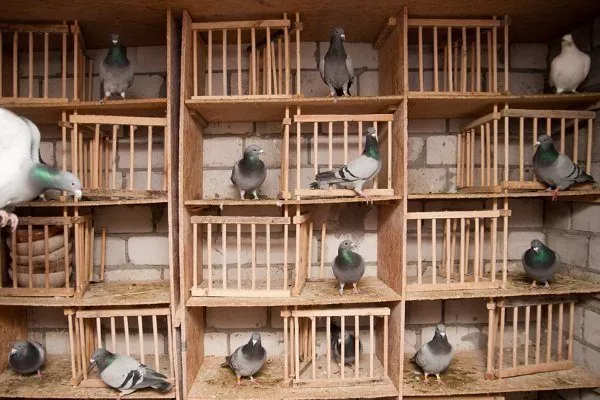
The main rules for keeping pigeons:
- The pigeons' housing is spacious and bright, and the food is nutritious.
- The room should be clean and ventilated, but free of drafts. The litter should be changed weekly, or better yet, as it gets dirty. The cages, equipment, and the entire loft should be washed with detergent.
- Birds should have constant access to clean, fresh water, as well as a “pool” – a trough for bathing.
- Artificial lighting is provided in the dovecote to control daylight hours.
- The optimal temperature in summer is up to +25 °C, since pigeons do not tolerate heat well.
- The optimal air humidity is 65-70%. High humidity makes birds susceptible to infectious and fungal diseases.
- The standard area for keeping pigeons is 0.5-1 sq. m per two adult birds.
It is especially important to provide pigeons with the correct winter maintenanceIt's essential to maintain their health and reproductive capacity. While hygiene, disinfection, and feeding are the primary measures in summer, insulation, lighting, and supplemental feeding are added to this list in winter.
Winter maintenance rules:
- Birds should not be exposed to rain or fog for long periods of time.
- They give a lot of warm water.
- The duration of daylight hours is maintained at 14 hours.
- There's ventilation at the bottom of the dovecote. The entrance doors are insulated, and the nests are deepened.
- The minimum temperature in the dovecote is minus 10 degrees, with short-term temperatures of minus 25 degrees allowed.
- Monthly cleaning and disinfection. Damp areas are sprinkled with lime.
- Prevents the appearance of rodents.
- The birds' health is carefully maintained. During molting, their immune system is weakened, so enhanced nutrition is necessary. Pigeons are given:
- high fat grain;
- crushed corn;
- mineral fertilizers;
- green salad;
- grated carrots.
Which breed should I choose?
Pigeons are divided into breeds and species. They differ in appearance, behavior, and purpose. All pigeons are divided into two large groups:
- Wild. They are demanding in terms of housing conditions and care. They are accustomed to a free life, and keeping them in a dovecote becomes a torturous ordeal. Breeding such pigeons must be justified.
- Homemade. These are the pigeons that pigeon fanciers breed. Anyone can manage their upkeep and breeding. There are many subspecies in this category, including pigeons for show, for sport, and for meat.
Depending on their purpose and usage, pigeons are divided into:
- flight;
- sports;
- decorative;
- meat.
Decorative
| Name | Weight of an adult (g) | Flight speed (km/h) | Features of plumage |
|---|---|---|---|
| Barb | 300-400 | 60-80 | Uniform, leathery growths around the eyes |
| Curly-coated pigeon | 350-450 | 50-70 | Curly feathers on the body and wings |
| Brno Dutyš | 400-500 | 40-60 | Large distended goiter, long legs |
| Peacock dove | 300-400 | 50-70 | A lush tail reminiscent of a peacock |
| Saxon priest | 350-450 | 60-80 | A tuft on the head, feathers on the legs |
These birds are kept for pleasure or for commercial breeding. Ornamental pigeons are distinguished by their unusual shape, coloring, feathers, and sometimes have unusual crests, bushy tails, and other distinctive features.
Popular ornamental breeds:
- Barb. Birds with multicolored, but always uniform plumage—from snow-white to dark brown. Leathery growths surround the eyes.
- Curly pigeon. The body and wings have curly feathers. The plumage is two-colored.
- Brno blower. They have a large, inflated crop, which makes up almost the entire body of the pigeon. Their legs are long and slender, and their tail is short.
- Peacock dove. They have a fluffy, upright tail, reminiscent of a peacock's. They come in a variety of colors.
- Saxon priest. Their paws are feathered, and their heads have a tuft of feathers. Their colors vary, but they always have a white mark on their foreheads.
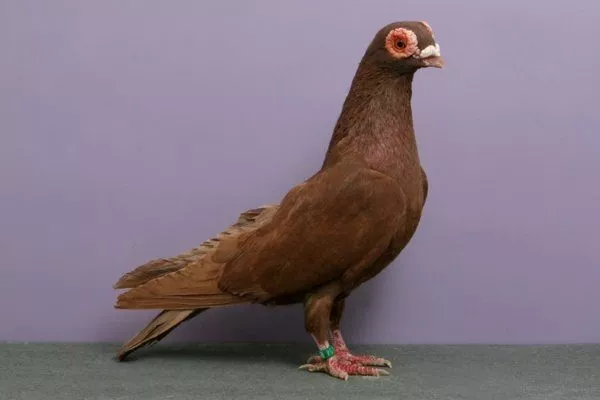
Barb pigeons
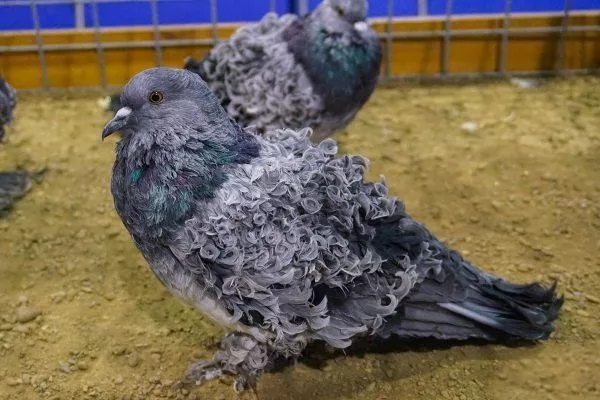
Curly-coated pigeon breed
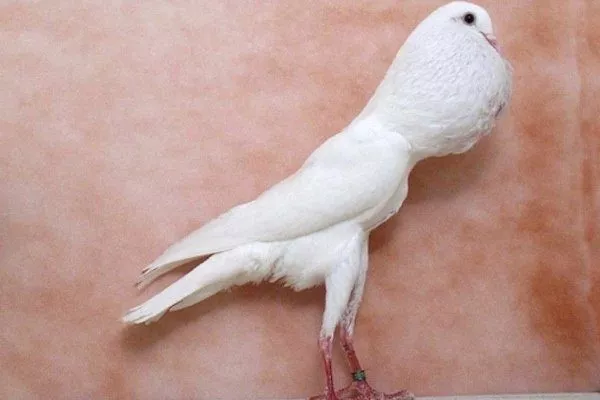
Brno Dutysh pigeon breed
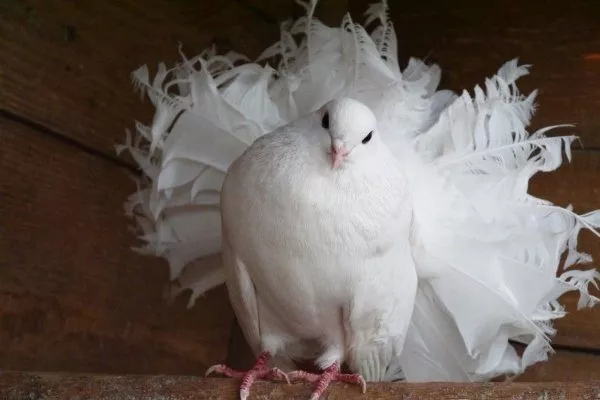
Peacock Dove breed
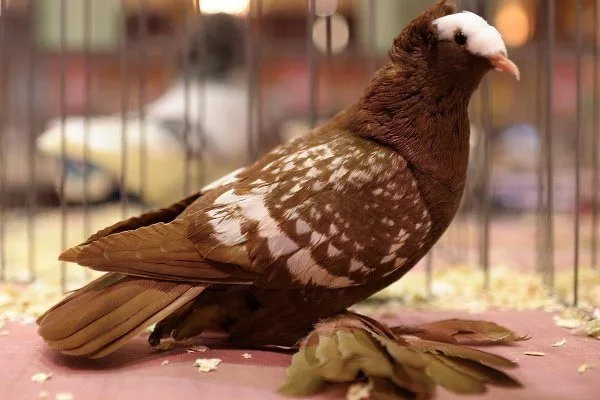
Saxon Priest pigeons
Peacock doves are traditionally featured at weddings and other special occasions. Their snow-white plumage and lush tail make them particularly striking.
When keeping fancy pigeons, it's important to maintain their appearance. To achieve this, the dovecote is cleaned and the bedding changed more frequently than usual. To ensure their plumage remains beautiful and shiny, the birds are provided with a balanced diet.
Sports
| Name | Weight of an adult (g) | Flight speed (km/h) | Features of body structure |
|---|---|---|---|
| English quarry | 500-600 | 90-110 | Upright posture, long beak |
| Russian postal | 450-550 | 80-100 | Graceful, fine bone structure, rounded beak |
| Belgian postman | 550-650 | 100-120 | Small head, powerful chest |
These breeds were once called postal pigeons. Postal pigeons are no longer popular, but flying speed competitions are held regularly around the world.
Popular sporting breeds:
- English quarry. These birds are characterized by an upright stance, a large but shallow chest, and a long beak. Their body structure facilitates high speeds. Their eyes have folds of skin that protect them from strong winds.
- Russian postal. These graceful pigeons have fine bones and a rounded beak. Their wings are long, with curved tips for improved maneuverability. Their coloring ranges from white to dark graphite.
- Belgian postman. A classic breed of racing pigeons, these birds boast unrivaled maneuverability and flight speed. They have a small head, a powerful chest, and a short tail.
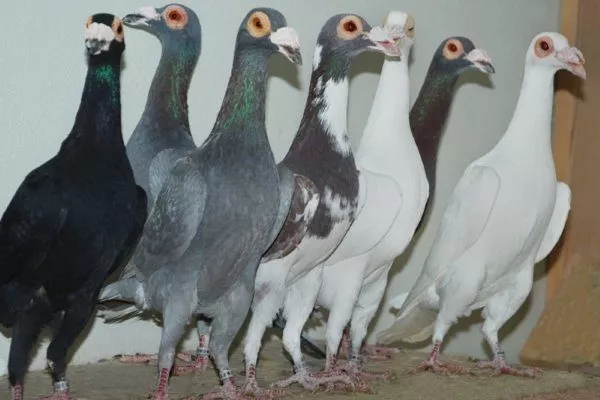
English Quarry pigeons
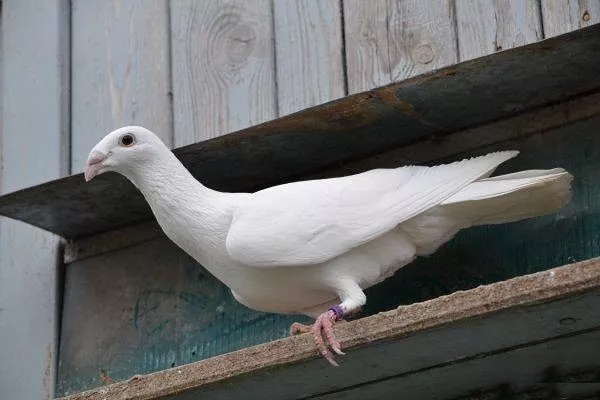
Russian Postal breed
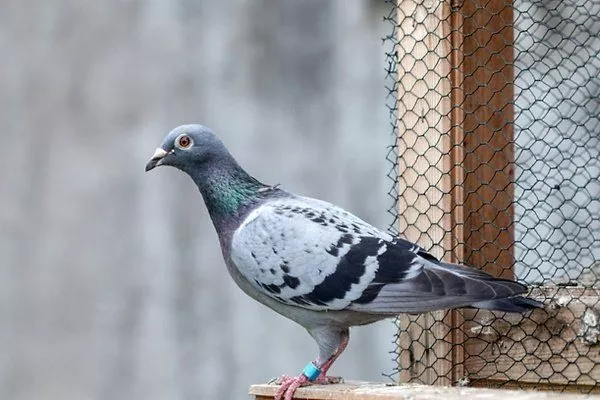
Belgian Postman pigeon breed
Homing pigeons They are adopted at one month of age to allow them to become accustomed to the home. A ring is placed on the bird's leg for identification. The pigeons are trained regularly, and they are ready for competitions by the age of three to four years.
A racing pigeon aged 3-4 years can easily cover a distance of 1000 km.
Flight
| Name | Weight of an adult (g) | Flight speed (km/h) | Flight Features |
|---|---|---|---|
| Berlin Thurman | 300-400 | 70-90 | High speed, lively character |
| Crusade monk | 350-450 | 60-80 | Flies at low altitude, the flight style is similar to a dance |
| Nikolaevsky dove | 400-500 | 80-100 | Flying high, it freezes and trembles its wings |
Pigeons have their own unique flight style and characteristics. They are kept for their beautiful flight, and they are capable of not only flying fast but also performing all sorts of tricks—somersaults, rapid drops and takeoffs, turns, banked maneuvers, and much more.
Breeds of flying pigeons:
- Berlin Thurman. This breed has a short beak, miniature size, and a lively nature. They are noted for their high flight speed. Their coloring ranges from white to dark and mottled. Their legs have lush feathering.
- Cross monk. They fly at low altitude, their flight style resembling a dance. They lure other pigeons.
- Nikolaevsky dove. They fly high, pausing and fluttering their wings. They rise almost vertically. The breed is distinguished by its long, muscular wings.
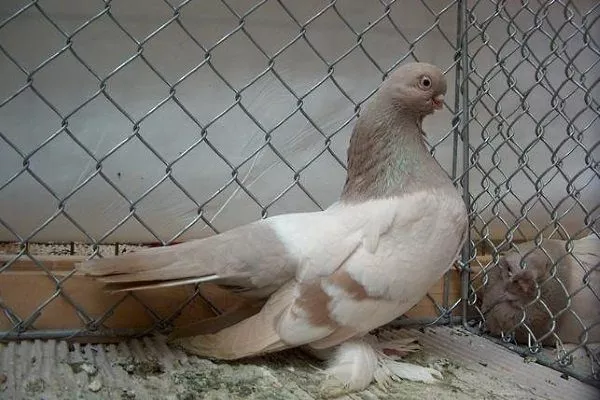
Berlin Tumbler pigeon
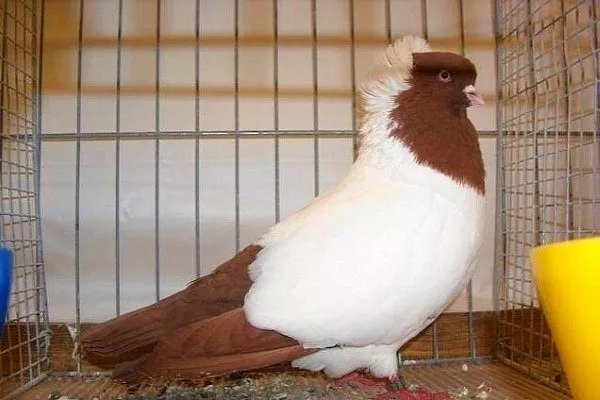
the "Cross Monk" pigeon breed
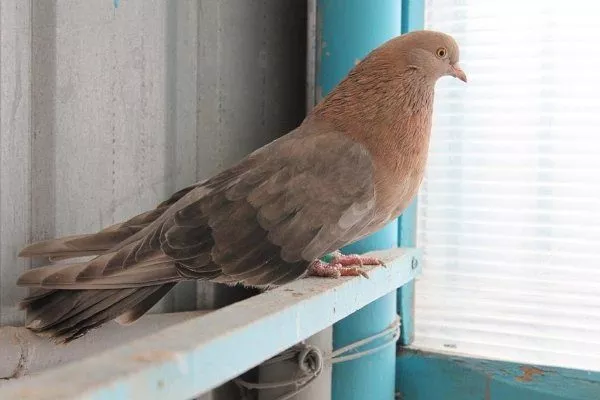
Nikolaev Dove
A key aspect of keeping flying pigeons is regular flights. The birds must take to the skies every day.
Meat
| Name | Weight of an adult (g) | Slaughter yield of meat (%) | Content Features |
|---|---|---|---|
| Modena English | 800-900 | 60-70 | Poor flyers, short tail and wing feathers |
| Roman dove | 900-1000 | 65-75 | Strong immunity, simplified care |
| King | 900-1000 | 70-80 | Dense, massive body, lost flying skills |
| Carnot | 700-800 | 55-65 | Stocky and dense, they move on foot |
Pigeon meat is a popular product in many countries. In fact, the first artificial breeds were developed specifically for their meat—their meat is particularly tasty, with fine fibers.
Popular meat breeds of pigeons:
- Modena English. They weigh a lot—800-900 g—and are poor flyers, partly due to their short tail and wing feathers. Their coloring is either variegated or solid.
- Roman dove. They weigh up to 1 kg. They have a strong immune system, making their care extremely simple.
- King. An American breed that has lost its flight skills. They weigh up to 1 kg. They have a stocky, massive body, a small head, and a short tail. Their coat color is white, black, spotted, or brown.
- Carnot. These are dense, stocky, dark-colored birds. They are poor fliers and primarily move about by foot.
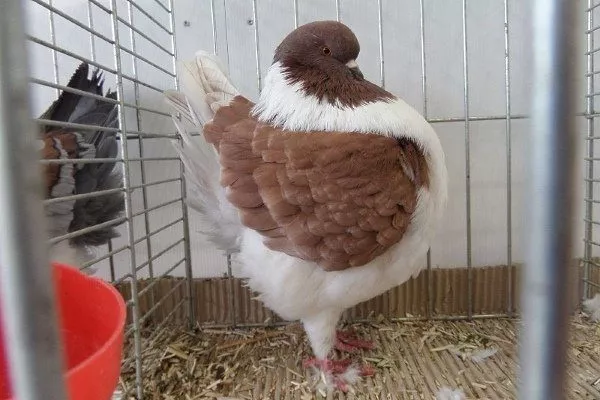
Modena English pigeons
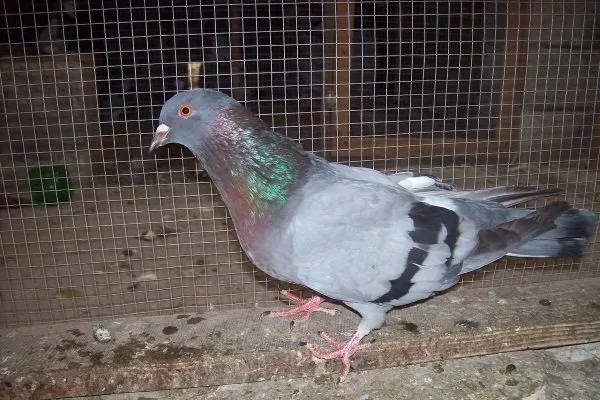
Roman pigeon breed
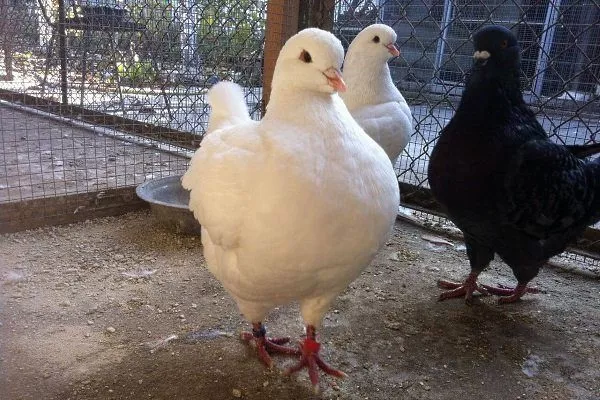
King pigeon breed
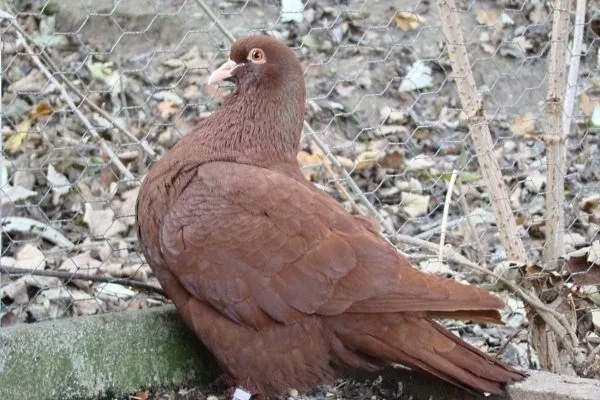
Carnot pigeon
The most important thing in keeping meat pigeons is proper feeding. These birds are flightless and don't forage for food, so humans must provide them with a full diet. They are fed grains, legumes, and oilseeds. They are also given vitamins, shell rock, charcoal, and eggshells. Meat pigeons are kept in aviaries rather than dovecotes.
How to buy pigeons for breeding?
When buying pigeons, they buy an equal number of males and females—so that each bird has a mate. Pigeons take family ties seriously—once they choose a partner, they remain faithful to them for life.
It's not advisable to buy pigeons in winter. The best time to stock a dovecote is February-March. During this time, the birds require special care, which isn't always possible to provide fully. Once you've decided on a breed, all that's left to do is select healthy individuals.
Signs of healthy pigeons:
- breathe evenly;
- active;
- have shiny plumage;
- eyes open, shining;
- the chest should not stick out.
Beginners buy pigeons wherever they can find them. And that's a big mistake. Experienced pigeon breeders prefer to buy pigeons not from unknown individuals at the market, but from a specific loft. They also learn as much as possible about the loft beforehand—how the pigeons are kept, how they are trained, and other details.
Setting up a dovecote
When designing a dovecote, consider the number of pigeons it will house. It is not recommended to build dovecotes near power lines or high-rise buildings.
Perches
Every pigeon should have the opportunity to sit and rest. For this purpose, perches are constructed—perches for the birds to sit on. What you need to know when making perches:
- For each pigeon - 30 cm of perch.
- The material used is smoothly planed, painted wooden perches with a diameter of 3 cm. 2x4 cm beams are also suitable.
- The perches are fixed at a distance of 30-40 cm from the ceiling.
- The perches are installed so that the birds sitting on them do not interfere with each other.
If the breed has long and lush plumage on the wings and legs, then perches are necessary to keep the feathers clean and tidy.
Nests
To ensure comfortable breeding conditions for pigeons, nests are installed on shelves. The shelves are designed to serve both as mating and nesting sites. Each bird or pair should have its own nest box. They are arranged in several rows. There should be as many nest boxes as there are females in the loft, or more.
Features of the arrangement of shelves with nests:
- The cell dimensions depend on the breed's size. The approximate length is 25 cm, the width is 35 cm, and the height is 20 cm. Nests can be open or made as cages. The open part of the cell is covered with mesh, leaving a 10 x 10 cm opening. A small rectangular perch is placed in front of the opening.
- Nests are built in a shaded area of the dovecote, where the hens will feel most comfortable. A nesting area lined with sawdust, hay, or straw is prepared for the birds.
- Each shelf for the nest is made 5 cm wider than the bottom one - so that excrement does not fall on the inhabitants “on the floor below”.
- Nests 20-25 cm wide and 5-7 cm high are installed in the nesting cells. Plywood boxes or round plaster nests, the bottom of which is lined with straw or sawdust, are used for this purpose.
Feeders and drinkers
Don't scatter feed on the floor; it must be placed in clean feeders. Different compartments should be used for different types of feed. The most important thing when creating feeders and waterers is to prevent debris and bird droppings from getting into them.
The number of feeders and waterers in a dovecote depends on the number of pigeons. Each pigeon should have at least 60 cm of approach distance, though for larger breeds this distance is greater. Feeders require simple features: they should be easy to use—clean, wash, and refill. They should be made from materials that are not harmful to the birds; for example, they should not contain zinc or copper.
To prevent pigeons from contaminating their water and food, use devices that prevent them from standing upright—only the bird's head can fit through. Automatic feeders and waterers are the most convenient for pigeons.
Baths
Pigeons, especially during the warm season and during molting, enjoy baths. These birds bathe in small containers. The easiest way is to buy special baths—they're sold in specialty stores. However, if you have suitable containers with sides 4-8 cm high, you can use them.
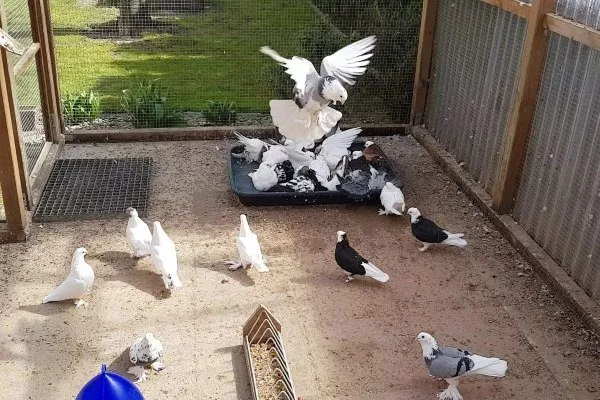
During cold weather, the pigeons are given weekly baths, and twice a week when nesting begins. Once the birds have finished bathing, the tub is removed to prevent them from drinking dirty water.
Letok
A dovecote is an opening for pigeons to exit. Its size is adjusted to the size of the birds. Typically, dovecote entrances are 10-25 cm high and 10-20 cm wide. One or two entrances are used in a dovecote. For flight breeds, the entrances are located 1-1.5 m above the floor, while for meat and ornamental breeds, the height is 15-20 cm.
Bird entrances are often made adjustable—this is especially convenient for sport breeds. A special inserted frame is installed in the window, consisting of swinging rods that are loose at the bottom. The rods are made of thick wire. The frame also has a special stop that can be adjusted.
Conditions
To ensure pigeons are healthy, active, prolific, and delight their owners with their beautiful appearance or meat production (meat breeds), they need appropriate living conditions. Temperature, lighting, fresh air, and the interior layout of the dovecote all impact the well-being and appearance of these birds.
Temperature
The temperature in the pigeon house affects the health and reproductive capacity of the birds. Optimal temperature conditions:
- in winter – 5-7°C;
- in summer – no more than 20°C;
- air humidity - 65-70%.
The minimum permissible temperature in winter is minus 25°C; it should not fall below this mark.
If the birds are ruffled and huddled together, they're cold. The dovecote should be insulated immediately and warm water should be provided. If the birds are panting rapidly, spreading their wings apart, they're hot. Increase ventilation and provide containers of cool water.
In extreme heat, pigeons are not allowed to fly – it is too much of a strain for them.
Ventilation
A ventilation system is installed inside the dovecote, but drafts are prevented. A hole is made 10-15 cm above the floor to allow air in, and covered with a grate. An exhaust hood is installed near the ceiling. Doors and latches are installed on the windows for use in cold weather.
If desired, artificial ventilation can be installed in addition to natural ventilation. The circulation of fresh air prevents mold, dampness, and infection in the dovecote.
Lighting
Short daylight hours negatively impact the sexual maturation of young birds, slowing it down. However, the birds develop better physically. Bright red and orange light also impedes sexual maturation.
The optimal daylight hours for pigeons are 13 hours. To control this, artificial lighting is installed in the dovecote. The dovecote windows should face south or southeast to allow more light into the room.
Bedding
A dovecote requires bedding. It is made from sawdust, hay, straw, dry peat, thin twigs, and coarse sand. The layer should be 5 cm thick. This makes cleaning easier. The bedding must be kept clean. It is completely changed twice a year—in the fall and spring, during disinfection. Damp or rotten bedding must be changed immediately to prevent the spread of mold and infections.
Enclosure for walking
Domestic pigeons, whether used for meat or ornamental purposes, are provided with an aviary for outdoor exercise. In the aviary, the birds acclimate to the outdoors, bask in the sun, and enjoy the fresh air. The aviary is built on the ground or elevated with supports. An aviary can also be installed on the roof of a dovecote or suspended from the ground.
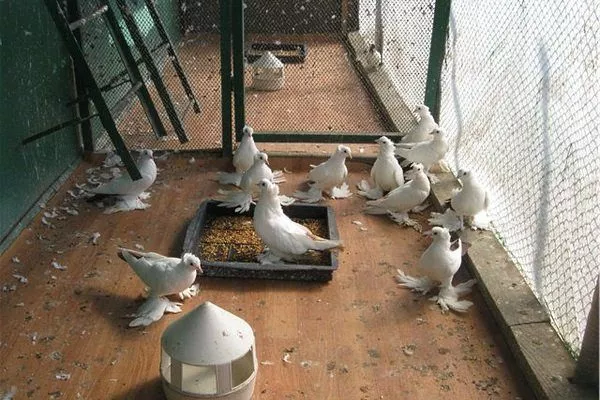
Rules for setting up an enclosure:
- minimum dimensions are 5x3 m, but there should be at least 0.5 sq. m per bird;
- a roof is installed to protect against predators;
- the enclosure is created using a net with cells up to 5 cm wide to prevent wild birds from flying in, as they could cause the pigeons to catch an infection;
- install double doors to prevent pigeons from flying away;
- the floor is made of concrete or cement to make it cleaner;
- earthen floors are renewed periodically - they are dug up to the depth of a shovel blade and sprinkled with sand on top;
- a trench is dug around the enclosure and broken glass mixed with earth is poured into it - this is protection against digging holes that predators can make;
- on the north side the enclosure is covered with plywood or plastic sheets;
- Inside the enclosure, feeders, drinking bowls, baths and everything else necessary for the pigeons' daily life are installed.
Additional inventory
To meet the daily needs of pigeons and maintain the cleanliness of the dovecote and aviary, pigeon breeders need additional equipment:
- bucket;
- broom;
- scoop;
- scraper;
- drinking water canister;
- litter basket;
- sieve for sifting sand;
- mortar – to crush mineral components;
- rakes of different sizes;
- objects used to transport pigeons.
The dovecote should also contain a first aid kit consisting of the following:
- tweezers;
- scalpel;
- syringe;
- bandage;
- silk threads;
- patch;
- alcohol;
- cotton wool;
- chloramphenicol;
- potassium permanganate;
- boric acid;
- Brilliant green and other medications that may be urgently needed to treat birds.
Basics of proper feeding
Principles of pigeon nutrition:
- The diet is based on barley. Carrots, apples, and potatoes are added. Barley can be substituted with pearl barley.
- The daily ration must contain wheat. The amount is increased during molting and lactation.
- This complete, nutritious grain mix contains millet. This feed provides birds with a lot of energy. Millet is especially necessary for sporting breeds, especially those flying long distances.
- Legumes are included in the diet. Don't feed them in large quantities to avoid obesity. Legumes are essential during molting, transportation, breeding, and raising the young.
- Hulled oats or oatmeal are added to the grain mixture.
- In the warm season, fresh grass is given.
- It's important to meet the bird's protein requirements. If the birds don't get enough protein, the loss is compensated for by carbohydrates and fats for a while, but then the body begins to use intramuscular protein. However, excess protein is also harmful, as the birds lose productivity. The recommended protein intake for pigeons is 13-15% of their feed.
- Fat-containing grains and eggs are introduced into the diet of meat breeds.
- One individual receives at least 40-50 g of food per day. In winter, feeding rates are increased.
- To strengthen the immune system, birds are given decoctions of chamomile, thyme and string.
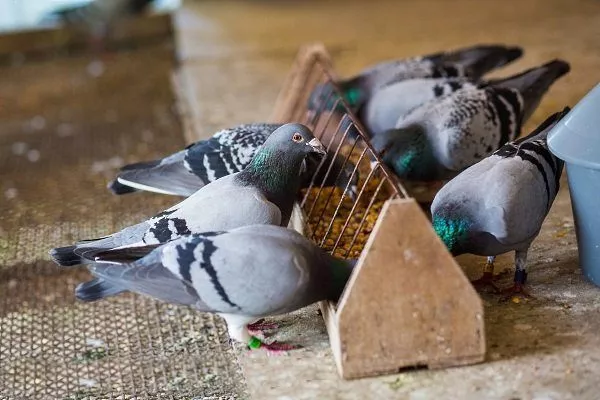
It is prohibited to feed pigeons:
- Fish. The bodies of these birds do not cope well with phosphorus.
- Meat. Pigeons' digestive systems are not designed to digest meat products. The birds may even die.
- With black bread. It causes a fermentation process in the stomach.
- Dairy products. There are few lactic acid bacteria in the gastrointestinal tract of pigeons, and digestion of dairy products is difficult.
- Sweets and products containing oil. Pigeons' livers can't digest fatty foods. Oil can kill the birds. Even sunflower seeds can be harmful. If they are fed seeds, it's in very limited quantities.
- With salt. In large quantities, it's poisonous to pigeons. It takes just 1.5 grams of salt to kill a pigeon. Pigeons meet their salt requirements with their regular food.
For adult birds
The feeding regime for pigeons is determined by:
- time of year;
- the condition of the birds;
- lifestyle (open or closed dovecote).
Organizing meals depending on the time of year:
| Season | Number of feedings | Feeding time, h |
| Winter | 3 |
|
| Summer | 2 |
|
The birds' life stage influences their diet:
- Molting. This period lasts from March to November. The proportion of protein products increases. A lack of protein leads to a prolonged molt and the formation of poor-quality plumage, resulting in feathers with narrow vanes.
- Reproduction. The period begins in March-April. Fish oil is required at a rate of 10 ml per 1 kg of feed. Feed mixtures with increased protein, amino acid, and mineral content.
- Oviposition. It begins 7-10 days after mating and lasts 18-21 days. The feed contains many vitamins, amino acids, and minerals. A small amount of greens, potassium iodide (70 mg per 1 kg), and vitamin E (2-3 drops per 1 kg) are added to the feed – these substances are necessary for egg formation and high-quality fertilization.
- Winter period. Protein intake is reduced to reduce sexual activity. Flaxseed and rapeseed should be added to the daily diet at a rate of 4 g per kg. Legumes are excluded, and wheat is reduced to a minimum. A mixture of boiled potatoes and bran is fed.
Approximate feeding rations for pigeons, taking into account the life stage:
| Period of life | Peas, % | Vetch,% | Wheat, % | Millet, % | Barley, % | Corn, % | Oats, % | Rye crackers, % | Hemp, % | Sunflower, % | Lentils, % | Yeast, % |
| Molting | 20 | 10 | 10 | 20 | 10 | 10 | 20 | — | — | — | — | — |
| Reproduction | 20 | — | 50 | — | 20 | — | 10 | — | — | — | — | — |
| Oviposition | — | 15 | 30 | 15 | — | — | 15 | 15 | 4 | 5 | — | 1 |
| Winter period | — | — | — | — | 40 | 10 | 40 | — | — | — | 10 | — |
Consequences of vitamin deficiency in female pigeons:
| Substances that pigeons lack | Symptoms of deficiency |
| Vitamin A | cessation of egg production, reduction in hatchability, hatching of non-viable chicks |
| Vitamin B2 | embryonic freezing, birth of non-viable chicks |
| Phosphorus, calcium, vitamin D | thin shell, lack of shell in eggs |
For young animals
The growth of young pigeons depends on the nutritional value of their diet. Young pigeons are more vulnerable to disease than adults. Disease incidence is reduced if the feed contains sufficient vitamins, minerals, and other nutrients.
During the first few weeks after weaning, young birds require a lot of food. Their irises are monitored closely; once they reach the same color as those of adult birds, the portions are reduced.
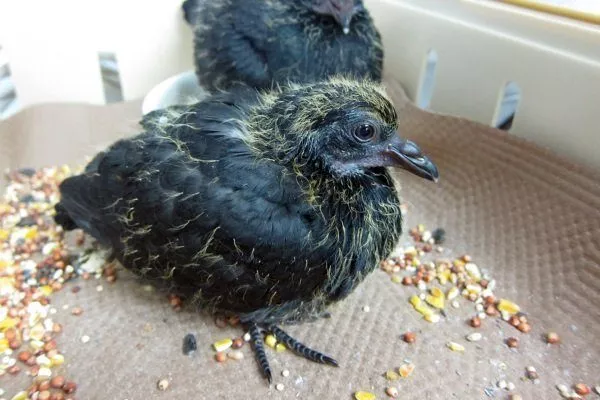
Features of feeding young animals:
- In the morning the portion is smaller than in the evening.
- The grain is watered with fish oil.
- To ensure that the young animals grow well, they are fed a mixture of barley, peas and vetch.
- When the pigeons learn to fly, they are given half as much wheat and replaced with peas and vetch, taken in equal parts.
Per individual – 40 g of feed. Example of grain mixture for feeding:
- wheat – 20%;
- vetch – 10%;
- peas – 10%;
- corn – 10%;
- barley – 20%;
- millet – 30%.
As the birds grow, beans are introduced into the diet, reducing the amount of vetch.
Pigeons experiencing growth retardation are given a supplemental diet: polished rice, corn grits, millet, feed yeast, and fish oil (5 drops per day) are added to the wheat. A 5% glucose solution is added to the water.
The young birds are given succulent green feed daily – 10 g per day per bird. Potatoes and porridge are used as supplements, but they cannot be given without grain, as this will cause digestive upset.
Breeding
Domestic pigeons begin breeding in March. By this time, the aviary is prepared, nest boxes are installed, a pair is selected, and preparations for hatching begin.
Choosing a pair
A pair is selected before the mating season begins – in the fall or winter. The principles for selecting a pair for breeding are:
- The male and female are of the same breed.
- No flaws in the exterior.
- Both partners must be in perfect health.
- Both birds are strong and energetic.
- The female's body weight should not exceed the norm.
Obese birds often lay unfertilized eggs, making the egg-laying process more difficult. Emaciated females are also unfit for breeding—they are unable to incubate and feed their young.
Preparing the nest
In the wild, the male is responsible for nest construction. He searches for "building materials"—twigs, straw, and blades of grass—brings them to the nesting site and constructs the nest. Females perform the "design"—trim the nest, rearranging twigs and feathers. Give the pigeons wool, down, twigs, and feathers—let them get to work building the nest. It takes them about 2-3 weeks to complete the work.
Nesting boxes are installed in the dovecote for breeding purposes. It's best to have more nesting boxes than there are pairs of doves, so the birds can choose their favorite nest and avoid fighting over nesting sites.
Once the pairs are matched, they are placed in prepared nesting boxes and left overnight—the birds will decide whether they are compatible. From then on, the pairs spend all their time together.
Incubation period
The female begins laying eggs two weeks after mating. The female is less active, and the area around the anus becomes enlarged. Young females can lay only one egg, and not all are successful in hatching it.
Older individuals lay two eggs. Experienced females—strong and healthy ones—generate high-quality offspring. It's important to note when the egg is laid. Each egg weighs 15-20 g. Incubation lasts 20 days. Temperature influences the timing—the warmer the temperature, the faster the hatching process. The male and female incubate the eggs alternately.
On the fourth day, the eggs are checked to see if they are fertilized. Picking up an egg with your fingers, you can hold it up to the light—a dark embryo will be visible in a fertilized egg. After seven days, the egg becomes completely dark. Unfertilized eggs are removed and replaced with dummy eggs to keep the birds calm.
The emergence of a brood
The chick hatches between 16 and 19 days after hatching. Twelve hours after the initial hatching, a crack appears in the shell, then a hole. The chick usually emerges in the morning. Before hatching, the nest is cleared of droppings and debris. This is done very carefully so as not to upset the parents, who immediately rush to defend the clutch.
As soon as the chicks hatch, they must be inspected for defects. Healthy chicks must have their yolk sacs fully retracted; otherwise, they die. Newborn pigeons are naked, wet, and blind. Within a few hours, the parents completely dry them and warm them with their bodies. Once dry, the chick is ready to eat. If it is deprived of food for more than 24 hours, it dies.
Caring for pigeons
There is no need to take any direct care of the pigeons - the parents do everything themselves.
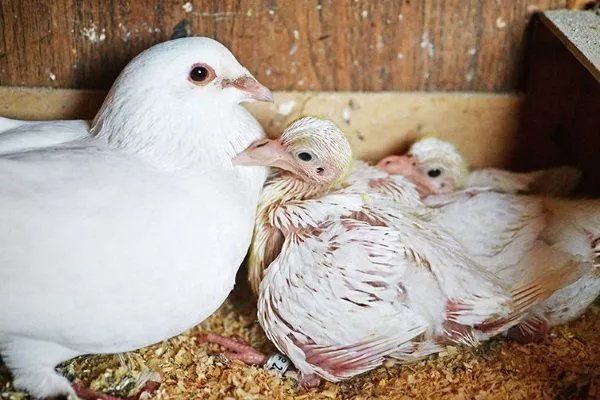
Humans are responsible for creating favorable living conditions for birds. Cleaning is essential, and it's done weekly. The dovecote and nests must be kept clean.
The first step is to remove the eggshells from the nest. Maintaining cleanliness is essential to prevent infectious diseases. Regular disinfection with chemical solutions that are non-toxic to birds is essential to kill microorganisms.
During cleaning, the pigeons are removed from the box. Cleaning agents should not come into contact with the water or feed. First, prepare a soap solution: 500 g of soap per 10 liters. This is used to wash the boxes and perches. Then, disinfection begins, for example, with a bleach solution.
Parents feed newborn chicks crop milk for 12 days. By the beginning of the second week, the pigeons add grains to it. If one of the parents dies, the entire clutch dies of starvation. Foster parents are sought for the chicks. Alternatively, they are fed themselves using a syringe. A nipple is attached to the syringe and it is filled with warmed yolk. The chicks can also be given mixed feed, steamed to a paste.
We recommend reading the article about How to raise a pigeon chick at home.
When bottle-fed, chicks are fed six times a day. At 2-3 weeks, they are given crushed grains such as barley and peas. Their food is sprinkled with feeding chalk. During this period, chicks begin to learn to drink water.
The chick's satiety is determined by its crop: if it is full, then the bird is full.
Is breeding possible in winter?
Breeding pigeons in winter is complicated by the slowing of physiological processes. However, pigeons tolerate low temperatures well; if the birds are provided with suitable conditions, breeding in winter is possible.
Conditions for breeding pigeons in winter:
- Carefully monitor your health, promptly stopping the first signs of infection.
- The nests are deepened to 40 cm.
- The entrance to the dovecote is insulated.
- The temperature should not fall below 10 degrees, otherwise the chicks will freeze.
- Daylight hours are increased to 12 hours due to artificial lighting.
Bird health
Pigeons, like all scavenging birds, are active carriers of infectious diseases, including avian influenza. Many diseases are dangerous not only to pigeons but also to humans. The most dangerous diseases are:
- Ornithosis. This is an acute infectious disease. It particularly affects young animals, which often die if infected.
- Trichomoniasis. The causative agent is Trichomonas. It is spread through water and causes death.
- Campylobacteriosis. They are caused by bacteria that parasitize the body without causing symptoms. They are treated with antibiotics.
- Listeriosis. Another bacterial disease. Characterized by a long course. There is no effective treatment.
- Tularemia. A bacterial disease with no specific treatment. Conventional antibiotics are used.
- Pseudotuberculosis. A chronic disease causing a wide range of symptoms. There is no specific treatment.
- Weekly disinfection of feeders and drinking bowls with a solution of potassium permanganate.
- Monthly treatment of the dovecote from parasites.
- Quarterly vaccination of birds against major diseases.
And this is only a small part of the diseases that pigeons can suffer from (read about the diseases that pigeons can have). here). Due to the fact that people are affected by bird diseases when breeding pigeons, it is necessary to settle the issue with the sanitary and epidemiological station.
To legally keep pigeons in your backyard, you need to obtain the following documents:
- Permit – 20,000 rubles.
- Certificate of quality – 5,000 rubles.
- Veterinary certificate – 200 rubles per bird.
The greatest danger to domestic pigeons is posed by wild birds, which is why it is important to prevent them from accessing the flock.
Pigeon health and influencing factors:
| Positive | Negative |
| dryness, lighting and ventilation | overpopulation |
| vaccination | no quarantine |
| high-quality food and water | wild birds and rodents |
| vitamins and minerals | birds with chronic diseases |
| feeding regime (flights, walks) | open feeders and drinkers |
| correct breeding selection | untimely breeding |
| drug prophylaxis | stress |
Contents on the balcony
The balcony is large enough to accommodate a small flock of pigeons. This is convenient—you don't have to go to the dovecote; simply open the balcony door to be with your pets. The downside is the noise, which may disturb your neighbors.
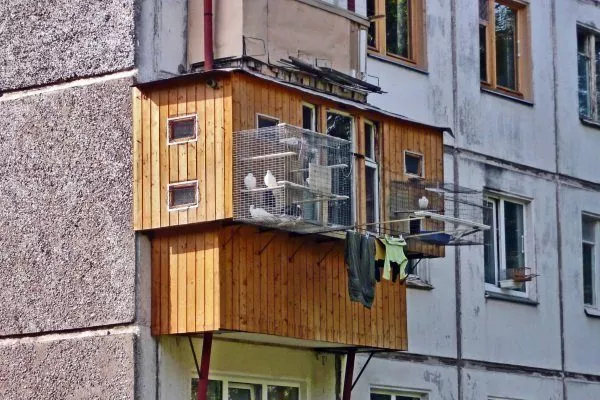
Features of setting up a dovecote on a balcony:
- The walls of the balcony are covered with plywood or boards so that there are no gaps.
- They make perches and nests for birds, or boxes with compartments.
- The windows should be small, preferably located on the south side.
- The balcony is insulated to prevent dampness and drafts.
- Lighting is installed to increase daylight hours in winter.
- Minimum temperature: 7-10 degrees.
- The dovecote should be ventilated.
- An entrance and exit are arranged in the dovecote.
- The walls of the dovecote balcony are painted in bright colors so that the birds can quickly find their home.
Business or just a hobby?
When discussing pigeon breeding, it's important to distinguish between a hobby and a business. For dedicated pigeon breeders, this is a pastime that takes up all their free time and doesn't generate any income. For those looking to create a profitable business, pigeon breeding can be a significant source of income.
You can breed both meat pigeons for profit, as well as sport, flight, and ornamental pigeons for sale. Features of the pigeon business:
- Pigeon meat is very tasty—comparable in flavor to quail. It's recommended for dietary purposes, so it's always in demand.
- You'll need a private home or cottage to set up a dovecote. You can use outbuildings or build a separate structure.
- If breeds are bred that are not allowed to fly, enclosures are set up.
- Birds are purchased from specialized farms. The average price per bird is 500-1000 rubles.
- The most famous meat breed is the King. These birds are more like chickens than pigeons. Each bird weighs about 2 kg.
- The chicks grow quickly and are ready to sell within a month. Both whole and live pigeons are available. If they're not meat-producing breeds, then naturally, only live birds are sold.
- Those who raise meat breeds find sales in cafes and restaurants. Here, pigeon meat is served as a delicacy, often becoming a signature dish. By signing a contract, the meat can be supplied for approximately 900-1,200 rubles per kilogram.
Tips from pigeon breeders
Practical advice from pigeon breeders:
- Take measures to exterminate rats and mice. Prevent cats and ferrets from entering. To protect catteries from rodents, use a special poison called Deutran. Read the instructions and follow all directions – the mice and rats will be gone for six months.
- If you have some spare time, rinse your grain feed to see how much dirt is in it. This will reduce the risk of infection for your birds. Don't seal the containers you store dried grain in.
- Grain and mineral feeds are easily disinfected in microwave ovens – one minute is enough for disinfection.
- Avoid heating the dovecote, as this will reduce the birds' resistance to disease. However, if temperatures drop below -10°C (14°F), the temperature should be raised.
- Don't put salt licks in dovecotes—it's dangerous. The salt will absorb moisture, soften, and the birds will start pecking at large chunks, causing poisoning and rapid death.
- Pigeons' biggest enemy is dust from dried droppings. It's harmful to their breathing and can lead to various diseases. Therefore, after cleaning the dovecote, be sure to vacuum it first, and then wet-clean it.
Pigeon breeding is a complex, labor-intensive, and expensive process. If you decide to pursue this venture for profit, first carefully calculate all costs, assess the risks, and evaluate your capabilities.
Where does rain come from in winter??? By the way, it snows in winter!
And where can I get a scalpel?