
Pigeons aren't particularly fussy, but even they require special care during the winter. First and foremost, they need to be provided with proper living conditions, including maintaining a suitable temperature in the loft. It's equally important to properly adjust their diet, increasing their daily caloric intake so they can get all the energy they need to stay warm.
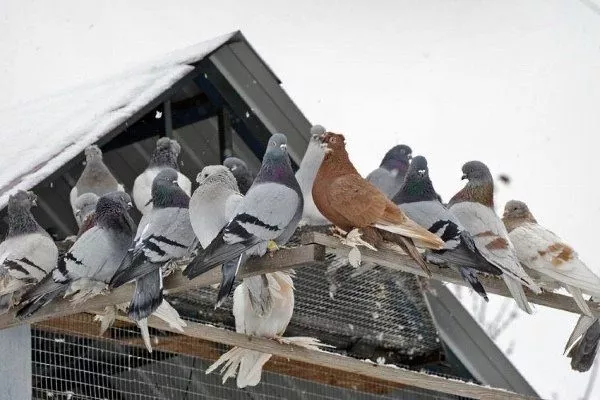
Requirements for a dovecote
Before the onset of winter cold, it's essential to create comfortable conditions in the dovecote to prevent weakened immunity and the development of colds in the birds. Let's explore how to create these necessary conditions below.
Temperature control and insulation
Pigeons don't need a "tropical" climate in winter, as they can easily withstand temperatures as low as -7°C. However, if the room gets colder, the risk of freezing is quite high. In this case, either additional heating will be needed or the birds' caloric intake will need to be increased.
Experienced breeders see no need for additional heating in the winter, as their observations show that if pigeons are well-fed, they do just fine without heating. However, things aren't so clear-cut.
Indeed, with proper nutritional adjustments, low temperatures don't pose a significant threat to pigeons. However, in freezing temperatures, food and water often freeze. While a bird's plumage protects it from cold weather, hypothermia is difficult to avoid if it ingests frozen food or cold liquid.
To avoid this problem, it's worth considering insulating your dovecote. To do this, follow these steps:
- seal all cracks in the room;
- If possible, install double-glazed windows to retain heat;
- cover the walls with thermal insulation material such as foam or plasterboard;
- provide thermal insulation for the roof, which can be covered with the same materials as the walls.
- ✓ The minimum thickness of foam plastic for walls must be at least 50 mm for effective thermal insulation.
- ✓ It is mandatory to have a moisture-proof layer under the thermal insulation material to prevent condensation.
Pigeons can peck at the paneling. To prevent this, install chipboard/fiberboard sheets over it.
Lighting
The optimal daylight period for pigeons is 12-14 hours. While sunlight is sufficient in the summer, in winter the daylight hours are shorter, requiring additional lighting.
Incandescent bulbs can be used to provide artificial light. The source shouldn't be too bright, so 1-2 50-watt bulbs will suffice. These bulbs can be used to artificially extend daylight hours to 12-13 hours; otherwise, the bird won't stay awake in the evening.
During the onset of severe cold weather, daylight hours should be extended to 14-15 hours, and additional food intake should be introduced into the diet.
Ventilation
To ensure proper ventilation, i.e., air exchange, two pipes are installed in the dovecote: an intake pipe and an exhaust pipe. The intake pipe is usually mounted near the ceiling, while the exhaust pipe is 15 cm above the floor.
In winter, ventilating a dovecote can be quite challenging due to the risk of hypothermia. Therefore, it's a good idea to install dampers on both pipes, partially blocking the air inlet and outlet. This will prevent drafts and maintain a comfortable temperature in the room. For the same purpose, the front door should be tightly covered with a warm blanket and plastic sheeting.
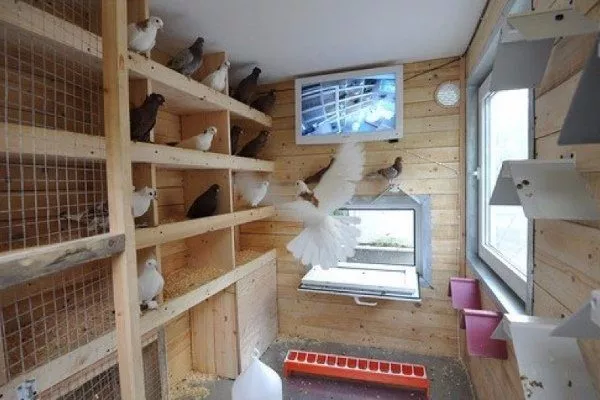
Experienced breeders recommend making nesting boxes quite deep (at least 35-40 cm) and placing them under the ceilings.
Cleaning
Cleaning a dovecote during the winter can be quite challenging, as the weather outside can drop to critical temperatures. However, cleaning the room should never be neglected – it must be done thoroughly and with the use of disinfectants once a month.
During cleaning, the bird should be moved to a comfortable location where a normal temperature is maintained. The cleaning itself is carried out taking into account the following rules:
- remove feeders and waterers from the premises before cleaning;
- To disinfect a room, choose products with a quick drying time and the ability to destroy harmful microorganisms at sub-zero temperatures;
- Use heated water to dilute chemicals, especially in severe frosts;
- Using special means, treat all surfaces in the room, including the ceiling;
- Disinfect all tools used to care for pigeons.
Birds can be returned to the dovecote only after the disinfectant solution has completely dried.
How to feed pigeons in winter?
With the onset of winter cold, pigeons' diets need to be adjusted, increasing their daily caloric intake to ensure they receive enough energy to keep warm. Additionally, certain feeds will need to be eliminated and vitamin and mineral supplements increased. There are many nuances to feeding pigeons in winter, so each aspect requires careful attention.
What to feed?
In winter, the dovecote is cool, so it's especially important to feed the birds well, providing 30 to 50 grams of feed per day. The optimal feeding option for pigeons is a grain mixture. The more types of grain it contains, the better. Barley and oats are considered the most beneficial for birds, and can also be fed with:
- millet;
- sorghum;
- wheat;
- corn;
- sunflower and hemp seeds.
Here is an example of the optimal grain ratio in a winter menu:
- oats – 40%;
- barley or pearl barley – 40%;
- crushed corn – 10%;
- chopped lentils – 10%.
Additionally, during one of their winter meals, pigeons should be fed grated boiled potatoes, pre-mixed with wheat bran. Other root vegetables that can be fed to pigeons include carrots and cabbage, and fruits such as apples and bananas. It's important to note that up to 30% wheat can be included in the grain mixture at any given meal.
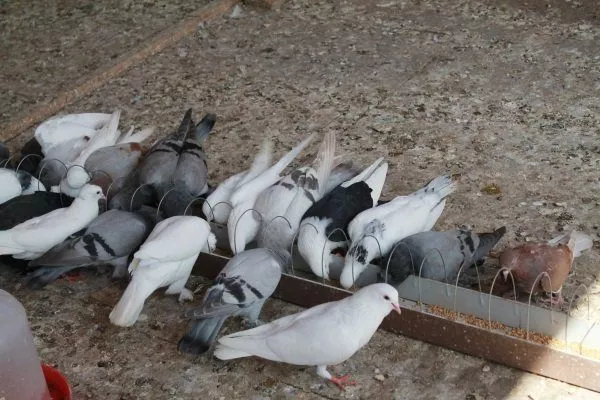
If the birds are left to fend for themselves for a week or more, several hopper (automatic) feeders should be installed in the loft. Each should be filled with a uniform grain to reduce beak activity and prevent the birds from scraping the feed onto the floor in search of more palatable grain.
What should not be fed?
The main difference between a winter diet and a summer one is that in winter, the proportion of high-protein feed should be minimized. This is necessary to reduce the birds' sexual activity. A high protein diet will result in premature hatching of chicks, which have a low chance of surviving the winter.
Legumes are the highest in protein content, so they should be completely eliminated from the diet. To compensate, pigeons should be fed additional barley and oats.
It is also not recommended to give birds large quantities of:
- peas;
- vika;
- buckwheat.
Furthermore, pigeons should not be given foods that can cause illness or death. The following foods are completely prohibited:
- bakery products, including white, grey and black bread, are difficult to digest and can cause gastrointestinal diseases;
- Milk, cheese and other fermented milk products lead to dysbacteriosis in adults;
- Fish, meat and meat products are not digested by the bird's body at all, so after consuming them the pigeon may die.
Sunflower seeds are rich in fats, so they can be given to pigeons from time to time, but only in small quantities.
Vitamins and minerals
Fresh grass is hard to find in winter, causing birds to develop nutrient deficiencies. To address this issue, include the following vitamin-rich foods in their diet:
- herbal flour;
- grated carrots;
- dried dill and parsley.
| Type of additive | Recommended dosage | Frequency of use |
|---|---|---|
| Herbal flour | 5 g per 1 kg of feed | Daily |
| Fish oil | 1 drop per bird | 2 times a week |
If you can't diversify their diet with these products, you can purchase a special premix at the store. This will help your pigeons survive the winter and avoid vitamin deficiency in the early spring.
Birds need vitamins A, D, E, and K. If you can't find a commercial vitamin supplement, you can give them individually. It's important to note that they are fat-soluble vitamins, so they are absorbed only with fats, ending up in fatty tissue and the liver.
Vitamin C is ingested by birds through root vegetables. Supplementation is only necessary if birds have been diagnosed with weakened immunity. It's important to note that ascorbic acid is water-soluble, so it quickly enters the bloodstream and is quickly used up by the body. Reserves don't accumulate even in excess, so its levels must be maintained constantly.
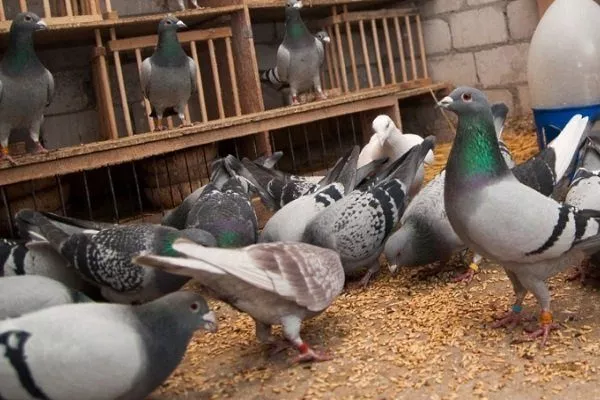
As for B vitamins, pigeons get them from the grain that predominates in their winter diet, so they are unlikely to encounter a deficiency.
Of course, it's equally important to give birds mineral supplements during the winter. These can be purchased or prepared at home. Here's the optimal composition of a comprehensive supplement:
- 4 parts of crushed red brick (brick chips);
- 2 parts crushed old plaster;
- 1 part river sand;
- 1 part crushed eggshell;
- 1 part meat and bone meal.
All ingredients should be mixed and covered with a 2% salt solution. This mixture should be given to the pigeons as a mineral supplement. Chalk, sulfur, topsoil, crushed lime, and gravel can also be used for the same purpose. Nettle, pine needle, or berry-based infusions are also beneficial. These can be given as drinking water or used in making mash.
Pigeons' feathers suffer from cold air, becoming less soft and fluffy. To strengthen them, add flax and rapeseed to their diet. The daily requirement is 4 g.
Number of feedings
The feeding schedule also depends on the season. In summer, feeding is three times a day, while in winter it's twice a day. Typically, the first feeding is at 9:00 AM, and the second at 8:00 PM. The evening portion should be supplemented with a vitamin and mineral mixture, and its composition should be stronger than in the summer, as in colder months, birds lack access to fresh grass.
Feeding Features for Different Breeds
Feeding of pigeons should also be adjusted depending on their breed:
- Meat breeds, German and other large birds can be fed large grains such as peas and corn.
- In winter, homing pigeons are best fed a grain mixture consisting of oats and barley (4 kg each), as well as lentils and pre-crushed corn (1 kg each). The quantities of the ingredients can be varied, but the ratio must remain the same. This mixture should be fed to the birds at a rate of 35 g per adult.
- Small and short-billed breeds should be fed small grains or cereals.
- Ornamental pigeons should be given no more than 40 g of food per day, as they lead a sedentary terrestrial lifestyle.
- Dutyshey Feed them in moderation to prevent them from overeating.
- Show pigeons should be fed high-oil feeds, such as hempseed, flaxseed, and sunflower seeds. They should also be given sprouted grains and grated or finely chopped vegetables.
If birds are bred for slaughter, the feed rate is higher than 40-50 g per day and is determined individually.
Features of feeding chicks
If chicks are separated from their parents during the cold season, it's crucial to boost their nutrition. The daily requirement is approximately 40 g. They should be fed three times a day: 10 g in the morning, 10 g at noon, and 20 g in the evening. Chicks dislike legumes, but they readily eat wheat, so it can be added to the grain mix. It should also be supplemented with fish oil.
By the time the chick leaves the nest, the diet should be adjusted again, reducing the wheat content and increasing the proportion of protein feed.
Read more about feeding pigeon chicks here.
How to water pigeons in winter?
When temperatures drop below freezing indoors or in aviaries, some recommend filling water bowls with snow instead of water to avoid killing the pigeons. Experienced breeders, however, warn that pigeons should not be given either snow or melted water in winter, as these actions lead to severe hypothermia, which can lead to illness and, in the worst case, death. This rule applies not only to sensitive breeds but also to pigeons accustomed to extreme cold.
There are three ways to solve the problem:
- every 2-3 hours change cold water in drinking bowls to warm water;
- install heated drinkers in the dovecote;
- Several times a day, pour small amounts of water into the drinking bowls so that the birds have enough water for 30-60 minutes.
It's worth noting that hypothermia will be less of a concern if the pigeon house is insulated and the outside temperature remains above -20°C. In any case, remember that the water temperature in the drinking bowls should not fall below +8°C.
After the thaw, the pigeons need to be visited every day, making sure that the water in the drinking bowls does not freeze and that the snow in the bowls does not harden.
Preparing for the breeding period
During the winter, birds of different sexes should be kept separate to prevent them from wasting energy on early egg-laying. Meanwhile, this is an excellent time to use paper or a special pigeon breeder's diary to identify pairs that can produce chicks closest to the breed standard. When doing so, consider the following recommendations:
- Don't keep only top-quality birds for breeding, as high-quality offspring can also be obtained from less-than-perfect pigeons. Moreover, sometimes even almost perfect chicks can be quite unsightly.
- It is not possible to breed pigeons with the same defects that are unacceptable according to the standard, since in the future the offspring of the couple will be affected by the defect.
- Unless absolutely necessary, you should not select a partner consisting of close relatives.
- There is no need to focus on the bird's appearance: care in incubating and feeding chicks, orientation in the area - all these characteristics are inherited.
- If you don't have a suitable mate, you can look for a suitable bird among fellow pigeon breeders. However, new birds shouldn't be introduced into the coop immediately, as this is unsafe. They should initially be quarantined, kept separately from the rest of the pigeons for a period of time. Their condition should be monitored, and if possible, their droppings should be submitted to a laboratory for analysis. You can also introduce low-grade young birds to them. If a bird is sick, it will definitely show.
- It's best not to buy aviary-raised pigeons, as they are bred behind bars year-round, losing their ability to fly in circles and navigate. While they're indistinguishable from flighted birds in the cage, outside it's obvious.
Urban pigeons live 3 times less than domestic ones and also suffer more often various diseasesHowever, even if the bird is kept in comfortable conditions, special care must be given in winter to ensure it survives the cold season without any problems and is prepared for the breeding season.