
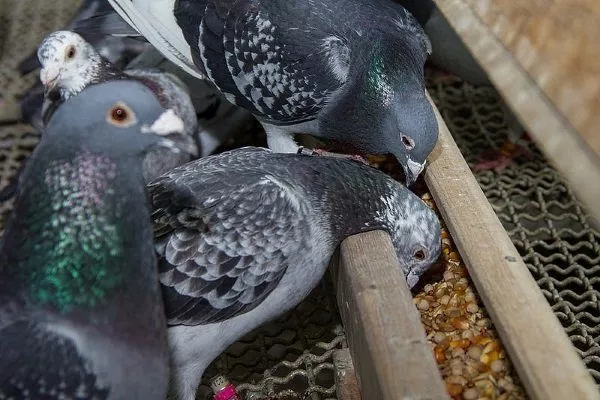
Bird feeding directly impacts their lifespan. While outdoor pigeons live an average of 5 years, captive pigeons can live up to 15-20 years. Therefore, they need a balanced and varied diet, taking into account the characteristics of each breed and the activity level of the birds. Let's explore the differences between the diets of captive and outdoor pigeons.
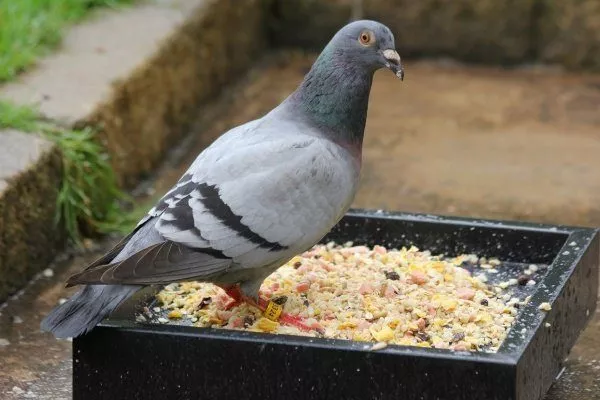
What do pigeons eat in the wild?
| Name | Life expectancy | Diet | Activity |
|---|---|---|---|
| Street pigeon | 5 years | Plant seeds, cereals, greens, insects | High |
| Domestic pigeon | 15-20 years | Grain mix, legumes, greens | Moderate |
Street birds forage for their own food. Typically, their diet consists of:
- plant seeds;
- cereals (rice, buckwheat, barley, millet);
- green;
- insects.
- ✓ Take into account seasonal changes in pigeon activity to adjust the diet.
- ✓ Provide access to clean water, especially during hot periods, to prevent dehydration.
Pigeons often settle in large cities, where it's quite difficult for them to find food. In the fall and summer, these birds can still feed on grass, seeds, and grains of various plants. However, flowers and grass are often mown in cities, so the birds don't get this food either. Furthermore, they spend a lot of time foraging for it. Meanwhile, in winter, things are even more challenging, as many food sources are completely hidden under a layer of snow.
What do pigeons eat when they don't have access to seeds, greens, and other natural food? In this case, they settle in areas where people feed them. Their diet includes large quantities of:
- bakery products;
- sunflower seeds;
- food waste near garbage bins.
However, this is not the right diet for birds. Although pigeons eagerly eat seeds, bread crumbs, and even scraps, they are harming themselves because such food is poorly digested in their stomachs due to the specific enzyme content and the speed at which food particles are processed.
An unbalanced diet reduces the average lifespan of street pigeons by three times: their biological age is 13-15 years, but on the street they rarely live longer than 6 years, as they die from gastrointestinal pathologies.
What to give to street pigeons?
Many city dwellers enjoy feeding pigeons. They also readily eat almost anything humans give them. To avoid harming these birds, it's important to at least have a basic understanding of their diet. For example, consider the following:
- Pigeons have a fairly small stomach capacity, so they need to be fed frequently, but in small portions;
- To ensure that birds can quickly digest the food they eat, they should not be overfed or force-fed;
- Birds need to be given food that they can crush with their beaks, since they can choke when swallowing solid food;
- If possible, birds should be given a variety of vitamin and mineral supplements to help balance their outdoor diet.
Given these rules, it's clear that pigeons shouldn't be fed scraps from the human table. They should be fed the following foods:
- cereals, such as barley;
- cereals;
- beans;
- yeast;
- unroasted seeds.
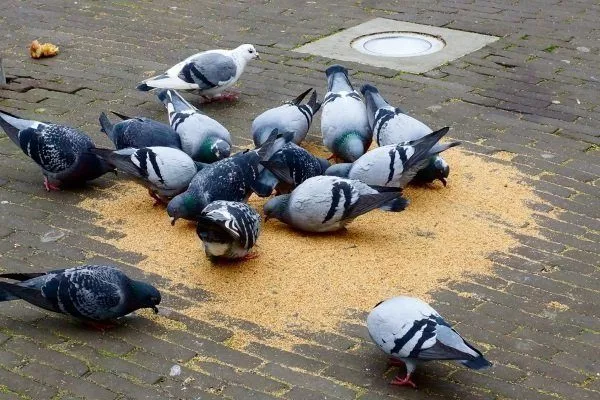
Ideally, pigeons should be given special food from a pet store that contains all the necessary microelements for birds.
Feeding poultry
| Name | Protein content | Fat content | Carbohydrate content |
|---|---|---|---|
| Wheat | 12% | 2% | 75% |
| Barley | 10% | 2% | 73% |
| Corn | 9% | 4% | 74% |
| Oats | 13% | 7% | 66% |
| Peas | 23% | 1% | 60% |
| Lentils | 25% | 1% | 60% |
The diet of domestic pigeons is often varied, as it consists of various crops:
| Culture | Representatives |
| Cereal grains | wheat |
| corn | |
| barley | |
| millet | |
| oats | |
| rice | |
| buckwheat | |
| Legumes | peas |
| vetch | |
| lentils | |
| beans | |
| beans | |
| Oilseeds | sunflower |
| hemp | |
| flax | |
| repsa | |
| rapeseed | |
| Other seeds | weed seeds |
| Root crops and tubers | potato |
| carrot | |
| onion | |
| Green | cabbage |
| salad | |
| spinach | |
| sorrel |
To ensure a balanced diet, it's important to carefully plan the menu. The main food is a grain mix, which can be purchased at any pet store or prepared at home. Here's the optimal mix composition:
- oats – 50%;
- barley – 30%;
- pearl barley – 10%;
- millet – 10%.
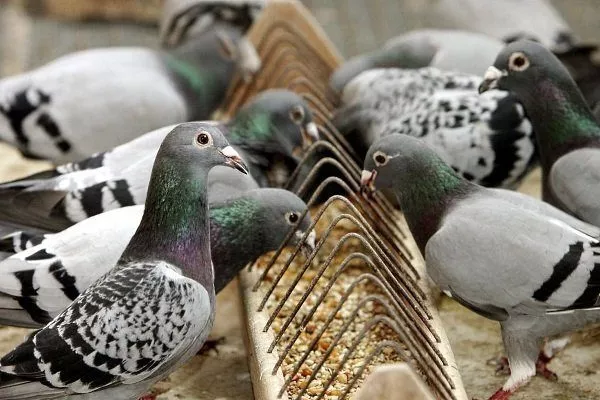
Millet is a grain that should be given to pigeons with great caution, as it can be toxic to them.
When feeding pigeons, you should also consider the following recommendations:
- Wheat should be fed in small quantities, as it can lead to obesity in birds. Its optimal proportion in the daily diet is about 30%. The rest comes from other grains and legumes.
- The bird's daily diet should include succulent food, such as grass. This can be collected from nearby lawns or grown locally.
- Birds can be given granulated feed, which contains a full range of nutrients and microelements.
- Porridges are allowed in the birds' diet. Oatmeal and barley porridges are the healthiest. They can also be given rice from time to time.
- Pigeons can be regularly given mixed feed, which consists of vegetables and grains.
Pigeons should be fed only clean feed. It should be stored in a dry place to prevent mold growth. For example, keeping feed in the basement is prohibited.
Feeding for pigeons
To ensure pigeons feel well, receive all the necessary micronutrients, and have a healthy appetite, they should be given vitamin and mineral supplements. The optimal proportion of these in their daily diet is 5-7%. Special commercial supplements for adding to drinking water, as well as dry supplements for adding to feed, are available commercially. If special vitamins for pigeons are unavailable, premixes for chickens can be used.
Supplements for pigeons should include the following elements:
- calcium;
- phosphorus;
- iodine;
- copper;
- manganese;
- cobalt;
- potassium;
- sodium;
- zinc.
The listed elements are found in certain foods that may seem inedible to inexperienced pet owners. These include:
- slaked lime;
- gravel;
- river sand;
- sulfur;
- table salt;
- nettle flour;
- caraway;
- clay;
- Earth.
These ingredients don't have to be included in the bird's diet all at once. They should be introduced periodically, three to four at a time. Here's an example supplement:
- red brick – 4 g;
- old plaster – 2 g;
- eggshell – 1 g;
- river sand – 1 g;
- meat and bone meal – 1 g.
All ingredients should be crushed and mixed with a salt solution (20 g per 1 liter of water). Depending on the number of pigeons in the flock, the dosage of the ingredients can be adjusted, but the appropriate proportions must be maintained.
This video shows an example of making a mineral supplement for pigeons:
What shouldn't you give to pigeons?
Both street and domestic pigeons should not be given the following food:
- Bakery productsThey have a negative impact on the bird's body because they are poorly digested in the stomach and suppress their appetite without providing any energy. Black bread, in particular, should not be fed to pigeons. It swells in the bird's intestines and can cause intestinal obstruction or volvulus. Rye bread, on the other hand, begins to ferment due to its high acid content, causing dysbiosis.
- Roasted sunflower seedsTheir consumption leads to the development of liver disease. It is recommended to feed pigeons only raw seeds.
- Salt in increased quantitiesA pigeon's excretory system is unable to process large amounts of salt, so it accumulates in its body. This can ultimately lead to the bird's death.
- StarchLike salt, it is poorly digested in the bird's stomach.
- Fish, meat and meat productsThe bird's body is unable to digest such products, which can lead to its death.
- Milk and dairy productsTheir use can cause the development of dysbacteriosis.
Pigeons should not be given spoiled, moldy or expired food.
How often should you feed pigeons?
Birds are fed according to a set schedule, and the proportions and quantity of food are determined by the breeder based on the birds' breed and overall well-being. The feeding schedule is adjusted according to the season:
- SummerDuring warm weather, pigeons often feed three times a day. If the dovecote is open, the birds fly freely across the meadows during the day and forage for food on their own. At home, they only need a light supplemental feeding. The first feeding should be at 8:00 AM, the second at 1:00 PM, and the third at 6:00 PM.
- WinterDuring cold weather, the situation changes somewhat—pigeons are fed twice a day. A vitamin and mineral supplement should be given with the second portion, and its composition should be more concentrated than in summer, as pigeons don't get fresh grass in winter and need to compensate for this deficiency. Since winter days are short, pigeons don't need a larger ration. Therefore, feeding at 10:00 AM and 5:00 PM can be limited.
If you have pigeons of different breeds in your coop, they should be fed separately. Large birds eat food faster than short-billed ones. Therefore, if you feed them together, some of the flock will go hungry. Furthermore, it's better to use crushed grain for smaller breeds.
Features of feeding at different periods
Pigeons' diets need to be adjusted depending on both the season and their developmental stage. An example of what foods and in what proportions to feed birds is provided in the table:
| Products | Feeding periods | ||||||
| Winter | Spring-summer | Period of active growth | Mating period | Moulting period | Competition period | During transportation | |
| Wheat | - | 10% | 20% | - | 10% | 5% | 50% |
| Barley | 40% | 20% | 20% | 20% | 10% | 20% | - |
| Corn | 10% | 10% | 10% | 10% | 10% | 10% | 20% |
| Oatmeal | 40% | - | - | 20% | 20% | - | - |
| Lentils | 10% | - | - | - | 10% | - | - |
| Millet | - | 20% | 30% | 20% | 10% | 10% | - |
| Peas | - | 20% | 10% | 15% | 20% | 35% | - |
| Vetch | - | 10% | 10% | 15% | 10% | 10% | 30% |
| Oats | - | 10% | - | - | - | 10% | - |
Summer and winter menu
The diet of pigeons varies depending on the time of year, and this applies to both domestic and outdoor individuals.
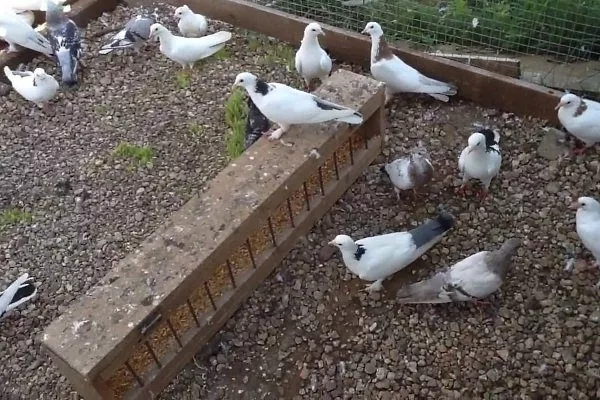
During the summer, birds' activity increases significantly as they fly a lot, which requires a lot of energy. After flights, pigeons develop an appetite as they need to recuperate. To achieve this, their summer diet should include:
- buckwheat;
- second type of pea and yellow field pea;
- vika;
- millet;
- rapeseed;
- sorghum.
During the winter, protein intake should be reduced to prevent premature egg laying. This requires eliminating legumes (beans and peas) from the diet and introducing oats and barley instead. Feeders should be regularly replenished with grains and cereals to ensure each bird receives 40 grams of feed per day. The optimal daily ration might look like this:
- barley – 40%;
- oats – 40%;
- ground corn – 10%;
- lentils – 10%.
During cold winter months, pigeons can also be fed mixed grain porridge, cooked in slightly salted water. It's also recommended to replace the grain mixtures once a day with a mash made from wheat bran and boiled potatoes.
You can learn more about winter feeding of pigeons from this article.
To promote a fast metabolism and maintain optimal body temperature, pigeons must be given supplementary food in winter, which can include dried herbs (dill, parsley) or grated vegetables (pumpkin, carrots).
In winter, pigeon feathers will remain soft and fluffy if you add flax and rapeseed seeds to their diet – 4 g per day.
Feeding during the mating and breeding period
During the breeding season, pigeons require food rich in protein and minerals, as a deficiency leads to reduced reproductive performance and impacts the health of their offspring. For example, vitamin A affects egg-laying rates, so a deficiency directly impacts fertility. A vitamin B2 deficiency can lead to developmental abnormalities in the embryo.
All the essential nutrients pigeons need during this period are found in legumes. This type of feed satisfies the bird's body in a short period of time. Here are some examples of daily diets:
- Example 1. Peas, millet, barley – 20%; wheat, vetch, corn, oats - 10% each.
- Example 2Vetch, corn – 20% each; peas, wheat – 15% each; millet, barley, oilseeds – 10% each.
Regardless of the specific diet, it should be taken into account that the daily amount of feed is 50-60 g per head.
During the breeding season, pigeons should also be given fish oil, adding it to their feed in cycles – week after week. Multivitamins or Trivit can also be used for this purpose.
Feeding during the molting period
This period is especially energy-intensive for birds, so their diet should be as nutritious as possible without stimulating sexual arousal. Furthermore, to promote active feather growth, their diet should include foods rich in oils. These include various seeds:
- hemp;
- rapeseed;
- flax;
- sunflower;
- cake.
They should receive 10% of the daily feed volume, the norm of which is about 50 g. The rest of the diet is made up of a feed mixture:
- peas – 20%;
- barley – 20%;
- oats – 20%;
- millet – 10%;
- Wiki – 10%;
- corn – 10%;
- wheat – 10%.
If the birds are eating poorly during the feathering period, you can add black pepper to their feed (1-2 grains per day). This will help restore their appetite.
What do chicks eat?
Both in the wild and at home, chicks require constant parental care during their first days of life. Adult birds feed their young crop milk, which contains all the necessary nutrients, vitamins, and minerals.
If a newborn pigeon chick is left without its parents and cannot receive crop milk, it needs to be given special compensatory nutrition to prevent its death. A person can feed the chick a mixture of egg yolk and milk using a syringe and a thin rubber tube inserted into the esophagus. After just one week, the pigeon chick can be given a liquid milk porridge made from peas or lentils. It needs to be fed every 7-8 hours.
For more information on how to feed a pigeon chick at home, you can read Here.
When the chicks reach 4-6 weeks of age, they transition to adult food. Their diet gradually becomes dominated by softened grain. In the wild, both the male and female feed the chicks. Even if one parent dies, the other does everything necessary to raise the offspring. For example, it teaches the chicks to fly and forage for food independently.
If the chicks are kept at home and separated from their parents, the breeder must provide them with enhanced nutrition. The chicks' diet should be adjusted as they mature:
- Initially, feed the chicks with moistened wheat grains, to which it is advisable to add a little fish oil or Trivitamin.
- To increase the nutritional value of the feed and ensure active development, chicks should be fed a high protein diet. For this purpose, raw chicken egg whites mixed with corn or pea flour should be included in the diet. It's a good idea to add a few grains of sand to this feed, as this will help improve digestive function.
As a supplement to the main diet, chicks can be given special pressed food with a high protein content.
- Next, introduce legumes into the diet. Keep in mind that pigeons eat them less readily than wheat, which should be the predominant food in their diet.
- Once the chicks have fully mastered this food, all other nutritional elements of adult birds can be introduced into their diet.
- Start by feeding soaked wheat grains with added fish oil.
- Introduce legumes into your diet gradually, starting with small amounts.
- At one month of age, switch to a complete feed mixture with a higher protein content.
Video review of artificial feeding of pigeon chicks:
Month-old pigeons can now be fed a complete feed mixture. Here's an approximate list of its ingredients:
- millet – 30%;
- wheat – 20%;
- barley – 20%;
- peas – 10%;
- vetch – 10%;
- corn – 10%.
It's advisable to moisten this mixture with fish oil. Meanwhile, during the flight period, the wheat intake should be reduced by half, increasing the amount of peas and vetch.
Chicks need to be fed three times a day. A quarter of the daily allowance should be given for breakfast and lunch, and the remaining two quarters for dinner. Keep in mind that chicks should not be given more than 40 grams of food per day.
Watering pigeons
Street birds often drink dirty water from puddles and fountains, which can lead to dangerous diseases. This, of course, affects not only their quality of life but also their lifespan.
To protect domestic pigeons from such consequences, they should be given only clean water. In summer, the temperature should be around 12-15 degrees Celsius, and in winter, at least 8 degrees Celsius. On average, each bird should receive about 50-60 ml of water per day. A lack of water negatively impacts the birds' health. Therefore, it's important to ensure that their drinking bowls are always stocked with fresh, clean water.
Pigeons are unfussy eaters, so they'll eat almost anything they come across. However, improper nutrition can impact their lifespan, often leading to digestive problems and serious illnesses. To prevent premature death, it's important to provide the right food and water.