
Everyone is familiar with pigeons. Breeding these birds was fashionable in the Soviet Union. Today, breeders have different goals and more opportunities. Therefore, breeding these birds often becomes a lifelong pursuit, bringing pleasure and profit.
Requirements for keeping birds
To ensure that pigeon breeding is enjoyable and results are pleasing, you should approach the entire process responsibly:
- build a dovecote and aviary that is comfortable for birds;
- prepare balanced feed, mineral supplements and vitamins;
- provide ongoing care and monitoring of the birds' condition.
These are the fundamental rules for a breeder. Neglecting even one will inevitably lead to the death of the pigeons.
Preparing the pigeon house
Initially, you can get by without a specially constructed structure for the birds. Any warm room where the temperature in winter does not drop below 10°C will do. It's better to be on the safe side and consider a heating system. Enclose the dovecote with rigid mesh to prevent rodents and other animals from entering and harming the flock. The mesh will also prevent the birds from escaping.
- ✓ The minimum height of the decking from the floor must be at least 0.3 m to prevent dampness.
- ✓ Lighting should be subdued, simulating the natural twilight preferred by pigeons.
To prevent dampness from wafting up from the floor, install a platform about 0.3 m above the ground. Make sure the birds aren't disturbed by drafts. Keep the lighting in the room moderate—pigeons prefer dim light. Build perches and perches, which can be painted in different colors.
Place boxes for each bird along the walls, securing them with the bottoms against the wall. The boxes should be at least 20 cm long and 40 cm high. Keep in mind that the enclosure needs to be spacious.
Be sure to set up a quarantine compartment in your pigeon coop for sick birds. This is also where you'll keep new pigeons for a week before rehoming them.
Sanitation standards
The dovecote should be located away from sewers, cesspools, septic tanks, and piggeries. Otherwise, the birds will become sick frequently. Regularly clean the room and the boxes and cages. Treat the area with pesticides and antiseptics. Make sure the dovecote is free of rodents.
How to keep pigeons in a house/apartment is described Here.
Feeding
Pigeons need a certain amount of balanced food. Don't overfeed them, but don't skimp on it either.
There are approximate nutritional standards for birds.
| Type of food | Percentage ratio |
| Cereals | no more than 70 |
| Legumes | no more than 40 |
| Plant-based green foods | no more than 25 |
| Oilseeds | no more than 5 |
| Mineral supplements | no more than 5 |
| Vitamin complex | no more than 5 |
| Vegetables and root vegetables | no more than 5 |
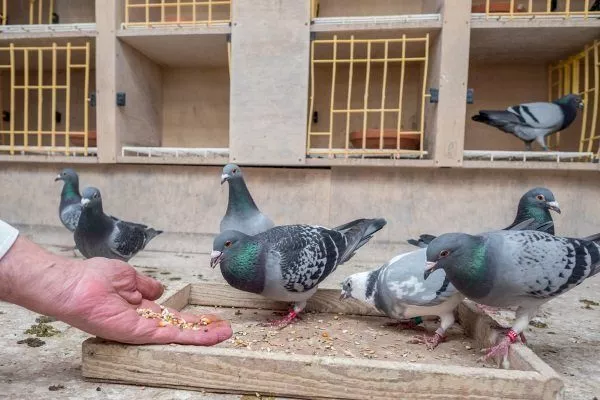
When formulating a diet, it's a good idea to consult a veterinarian. They can help determine optimal feeding rates, taking into account the pigeons' sex, age, breed, and condition. It's best to feed your birds with ready-made grain mixes and compound feed, supplementing their diet with fruits, cooked vegetables, crushed chalk, and shells.
A container of clean drinking water for the birds should be kept in the aviary. It should be changed daily. For preventative purposes, it is recommended to use a decoction of chamomile, thyme, and string.
Avoid using ice or snow as a water source for pigeons. This can lead to hypothermia and illness.
Winter maintenance
During the winter, it's important to minimize protein when feeding pigeons. This is necessary to reduce sexual activity and prevent the birds from producing offspring during the cold season. The chicks simply won't survive in such conditions. To achieve this, exclude the following from the diet:
- wheat;
- legumes;
- bread and bakery products;
- dairy and fermented milk products, cheese;
- citrus;
- fats;
- meat and fish products.
To compensate for the lack of grains and legumes, increase the proportion of oats and barley in your diet.
- Reduce the amount of protein in your diet a month before the onset of cold weather.
- Increase the proportion of oats and barley in the diet to compensate for the lack of grains and legumes.
- Check the heating system of the pigeon house before the onset of frost.
We recommend reading the article about How to keep and feed pigeons in winter.
Summer maintenance
Summer is the season for mating and breeding. Pigeons' diets undergo significant changes—their protein and mineral content increases to stimulate sexual activity. Legumes should account for up to 40% of their total diet during this period. They contain the highest amount of protein. Peas are especially beneficial.
Which breed of pigeons should I choose for breeding?
To choose a pigeon breed, it is important to determine the ultimate goal of the breeding process itself.
Meat breeds of pigeons
| Name | Weight of an adult | Life expectancy | Breeding Features |
|---|---|---|---|
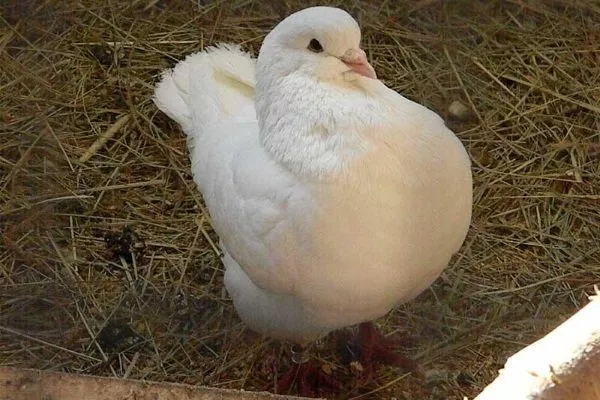
| King | 800-1000 g | 10 years | Requires a spacious enclosure |
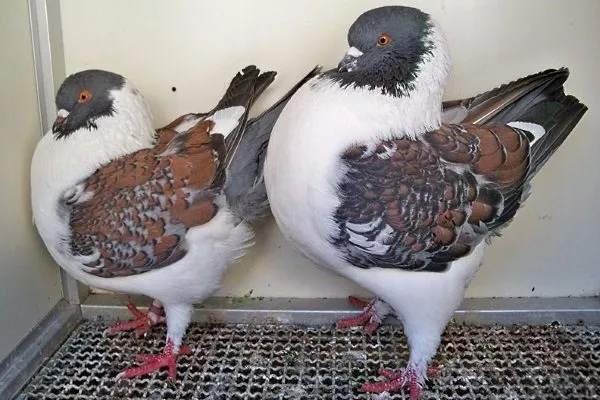
| English Modena | 700-900 g | 8 years | Resistant to diseases |
These birds are bred for their meat, which is dietary but superior in nutritional value to chicken. Meat pigeon breeds larger, more massive compared to flying and decorative specimens.
This category includes the following breeds:
- King;
- English Modena and others.
King pigeon breed
English Modena pigeon breed
Ornamental breeds
| Name | Size | Color | Flight Features |
|---|---|---|---|
| Saxon priest | Average | White with black spots | High flight |
| Curly | Large | Multicolored | Decorative flight |
| Peacocks | Average | White | Low flight |
These pigeons are exhibited, used as decorations for events, and used in circus acts. Birds of this breed are sold for quite a good price. They don't require any special care.
Ornamental breeds:
- Saxon priest;
- Curly;
- Peacocks and others.
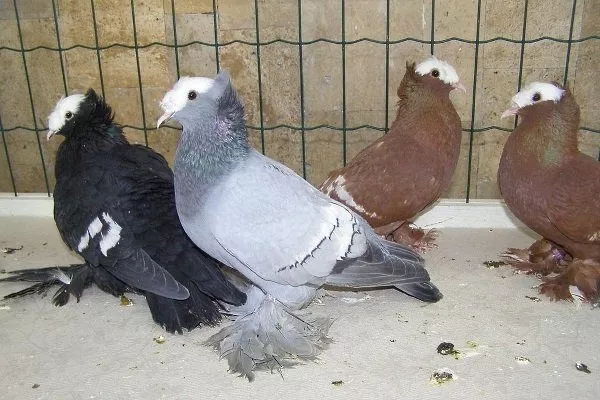
Saxon Priest breed
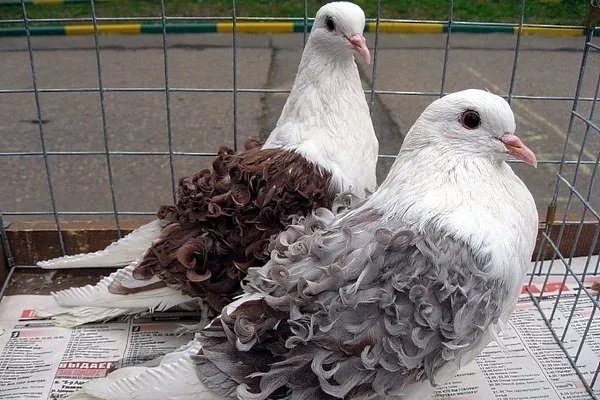
Curly breed
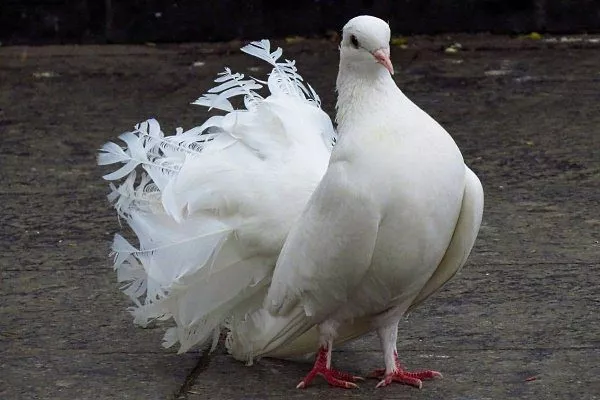
Peacock breed
Sporting breeds
| Name | Flight speed | Orientation in space | Endurance |
|---|---|---|---|
| English pigeon | High | Excellent | High |
| Belgian Postal Service | Very high | Excellent | Very high |
| Russian pigeon | Average | Good | Average |
Pigeons of sport breeds participate in competitive flying among their own kind, have excellent spatial orientation, and can find their way back from various distances. Keeping such birds requires careful attention and responsibility.
This type of rocks includes:
- English pigeon;
- Belgian postal;
- Russian pigeon, etc.
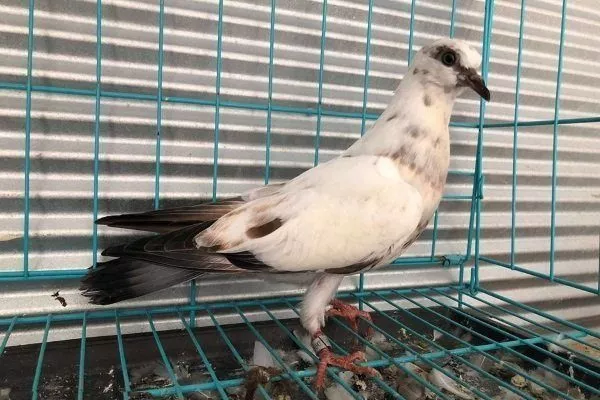
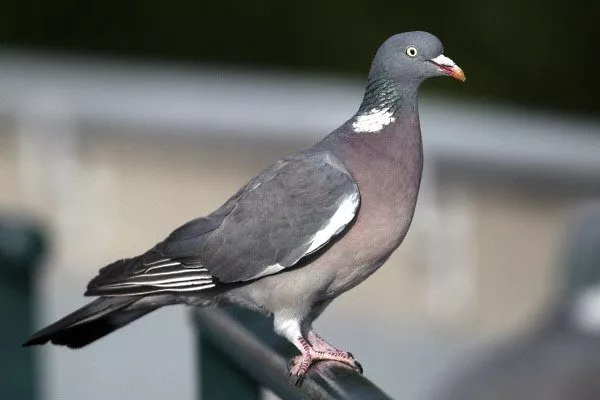
English pigeon
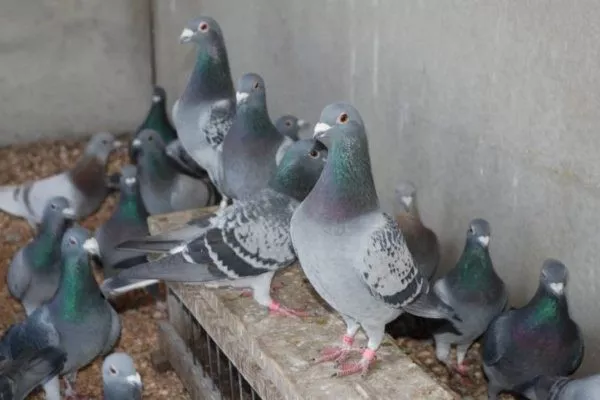
Belgian Homing Pigeon
Russian pigeon
Flight breeds
| Name | Flight type | Flight altitude | Peculiarities |
|---|---|---|---|
| Berlin Short-billed Tumbler | Rotating | High | Acrobatic stunts |
| German monk | High-flying | Very tall | Rapid climb |
| Nikolaevsky dove | High-flying | Very tall | Long flight |
They can be high-flying or rotating, which emphasizes the character and style of their flight. This breed was chosen for mailing pigeons.
This type includes the following breeds:
- Berlin Short-billed Tumbler;
- German monk;
- Nikolaevsky dove and others.
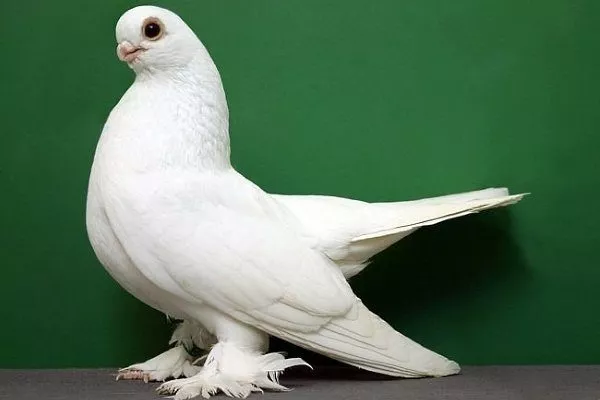
Berlin Short-billed Tumbler breed
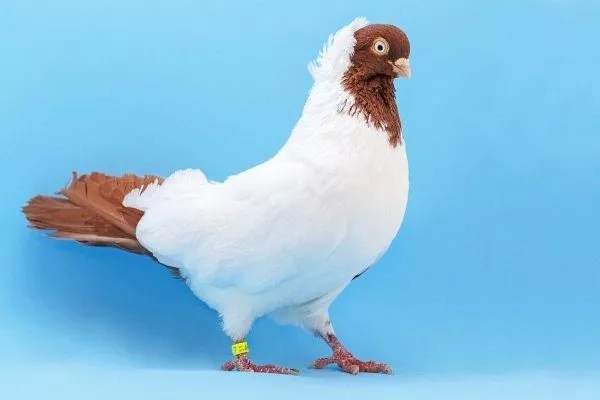
German Monk breed
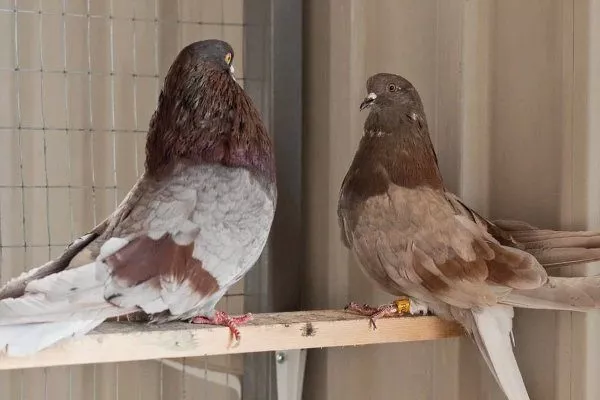
Nikolaev pigeon breed
Setting up an enclosure for pairs
The enclosure should be large enough to prevent pairs from interfering with each other or fighting over territory. A good rule of thumb is that one pair requires approximately 1 square meter of space.
It's important to prepare nests for pairs. These can be made from boxes, baskets, and other suitable containers. A simple craft is enough to create the perfect nest. To do this, assemble a square frame from wooden elements. A lattice bottom is recommended for ventilation. Line the inside with straw or hay to prevent eggs from breaking or freezing. Paint each box a different color. This will help the birds choose their nest and remember the way to it. The floor of the dovecote should also be covered with straw, hay, and a few small twigs and leaves.
If you have several pairs, hang the nests as far apart as possible and at least 50 cm above the floor. Pigeons value intimacy and a calm environment during this period.
There should be several more nests in the dovecote than there are pairs of pigeons in order to minimize competition between the birds.
If the pigeons have chosen a box for themselves, it must not be moved!
Selecting a breeding pair
To continue the breeding process, you should select healthy, mature birds. They should be from different litters of the same breed. Avoid young birds. Their reproductive system is not yet fully developed, so a pair can produce a high percentage of unfertilized eggs or weak, sickly offspring. The optimal age for birds is 3-6 years. After this age, reproductive success declines.
Types of mating
It's important for breeders to ensure the mating process occurs as quickly as possible. This determines the timing of the pigeons' hatching. There are two types of mating:
- ForcedIn this case, the pairing process takes place under strict human supervision. The breeder selects the female and male. By leaving them in the same cage for a day, he allows the birds to develop affection for each other. If this happens and a pair is formed, the pigeons in the flock behave differently. When released among the other birds, they will spend most of their time together, showing signs of affection to their partner.
- NaturalThis type of pigeon mating has a higher chance of producing chicks quickly. Mating often occurs on the first try. As in the wild, the male chooses the object of his affection and begins active courtship. Puffing up his feathers and inflating his crop to appear larger, he circles the female, emitting characteristic sounds. If the female accepts his advances, she crouches and bows to the male. The pair begin to coo and treat each other tenderly.
Nesting
After mating, the nesting period begins. The pair builds a nest in prepared boxes, using straw and twigs from the litter on the dovecote floor. The female does the actual construction, while the male merely brings her the building materials. Once the nest is complete, the female insulates it with her down. The preparation and furnishing of the box can take anywhere from 7 to 14 days.
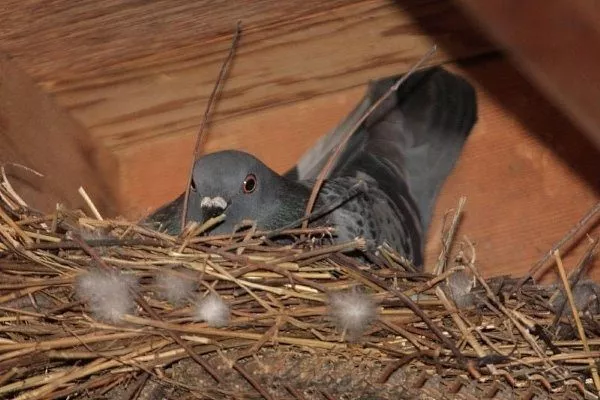
Incubation period
Once the nest is complete, the female lays her eggs. This can take up to three days. During this time, the female becomes quiet and does not leave the nest. Sometimes, after laying the first egg, the dove leaves the nest and returns only when the second egg hatches. The hatching of the chicks occurs within a couple of days.
Incubation takes 20 days. To ensure successful incubation, optimize the conditions by adjusting the temperature and lighting in the dovecote.
During this crucial period for the pair, the male assists the female. Twice a day, he replaces her on the clutch so the female can go out to feed. The female constantly monitors the eggs, turning them periodically. This is necessary to ensure they are heated evenly.
Two to three days before the chicks are expected to hatch, spray the bottom of the nest with warm water. The moisture will reduce the dryness of the shell, which will help the chicks break through the shell during hatching. Remove any debris and accumulated droppings from the box.
Checking eggs and hatched chicks
For the first 5-7 days after the dove has laid eggs, it is better not to disturb her.
Around day 8-10, slowly, so as not to disturb the pigeons, check the eggs for an embryo. This can be done with an ovoscope or simply by holding the egg up to a very bright light. If the egg is fertile, you'll see a dark spot with a network of diverging blood vessels. This is the embryo. If the egg is clear and spotless, remove it and replace it with a dummy egg.
The chicks are born weak, featherless, and blind. The pair warms them and feeds them for the first time a couple of hours later. If the first feeding is delayed for more than a day, the chicks will die.
The breeder should check the health of the hatched chick. This is determined by the condition of the yolk sac. If it is not fully retracted, the chick dies.
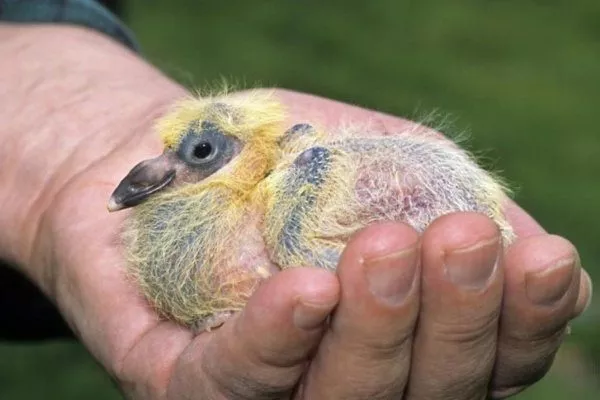
Inspection of chicks for defects
When the offspring hatch, it's a good idea to check them for defects. These can range from visible physical deformities to internal organ problems, such as bluish skin, abnormal heart rhythms, and so on. If any developmental abnormalities are evident, remove the chick from the nest. The second chick will receive more nutrition and a better chance of maturing. Such measures are necessary to maintain the future health of the flock and preserve the purity of the breed.
If a pair of pigeons has already produced more than one litter of defective chicks, then do not allow them to nest again.
Feeding hatched pigeons
For the first 10-12 days after birth, the mother feeds her chicks with milk secreted by special glands in her crop. By the second week, the mother pigeon begins to leave a few grains in the milk to soak and soften them. This gradually acclimates the chicks to solid food. Prolonged crop feeding has a positive effect on the health of the offspring.
If the parents die or abandon the pigeons, try placing them with another pair or feed the chicks yourselfWarmed egg yolk can be used instead of crop milk. The chicks will need to be fed six times a day. This can be easily done with a syringe and pipette. When the chick is full, its crop will be swollen and firm.
Starting at 14 days of age, add crushed grain and vegetables to their diet. By three months, the young are transitioned to the regular flock diet.
Breeding pigeons is a challenging, yet rewarding, activity. To achieve their goals, a pigeon breeder must organize and implement a number of care and breeding measures. Knowledge and experience will be instrumental in this.