
Breeding pigeons requires specialized knowledge. An inexperienced breeder can make serious mistakes that can lead to the loss of both the breed's qualities and an entire line of offspring. The article below describes the specifics of breeding, important rules for choosing a mate, and much more.
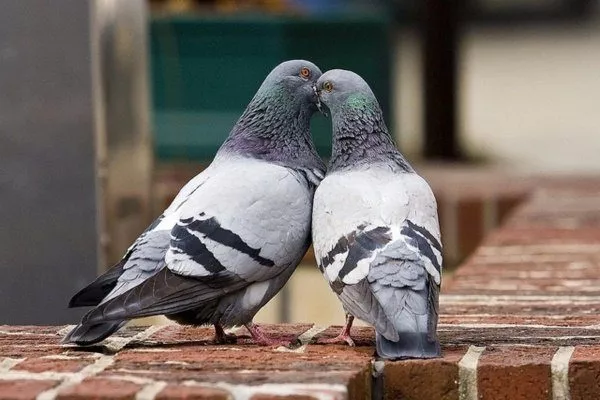
How to distinguish a pigeon from a dove?
To breed pigeons, the first thing you need to know is distinguish the sex of birdsThere are several ways to distinguish a pigeon from a dove within the same species:
- Appearance.A male pigeon is larger than a female dove, with a large, round head and a high forehead, and a short neck with a thick base. Female pigeons are graceful, with more expressive eyes and a thinner bill base. In ornamental bird breeds, the male is often smaller than the female. Therefore, such sexual differentiation characteristics are not 100% reliable. A male pigeon's plumage is often duller than that of a female dove.
- Width of the pelvic bones. The male's pelvis has a narrower distance between the bones, which practically meet, while in the female, the distance between them is 1.5-2 cm. This distinguishing feature does not work for young birds, i.e., birds that have not yet laid eggs, and individuals with a calcium deficiency (their structure may be deformed).
- Bird behavior:
- When two males are placed in a cage, they will become aggressive towards each other. This is due to competition and dominance over territory.
- If there are two females in a cage, they will most often begin to coo, living peacefully together.
- If birds of different sexes are seated, the male dove will begin active courtship: spreading its tail feathers, puffing out its crop, stretching its neck, and pursuing the female, attempting to embrace her. The female's behavior is calmer and more measured.
If she likes the dove, she accepts his advances. Her behavior begins with bows toward the dove, head nods, and her feathers fluff up, highlighting its beauty. - When you lift the bird by the wings and stroke its chest, the male tucks in his paws.
- Traditional methods It is recommended to distinguish the sexes of birds by their vocal sounds. It is believed that the male's voice is louder and rougher than that of the female.
When using sex recognition methods, the nervous state of the birds, breed, and age should be taken into account.
Determining the sex of chicks is somewhat more difficult, as age-related habits have not yet developed. However, in some breeds, the signs are quite clear. Individuals are clearly differentiated by feather length and color.
By using the same sexing methods across their birds, breeders can clearly identify differences between individuals. This is important for properly managing the flock's size and reproductive capacity.
How do you know if pigeons are sexually mature?
Pigeons reach sexual maturity six months after hatching. However, this doesn't mean they can begin actively mating at this age. On the contrary, the female should be given another 6-9 months to fully develop all her bodily systems to ensure healthy offspring.
Thus, for natural sexual maturity to coincide with physiological sexual maturity, one to two years must pass. Separating the chicks by sex and raising males separately from females is essential to prevent premature egg laying.
How to choose the right pair?
When choosing pigeons for pairing, consider their temperaments. An active male and a timid female are not a good match. Conversely, a pair of a lively female and a shy male will also fail. Their temperaments should be roughly comparable.
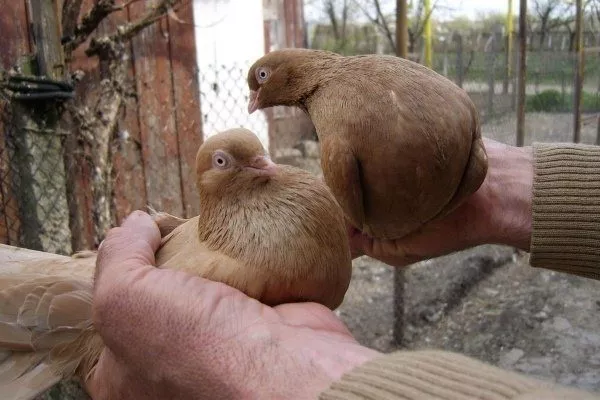
Close relatedness within a pair is undesirable, as are similar developmental defects. Birds from the same brood should be marked.
Age
Pigeons retain their reproductive capacity until they are 12 years old. It's not recommended to pair very young birds or birds over 10 years old. Their chicks are likely to have weakened immune systems and a low survival rate. Furthermore, young hens often lay infertile eggs. And if they do lay eggs with their future offspring, they are unable to hatch them.
It is possible to correctly determine the age of pigeons by:
- Cere. In young animals, it is pink, thin, and delicate. By 5 months, it becomes whiter and thicker.
- The color and condition of the legs. In young specimens, they are smooth and pink. With age, they become rough and red.
- By the eyelid. In adult birds it is white, and in young birds it is almost transparent.
Size and weight
There are no exact weight and size requirements for birds before breeding. However, it's important to follow feeding guidelines to ensure the bird isn't underfed or overfed.
Proper feeding of birds before mating is very important. Each bird requires approximately 50 g of food per day. Don't forget to add minerals in the form of chalk, shells, crushed red brick, and coarse river sand. Include minerals and greens in the diet. Allow the bird to fly a lot.
Don't overfeed your pigeons before mating. This is a pointless measure, not only will it not speed up the process, but will actually create additional problems. Overfed hens often have difficulty laying eggs. Conversely, a skinny dove won't be able to incubate her eggs. Her body isn't strong enough to cover and warm them all. Proper feeding of your birds before mating is crucial.
Mating games
The mating season for pigeons begins in late winter and continues until early spring. In the wild, birds choose their own mates. In captivity, this process can be lengthy. It takes time for the male to assess the female and begin courtship. Due to the pigeons' highly developed sexual instinct, this can sometimes require a long wait.
- ✓ The optimal temperature in the dovecote should be within 10-15°C to stimulate the sexual instinct.
- ✓ The duration of daylight is at least 14 hours to activate reproductive functions.
A male dove shows his affection for a female dove by actively courting her, circling, puffing out his crop, spreading his feathers, and embracing her. Upon acceptance, the female bows and "floats" on her tail. The pair nip at each other's feathers and coo. This means they can expect offspring soon.
Pigeon families often remain together and produce chicks throughout their lives. This is because these birds are monogamous.
But sometimes a pair doesn't form because the birds don't accept each other. Try finding other birds.
Types of mating and their characteristics
Only healthy, young birds of the same breed, but from different litters, are selected for mating. Pigeons are capable of producing high-quality offspring up to 5-6 years old; after that, the chicks become increasingly unhealthy, and the incidence of congenital defects increases.
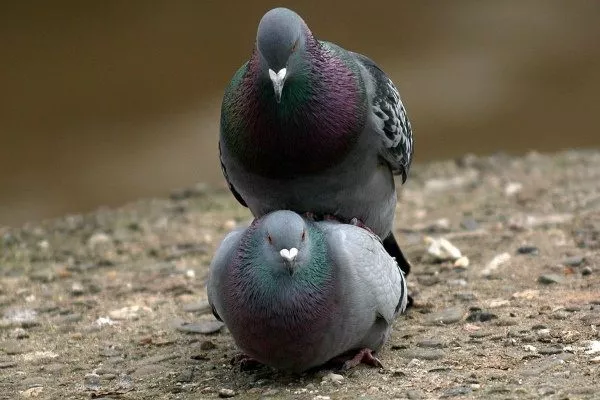
Natural mating
This type of mating occurs when pigeons are free-ranging in the wild, or if the breeder is breeding a single breed of birds. There is no need for a human to select a pair and place them in a common box. The pigeon itself chooses its mate.
Pairs form permanently, and offspring are born quickly. Egg production, fertility, and hatching rates are naturally high. The young are robust.
Forced mating
This method is used to preserve and optimize the breed's qualities. In this type of mating, the breeder selects the pairs. The birds are placed in a closed box overnight and released into the aviary with the other birds the following day.
Young pigeons recognize each other and mate most easily. To determine whether pair bonding has occurred, simply observe the birds. Once they've shown affection and mated, they will begin cooing to each other, showing affection and grooming their partner.
Don't remove the box where mating took place; the birds will likely nest there. If the pair chooses a different location, move the box there.
Nest building
In the wild, wild pigeons build nest frames from branches. This should be taken into account by breeders when creating suitable conditions for egg-laying in the dovecote.
For domestic pigeons, you can use boxes or baskets. They are placed on their sides or attached to the wall upside down, and the floor of the dovecote is covered with dry grass, straw, or leaves. The pair will use these materials to build their nest. The male carries them in his beak, and the female builds the first nest for the chicks. Nesting takes approximately 5-7 days.
Several conditions apply to steam boxes:
- They should be spaced apart. When hanging them on the wall, choose a staggered arrangement. This will help the birds remember the way to their nest.
- It is advisable to paint the boxes in different colors.
- Provide a few more nest boxes than the number of pairs. This will prevent competition and fighting among the pigeons for the boxes.
- Maintaining maximum privacy to create a cozy and intimate atmosphere.
Under no circumstances should you move boxes that are already occupied by birds!
If you have several pairs of pigeons preparing for the brooding period, the nest boxes should be marked or numbered. This makes it easier to keep track of the families and chicks.
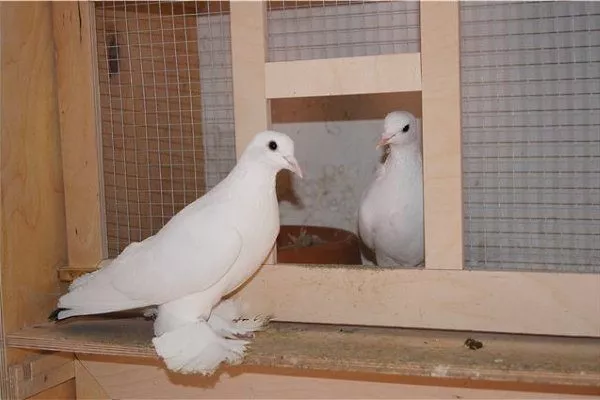
The process of breeding pigeons
This “event” consists of several stages, which are described in more detail below.
Egg laying
Once the nest is ready, 12-15 days after mating, the dove begins laying eggs. This process takes 2-3 days. During this time, the female's behavior changes. They become quiet, rarely leaving the nest.
The female's cloaca swells. After the first egg hatches, the dove may emerge from the nest box and return before the second. However, she may not do so. Thus, the hatching time between chicks is a couple of days.
Hatching eggs
After laying eggs, the incubation period begins, lasting 20 days. For the first nine days, do not disturb the dove. On the tenth day, carefully examine the eggs with an ovoscope for the presence of an embryo. If the egg is fertilized, a dark spot and blood vessels will be visible inside. Fertility rates in mature pairs are high—up to 95%; in young dove colonies, it's around 65%.
The male replaces the female dove in the nest twice a day. This allows the female to satisfy her hunger. During incubation, the female turns the eggs several times to ensure they are evenly heated.
Domestic pigeon hens are very responsible. Broody hens are especially meticulous and attentive when incubating their eggs. To facilitate this process, the breeder can maintain a warm, comfortable light in the loft. Two to three days before the chicks hatch, moisten the eggs with warm water. This will soften the eggshells, preventing dryness, and help the chicks hatch.
If for some reason the chicks do not hatch on time, the pigeon pair leaves the nest.
Caring parents throw the eggshells out of the nest.
Caring for chicks
A newborn chick weighs only 10-20 grams. It is practically naked, blind, with a disproportionately large head and a beak that is enormous compared to its body.
For the first 14 days after hatching, the offspring feed on milk produced in the female's crop. This distinctive yellow secretion has a curd-like consistency. Subsequently, their diet includes grain softened in this way, insects, and plant scraps.
The firstborn chick receives its first food approximately 4 hours after birth, and the second chick receives it 15 hours later. Therefore, their development varies, and the weaker chick often dies.
After three weeks, the chick is already covered with dense plumage, which is replaced by adult feathers during the molt process between 43 and 50 days. After approximately 55 to 60 days, the young flock feeds on its own, foraging for its own food.
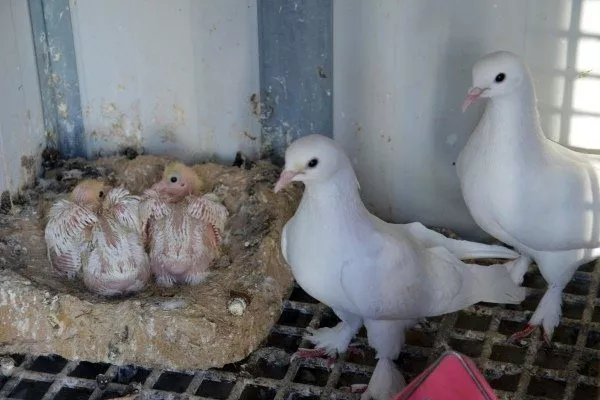
Preparing for pigeon breeding: choosing a breed
Breeding pigeons can have various goals. However, it's essential to approach the process responsibly and prepare for it in advance.
First, familiarize yourself with the breeds and choose the one you want to breed. Pigeons are divided into:
- Wild ones. These pigeons are bred for specific purposes. They require special conditions to maintain them. Accustomed to living in the wild, they find it difficult to cope with life in cages and aviaries.
- Domestic. A highly developed branch of pigeon breeding. The birds are relatively easy to keep and raise, requiring no special conditions. However, there are many pigeon breeds in this group.
According to their intended purpose, breeds are divided into:
- Meat breeds. Pigeon breeding involves raising pigeons for food. These breeds are larger than their ornamental relatives. Pigeon meat is more nutritious and healthier than chicken. These breeds include the Roman Giant, Strasser, French Monden, and others.
- Postal(sports).These pigeons participate in sporting competitions. Breeding these breeds takes a lot of time and requires special attention. Sporting breeds: Russian pigeon, German pigeon, English pigeon, etc.
- Decorative. They are used in circuses, landscape design, exhibitions, weddings, and other celebrations. They are sold and rented. Breeding these pigeons is more difficult, and the costs are higher than for meat breeds. Popular breeds include: German Monk, Peacock, Jacobin, etc.
Knowing these differences, choose your favorite breed, considering your breeding goals, preferred size, and plumage color. Next, prepare the conditions for raising the birds, and you can purchase young birds or pairs.
Breeding a new breed
If you want to develop a new breed through experimentation, you should select pairs of birds of different breeds. All other steps are similar to forced mating. Keeping a diary is essential in this case.
Breeding new pigeon breeds requires specialized knowledge and a wealth of information. It's best to have experience breeding pigeons of the same breed to achieve successful results.
We recommend reading the article about How to breed pigeons correctly.
How many times per season do pigeons produce offspring?
After a month, regardless of whether the chicks have fledged the nest or are still in it, the parents abandon them. The pair takes up a new nest, and the process of laying eggs and incubating the offspring is repeated. Thus, pigeons produce offspring up to four times per season.
So, before starting to breed pigeons, it's worth familiarizing yourself with a wealth of information: the different breeds, their breeding goals, mating methods, and other details. You'll also need to prepare the birds' living and breeding conditions. Obtain all the necessary paperwork and permits. This is a labor-intensive and expensive process. But pigeon fanciers are willing to go through all the trouble to ensure their flock produces the best possible offspring and is healthy.