
To conduct breeding and artificially create pairs of birds, a breeder must be able to accurately determine the sex of an individual. It's impossible to distinguish a male from a female pigeon by primary sexual characteristics, so birds must be compared by analyzing their appearance, voice, body structure, and even behavior. In addition to modern scientific methods, folk remedies can also be used.
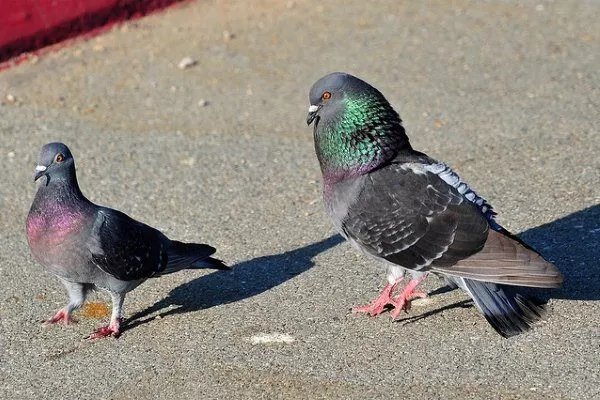
External differences
By analyzing the birds' appearance, a breeder can identify males and females in a flock. To do this, they need to compare various parameters, which we'll discuss below.
| Name | Bird size | Head | Plumage color | Voice | Interaction with individuals of the opposite sex | Interaction with individuals of the same sex |
|---|---|---|---|---|---|---|
| Females | The dimensions of the dove's body are quite miniature. | It has a rounded shape, free of bulges and irregularities. The neck is quite thin, and the cere and beak are graceful. Doves typically have expressive eyes. | As a rule, it is monochromatic and lacks bright shine. | More calm and melodic. However, doves are considered to have a slight lisp. | To express affection for a male they like, doves may dance slightly, coo, and perch on their tails. If the female is already taken, she may react quite aggressively to a strange male. | Females react calmly to each other and can even enter into friendly relationships. |
| Males | They have a strong and powerful body. | It is distinguished by a rather pronounced forehead. The neck is broader, and the beak and cere are developed and massive. The pigeons have large, round eyes. | Males often have brightly colored patches on their chest, wings, and tail. Their bodies can be decorated with intricate patterns. The feathers on their necks often shimmer in various shades—green, blue, and burgundy. | Quite loud, as the individual is trying to attract the attention of females or scare off opponents. Their rumble can be quite aggressive. | When a pigeon likes a female, he begins to court her, displaying his colors, cooing loudly, and performing a courtship dance. He may even embrace the "lady," taking her under his wing. | Males often show aggression towards each other and start fighting to prove their leadership and superiority. |
Feather coloring
Bird feathers can have a wide variety of colors, from light blue and lilac to cherry, blue, and black. The shades vary by breed, but female plumage is generally considered to have two types:
- darker, closer to black;
- monotonous and nondescript, closer to gray.
This fact is due to the fact that the dull color helps the female to be less noticeable in the environment and serves as a kind of protection from predators, which is especially important during the period when she is incubating eggs and raising chicks.
Males, on the other hand, have lighter, more intensely colored plumage. Their feathers are often flecked with additional colors. Their necks are typically more intensely colored, with a metallic sheen, and their wings and tails are beautifully patterned. This appearance is believed to help males attract females for mating purposes.
These differences do not apply to male and female decorative pigeons, as their plumage is often identical in intensity.
Head and beak
Males have a high forehead, a more powerful and shorter neck, and a large, rounded head. Females, on the other hand, have a graceful, small head on a longer neck. It's worth noting that female doves have larger, more expressive eyes.
When comparing the beaks of males and females, it's important to note that males have a coarser and thicker beak. The same can be said about the cere—the thickened area of skin at the base of the upper beak that contains the external openings.
Structure of the pelvic bones
This is one of the most important parameters, and one that even the most experienced breeders pay attention to. To analyze the pelvic bone structure, pick up the bird and examine it, stroking it from the chest, down the belly, and down to the vent. Feel the pelvic bones at the bottom of the abdomen:
- in the male, both bones are located close to each other and are almost invisible;
- In females that have already laid eggs, the bones are located at a distance of 2-3 cm from each other.
It's important to note that the pelvic bones of pigeons tend to separate once they begin laying eggs. Until puberty, chicks show no differences in pelvic structure, as the two bones fit tightly together.
According to observations by poultry farmers, when a person strokes their belly, males immediately tuck their paws in, but females do not change their body position.
Voice
Experienced breeders can determine the sex of a bird by its voice:
- Males coo much louder, clearer, and more insistently. They have a rough, bass-like voice. This is because their cooing is used to attract the attention of females. Their loud bass voice also often scares off potential rivals.
- Doves coo more softly and quietly. They have a deeper, guttural timbre, which is why their cooing is often called "burr." Females' songs are single-note, soft-voiced, although some individuals have a rougher sound, which can make them confuse with males.
It is quite difficult to correctly determine the sex of a bird based on its voice alone, since subjective human perception plays a large role.
Body dimensions
Males are always larger and heavier, and have a massive body. Females, on the other hand, have a more graceful figure and short legs. However, it should be noted that in some ornamental pigeon species, females are larger. This fact must be clearly stated in the breed's exterior characteristics.
When comparing pigeons by body size, their age must be taken into account, as young birds are always smaller and more graceful than older ones. Furthermore, it is important to compare pigeons within the same breed, as females of large breeds are always larger than males of small and medium breeds.
Differences in behavior
It's not always possible to accurately determine a bird's sex based solely on external factors, as much depends on the breed, age, and individual characteristics. Taking into account behavioral differences between the sexes, it's possible to more accurately determine the sex.
A poultry farmer explains how to distinguish a male pigeon from a female dove in the video below:
Character
Males can display aggression even in a calm environment. Typically, they begin fighting over territory or a female. It's important to note, however, that some pigeons may react quite calmly to an opponent's advances and even bow in response.
Females are more docile, but if they already have a mate, they can aggressively repel a suitor. At this point, she may resemble a male.
Habits during the mating season
Males and females begin to change their character during the mating season:
- Males become more active and try to attract the attention of females in every possible way. During this period, the male pigeon typically spreads his tail and protrudes his crop. He often relentlessly pursues the female and even displays some belligerence. If several males are in the same territory during mating season, they inevitably begin to fight.
- The doves are calm and shy, but they refuse to share territory with another female. However, if several females are nearby, they do not fight, but communicate with each other through quiet cooing.
Attitude towards a person
Birds of different sexes react differently to humans. If you reach out to a pigeon, it will attempt to peck it, perceiving the human's actions as aggressive. In a similar situation, a female pigeon behaves more peacefully and rarely bites.
Experienced breeders note that if you reach for the male's beak, he will abruptly pull his head away. The female, however, reacts more calmly and even allows you to touch her.
Folk methods
Inexperienced breeders can use folk methods that have long been used by poultry farmers to determine the sex of a bird.
Putting birds in one cage
According to this method, it is necessary to place a pair of pigeons in one cage and observe their behavior:
- Males begin to bully each other if they find themselves alone in a confined space, each wanting to prove their dominance over the other. Female doves, on the other hand, behave more calmly and peacefully, even in the presence of the opposite sex.
- If pigeons of different sexes are in the cage, the male becomes more confident and even begins to examine the "lady," circling around her and arching his neck. If the female responds indifferently to such advances, the male remains close and continues cooing. When the female is pleased with the suitor, she begins to fluff up her pelvic feathers, flick her tail along the floor, and bow deeply.
When using this method, it's important to understand that it's not particularly reliable, as the bird's reaction often depends on its personality. For example, two temperamental females can easily start a cage fight. It's also important to remember that doves are monogamous and can therefore be aggressive toward strange males.
Using a pendulum
This method has been used for quite some time and, according to experienced pigeon breeders, allows for 98% accuracy in determining the sex of a bird. It involves the use of pendulums made of copper, bronze, or brass.
This method is implemented as follows:
- Tie a piece of metal to a thread to create a kind of pendulum.
- Take the bird in one hand and the homemade pendulum in the other. Position it over the pigeon's tailbone and genitals.
- If the pendulum swings along the spine, it means the breeder is looking at a male. If the pendulum swings in a circle, it indicates a female dove.
A breeder demonstrates how to use a pendulum to distinguish the sex of pigeons in his video:
It should be noted that this method has no scientific basis, and therefore causes skepticism among professional pigeon breeders, but is often used by beginners.
How to determine the sex of chicks?
Distinguishing the sex of juveniles is significantly more difficult than that of adult birds, as chicks don't yet have many distinguishing characteristics. They have the same pelvic structure, a similar voice, and similar behavior. However, there are some clues that can help you determine the sex of a chick:
- The head of small males is somewhat larger, and the beak is wider and more massive than that of females.
- the sizes of the chicks of both sexes are approximately the same, but the males are somewhat larger;
- Growing females of the Texan breed have quite long down, while males, on the contrary, have short down.
- ✓ Down length in Texan chicks as a sex marker.
- ✓ Beak and head size in chicks as an early indicator of sex.
To accurately determine the sex of chicks, it is necessary to find out the features of the body structure and behavior of the pigeon breed to which they belong.
Table of distinctive characteristics
Experienced breeders analyze a range of parameters to accurately determine a pigeon's sex. The summary table of distinguishing characteristics, which you can find below, will help you avoid making a mistake in this matter:
| Characteristic | Females | Males |
| Bird size | The dimensions of the dove's body are quite miniature. | They have a strong and powerful body. |
| Head | It has a rounded shape, free of bulges and irregularities. The neck is quite thin, and the cere and beak are graceful. Doves typically have expressive eyes. | It is distinguished by a rather pronounced forehead. The neck is broader, and the beak and cere are developed and massive. The pigeons have large, round eyes. |
| Plumage color | As a rule, it is monochromatic and lacks bright shine. | Males often have brightly colored patches on their chest, wings, and tail. Their bodies can be decorated with intricate patterns. The feathers on their necks often shimmer in various shades—green, blue, and burgundy. |
| Voice | More calm and melodic. However, doves are considered to have a slight lisp. | Quite loud, as the individual is trying to attract the attention of females or scare off opponents. Their rumble can be quite aggressive. |
| Interaction with individuals of the opposite sex | To express affection for a male they like, doves may dance slightly, coo, and perch on their tails. If the female is already taken, she may react quite aggressively to a strange male. | When a pigeon likes a female, he begins to court her, displaying his colors, cooing loudly, and performing a courtship dance. He may even embrace the "lady," taking her under his wing. |
| Interaction with individuals of the same sex | Females react calmly to each other and can even enter into friendly relationships. | Males often show aggression towards each other and start fighting to prove their leadership and superiority. |
So, to determine a pigeon's sex, a number of parameters must be taken into account: head and beak size, feather color, pelvic bone structure, and temperament and behavior during the mating season. In addition, there are a number of folk methods that have proven effective in practice and are used by many breeders. All of these methods can be used in combination to maximize the accuracy of sexing a bird.
A very informative article. Sexing has always been a big problem for us. We've only been keeping pigeons for a year and a half, but we still haven't learned how to recognize them. Thanks for the details.