
Stately pigeons are distinguished by a particularly proud demeanor. They have a protruding chest and a pronounced drooping wing. The entire appearance of these birds indicates a robust constitution and high productivity.
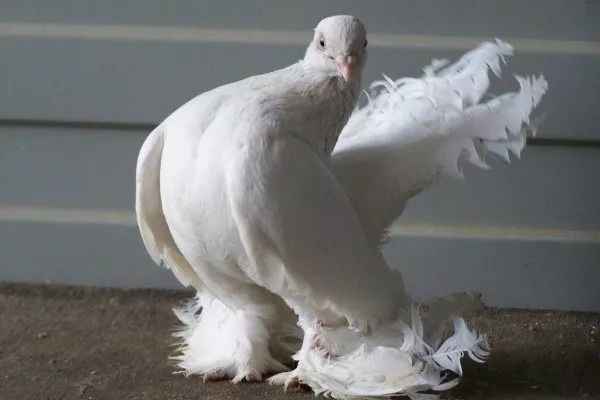
Who are the stately pigeons?
Stately pigeons are a large group that includes many breeds that differ from each other:
- body shape;
- plumage color;
- flight qualities.
- ✓ Consider the climatic conditions of your region when choosing a breed.
- ✓ Pay attention to the requirements for space and living conditions.
- ✓ Consider the purpose of breeding: decorativeness, flying qualities or participation in exhibitions.
The main difference of this group is the external characteristics, which serve as key criteria in determining the “stateliness” of the breed.
Historical data
Stately pigeons are not recognized as a separate group in international catalogs. However, they have existed in Russia since 1982. The Don and Kuban regions are considered the birthplace of these birds, where stately breeds have been bred for about 200 years. These pigeons later appeared in the Volga region, and then in the Urals in Siberia.
Stately breeds are regular participants at pigeon shows held in Russia. Through selective breeding, numerous varieties have been developed, each new line named after the region where it was developed.
The breed was first introduced to the world in 1975 at the Budapest show. There, Russian fanciers exhibited Rostov white-breasted pigeons, which received top marks and won the sympathy of the spectators. In Czechoslovakia, at the 1980 show, Volga ribbon pigeon rightfully received the title of champion.
What should the "stat" indicators be?
"Stateliness" in pigeon breeds is determined by external characteristics. All representatives of stately breeds share a distinctive build and graceful posture. The following characteristics characterize their appearance:
- broad, raised chest;
- tail with one to two dozen tail feathers;
- drooping wings, the wings should be lower than the tail.
In total, pigeon breeders distinguish three subgroups of stately breeds:
- shakers;
- kachunov;
- drooping-winged.
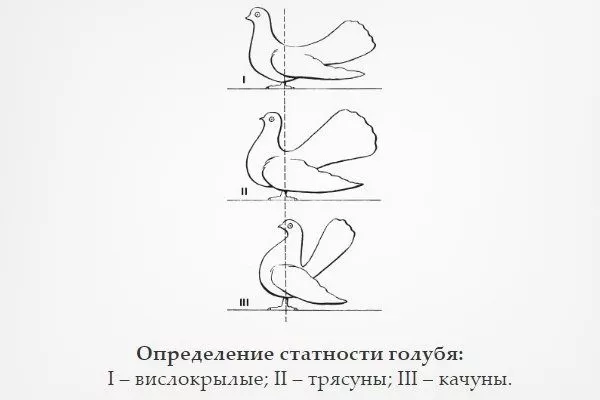
Belonging to one of the above-mentioned subgroups is established in one of the following ways:
- The relationship between the position of different body parts and a horizontal surface. The values are measured in degrees. This method is quite complex and requires measurements and calculations.
- The positions of different body parts relative to a vertical line—which runs from the pigeon's feet up the body. Fanciers determine, in particular, the position of the head, body, wings, neck, and tail relative to this line.
In both cases, determining a bird's stature is done by looking at it in profile. Let's take a closer look at the different pigeon varieties that differ in stature.
Types of stately pigeons
Stately pigeons are classified by their appearance and flight characteristics. External characteristics allow us to distinguish three subgroups of breeds.
Droopwings
| Name | Size | Plumage color | Flight qualities |
|---|---|---|---|
| Dubovskys | Average | Various | Tall |
| Kamyshinsky | Average | Various | Tall |
| Rzhevsky | Average | Various | Tall |
| Syzran | Average | Various | Tall |
| Kryukovskiys | Average | Various | Tall |
These birds are medium-sized, rarely small. A characteristic feature is their low-hanging wingtips. The wingtips are lower than the tail, and can even reach the horizontal surface on which the pigeon is perched. The tails of drooping-winged pigeons are raised, and their necks are at rest, not shaking.
Popular drooping-winged breeds:
- Dubovskys;
- Kamyshinsky;
- Rzhevskie;
- Syzran;
- Kryukovsky and others.
Kachuny
| Name | Size | Plumage color | Flight qualities |
|---|---|---|---|
| Novocherkassk black-tailed | Short | Black tail | Decorative |
| Rostov stately | Short | Various | Decorative |
| White-breasted | Short | White | Decorative |
Kachuns have a short body, a raised chest, and a long, gracefully arched neck. When walking, the birds sway, hence the name. Many breeds of kachuns are bred in Russia:
- Novocherkassk black-tailed;
- stately Rostov;
- white-breasted and others.
Shakers
| Name | Size | Plumage color | Flight qualities |
|---|---|---|---|
| Kazan | Shortened | Various | Tumblers |
| Chistyaki-chiliks | Shortened | Two-color | Tumblers |
| Poltava black-tailed | Shortened | Black tail | Tumblers |
| Uryupinsk blue | Shortened | Blue | Tumblers |
| Luhansk | Shortened | White | Tumblers |
| Voronezh beetles | Shortened | Black | Tumblers |
| Volga red-breasted | Shortened | Red | Tumblers |
| Yeisk two-crested | Shortened | Various | Tumblers |
Shakers have a shortened body and an elongated, gracefully arched neck. Their chest is classically raised, and their tail is quite broad and also raised. The distinctive feature that gives this subgroup of birds its name is the frequent shaking of their necks.
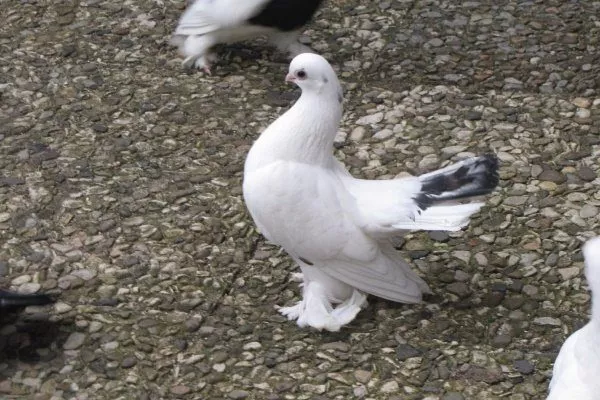
Kazan Shaker
Popular shaking pigeons:
- Kazan;
- chistyaki-chiliks;
- Poltava black-tailed;
- Uryupinsk blue;
- Lugansk;
- Voronezh beetles;
- Volga red-breasted;
- Yeisk two-crested and others.
Flight qualities
Stately breeds are renowned not only for their beauty but also for their excellent flight qualities. There are three varieties:
- High-flying. These birds typically soar to great heights, becoming invisible from the ground. They can remain in the air at high altitudes for extended periods. This subgroup includes many drooping-winged species and several shakers. Popular high-flying species include the Kamyshin, Dubovsky, and Kryukov.
- Decorative. These include breeds that have lost their ability to fly. Such pigeons are kept primarily for their beauty. Examples of such breeds include: Altai shawls and Novocherkassk black-tailed trout. This subgroup includes all kachuns and several shakans.
- Tumblers. Not only can they remain in the air for long periods, but they can also perform complex tricks, such as somersaults and flips. They prefer to fly in groups. Tumblers include the Rzhev, Syzran, and Kazan shakers.
- Start training with short flights, gradually increasing their duration.
- Conduct your workouts in the morning hours when the air is clean and fresh.
- Provide pigeons with rest between training sessions to recuperate.
Not all toy breeds have lost their flying abilities. By training these beautiful birds daily, you can achieve excellent results even in breeds not known for their exceptional flight abilities.
Properly trained pigeons of stately breeds are capable of flying at considerable heights for long periods. They fly slowly, preferring to circle. Flight duration is 3-6 hours or more.
Feather color
Among the stately breeds, birds come in a wide variety of colors. However, white, yellow, red, black, and blue-gray individuals are the most common. Breeders distinguish several subgroups with distinctive color features. Subgroups of stately breeds distinguished by plumage color and their descriptions are in Table 1.
Table 1
| Subgroup name | Color | Where are they common? | Note |
| Color-breasted | White plumage. Chest, neck, head, and tail are colored. Plumage with a magpie pattern. | Central Russia, Volga cities, Southern Urals, Siberia. | Pigeon breeders especially prize birds whose tails are adorned with a white stripe. The ancestors of such breeds are the Rzhev pigeons. |
| Colored-sided | White plumage. Wing shields—the secondary flight and covert feathers—are colored. The shield colors are yellow, red, black, and blue-gray. The shields have two transverse black stripes. | Azov region, Middle Volga region, cities in the Don region. | Representatives of this subgroup are chiliks and chistyaks. |
| Colored-tailed | White plumage. Tail is colored. | Volga region, Don area. | Only three breeds are included. All of their names contain the word "black-tailed." These include the Poltava, Orenburg, and Novocherkassk Stately Pigeons. |
| Monochrome | The plumage is white, red, yellow, black, and blue. | Urals, Siberia, Volga region. | Another name is doperovye. They are good flyers and often have feathers on their legs. |
| Variegated (speckled) | Two-colored or multi-colored plumage. Chaotic scattering of spots. | Ural, Volga region. | They have feathered decorations on their paws. This subgroup includes the Chelyabinsk white-tailed, Chelyabinsk black-winged, and others. |
Varieties of stately pigeons
In every region, pigeon breeders worked to improve the flight and appearance of their pigeons. Selective breeding, conducted over decades and even centuries, resulted in the development of numerous new breeds and subspecies.
To tie a breed to a specific area, they are given a name indicating the geographic location, for example - Kazan, Lugansk, Volga, etc. Let's get acquainted with the most famous stately breeds.
Rostov
There are four types of stately Rostov pigeons:
- Rostov flight. They are classified as ornamental scaups. Their plumage is yellow, red, and black. The chest and neck have a metallic sheen. The head is smooth, sometimes with a crest. The back is concave, sometimes raised to 80 degrees. The tail has 18-22 tail feathers. The legs are feathered.
- Chistyaki-chiliks. They are classified as ornamental flight birds. Their coloration is two-toned, with white being the primary color. The secondary color is red, yellow, black, or glaucous. Some individuals are decorated with a "cockade" on their foreheads. Glaucous individuals have black stripes on their wing shields. Chiliks are considered an aggressive breed. Their temperament should be taken into account when breeding them.
- White-breasted. This decorative breed is bred for captive breeding. Its coloring is black and white. The chest, neck, forelock, and belly are white.
- Buckwheat groats. This breed originated in the Rostov region, from where it spread to other regions, where it was given different names. During World War II, the breed suffered damage that pigeon breeders have been unable to recover from to this day—Cicara pigeons remain rare.
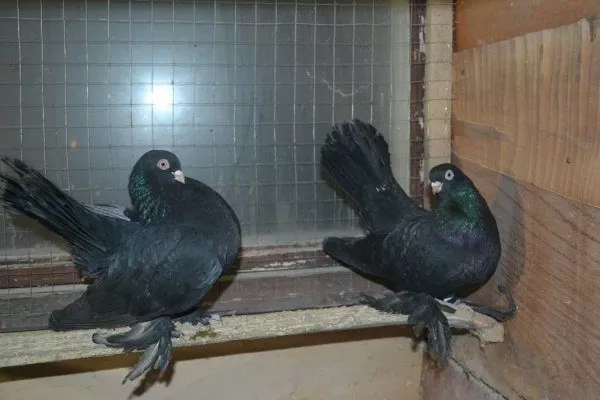
Rostov flying pigeons
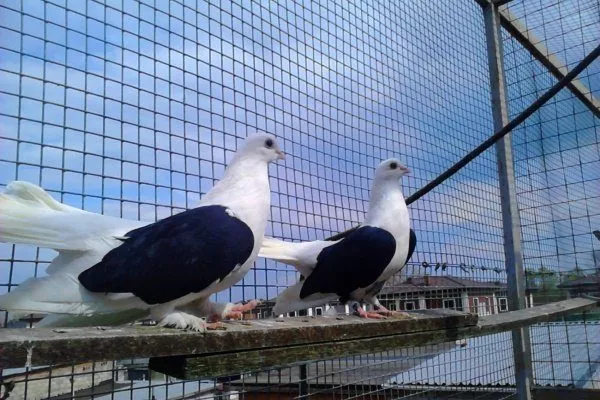
Chistyaki-Chiliki pigeons
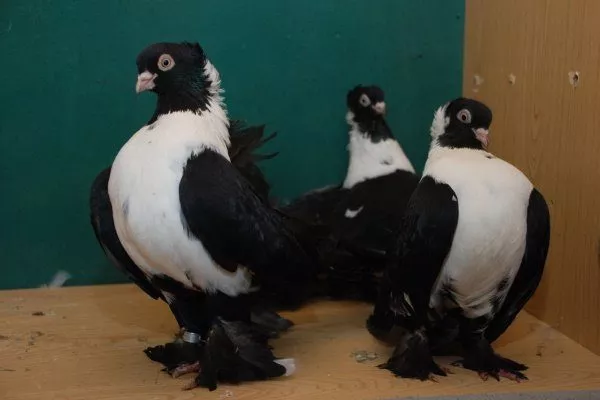
Rostov white-breasted
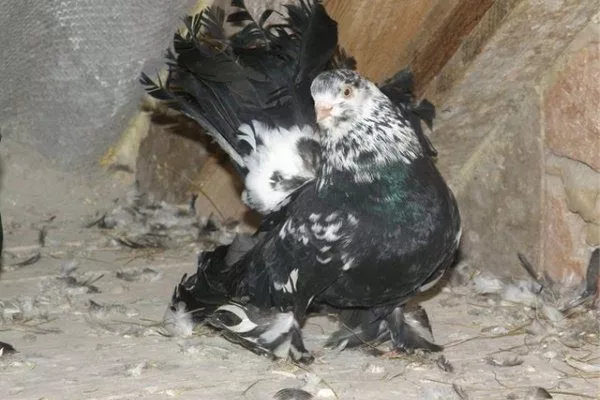
Rostov breed of pigeons, Tsitsarya-Grechanaya
Tape
Ribbon pigeons were created by crossing several stately breeds. Volga, Syzran, and Rzhev pigeons were involved in the selection process.
A distinctive trait of all ribbon-like breeds is fidelity. Once they choose a mate, they remain faithful to her for life. The tenderness with which these birds treat each other is touching.
External characteristics:
- the plumage is white and cherry-colored, rarely coffee-colored;
- there is a white stripe on the tail;
- broad chest, pushed forward;
- tail raised.
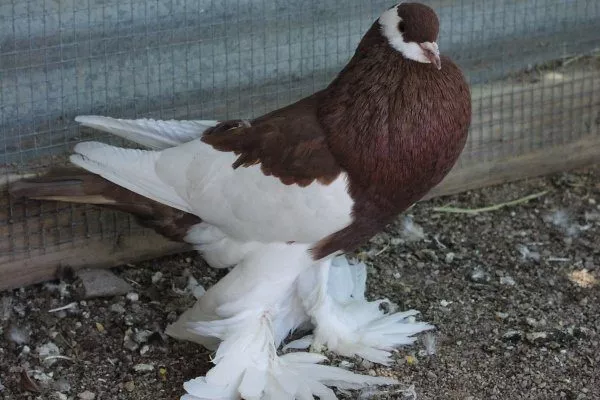
Luhansk
This breed is common in Russia and Ukraine. It belongs to the shaking type. Bred in Luhansk, it is distinguished by its proud stature, high flight, and circular motion. Flight duration is 2-3 hours.
The Lugansk breed is distinguished by:
- powerful build;
- active character;
- toothlessness;
- snow-white color;
- wide tail;
- the wings are lowered, but do not reach the ground;
- there is glitter on the neck.
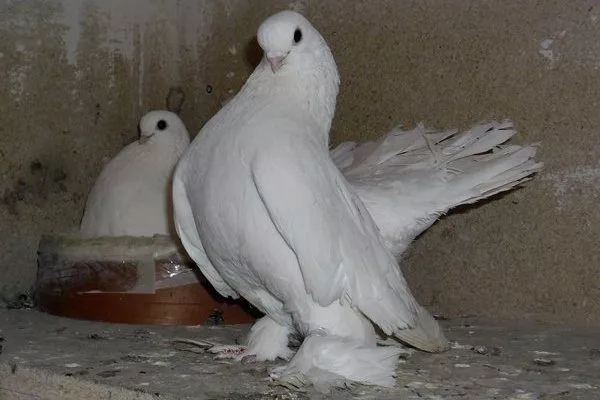
Lugansk pigeons were used in the opening and closing ceremonies of the 1980 Moscow Olympics.
Today, Lugansk pigeons are kept primarily in aviaries, which is why they have practically lost their high-flying abilities.
Shawls
Shawl pigeons first appeared in the 20th century in the city of Barnaul and its environs. Their ancestors are the Rzhev and Kazan shakers.
This subgroup includes ornamental scaly-winged ...
- a large head with a forelock that smoothly turns into a “mane”;
- the beak is short, the color is pinkish;
- the tail is raised, the back is short;
- the neck is narrow - curved and thrown back;
- paws are feathered, feather length is 6 cm;
- The feathers are colored cherry, yellow, and black and white.
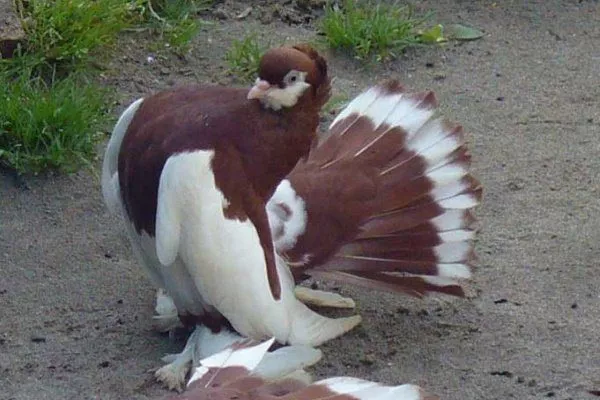
Shawl doves don't have particularly impressive flight abilities. Their flight isn't particularly spectacular.
Peculiarities of keeping stately pigeons
All stately breeds are distinguished by:
- unpretentiousness;
- calmness;
- fertility;
- good parenting skills - they willingly sit on eggs and then carefully feed their offspring.
These stately breeds don't require any special care. Basic care guidelines are sufficient:
- regular cleaning of the dovecote, aviary, cage;
- systematic replacement of bedding material;
- construction of perch-less perches in the dovecote so that the wings do not reach the floor;
- equipment of drinking bowls, feeders, nests;
- creation of a sand bath;
- the enclosure should be spacious and bright;
- the dovecote is equipped in the form of a house - it is placed on the ground, in the attic, on the wall;
- The standard area is 1.5 square meters per individual.
What else do you need to know about pigeon breeding:
- If a breed is bred that is considered a good flyer, it needs to be exercised regularly.
- The diet should consist of 70-80% grains. The remaining 20-30% should consist of legumes, greens, and vitamin and mineral supplements.
- It is recommended to feed chicks eggs or breadcrumbs mixed with milk.
Animals and birds are kept not only for productivity and financial gain. This is especially true for pigeon breeding. Many pigeon breeders value their birds not only for their flying ability but also for their appearance. Stately pigeons are truly beautiful, and if they also possess flying ability, they are simply priceless.