
In the past, before digital technology, people used carrier pigeons to transmit messages. These birds were trained and educated. Pigeons are very capable birds, making them easy to train. Read on to learn more about these "postmen."
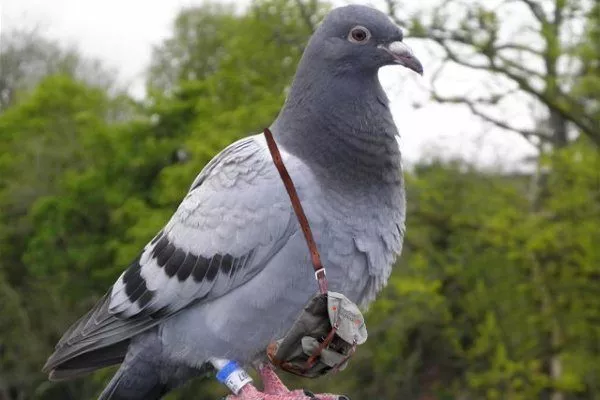
Historical data about homing pigeons
The first mention of pigeons dates back to 45 BC. At that time, they were used to deliver letters from the besieged city of Modena. By the 12th century, pigeon post had become more popular in Egypt.
The inhabitants of England, France, and Belgium made significant contributions to improving postal characteristics. This was established by the Antwerp and Luttich pigeons. This is how subsequent pigeon breeds emerged.
The first European homing pigeon competitions were held in the early 19th century. In Russia, pigeon racing emerged in the late 19th century but never gained popularity. Pigeons were particularly in demand during the Great Patriotic War. Then came a period of silence for pigeons.
It wasn't until the 1970s that the carrier pigeon population began to grow. Some people believed in the future of these birds. They began breeding them using old and foreign breeds. And they succeeded – the birds became popular worldwide.
To develop endurance in birds, competitions are required. Such events are made more challenging by flying over difficult-to-reach areas or releasing the birds in poor weather.
There are known cases of carrier pigeons covering over 1,000 kilometers, reaching speeds of approximately 100 kilometers per hour. This sport, in the 1950s and 1960s, led to the development of a new breed of Russian racing pigeon—the White Ostankino.
Homing pigeon breeds
Today, there are several varieties of homing pigeons, differing in external characteristics, speed and other indicators.
| Name | Flight speed (km/h) | Endurance (km) | Weight (g) |
|---|---|---|---|
| Russian | 90 | 1000 | 800 |
| German | 100 | 800 | 700 |
| English | 95 | 900 | 750 |
| Belgian | 110 | 1100 | 850 |
| Dragons | 85 | 700 | 650 |
| Czechs | 80 | 600 | 600 |
Russian
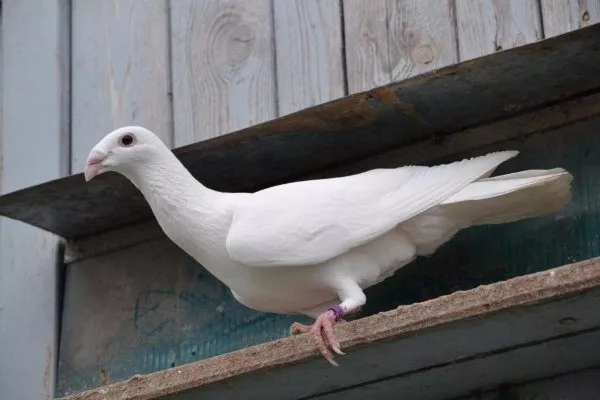
Russian pigeons have an elegant head shape and a pointed beak. They are distinguished by their wings, which have curved tips, allowing them to be held tightly to the body. A distinctive feature is their well-developed muscles.
The birds have long legs and no feathers. The irises of the eyes are red-orange, with light rims. Russian homing pigeons typically have white plumage, but occasionally specimens with variegated plumage are found.
German
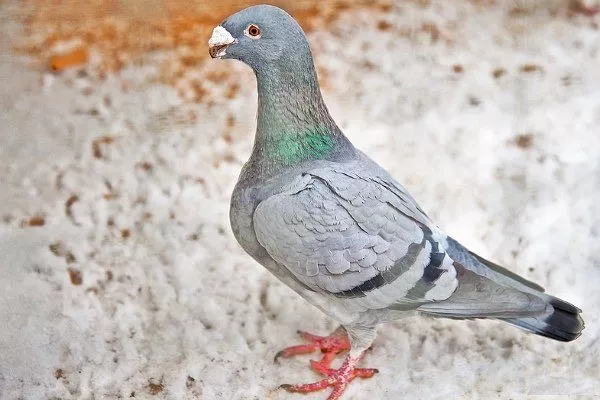
Breeders used English and Dutch pigeons to develop the breed. The main goal was to create a new breed characterized by high speed, attractive appearance, and rapid growth. The result was a small-sized bird.
The bird has a shortened, strong beak and a long neck. The tail of the "German" is also shortened. The bird does not have a distinctive plumage, which can be very varied.
English
The ancestors of English homing pigeons were the Carrier, which was used in Eastern countries and Egypt. In the 14th century, the birds were brought to Europe, where breeders managed to improve not only their excellent flight qualities but also their attractive appearance.
Modern Carriers have a small head relative to their large body. The bird has a thick, straight, long bill with wart-like growths. A distinctive feature is their large brown eyes with barely visible eyelids. English pigeons can be found with white, black, dove-colored, mottled, chestnut, and yellow, stiff plumage.
Belgian
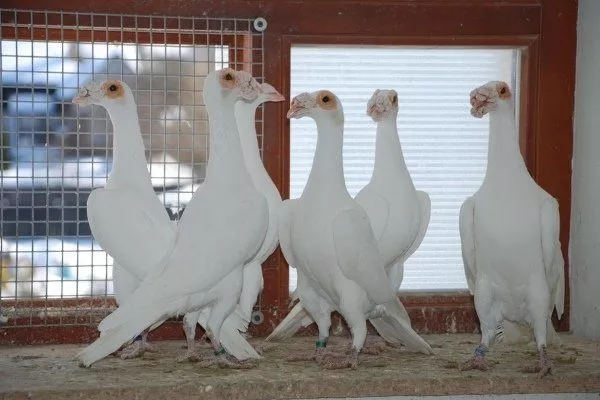
Belgian homing pigeons are the standard among modern sporting breeds. The bird was developed long ago, but its refinement took place in the 19th century. This breed has a rounded body shape and a well-developed chest—it's broad and muscular.
These birds are characterized by an elongated neck, short legs, and a rounded head. They have brown eyes with light-colored eyelids. A distinctive feature is the shortened tail and wings, which are held tightly to the body. Pigeons come in a wide variety of colors.
Dragons
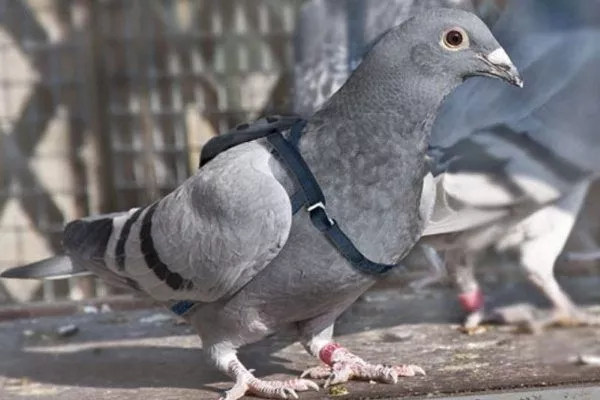
Dragon pigeons are considered one of the most ancient breeds. A distinctive feature of these birds is not only their excellent speed but also their spatial orientation. They have a small, stocky body. A short neck supports a large head, widened at the base. Large red-orange eyes and an elongated, closed beak with growths at the base protrude from the muzzle.
The Dragon has a rounded, slightly raised chest and long wings that reach the tips of the tail. Dragons come in white and black. Gray and mottled varieties are also found. This is an easy-to-care-for breed, remaining active at any age.
Czechs
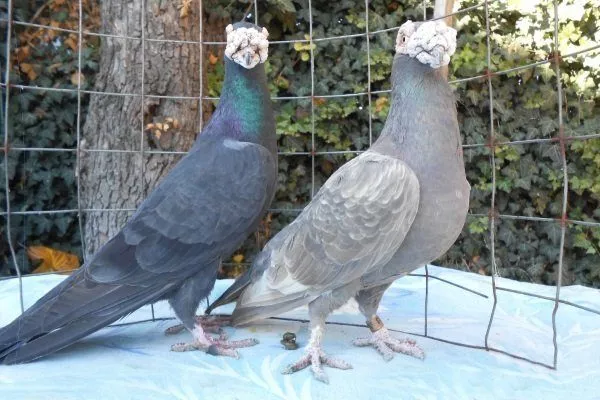
Czech homing pigeons are sporty birds characterized by their physical strength and robust health. They are prized for their loyalty to their owners, their domesticability, and their intelligence—they are easily trained. This makes them very easy to work with.
The breed is considered popular, especially for use in competitions. These pigeons are capable of performing well over short distances.
Czech pigeons have smooth, dense, light-colored plumage. The body is well-proportioned and horizontal. Czech pigeons have a small head, flattened on both sides, and a broad forehead. The head is set on an elongated neck, widened at the shoulders. The beak is small, narrow, and pointed. The birds have a narrow tail, which is almost completely covered by strong, long wings.
The operating principle of pigeon post and their orientation in space
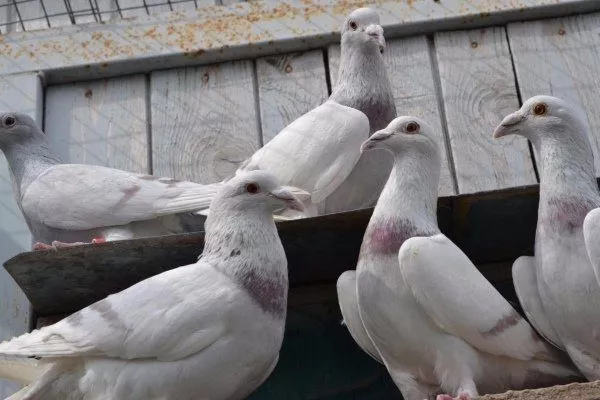
Because the pigeon returns home at the first opportunity, pigeon post works flawlessly. This is the essence of the birds' "work." Pigeons have excellent spatial orientation without making mistakes. They can navigate unfamiliar terrain and find their way home.
Until recently, scientists couldn't understand how pigeons navigate spatially. But recently, they were able to clarify this point. The bird's eyes contain a special protein, cryptochrome, which, when exposed to a magnetic field, transitions from one reversible state to another. The bird's brain thus registers these protein changes, occurring in just one cell of the eye, and adjusts its flight direction. Most likely, a similar process facilitates precise long-distance orientation in other animals, such as turtles, butterflies, and fish.
Living conditions for carrier pigeons
Homing pigeons require good housing. They require cleanliness, warmth, and a room from which they can fly regularly. The aviary must meet certain conditions:
- Location. Most experienced breeders recommend building a dovecote, preferably in the attic. If you plan to build a separate dovecote, it's best to locate it away from cesspools, farms, and power lines. The building should be built on the south side.
- Dimensions. A minimum of 0.5 square meters of space is required for each pair of pigeons. The room's height should not exceed 2 meters. If there are many birds, the dovecote should be divided into sections, housing 15 pairs of birds in each.
- Ventilation and lighting. Installing double doors with both a grille and a main door will ensure better ventilation. It's important to have a ceiling vent in the room. Pigeons should receive at least 12 hours of daylight. If necessary, use additional artificial lighting, especially during the winter.
- Heating. Heating the aviary is usually not necessary. However, the temperature in the coop during winter should not fall below 5-10 degrees Celsius. It is recommended to insulate the dovecote and lay bedding of hay, small branches, sawdust, straw, and feathers on the floor and in the nests. A layer of tobacco leaves or wood ash placed under the bedding will help prevent infectious diseases.
But overheating is also dangerous for birds, so in the summer the temperature in the poultry house should not exceed 20 degrees Celsius.
- Feeders and drinkers. Birds find it more convenient to feed from wooden box-shaped feeders. These can be automatic. Feeders should be sized to provide 7 cm of space per pigeon. Birds should be provided with constant access to clean water.
- Perches and nests. The perches need to be installed horizontally on the wall, 80 cm from the floor and ceiling. The nest dimensions are typically 80 x 40 x 30 cm.
It's essential to install a "reception station"—a cage-like structure—in the dovecote. It's used during training and competition periods to inspect the pigeons.
How to feed such birds?
Because homing pigeons are forced to fly very long distances and constantly exercise, they require a special diet. One pigeon consumes approximately 400 grams of feed per week. This abundant feeding causes the bird's weight to increase several times over. A single pigeon can weigh up to 800 grams.
Racing pigeons are fed three times a day, following a feeding schedule. The portion sizes should always be the same, approximately 20 grams per meal. Pigeons are fed in the morning, at lunchtime, and in the evening after sunset, but before dark.
The nutritional value of the food should always be the same. The time of year doesn't affect this in any way – pigeons need food to gain weight and strength in both winter and summer. Lentils, peas, and vetch are the best choices. Occasionally, sand, calcium, and lime should be added to the birds' diet. A little salt added to the food is a good idea.
To diversify the diet, it is allowed to feed birds with the following ingredients:
- bran;
- flax;
- boiled potatoes;
- rapeseed.
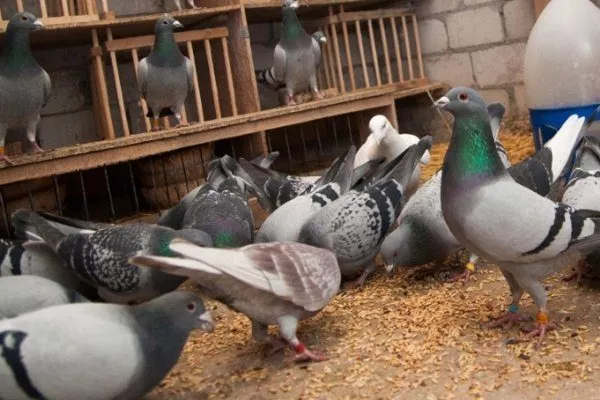
Additionally, the room should have drinking bowls with clean drinking water, which is changed every day.
Training
Training plays a crucial role in raising homing pigeons. Without it, they won't be able to compete in sporting events, which not only leads to lower market prices but also to pointless, unprofitable breeding.
Pigeon training begins when the birds reach six weeks of age. Initially, they are only allowed to circle above the loft. Once this lesson is mastered, after six weeks, they can begin to be taken to a location near their home. It's also acceptable to begin training birds after they've been in their new coop for at least three days.
First, the birds are trained in warm, sunny weather. It's best to begin training between the second half of April and mid-October. Initially, the pigeons are taken 20-30 kilometers from home, then increased to longer distances. It's best to release the birds early in the morning, but no later than midday. In the first year, the pigeons should be able to cover distances of up to 320 kilometers.
Before transporting pigeons, they must be thoroughly tamed so they can be handled independently and are not afraid of being moved into their cages. Birds are especially docile at night, so it is recommended to remove them from the coop before dawn. Future postmen are transported quickly to minimize the time spent in the cage. The birds are released into open terrain, as in a valley or forest, pigeons may become disoriented at the beginning of their training.
After just a couple of years, fully trained homing pigeons are produced. During this period, they learn to reach their maximum speed and find their way home from a distance of about 1,000 kilometers. At 3-4 years of age, the birds are eligible for competitions. During their life, a single homing pigeon flies hundreds of thousands of kilometers, overcoming difficult obstacles along the way.
Breeding and cultivation
Nestlings are introduced into the dovecote at the age of 1-1.5 months. At this age, young birds begin to recognize their home, quickly becoming attached to their new home. The flock should be equally divided between males and females. Birds reach sexual maturity at 5 months. It's best to select pairs that fully comply with breed standards. Pairs are placed in a spacious, closed box for a couple of days. You can tell a pair has formed by the birds staying together after emerging from the box.
- ✓ Chicks should be actively responsive to their environment and show interest in flying at an early age.
- ✓ Pay attention to the parents of the chicks; their athletic achievements can be an indicator of the potential of the offspring.
The female begins laying eggs within two weeks of mating. Typically, a clutch contains 1-3 eggs. Both parents take turns incubating the eggs. At this stage, it's important to identify fertilized eggs: initially, all eggs have translucent shells, but over time, the shells turn milky white and darken. Unfertilized eggs remain translucent, and their surface becomes rough.
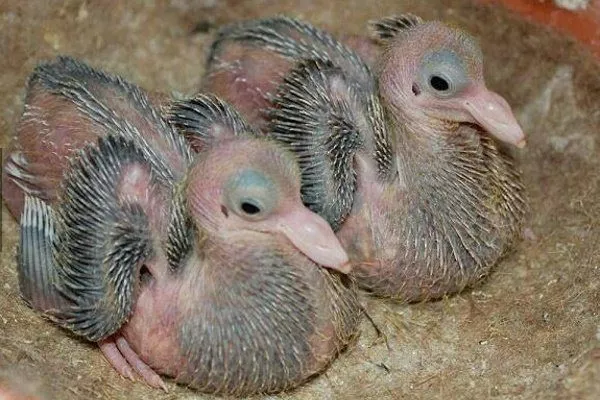
The chicks are born 16 to 19 days after laying. The young are blind, their bodies covered in a thin down. The parents feed them milk, produced in their crop, for several weeks. Afterward, the chicks are fed a porridge made from their secretions and semi-digested grains.
When the birds reach one month of age, they are fed with swollen grains. At one and a half months, the young begin to eat adult food. It is preferable for a pair to feed only one chick. For this purpose, the remaining chicks can be given to a pair that does not have their own chicks.
Advantages and disadvantages of homing pigeons
Homing pigeons have both positive and negative qualities. These are important to know before breeding homing pigeons:
- It's unacceptable to breed birds in the mountains because the terrain can lead them astray. This can lead to the bird becoming lost in the mountains and unable to return home, thus losing its bearings.
- Birds can lose their way, get lost, and fail to return home if there is heavy rain or gusty winds prevent them from moving towards their destination.
- During winter, racing pigeons become weakened and lose their speed. Only in warmer weather can they quickly recover and perform their tasks.
Modern mail
Today, there are many modern means of communication. People are accustomed to talking on the phone, messaging online, and sending parcels via airmail. For those accustomed to such technologies, pigeon post is probably something out of science fiction.
But some are unwilling to part with homing pigeons, considering this form of mail a time-honored tradition. One such tradition dates back to ancient times. The ancient Greeks sent homing pigeons to major cities to announce Olympic victories. In 1996, Slovakia sent out homing pigeons in honor of the Atlanta Olympics. The birds were decorated with commemorative stamps.
In New Zealand, it's common to hold annual pigeon flights along the same route—between Auckland and the Barrier Reef islands. Pigeon competitions are also held frequently, where the best of the best are selected based on the bird's appearance, its ability to navigate the terrain, and its ability to reach maximum speed.
Although many people today have never heard of homing pigeons, those who grew up when these birds carried important news pass on their knowledge to their children. This is how ancient traditions are upheld. Pigeon breeding can be a profitable business, as trained birds are often used at weddings, anniversaries, and other events.
Great article!