
Peacock pigeons are one of the most ancient and beautiful pigeon breeds. These birds are distinguished by their stunning appearance and grace. Learn more about the breed, its varieties, care and maintenance requirements, diet, diseases, and much more below.
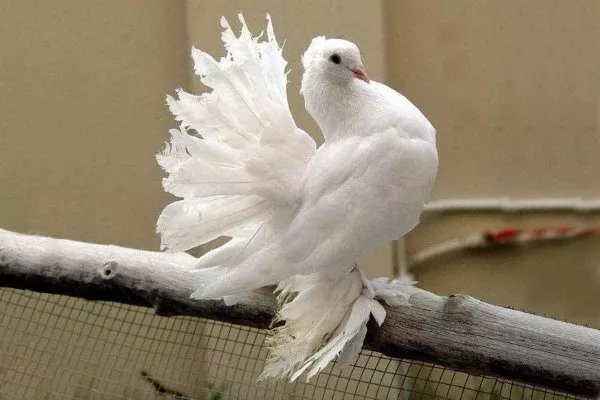
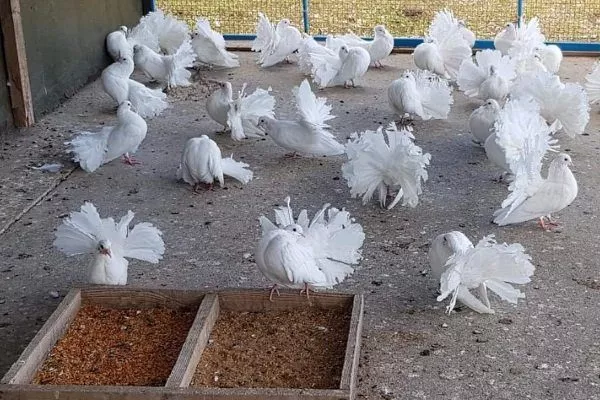
white peacock dove
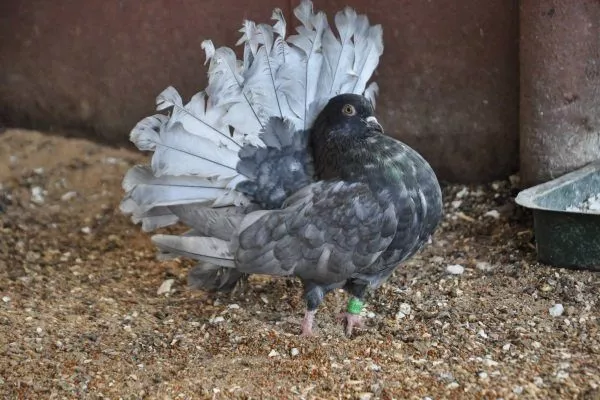
The popularity of peacock pigeons has not waned for several centuries
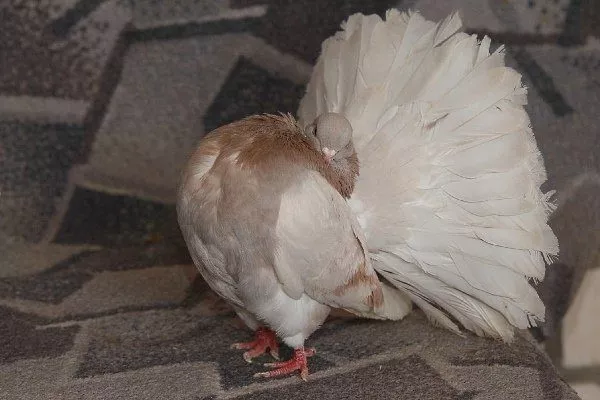
Peacock doves never miss the opportunity to show off their tails to the audience
History of the breed's origin
The exact origin of these beauties is unknown, but historians have found references to them in ancient Indian writings. Some believe the birds lived in the palaces of Indian nobles and served as living "decoration." They were later exported to England, and from there spread throughout the Old World. Pigeon fanciers from Germany and Holland played a significant role in their breeding and distribution. They arrived in Russia in the first half of the 20th century and immediately gained a large following.
Its representatives are distinguished by their grace and luxurious tail. They were created to capture people's hearts with their captivating beauty. The breed was officially described in 1669. One of the breeders' goals is to increase the number of tail feathers, which, indeed, resembles the lush, luxurious tail of a peacock. They are occasionally called fantail pigeons, but this is incorrect.
Types of peacock pigeons
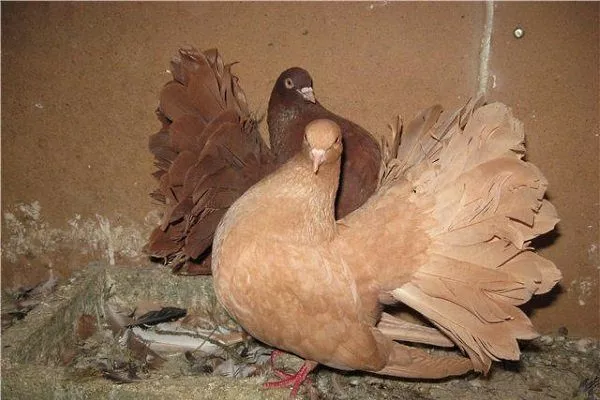
There are several species of peacock doves, differing only in their feather color. The most common birds have white plumage without any other color, but there are also doves with blue, pink, blue, variegated, caramel, brown, beige, and two-tone plumage.
Pigeons have a decorative appearance, a calm nature, and average cold tolerance, but they are not designed for long flights. Breeding efforts have primarily focused on improving their appearance. These birds have virtually lost their ability to fly; even in open aviaries, they prefer to walk on their feet. These birds are quite passive and lazy by nature, but they are trainable. They are usually trained to perform short, circular flights.
Standards and appearance
And there are also three standards for this breed:
- Russian;
- American;
- Hungarian.
The differences between them are also minor. Russian breeders insist on larger specimens, while others believe a small bird is ideal.
In other characteristics, the standards are the same. A purebred peacock pigeon should have:
- A wide chest in the shape of a flat hemisphere; in some individuals it protrudes forward significantly.
- A narrow, smooth back with a “dimple” in the middle.
- A small head; German lines have a forelock. The head is thrown back and rests on the rump.
- The neck is long and curved, and often shakes when moving.
- Small, shiny eyes. White pigeons always have black-brown eyes, while dark-colored specimens have eyes ranging from orange to light gray (pearl).
- The skin in the eye area and eyelids must match the color of the beak.
- The beak of peacocks is small, thin, graceful, and neatly curved. Its color depends on the feather color. In white-colored pigeons, it ranges from white to light flesh-colored; in dove, black, and blue pigeons, it is horn-colored; the flesh-colored beak is found in red and fawn-colored pigeons, and in other birds, it is white.
- The cere is narrow and very small in size.
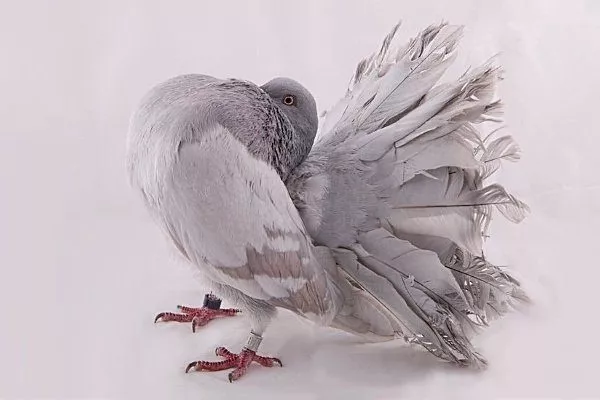
- The tail is lush, consisting of 30-50 vertically curved tail feathers. A feather cushion and down at the base of the feather are always present. The tail feathers are very wide (up to 3 cm) and long. They are heavily forked at the tips. This forking or curling is a decorative feature of the bird and is called lace or the pigeon's coiffure.
- The legs are of medium length, without feathers or with tufts that can reach 20 cm in length. The paws are raspberry or red.
- The wings are pressed tightly to the body and slightly lowered downwards.
- The bird walks on tiptoe.
The presence of a small crest or tuft on the head indicates a non-purebred breed, with the exception of German representatives. Peacock pigeons have a tail consisting of nine vertebrae, while other breeds have seven. Peacock pigeons have atrophied sebaceous glands, so their feathers only become water-repellent after their first molt.
How to choose a healthy pair when buying?
Experts recommend purchasing a pair in spring or fall. This is the best time of year to assess the bird's purity and decorative qualities. The seller is always asked for the bird's pedigree.
- ✓ Check the bird's activity when you tap on the cage.
- ✓ Make sure the seller has a pedigree.
- ✓ Assess the purity and decorativeness in optimal seasons (spring/fall).
It's quite easy to distinguish a healthy bird from a sick one. If you knock on the cage, a healthy bird will react quickly to the sound. A sick bird will show no interest and remain motionless.
It's best to go shopping with someone knowledgeable—a breeder or veterinarian. Buying a pigeon couple in the spring will be more expensive than in the fall, but you may be able to produce offspring immediately after purchase.
Arranging a home for pigeons
Peacock pigeons are kept in spacious enclosures enclosed with mesh. They are covered with slate roofing, which provides excellent protection from rain or heat. If necessary, the roof can be quickly dismantled, allowing the birds to fly out. Perches and boxes filled with sand are installed inside to keep the birds' feathers clean. A winter shelter is also added here.
The area of the room is calculated based on the number of individuals. Each pair requires at least 1 cubic meter of comfortable living space. Nests measuring 40x40 cm are required. This breed is noted for its high reproductive rates. On average, during the entire season, under favorable conditions, a female pigeon will hatch eggs 4-5 times. The pigeons spend the entire warm season outdoors, and males and females are kept separately until mating.
Features of care and maintenance
Peacock doves, although expensive, are quite low-maintenance. It's sufficient to keep the aviary and wintering area clean, ventilated, and dry. The temperature in the dovecote is maintained at 25°C in summer and at least 10°C in winter.
During the winter, daylight hours should also be increased to 12 hours. Infrared lamps are the optimal supplemental lighting option, especially if the room is cool. The soft reddish light has a calming effect on the pigeons and warms their home without drying out the air.
We recommend reading the article about How to keep and feed pigeons in winter.
Humidity should be no more than 70%, otherwise there is a risk of fungal diseases developing. If the region has mild winters and temperatures do not drop below -5°C, pigeons can be kept outdoors year-round without any harm.
Peacock pigeons should be kept separate from other breeds. Otherwise, they are constantly stressed, which affects their reproductive function and appearance. Mating them with other breeds leads to a deterioration of the pedigree and, ultimately, to degeneration.
Matchmaking
The breeder's primary goal is to select the right mate for procreation. There are two types of selection:
- homogeneous;
- heterogeneous.
In homogeneous or uniform selection, the female and male share identical characteristics. These characteristics are passed on to the offspring, improving their quality. This method aims to enhance heritable traits.
Heterogeneous or mixed breeding, on the other hand, increases offspring variability. To introduce changes, a female and male with strong but different characteristics are selected. The outcome of such selection is unpredictable. It can result in a successful outcome, or it can disappoint the breeder.
Pigeons reach sexual maturity at 5 months. A mated pair should never be separated, as these birds are monogamous.
Individuals are rejected based on the following characteristics:
- too big or too small;
- tail pad defects;
- thick, short neck;
- chest tilted downwards;
- joint deformation;
- dull plumage.
Obese females are not suitable for hatching chicks, as they may lay "empty" eggs. Thin females are also unsuitable, as they tend to leave the clutch at the first opportunity and go in search of food.
The mating season begins in February. Experienced breeders recommend pairing birds with similar plumage colors. If this is not possible, one bird should have white plumage and the other a different color. In this case, the dark colors will predominate.
As a result of selection, with the correct selection of pairs, it is possible to breed white pigeons with black or gray wings.
Mating and hatching of chicks
Before mating, the pigeons have 5-6 feathers trimmed along the edge of their tails or shortened. After pairs are selected, they are locked overnight in a special mating box. It measures 70 x 50 x 40 cm and is usually made of wood.
Then, two nests can be placed inside, separated by a partition. The boxes are placed as far apart as possible to prevent the pigeons from confusing their nesting sites. The outsides are painted in different colors.
In the morning, the pair is released into the common enclosure and observed. If the male is caring for the female and they are staying together, then a nest can be built and a new addition to the family can be expected.
Two to three days after mating, the dove lays two eggs. Young birds may lay only one. The incubation period lasts 16 to 19 days. During this time, the breeder should disturb the birds as little as possible.
Females have excellent maternal instincts, so they don't require human assistance in hatching their chicks. On the 12th day, the eggs are checked for embryos. By this time, large blood vessels are clearly visible through an ovoscope. The chicks begin to hatch on the 16th day.
Peacock doves are impeccable parents. After their chicks hatch, they begin caring for them intensively. The chicks must be fed within the first three hours. Therefore, it's important to be on the safe side and monitor how the parents are performing.
The mother initially feeds the chicks with crop milk, then introduces them to solid food after one month. If the chick has been hungry for two and a half hours, it's time to take matters into your own hands and feed it artificially, otherwise it will soon die.
Learn more about how to feed a pigeon chick at home from this article.
Peculiarities of raising young animals
What should newborn birds be fed? A pipette is used to draw up a mixture consisting of 2 teaspoons of warm milk and a mashed boiled egg yolk. Infant formula should not be used as a first food. The pigeons are fed liquid food for 30 days, then gradually introduced to millet. A serving of millet is only 10 grams, but the number of feedings per day can reach up to eight. Crushed grain is introduced into the diet from four weeks.
| Age | Type of feed | Number of receptions |
|---|---|---|
| 0-30 days | A mixture of milk and yolk | 8 times a day |
| 4 weeks | Crushed grain | Gradual introduction |
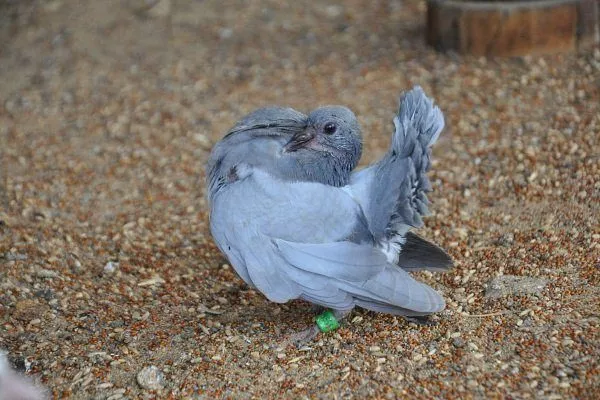
Birds usually remain with their parents until their first molt. However, sometimes they are separated from their parents much earlier. In these cases, they should be kept in brooders under a lamp. The temperature should be 35°C, with the light constantly on. After two weeks, the temperature is gradually reduced to 25°C, with daylight hours reduced to 12 hours.
Feeding rules
There are certain rules that should be followed when feeding such pigeons:
- Since the peacock pigeon has a small beak, they are not given whole grain; it is necessarily crushed into small fractions.
- The portion of food should be such that the pigeon eats its fill, eating everything clean, otherwise it will dig up the remaining food with its paws, scattering it around.
- A pigeon's fullness can be determined by its crop. It should feel soft and full, but not tightly packed.
- The number of meals depends on the season. In summer, they are fed three times a day, and in winter, twice.
- After the evening feeding, all feeders are removed, cleaned, and washed. They are returned in the morning, filled with food.
- During warmer months, your diet should include fresh green grass; you can grow it yourself or collect it from lawns in ecologically clean areas.
On average, one individual consumes 45 grams of food per day. This portion is half that of their flying relatives. Peacock pigeons, particularly those that are flightless, have underdeveloped muscles and a weak esophagus.
Peacock doves can suffer from anemia. After consulting with a veterinarian, potassium chloride and trace elements are added to the water, and the food is fortified with B vitamins.
Diet of peacock pigeons
The diet depends on the season; it is adjusted during the mating season, while laying eggs, incubating and feeding chicks.
Winter
The diet increases the proportion of high-calorie foods, but not those containing a large amount of protein. The menu consists of:
- 40% wheat;
- 60% oats.
This type of food allows the birds to quickly replenish their energy, warm up and avoid freezing.
Pigeons are not fed legumes and chopped vegetables in winter.
Before mating
Beginning in mid-February, the birds begin preparing for mating. Protein-rich legumes are introduced into the diet. They should make up no more than 20% of the main feed, and up to 12% of oilseeds are added:
- flax;
- hemp;
- sunflower.
Tribal diet
To ensure successful rearing of young animals, in March the feed is additionally enriched with mineral supplements, vitamins, oils, and amino acids. A sample menu consists of:
- from 30% crushed wheat;
- 5% sunflower seeds;
- from 15% millet, the same amount of oats and crushed rye crackers;
- 4% flax or hemp seeds;
- 1% feed yeast or raw dough.
- and also add tocopherol (vitamin E) 3 drops per 1 kg of feed mixture and 70 g per 1 kg of potassium iodide.
Flight ration
If you're training peacock pigeons to fly in a circle, change their diet again in April. While in flight, birds lose a lot of strength and energy, so they're given carbohydrate-rich foods that are easily digested. For example, prepare the following mixture:
- 20% of representatives of the legume family - peas, vetch;
- 30% each of barley and millet;
- 10% - wheat;
- 5% oats and hemp seeds.
Moulting period
These pigeons begin molting in August and finish in October. It's crucial that it's completed by winter. Otherwise, weakened birds are susceptible to various diseases, and their feather quality deteriorates.
To help the birds get through this difficult period more easily, protein-rich foods are added to their diet. A sample menu looks like this:
- 20% peas;
- 20% millet;
- 20% oats;
- 10% wiki;
- 10% wheat;
- 10% barley;
- 10% dried corn.
Add 10 ml of fish oil to 1 kg of feed mixture.
Maintaining cleanliness
Drinking bowls and feeders are washed daily with non-aggressive detergents, only after which clean water is poured into them and food is added.
The walking area and the poultry house are cleaned daily of droppings and food scraps. Disinfection is carried out monthly and always before nesting. For this purpose, all pigeons are moved to another room or released outside.
The poultry house is first cleaned, all dirt is scraped off, and then thoroughly washed with chemicals:
- 2% paraformaldehyde;
- 2% chlorocresol;
- 3% solution of slaked lime.
The choice of disinfectant depends on the purpose of disinfection. If a pathogen is detected in the premises, treat it once every 4-7 days for one month with the following solutions:
- for smallpox, a solution of slaked lime or chlorocresol is used;
- for paratyphoid fever - a solution of formalin or slaked lime;
- for coccidiosis - chlorocresol;
- for toxoplasmosis - formalin or bleach;
- Treatment with chloramine, caustic soda, or bleach will help defeat pseudoplague.
Birds can be introduced into the treated room only after it has dried and ventilated. All items removed from the dovecote are burned. The wire is blown with a blowtorch.
Every year, the top layer of the earthen floor is removed and replaced with a new one. If the floor is concrete or wood, it is covered with sawdust, which is replaced daily.
Diseases
Ornamental breeds require vaccinations and preventative measures. The following diseases are most commonly reported in peacock pigeons:
- Infectious ornithosis or psittacosis Chlamydia is a contagious viral infection that can be transmitted to humans through an infected bird. It is caused by an intracellular microorganism called chlamydia. Symptoms are immediately visible. An infected bird will have wheezing sounds in its lungs, mucous discharge from the eyes and nose, loss of appetite, and possible diarrhea. In advanced cases, the bird is euthanized to prevent an epidemic from developing.
- Trichomoniasis or flagella infection. The causative agent is a flagellated microorganism called Trichomonas. It can remain active in drinking water for a long time. It thrives and multiplies readily on the mucous membranes of the larynx, oral cavity, esophagus, and crop. Hard yellow formations called "yellow plugs" appear on these mucous membranes. This interferes with the pigeon's normal breathing. The bird becomes motionless, its wings droop, and its beak open.
The disease is often accompanied by diarrhea due to damage to the internal organs of the digestive system. The feces have a strong putrid odor. The abdomen is bloated. - Coccidiosis The disease is caused by a protozoan called coccidia, which is spread through pigeon droppings. Once in the body, these microorganisms begin to rapidly multiply in the digestive system, damaging internal organs. The disease causes enteritis—inflammation of the intestinal walls—and bloody diarrhea. The disease spreads very quickly in warm and humid environments, causing epidemics within the flock. Read more about coccidiosis in pigeons. here.
- Salmonellosis or paratyphoid fever The disease is caused by Salmonella bacteria. It enters the bird's body through the droppings of an infected bird, through feed if it was in a dirty feeder, and through water. The bacteria are also dangerous to humans. If personal hygiene is poor, it can enter the body and cause illness.
Paratyphoid fever is also transmitted by insects, rodents, and other animals. Birds lose their appetite, and their overall health deteriorates. Internal organs become affected. An infected female lays infected eggs, which hatch into chicks infected with the disease. They die within 15 days of birth. - Toxoplasmosis The disease is caused by single-celled, motile organisms with a complex structure. They are quickly killed by sunlight and, when exposed to disinfectant solutions, within 5–10 minutes.
Infection most often occurs through contaminated feed and water, and rats are also carriers. Humans can also become infected, so it's important to consult a veterinarian at the first sign of illness in pigeons.
The main symptoms of toxoplasmosis include spinning, an unsteady gait, refusal to eat, and paralysis. There is no treatment. Sixty to seventy percent of infected birds die, while the remaining birds develop a chronic form of the disease. They become carriers of the infection and shed the pathogen into the environment through their droppings.
A complete list of pigeon diseases is presented in this article.
All of these diseases are easier to prevent than to treat. To achieve this, take the following preventative measures:
- regularly disinfect the premises, feeders, and drinking bowls;
- the birds are walked in the fresh air;
- in winter and during the feeding period, vitamins are added to the feed and water;
- sick individuals are sent to quarantine;
- the livestock is vaccinated in a timely manner;
- Antihelminthic drugs are given 1-2 times a year.
Helpful tips for beginners
Beginners will find it helpful to follow the following rules:
- Don't buy several pairs of peacock doves at once; limit yourself to buying one to see if you like it or not.
- If the site with the dovecote is located near a forest, then it is necessary to take care to protect the birds from wild predators.
- Spend plenty of time with the birds. They should become tame and not be afraid of their owner.
Peacock pigeons are fascinating and beautiful birds. The above recommendations for selecting and caring for peacock pigeons will help a pigeon fancier raise elite pedigree pigeons and their healthy offspring.