
Among the breeds of flying pigeons, the Pakistani (or "Indo-Pakistani") is considered one of the best. These birds are characterized by remarkable endurance, excellent navigation, and adaptability to various climates. The breed's strengths lie in its high and long flight, as well as its exceptional acrobatic abilities.
Origin of the breed
Pakistani fighting pigeons originated in neighboring India, which is why they are often called Indo-Pakistani. Both Asian countries are the birds' homeland, where they have been bred for decades. These birds easily tolerate dry and hot climates (up to 50 degrees Celsius), so they spread to Central Asia. They were kept by Arabs and Indians, who developed their skills and appearance.
Today, Pakistani pigeons are popular in the UAE. They are one of the few pigeon breeds, if not the only one, that has been kept and bred in the Emirates for several decades. This variety is highly prized for its ability to fly extremely long distances, and special competitions are held. The most resilient ones are used to breed the Royal Pakistani pigeons. Competitions are held twice a year.
Description of appearance
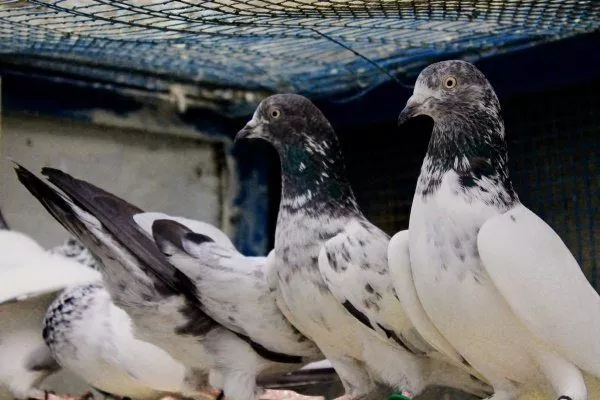
Pakistani pigeons have no generally accepted breed standards. The appearance of individual pigeons can vary dramatically—in plumage, color, pattern, the presence or absence of forelocks and tufts, body length, etc. Among Pakistani fighting pigeons, several subtypes are distinguished, each with slight differences in appearance. However, birds of this breed do share some common characteristics.
So all "Pakistanis" have the following external characteristics:
- Average size – 27-28 cm.
- Broad, developed chest.
- Small head (compared to the body).
- A tail consisting of 12 or more feathers. It is long, which is uncharacteristic for flight breeds.
- ✓ The presence of needle-shaped or peak-shaped forelocks.
- ✓ Variety of eye colors: blue, black, orange, red.
- ✓ Plumage on the legs in the form of trousers or shaggy feathers.
The birds' plumage is dominated by light tones, most often white. The pattern becomes established after molting. The pattern remains throughout life. Pigeons' feathers are uniformly colored, but the plumage pattern is distinct.
The color of different body parts (wings, head, neck) and the body varies. Eye color can be blue, black, orange, or red. Pigeons can have different body plumage patterns. For example, they may have breeches, shaggy legs, shaggy feathers, topknots, and feathers on their heads or without. If they have topknots, they may be pointed or peaked.
Flight qualities and characteristics
The high-flying Pakistani fighting pigeon breed has a distinctive flight style that has earned them fame. These birds perform acrobatic feats in the air, often flipping head over heels as they gain altitude and enter a so-called "column." Because of their loud wing flapping, they are considered a "flying pigeon." fighting breedsThe favorite pastime of the "Pakistani" is to rise high into the sky and soar there, performing their stunts.
Pakistani pigeons can stay in the air for 22 hours. They broke the world record in the 1990s.
It's interesting to note that females develop their flying skills earlier than males. This is explained by their early maturation. However, regardless of sex, pigeons require training. Breeders aren't intimidated by the alternative of long training sessions with their charges, as the subsequent performances make the time investment worthwhile. Skills, both natural and inherited, simply need to be honed. Excellent abilities are perfectly matched by the birds' docility and ease of care.
Conditions of detention
It's important to understand that these birds originate from hot climates. Therefore, they must be kept either in a warm climate or in a heated room where the temperature does not drop below 20-25 degrees Celsius.
The home can be either a specially equipped dovecote, an insulated attic, or the house itself. In the latter case, the number of birds will have to be reduced to 2-4 pairs. In the first two options, achieving comfortable conditions for the birds is challenging, as the pigeons must have access to the outdoors through windows at any time of year (even during severe frosts).
Facilities and standards of the premises
When choosing a warm attic above a living space for a dovecote or building a separate house from scratch for housing the birds, it's important to ensure the birds don't become overcrowded. The recommended stocking density is two pigeons per square meter. If 10 or more pairs are planned, the structure should be divided into separate compartments for each pair.
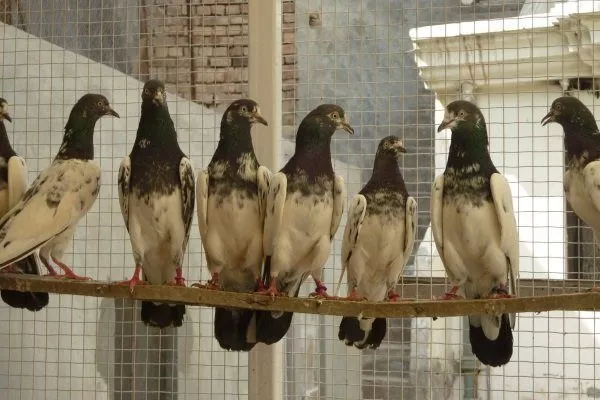
It's important to remember that during the winter, males and females are temporarily separated. Suitable rooms are provided for this purpose. According to regulations, a separate compartment should also be provided for young birds.
Pigeon housing is designed according to accepted standards. Here are some general rules:
- The room should be free of dampness, drafts, and dirt.
- It is important to protect birds from invasion by predators – cats, rats and other unwanted guests.
- The exit from the dovecote is to the south.
- If the nest is located on the ground, the floor should be raised at least 25 cm, otherwise the birds may freeze. If necessary, heaters can be installed in the room.
Pakistani high-flying pigeons are considered a sporting breed. Like other members of this species, they require a spacious aviary for sunbathing. The minimum aviary size is 3x5 m.
The facade is typically made of mesh, and the walls are covered with plywood. Inside, there's a bath, a water bowl, and a feeder, as well as boxes filled with fresh green grass for the pigeons to enjoy.
Ventilation, humidity and temperature
As with any dovecote, the Pakistani dovecote's home must have a well-functioning ventilation system. Drafts are eliminated. Air exchange is ensured by supply and exhaust pipes. The exhaust pipe is positioned 15 cm above the floor, and the supply pipe is located near the ceiling. The ventilation outlet and inlet are covered with mesh to prevent curious birds from getting stuck in the pipes.
A comfortable temperature is the second important requirement for a dovecote. As mentioned above, the optimal temperature for these heat-loving birds is 20-25 degrees Celsius or higher. In winter, it shouldn't fall below 20 degrees Celsius. How can you tell if your birds are cold? The following signs will tell you:
- the birds are inactive;
- sit in one place;
- gather in groups;
- their feathers are ruffled.
The humidity level required for pigeons' health is 65-70%. Excessive humidity can cause them to become infected with fungal diseases. To maintain the required humidity, several containers of water can be placed in the dovecote. Pakistani doves also require 12 hours of daylight. To achieve this, the dovecote should be equipped with windows and artificial lighting.
Nests and perches
The dovecote is equipped with wooden perches, raised 20-30 cm from the floor. The perches should be of a suitable thickness—2-3 cm—to ensure comfortable perching for the birds. Each perch is 30 cm long. Proper perch design affects the health of the birds and the quality of their future offspring. The material is carefully selected: pre-painted and sanded.
Pigeons spend most of the cold season on perches, as they get cold in an aviary. It's important to provide them with a comfortable perch.
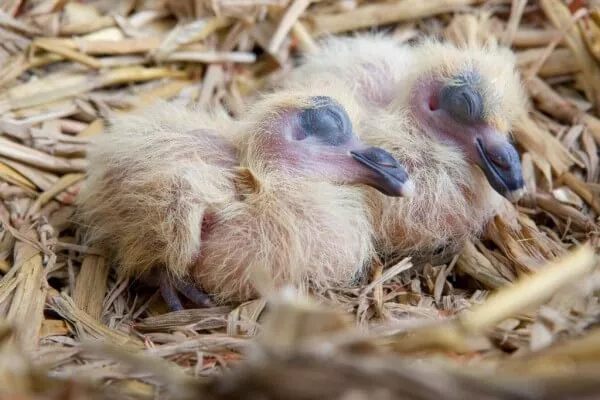
Pigeons need nests to lay and hatch their eggs. They can be constructed from wooden beams or as wooden shelves placed along the walls. Each shelf is divided into square compartments, which comfortably accommodate up to three pigeons.
Nests are lined with straw, and after a successful mating, the owner can provide the mated female with nesting materials: feathers and down, small twigs, woolen threads, and other small items. She will furnish her nest herself.
While the female is incubating her eggs, approaching her is not recommended. She becomes nervous, leaves the nest, and displays maternal instincts, eager to protect the chicks, especially if the visitor is unfamiliar. Doves approach humans, expressing indignation by vigorously flapping their wings. Only after the humans leave do they return to their chicks.
Maintaining cleanliness and bedding
Maintaining hygiene in the dovecote is essential for the birds' health. The owner should regularly clean the room, thoroughly disinfect it before introducing the pigeons, and follow these tips:
- Carry out scheduled disinfection once a month.
- Ventilate the dovecote after disinfection for at least 2-3 hours.
- Wash the drinking bowl and feeder once a day.
- Change the bedding as it gets dirty, but at least once every 7 days. During damp weather or when the pigeons' immunity is weakened, it's advisable to change it daily.
- Wash floors, walls, and perches with soapy water. Mild disinfectants are permitted.
The litter in the room should not become a breeding ground for microorganisms. It can be made of various materials, but it is preferable to choose absorbent ones, such as river sand or dry peat. Shredded oak bark can also be used. Sand, wood chips, or peat should be spread in a thick layer of 2-3 cm.
Feeding and watering
For Pakistani pigeons, it's recommended to use closed containers, such as pneumatic or vacuum drinkers placed on the floor, as waterers and feeders. These prevent debris from getting into them, and birds that enjoy rinsing themselves in water will avoid doing so in closed waterers.
The feeder should be large enough to allow all birds access to food at the same time. It should be made of materials that do not absorb moisture, which prevents mold growth.
What should pigeons be fed? Their main diet is cereals (60%), such as barley, with the addition of fresh vegetables and fruits, carrots, potatoes, and apples. You can also add fatty grains and legumes (peas, lentils), chalk, meadow grass, and herbal infusions (succession, chamomile) to their diet to boost their immunity. Don't forget about fluids. The water in the drinking bowl should be changed daily.
A balanced diet affects pigeons' lifespan, health, and appearance. When creating a menu, it's important to maintain a reasonable calorie intake to prevent the birds from becoming overweight, as this reduces their mobility and flight performance, which can lead to dangerous and even fatal falls. The amount of food consumed by the birds is calculated based on the time of year.
The general rules are:
- Each individual takes about 40-50 g of food per day, in winter the norm increases slightly.
- During the breeding and moulting period, birds also require enhanced nutrition: 60 g per pigeon.
Training Pakistanis
Pakistani pigeons are among the finest high-flying birds. However, to be among the leaders, they require consistent training. While long-distance flight is in their genes, they are not designed to perform acrobatic tricks and maneuvers on their own. Experienced breeders know this and are willing to teach their charges the ropes.
Among Pakistani high-flying pigeons, two types are distinguished:
- Those who start to fly correctly at an early age of three months.
- Those who master the skill at the age of one and a half years, i.e. late.
Pigeons that have not mastered the art of aerobatics are called "simpletons" by experts.
Young birds require a lot of time and training every day. It's recommended to choose early morning training in calm, clear weather. Pakistani birds require clear air with updrafts. In bad weather, they may not be able to find their way home.
Only after completing a short training session do the pigeons have breakfast. Longer sessions are held once a day (5 hours on average), and if the training session is long—10-12 hours straight—the pigeons need a rest break on the following days.
Features and stages of training
It's best to start training Pakistani pigeons in a group. This is done in several stages:
- First of all, the young animals are trained to their place.
- Then the flights with the leader pigeon begin.
- Once the pigeons have settled in, you can let them fly on their own.
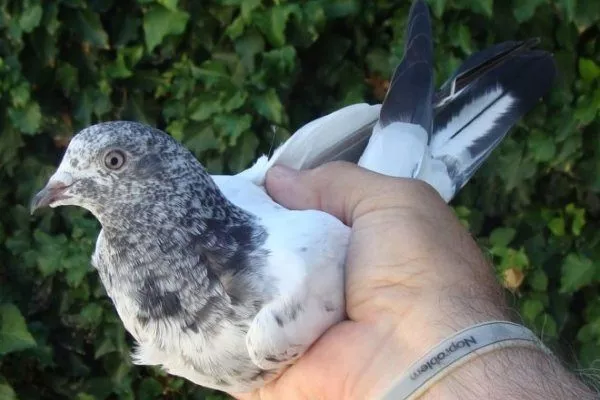
It's important to take safety precautions. Pakistani pigeons sometimes become disoriented and, when practicing somersaults, lose balance, altitude, and can even crash. If the owner feels a bird is struggling in the air and there's a risk of falling, the bird can be pinned, meaning its flight feathers are pulled. After training, the pigeon will remain disoriented while performing the maneuver.
Tricks and training time
Soon, the birds develop a distinctive flight style. They rise high into the sky and begin performing the tricks that have made Pakistani birds famous. The most recognizable acrobatic feats include:
- They hover in the air for long periods, rising so high that it can be difficult to see them from the ground. The "Pakistanis" freeze in place with their wings outstretched.
- Perform somersaults, accompanied by a fight - a loud flapping of wings.
- By jumping in the air, with each new somersault you rise higher and higher, which is called “coming out into a column.”
Generally, by one year of age (less often by 1.5 to 2 years), young fliers reach the level of skill expected by their breeders. They hone the necessary coordination, and now there's no need to worry about them. Trained "Pakistanis" are agile and strong, confidently maintaining their position in the air, resisting air currents, and performing somersaults while maintaining balance. They spend long periods in the air without any harm to their health, impressing with their strength, speed, and endurance.
Keeping Pakistani pigeons isn't for everyone. They require a lot of attention, not in terms of care, feeding, or housing, but in terms of training. However, with a little effort and a responsible approach to breeding, Pakistani pigeons will delight their owners with their flying skills and acquired skill.