
German show pigeons are regular participants in international pigeon shows. This breed was developed not for practical purposes, but for exhibition purposes.
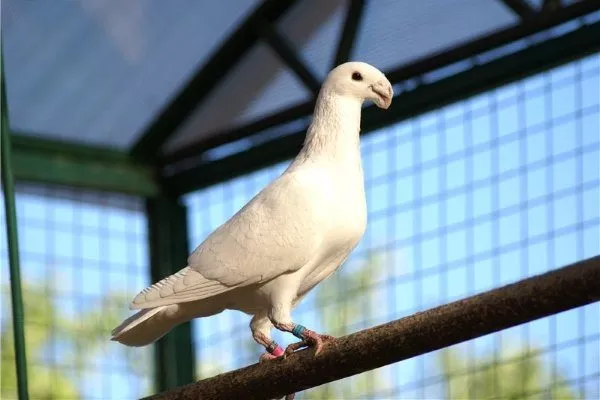
German show pigeons
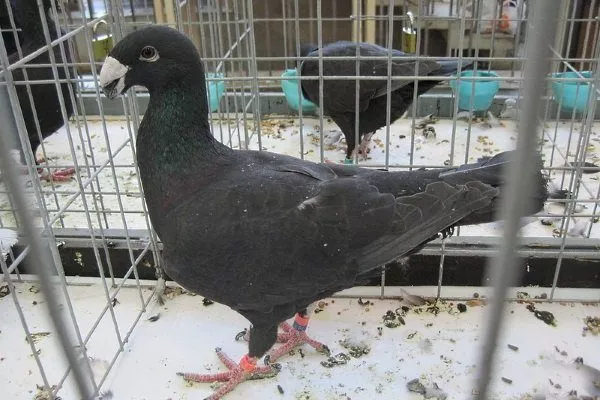
The German show pigeon breed has gained popularity on a European scale
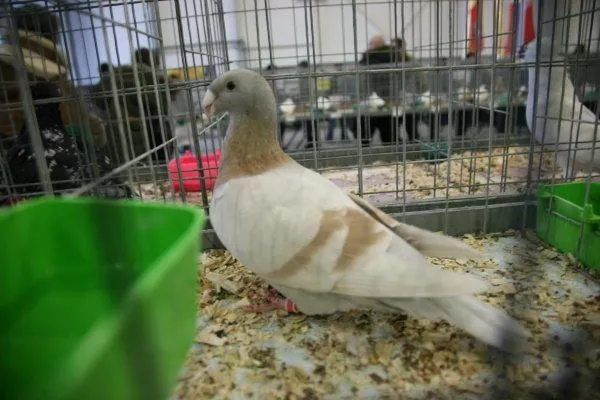
These amazing German show pigeons are distinguished by their elegant forms and proportions.
The bird's appearance
In appearance, this is a noble, stocky pigeon with thick and smooth plumage.
Characteristic features:
- Small, strong body.
- The head is massive and tapers to a wedge-shaped point at the beak.
- Bulging, expressive eyes from red-brown to dark color (depending on color).
- Closed beak. Medium in length, blunt.
- A white, elongated cere. It lies close to the beak.
- Long narrow neck (height 1/3 of body length).
- Short, rounded chest.
- Strong, prominent wings.
- Narrow tail. Extends beyond the wings to the width of a thumb.
- The paws are strong and featherless. The metatarsus is red.
The colors come in a variety of colors: bluish-gray, with black and white belts, white, black, blue without belts, red (with and without speckles), yellow (with and without speckles), spotted, brindle, etc.
The piebald colors of Gomers are especially prized. If a bird has only a few colored and white feathers, it won't be called piebald.
History of origin
The Belgian (Antwerp) and English homing pigeons developed in the 19th century inspired German breeders to create their own breed. Thus, in the early 20th century, German show pigeons (also known as German Homers) emerged.
A club for show pigeon enthusiasts was established in Leipzig before the First World War. The new birds were popular, as other breeds bred at the time were prone to inconsistency. Around 500 pigeons were exhibited at the first German shows.
The ancestor of the domestic pigeon is the rock pigeon. Wild birds were domesticated about five thousand years ago. Initially, they were bred for food. Then, people noticed that pigeons were able to return to their homes. They began to be used for postal messages. Later, ornamental breeds emerged that served aesthetic purposes.
German zootechnicians conceived the idea of creating a breed that would stand out from other show pigeons in its graceful lines and forms, beauty, and strength. To eliminate these shortcomings, they crossed only purebred pigeons.
In 1921, the clubs united into a single union. Scifert and Aschersleben drew the ideal image of the German show pigeon, which became the national standard.
Improving the breed over half a century in captivity has led to positive results: high-quality and correct proportions of the head and body.
Poultry farmers periodically proposed revising and clarifying the standards. Disputes often erupted. In 1948, at a joint meeting, union members decided to retain the previous standards without changes.
After the war, German pigeons became one of the most popular breeds in the USSR. Over time, interest in German Homers in our country began to wane. Soviet pigeon breeders focused on creating and maintaining domestic breeds. This led to the loss of important traits and crossbreeding with other pigeon species.
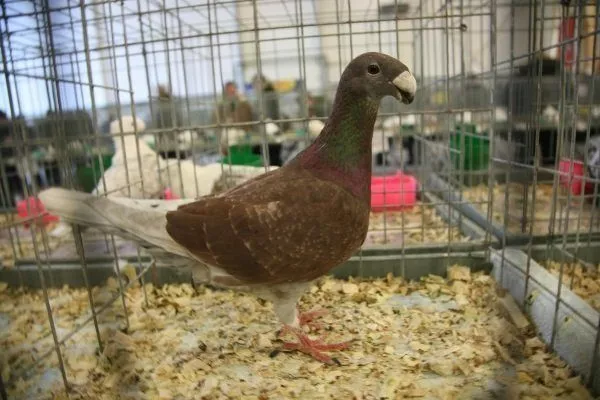
Flight qualities
Flight skills are poorly developed, as this is an ornamental bird. When creating the breed, German specialists focused on appearance and proportionality. Furthermore, the pigeons were kept in an aviary.
The fascination with decorativeness in the 20th century had a negative impact on pigeon breeding: many pigeon breeds lost their good flying abilities.
Ornamental pigeons adorn courtyards, parks, and winter gardens. The external structure of these birds differs from that of common species. Pigeons differ in pattern, color, body shape, and posture. Some breeds resemble seagulls, swallows, and storks.
Breed characteristics
One of the breed's main characteristics is its festive appearance. The bird should look like a strong flyer.
Shows are usually held in winter or early March, after the breeding season, to avoid harming future offspring. Holding a show during the breeding season can result in eggs being laid directly in the cages. The molting period is also taken into account. During this time, the birds are fed supplements that enhance the intensity of their feather color and luster. For example, yellow-coated pigeons are given corn. To look their best, the birds must completely molt.
Main breed characteristics:
- horizontal stand;
- thin straight profile;
- wide distance between eyes;
- proportional, well-defined physique;
- smooth plumage, close-fitting to the body.
- ✓ Compliance with head and body proportions standards.
- ✓ Absence of curly plumage and other unacceptable defects.
- ✓ Uniformity and clarity of color, narrow and intensely colored belts.
Blue and black pigeons have a dark-colored beak, while colorful and light-colored pigeons have a horn-colored beak.
The coloring should be clear and uniform, with narrow, intensely colored stripes. The base color should cover the pigeon's entire body.
Unacceptable defects
The widespread craze for pigeon breeding, both among experts and non-specialists, has led to the destruction of the gene pool of purebred individuals.
Connoisseurs carefully evaluate purebred pigeons. The following are considered unacceptable faults in German show pigeons:
- rough, coarse head;
- open or pointed beak;
- curly plumage;
- protruding Adam's apple;
- white back;
- crooked chest;
- uncharacteristic (white, yellow) eye color;
- disproportionately developed torso;
- huge ceres;
- red eye rings;
- too tall or too short.
There are known cases of crossing German exhibition pigeons with other breeds of pigeons for meat production.
The first German Homers were good fliers. Today, they are weak fliers, but they are beautiful athletes among the pigeon breeds destined for show.