
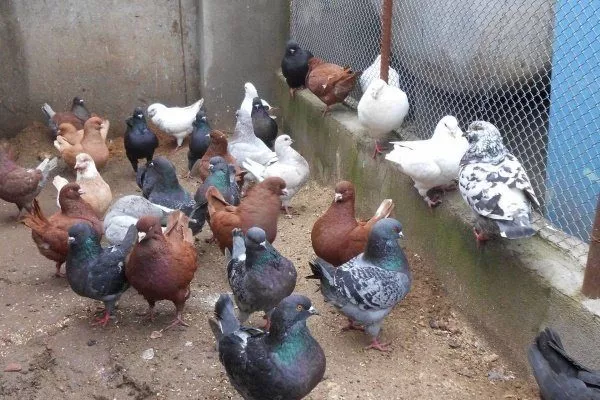
Meat pigeons are bred and raised for food. Unlike other breeds of domestic pigeons, they are larger, weighing an average of 650 g. This group of birds includes over 50 breeds, many of which are raised commercially in the United States, Hungary, France, and Italy. What these breeds are, how to breed them, and how to care for them will be discussed below.
Popular breeds
Meat pigeon breeds vary in weight, plumage, and fertility, so it's worth taking a closer look at their descriptions.
- ✓ Consider the climate conditions of your region, as some breeds, such as the King, are better adapted to warmer climates.
- ✓ Consider the breed's fertility if you're aiming for maximum meat yield. Breeds like the Texan can produce up to 22 chicks per year.
- ✓ Consider the housing requirements: for example, Carno is best suited for aviary keeping.
| Name | Weight of an adult (g) | Fertility (chicks per year) | Slaughter yield (%) |
|---|---|---|---|
| Strasser | 800-1200 | 12 | 58-62 |
| King | 700-1500 | 18 | 60 |
| Texan | 700-900 | 16-22 | 60 |
| Roman giant | 1300-1800 | 4-5 | 60 |
| Carnot | 600-650 | 12 | 60 |
| Monden | 700-1100 | 12 | 60 |
| Prachensky Canic | 550-750 | 12 | 60 |
| Polish lynx | 800 | 8 | 60 |
| Modena pigeon | 350-500 | 12 | 60 |
Strasser
The breed was developed in the 19th century in the province of Mahrischer Strasser, hence its name. The external characteristics of the Strasser are as follows:
- the head is large with a convex wide forehead;
- the neck is of medium length and slightly arched;
- the beak is strong, medium-sized and with a small cere;
- the body is strong and massive, about 40 cm long;
- the back is straight and wide;
- wings are wide and of medium length;
- paws are bright scarlet;
- The tail is narrow, medium-sized.
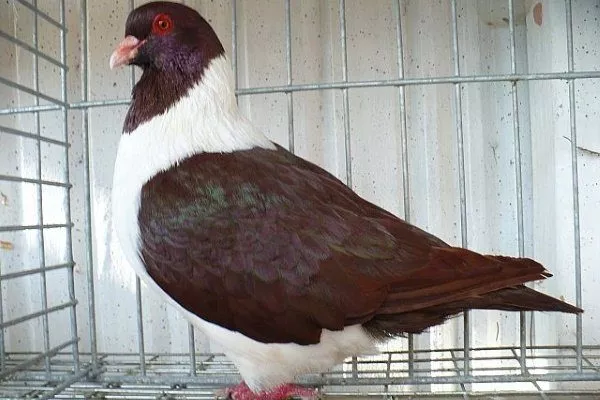
The unique coloring of this breed of pigeons is worth noting separately: their thighs, lower body, and neck are white, but the rest of the body is colored, that is, the color can be blue, gray, yellow, red, or black.
Some poultry farmers describe Strasser pigeons as plump: males can weigh up to 1.2 kg, while females weigh 800 g. Typically, by day 30, chicks weigh 600-700 g. Over the course of a season, a pair of pigeons can produce up to 12 chicks, which yield up to 7 kg of fine-fibered meat. Thus, the slaughter yield of this bird is 58-62% (this figure may vary and depends on the conditions).
To obtain the maximum mass of offspring, it is worth removing birds that are over 5 years old from the dovecote.
King
The breed was developed in the United States by Californian poultry breeders in 1890 by crossing several species—Maltese and Roman pigeons, with the Roman giant being the breed from which it derives its meat qualities. The breeders' goal was to produce a large pigeon that would grow quickly and be highly prolific. Thus, this bird is dual-purpose, being used both for meat production and for exhibitions.
King has a compact and cast body structure with the following external characteristics:
- the figure is tall and stately;
- the head is large and carried proudly (this adds an impressive appearance to the pigeon, which is why it received its royal name);
- the neck is thick and almost vertical;
- the beak is medium-sized, powerful and strong;
- the chest is wide and voluminous, slightly protruding forward;
- flat back;
- wings are short and straight;
- The tail is small and raised (looking up).
Kings' plumage can come in a variety of colors. In the classic form, these pigeons are solid-colored—white, black, red, or brown. More unique variations, however, feature bands of varying colors—brown, blue, silver, ash-red, and ash-yellow. The most popular color is pure white. In this case, the pigeons often have black eyes. If the plumage is colored, the eyes are more often yellow.
These birds have a lively and feisty nature, often displaying aggression. They are capable of flight, but have poorly developed gliding skills.
Adult show Kings can weigh up to 1.5 kg. If raised for meat, they can weigh around 700 g at 45 days of age. Under proper care and with a balanced diet, a female will produce up to 18 chicks per year.
You can clearly see Kings of different colors in the following video:
It should be noted that pigeons of this breed are better suited for raising in warm climates. Thus, they are actively bred in Europe and the southern and central regions of Russia, including the Krasnodar Krai and Rostov Oblast.
Texan
This breed also has American origins, having been developed in the last century in Texas. The Texan's main distinguishing feature is its high fertility. Under favorable conditions, a single pair can produce up to 22 chicks per year. The average litter size is between 16 and 20.
The external characteristics of the Texan are as follows:
- head of medium size;
- the neck is short, positioned vertically;
- the body is powerful with a small belly;
- the chest is fleshy, wide and projecting forward;
- wings of medium length and tightly pressed to the body;
- the tail is short (up to 15 cm) and raised upwards;
- The legs are short, strong and set wide apart, which is a common distinguishing feature of all meat breed pigeons.
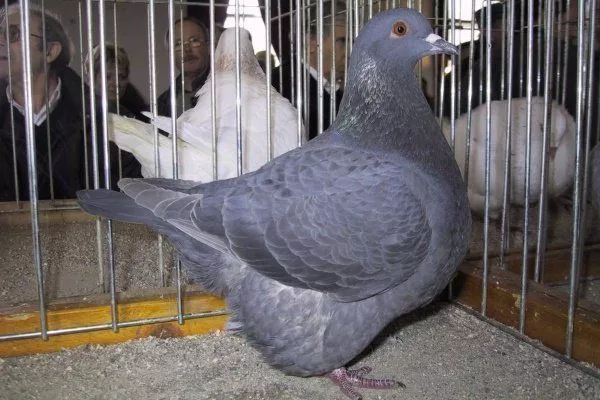
It's worth noting that the sex of this breed's chicks can be distinguished very early. Male chicks are naked after hatching, while females are covered in long, yellowish down. A brown spot appears on their beak after a few days. Adult males are light-colored, while females are darker. Their wings are brown or cream-colored with bands, and their breasts are blue, smoky-gray, or brown.
Texans digest food well, grow and gain weight quickly. On average, they weigh 700-900 g, and by the age of one month, they already weigh around 600-750 g. They can fly well, but most prefer to move on the ground.
Texans are known for their calm temperament and undemanding living conditions, making them a popular choice for poultry farmers who want to spend minimal attention on their flocks but still want a good meat yield.
Roman giant
The breed's origins lie in what is now Italy, as it emerged during the reign of Ancient Rome. It is believed that the image of a Roman giant is carved on the interior columns of St. Peter's Basilica in the Vatican. The breed is actively bred in Spain, southern France, and the United States.
The Roman pigeon is a large bird, weighing up to 1.3 kg. Larger specimens are also known. In 1906, a bird weighing exactly 1.8 kg was presented to the American Roman Pigeon Club. The average length of a Roman pigeon is 50 cm, but its wing length can reach 100 cm.
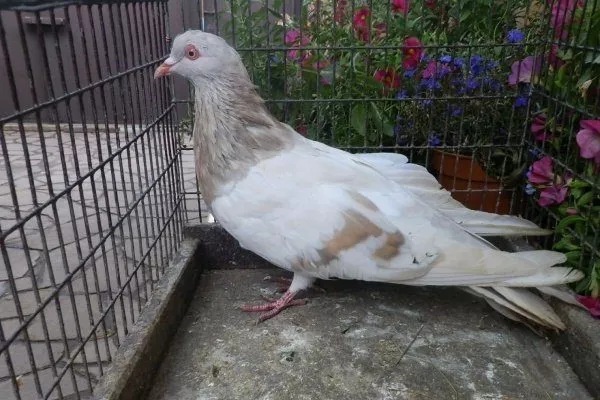
These pigeons are similar in build to common pigeons, but are twice as large, hence the nickname "giant." American representatives of this breed have some external differences from their European counterparts. They are somewhat shorter and plumper, with shorter wings and tail. European representatives have a smaller head, a longer neck, and a slender body. The Roman giant can come in a variety of colors:
- red;
- yellow;
- silvery;
- white;
- black;
- blue;
- red-ash;
- with or without belt.
Roman pigeons have a calm and peaceful nature, despite their impressive size. They rarely fight and are easily tamed. These birds are practically flightless. One drawback is their low fertility—up to 4-5 chicks per season. For this reason, this breed is kept in smaller numbers than more productive modern breeds like the Strasser.
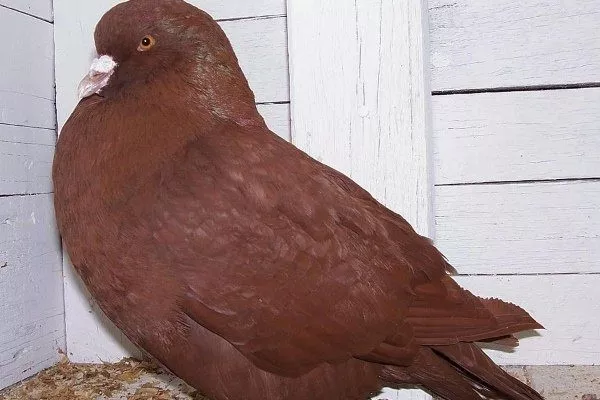
Carnot
This breed is considered to have originated in France, and was introduced to the USSR from the United States in the 1960s. Carnot pigeons were developed during a time when aviary-based housing of meat pigeons, with maximum mechanization of all processes, was becoming popular, as this allowed breeders to reduce meat production costs. Thus, Carnot pigeons are best suited for aviary-based housing.
The external characteristics of the individual are as follows:
- the head is small, not in proportion to the body;
- the beak is long, pinkish in color, slightly curved downwards;
- the neck is thick and short;
- the thoracic region is excessively convex;
- paws without feathers, small;
- the feathers are thick and wide;
- the tail is short, hanging down to the floor.
Carnot pigeons can be solid (brown, white, or black) or variegated (white with blue-gray or red feathers, or brown with white feathers). In any case, these pigeons are relatively small, weighing approximately 600-650 g. Moreover, this breed is the fastest maturing of meat pigeons, gaining weight within two months. Poultry farmers prefer young birds because their meat is more tender.
Monden
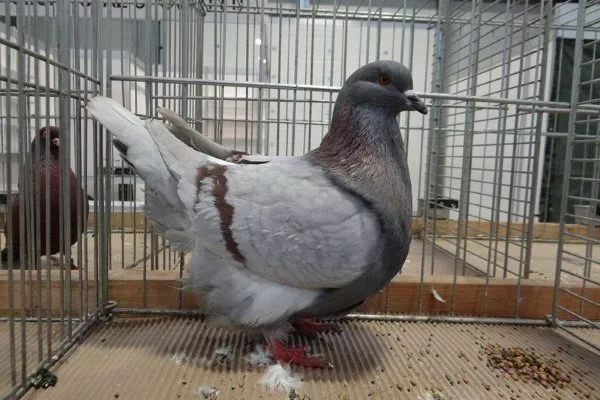
The breed was developed by French breeders in the city of Mont-de-Marsan, hence its name. Mondain pigeons are distinguished by the following characteristics:
- high meat yield, which averages 60%;
- high massiveness index – about 28.7%;
- high index of edible parts (82.6% for males, 81.3% for females), so almost the entire bird can be eaten.
Visually, Monden looks like this:
- the head is small;
- eyes are small and brown;
- the beak is medium-sized and reaches 0.3 cm;
- the neck is thick and short, almost invisible;
- the body is powerful with a wide and convex chest;
- the wings are small and tightly pressed to the body, almost not visible;
- silver feathers;
- the legs are short, dark red, almost black;
- the tail is short and raised upwards.
Monden pigeons can be fattened to a maximum of 1.1 kg, and at one month of age they weigh an average of 500-700 g. The minimum weight of adults is 700 g. The meat yield during rapid weight gain is 60%, and most of the carcass can be used for food.
These birds are resistant to various diseases, grow and gain weight quickly, and are therefore often used for crossbreeding and breeding highly productive hybrids.
Prachensky Canic
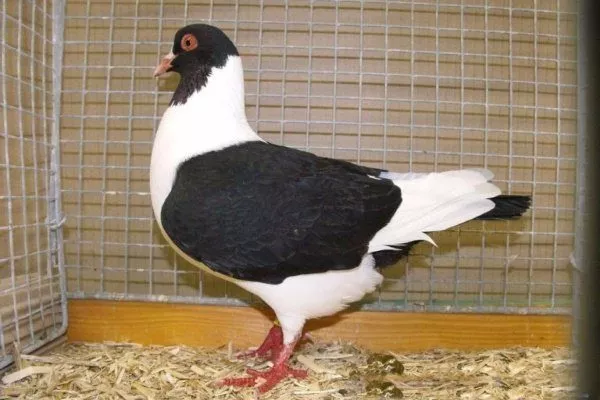
An ancient Czech pigeon breed, also found in Crimea. It was developed by crossing several types of pigeons—the Czech Lapwing and the ground pigeon (Domestic, Florentine, and Viennese). Its appearance resembles that of the blue Kanik, hence its common name, "Buzzard." The Prachen Kanik's characteristics are as follows:
- the head is small;
- orange eyes;
- the beak is strong and orange-red in color;
- medium sized neck;
- the body is small and graceful;
- the chest is convex and wide;
- wings are well developed;
- paws are medium sized, without feathers;
- tail directed upwards and continuing the line of the back.
Representatives of this breed grow quickly, gain weight, and exhibit resistance to many diseases. Unlike other meat pigeons, they fly well. Males weigh an average of 550-750 g, while females weigh up to 600 g. A large number of chicks of this breed can be hatched within a year, and they will be well-fed and fleshy.
Polish lynx
This breed is of Polish origin and is often raised on an industrial scale to produce excellent meat. It should not be crossed with other species, as this carries a high risk of loss of meat quality.
Unlike many of its relatives, this pigeon has a large head and a long beak. Its legs are not short, but medium-length, and are traditionally widely spaced. Typically, these individuals are uniform in color—black, white, gray, brown, or blue—but some have stripes or spots of a different color on their neck, wings, and tail.
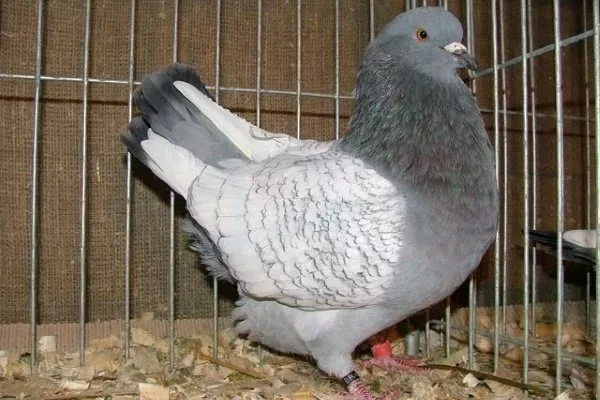
The Polish lynx is easy to care for and grows quickly. An adult weighs an average of 800 g. Fertility is relatively low, with about eight chicks per year. These chicks are calm and capable of flight.
Modena or Modena Dove
The breed was developed in Italy in early 1327 and named after the city of Modena. It is considered to be virtually the only truly European breed. Its external characteristics are as follows:
- the head is small;
- the neck is large and almost not prominent;
- the chest is convex, wide and fleshy;
- the back is short and wide;
- wings are short and slightly raised;
- The tail is short, narrow and raised upwards (located at the level of the neck).
The Modena pigeon's plumage can come in a variety of colors, with over 200 variations identified by breeders. The most popular are blue, bronze, black, silver, red, cream, and yellow. Travel variations and combinations of these colors are also possible. The pigeon can be solid or multicolored, scaled or banded.
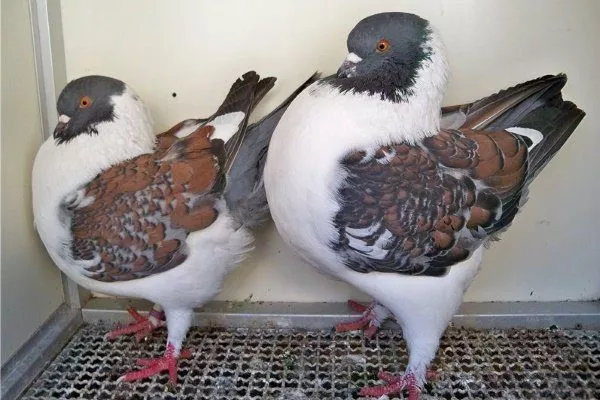
Modena is of medium size: height - up to 23 cm, length - about 18 cm. The weight of individuals is relatively small - about 350-500 g.
Peculiarities of keeping meat pigeons
Many poultry farmers keep pigeons in the attics of their summer houses or build separate coops for them. In any case, the coop should be covered, protected from temperature fluctuations, and suitable for both summer and winter use. Good ventilation and heating are equally important.
To ensure acceptable conditions for keeping birds, it is worth equipping the dovecote as follows:
- make windows that face the south side;
- Place the nests on the floor or on a small elevation, since most meat breeds are very poor flyers;
- provide nests with paths along which individuals can climb;
- lay down the floor and constantly monitor its cleanliness (the bedding should be disinfected at least twice a year);
- install drinking bowls and feeders that need to be refilled on time.
The air temperature in the dovecote must always be maintained above 0°C.
Pigeons that have been checked by a veterinarian can be introduced into a prepared coop. They should be fed primarily grains, but rye, oats, and lupine should be completely excluded from the diet. A feed mixture can be prepared from the following ingredients:
- corn (35%);
- barley (20%);
- peas (20%);
- oatmeal (15%);
- greens (5%).
The diet must necessarily contain vitamin and mineral supplements (5%), which can be added to the feed:
- lime;
- river sand;
- red brick chips;
- clay;
- charcoal;
- eggshells.
Meat breeds should consume approximately 50-55 grams of grain mixture per day. Of course, they should not be fed spoiled or moldy food, as it will be difficult for them to digest.
It's equally important to ensure that the coop always has fresh, room-temperature water, as birds can't survive a day without this life-giving fluid. If feathers, bird droppings, or small debris get into the water, it should be poured out immediately and the waterers replenished.
To ensure your pigeons are completely healthy and have a strong immune system, they need to be vaccinated twice a year by a certified veterinarian.
Breeding
To breed pigeons in a coop, an equal number of males and females is required to ensure each individual can find a mate. Under natural conditions, pigeons lay three clutches of two to three eggs each year. With proper lighting and heating, this number can increase more than sixfold.
Females can breed from 8 months of age, but the most fertile individuals are considered to be those aged 1 to 1.5 years. Mating occurs naturally, when the pigeons are housed together in the same aviary. However, forced mating can also be used if specific traits are desired in the chicks. In this case, the pair should be temporarily separated into a separate aviary.
It is quite easy to understand that mating has already occurred and the birds are ready to return to the common aviary, since the pigeons will constantly sit next to each other and carefully sort through each other's feathers.
After 11-16 days, eggs are laid. To ensure embryos are developing, on the sixth day, you can place them on spoons and hold them up to the light. If a spot is visible, they will likely lay eggs. The eggshell color also changes as the embryo develops—by the eighth day, the egg will acquire a matte gray hue.
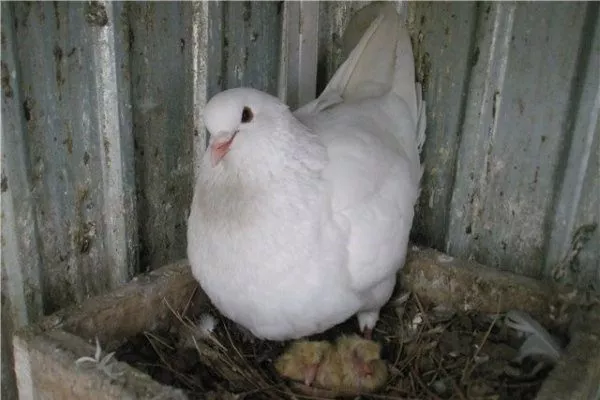
Pigeons hatch their eggs one at a time for 16-19 days, but in some breeds this period can last up to 29 days. The chicks are born helpless and blind, but within a few hours they will be able to accept food from their parents. For the first two weeks, they should be fed only crop milk, but after that, crop slurry, softened in the parents' crop, can be introduced into their diet. Only after a month can they be given a full diet.
Growing methods
There are several of them, and the choice depends on the goals the poultry farmer is pursuing.
Extensive
It does not require any special expenses or efforts from the breeder, since in this case the birds get their own food, and the poultry farmer gives them food once a day so that they can gain weight within the allotted period of time.
This method has several drawbacks. For example, when searching for food, pigeons may encounter wild birds or animals that may carry dangerous diseases. Furthermore, they require complete protection from predators. Of course, a well-fed bird that cannot or does not want to fly will become easy prey even for a domestic cat.
Intensive
This involves force-feeding the birds to rapidly gain 600-800 g or more in weight. For this purpose, it's best to choose high-yielding breeds like King or Texan, as they can reach the target weight in just 30-38 days. Furthermore, due to their high fertility, these birds can reproduce 5-10 times a year, resulting in 10-20 chicks.
- Place the selected chicks in a dark room.
- Feed them the porridge mixture up to 4 times a day.
- Use special equipment or a syringe without a needle with a soft rubber tip.
- Prepare a mixture of cereals, grains and legumes with the addition of mineral supplements.
- Provide each bird with 50-60 g of the mixture per day, divided into portions of 15-20 g.
Three-week-old birds are suitable for fattening for slaughter, as the meat from young birds has the best taste. Selected chicks should be placed in a dark room. They should be force-fed up to four times a day with a mushy mixture, using special equipment or a syringe without a needle but with a soft rubber tip.
For feed, prepare a mixture of cereals, grains, and legumes. It is recommended to add a small amount of mineral supplements. Each bird should eat 50-60 g of this mixture per day, washed down with warm water. The optimal single serving is 15-20 g. If you feed young pigeons for about two weeks, you can get pigeons weighing about 800 g.
There is also a combined or economic-decorative method, but it is mainly popular among poultry breeders of domestic decorative pigeons.
Slaughter of meat pigeons
Birds are slaughtered at 29-37 days of age. They typically weigh 600-750 g. During the last three days of fattening, it's a good idea to add small amounts of aromatic seeds, spices, or berries to the pigeons' feed. This trick can impart a piquant flavor to the pigeon meat.
In addition, the day before slaughter, it's a good idea to give the bird warm milk with salt to make the meat juicier and whiter. Feeding should also be stopped on the same day to make gutting easier.
By following all the proper care and maintenance guidelines, poultry farmers can raise an excellent meat-producing breed. These birds can then be used for meat production, producing the most tender dishes and delicacies. There are various breeds of meat-producing pigeons, so when choosing a specific bird, it's important to familiarize yourself with their key characteristics and features.