
Iranian fighting pigeons are birds that captivate with their ability to fly, performing numerous tricks while ascending. The distinctive sounds produced by their wings during flight are a distinctive feature and hallmark of this breed. This article discusses the breed's characteristics, care, and varieties.
Historical data
Once upon a time in Iran, only worthy people could breed pigeons—the occupation was considered sacred. Iranian pigeons are the most resilient and beautiful birds. Pigeons of this breed have become a symbol of pride and grandeur; they fly in flocks, but remain solitary. Iranian pigeons tend to fly slowly, but are not afraid of headwinds. They are called "fighting" for the reason that in flight, gaining altitude, birds beat their wings in the air, creating characteristic sounds.
Iranian pigeons are descendants of the Persian pigeons that graced royal courts. They were first bred in Persia over 1,000 centuries ago. The birds were carefully selected for such criteria as beauty, endurance, and flight altitude.
Poultry breeders worked hard to create a new breed that would meet all the stated criteria. Special competitions, involving 10 birds, helped select the best individuals. Although wars were frequent in this region, local residents continued to love pigeons, preserving the sacred tradition. Now, poultry breeding has become a sacred tradition for Iranians.
Farms where Iranian fighting pigeons are bred are owned by respected individuals. These pigeons are renowned for their beauty and excellent flying skills. Many enjoy watching these birds in flight.
Exterior features
The birds don't have a clear breed standard, but all varieties of the breed share common traits. Iranian pigeons are distinguished by an elongated body and a tapered, rounded, or oval head. Many varieties have a smooth head with a small crest and a long beak. Wing length reaches 21-30 cm, and the wingspan ranges from 60 to 70 cm.
Iranian fighting pigeons boast a broad tail and long, smooth, featherless legs. Their body circumference reaches 25-35 cm. They have a compact body structure, well-developed muscles, and a broad chest. Their feathers lie flat against their body.
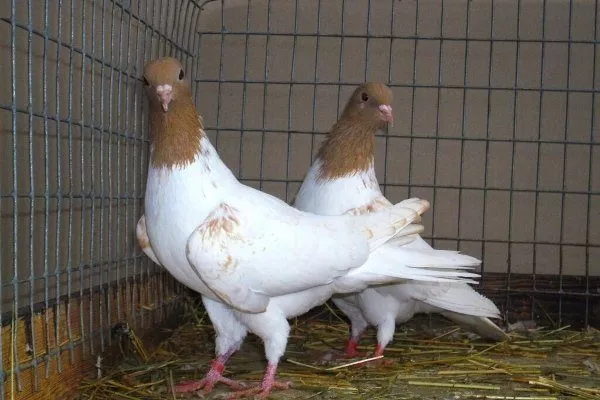
A wide variety of specimens are found. White doves, as well as birds with red, black, and yellow plumage, are often encountered. Sometimes they are blue-gray. The most valuable doves are those with a combination of colors:
- with a colored head and tail;
- plain;
- with a white head and a variegated body;
- with colored sides (white body, colored wings);
- with a colored head (black, yellow, red, etc. shades);
- with a colored tail and with a white tail;
- with colored rings located around the neck.
These breeds typically do not change plumage color with age or during or after molting. Fanciers often ignore plumage, breeding Iranian pigeons only in western Iran. They prefer birds with clear markings and no marks on their bodies.
Flight specifics
Iranian fighting pigeons fly slowly and calmly. A mandatory flight characteristic is a fight followed by a flight pole. The birds also demonstrate their flight skills particularly well when flying against the wind. A distinctive characteristic is their ability to rise to a height that flies can reach, then hover there for a couple of minutes.
Birds of this breed are distinguished by their distinctive fighting: it's moderate, and the stand itself must be held for several seconds. The fighting noise is clearly audible even from a great height. Breeders value this breed for its long flight time—birds can fly distances for 3-10 hours.
What types are there?
Through their work, breeders have succeeded in developing numerous varieties of Iranian pigeons. Depending on the breed's origin, these pigeons have distinct plumage colors and characteristics.
| Name | Wingspan (cm) | Body length (cm) | Plumage color |
|---|---|---|---|
| Tibriz pigeons | 60-70 | 9:30 PM | Various |
| Big-headed | 60-70 | 9:30 PM | White body, dark head and neck |
| Tehran High Flyers | 70 | 9:30 PM | Various |
| Hamadan fighting kosmachi | 60-70 | 9:30 PM | Various |
| Cheeky (karages) | 60-70 | 9:30 PM | White body, colored cheeks and head |
Tibriz pigeons
This subspecies is the most common in western Iran. These birds have an elongated head and a long body. These pigeons are considered to be their direct relatives. Baku flyersIranians note that it's impossible to fully understand how this variety was developed. Even the most experienced pigeon fancier, with many years of experience, can always learn something new about this ancient bird.
Big-headed
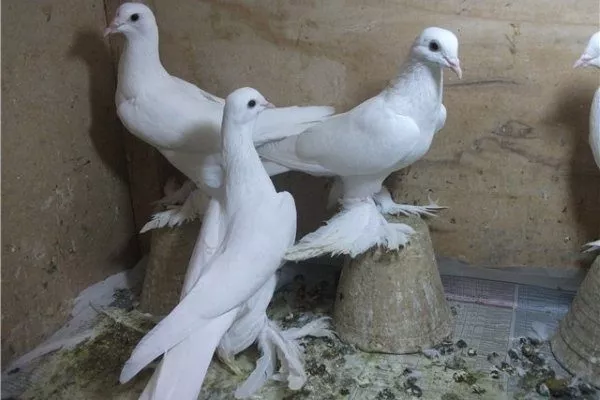
A distinctive feature of the Iranian piping pigeon is the contrasting color of its plumage. These birds have snow-white body feathers, while the plumage on their head and neck is dark, ranging from light brown to black. This species is particularly prized by poultry farmers due to its reluctance to interact with humans and the difficulty of taming them. However, once tamed, these birds reward the fancier with a beautiful, high-flying flight.
Tehran High Flyers
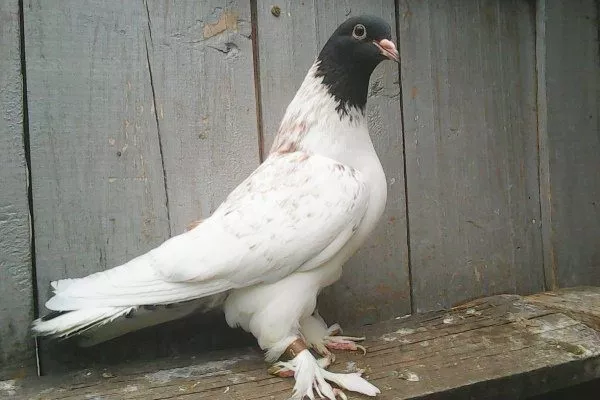
Tehran pigeons are a popular and well-known species. Their feathers are very hawk-like. These birds have an impressive wingspan, which can reach up to 70 cm. They have a rounded head and a short beak. Individuals come in a variety of colors and patterns.
Hamadan fighting kosmachi
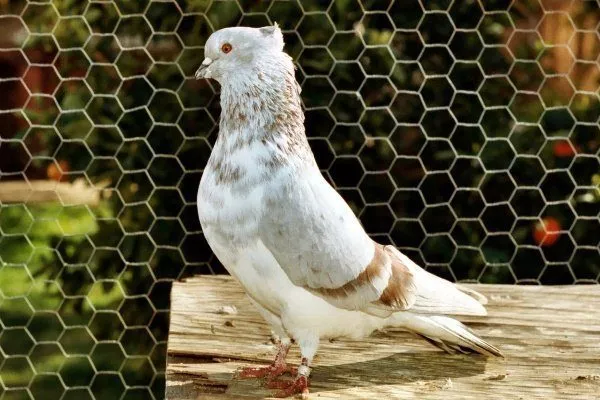
The Iranian pigeon variety originated in northwestern Iran, specifically the Hamadan province, which is where the birds got their name. These pigeons have long leg feathers (up to 20 cm) – this feather is considered their most important feature.
Iranian breeders have successfully developed many lines of this subspecies. Some specimens are striking in their crest, long beaks, and feather coloring. This is not surprising, as breeding efforts have spanned thousands of years.
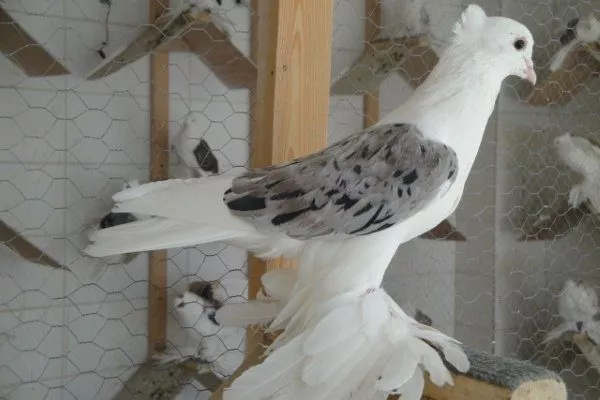
Cheeky (karages)
Cheeked pigeons are a cross between Tibriz and Tehran pigeons. Iranians have a distinctive plumage pattern, making them recognizable among other breeds. The primary feather color is white, but the cheeks and head can be red or yellow. Cheeked Iranians have a slender body and a smooth head.
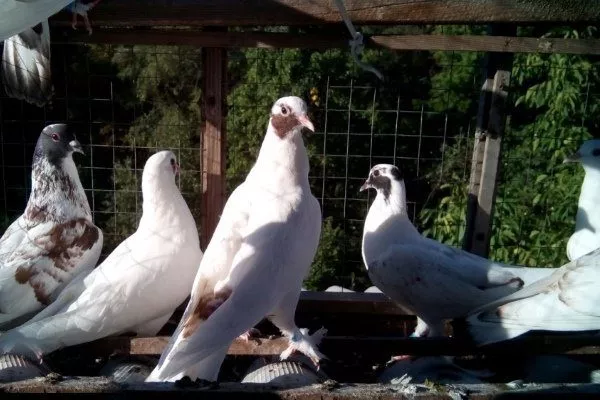
Peculiarities of pasture and selection
Iranian fighting pigeons are not accustomed to flying in flocks. Each pigeon is an individualist. Some specimens are capable of hovering high in the air for several minutes. With excellent living conditions and a balanced diet, specially trained pigeons will become not only strong but also resilient, and their flight time will only increase.
The average flight duration is 4 to 8 hours. Birds that fly for less than 3 hours are culled.
A number of requirements are imposed on young birds preparing for competition. First and foremost, they must develop excellent homing skills, and after their flight, they must return to their release location. Birds that do not meet these requirements are culled.
- ✓ Long-term flight capability (more than 3 hours).
- ✓ Ability to return to the dovecote after a flight.
Bird fight
This breed is characterized by the distinctive sounds produced by flapping wings. Fighting is divided into several categories:
- Butterfly game. Characterized by frequent combat and performed in solo flight.
- Pillar. During this flight, the bird is capable of instantly gaining altitude, taking off vertically, and performing short, circular flights. A distinctive clicking sound can be heard as the wings flap. After gaining altitude, the bird somersaults head over heels. The final stage involves returning to its original position and descending in smooth circles.
- Corkscrew. The bird rises vertically, twirling in spiraling motions, constantly playing, demonstrating its skills. This ascent requires strength and maximum effort from the pigeon.
Conditions of detention
Keeping pigeons requires the construction of a dovecote. When setting up the aviary, certain rules and regulations must be observed:
- Location. Because Iranian pigeons are known for their poor health, the dovecote should be located away from sources of infection, such as cesspools, farmland, pigsties, poultry houses, etc. It is advisable to build the building away from power lines and tall trees.
- Dimensions of the dovecote, stocking density. The height of a dovecote can reach up to 2 m. Each pair of birds requires at least 50 cubic cm of space. This space requires additional space for nests, feeders, and waterers.
- Insulation. Experienced pigeon breeders say that installing a special heating system in the dovecote isn't necessary, but it is advisable to insulate and seal the coop. There shouldn't be any cracks in the room. You'll need to lay down bedding, which should be changed regularly to prevent dampness. The optimal temperature in summer is 20°C, and in winter, 5°C to 7°C.
- Bedding. This is a must during the winter. The bedding is made from hay and straw, sawdust, small branches, sand, or dry peat. The bedding is approximately 5-10 cm thick. Wood ash or wormwood is placed underneath to help prevent infectious diseases.
- Feeders and drinkers. Experienced pigeon breeders recommend installing automatic feeders, as this will significantly minimize human involvement in caring for pigeons.
- Perches. The number of perches depends on the number of pigeons. Perches are typically made of wooden beams, fixed perpendicularly to the wall. The distance from the floor to the ceiling is more than 50 cm.
- Nests. The optimal nest size is 80 x 40 x 30 cm. Females of the Iranian breed prefer to build their own nests. In this situation, the poultry farmer only needs to provide the pigeons with building materials: straw, branches, and hay.
- Ventilation. A ventilation system will help ventilate the room, removing unpleasant odors and carbon dioxide from droppings. The coop will always be fresh. It's best to install a grille behind the main door. Small mesh openings in the floor are also helpful. A sealable exhaust pipe should be installed in the ceiling.
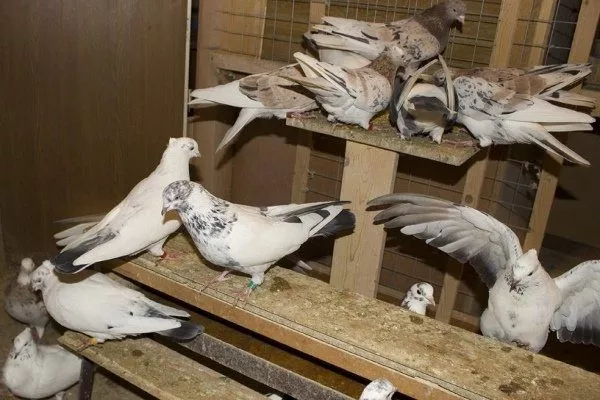
A yard for the birds to run in is essential. It should be at least as large as the dovecote. The area is fenced off with wire mesh on all sides and covered with boards or plywood on the floor.
Feeding and routine
A balanced diet is an important part of bird care. The basis of the diet is grain and succulent greens. The diet should include:
- millet – 10%;
- wheat – 30%;
- barley – 50%;
- other grains and seeds (lentils, sunflower seeds, oats, peas) – 10%.
As for greens, it is best to feed birds various herbs, including spinach, sorrel, alfalfa, nettle, clover, lettuce, and cabbage.
A pigeon fancier will need to adhere to a feeding regimen depending on the time of year:
- In summer. Feed the pigeons twice a day: at 6-7 am and at 6 pm.
- In winter. Feed the birds three times a day: at 9 am, 2 pm, 8 pm.
- During the period of feeding chicks. Eat three meals a day: at 5 am, 1 pm, and 9 pm.
Serving sizes vary considerably for birds of different ages and life stages. For example, juveniles will need 30-40 grams per day; the daily requirement for birds before molting is 50 grams, and during egg-laying and breeding periods, up to 60 grams. When preparing birds for competitions, a lot of energy is expended. At this time, it's necessary to introduce starch (rice) and sugar into the diet.
It's important to maintain a feeding schedule and provide a balanced diet for your birds. Otherwise, pigeons may become obese, which can lead to a loss of fitness.
It is also necessary to supply Iranians with mineral supplements, such as crushed shells, crushed eggshells, salt, and charcoal.
It is strictly forbidden to feed birds the following products:
- With milk and cheese. Birds do not have lactobacilli, and it is difficult for them to digest such a quantity of fat.
- Meat products and fish. Birds have difficulty digesting these foods.
- Bread and bakery products. These ingredients can cause fermentation and disrupt the gastrointestinal tract.
Where to buy?
The Iranian pigeon breed is popular today almost worldwide. Although the birds originate in Iran, they can be purchased not only there, but also in Kashan, Isfahan, Shiraz, Tabriz, Tehran, Hamadan, and Mashhad. They are also sold in other countries where they have successfully established themselves.
In Russia, large pigeon farms in Vladivostok, Moscow, Novosibirsk, Yekaterinburg, Khabarovsk, Chelyabinsk, Krasnoyarsk, Omsk, and Orenburg are engaged in breeding and selling Iranian fighting pigeons.
Sellers from Ukraine also offer pigeons. Private breeders often post ads online, making it possible to purchase animals from the comfort of your home.
Just as the birds' appearance can vary, so can their price. The price depends directly not only on the species but also on their performance. The best birds come from Iran. In Russia, Iranian pigeons are offered for between 1,000 and 2,500 rubles per pigeon. Birds from good breeding lines can cost significantly more, over a hundred dollars.
Iranian fighting pigeons are one of the oldest pigeon breeds in the world. These birds are distinguished by their attractive appearance and low maintenance requirements. There are several varieties of these birds, each unique and unusual.