
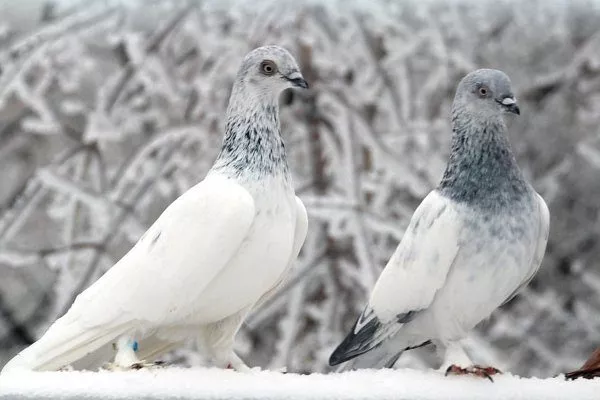
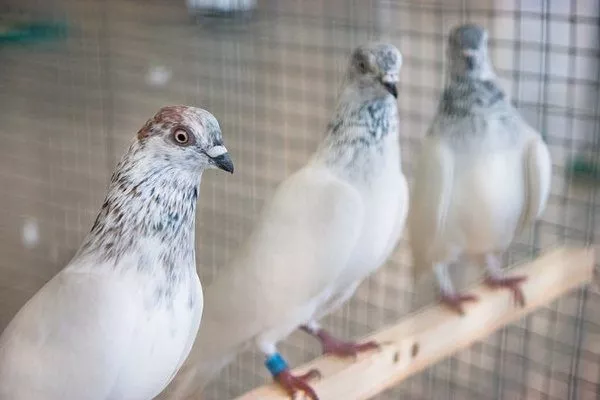
The Hungarian Highflyer is a fairly common pigeon breed. Their low maintenance, ease of breeding, and wide variety of plumage colors are the reasons why these birds are becoming increasingly popular. This breed should not be confused with the Hungarian Giants: unlike the latter, the Highflyer is capable of soaring to greater heights, hence its name.
Description
The first high-flying Hungarians appeared in 1941, although reports of attempts to develop a new breed from Budapest Stork Pigeons had been recorded as early as the 19th century. As a result, breeders succeeded in creating a new bird species that combined both excellent flight and decorative qualities.
General characteristics
A distinctive external characteristic of the breed is its deviation from classic proportions. Unlike the vast majority of pigeons, Hungarian Highfliers have a small but robust body and a relatively small head, which makes the bird's eyes appear enormous and its small beak appear harmonious. This imbalance is particularly pronounced in females. Otherwise, Hungarian Highfliers lack any aesthetic features (curves, protrusions, a distinctive tail, etc.), and their appearance can be described as plain. Individuals can reach approximately 35 centimeters in length.
A distinctive behavioral trait of high-flying Hungarian hawks is their ability to soar to such heights that they become invisible to the human eye from the ground. Their strong, powerful torso allows them to fly not only high but also for long periods—from 6 to 10 hours.
A well-developed maternal instinct is another distinctive feature of Hungarians. Experienced breeders have successfully used such excellent brood hens and nurses as Hungarian Highflying Pigeons to raise chicks of other breeds.
Purity criteria
Birds of this breed can be characterized by the following signs:
- EyesHungarians have rather prominent eyes with yellow parchment eyelids and irises that come in all shades of dark chocolate: from dark brown to almost black.
- Head. Fairly smooth, without sharp transition lines and breaks, predominantly oval in shape.
- BreastThanks to the slightly wide and barely convex chest, enveloped in developed muscles, the body structure of the birds is comparable to a dense one.
- BeakDownward-facing, thickened, light-colored, and on average, reaching about 1.5 centimeters in length.
- WingsThe wings, which lie close to the body, boast wide shields. The tips do not meet and are located on either side of the tail.
- PawsMedium length, set fairly wide apart, with claws the same color as the beak.
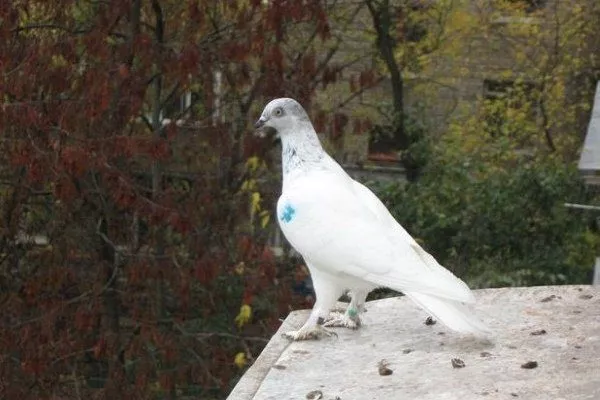
- PlumageThe plumage color of the Hungarian Highflying Pigeon can vary from snow-white to bluish-black. Typically, the plumage on the wingtips, neck, and head contrasts with the rest of the bird's body. White representatives of the breed are characterized by a speckled head and uniform plumage throughout the rest of the body.
- BackThe broad back, tapering from the shoulders, adds visual power to the bird.
- Tail. Standard and contains a standard number of medium-length tail feathers - 12 pieces, not reaching the ground.
- Neck. Also medium in size, it tapers from the body to the head, and is noticeably curved in the occipital region.
Rejection
Achieving breed purity is generally not difficult for a breeder. However, sometimes the resulting specimens exhibit signs that prevent a given Hungarian Highflyer from being considered purebred:
- the length of the bird exceeds 45 centimeters;
- excessively long or shortened legs;
- an enlarged head that looks harmonious with the body;
- forehead protruding above the beak;
- multi-colored irises;
- beak from 2 centimeters;
- whitish eye rings.
Content
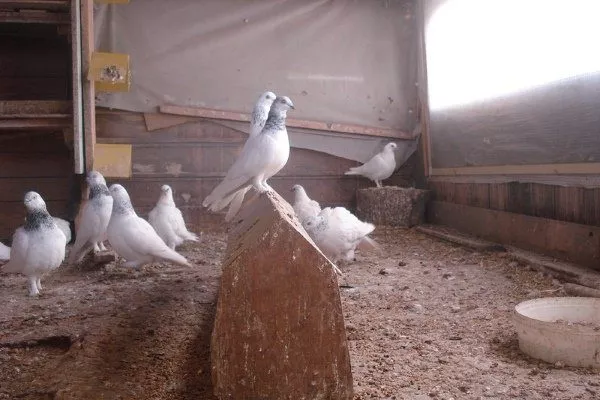
Unlike ducks or chickens, pigeons require more space to live, and their habitat should be off the ground. Therefore, building a dovecote in the attic of a house or constructing a dedicated outdoor dovecote is an excellent choice.
Settlement in the attic
Pigeons in flight require ample sunlight to avoid illness and maintain their immunity (especially young birds). Therefore, an attic with south-facing windows (or, at worst, southeast-facing windows) is considered ideal. Otherwise, it's best to build a separate structure.
To house high-flying pigeons, the room must be thoroughly cleared of debris, disinfected, and all cracks and holes sealed. Perches and nests should be installed around the perimeter of the attic, and feeders and waterers should be placed on the floor.
If you plan to confine the birds, you'll need to build an aviary—a spacious cage made of small-mesh wire mesh. The enclosure size is calculated based on the fact that a pair of Hungarians will require approximately 0.5 cubic meters of space.
It's also necessary to provide windows for the pigeons to fly out. To do this, cut small squares with 20-centimeter edges to prevent drafts from forming in the makeshift dovecote.
Construction of a dovecote
Before starting construction, it's necessary to determine the future dimensions of the room. As with building an aviary, the following ratio should be maintained: 1/2 cubic meter of space per pair of birds. To ensure separate housing for males and females, young birds and older birds, if necessary, temporary partitions should be provided.
If you plan to keep more than 30 Hungarians, the room should be divided into sections, each of which will house up to 15 high-flying pairs.
Tools, feed, and bedding are often needed, so it's recommended to locate a storage area close to the birds to store all consumables and equipment. In this case, a two-story dovecote can be a practical solution, with the ground floor able to accommodate all the necessary equipment, and the second floor suitable for the pigeons' permanent residence.
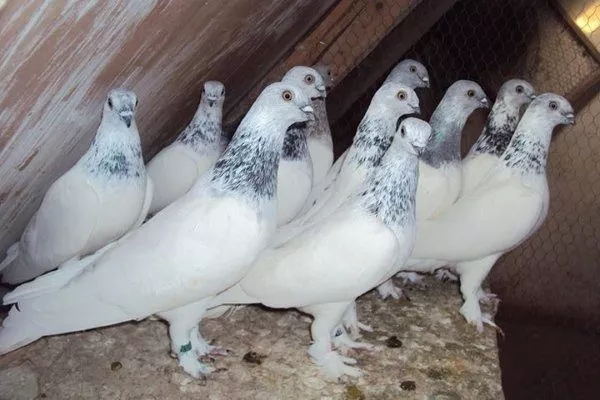
You can build a dovecote using various materials:
- Metal base. In this case, the structure is a structure lined with boards on the inside.
- Brickwork. A durable structure that can last for many years. This type of poultry house must be plastered from the inside, both the walls and the ceiling.
- Wood. A wooden dovecote must be treated with specialized products to repel moisture, mold, and beetles; otherwise, its lifespan will be limited. The interior can be lined with plywood or plaster.
When constructing a dovecote, the following should be taken into account:
- A wooden (plank) floor is the best choice for a future poultry house, constructed by tightly fitting planed boards. The roof can be either a single-pitched (in this case, the slope should be at least 20°) or a gable roof.
- Windows in a dovecote for high-flying Hungarians should make up at least one-tenth of the total wall area. When constructing the dovecote, it's important not to place them opposite each other (to prevent a draft when open) and to cover them with a grille to prevent the birds from escaping unimpeded.
- Small windows intended for flight should be located at a height of one and a half meters from the floor.
- Windows are not the only source of light required by high-flying Hungarians, and even in the sunniest regions, artificial lighting is essential to regulate the length of daylight under all circumstances.
- Sturdy doors with secure locks provide reliable protection for such valuable birds as high-flying Hungarian pigeons. They should be of a suitable size for breeders—one that allows passage while holding all necessary equipment. Double doors are especially beneficial: the outer metal ones provide adequate protection, while the inner mesh-lined door improves the flow of fresh air into the loft during warmer months and helps eliminate excess moisture.
- Even with frequent airing, it's also a good idea to provide ventilation. For this purpose, you can install two small windows protected by bars: the lower one 15-20 centimeters from the floor, and the upper one 10 centimeters below the ceiling. Doors should also be provided to ensure heat retention during freezing temperatures.
- Along with daylight hours, a certain temperature regime must also be maintained. For comfortable living for high-flying Hungarians, a temperature range of 7 to 20 degrees Celsius should be ensured. In cold regions, to avoid the need for additional heating, it is recommended to construct double walls with a layer of insulating material between them.
Walking enclosure
No matter how comfortable and convenient a dovecote may be for the bird, Hungarians are a breed that loves freedom and the outdoors. Building outdoor aviaries (large outdoor cages) will fully satisfy their need for sunbathing. If the birds are kept in an attic, a walking area can be created directly on the roof, if it has a pitched roof.
Perches
Each bird should have its own perch, as well as a nesting platform for the breeding season. Perches are square blocks measuring 2 to 4 cm. The distance from the perch to the ceiling should be at least 40 centimeters; for larger hens, this distance can be increased to half a meter.
It will be more difficult, but more convenient in the future, to make all perches and other internal structures removable and disassemblable to significantly facilitate cleaning and disinfection procedures.
To increase the number of pigeons in the future, place shelves with narrow sides along the walls of the structure, measuring 80 cm in length and 40 cm in width. Steaming boxes can then be installed on them, followed by nests.
Nests
Both round and rectangular nest boxes, 20-25 centimeters wide with 7-centimeter sides, are ideal for high-flying Hungarian pigeons. Sizes may vary depending on the size of the pigeons, so the key to choosing a suitable container is a width that neither feels cramped nor too spacious for the hen.
The nest can be made from scrap materials left over from building a dovecote, such as plywood and wooden slats. A round nest can easily be molded from plaster.
Feeders
Restricting free-range feeding and overfeeding Hungarian pigeons often leads to obesity. Therefore, the amount they eat must be strictly controlled, making automatic feeders unsuitable. A solution is standard containers with 3-4 cm sides, allowing pigeons to consume food without straining their necks.
You will need several feeders:
- For grain. Narrow boxes, divided into sections according to the number of individuals, are suitable as a base.
- For green plant food and vegetables. It's a small container made of easy-to-clean materials.
- For mineral fertilizers, temporary feeders or containers smaller than grain containers are suitable.
Drinking bowls
Designs may vary, but the most convenient for high-flying Hungarians are vacuum or automatic drinkers.
During the winter, it is strongly recommended to warm the birds' water. When using open-type waterers, the water should be changed daily.
Homemade drinking bowls are also an option. Simply take a large metal can (at least half a liter), cut off the top, and bend the sharp edges inward, thereby eliminating the risk of accidental injury to the bird while drinking. The sides should be high enough to allow the pigeon's beak to easily touch the bottom of the container.
Swimming pools
Any flying pigeon breed requires not only sun but also regular bathing, so it's essential to provide makeshift swimming pools for the Hungarians. Any container larger than the bird and with sides about 5-7 centimeters wide will do.
Care
A day after the dovecote is fully stocked and the pigeons are settled, the birds' habitat will need cleaning. Keeping the habitat clean and the birds comfortable and well-fed requires certain tools and knowledge of general care guidelines.
Necessary tools
To properly care for high-flying Hungarians, you will need the following accessories and equipment:
- mortars: for grain and mineral feed;
- cans;
- buckets;
- rake;
- containers and tanks for storing grain and other bird food that are inaccessible to rodents;
- water canisters;
- coarse sieve;
- shovel;
- brooms;
- green fodder cutter;
- cages and carriers;
- scrapers;
- scoops.
Cleaning
Regularly changing the bedding is essential not only for quick cleaning but also for maintaining the right temperature in the dovecote. Sawdust or dry peat can be used as bedding. However, avoid using foam beads as a bedding material, as Hungarians can ingest them, which can ultimately lead to death from intestinal obstruction.
Every time you change the bedding, including in nest boxes, you can sprinkle a little tobacco, wood ash, or dried wormwood underneath. This will provide excellent natural and environmentally friendly protection for birds against unwanted guests like parasites and insects.
Pigeon feeders and waterers should be cleaned daily, avoiding the use of harsh detergents. It is recommended to clean perches and change the bedding at least once a week. If the bedding is thick, it should be completely changed every 3-4 days.
A general cleaning, which involves thoroughly disinfecting the dovecote (including both the room itself and the equipment), should be performed twice a year, for example, in November and May. If the walls of the structure are whitewashed, this should also be renewed every six months.
First aid kit
Adherence to all rules and precautions for caring for Hungarian high-flyers minimizes the risk of illness or injury, but such incidents cannot be ruled out. Breeders should be prepared for this and stock up on all necessary first aid supplies in advance:
- boric acid;
- with cotton wool and bandage;
- veterinary scissors;
- Levomycetin;
- adhesive plaster;
- sets of needles;
- potassium permanganate (potassium permanganate);
- with tweezers;
- with a scalpel;
- syringes with a volume of 1 to 3 milliliters.
About common pigeon diseases and their treatment – read here.
Before the cold weather sets in, it's a good idea to stock up on vitamins that will help your birds strengthen their immune systems before the winter season and survive it without getting sick:
- Introvit A + Oral;
- Undevit;
- Chiktonik;
- ascorbic acid;
- fish oil.
Thanks to vitamin support, your pigeons will be strong and resilient.
Nutrition
A distinctive feature of the Hungarian Highflyers' diet compared to other breeds is that they do not consume animal feed. Therefore, standard compound feeds for pigeons are unsuitable, and you will have to prepare your own feed (or purchase a compound feed specifically designed for this breed).
Diet planning
The diet of high-flying Hungarians depends on many factors: the time of year, the bird's life stage, age and living conditions.
For example, in winter season The bird's diet should include the following components:
- oats – 40%;
- barley – 40%;
- corn – 10%;
- lentils – 10%.
In winter, in addition to vitamin supplementation, pigeons' grain feed can be supplemented with grated apples and carrots.
IN warm seasons The diet of high-flying Hungarians contains a greater number of ingredients, but in smaller proportions:
- peas – 20%;
- millet – 20%;
- barley – 20%;
- vetch – 10%;
- buckwheat – 10%;
- corn – 10%;
- wheat – 10%.
Mating period also requires birds to adhere to a specific grain diet:
- oats – 20%;
- millet – 20%;
- barley – 20%;
- vetch – 15%;
- peas – 15%;
- corn – 10%.
For young animals The average diet consists of the following combination of grains and their proportions:
- millet – 30%;
- wheat – 20%;
- barley – 20%;
- vetch – 10%;
- peas – 10%;
- corn – 10%.
During the periods when the high-flying Hungarians change plumage (molting), their diet should be as varied as possible, while remaining balanced:
- peas – 20%;
- oats – 20%;
- vetch – 10%;
- corn – 10%;
- millet – 10%;
- wheat – 10%;
- lentils – 10%;
- barley – 10%.
At transportation Birds need a minimum of components:
- wheat – 50%;
- vetch – 30%;
- corn – 20%.
Mineral supplements
Hungarian high-flying pigeons, like any other animal, require not only nutrients and vitamins but also micro- and macroelements. Breeders can compensate for these deficiencies by using ordinary sand. Coarse sand, preferably river or quarry sand, is suitable for this purpose, but sea sand should be avoided. Fine gravel can be used as an alternative.
Mineral supplements can be purchased ready-made or made at home. To prepare a homemade mineral supplement for high-flying Hungarians, you'll need the following ingredients:
- ferrous sulfate – 1 teaspoon;
- fine red brick chips – 2 level tablespoons;
- meat and bone meal – 1 teaspoon;
- river sand – 1 teaspoon;
- cobalt sulfate – 1 teaspoon;
- old plaster – 1 tablespoon;
- calcium carbonate – 1 teaspoon;
- broken eggshells (from boiled eggs) – 1 teaspoon;
- saline solution (2 grams of salt per liter of water) – 1 teaspoon.
Mix all the dry ingredients thoroughly, then pour in the salt solution. Form the resulting "dough" into small sheets. Allow them to dry completely (from several days to weeks, depending on the room humidity and temperature) and periodically add them to the mineral feeder.
Breeding
Hungarian high-flying pigeons breed at different times. The timing depends on the climate of the specific region, but the mating season usually begins with the first warm weather of spring.
The fertility of Hungarian highflyers depends on age: the most prolific individuals are mature pigeons, which produce approximately 90% of fertile eggs. In young and older birds, this figure is approximately 60-65%.
A week after mating, the Hungarians begin an incubation period, which lasts about a week, during which the female lays a pair of eggs at intervals of 1.5 days.
- ✓ The optimal temperature in the dovecote during incubation should be maintained within the range of 18-22°C.
- ✓ The indoor air humidity should not exceed 60% to prevent the development of fungal diseases.
Doves incubate their eggs for about 2.5 weeks. This period can vary in both directions and depends on the temperature and weather conditions in their habitat. In a warm dovecote, the first chicks may hatch as early as 16 days, while in colder regions, the offspring hatch later—after 18-19 days.
Both parents incubate the eggs in turns, only occasionally leaving the nest for food and water. It's best not to disturb the birds for the first few days, and postpone cleaning procedures until later.
After about four days, you can check the eggs for fertility. To do this, carefully and gently pick up the egg and shine a light or candle on it. If you can see a dark spot inside with red veins radiating from it, the egg is fertilized and will hatch.
- ✓ Activity and desire for food in the first days of life.
- ✓ No discharge from the nose or eyes.
- ✓ Uniform feather growth without bald spots.
Chicks are born blind and featherless, and their parents feed them at first. Once the young are ready to feed themselves, they should be provided with a caloric diet, including fresh, clean water. Growing chicks have a voracious appetite and can eat more than adults, which is normal.
How to feed a chick yourself in case the baby's parents cannot do this is described in next article.
Hungarian Highflying pigeons don't require any specific living conditions from their breeders. A simple dovecote, some personal space, and a well-balanced diet are sufficient for a comfortable existence. Adherence to the breeder's rules and recommendations will ensure trouble-free, thriving breeding.