
While some pigeon breeds are bred for their unique colors or patterns, others are prized for their beauty of flight and fighting ability. Baku fighting pigeons belong to the latter group. It's no wonder they are considered a national treasure in their native Azerbaijan. The birds were bred in the city of Baku, after which the breed was named.
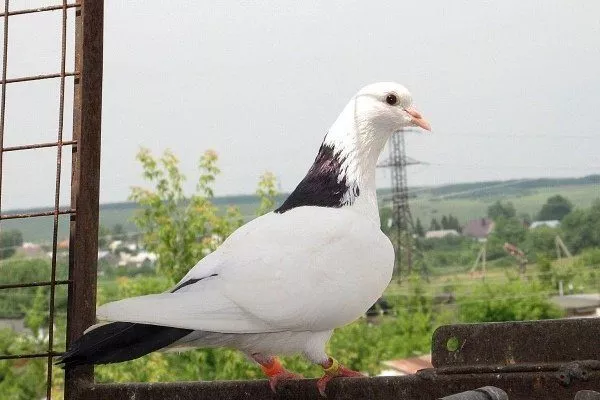
The origin of the "Baku people"
The breed's heyday came in the 1950s and 1960s, when Azerbaijan was part of the Soviet Union. Every pigeon fancier at the time was striving to develop an increasingly interesting breed, one with superior performance and flight characteristics.
Birds pass on their abilities by inheritance, but in order to reveal them, it is necessary to engage in their upbringing and training.
These are descendants of the most ancient pigeon breeds, whose cradle was Persia. They possessed greater endurance than other birds and "wore" boots on their feet. Genetically, Baku pigeons are the closest relatives of Iranian pigeons.
Bird exterior
The breed includes several varieties, typically distinguished only by color. Breeders didn't pursue beauty or pay attention to color or pattern, as they weren't bred for beauty contests. This explains the wide range of colors—from white and rare yellow to black. Regardless of appearance, all Baku birds are distinguished by their beautiful fighting style and stunning flight.
These small birds have a neat, oval head, which may be adorned with a crest or forelock. The transition to the bill is smooth, the forehead is rounded, and the crown is rectangular. The bill is thin and smooth, no more than 25 mm long, and has a rounded tip. The eyes are brilliant, the color of which depends on the plumage. The body is taut and muscular. The neck is long and gracefully arched. The back is broad, tapering toward the tail.
The tail is carried parallel to the ground and consists of 12 large feathers. The powerful, strong wings lie close to the body, their tips close together but not crossing, forming a "cross." The legs may or may not have feathers. Each variety has its own plumage coloration.
Types of Baku fighting
| Name | Plumage color | Presence of a forelock | Type of battle |
|---|---|---|---|
| Chile | Variegated with purple shimmer | No | Solo flights |
| Marble | Speckled | No | Not specified |
| Agbash | Varied, white head | Yes | Not specified |
| Necks | Light with a bright spot on the neck | Rarely | Not specified |
| White cephalopods | Snow-white | No | Not specified |
| Red-tailed and black-tailed | White with black/red tail | Yes | Not specified |
Below are the most common types of "Baku residents":
- Chile. These are mottled pigeons, distinguished by a delicate violet iridescence on the chest and neck. The mottling is localized on the cheeks, head, or tail. Their eyes are dull light, often with a yellowish tint. The bill is perfectly straight and white, but if the feathers on the head are dark, the bill itself is darker.
The silky cere is undeveloped and white. The legs are densely covered with short feathers, and the tips of the toes are bare. Chili finches also occur with a rich black coloration or a variegated head with marbled or white speckles. These species prefer solitary flights. - Marble. They resemble the previous birds in appearance, but their coloring is mottled. Their plumage consists of feathers of different colors, arranged alternately. Young specimens have more light feathers, but these become darker with age. Therefore, the darker the bird's coloring, the older it is.
- Agbash (white-headed). These birds come in a variety of colors, but they always have white feathers on their heads. Some birds have a voluminous crest. Their feet may be feathered or bare. Possessing high adaptability, they are distributed throughout the country.
- Necks. Another species with a "decoration" on its neck. Its body is a uniform light color, with a bright spot on its neck. Its head is rarely decorated with a crest, and its neck lacks the usual arch. Its tail also has colored spots. Its eyes are cherry-colored and lidless.
- White cephalopods. All individuals of this species are pure white, with no other coloration or markings permitted. Their legs are bare, and their heads lack a crest.
- Red-tailed and black-tailed. These pigeons have either black or red tails, while the rest of their bodies are covered in uniform feathers, usually white. Their heads are often adorned with a neat crest.
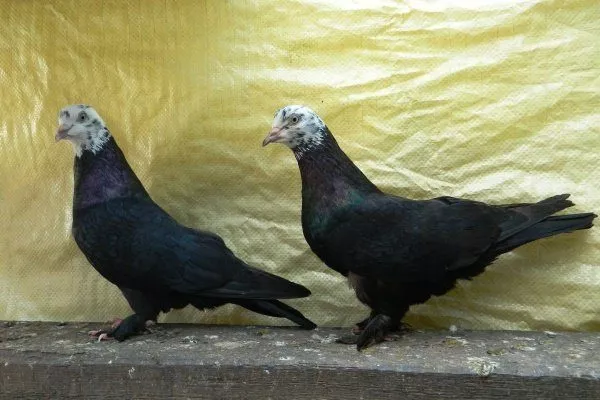
pigeons of Chile
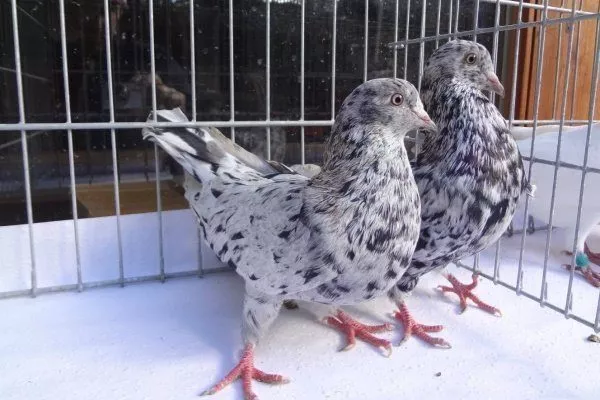
Marble doves
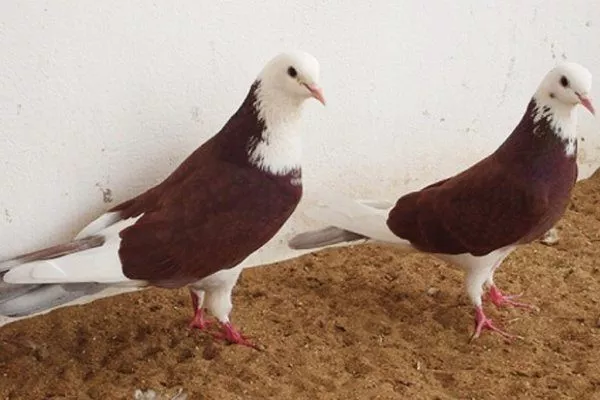
Agbash pigeons (white-headed)
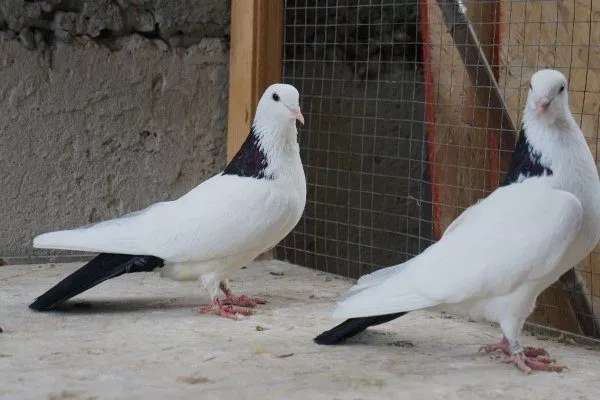
a species of Shakey's pigeon
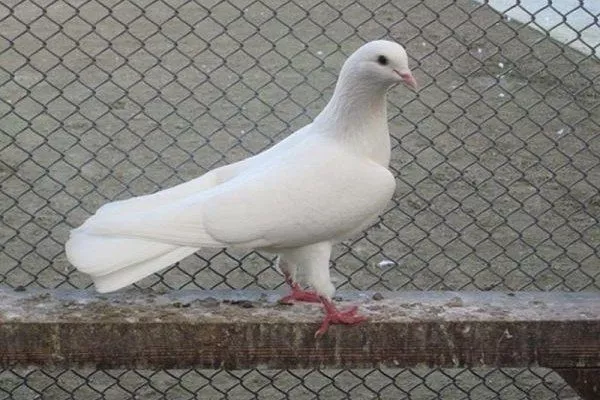
White-headed pigeons
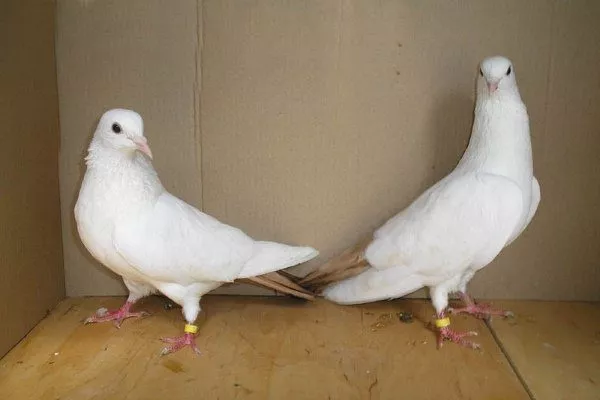
Red-tailed pigeon species
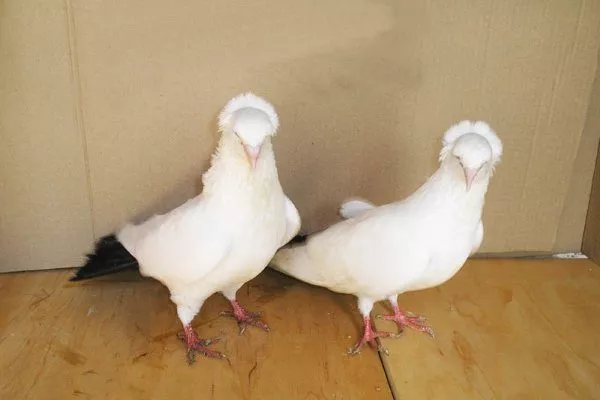
a species of black-tailed pigeon
Exterior flaws
There are a number of flaws in the bird's exterior that influence the assessment of specialists who determine the purity of the Baku breed.
It is permissible for birds to have beige eyelids, a lack of arch in the neck, and a more rounded crown, but this does not mean that the individual is purebred.
The following are unacceptable defects:
- eyes of different colors;
- short body;
- thick, short neck;
- thick, short beak (except for the high-flying subspecies);
- feathers grow on fingers;
- the plumage is loose and sparse;
- hunched back;
- the wings are hanging;
- the tail touches the ground.
If one of these defects is present, the individual is rejected.
Flight qualities and play
Representatives of the Baku breed prefer to fly in a scattered formation. They soar so high into the sky that they are often impossible to see. These birds can remain in flight for two hours, but experts claim that flight durations can reach 10-12 hours. To ensure that a pigeon always returns home and does not get lost, it requires proper training. Training and education are essential.
The purity and correctness with which a pigeon enters the pole are considered the main indicators of the quality of the game. The fight requires a great deal of energy and strength from the bird. After 5-6 hours, it should return home. Intense fighting is observed for the first 3.5 hours.
Types of Baku pigeon fighting:
- Exit into the pole This type of fight is highly prized by breeders. The pigeon vigorously and noisily flaps its wings and rises vertically. Then, suddenly and sharply, it throws its head back and somersaults, accompanied by a loud pop. A trained bird can perform up to 10 such rises in a row.
- Hanging fight — the complete opposite of the previous one. The bird rises slowly, deliberately, and somersaults, as if in one place, that is, hovering. Then it continues to rise. Although the somersault is performed more slowly, the clicking sound should still be present.
- Post with screw — the dove rises as if in a spiral.
- Ribbon fight Not all experts like it, and some consider it a flaw in the bird. Pigeons perform "pirouettes," but in normal flight and at a constant altitude.
| Type of battle | Energy consumption | Recommended age to start training |
|---|---|---|
| Exit into the pole | High | 5 months |
| Hanging fight | Average | 4 months |
| Post with screw | High | 6 months |
| Ribbon fight | Low | 3 months |
Training
The beauty and duration of summer are already genetically programmed into birds; all that remains is to develop them and enjoy the play of your pets.
Baku pigeons require regular, time-consuming training. Since the birds expend a significant amount of energy during flight, they need high-quality, highly nutritious feed.
- ✓ The food should contain a high percentage of protein (at least 18%) to maintain energy during long flights.
- ✓ Avoid high-fat foods to prevent obesity.
- ✓ Include vitamin supplements in the diet, especially during the shedding period and in winter.
Training begins for young pigeons at 30-40 days of age. It's best not to delay training, as the chances of raising a champion pigeon decline with age. Exceptions are made for birds that develop slowly. Breeders begin training them when they are two months old.
It's worth keeping in mind that if the "Baku" players score early—15 days after their first flight—they may change their game after the "molt." The best results are shown by individuals who began playing at five months of age.
Birds don't learn to somersault right away. Young birds may lose altitude or fall on their tails, but be patient, they'll soon master it. Their unique play and flight style doesn't develop until they're two or three years old. No more than eight birds are released into the air at a time to learn to flip.
Basic rules of training
Here are the most common mistakes made by novice pigeon breeders:
- Doves are given a break from training two days before and one day after laying. New parents are given "maternity leave" until their chicks are seven days old.
- Training takes place outdoors; it's impractical to do it in the city, even in good weather. Birds can get lost in fog or rain.
- If you're traveling to a competition, avoid feeding your birds heavy food for four days beforehand. They should be given water an hour before the competition. Transport pigeons in spacious cages, avoiding overcrowding.
- You should not release young ones together with old individuals, or females with males.
It also happens that a bird does not return home after training. In most cases, this is due to poor weather conditions (thunderstorms, rain, fog, strong winds, etc.). Experts recommend checking the weather report before releasing them, given that Baku pigeons spend a lot of time in the sky.
Statistically, birds bred in the same area rarely get lost in the third or fourth generation. And there's a scientific explanation for this. Pigeons have a very well-developed genetic memory. This is important to keep in mind when a pair is kept in an aviary and not allowed to fly. Their offspring will not inherit the homing skills.
Conditions of detention
The average lifespan of a pigeon is 30 years, but only if they are kept in comfortable conditions. Otherwise, the bird will live two or even three times less.
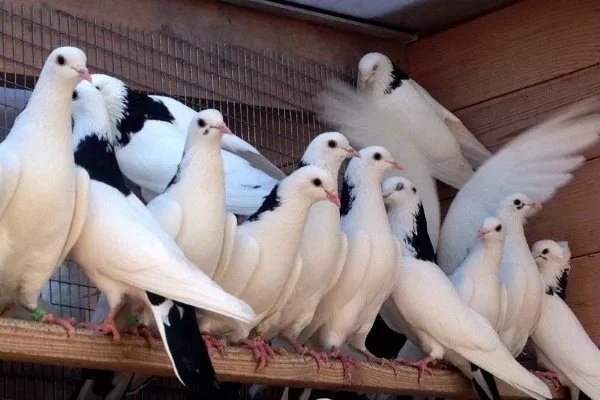
Size of the dovecote
Because this breed excels at flight, its members should have the opportunity to exercise their wings at any time—not only outdoors, but also indoors. They should also be able to move freely indoors and perform short flights.
Therefore, for 10 birds, there should be at least 15 square meters of space, and the room height should be 150-200 cm. If it is possible to increase the dimensions, then do so.
Temperature, ventilation
Maintain a positive temperature in the room year-round—up to 21°C in summer, and a minimum of 5°C in winter. Avoid sudden temperature changes, as pigeons react poorly to them, as do they react poorly to heat.
In hot places, they breathe heavily and open their beaks wide. Well-fed pigeons are particularly susceptible to high temperatures. In hot climates, pigeons are not allowed to fly, as this puts a lot of strain on their bodies. Overheating is common in hot climates, especially if the perches are under a roof. To reduce the temperature, it is recommended to hose down the roof with cold water.
Hypothermia is most dangerous for young birds in early spring. Their growth slows, development is delayed, intestinal function is disrupted, and underlying illnesses become more active. A chilled chick becomes torpid. On cold nights, parent pigeons should be returned to the nest to keep their young warm. Alternatively, the nest with the young can be placed in a warm place overnight and returned to its original location in the morning.
Experienced breeders believe heating a dovecote is impractical; caulking all cracks and insulating the floors is sufficient. During the fall and winter months, the litter should be changed regularly to prevent it from becoming damp. During severe frosts, the birds should be given warm drinks and nutritious food.
When birds breathe, like all living things, they release carbon dioxide. Without ventilation, its concentration increases, which can negatively impact their health. They refuse to eat, and their bones become brittle and fragile due to calcium leaching. On the other hand, the decomposition of excrement produces ammonia. Its concentration is higher in the upper part of the dovecote. Therefore, the air must circulate constantly, rather than stagnate. This can be achieved by installing ventilation, but ensuring there are no drafts.
Perches and nests
Smooth wooden perches are installed in the room. Each pigeon should have its own individual place to rest after long flights and numerous training sessions. When constructing shelf-like perches, they can be arranged in pairs.
If there are no nests in the coop, the pair will make one themselves from available materials in a suitable location. However, it's important to remember that they will be permanently attached to the nest, and relocating them will be impossible. Therefore, it's best to prepare nests in advance. These are usually small, square, wooden boxes without a top. Bedding should always be natural, such as hay or straw.
Drinking bowl, feeding bowl, bathing bowl
Experienced breeders recommend installing several feeders, one for young birds and one for older ones, to avoid unnecessary squabbles and fights.
They are made of natural materials and are designed to protect the feed from dirt, excrement, and debris. Typically, the feeder consists of two parts: a removable tray for the grain and a lid. This design prevents the bird from scooping up the feed with its feet.
A waterer can be purchased at a specialty store or made from a bottle and bowl. The volume of water should be appropriate for the number of birds. Otherwise, they will suffer from thirst.
Another essential item for the house, as in any poultry house, is a bath (deep container). Two types are available for pigeons:
- with water, where the bird will wash itself and clean its feathers;
- Dry – it's filled with fine sand and dry wormwood. This helps the bird get rid of pests and dead feathers and maintain its plumage.
If your bird is heavily soiled or infested with insects, you should bathe it yourself using special medications. Some veterinary clinics offer this service, so you can seek help there as well.
Litter and cleanliness requirements
The dovecote is laid with bedding made of natural materials—hay, wood shavings, sawdust, or straw—at least 5 cm thick. The frequency of bedding changes depends on the flock size; the larger the flock, the more frequently cleaning is required. Cleaning is recommended at least once a week. Disinfection is performed monthly using a blowtorch, after washing the walls, floor, and perches with soapy water.
Letok
A flight hole is a small platform measuring 15 x 15 cm where pigeons land and take off. It also serves as a transition from the room to the run area. One flight hole is designed for one pair. The number of platforms is determined by the number of pairs living in the loft.
Feeding and watering
Proper nutrition, rich in micronutrients and vitamins, is the key to good plumage and bird health. A varied diet and a consistent feeding schedule prevent crop distension.
Pigeons are fed twice a day—morning and evening. Some breeders feed their charges ready-made commercial feed, which already contains the optimal amount of nutrients. Only soft feed is suitable for chicks.
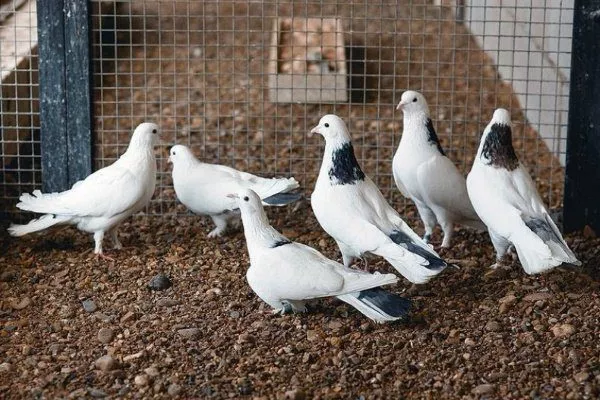
The basis of the diet is grain. The following types are preferred:
- Millet should be the largest portion. Choose brightly colored grains, as they contain more vitamins.
- Wheat is also a staple diet for pigeons, but it is low in the trace mineral calcium. Mineral supplements are essential.
- Birds are reluctant to eat oats because of their high fiber and husk content, although they are easily digested.
- Barley and rice are considered the healthiest grains. Barley is given in crushed form. The downside of rice is its high cost.
- Corn is rich in macro- and micronutrients; select varieties with small grains. Excessive corn consumption can lead to obesity in pigeons.
Oilseeds must be added to the feed:
- sunflower;
- Flaxseed is nutritious and acts as a laxative;
- rape;
- Hemp is a favorite delicacy for birds, but in large quantities it can be harmful. It is enough to give a small portion of seeds, boiled beforehand.
Fresh greens are a source of vital nutrients. Chopped greens are regularly fed to pigeons during the summer. These include dandelion leaves, lettuce, nettle, and spinach.
The menu changes depending on the season. For example, in summer, it consists of 10 parts each of wheat, peas, oats, and corn, and 20 parts each of barley, oats, and lentils. In winter, the variety of grains is less extensive. The mixture is made from barley and oats (40% each) and corn and lentils (10% each).
During the molting period - peas, lentils, oats 20% each and millet, wheat, barley, corn 10% each.
Young animals should not have oats in their diet. Increase the proportion of millet to 30%, wheat and barley to 20% each, and the remaining grains (peas, lentils, and corn) to 10% each.
In winter, pigeons do not tolerate a lack of vitamins very well, so they are fed vitamin supplements.
The water bowl should always contain fresh, clean water. Change the water frequently.
About living next to another bird
Pigeons usually live in families of the same breed. If you want to keep several birds of different species at once, you should buy young birds at the same time. The chicks quickly get used to each other, and fighting between them is almost never an option.
Advantages and disadvantages of the breed
The main advantages of the breed are:
- excellent adaptive qualities, the bird easily acclimatizes to a new place and climate conditions;
- excellent flight qualities and playability;
- variety of colors;
- They have endurance, which allows them to make long flights;
- pigeons are undemanding in care and maintenance;
- find their way home easily;
- They are immune to diseases.
The disadvantages include:
- predisposition to genetic defects;
- wasting time on training;
- a young bird without additional training may not return home;
- Birds need a lot of quality food.
Growing tips
Breeders of Baku pigeons must adhere to certain recommendations to produce successful specimens:
- Buy pigeons from trusted and experienced pigeon breeders.
- For breeding, select the best birds based on training results.
- Mate only purebreds with the best characteristics.
Baku pigeons are a favorite breed of many fanciers. Thanks to their easy adaptation to any conditions, they are common throughout the CIS. The captivating beauty of the bird's flight and unique pirouettes, accompanied by clicks and claps, make them recognizable everywhere.