
A properly constructed dovecote is essential for breeding. Simply housing the birds in a large cage isn't enough. A fully functional dovecote is essential, providing comfort and security for your birds in any weather. Building a dovecote yourself isn't difficult; the key is to have the right materials and patience.
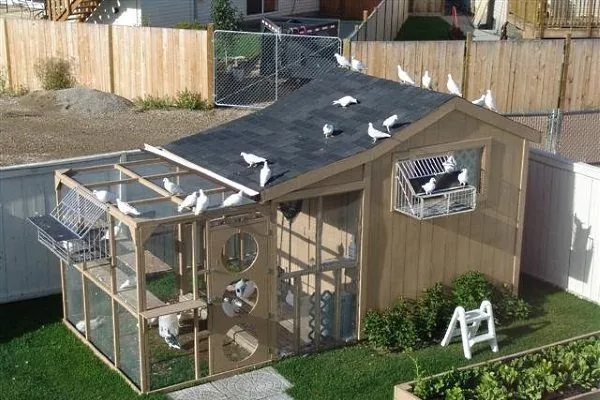
Choosing a location for the building
Pigeons are shy animals. They dislike noise, and under constant stress in urban environments, they begin to lose feathers and miss the breeding season.
- ✓ The noise level should not exceed 40 dB during the daytime.
- ✓ The distance to the nearest water source should be at least 100 meters to prevent diseases.
Pedigree pigeons are even weaker, susceptible to various infections, and, under constant stress, lose any visual appeal. Therefore, if a breeder wants their pets to be healthy and to admire their beautiful plumage, they need to choose a location as far removed from the hustle and bustle of the city as possible.
Finding a quiet corner in the city is very difficult. Consider these places:
- areas adjacent to public parks;
- closed courtyards of low-rise buildings;
- vacant lots next to private sectors.
Naturally, if a breeder lives in an apartment, they will have to locate the dovecote outside their own property. The construction will need to be approved by the municipal administration. Even in the capital, several legal dovecotes are still operating successfully on public property.
Tools and materials
It's impossible to determine a specific list of tools in advance. Everything depends on the type of dovecote, which is discussed in detail below. Here's a list of materials for the simplest, suspended type of structure:
- chain-link fencing;
- lining;
- wooden poles;
- 1-2 doors;
- nails and screws for fastening;
- metal corners for connecting the frame;
- hinges for hanging doors;
- a special bracket for securely attaching the suspended structure to the wall.
Budget dovecotes always include chain-link fencing. More expensive dovecotes may not have it, but they require the purchase and installation of full-size spiral staircases, the creation of multiple compartments with doors, and so on.
A pigeon breeding building can be constructed not only from wood but also from metal and brick. For decoration and protection from dirt, some owners tie the outside of the dovecote with thick rope.
The tool list also varies. For the simplest construction, you'll need:
- hammer;
- nippers;
- saw;
- drill and screwdriver;
- sandpaper or grinding wheel;
- screwdriver;
- construction ruler.
If the building is being constructed from metal, a welder, cutter, or metal shears may be required.
Additional requirements
The dovecote should not be located near the following objects:
- piggeries;
- other people's dovecotes;
- cesspools;
- large crowds of people;
- city dumps and garbage bins.
If the structure is to be erected on a private property, it's generally advisable to place it as close to the center of the property as possible. This way, the impact of neighbors and their potential hazards on the pigeons will be minimal.
Chicken coops and other places where birds are raised should be especially avoided: diseases can be easily transmitted from them to birds simply through the air, and even more so through direct contact.
Birds are at risk from anything they might encounter during flight. Particularly avoid:
- power lines;
- multi-storey buildings;
- tall trees.
Trees pose a danger primarily only in inclement weather. Their large branches, broken by strong winds or heavy snow, can destroy the structure and injure the birds themselves. If there's no other place to build a shelter than under a tree, it's advisable to at least support the most dangerous branches.
Birds get used to power lines, but not right away. If possible, the dovecote should be at least 10 meters away from them to prevent birds from touching the wires when landing.
Video on the topic: "Building a Dovecote with Your Own Hands"
One of the methods for building a dovecote is presented in the following video (parts 1 and 2):
Types of pigeon houses
Four different types of dovecote can be built in urban and rural settings. The choice of design should be based on your budget and the availability of your land.
Even in the city, it is possible to place a well-functioning dovecote, although unless it occupies a separate plot, caring for the birds will pose some difficulties.
| Name | Type of construction | Level of protection | Ease of cleaning |
|---|---|---|---|
| Hanging dovecote | Box with mesh | Short | Low |
| Tower Dovecote | Tower | High | High |
| Dovecote in the attic | Attic space | Average | Average |
| Dovecote on the balcony | Balcony | Average | Average |
Hanging dovecote
A lean-to structure is the most cost-effective option. This type of construction is primarily used in private homes or rural areas. The design is essentially attached either to the building's roof (if it's flat or slightly pitched) or to the very top of the second (or third) floor wall.
The dovecote itself is a box with a metal mesh and a wooden frame. It contains shelves and two doors: a hatch for the birds and a door for cleaning the room by humans. There is no roof as such. All the walls and the top of the box are made of chain-link fencing. The floor is made of planks.
The advantages of this option:
- fast production;
- Even a beginner can handle the creation;
- You can place a dovecote even if there is little space for it on the site;
- Suitable for beginner breeders;
- minimum cost of production.
However, this design has more disadvantages than advantages:
- Despite its simplicity and speed of construction, the box proves to be inconvenient for the birds. The pigeons are not even protected from rain, let alone frost, snow, or the scorching sun.
- If the top hatch is left open, a predator (such as a weasel or a bird of prey) can enter the structure. Pigeons and their chicks are left vulnerable to all the dangers present in nature. Because of this, high mortality rates of both chicks and adults occur in overhead boxes.
- Inconvenient location. Because the dovecote must be accessed either through a roof hatch or by ladder, cleaning it and generally monitoring the animals is very difficult. This affects the lives of the birds: they receive insufficient care and attention, and their cage is cleaned too infrequently.
- The breeder may tire of constantly moving to the roof and abandon pigeon breeding altogether. This option is especially inconvenient for the elderly, those with limited mobility, and those whose health prevents them from regularly using a ladder.
Pedigree birds are not bred in suspended dovecotes. It's simply impractical: breeding will not yield the desired results due to the high chick mortality rate, and weaker pedigree birds can easily die in such uncomfortable conditions.
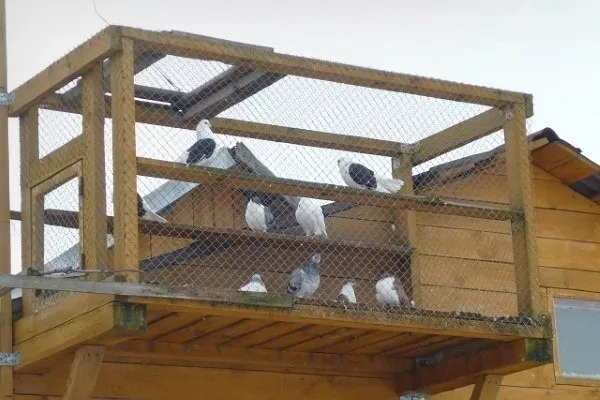
Tower Dovecote
This is a much more popular option among professional breeders. Tower construction is suitable for breeding pedigree pigeons, as it offers a high level of safety.
Design features:
- Birds inside such a building are protected from cold, precipitation, and attacks by various predators. The owner can easily monitor the well-being of both adults and newly hatched chicks.
- The structure, as the name suggests, is a tower. Typically, the structure has two to four levels. On the ground floor, the owner stores supplies for feeding, as well as tools for cleaning up after the birds.
- Starting from the second floor, the pigeon nests are placed. The nest section should be at least 2 meters above the ground to prevent predators from accessing them.
- Windows are located around the perimeter of the towers. Each window is a single compartment containing a single nest. Perches or full-size platforms can be attached beneath the windows for the pigeons' comfort. Each compartment is separated from the other, so it's clear which nest belongs to which individual. The openings (windows) for entry should not be too large, as this could prevent cats or large birds of prey from entering.
The design type may vary depending on the builder's budget. For example, the most basic turrets are small in diameter, and the owner reaches the windows using a ladder.
A far more convenient, more expensive option involves placing the spiral staircase inside the tower. This leaves the core of the structure hollow, and once on the stairwell, the owner has access to each nest from the inside.
This makes caring for the chicks and cleaning easier, but building such a dovecote is difficult both financially and technically. You'll need to hire construction workers.
The undoubted advantages of this option:
- pigeons are protected from external influences;
- Birds can be kept at any time of the year;
- ease of cleaning up after birds;
- ease of selection.
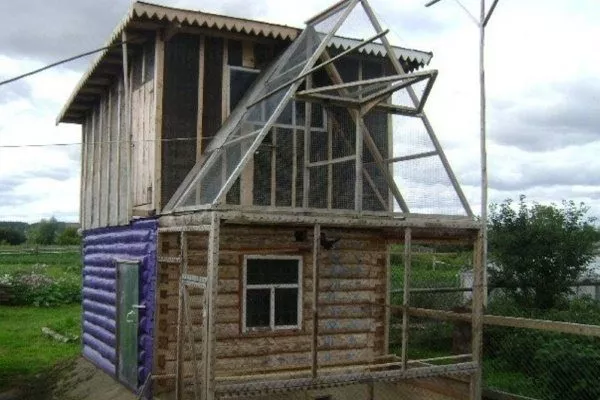
Dovecote in the attic
If a breeder has a residential or non-residential, but insulated house with a free attic or loft, the best option is to build a dovecote in the attic. Unlike a hanging box, this option poses no danger to the birds themselves.
The design has the following features:
- The main part of the dovecote, including the feeders, sections for nesting and a place for the person who will carry out cleaning, are located inside the attic;
- an additional walking area is being added, which is a small balcony with a net that closes access from all sides;
- Access to the attic is not through an extension ladder, but using the house's own ladder, which is convenient for the breeder.
This construction method is the least labor-intensive. Simply set up a walking area, create openings for access, and locate nesting areas and a feeding station.
Unlike the two methods mentioned above, you don't need to build the structure from scratch. Construction costs are minimal: all you'll need is some wire mesh and a few planks for the balcony. The breeder may also install some perches.
Cleaning this type of dovecote is the most convenient, as the owner has access to all surfaces. The only drawback is the large area to clean. However, given the easy accessibility of the surfaces, cleaning can be completed in about the same amount of time as in a tower structure.
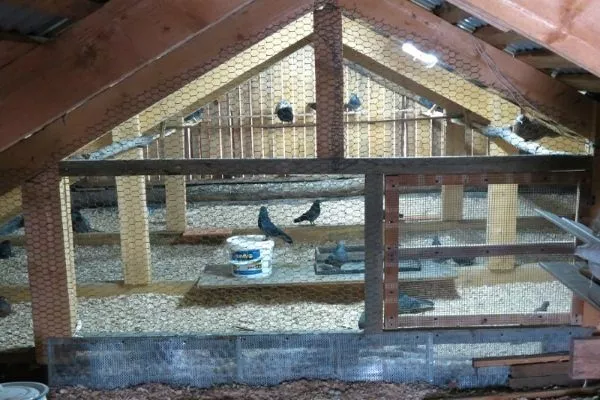
Dovecote on the balcony
Not everyone who wants to breed pigeons has the means to build a full-fledged building. Some lack the budget, while others are limited by urban conditions or a small country plot. In these cases, the only option left for a pigeon breeder is to place a dovecote on a balcony.
This option is not suitable for breeding a large number of animals, given the small area of standard balconies, but 5-6 pairs will definitely fit comfortably.
Features of a dovecote on a balcony:
- Before building, consider the neighbors' attitudes toward the potential presence of pigeons. They may file a complaint with the relevant authorities, and if the pigeon owner lives in an apartment building, they may be forced to stop breeding. However, if the neighbors are comfortable with the practice, and the owner is prepared to deal with the dirt and odor on a daily basis, no problems should arise.
- Place special perches and nesting holes on the balcony, or boxes (or a rack with square sections) where the pigeons will live. Install a feeder, a waterer, and, ideally, a bathing basin.
- The balcony should be insulated and provided with electricity and light to extend daylight hours in winter. If the balcony faces south, it should be shaded. If desired, small mesh structures for bird runs can be installed. You can make them yourself or purchase ready-made structures (usually made for cat runs).
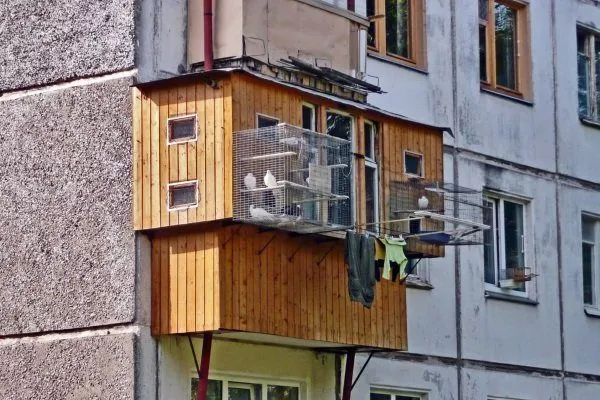
A balcony offers excellent conditions for keeping birds. The only drawback is the limited space available.
Instructions on how to build a dovecote yourself
Once you've selected the optimal design and prepared the materials and tools, you can begin construction. The detailed steps below will help you complete the project quickly and easily.
Parameters of the future dovecote
The dovecote must meet the following requirements:
- at least one square meter per individual (if there is a large walking area, 0.5 square meters per pair is allowed);
- each nest is located in a separate section;
- it is necessary to make compartments for young and adult birds;
- Nests and feeders should not be located too close to each other.
Further parameters depend on the type of design selected.
Construction stages
It's advisable to construct the structure separately from the residential building. Construction begins with the foundation. Below is a step-by-step guide.
Laying the foundation
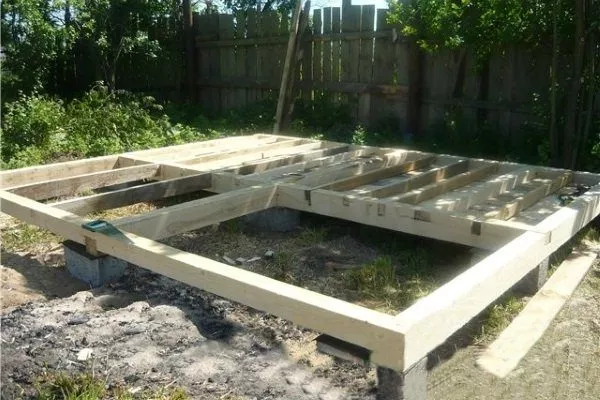
A foundation is only required for permanent structures (such as full-size towers). In most cases, clearing the area, leveling the soil, and securing it with slabs or bricks is sufficient.
Floor
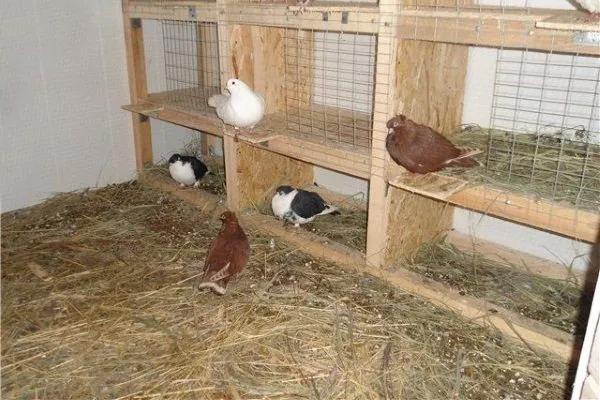
The floor is made of wood. It's easy to change, although its drawback is that it absorbs odors. If possible, an additional covering, such as linoleum, should be installed over the wood. Cold stone is not recommended. The floor is additionally covered with hay.
Installation of walls
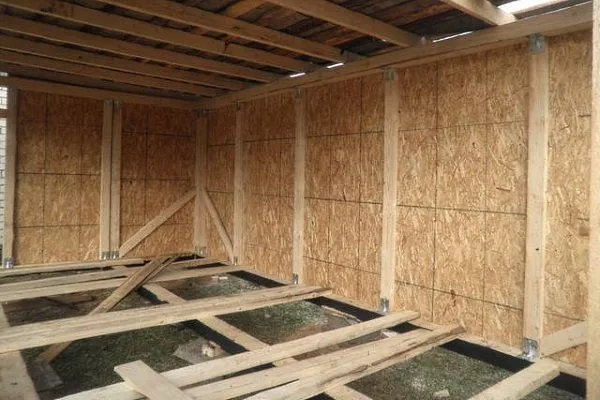
Walls are often made of wood. First, a frame is erected, then planks are nailed onto it. Insulation can be added between the outer and inner layers of planks to ensure warmth in the building even in winter.
Windows
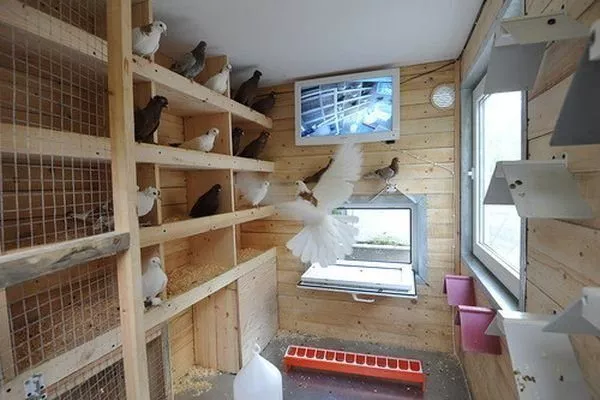
Window openings should be located on the east and south sides. They don't have to be large; small windows are sufficient. Window openings are additionally reinforced with corners.
Construction of the roof
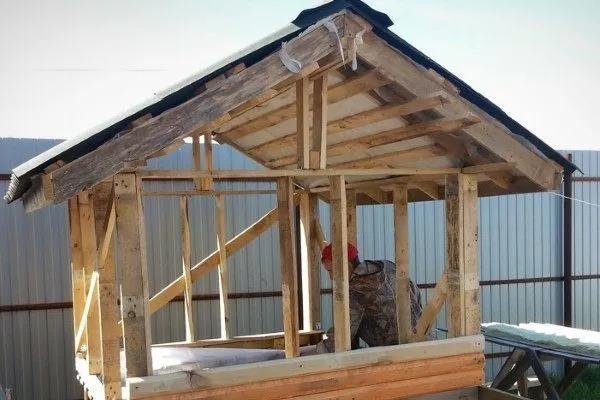
The frame is made of timber. The roof type is chosen by the owner; the simplest is a gable roof. Insulation, a waterproofing layer, and then tiles or metal for the outer covering are essential.
Ventilation
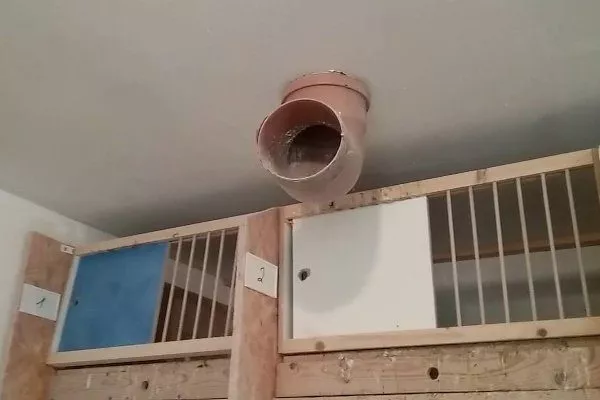
Optimal ventilation is a combination of a ceiling-mounted exhaust hood and one or two mesh doors. These should be covered with fine mesh to allow air to pass through but keep out insects. It's best to position the mesh windows closer to the floor to improve air circulation.
Walking area
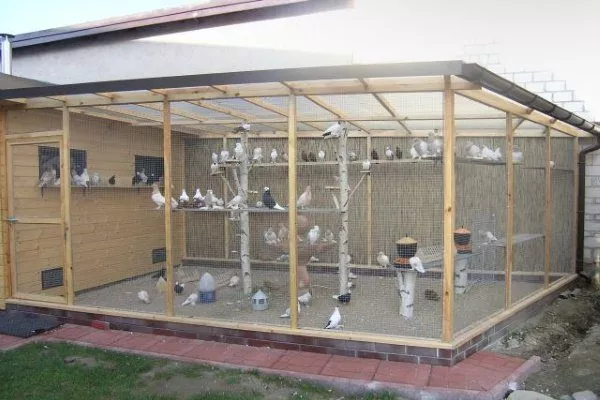
The walking area is the last thing to be built. A small balcony with a wooden floor and mesh walls and ceiling, attached to the outer wall of the building, is sufficient. If the pigeons are kept in a private home and are well-trained, a walking area will not be necessary: simply letting them out to fly is sufficient.
Interior design of the dovecote
The interior design is no less important than the exterior. The pigeons should be comfortable in the building and have ample space to move around.
Construction of perches
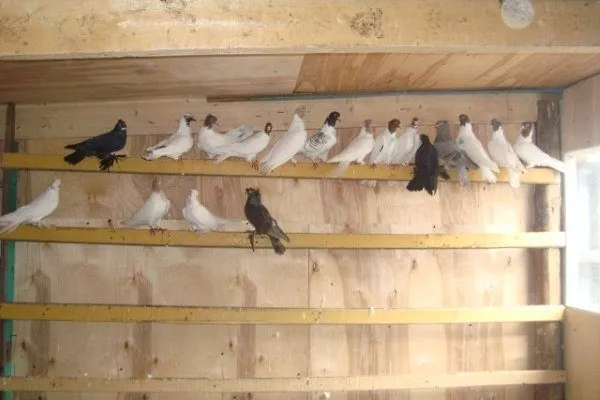
Perches should be located at least 30 cm from the ceiling. They are usually shaped like the roof of a house (a triangle without a bottom). Perches are made from 5 cm wide perches. They are usually placed on one side of the wall. Nests are made on the other side.
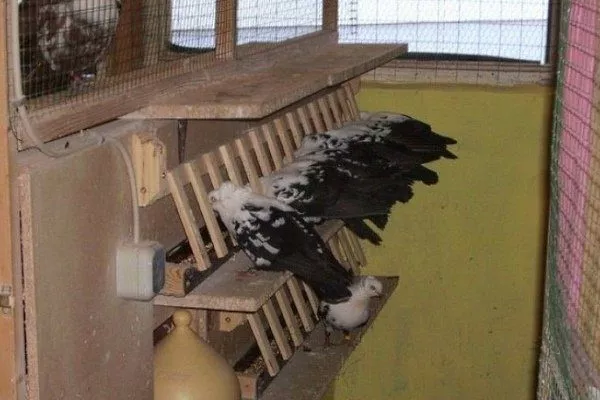
The optimal nesting platform is a simple rack, either purchased or homemade. The rack sections should be 40 x 35 x 75 centimeters. Additionally, plants or straw should be scattered inside the dovecote. This will encourage the birds to nest.
Drinking bowls and feeders
Feeders are made wide and long so that several individuals can eat from them at once. Automatic waterers are available at any pet store. Water is changed daily, and food is dispensed as needed.
Operating Rules
To ensure the building lasts as long as possible, it is necessary to take care of the following points:
- Humidity levelIt shouldn't be too high, otherwise mold and mildew will quickly form on the walls. If the owner lives in a damp area, the wood should be treated with special anti-fungal compounds.
- Ventilation. The frequency of ventilation determines whether the unpleasant odor is absorbed into the wooden components of the dovecote. If the room is regularly ventilated and cleaned, the dovecote will not develop an unpleasant, specific odor that would require replacement of some of the interior fittings.
- Hygiene. Regularly removing pigeon waste is crucial. Not only their quality of life but also the lifespan of the structure depends on this. Bird droppings, when present in high concentrations, can even corrode organic components (cardboard, wood) in the dovecote.
- Anti-corrosion treatment. All metal parts must be treated or painted to resist corrosion and rust.
- ✓ The temperature should be maintained in the range from -7 to +20 degrees Celsius.
- ✓ Air humidity should not exceed 60% to prevent mold growth.
Other operating conditions depend on the characteristics of the design chosen by the breeder. The birds must be provided with fresh water and food daily, the condition of their nests must be monitored, and the chicks must be checked.
Additional recommendations
It is necessary to take into account several important factors that influence the lifespan of pigeons, the quality of their offspring, as well as their appearance:
- The temperature in the dovecote should not fall below -7 degrees Celsius. If keeping pigeons If it occurs in a temperate or northern zone with cold winters, it is necessary to take care of heating.
The minimum requirements are to line the inside of the building with insulated clapboard. It's best to provide minimal heating (while ensuring that the pigeons don't have access to the wires and don't get burned). - The maximum air temperature is 20 degrees Celsius. If the summer temperature reaches 25-30 degrees Celsius, the dovecote must be shaded. Even in winter, the temperature can become very high, for example, if the pigeons are kept on a south-facing balcony. Proper ventilation and insulation can help ensure the correct temperature.
- Sunlight should be readily available if the pigeons spend most of their time on a balcony or in an attic. The windows shouldn't be too large, as too much light is harmful to the chicks, but at the same time, adults should receive sufficient ultraviolet radiation.
- The building is brightly colored. Pigeons have a strong memory and will return to their home dovecote. However, if it's indistinguishable from other buildings, they'll have a hard time recognizing their home after a free roam.
If the owner ensures proper nutrition and regular hygiene for the birds, breeding will be a true pleasure. A properly constructed dovecote can last up to 20 years without requiring major repairs.