
People have been breeding pigeons for hundreds of years. It's a fascinating pastime. Pigeons are easy to care for and readily accept any food offered. However, they are demanding of their surroundings during the breeding and rearing seasons. Therefore, a dovecote owner must create optimal living conditions for their winged pets.
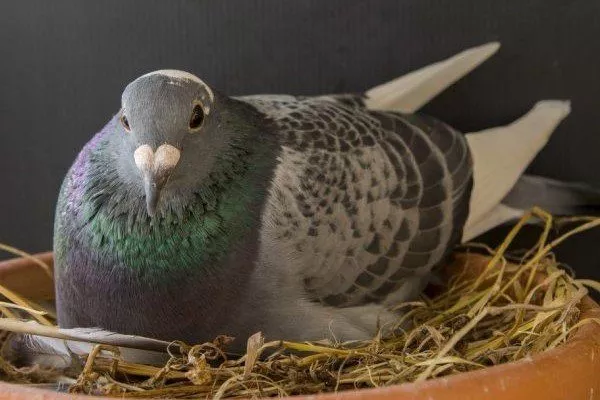
General requirements and recommendations for the arrangement of pigeon nests
Successful pigeon breeding is impossible without proper nesting. Creating optimal living conditions for the birds requires some effort.
Every poultry farmer should know the basic requirements for arranging pigeon housing:
- Each individual should have its own spacious area (including a perch) where it can rest and incubate eggs peacefully during the breeding season. The bird should not be kept in cramped conditions, otherwise breeding pigeons will be at risk. If space allows, it's recommended to divide the bird's home into two sections: one with perches and the other with nesting racks. The racks can be made removable, removed to create additional space when the chicks are fully grown, and then reinstalled during breeding season.
- Comfortable microclimate conditions. The dovecote should be well ventilated, but free of drafts. Pigeons, especially young ones, are extremely sensitive to drafts and high humidity and can become seriously ill, requiring additional funding. medicines for pigeonsThe room should be warm, and it's advisable to insulate the walls. During the winter months, the pigeon house should be additionally heated using space heaters.
- The premises must be kept clean: droppings and dirt must be removed promptly, and shelves and perches must be periodically disinfected to prevent the spread of infection.
- The nesting bedding must be replaced regularly. The bedding material should be fresh and high-quality, such as sawdust or straw.
- The room should be designed so that it provides ample space not only for the birds but also for humans. The owner should be able to easily access the nests and clean them.
- ✓ Consider the hygroscopicity of the material: wood requires protection from moisture, and polystyrene foam requires protection from damage from beaks.
- ✓ Pay attention to thermal conductivity: foam and gypsum retain heat better, which is critical for hatching eggs.
Types of pigeon nests
| Name | Material | Form | Thermal insulation |
|---|---|---|---|
| Rectangular structures | Tree | Rectangular | Low |
| Round structures | Styrofoam, gypsum, plastic | Round | High |
There are two types of nest shape: round and rectangular.
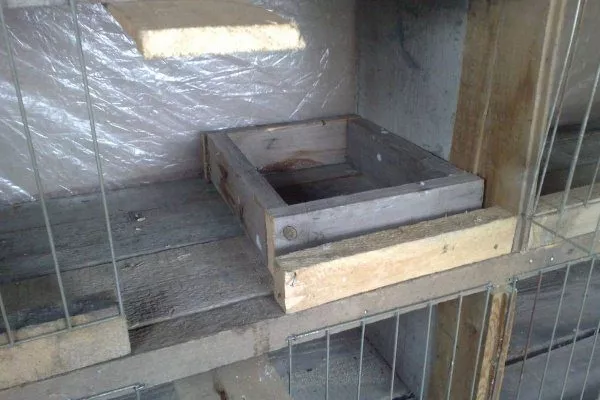
Rectangular structures Wooden nests are the most popular because they are the easiest to construct and the material is readily available. The advantage of wooden structures is their durability and the ability to be used for several years. A disadvantage is that the wood rots when exposed to moisture or high humidity. Therefore, when using wooden nests, it is important to ensure that the loft is always dry and well-ventilated. If the microclimate is unsuitable, the nests will soon have to be discarded.
Round structures Nest boxes are made from various materials, including plastic, plaster, and foam. Of these, foam nest boxes are particularly popular. Their major advantage is their ability to retain heat, which is important for hens sitting on eggs. Experienced poultry farmers note that pigeons prefer round nest boxes when choosing nest boxes.
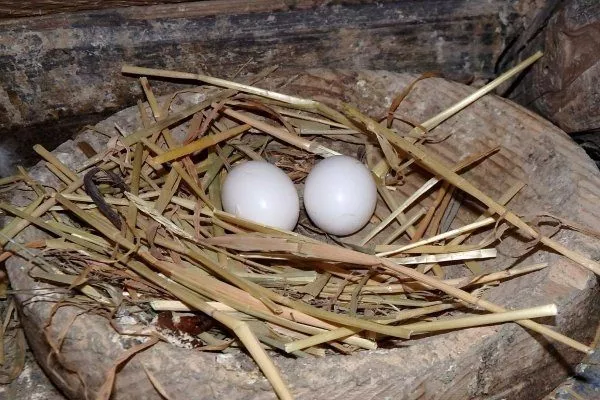
When choosing gypsum products, keep in mind that they can warp when exposed to excess moisture. A disadvantage of foam products is their fragility; birds often peck at the lightweight foam nesting walls.
How to make a nest for pigeons with your own hands?
Below are instructions for making pigeon nests from different materials.
Made of wood
Wood is the most common material used for nesting. A wooden nest is a small rectangular box. A round structure can also be made, in which case it is carved from a solid piece of wood or woven from branches into a basket-like shape.
To make a wooden nesting place, you will need the following materials and tools:
- boards;
- nails;
- hammer;
- saw;
- plywood sheet or fine mesh;
- measuring tape;
- sandpaper.
Step-by-step production:
- A board without signs of rot is taken.
- The surface is smoothed using sandpaper.
- The board is sawn into several pieces of optimal size.
- The pieces are gathered into the sides of the box.
- A plywood or mesh bottom is measured and cut out and nailed to the box.
- The structure is checked for the absence of protruding nails and splinters.
- The box is placed on a rack for the birds to get used to.
A round nest is cut into the shape of a bowl from hard, non-coniferous wood. Before placing the bowl on the rack, it is sanded to make it smooth and remove splinters. Avoid sanding too hard, otherwise the wood surface will become slippery.
Making a nesting basket is a more complex task, requiring weaving skills. Flexible willow branches are used. The woven nest shouldn't be too deep, otherwise the female won't be able to comfortably warm the eggs lying on the bottom.
Nesting boxes can crack during use. Cracks can become breeding grounds for infection and pests, so they must be sealed.
In the video below, you can see the step-by-step process of making wooden pigeon nests:
Made of foam plastic
A foam nest is cozy and retains heat. You'll need:
- a piece of foam of a suitable size;
- a saucepan in which to place the foam plastic, suitable for the size of the future nest;
- parchment paper;
- construction bandage;
- PVA-M glue.
Making a nest out of foam is simple. Place a saucepan over the fire. Place parchment paper or newspaper on top of the foam. When the bottom of the saucepan is hot, slowly but firmly press the saucepan onto the material. The foam will melt and take the shape of the container. You can also use other materials at hand.
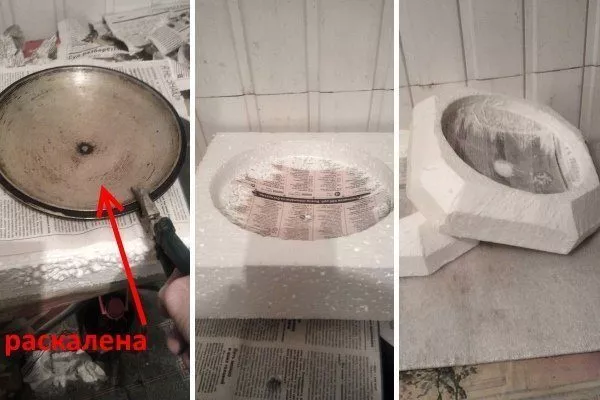
After cooling, the nest is removed, coated with glue, and wrapped in bandage. The bandage wrapping makes the nest stronger, preventing birds from damaging it with their beaks.
Made of plaster
Plaster nests for pigeons are also round, the same size as those carved from a solid piece of wood. The following materials and tools are used for making them:
- gypsum;
- two containers of suitable shape (one smaller than the other);
- polyethylene film;
- knife.
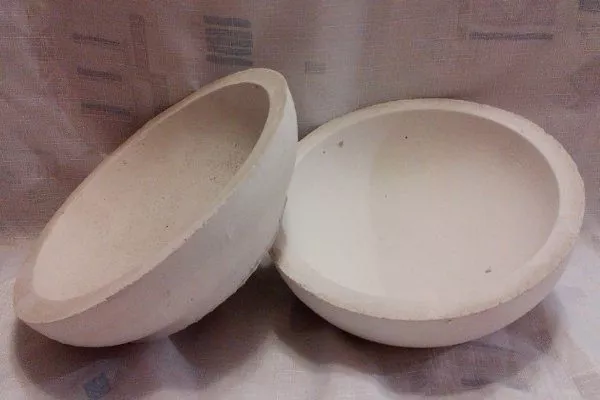
The manufacturing stages are as follows:
- The prepared large container is lined with thick polyethylene.
- The gypsum mass is diluted to the required consistency and poured into a container.
- Place a smaller container on top, also wrapped in plastic wrap. To ensure it stays in place, you can secure it with a weight placed on top. There should be at least 3 cm of space between the larger and smaller containers.
- The plaster hardens for about 3 hours. After this time, the plaster mass is removed from the containers.
- Using a knife, bulges and defects are scraped off, creating a smooth surface.
- The product is left in a ventilated place for several days until completely dry.
Made of clay
Clay nests are aesthetically pleasing, reminiscent of ceramic bowls. They are custom-made by artisans.
There's one drawback: the fragility of the material. Clay nests crack and break when handled carelessly. After cleaning their dovecote, owners often end up with a multitude of broken pieces in the trash.
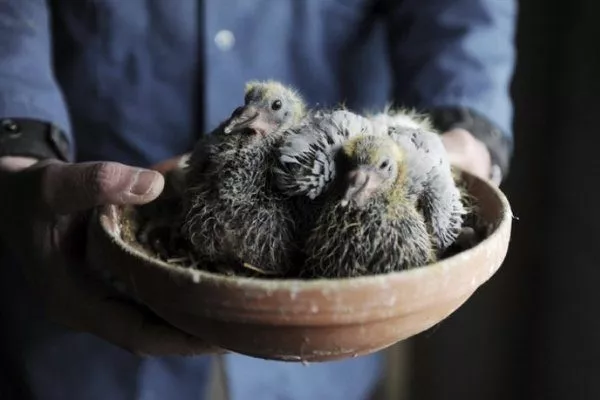
Made of plastic
Sold in pet stores, they visually resemble dog food bowls and come in a variety of shapes and colors to suit every taste.
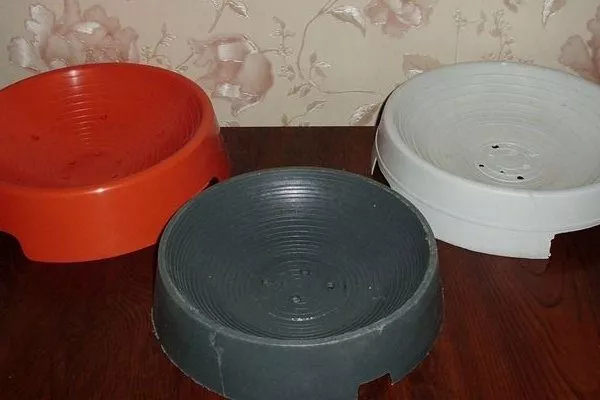
The purchased plastic product must be disinfected before placing it in the dovecote.
Optimal sizes of pigeon nests
The nesting site size is selected based on the bird breed. A standard rectangular nesting site is 30 cm long, 25 cm wide, and 8 cm high. Larger breeds require an additional 5-10 cm. Smaller breeds require smaller nesting sites. Nests must be equipped with sides to prevent eggs from rolling out or chicks from falling out.
If the nest is round, its diameter should be at least 25 cm, height – 8 cm.
Avoid skimping on materials and creating cramped structures. Cramped conditions pose a risk to the chicks' lives. A careless mother could crush her chicks.
Construction of a dovecote, construction of racks and perches
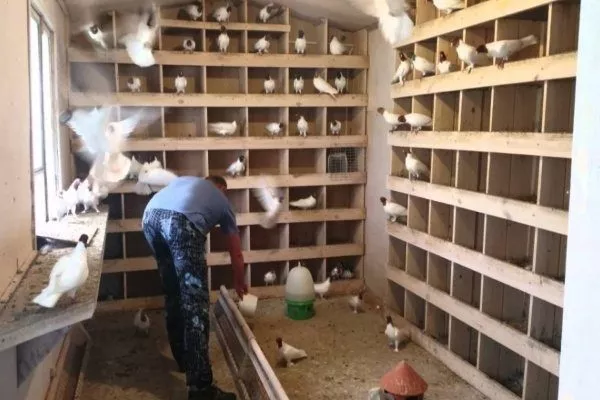
The dovecote should provide comfortable accommodation for the birds, and then pigeon breeding It won't be difficult. There should be enough space inside the structure. Male pigeons can squabble and fight, and this requires space. The birds need to be able to fly freely indoors without their wings hitting the walls. Overcrowding increases the risk of injury to the birds. Perches should be located some distance from the floor, but not right next to the ceiling.
The room must be ventilated, which means regular airing. This not only prevents mold and infection but also eliminates unpleasant odors from the birds' excrement. Pigeons are naturally messy, so poultry farmers must work hard to maintain their home clean and tidy. This maintenance cannot be ignored, as despite their uncleanliness, pigeons will not actively breed in a dirty and odor-filled room.
A standard dovecote has the following parameters:
- height – 2 m;
- floor level above ground – 25 cm;
- doors 150 cm high, 60 cm wide;
- the window area is equal to one tenth of the floor area;
- bird flight holes 25 cm high, 20 cm wide, 20 cm above the floor;
- ventilation hole at a height of 15 cm from the floor.
Read more about this,How to build a dovecote yourself.
Shelves
Nests are lightweight and can be turned over. Experienced poultry farmers construct racks to house and secure nesting sites. These structures touch the walls, take up little space, and significantly save space.
A good option for shelving is a mobile one. In this case, wheels from mobile furniture are attached to the legs or the bottom panel. It's preferable to make shelving units that can be easily dismantled if necessary.
Wood is the most common material used, but the frame can also be made of aluminum. The metal is lightweight yet provides a strong structure.
The instructions for making the rack are as follows:
- You need to take five boards 1 m long and about 35 cm wide.
- Knock three boards together to form a "P" shape.
- Divide the space created by the knocked-down boards into three parts. Attach crossbars to the marked divisions. Fasten the boards horizontally to the crossbars.
- Divide each of the resulting sections into two halves. The size of the sections is determined by the breed of the pets. The larger the adult pets, the more space they should occupy.
- Cover the back side of the rack with a sheet of plywood.
- To prevent nests from falling out, place a partition at the front of each section. It shouldn't be too short, but it shouldn't be too high either, allowing the pigeons to easily fly in and the owner to clean and disinfect the sections. The optimal height of the partition is 8-10 cm.
Racks are used to place:
- nesting structures;
- boxes where pigeons mate;
- perches (a crossbar on which a bird sits at night).
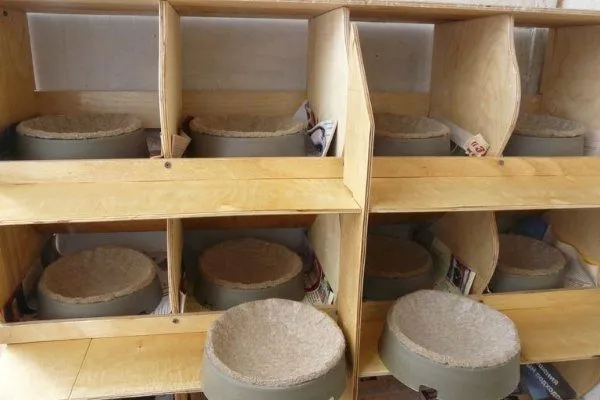
Rack with nests
You can quickly make a shelving unit from cardboard boxes, but it won't last long.
Perches
Perches are essential in a dovecote, as pigeons spend most of their time there. Perches are especially necessary for exotic breeds with beautiful feathered legs. Without a perch, the feathers on their legs will quickly become dirty, which will negatively impact the aesthetic appeal of this ornamental bird.
Perches are made from sanded 4-cm-thick boards and secured to the walls. The distance from the ceiling should be 40 cm. If the pigeon colony is large, the perches are secured in several rows. However, they must be positioned so that droppings from the birds perched above do not fall on those perched below. The owner must be able to easily reach the perches for cleaning and disinfection.
The most common design is an "L"-shaped one when viewed from the front. This means two boards are joined at a 90-degree angle, with a slat nailed to the top. This type of perch is comfortable for fancy pigeons with luxurious plumage. For simpler breeds, regular boards attached to the walls are suitable. A board 30 cm long is ideal, as it can accommodate two pigeons. Generally, the number of perches in a dovecote corresponds to the number of birds: each pet should have its own resting place.
During the winter months, pigeons spend almost all their time perched. Therefore, the perches should be comfortable and not require the birds to strain or balance. The more comfortable the birds are during the winter, the more likely they are to breed in the spring.
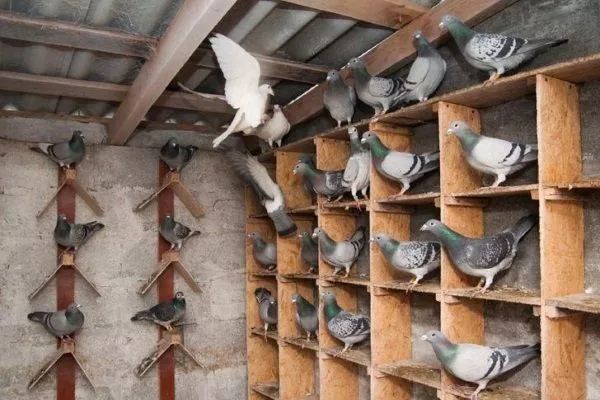
The perch surface should be smooth, preferably painted or treated with a bird-safe protective agent. Untreated wood deteriorates quickly and harbors insects and fungi. Avoid making the surface too smooth or glossy. Birds' feet will slip on it, and the pigeon will have to work hard to maintain balance and avoid falling.
The board shouldn't be too thick, otherwise the bones in the bird's feet may become deformed due to stress. The optimal perch has three or four sides. The thickness should not exceed 4 cm, which is half the length of the pigeon's open toes.
Making L-shaped perches for breeds with lush plumage is also not difficult. You'll need:
- a board 15 cm wide;
- plywood sheet;
- saw;
- nails;
- measuring tape.
Manufacturing stages:
- Two pieces of length 25 and 20 cm are measured and sawed off.
- They are connected at a 90 degree angle.
- A triangle is cut out of a plywood sheet to secure the joined boards. It is attached to the wall.
- A structure of boards is installed on top of the plywood with the top facing up.
- A lath is nailed to the joint between the boards to make it more comfortable for the birds to sit on.
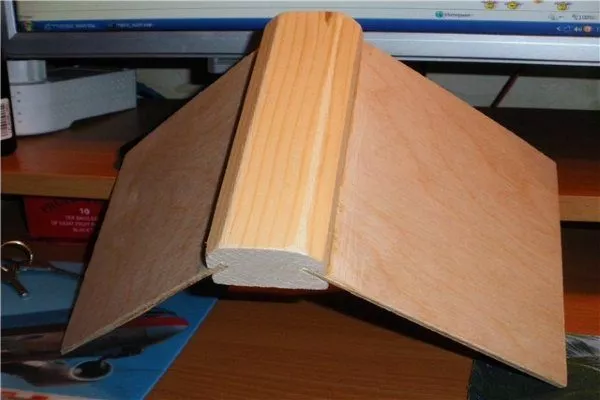
L-shaped perches can be found in pet stores. They come in plastic and aluminum. They are long-lasting and easy to clean. However, poultry farmers note that pigeons prefer wooden structures. Another advantage of homemade wooden perches is that they can be disassembled and repaired.
Nest care
The materials used to construct houses and nests must be non-toxic and environmentally friendly, otherwise there is a high risk of serious illness in chicks and adults. Pigeons are susceptible to infections and parasites, so owners must regularly clean and disinfect nests, perches, and racks. Bedding must be changed as soon as it becomes soiled, and debris and waste must be removed.
Disinfection is necessary to prevent the proliferation and removal of pathogenic microorganisms and parasitic insects. It is performed monthly as a preventative measure. If an infection has already developed, an unscheduled procedure is performed. It is important to choose safe disinfectants that do not contain components harmful to birds.
Disinfection is carried out as follows:
- The pigeons are removed from the dovecote during the procedure.
- Rotten and dirty bedding is completely removed.
- Racks, perches, nests, and walls are thoroughly treated with a disinfectant solution.
- Feeders and drinking bowls are thoroughly washed with a cleaning agent.
- A blowtorch can be used as an additional disinfectant.
- At the end of the event, the dovecote is ventilated and the birds are released into it.
- Check nests weekly for damage and dirt.
- Once a month, carry out a complete disinfection of the nests and dovecote.
- Immediately after the chicks have fledged, replace the bedding and repair the nest if necessary.
If signs of infection are detected during cleaning, cleaning is performed with a special solution effective against specific bacterial or viral agents. Every corner of the dovecote and all equipment are treated.
Disinfectant aerosols are available at pet stores. They are safe for use on food, walls, and bird feathers. They can be safely sprayed into the air.
To clean the dovecote, the poultry farmer must purchase the following equipment:
- scoop;
- broom;
- bucket;
- container for collecting droppings;
- scraper;
- rake;
- carriers for pigeons.
A well-built nesting site ensures healthy and numerous pigeon offspring. Setting up a dovecote and building nests isn't difficult, but it does require a considerable amount of time and effort. Pigeons readily breed in comfortable conditions, such as clean, spacious, and fresh air.