
When breeding pigeons, it's crucial to pay close attention to their health, as if one bird becomes ill, there's a high risk of infecting the rest of the birds. Newcastle disease is the most common disease among pigeons, and to prevent it, the La Sota vaccine can be administered prophylactically. Learn more about this vaccine and how it's used below.
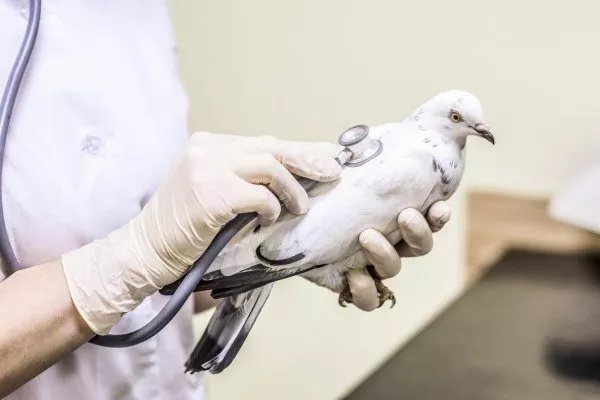
What kind of drug is this?
La Sota is used by pigeon breeders solely for the prevention of Newcastle disease, which affects the respiratory, digestive, and nervous systems of birds. The disease manifests itself with the following symptoms:
- high temperature;
- loss of orientation;
- enlarged goiter;
- the release of a fluid with an unpleasant odor from the oral cavity;
- refusal to eat;
- liquid droppings with mucus, blood or bile.
In more severe cases, the disease can lead to paralysis, open-beak breathing, stunted growth, and decreased egg-laying ability.
To prevent infection with such a dangerous disease, it is necessary to administer the La Sota vaccine, as it maintains the pigeons' resistance to the virus. This vaccination is administered regularly, not just once. A week after the initial administration, the drug will be effective for several months. If the bird has already become infected, a different treatment will be required.
The vaccine is being marketed by both foreign and domestic manufacturers. Currently, the product is available from three leading companies:
- AviNova ND LASOTA (Germany);
- AVIVAK-NB (Russia);
- "La Sota" (Russia, Federal State Institution "All-Russian Research Institute of Animal Husbandry").
Indications for use
The instructions for use do not specify that the product is suitable only for pigeons, so there is no distinction between species. The vaccine can be used on both farms with and without the disease.
- ✓ Check the storage temperature of the vaccine before use (4-8°C).
- ✓ Make sure that pigeons are free from diseases before vaccination.
Only healthy birds are vaccinated, and the required dose for each individual is determined based on factors such as age and weight. Two weeks after vaccination, the birds develop immunity, which protects them from infection for three months.
To ensure the drug is truly effective, it's important to avoid taking any other medications, even for other illnesses, for 5 days prior to vaccination. This should also be avoided for 5 days after the procedure.
On large farms with highly prized pigeon breeds, laboratory testing of the birds' blood for immune status is necessary after vaccination. If the results show low antibody levels, re-vaccination is necessary.
Release forms
The described vaccine is available in glass ampoules or vials with a capacity of 0.5 to 4 cc. The volume of one ampoule may vary depending on the manufacturer, but the packaging containing the substance must be labeled. It must contain the following information:
- name of the drug;
- date of manufacture;
- number of doses;
- serial number;
- control number.
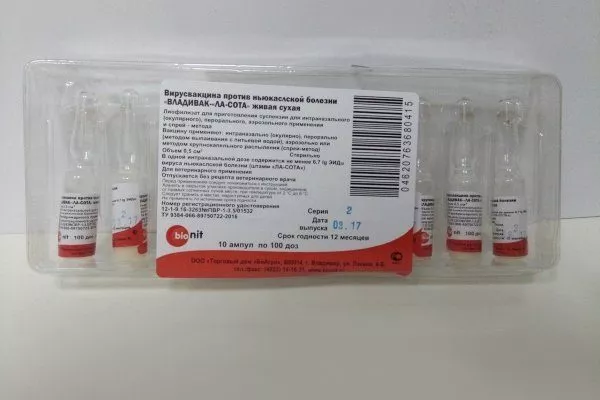
One pack contains 10 ampoules, each containing 100 doses. The vaccine is available in both dry and liquid form. The dry form is light pink, yellow, or brown tablets that dissolve in water. The liquid vaccine is packaged in glass jars with rubber lids and hermetically sealed aluminum caps and is colorless and odorless.
Composition of the drug
The vaccine contains strains of Newcastle disease that were obtained on SPF (Specific Pathogen Free) chicken embryos.
Additional components are only included in the vaccine if it is presented in dry form and is to be dissolved in water. The following are considered auxiliary elements:
- lactalbumin hydrolyzate;
- skim milk.
Instructions for use
Pigeon breeders use the described drug using two methods: intranasal and enteral. The choice of method should be based on the number of birds requiring vaccination. It is physically difficult to vaccinate a large flock intranasally. Let's look at each method separately.
Intranasal
In this case, the drug is administered through the bird's nasal cavity. The vaccine must be diluted before use. The instructions for use are as follows:
- Dilute La Sota powder in 0.1 ml of sodium chloride solution.
- Use a dropper to place 2 drops of the resulting solution into one nostril. Leave the other nostril undisturbed.
During the vaccination, it is necessary to close the second nostril with your finger, otherwise the drug will not pass through the nasopharynx and will not be absorbed, but will flow back out through it.
This procedure should be repeated every ten days, as it only provides temporary immunity to the disease, which disappears as the drug's effect wears off. It's important to remember not to use a syringe for instillation, but only a medical pipette, as this can damage the bird's nasopharynx.
Enteral
This method is better suited for those keeping a large number of birds. In this case, the medication is diluted in water and poured into the birds' drinkers instead of their regular water. To ensure the birds have received the medication, remove all water bowls from the loft in the evening. This way, they will be thirsty in the morning and will drink the medication.
Each bird should receive 1 ml of vaccine, so when diluting the vaccine with water, count the total number of birds. The vaccine should be diluted in the amount of water that one bird drinks in 4 hours. Avoid using small amounts of water (less than 300 ml), otherwise some birds may receive too much of the vaccine, which will negatively impact their health.
After the procedure, thoroughly rinse the waterer and ensure there is no residual medication residue. If any remains, dispose of it and disinfect the waterer.
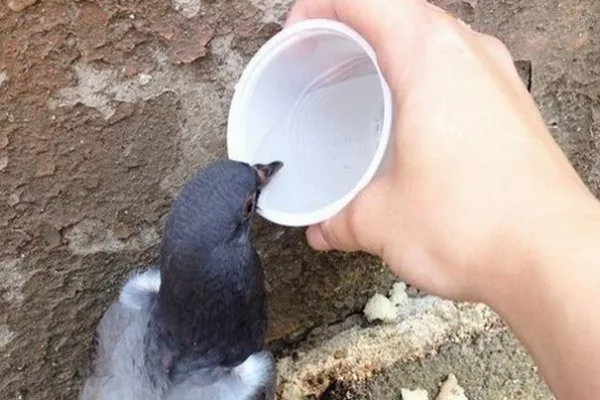
After vaccination using any of the methods described above, birds should not be fed for an hour and a half.
Aerosol spraying of the vaccine
For vaccination purposes, the dovecote can also be treated with La Sota. This method is not often used by pigeon breeders, as personal safety is also important. It's important to keep the loft completely sealed during the procedure, otherwise the treatment will be less effective.
The spraying procedure is carried out in the following order:
- Take three glass containers of the vaccine and dilute them in water. Use the amount of vaccine that corresponds to the area of the poultry house. The dosage can be calculated using the following formula: 1 cubic centimeter of vaccine per 1 square meter of the house. It's also important to consider the bird's age and weight when choosing the dosage. To determine the total weight of the birds, weigh each bird separately, add the results together, and divide the resulting figure by the total number of birds.
- Spray the reconstituted vaccine using an aerosol spray throughout the entire dovecote. Spray for at least 5 minutes.
- After spraying, thoroughly rinse all drinking bowls and feeders without using any additional products.
It is also important to observe personal safety:
- When spraying, wear special protective clothing, a head covering, a respirator mask and goggles to protect your eyes;
- Do not enter the poultry house for at least 10 minutes after spraying the vaccine.
Contraindications and side effects
The described vaccine cannot be used in the presence of the following contraindications:
- progressive disease of any type;
- weak immunity or the bird’s recovery period after an illness;
- treatment with antibiotics, nitrofurans or sulfonamides.
Adverse reactions are not observed in adult animals, as they tolerate the vaccination well. However, the following side effects may occur in young animals:
- dyspnea;
- poor appetite;
- general malaise.
Adverse reactions among young birds are due to the fact that their bodies are weaker than those of adult birds and less resistant to external intervention.
Storage terms and conditions
The vaccine contains a live virus, so it requires special storage conditions. Specifically, it must be kept in a dry, dark place where the temperature remains between 4 and 8 degrees Celsius.
Proper temperature control is the most important requirement for storing La Sota. Therefore, do not purchase the product from pharmacies that cannot ensure proper temperature control during transportation and storage prior to sale. This should always be discussed with the seller, otherwise you risk purchasing a spoiled product and harming the birds' health.
When properly stored, the vaccine remains usable for one year from the date of manufacture. However, do not use the vaccine if it has been opened for more than four hours.
Tips from pigeon breeders
The instructions for use of the drug do not provide clear instructions on how to treat birds, so practical recommendations from experienced pigeon breeders will be useful:
- It's best to vaccinate young birds from an early age. The best time to do this is 15 days after birth.
- Young individuals should be vaccinated only by administering the drug through the nostril.
- If, with the enteral vaccination method, the pigeons do not drink the entire solution within 4 hours, then the procedure must be repeated the next day, using the same doses.
- Re-vaccinate birds every three months.
Before administering medication to your bird, be sure to consult a veterinarian. This is to ensure that your pigeons are completely free of any illnesses.
Video: La Sota B1 vaccine
A veterinarian from KLM explains what type B1 means, which farms are best suited for this product, and at what age vaccinations can begin:
The La Sota vaccine has proven effective in preventing Newcastle disease, so don't neglect this procedure. This is the only way to maintain the health of all birds in the breeding colony and prevent their mortality. It's important to remember that vaccinations should be administered every three months.