
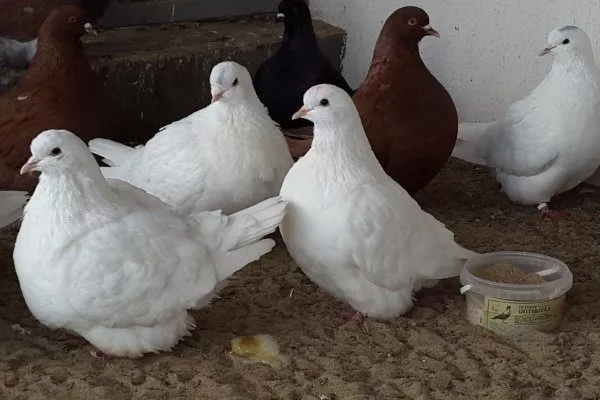
Diarrhea in pigeons is a common occurrence, occurring in both young and adult birds. This disorder can be triggered by both infectious and non-infectious factors, but in any case, it weakens the birds' bodies, causing their immune systems to malfunction and various disorders to develop. We'll explore why this condition occurs, how it manifests, and how it is treated.
Reasons for occurrence
Diarrhea or runny droppings in pigeons is a sign of digestive upset. This is not an independent disease, but a consequence of various pathological conditions, which can be infectious or non-infectious. The causes of diarrhea in pigeons are worth examining separately.
Monotonous and unhealthy diet
| Name | Disease resistance | Ripening period | Productivity |
|---|---|---|---|
| Barley | High | Early | High |
| Pearl barley | Average | Average | Average |
| Wheat | Low | Late | Low |
| Millet | High | Early | High |
When breeders feed birds only one type of grain, they don't receive enough nutrients. This leads to disruptions in their body functions, disrupting their metabolism and digestive system, which ultimately causes diarrhea.
The table below shows which vitamin deficiencies the body of individuals reacts to most acutely:
| Name of the vitamin | Consequences of insufficiency |
| A | Its deficiency causes damage to the mucous membranes and inflammation of the goiter. Since the goiter is part of the gastrointestinal tract, its inflammation can trigger diarrhea. |
| B | A deficiency of B vitamins causes hypovitaminosis B, which manifests as diarrhea, low body temperature, labored breathing, and mucosal inflammation. Furthermore, the bird may experience developmental delays and nervous system problems, which can cause wing and leg tremors and even paralysis. |
| E | If a bird's body experiences a deficiency, it can affect the health of its cardiac, nervous, or digestive systems. This condition manifests itself as impaired muscle tone and coordination, and loose stools. Paralysis can also occur. |
| K | Reduced blood clotting and vascular damage are common consequences of vitamin K deficiency. These often trigger intestinal bleeding, which can result in blood stains in the stool. |
Parasite infestation
Parasites enter the pigeons' bodies through poor-quality food and water, as well as from the environment if the breeder fails to observe all hygiene standards.
Once pathogenic microflora enters the body, it triggers infectious diseases of bacterial, fungal, viral, or parasitic origin. All of these diseases cause loose stools, which may contain blood or mucus, be green or yellow, and smell foul of bird droppings.
Sick pigeons can infect the entire flock. Moreover, they even pose a danger to humans. To prevent negative consequences and death, sick birds should be moved to a separate cage and consult a veterinarian. Only a veterinarian can prescribe the correct treatment, taking into account the stage of the disease and the bird's age.
Inflammatory diseases of the goiter
The crop is one of the organs of the bird's digestive system. It stores food and exposes it to specialized enzymes. If a bird is fed poor-quality food, consumes primarily grains, or ingests toxic substances through food and water, inflammation can develop in the crop, leading to digestive problems and diarrhea.
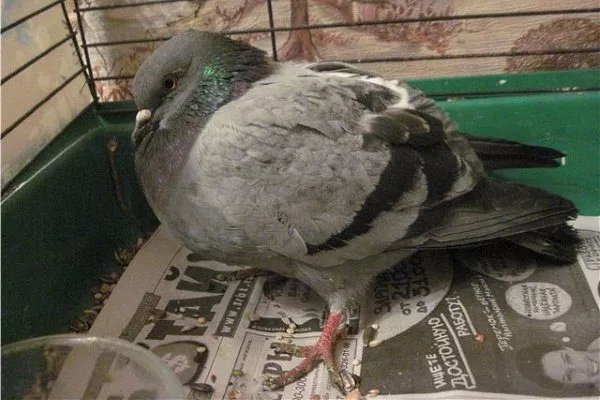
Regardless of the cause of diarrhea, if the bird is not treated promptly, the disease can become chronic and advanced, leading to digestive dysfunction and a systematic weakening of the immune system.
Diarrhea as a symptom of another disease
When pigeons have diarrhea, their droppings may be yellow or green, and in some cases, they may contain traces of blood. Depending on the droppings' characteristics, the underlying disease can be determined. Therefore, it's important to consider the different types of diarrhea and the diseases that can trigger them.
We also recommend reading the article about What diseases do pigeons have?.
Watery stool
| Name | Type of infection | Symptoms | Treatment |
|---|---|---|---|
| Paramyxovirus infection | Viral | Liquid stool, weakness, convulsions | Unknown |
| Capillariasis | Parasitic | Liquid stool, intestinal inflammation | Anthelmintic drugs |
| Streptococcosis | Bacterial | Loose stools, depression | Antibiotics |
| Ascariasis | Parasitic | Loose stools, weight loss | Anthelmintic drugs |
| Aspergillosis | Fungal | Blueness of the beak and feet, watery droppings | Antifungal drugs |
It is observed in such pathologies as:
- Paramyxovirus infection (vertigo)This disease is dangerous for pigeons, as its treatment remains unknown. It is transmitted by airborne droplets and dust, and is spread by insects, rodents, and the infected pigeons themselves. When infected, the bird produces liquid droppings that are white, or sometimes green. Additionally, the bird becomes weak, stops drinking and eating, experiences convulsions, has a head tilt, and suffers from impaired coordination.
- CapillariasisIt is caused by parasites that infect the small intestine. Inflammation occurs, leading to impaired function and the release of liquid feces.
- StreptococcosisThis microbe causes depression in pigeons, mucus discharge from the nose, frequent sneezing, convulsions, and loose stools resembling diarrhea. As a result of the frequent stooling, the bird's body becomes dehydrated and malnourished.
- AscariasisBirds often become infected with roundworms, which cause ascariasis. These parasites infest the small intestine, causing weight loss and loose stools.
- AspergillosisThis is a fungal disease. Pathogenic microflora appears in grain, straw, and hay bedding, especially during periods of high humidity. The fungus produces spores that are dangerous to pigeons and cause aspergillosis. Symptoms include blue beaks and feet, as the pigeons develop heart failure. The droppings become watery, fluid drains from the nose, feathers fall out, and breathing becomes difficult.
Fungus is resistant to many disinfectants, making it very difficult to eradicate. Typically, it can only be destroyed by exposure to high temperatures. Thus, the room will need to be disinfected using flame and formaldehyde.
Green droppings
| Name | Type of infection | Symptoms | Treatment |
|---|---|---|---|
| Gastroenteritis | Bacterial/Viral/Parasitic | Yellow or green droppings, undigested food | Antibiotics/Antivirals/Anthelmintics |
| Trichomoniasis | Viral | Putrid liquid stool, abdominal distension | Antiviral drugs |
Green feces often appear as a result of various illnesses. The following are believed to be the cause:
- GastroenteritisIt develops due to inflammation of the intestinal and gastric mucosa. The disease can occur when birds are exposed to dirty water, poor-quality feed such as moldy wheat, or when they eat mineral fertilizers from a garden bed that aren't covered with soil. The disease can also be caused by helminths, viruses, and fungi. In any case, it manifests as diarrhea. The droppings are yellow or green and may contain gas bubbles. Undigested food is often present in the excrement.
- Trichomoniasis (Trichomonas diphtheria)It is caused by a virus that can be found in dirty water, poor-quality feed, or the droppings of sick birds. The disease develops slowly, making it dangerous because it cannot be diagnosed immediately. The virus destroys the mucous membranes of the mouth and throat, causing the formation of pale yellow nodules. The virus then enters the intestines, causing the bird's abdomen to swell and produce putrid, loose stools.
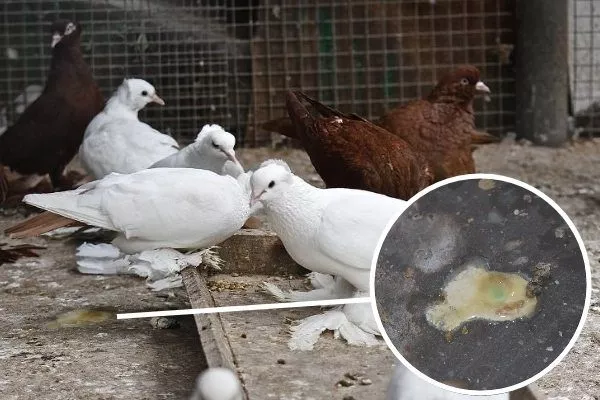
Trichomoniasis is a fairly common disease, especially in young animals, due to their weak immune system.
Bloody diarrhea
| Name | Type of infection | Symptoms | Treatment |
|---|---|---|---|
| Coccidiosis | Parasitic | Bloody stool, weakened condition | Koktsidin, Furagin |
| Salmonellosis | Bacterial | Green stool with blood, weight loss | Antibiotics |
Occurs in diseases such as:
- CoccidiosisIt is caused by coccidia protozoa, which contribute to the development of pathologies of vital organs—the intestinal mucosa, kidneys, and liver. As the disease progresses, the color of the droppings changes: in the first stage, it becomes yellow-green, and then dark brown due to the presence of blood. This leads to weakening of the pigeons.
- SalmonellosisThe disease is caused by the salmonella virus. Pigeons become infected when the droppings of an infected bird come into contact with their food or water. This disease causes the droppings to become green and runny, containing air bubbles. The droppings are this color due to the presence of bile, which cannot be fully digested, causing the pigeons to lose their appetite. In the later stages, the bird becomes flightless, loses weight, and drops of blood appear in the droppings. The joints and nervous system are affected, and the head tilts back.
The salmonella virus is very resistant to infection, so the disease quickly spreads throughout the entire herd.
Symptoms of bird disease
Pigeon illnesses begin with general symptoms, which can indicate that the bird is ill. Therefore, the birds should be examined every morning, their behavior and pecking behavior monitored.
Characteristic symptoms of ill-health in pigeons:
- the bird sits with its feathers ruffled and does not approach the feeder;
- feathers are falling out;
- breathing is heavy, the bird holds its beak open;
- coordination is impaired;
- liquid droppings are released.
If these symptoms are noticed, the bird should be immediately separated from the flock and moved to a separate cage. To prevent the spread of the disease, the premises should also be thoroughly disinfected.
Treatment of pigeons
To treat diarrhea in pigeons, you first need to determine the underlying cause. For a proper diagnosis, you'll need to submit the droppings to a lab and consult a veterinarian. Below, we'll explore what comprehensive treatment involves and which medications are most commonly given to birds.
General recommendations for therapy
Treatment of diarrhea in pigeons requires special attention to such aspects as:
- WateringBirds should only be given freshly boiled water, which should be changed every few hours. Add a few drops of potassium permanganate to the water until it turns slightly pink. This will help disinfect the bird's gastrointestinal tract and remove toxins. Additionally, to protect the lining of the stomach and intestines, pigeons should be given rice broth or flaxseed tea. These products have a coating effect and help prevent irritation.
 Critical water parameters for pigeons
- ✓ Water temperature should be between 10-15°C for optimal absorption.
- ✓ The pH of the water should be neutral (6.5-7.5) to prevent irritation of the gastrointestinal tract.
To stop the loss of fluid from the body, the bird should be given electrolytes.
- FeedingIndividuals should be given 20-30 g of feed, 40% of which is barley or pearl barley, 30% wheat, and 10% millet. Vitamins A, B, E, and K should be added to the feed, and sometimes mineral supplements are added. Legumes, corn, seeds, and table salt can also be added to the diet. Greens should not be given to birds, as they can upset their stomachs.
- Disinfection of enclosures and equipmentThe pigeons' living quarters should be cleaned daily, with preventative disinfection performed once a month and, in the event of an epidemic, disinfected every 5-7 days. A solution of chloramine (2%), bleach (3-4%), paraformaldehyde (2%), slaked lime (3%), or Deitran can be used to disinfect the cages, feeders, and waterers. For effective treatment with gaseous disinfectants, the room must be completely sealed and the temperature must be at least 15 degrees Celsius.
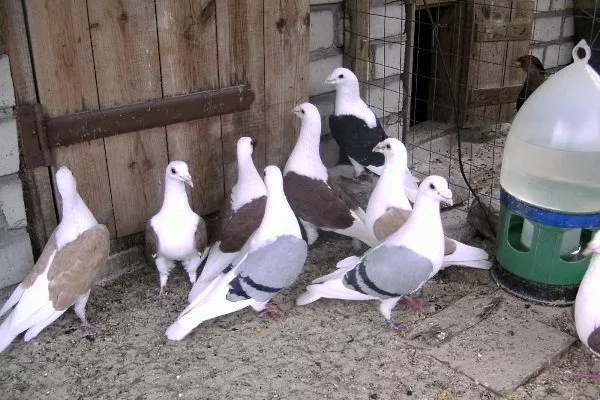
- Carry out mechanical cleaning of the premises from droppings and feathers.
- Treat all surfaces with a 2% chloramine solution.
- Ventilate the room for 24 hours before returning the pigeons.
The person performing disinfection must follow safety precautions and work in a protective suit, mask and gloves.
Drug therapy
Only a doctor can prescribe specific treatment based on test results.
If diarrhea is of an infectious nature, the doctor prescribes antibiotics:
- TetracyclineA broad-spectrum medication used to combat many microbes and parasites. It should be administered twice daily with food at a dose of 20 mg per kg of body weight. The treatment course is 7 days.
- StreptomycinIt is used to treat various bird pathologies, ranging from the common cold to complex infectious diseases. It is administered intramuscularly every 12 hours at a dose of 50,000 IU per 1 kg of body weight. The course of treatment lasts several days (until complete recovery).
For fungal infections, use:
- NystatinEffective against aspergillosis and candidiasis. Administer with food. Doses are prescribed by a specialist and range from 25 to 50 mg per 1 kg of body weight. Treatment lasts for 6-10 days.
- OxytetracyclineEffective against coccidiosis, salmonellosis, and gastrointestinal disorders. It is administered intramuscularly at a dose of 10,000 IU or given to pigeons with food at a rate of 6-10 mg per 1 kg of body weight.
If diarrhea is caused by helminthiasis, Piperazine is prescribed. The drug paralyzes the parasites, disrupting their neuromuscular system. It should be added to the pigeons' drinking water, after consulting with a veterinarian for dosage instructions.
If there is inflammation of the intestines and stomach, it is necessary to wash the bird’s crop by dropping oil into the beak:
- sunflower;
- Vaseline;
- castor.
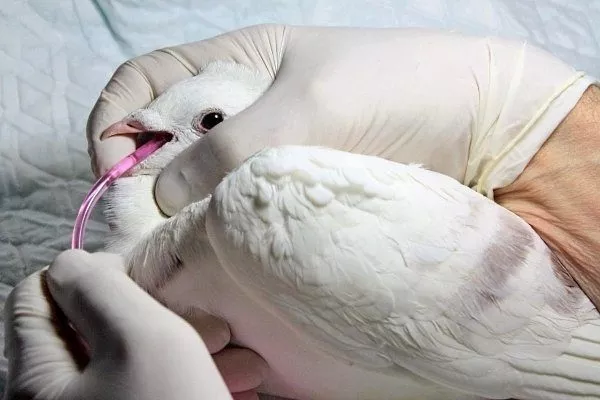
If droppings containing drops of blood are detected, the bird is usually prescribed Coccidin and Furagin.
To boost the birds' immune system, Aminalon or another immune-boosting drug can be added to their water for 5 days.
These medications are used only as part of a comprehensive vitamin therapy regimen, which includes a trivitamin or fish oil. The dosage and duration of treatment are determined by a veterinarian.
Prevention
To prevent the development of various disorders in pigeons, preventative measures should be followed:
- Maintain proper hygiene standards for the premises and equipment. Perform thorough cleanings regularly, and treat the floor with antiseptic once a month. Use chlorine-containing products for disinfection. Deitran is also effective and can be used in the aviary even when pigeons are present.
- Control the optimal temperature and humidity in the dovecote.
- Keep the water clean. If any debris or food gets into it, it should be replaced.
- Follow all feeding guidelines. Grain mixtures should include barley or pearl barley, wheat, and millet. Corn, sunflower seeds, peas and beans, and table salt should also be included in the birds' diet. It's also important to supplement the diet with vitamins. Many experienced breeders use veterinary yeast for this purpose. Pay attention to the quality of the feed, too. It should only be purchased from reputable suppliers.
- Conduct antihelminthic measures and do not neglect vaccination of pigeons.
- Periodically submit pigeon droppings to a laboratory for analysis.
Diarrhea in birds is difficult to treat, so it's best to take all measures promptly to protect your pigeons from this scourge. If diarrhea does occur, seek professional help immediately, as this condition can be a symptom of many dangerous diseases.