
If pigeons are kept on bedding made of straw and sand and fed dirty and poor-quality feed, they often become infected with coccidiosis. This is a typical intestinal infection caused by protozoa that cause enteritis in the gastrointestinal tract. Let's look at how to identify the signs of coccidiosis and separate sick birds from healthy ones to begin treatment more quickly.
What kind of disease is this?
Coccidiosis is a disease caused by protozoan parasites called coccidia. It primarily affects young birds between 15 and 60 days old. As pigeons age, they develop immunity to the disease, so the parasites pose little threat to them.
Chicks and young birds are at risk because their bodies have not yet developed a defense against coccidiosis. The risk of infection is especially high when they leave the nest.
After entering the bird's body, oocysts (coccidia eggs) multiply in the intestine for 6-8 days and are then excreted in the bird's droppings. This causes damage to the gastrointestinal tract due to bloody diarrhea and inflammation of the intestinal walls. It should also be noted that the released bacteria can infect other members of the flock.
The course of coccidiosis varies, depending on the pigeons' immunity and the stage of the disease. However, in any case, the disease progresses more rapidly in warm and humid environments. Interestingly, this disease most often develops after prolonged rainfall.
The small intestine, its serous lining, is most commonly affected. Gradually, the intestinal mucosa becomes very thin, and white, fluid-filled plaques form. In mild cases, a small loop forms near the duodenum, while in more severe cases, the intestine becomes coated with a thick layer of plaque. If treatment is ignored in the early stages, the individual may die.
Causes of infection
Coccidiosis in pigeons is caused by protozoa—coccidia of the genus Eimeria. These can occur in various strains or species:
- renella;
- acervulina;
- maximum;
- necatrix;
- motivations;
- praecox.
Coccidia can enter the body of healthy birds during feeding. Spores of the pathogen can be found in grass, water, or soil. Infection is also possible through the feces of sick birds and animals. It's important to note that coccidiosis affects not only pigeons but also chickens, turkey poults, and domestic animals such as rabbits, dogs, and cows.
Veterinarians note that over time, birds' bodies adapt to this infection, so after recovery, they can remain carriers of the disease for another 6-9 months and infect other individuals in the dovecote with the virus.
Characteristic symptoms of coccidiosis
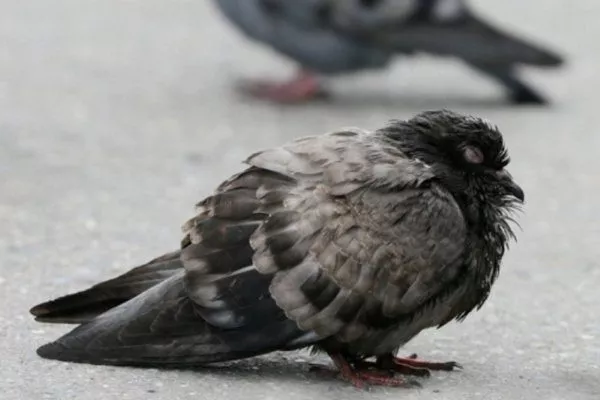
The danger of coccidiosis is that for a week after the spores enter the bird's body, there are no obvious symptoms. The pigeon appears healthy, but it can spread the infection. As the disease progresses, the main symptoms include the following behavioral abnormalities:
- sits hunched over;
- does not want to fly;
- does not “communicate” with other birds;
- half asleep, closing his eyes;
- yawns often;
- constantly drinks water;
- refuses to eat, which is why he loses weight.
In addition to behavioral abnormalities, coccidiosis in pigeons can be diagnosed by the following signs:
- diarrhea with streaks of blood;
- ruffled feathers that may fall out;
- sunken eyes;
- peeling on the beak;
- inflamed cloaca;
- impaired coordination of movements;
- paralysis of the limbs.
- ✓ Presence of white plaques in the small intestine at autopsy.
- ✓ Increased water consumption without apparent reason.
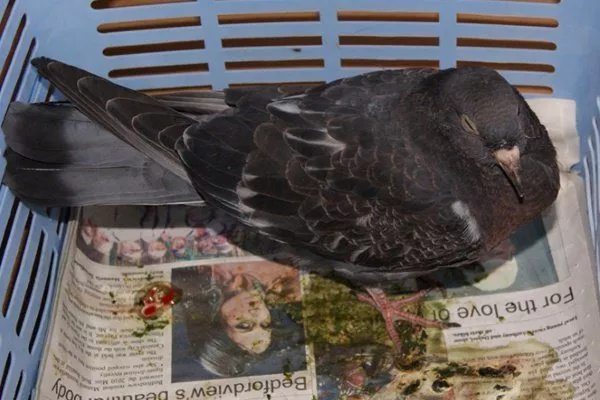
It's also worth considering that the disease progresses differently in all pigeons, as much depends on how deeply the pathogens have penetrated the body's structure:
- Deep penetration can cause intestinal bleeding due to damage to the mucosa. If left untreated, the bird may die from electrolyte loss due to dehydration.
- With shallow penetration into the intestine, the disease proceeds almost unnoticed.
If a bird exhibiting characteristic symptoms is noticed, it is not recommended to clean the dovecote with water to prevent the spread of pathogens. Dry cleaning with a scraper and broom is recommended.
If characteristic symptoms are present, it is recommended to seek veterinary attention. It is crucial to confirm the poultry farmer's suspicions and, most importantly, initiate treatment promptly.
Forms of the disease
There are two forms of coccidiosis:
- Asymptomatic (subclinical)The most common form. After a pigeon first ingests a small number of oocysts, its endogenous defense mechanisms are stimulated. This leads to the bird developing immunity to the infection, so the disease is asymptomatic. With regular ingestion of small numbers of oocysts, the immune system continues to strengthen. Thus, the pigeon's body "coexists" with the bacteria, and severe intestinal disease does not develop.
- Acute. Clearly, in this case, the disease progresses acutely, often affecting young birds and those with weakened immune systems. As a rule, the immune system is weakened in older birds exposed to stress. The acute stage also occurs when a pigeon ingests a large number of parasites.
Some individuals develop immunity to the disease upon repeated infection, but only when a small number of coccidia enter the body.
Diagnostics
A veterinarian can diagnose coccidiosis by its characteristic symptoms, but for a definitive diagnosis, a pigeon's droppings must also be analyzed. This should be collected in the morning, but only the surface portion. Additionally, an ultraviolet examination of the bird's intestines may be performed as directed by the veterinarian.
Breeders should monitor their pets' feces. As soon as the feces become runny, they should have it tested at a laboratory.
How to treat coccidiosis in pigeons?
Coccidiosis is treatable only in the early stages, so treatment must begin immediately after diagnosis.
First of all, it's necessary to isolate sick birds to prevent the entire flock from becoming infected. Maintaining hygiene in their living quarters is crucial—cleaning them daily, scraping away droppings, and then disinfecting the area with special products. Only then can you protect your pets from becoming infected again.
For timely treatment, there are medications that are lethal to coccidia. For therapy, they are added to drinking water or feed. These medications include:
- Furagin;
- Baycox;
- Zalain;
- Coccidin.
Meanwhile, Toltrazuril (Toltrazuril Coccidioides Solution) is considered the most popular and effective treatment. It penetrates the intestines and has a therapeutic effect. This treatment is considered safe, so it is given to birds even during molting and breeding periods. For coccidiosis treatment, the solution is diluted with water at a rate of 0.5 ml per 1 liter. This solution is poured into the pigeons' drinking bowls. Treatment is continued for 3 days or more.
It's important to understand that giving any medication to birds without consulting a veterinarian is not recommended, as only a specialist can properly prescribe medication. The difficulty lies in the fact that each chemical used affects parasites differently:
- Sulfonamides begin their action by blocking the absorption of p-aminobenzoic acid and also contribute to the disruption of folic acid metabolism;
- Taking Amprol prevents coccidia from absorbing thiamine;
- Clopixol therapy inhibits energy metabolism in parasites;
- Ionophores prevent the permeability of cell membranes, so alkali metal cations cannot penetrate into the coccidia's body.
Certain medications act as destructive agents, but there are also agents that prevent the development of parasites. These are called coccidiostatic agents. After treatment with these agents, the disease may recur.
It is recommended to change medications regularly, since with long-term use, the parasite develops adaptability, that is, its sensitivity to the drug decreases.
Coccidia have difficulty adapting to ionophores because their action is more complex. For example, they transport alkali metal cations across cell membranes, so it takes several years for these protozoa to develop resistance to them. Resistance to quinolones and clopidol develops quickly.
Along with parasite control medications, veterinarians also typically prescribe vitamins to normalize pigeons' intestinal microflora, which is often disrupted by medications and parasite activity. Trivitamin, which contains fish oil, is considered one such vitamin.
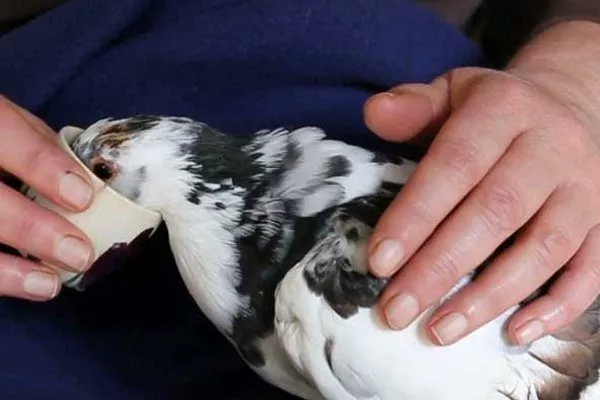
All medications prescribed by a veterinarian must be administered strictly as directed. Do not adjust the treatment course yourself.
Relationship with other diseases
The development of coccidiosis can lead to infection with other bacteria, as the gastrointestinal tract of a sick chick is damaged and its functionality is altered.
A weakened pigeon's body can be susceptible to bacteria that cause necrotic enteritis, as well as salmonella. These bacteria, acting together, complicate the course of the disease.
It is known that Marek's disease most often interferes with the development of immunity to coccidiosis, and the development of infectious bursitis in combination with coccidiosis interferes with drug therapy.
You can find out about the diseases that pigeons can get. here.
Preventive measures
Coccidiosis has insidious consequences and can even lead to the death of birds, so it is extremely important to take preventative measures to prevent it:
- To protect existing pigeons from infection, new birds should be quarantined, kept in isolation and monitored for behavior and droppings. This should last approximately two weeks.
- Avoid creating stressful situations for the birds as much as possible. Do not separate them by moving them to different cages. It's important to remember that pigeons have a hard time coping with change.
- Feed your pigeons high-quality feed, purchased from reputable suppliers. Be especially careful to ensure the grain is not damp or moldy.
- Before feeding pigeons, clean it from dust and debris.
- Develop a varied menu to prevent birds from becoming accustomed to a monotonous diet. During winter, the menu should be rich in vitamins and minerals.
- Fill the water bowls with boiled water only, and make sure no droppings get into them. Also, avoid allowing pigeons to drink from puddles after rain.
- Equipment used for feeding and watering birds should be regularly treated with disinfectants.
- Make sure that rodents cannot get to the pigeons' water and food.
- If the cage floor is covered with sawdust or soil, it should be replaced more frequently, as coccidia can persist there for a long time. If the floor is cement, it should also be disinfected, as pigeons most often become infected when the equipment and habitat are not kept hygienic. A thorough cleaning of the cages should be performed weekly.
- After cleaning the enclosure, also clean and treat clothes, shoes, scrapers and brooms.
- Dry the walls thoroughly using electrical appliances before installing ventilation systems. It's also important to maintain the correct temperature, as parasites prefer humid environments. Damp rooms with mold on the walls are particularly dangerous.
- Take your birds to the vet twice a year, even if they appear healthy.
Those planning to keep and breed pigeons should first familiarize themselves with the rules and specifics of caring for them. Otherwise, they can easily become infected with coccidiosis. Furthermore, it's crucial to closely monitor your pets to recognize the disease promptly, consult a veterinarian, and begin treatment.