
Eggs have always been a key source of valuable nutrients for the normal development of the human body. Pheasant eggs, rich in micronutrients and vitamins and high in fat, occupy a special place among similar livestock products.
Description of pheasant eggs and their composition
The eggs are small in weight, weighing no more than 30 grams. The eggshell is porous and very fragile. It requires careful handling during handling and transportation. The color palette typically consists of gray and green, with or without spots.
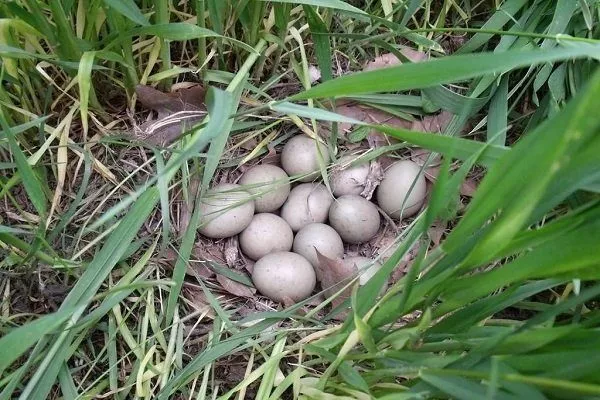
Consumers are more familiar with chicken, duck, and goose eggs. All of these, like pheasant eggs, have their own nutritional value. But they taste little different (except for their thicker consistency).
The chemical composition of eggs is very rich in trace elements, amino acids, and vitamins essential for the human body. The detailed composition per 100 g of product is provided in the table:
| Name of the microelement | Quantity (in mg) | Name of the vitamin | Quantity (in mg) |
| Calcium | 15 | A | 0.04 |
| Magnesium | 20 | B1 | 0.01 |
| Sodium | 100 | B2 | 0.2 |
| Potassium | 250 | B3 | 0.003 |
| Phosphorus | 200 | B4 | 70 |
| Chlorine | 60 | B5 | 0.5 |
| Sulfur | 230 | B6 | 0.4 |
| Iron | 3 | B9 | 0.008 |
| Zinc | 3 | B12 | 0.002 |
| Iodine | 0.007 | E | 0.5 |
| Copper | 0.18 | — | — |
| Fluorine | 0.063 | — | — |
| Molybdenum | 0.012 | — | — |
Caloric content of pheasant eggs
The product's main advantage is its high calorie content (it provides long-lasting satiety). The table shows the nutritional value per 100 grams of product:
| Name | Squirrels | Fats | Carbohydrates | Ash | Water | Caloric content (kcal) |
| Unit of measurement (g) | 6.5 | 70.8 | 4.2 | 1.3 | 1.5 | 700 |
Benefits of eggs
Pheasant egg whites and yolks are most beneficial when included in the diets of people with weakened immune systems. Consuming the product also has a positive effect on the nervous system and immune system.
Brief list of useful properties:
- Eating eggs fills you up, keeping you full for longer.
- Their use in dishes will help prevent iron deficiency in the body.
- The product promotes the normalization of metabolism.
- Timely introduction of pheasant eggs into the diet prevents vitamin deficiency.
- The presence of B vitamins has a positive effect on the emotional state of elderly people.
- A rich set of macronutrients allows you to significantly improve the condition of your hair, skin and nails.
Possible harm and contraindications
Despite many positive properties, pheasant eggs can be harmful to the body.
The disadvantages are as follows:
- Raw eggs are not recommended for consumption. Raw egg whites have a negative impact on the human gastrointestinal tract.
- Long-term consumption of raw eggs negatively impacts hair health (it starts to fall out), nails become brittle, and skin peels.
- Eggshells are often contaminated with salmonella viruses. When ingested, the infection causes digestive system dysfunction.
- Due to its high calorie content, the product is contraindicated for obese and diabetics.
- Pheasant eggs are a strong allergen and should not be fed to children under 2 years of age.
Methods of application
The potential uses of pheasant eggs are limited. They are primarily used in cooking, and less commonly as an ingredient in homemade cosmetics.
When consuming the product, freshness is a must. Quality can be determined by the condition of the protein—it should be transparent and free of foreign odors.
Be careful when purchasing this product in supermarkets. Due to the low egg production of these birds and the high price of the product, counterfeit products are often found on the shelves.
Before using, rinse eggs thoroughly under running water. It's best to avoid eating them raw.
Eggs are used in the preparation of the following dishes:
- They are hard-boiled and baked in the oven.
- Poached eggs and omelettes are prepared.
- Used in recipes for preparing various types of dough.
- Mayonnaise sauce is prepared.
- Added to the minced meat/filling when preparing cutlets and zrazy.
- Boiled, add to salads, etc.
Comparison table with eggs of other birds
The comparative table below shows the nutritional and energy values of different eggs per 100 g of product:
| Indicators | Unit of measurement | Pheasant eggs | Chicken eggs | Goose eggs | Duck eggs |
| Squirrels | G | 6.5 | 12.8 | 13.9 | 13.3 |
| Fats | G | 70.7 | 11.5 | 13.3 | 13.8 |
| Carbohydrates | G | 4.3 | 0.7 | 1.3 | 1.5 |
| Calcium | mg | 15 | 56 | 60 | 64 |
| Potassium | mg | 250 | 138 | 208 | 222 |
| Iron | mg | 3.0 | 1.75 | 3.64 | 3.65 |
| Vitamin A | mg | 0.16 | 0.45 | 0.20 | 0.19 |
| Vitamin B1 | mg | 0.04 | 0.05 | 0.20 | 0.20 |
| Vitamin B2 | mg | 0.20 | 0.44 | 0.42 | 0.40 |
| Energy value | Kcal | 700 | 158 | 180 | 185 |
What breeds of pheasant are bred for eggs?
When breeding pheasants for the purpose of profit from selling eggs, attention is often paid to hunting and some ornamental breeds.
- ✓ Consider the breed's climatic adaptation to your region.
- ✓ Pay attention to the breed's resistance to diseases.
- ✓ Check whether the breed requires special living conditions.
The most popular ones include the following:
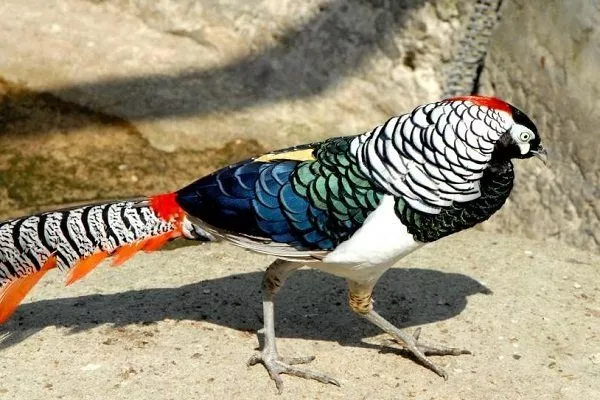
- Diamond Pheasant. Its homeland is China. The breed is prized for its ornamental qualities, which is its main advantage. Egg production is 30 eggs per season. It is not recommended to breed the bird for meat. Males produce 0.9–1 kg of meat.

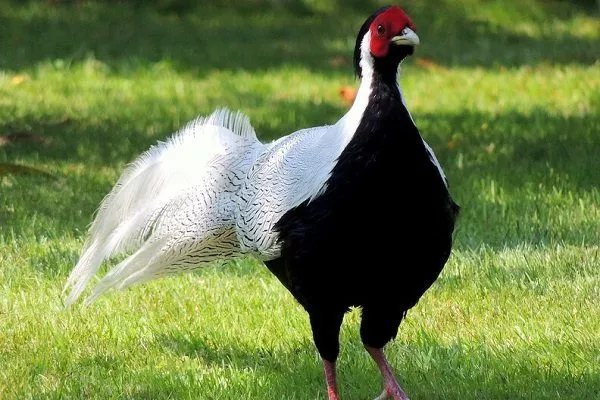
- Silver Pheasant. The silver pheasant originates from China, but has adapted well to the Russian climate. Its dense plumage helps it withstand freezing temperatures. Egg production is 50 eggs per season. To stimulate productivity and increase egg production, 5–6 eggs are left in the nest under the hen.
- Hunting. This breed was artificially developed. Females are noted for their high egg production—up to 60 eggs in three months. This variety is renowned for its fertility and excellent health. It is often used for selective breeding (developing unique subspecies).
In addition to farmers (for livestock products), the breed is popular with hunters. While it has many advantages over its "relatives," it is expensive—1,500 rubles per adult.
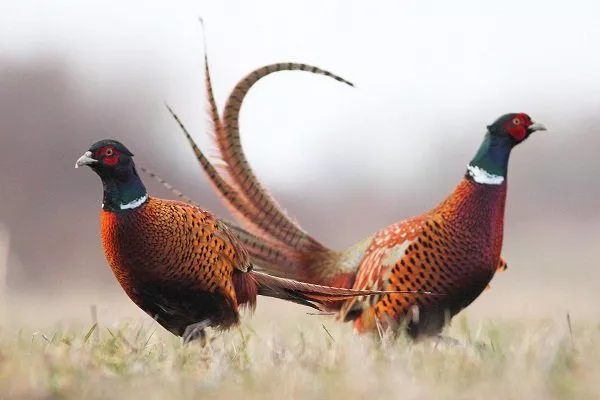
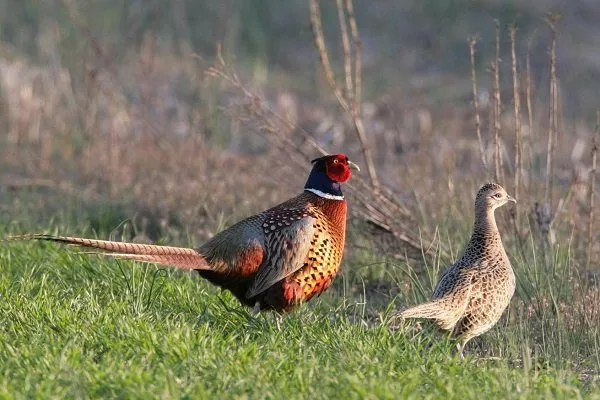
- Common pheasant. During the mating season, the female lays approximately 50 eggs, 1–2 per day. Egg-laying typically lasts from April to mid-June. The clutch is laid in a hole dug in the ground, containing 8–15 eggs. The female incubates the eggs herself for 3–4 weeks.
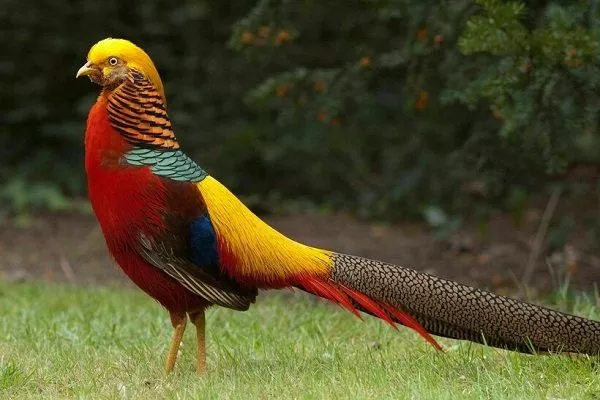
- Golden Pheasant. An ornamental breed. It is not raised commercially. Among its relatives, it has the lowest egg production rate—25 eggs. It does not tolerate cold well and requires an insulated house.
Profitability of breeding egg-laying pheasants
The profitability of a business depends on the breeding goal and the stability of sales. If birds are purchased solely for the purpose of producing and selling eggs, the costs incurred will be recouped, but not quickly and under certain conditions.
The main expense is equipment for a pheasant farm. Building a poultry house requires a large amount of space. On average, 2 square meters of space are required per bird. This figure does not include the space required for aerial movement of the birds.
The poultry house is enclosed around the perimeter and on top with welded metal mesh. This provides:
- good natural lighting of the enclosure;
- ventilation;
- free flight of a bird.
The enclosure should include designated areas for nighttime rest and nesting nooks. Twigs, hay, straw, moss, and other items should always be available for the birds to build nesting and brooding areas. Feeders and waterers should be placed throughout the enclosure.
Most pheasant breeds tolerate temperature fluctuations well. Enclosures are not insulated for the winter.
Next, you should consider the birds' diet. It's generally accepted that pheasants eat little (the average daily ration per bird is 100 grams of feed per day).
However, high-quality, balanced feed is used for feeding. The diet includes various herbs, grains, vegetables and fruits, scraps, worms, and insects.
Various vitamins and, if necessary, antibiotics are added to the diet. Gravel, sand, and limestone are used to promote feather growth.
To increase egg production, females are given a complex of vitamins and supplements in their diet:
- Biovit;
- Terramix-10;
- penicillin sodium salt;
- Erythromycin;
- Biomycin.
The next expensive item is purchasing a flock of pheasants. To achieve profitability, a farmer will need to initially purchase at least 100 birds. Depending on the breed, a farmer will spend between 50,000 and 150,000 rubles.
Calculation of profitability from egg sales:
- During the season, the female lays an average of 50 eggs, of which 10 will hatch, and 40 can be put up for sale.
- The average cost of eggs for cooking is 80 rubles per piece.
- Of a population of 100 pheasants, 80 will be females (there should be 3 females for every male bird).
- Thus, from a farm with a hundred pheasants, the profit from obtaining eggs per year will be: 40 eggs * 80 rubles. * 80 females = 256 thousand rubles.
- Net payback will occur in 2–3 years. Profit will occur in 3–4 years.
Besides the high investment, the challenge lies in organizing regular sales. The product is primarily purchased for cooking, meaning the main buyers are gourmets and restaurant chains. It is not used for large-scale production.
Before deciding to set up a pheasant farm for egg sales, a farmer should carefully weigh the costs against the potential (though not guaranteed!) returns. If the decision is made, it's a good idea to select a breed with the highest egg production. While setting up the farm, it's important to begin searching for potential buyers.
I knew pheasant eggs were healthy, but I had no idea they contained so many nutrients. And I had no idea about the contraindications. Thank you so much! And thanks for the accessible explanation of the profitability of pheasant farming.