
Pheasants' nutrient requirements vary depending on the season, so the bird requires different diets in winter and summer, although they should be varied and balanced. An excess or deficiency of even one nutrient can disrupt the bird's metabolism. Therefore, careful consideration of their diet is required at any time of year.
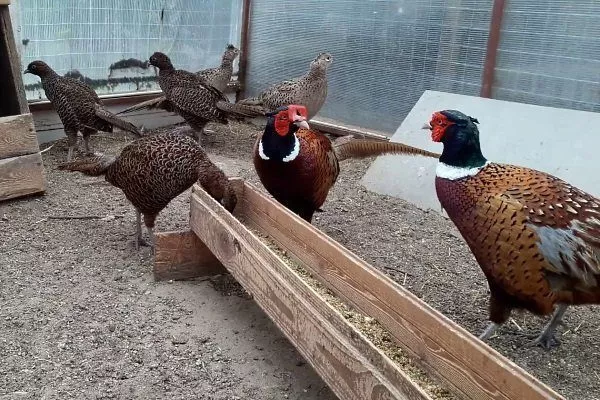
Rules for compiling a diet
Regardless of the time of year, when preparing a diet for pheasants, it is necessary to follow the following rules:
- The diet must be balanced and fully comply with all feeding standards. Pheasants need to receive all the vitamins and microelements they need daily. If any one component is deficient, other nutrients will not be adequately absorbed by the bird's body. This can lead to metabolic disorders.
- The food should be similar to their natural diet. It's important that the pheasants eat it with pleasure and gusto, and that it doesn't cause digestive or excretory problems. It's important to remember that in the wild, these birds constantly forage and eat intermittently. Their diet often includes protein-rich foods such as frogs, small snakes, and mice, but their favorite foods are grains and grass seeds.
- Birds need to be fed a certain amount of feed to prevent starvation, but also to avoid overeating, as excess can affect their gastrointestinal health. In autumn and winter, approximately 75 grams of feed per bird per day is sufficient. This amount is less than that for chickens. As spring approaches, feed should be increased, bringing the daily amount to 80 grams.
- To develop a feeding instinct, it's necessary to regulate feeding. It should be done at the same time, about 2-3 times a day.
- ✓ The optimal water temperature for drinking pheasants should be between 15-20°C to avoid stress and diseases.
- ✓ To improve digestion and prevent gastrointestinal diseases, it is recommended to add probiotics to the diet, especially during periods of feed change.
During the cold season, birds require less food because they are less active. However, in the summer, when breeding season begins, they actively use up nutrients and require a more nutrient-dense diet.
What foods should be included in the diet?
To properly formulate a pheasant diet, it's important to determine which foods should form the basis of their diet. These include:
- Corn kernelsThey contain protein, carotene, and other components that provide birds with energy. Pheasants also enjoy eating corn. However, it must be fed in combination with other grains, as it is low in calcium and amino acids. A deficiency in these can affect egg production, and the shells will be too thin and fragile.
- Wheat grainsThey contain vitamins B and E, phosphorus, and essential amino acids, so they should make up the majority of the diet (approximately 40-50%). Wheat bran should also be included, with an optimal daily intake of 7%.
- BarleyThis is a popular source of fiber. Small pheasants prefer chopped barley, but they can also be fed parboiled groats. Larger birds can also eat whole grains. Flour can be used for mash.
- SorghumThis grain crop is rich in many nutrients—it contains proteins, carbohydrates, and ash. Sorghum's share in a grain mash can amount to 30-50%.
- Oat flourIt is added to mash for both young and adult birds.
- LegumesThese include peas and soybeans. They are valuable sources of plant protein and should therefore be included in the pheasant diet. To ensure better digestibility, legumes should be boiled and crushed before feeding to the birds.
- Dairy productsSour milk, cottage cheese, and milk are especially beneficial. They contain many vitamins, as well as calcium, which is essential for eggshell hardness.
- Fresh herbsAfter mowing, alfalfa, clover, nettle, chickweed, and dandelion leaves are useful. The herbs should be washed thoroughly, chopped, and mixed with cottage cheese or hard-boiled eggs. They can also be placed in a separate feeder. Preserving the herbs for the winter is essential. To do this, dry the greens, then chop them and store them in moisture-proof containers.
- Vegetables, fruits, berriesHealthy vegetables include carrots, boiled potatoes, turnips, beets, rutabagas, and cabbage leaves. Pears and apples are especially valuable fruits. It's recommended to grate vegetables and fruits. In winter, birds can be given rowan and hawthorn berries.
In addition to the listed products, pheasants should also receive nutritional supplements. These include:
- Pine needle flourContains carotene, minerals, and vitamins. It's especially beneficial in winter. Pine needle flour has a distinctive smell and taste, so pheasants don't particularly like it. To encourage birds to consume it, add a small amount to their mash.
- Animal and fish bone mealThese are sources of beneficial micronutrients, without which the birds will develop weak skeletal systems. Chopped fish can be fed to pheasants as an alternative.
- Fish oilIt is added to mash as a source of vitamin A and other beneficial nutrients. Without them, birds develop poorly, lose weight, and become frequently ill. Approximately 2 grams of fish oil is required per bird.
- Vegetable yeastThey are a valuable source of B vitamins.
In the video below, the breeder shares his experience feeding pheasants:
By including the listed products and supplements in your pheasant's diet, you can provide it with a varied and balanced diet. The table below shows the composition of feed that any breeder can prepare:
| Ingredient | Quantity (%) |
| Composition No. 1 | |
| Corn | 45 |
| Barley | 22.5 |
| Sunflower meal | 10.5 |
| Fish meal | 6 |
| Feed yeast | 5 |
| Herbal flour | 4 |
| Chalk | 5.5 |
| Dicalcium phosphate | 0.2 |
| Premix | 1 |
| Table salt | 0.3 |
| Composition No. 2 | |
| Crushed corn | 29 |
| Crushed wheat | 11.7 |
| Wheat bran | 10 |
| Crushed soybeans | 20 |
| Alfalfa grass meal | 2 |
| Fish meal | 11 |
| Meat meal | 10 |
| Vitamins, minerals | 5 |
Diet in the summer
Summer is a paradise for pheasants and their keepers. During this period, there's a wide variety of green vegetation, which the birds eagerly consume. Their favorites are cracked corn, as well as seeds and wild grasses. These include:
- woodlouse;
- plantain;
- dandelion.
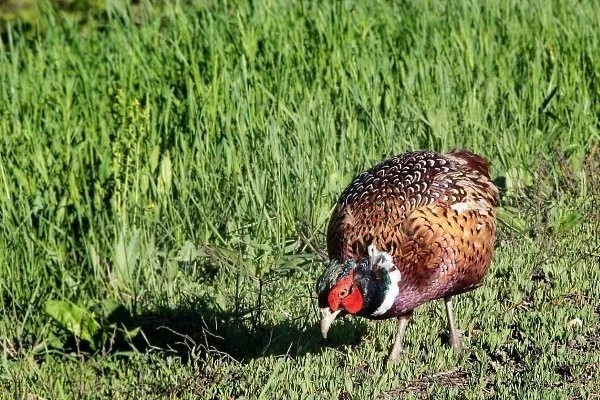
In addition, in summer, birds should be fed seasonal puréed vegetables and fruits (apples, pears, cabbage). They will also get some protein from mealworms, fly larvae, larvae, and cockchafers.
In summer, the optimal daily feed intake is at least 80 g. It is important to keep in mind that the daily feed intake should be increased by green fodder, which should account for at least 20 g.
As for vitamins and animal supplements, the summer diet may contain slightly less of them than the winter diet. The optimal amount of such supplements per bird is 5 and 9 g, respectively.
The table shows what kind of food and in what quantities pheasants should receive during the summer months:
| Type of feed | Products | Norm in grams |
| Concentrated | corn, wheat, millet | 45 |
| Juicy | carrots, potatoes, cabbage | 20 |
| Animals | minced meat, cottage cheese, fish and bone meal | 9 |
| Vitamins | yeast, fish oil | 2 |
| Minerals | lime, salt | 3 |
When preparing a diet, it should be taken into account that pheasants will also peck at greens, wheat, oats and other vegetation that grows in the yard.
Diet in winter
In winter, it is much more difficult to diversify the pheasants' diet, but it is at this time of year that it should be especially varied, since the birds need to take in more vitamins and minerals to withstand unfavorable temperatures.
So, to ensure that pheasants receive a complete diet in winter, the following rules should be taken into account:
- The basis of the diet is compound feed, to which animal protein and mashed root vegetables must be added.
- As a supplementary feed, feed the birds corn, millet, and sunflower seeds. Dried grass is also beneficial. Starting in the fall, for example, gather dandelion and clover leaves and dry them like hay.
- Include grated apples and red rowan berries in your diet.
- Store-bought grains should be thoroughly washed and dried. It's even advisable to disinfect them in an oven heated to 60°C. It's a good idea to sprout oats and wheat grains. Store grains in ventilated areas and ensure they are free of rodent feces and mold.
- Add bread crumbs, cottage cheese, and seeds to cereals.
- During winter, pheasants undergo molting, or feather renewal. To ensure they survive this period safely, mineral supplements such as shells, limestone, and chalk should be added to their feed. These supplements will also help improve the quality of their eggshells.
- In winter, birds don't receive enough ascorbic acid, so it should be added to the mash at a rate of 2.5 g per 500 g of feed. In addition, the vitamin supplement Trivitamin is recommended during winter.
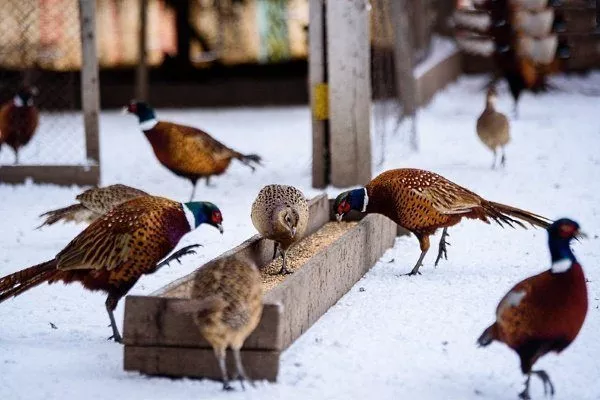
In general, each bird should receive approximately 75 g of feed in winter. Birds should be fed wet mash in the morning and dry grain feed in the evening. During winter, birds should be fed every 6 hours.
The table also shows what foods and in what quantities birds should receive during the winter months:
| Type of feed | Products | Norm in grams |
| Concentrated | corn, wheat, millet | 50 |
| Juicy | carrots, potatoes, cabbage | 10 |
| Animals | minced meat, cottage cheese, fish and bone meal | 6 |
| Vitamins | yeast, fish oil | 3 |
| Minerals | lime, salt | 3 |
Peculiarities of preparing food in winter and summer
If a breeder prepares food on his own, he needs to take into account two factors:
- in summer, the birds' diet should consist of 30-40% green food;
- In winter, pheasants especially need balanced food, as well as vitamin and mineral supplements.
Taking these factors into account, the approximate diet of birds in winter and summer looks like this:
| Ingredients | Winter norm (%) | Summer norm (%) |
| Corn | 40 | 40 |
| Wheat | 20 | 20 |
| Wheat bran | 14 | 9 |
| Sunflower cake | 10 | 15 |
| Meat and bone meal | 3 | 5 |
| Fish meal | 10 | 10 |
| Feed yeast | 3 | 1 |
How to feed chicks?
When feeding chicks in winter and summer, adhere to the following rules:
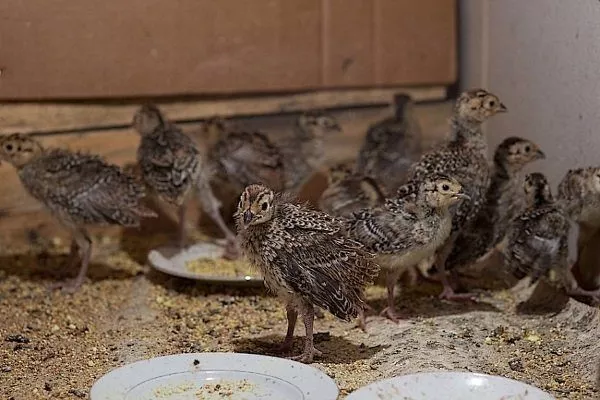
- After hatching, the chicks are fasted for about 60 hours. This is especially convenient when transporting them to different farms. After this, they are given a little warm boiled water to prevent food from sticking to the walls of their intestines and stomach, as the chicks' stomachs are very delicate.
- The brood is fed frequently—approximately every two hours. This schedule is maintained for two weeks.
- The chicks haven't been taught anything—they can't drink water or eat on their own, so they have to learn. To do this, they pour food into a feeder and tap the seeds with a finger, like a beak, to attract the chicks' attention. When they run up, their heads are slightly bent toward the food. The same is done to teach them to drink water.
- Until the chicks are one month old, they are fed finely chopped dandelion and nettle greens. A finely chopped hard-boiled egg is added to this.
- Green food should make up about 30% of the chick's diet while it's growing. After one month, supplement the diet with small amounts of mixed feed, gradually increasing the amount.
- During the growing period, up to about 2 months, legumes (beans, peas, soybeans), crushed corn and millet, barley groats, and oatmeal are added to the chicks' diet. This diet will help the chicks grow quickly and be less likely to get sick. These grains are used to make mashed potatoes.
- Instead of water, chicks are sometimes given sour milk. It contains nutrients beneficial for the young's intestines. Non-acidic cottage cheese and live insects are useful sources of protein.
- The chicks' diet includes animal and fish bone meal. A small amount of lean ground meat and nutritional yeast may be added.
- ✓ For the first 60 hours after hatching, chicks do not require feeding, but they must be provided with access to clean water.
- ✓ To teach chicks to eat and drink, use brightly colored feeders and waterers to attract their attention.
Prohibited foods
Not all foods are suitable for feeding pheasants, although they may be beneficial for other birds. For example, pheasants should not be fed the following at any time of year:
- millet;
- rye bread;
- potato peels;
- vernalized potatoes;
- large pumpkin and sunflower seeds;
- fried foods;
- too wet mash;
- overly salty foods.
Features of feeding ornamental pheasants
Feeding ornamental pheasants should be done according to all the rules, as they are very demanding. For example, the following foods should be included in their diet:
- wild herbs – chickweed, dandelion and plantain;
- bread, cottage cheese;
- sunflower seeds;
- crushed corn;
- fruits;
- wheat;
- meat and bone meal and fish meal;
- insects;
- minced meat;
- berries.
Dry herbs for winter. Rowan berries and pureed apples are beneficial. Mineral supplements, such as shells and chalk, are essential.
Helpful tips
To ensure your pheasants receive adequate nutrition throughout the winter and summer, consider the following tips:
- To add variety to your pheasants' diet, it's best to prepare a mash. This feed consists of:
- compound feed;
- grains of millet, wheat, corn, shelled peas, barley;
- cottage cheese;
- insects and their larvae;
- food waste;
- pureed fresh vegetables;
- fish oil;
- greenery.
- In the summer, give plenty of green food (about 40% of the total diet), and in the winter, ensure that the bird gets enough vitamins.
- In spring and summer, add berries, vegetable oil, and chalk to the feed. These additives promote faster growth and add juiciness to the meat.
- Buy industrially produced compound feed, as it is produced with the most balanced composition, which greatly simplifies the care of pheasants.
- If birds are kept in aviaries, they find their own food. They often peck at greenery and also eat insects that fly in or crawl in. Seeds scattered from feeders can germinate, also becoming excellent food for the birds. Therefore, when calculating feed, it's important to consider how much food pheasants eat "from the outside."
- Ensure that pheasants finish all the feed, rather than choosing only their favorites. If this happens, add mash to the feeders in portions.
- Avoid adding entirely new foods in large quantities to the feed to avoid upsetting the pheasants' digestion. The birds should be gradually acclimated to new foods.
- Carefully monitor the quality and purity of grain feed. Mashed feed should be fresh, and individual ingredients should be refrigerated. Boiled eggs have a shelf life of 3 days, while by-products have a shelf life of no more than 2 days.
- Do not give birds cold food from the refrigerator, but wait until the food reaches room temperature.
- Feed adult birds in the morning and evening. Initially, offer a soft mash, followed by a grain mixture in the evening. If the feeder is low on grain in the evening, replenish it to prevent the birds from going hungry until morning. Fill the feeder two-thirds full to prevent food from scattering.
- Pay special attention to drinking water. When the enclosure is hot, it spoils quickly, so it should be changed three times a day.
Choosing the right food for pheasants depends on many factors, including the season. To ensure healthy birds, good growth, and timely egg production, it's essential to properly adjust their diet in both winter and summer. Adhering to feeding guidelines, which are relevant year-round, is equally important.