
A century ago, pheasant hunting was reserved exclusively for the wealthy. Today, however, it's only available to those with a hunting license. With a pheasant permit, the bird can be hunted within certain time periods, only in designated hunting areas, and only with a shotgun.
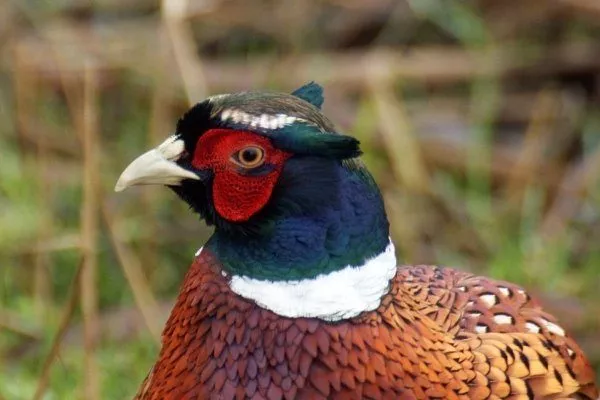
About the habits of the pheasant
| Name | Weight (kg) | Flight duration (m) | Behavioral features |
|---|---|---|---|
| Common pheasant | 2 | 100 | Cautious, timid |
The pheasant came to us from China. Its favorite habitat is the wild. Weighing about 2 kg, it easily adapts to domestic conditions. Many people buy pheasants from farms or raise them themselves for meat.
Let's look at the habits that are inherent to this bird by nature:
- The pheasant loves dense thickets. This is where it builds its nests. Due to its instincts, domesticated pheasants can nest in bushes.
- The bird cannot do without plenty of drinking water, so there must be a pond or puddle nearby.
- The pheasant is a very cautious and timid bird, so when danger approaches, it runs away or freezes so that it is impossible to detect the game.
- It flies poorly and for a short time. When absolutely necessary, the pheasant takes off, creating a lot of noise. The flight is steep, almost at a 90-degree angle, and then the bird descends smoothly, gliding. After flying about 100 meters, the pheasant lands on the ground. Its flight exhausts it so much that it hurries to hide in the undergrowth.
- The males scream quite loudly, after which the females begin to sing along with them.
Permitted pheasant hunting periods
Pheasant harvesting seasons have changed since 2021. According to Order No. 477 of the Russian Ministry of Natural Resources and Environment "On Approval of Hunting Rules," the hunting season for field and steppe game begins from the second Saturday of August through December 31.
Here are the hunting seasons for game in different regions of Russia:
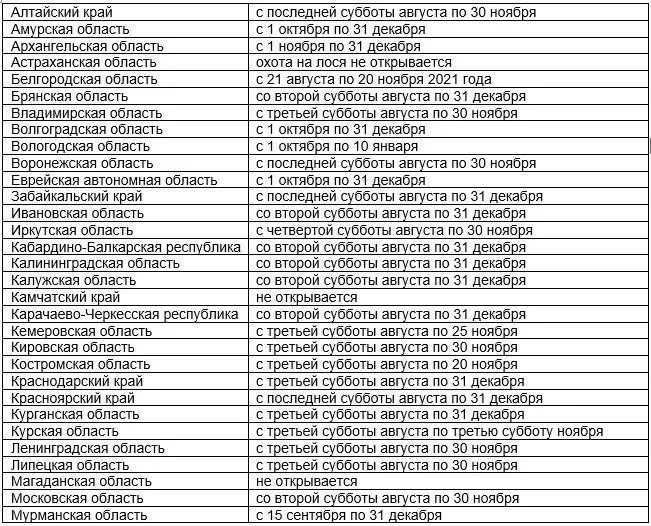
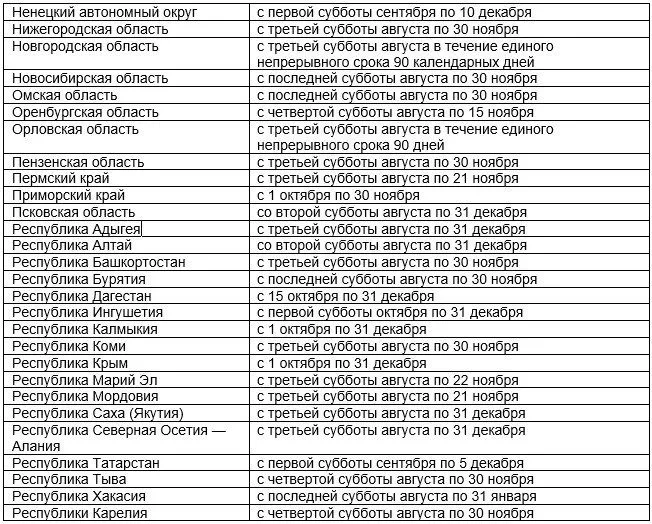
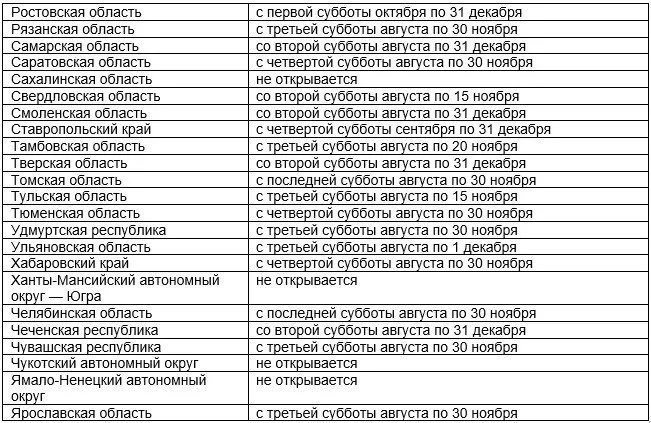
It's often necessary to personally confirm the specific opening date of the season with the hunting ground where you plan to hunt. Hunting grounds also publish permitted dates on their websites, or you can get all the necessary information by phone.
When hunting, it is recommended to use a smoothbore cartridge with #9, #7, or #5 shot. Rifles of any kind are prohibited. If hunting in thickets or bushes, do not shoot at birds taking off or landing (i.e., the pheasant must be at least 2.5 meters above ground level).
How to get a domestic pheasant into your enclosure?
There are nurseries and pheasant farms for breeding birds. Pheasants raised on private property are not hunted. Pheasants are kept in favorable conditions, taking into account the bird's needs. However, there are times when it is necessary to capture a bird (for example, for transportation, examination, treatment, etc.).
A call is used to lure pheasants, creating sounds similar to those of pheasants. It primarily imitates the calls of the male and female pheasants, which are typical during the mating season, as well as the leader of the flock. The call prompts the pheasants to respond, thus allowing their presence to be detected.
You can use a blow call—a budget-friendly, simplified version of the same kind our ancestors used. It's a whistle-like device. Its drawbacks include a weak sound signal, which birds can only hear at close range. Furthermore, anyone hoping to catch a pheasant must have excellent hearing and the skill to accurately imitate the bird's call.
An electronic call is considered a modern device that runs on electricity (a battery that must be charged beforehand). Its advantages include a loud and adjustable sound that accurately imitates pheasant calls. Its disadvantages include its high cost, the need for recharging, and its considerable size and weight.
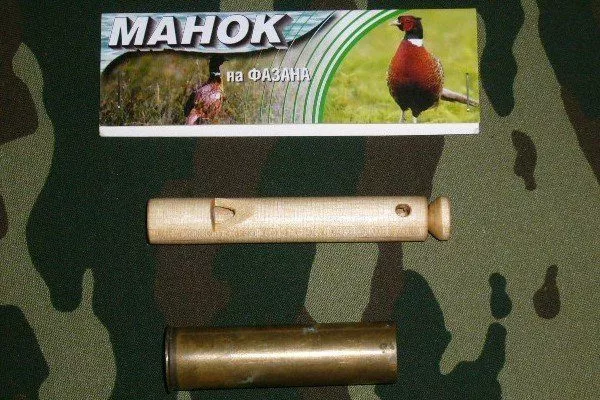
Pheasant call
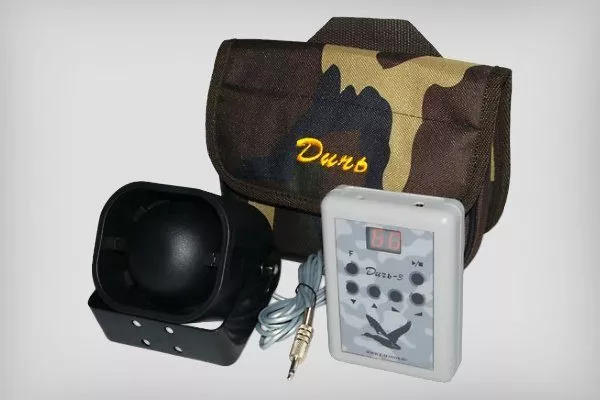
Electronic decoy "Game-1" (record library - Steppe, 21 voices - pheasant)
It's crucial to choose the right bird-catching device that won't harm the bird. For example, using cages leaves the bird unharmed physically and psychologically, making this method considered the most optimal.
- ✓ Using a decoy requires preliminary training to accurately imitate pheasant calls.
- ✓ Catch cages must be high enough (at least 50 cm) to prevent injury to the bird.
You can make one yourself. You'll need a wooden frame and metal mesh. The shape is arbitrary, and the size is based on the expected amount of prey. However, a height of 50 cm works best.
The cage operates like a regular mousetrap: a side or center drop-action door is installed. To achieve this, the top section is hinged to the ceiling, but always inside the cage, not outside. The door is lifted upward and supported by a rod, which falls once the bird enters.
An example of such a cell is shown in the video below:
Now you know when you can hunt pheasants and how to catch a domestic pheasant alive. Remember that pheasants are living creatures that require careful and gentle handling, and if hunted, a "humane" method of killing them without suffering. We urge you not to kill these beautiful birds for a moment's pleasure, but to engage in breeding pheasants at home, which will increase their population.