
Almost every household keeps chickens, but royal birds, or guinea fowl, are much less common, as breeders consider them exotic creatures requiring special conditions. However, in reality, things are somewhat different, and with certain rules, chickens and guinea fowl can even be kept in the same room or enclosure.
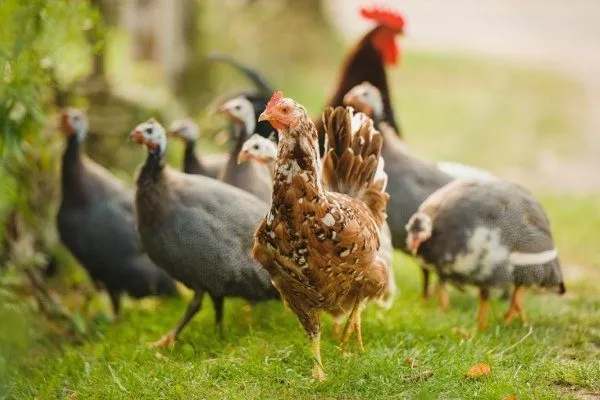
Is it possible to keep chickens and guinea fowl together?
Many farmers believe that guinea fowl are free-ranging, semi-wild birds that need space and therefore cannot be kept with hens. There are concerns that guinea fowl and roosters will constantly fight. Furthermore, feisty hens will also be involved. Consequently, constant stress can negatively impact the birds' fertility.
- ✓ The optimal ratio of chickens and guinea fowl in one room: no more than 3 guinea fowl per 10 chickens to minimize conflicts.
- ✓ It is necessary to have a separate area for walking guinea fowl with a fence height of at least 2.5 m to prevent escapes.
Given these risks, breeders are wary of keeping these birds together. However, with the right approach, it's possible to ensure a pleasant cohabitation for these birds, as they both belong to the order Galliformes and require virtually identical conditions and feed, but only if the chickens are raised for meat. This is due to several factors:
- Guinea fowl and chickens have different egg-laying and molting periods, requiring slightly different feeding regimens. To ensure fertilized eggs and hatchlings, guinea fowl need to be kept in a sufficiently large enclosure or outside. Chickens, on the other hand, mate well even in a cramped coop.
- Chickens may peck eggs.Not only their own, but also those of guinea fowl, which, in turn, can destroy the chickens' nests. In many cases, pecking occurs.
- Large guinea fowl can crowd out smaller guinea fowl from feeders and waterers. They also need to fly, so perches are made at varying lengths. It's also important to remember that guinea fowl are loud and can frighten hens, which can reduce their egg production.
If it's not possible to create separate coops for different species, the common area should be divided with partitions. This can have an advantage. Guinea fowl have a poorly developed instinct to brood eggs. Therefore, they can be placed with a broody hen, who will treat the guinea fowl chicks as if they were her own. Only in rare cases may young cockerels engage in fighting, which will also involve the guinea fowl chicks.
For cohabitation, it is better to choose meat breeds of birds, as they have better stress resistance and a calmer disposition.
Distinctive characteristics of birds
Guinea fowl differ from chickens in a number of ways. To ensure comfortable cohabitation between these animals, these differences must be taken into account. They are presented in the following table:
| Parameter | Chickens | Guinea fowl |
| Body structure | The body is often rectangular with rounded corners and is more compact. The tail is carried upward or forward, covered with large tail feathers. The back is broad, straight, or slightly concave. The head is proportionate to the body and covered with short feathers. The head has a leaf- or nut-shaped crest, which is poorly developed in females. The neck is proportionate to the body and is densely plumed. | The body is elongated, with a short tail and a perpetually lowered rump. The back is broad, and the chest protrudes forward from the age of one month. The head is small and often brightly colored, with a keratinous growth on the crown. The neck is long and covered with sparse down. |
| Beak and wattles | The bill is small and slightly curved downward. Males have wattles on their heads, while females have poorly defined wattles. | The bill is large and massive, curved downward, and has brightly colored skin growths on both sides. The wattles are small and poorly defined. |
| Limbs | More massive. meat breeds of chickens They are set wide apart. Their metatarsus is also well developed. The claws of females are small and short, while those of roosters are larger. | Thin and elongated, guinea fowl are fast runners with well-developed metatarsus. The claws at the ends of the phalanges are long and strong. |
| Egg production | Laying hens lay eggs in both winter and summer. Egg production decreases only during molting. Sexual maturity occurs at 4-6 months, but meat breeds are late maturing, reaching sexual maturity at 8 months. A laying hen can produce over 300 eggs per year, weighing 45-80 g. She lays eggs in a nest. The incubation period lasts 21 days. | It is observed only during warm weather—the laying season lasts from March to October. Sexual maturity occurs at 6-8 months. In the best-case scenario, a female lays 100 eggs weighing 43-50 g per season. The eggs are laid on the ground. The incubation period lasts 28 days. |
| Weight gain | Chicks are born with yellow down. Broiler breeds gain muscle mass the fastest. At one month, they can weigh 1.5 kg, and a month later, 2 kg. After that, their weight gain slows. | Newborn chicks weigh 30 g. They are light brown in color and are growing rapidly. By the age of one month guinea fowl chickens They gain 1 kg in weight, and after another 2-3 months – 1.5-2 kg. |
| Feeding requirements | For 1 kg of weight gain, chickens require 2.8 kg of feed. | For 1 kg of weight gain, the bird requires 3.2 kg of feed. |
| Meat | Chicken has a pale pink color. It's juicier and tenderer, and doesn't have a gamey flavor. | It has a white or red tint. Guinea fowl meat More fibrous, it tastes like game. It contains a lot of iron, making it especially recommended for those with low hemoglobin. |
| Behavior | More domesticated, they do not try to fly, do not make a lot of noise in the presence of a person, and do not try to escape from the yard. | These free-spirited birds love to fly and may leave the yard at the first opportunity to graze in a paddock. However, they often return to their original nest, especially if they are trained to feed at a consistent time. |
- ✓ Increased vocalization or unusually quiet behavior.
- ✓ Refusal of food or water for more than 12 hours.
- ✓ Aggressive behavior towards other birds for no apparent reason.
How to avoid scams in the chicken coop?
Despite differences in behavior and temperament, hens and guinea fowl generally get along well. However, the most active roosters often try to dominate and display aggression toward the guinea fowl.
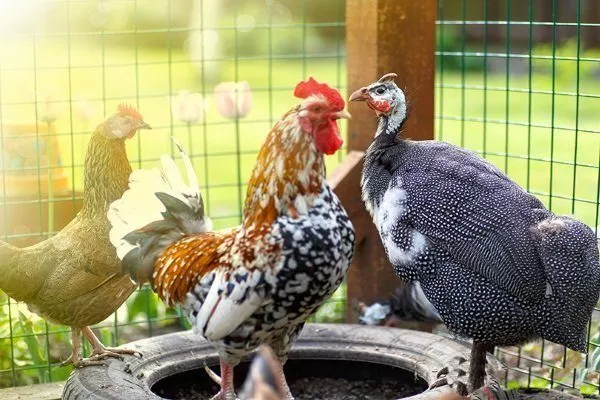
To avoid frequent fights between males, experienced breeders recommend keeping guinea fowl and hens in the same room from puppyhood. This way, they will get used to each other from the start and will rarely engage in squabbles or fights.
To maintain a peaceful atmosphere in the coop, the most aggressive individuals should be removed. Without the most aggressive individuals, the remaining birds will stop being provocative and get along with their fellows.
Before stocking the coop with different bird species, it's a good idea to add a few guinea fowl to the chickens and observe their behavior. If no serious conflicts arise and the birds get along well, you can increase the guinea fowl population.
How to organize the premises?
To ensure birds feel comfortable in close proximity to each other, the space must be properly organized. To do this, consider the following rules:
- The size of the coop must be properly calculated to ensure the birds are not overcrowded. Of course, the room should be as spacious as possible. When housing guinea fowl in a coop, a ratio of 2-3 birds per square meter of floor space should be used.
- Provide sufficient perches for the birds to rest on, as well as nest boxes for incubating eggs. Insufficient nest boxes can lead to conflicts between the birds.
- Create an enclosure with a large walking area. It should be fenced with a mesh fence at least 2 meters high to prevent the guinea fowl from jumping over it and escaping from the yard.
- Place several bathtubs filled with sand or ash indoors, as birds love to bathe and dig in the soil. This is also an excellent preventative against dangerous parasites.
- Provide birds with free access to clean water and feed. The optimal number of waterers and feeders should be calculated based on the number of birds on the farm.
The room must be kept clean, and all equipment must be cleaned daily. However, this alone is not enough to prevent disease. To achieve this, the room must be regularly disinfected using appropriate products. It's important that these products contain minimal toxins and do not disrupt the microflora in the poultry house. Here are the most popular products:
- FormalinThe disinfectant solution contains formaldehyde (40%), water (52%), and methyl alcohol (8%). After treating the room with Formaldehyde, all pathogenic microorganisms are destroyed. When disinfecting, follow the instructions on the packaging, always wearing a gas mask. Birds should not be allowed back into the room for several days after treatment, as the solution has a specific odor and can be harmful to both birds and people.
- BleachActively kills bacteria and prevents their proliferation. To disinfect, sprinkle bleach on the floor and bedding.
- Hydrochloric acidIt's used as an alternative to specialized disinfectants. Pour the solution into a wide-mouthed glass container and add potassium permanganate at a ratio of 5:1. Place the container in the poultry house for 30 minutes, then ventilate the room.
- Crystallized iodine granulesThis is the safest method, so disinfection can be carried out in the presence of birds. Use 10 g of the substance per 20 square meters of room. In a separate container, mix the iodine with 1 g of aluminum shavings and add 1.5 ml of water. This will initiate a chemical reaction, producing a brownish vapor. Leave the container in the room for 30 minutes, then ventilate the room.
Experienced breeders recommend disinfecting the premises every two months, regardless of whether the birds are sick. In practice, however, many farmers disinfect the premises once or twice a year.
How to feed birds?
Guinea fowl and chickens should be fed grains, wet mash, vitamin supplements, greens, or special compound feed. In any case, their diet should be complete and varied to ensure they receive all the nutrients they need to thrive.
These include:
- SquirrelsA necessary building block for the body's cells, and also the main component of eggs. The feed must be rich in plant and animal proteins. Plant-based proteins include rapeseed, soybeans, oilcake, sunflower meal, and legumes, while animal-based proteins include bone meal, fish waste, shellfish, and earthworms.
Despite all the benefits of protein for birds, it is important not to overdo it, as it can lead to decreased immunity and the development of various diseases.
- FatsThis is the basis of the birds' energy reserves. They are deposited in the subcutaneous layer and are also used in egg formation. Fats are found in corn and oats.
- CarbohydratesThese are essential for the proper functioning of all organs and muscles in birds, so they must receive the required amount of starch, sugars, and fiber from their diet. Birds should get most of their carbohydrates from succulent feed such as potatoes, fodder beets, carrots, and pumpkin. Whole grains should also be included in their diet, as their hulls contain fiber.
- VitaminsBirds must receive vitamins B, A, and D. Deficiencies can cause illness. Therefore, their diet should include green grasses, fish oil, yeast, silage, pine meal, and other nutrients.
- MineralsThe primary building block for a bird's skeleton and eggshells. Birds can obtain these substances from chalk, gravel, bone meal, wood ash or lime, crushed shells, river sand, and table salt.
What to include in your daily diet?
To ensure that birds receive all these elements, their daily diet should include:
- WheatAllows you to obtain the necessary kilocalories of metabolic energy. The optimal proportion of wheat in the grain mixture is at least 70%, but if desired, up to 30-40% of the wheat can be replaced with corn.
- BarleyIt is recognized as the best grain feed for all farm animals, but chickens and guinea fowl are reluctant to eat it due to the sharp ends of the grain husk. The optimal proportion in the grain mixture is 10%.
- OatsValued for its high protein content, oats have one drawback: they contain excessive amounts of fiber. Birds expend a lot of energy digesting oats, so oats should not make up more than 10% of the grain mix.
- Oil-containing cropsThese include oilcakes, meals, soybeans, sunflower seeds, and the like. They are valued for their vegetable fat content. Their share in the daily diet is no more than 5-8%.
- Fish and bone mealThey provide birds with essential minerals. Their proportion in the feed is 3-5%.
Thus, the approximate composition of compound feed for birds looks like this:
- wheat – 70% (can be partially replaced with corn);
- barley – 10%;
- oats – 10%;
- oil cakes, meals, oil-containing crops – 5%;
- meat and bone meal, chalk or shell – 5%.
Winter and summer menu
In summer, the birds' diet should include greens such as grass, clover, and plant tops. Here's an example of their daily menu:
- grain – 50 g;
- flour mixture – 50 g;
- vitamin hay flour – 10 g;
- succulent solid food – 10-15 g;
- bone meal – 2 g;
- mineral supplements and salt – 5.5 g.
For large quantities of livestock, manually chopping greens will be tedious, so it is better make a grass chopper from scrap materials.
In winter, preference should be given to pine needles, hay, and grass pellets. Succulent feed should be replaced with wet mash and potatoes. Furthermore, the proportion of protein feed should be increased, as the birds can no longer eat worms and other insects. Here's an example of a daily diet:
- grain – 50 g;
- mash – 30 g;
- boiled potatoes – 100 g;
- oilcakes and meals – 7 g;
- dried nettle or hay flour – 10 g;
- yogurt or dairy products – 100 g;
- bone meal – 2 g;
- mineral supplements and salt – 5.5 g.
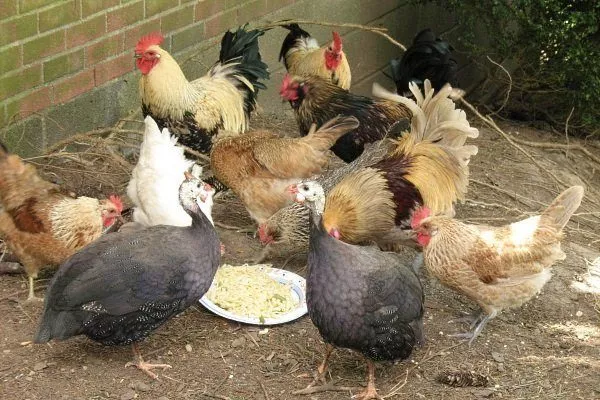
In cold weather, wet mash should be prepared with warm water or the mixture should be heated so that the bird has time to eat the warm food.
Correction of nutrition depending on the age of the bird
The diet of chickens and guinea fowl needs to be adjusted as they grow older:
| Feed/Age | 1-3 days | 4-10 days | 11-20 days | 21-50 days | 51-90 days |
| Boiled eggs | 20 g | — | — | — | — |
| Cottage cheese | 40 g | — | — | — | — |
| Millet | 20 g | 15 g | 20 g | 20 g | 7 g |
| Crushed wheat | 20 g | 65 g | 25 g | — | 30 g |
| Barley without husk | — | — | 9.5 g | 14 g | 15 g |
| Peas | — | — | 10 g | 16 g | 10 g |
| Fish meal | — | 12 g | 12.5 g | 7.5 g | 5 g |
| Meat and bone meal | — | 8 g | 7.6 g | 11.2 g | 6.5 g |
| Table salt | — | — | 0.2 g | 0.5 g | 0.5 g |
The optimal portion size for an adult bird is 100-130 g of feed. It is advisable to supplement the diet with fresh greens or vegetable tops (50-70 g).
Feeding regime
Birds are typically fed 2-3 times a day, but if free-ranging, they can be fed only in the evening. It's best to feed wet mash in the morning and at lunch, and grain mixtures in the evening. It's best to feed the birds at the same time every day, and at regular intervals.
Wing clipping
Guinea fowl are flying birds, so it's important to clip their wings to prevent them from flying over the fence. This should be done in the first few days of life. It's best to clip their wings in the evening, and it's recommended to do this for all young birds at once. If clipping is done on an individual bird, it should be temporarily placed in a separate cage.
For guinea fowl, trim the tip of the hand to the joint with sharp scissors. Then, treat the cut area with an antiseptic such as iodine, brilliant green, or hydrogen peroxide.
To prevent a guinea fowl from flying, it is enough to clip the tip of one of its wings.
Rules for joint walking
Chickens are easygoing when it comes to outdoor exercise, but guinea fowl are more demanding. Lack of access can be quite stressful for them, as they thrive on freedom and fresh air. Therefore, they need access to an outdoor area in all climates, as they tolerate cold well and can roam even in temperatures as low as -30 degrees Celsius.
The walking area should be spacious and fenced to prevent the birds from escaping. If possible, it's a good idea to provide a covered shelter where the birds can hide from the sun and rain. Furthermore, the entire area should be cleared of branches, twigs, leaves, and other debris to prevent injury to the birds.
When grazing, guinea fowl often gather in a separate flock and move away from the hens.
A hybrid of a guinea fowl and a rooster
If birds of different species are kept in the same room, the breeder must be prepared for the possibility of hybrids. In most cases, hybridization occurs through the mating of a guinea fowl and a rooster, while backcrossing occurs in isolated cases.
Interestingly, the first hybrid between a female guinea fowl and a rooster was bred in the mid-1980s at VNITIP in Sergiev Posad. Even then, it was established that the hybrid offspring were completely sterile. This is because hybrid birds lack gonads, making it difficult to determine their sex even during an autopsy.
Meanwhile, hybrids have robust health and a strong immune system, making them resistant to various diseases. These specimens resemble guinea fowl in appearance – they lack a comb or wattles on their heads, and their bodies are quite large and massive. However, they have chicken plumage.
To prevent hybrids from occurring, chickens and guinea fowl should not be left to fend for themselves in the same room. They must be constantly monitored and their cohabitation adjusted.
Pros and cons of keeping chickens and guinea fowl together
Keeping chickens and guinea fowl in the same room can provide the following benefits:
- Reduce the time and effort spent feeding birds. If birds are raised for meat, they need the same diet. Both chickens and guinea fowl should be fed grains, wet mash, vegetables, greens, and vitamin and mineral supplements.
- Create identical living conditions. If you plan to breed both species for meat, there's no need to waste time setting up two separate rooms, as they need to be provided with identical conditions. Birds rest together on perches, use the same nests, and need cleanliness, as well as a comfortable temperature and humidity level. Additionally, ensure adequate lighting and heating, and keep the bedding dry and clean.
- Solve the problem of guinea fowl incubation. Guinea fowl have a weak maternal instinct, so the farmer can place their eggs under a broody hen, which is excellent at brooding.
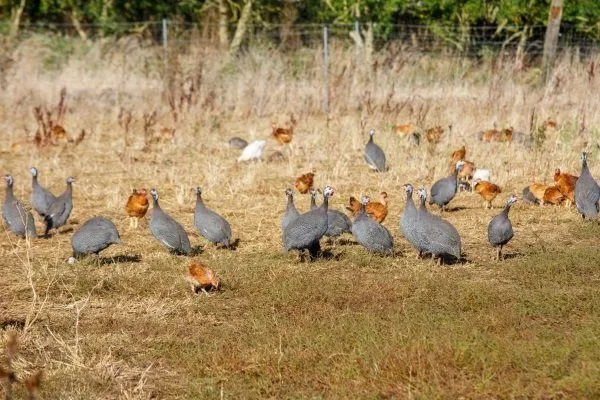
Having analyzed the advantages of such cohabitation, it is also necessary to take into account some disadvantages:
- Guinea fowl are freedom-loving birds, so they require space and run areas to thrive. They do not tolerate cramped conditions or caged conditions well. Chickens, on the other hand, can be kept in a cramped space or even in an enclosed coop and tolerate the lack of run areas well.
- Guinea fowl need an enclosure or a run to breed, but chickens can raise their young even in a small space.
- Female guinea fowl and roosters can mate, resulting in the birth of sterile young.
By compensating for these shortcomings, birds can be kept together, benefiting from the proximity. To ensure the birds bond and avoid fighting, they should be kept together from the very beginning. However, remember to clip the guinea fowl's wings to prevent them from escaping and causing chaos in the coop.
This topic of co-housing was what worried me most. We've been keeping chickens for a long time, but we're only just getting ready to buy guinea fowl, and we don't have the space to build a separate shed. Now I'm confident that it's safe to breed these birds with hens. The main thing is to follow the requirements and recommendations.