
Guinea fowl are robust and strong birds with strong immune systems. However, poor management and inadequate feeding practices often lead to the development of various diseases—infectious, non-infectious, and parasitic. Let's look at guinea fowl diseases, treatment methods, and prevention.
Infectious diseases
Viral and infectious diseases are accompanied by pronounced symptoms, spread rapidly, and can quickly cause massive losses of livestock. The spread of infection or virus is typically facilitated by poor housing conditions: dirty poultry houses and outdoor areas, poor-quality feed, and dirty drinking water.
It is advisable to limit contact of guinea fowl with other domestic birds, and especially with wild birds, as they are carriers of dangerous diseases.
| Name | Form of the disease | Symptoms | Treatment |
|---|---|---|---|
| Pasteurellosis | Acute, chronic | Inactivity, high fever, diarrhea with blood, mucus discharge from the nose | There is no effective treatment, slaughter |
| Pullorosis | Acute, chronic | Yellowish or whitish stools, loss of coordination, immobility, peritonitis | Slaughter, antibiotics |
| Marek's disease | Neurolymphomatosis | Paralysis and paresis of the legs, lameness, crooked toes, changes in organs | Antiviral drugs, vaccination |
| Trichomoniasis | Spicy | Yellow stool, loss of appetite, thirst, immobility, plaque on the mucous membrane | Anthelmintic drugs |
| Mycoplasmosis | Fungal infection | Difficulty breathing, coughing, sneezing, wheezing, red eyes | Antibiotics |
| Tuberculosis | Chronic | Increased temperature, decreased mobility, weakness, decreased egg production | Antibiotics, slaughter |
| Salmonellosis | Acute, subacute, chronic | Inactivity, lethargy, drooping wings, diarrhea | Antibiotics, nitrofuran agents |
Pasteurellosis
Pasteurellosis is caused by gram-negative bacteria called Pasteurella. The disease most often affects young livestock. There are two forms of pasteurellosis:
- acute – birds die 2-3 days after infection;
- chronic – the bird survives, acquires immunity, but itself becomes a source of infection and is therefore subject to slaughter.
Symptoms:
- low mobility;
- high temperature;
- diarrhea of yellow or green color with blood inclusions;
- discharge of mucus from the nose.
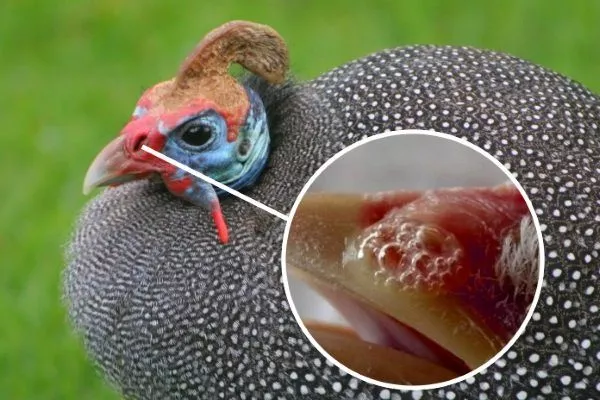
Treatment: There is no effective treatment for pasteurellosis. All birds, whether infected or carriers, are subject to slaughter. The only preventative measure is adherence to standard infectious disease prevention practices.
The meat of guinea fowl infected with pasteurellosis is strictly prohibited for consumption.
Pullorosis
A highly dangerous disease, capable of quickly wiping out 80-90% of a flock if adequate measures are not taken. If the disease becomes chronic, the birds appear emaciated, and the young ones grow poorly.
Symptoms:
- the stool is yellowish or whitish;
- loss of coordination;
- immobility;
- A complication of pullorum disease is peritonitis.
Sick birds are practically motionless—they have no strength. But if a guinea fowl does try to move, it exhibits obvious lack of coordination.
Treatment: Sick guinea fowl are sent for slaughter. All others are given antibiotics—penicillin, biomycin, and others.
Marek's disease
Another name for this dangerous disease is neurolymphomatosis. It is caused by the herpes simplex virus (HSV) type B. The virus is shed in feces and secretions, and then spreads through the air. The incubation period lasts from 1 to 7 months, so the disease goes undetected for a long time.
Symptoms:
- paralysis and paresis of paws;
- lameness;
- crooked fingers;
- stretching of paws;
- changes in organs at the cellular level.
The deceased bird is sent to a laboratory for an accurate diagnosis, as Marek's disease is often confused with leukemia. The risk of death is very high. Surviving birds eventually die after some time.
Treatment: There is no specific treatment. Antiviral medications, such as acyclovir and others, are commonly used. However, they are not very effective, and the mortality rate from Marek's disease is very high. The carcasses of dead birds are destroyed. Vaccination of young birds is an effective preventative measure.
The video below discusses vaccination of young animals against Marek's disease:
Trichomoniasis
The pathogen is a single-celled parasite, Trichomonas. It enters guinea fowl through the gastrointestinal tract, along with dirty water or feed. Young birds are most often affected, especially those between 10 and 90 days old. The disease progresses rapidly and is accompanied by severe symptoms.
Symptoms:
- the droppings are yellow and foamy;
- loss of appetite;
- thirst – birds drink a lot of water;
- immobility - sick guinea fowl sit without moving and with their wings spread;
- There is a yellowish coating on the mucous membrane of the respiratory tract, which prevents the birds from breathing and eating food.
Gradually, the birds' bodies become exhausted from lack of oxygen.
Treatment: Possibly, but only at the onset of the disease. Anthelmintic medications are used, as the disease is often accompanied by worms. Ipronidazole and cardinozole are also given.
Mycoplasmosis
A fungal infection affecting the respiratory tract. The main cause is poor ventilation and overcrowding in the poultry house.
Symptoms:
- heavy breathing;
- cough;
- sneezing;
- wheezing;
- red eyes;
- discharge of fluid from the nostrils;
- gastrointestinal disorder.
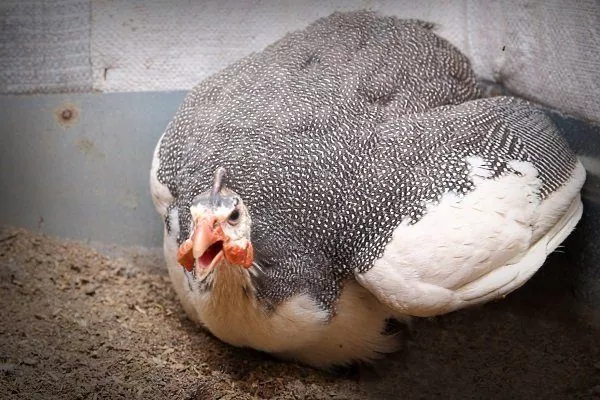
Treatment: Sick guinea fowl are given Streptomycin, Biomycin, and other antibiotics. To prevent mycoplasmosis, newborn chicks are given a solution of Enroxil or Baytril—1 ml per liter of water.
Tuberculosis
Guinea fowl rarely contract tuberculosis. The disease is characterized by a long incubation period—1-10 months—and a chronic course. Bacteremia is associated with the disease. Tuberculosis is detected during examination of the intestines, bone marrow, and parenchymatous organs.
Symptoms:
- increase in temperature;
- low mobility;
- weakness;
- decrease in egg production;
- wrinkled comb and earrings;
- mucous membranes and skin are jaundiced;
- Additionally, diarrhea, lameness, paresis and paralysis of the legs, and drooping wings may be observed.
- ✓ Loss of appetite while maintaining access to food.
- ✓ Increased time spent alone, outside the pack.
- ✓ Unusual vocalization or lack thereof.
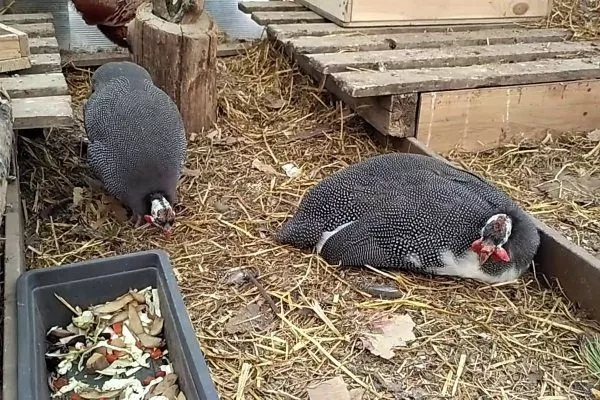
Sick guinea fowl rapidly lose weight and die from exhaustion. The above symptoms are typical of all poultry infected with tuberculosis. In guinea fowl, the symptoms are less pronounced than in chickens, for example. To diagnose tuberculosis, it is necessary to isolate a pure culture of the pathogen or obtain a positive bioassay result.
Treatment: Sick guinea fowl are treated in two stages. First, for two months, they are given a mixture of pyrazinamide, isoniazid, streptomycin, rifampicin, and ethambutol. If the bird remains a carrier of the bacteria, it is given a mixture of rifampicin and isoniazid for three to four months.
The main way to fight is to observerules for the care and maintenance of guinea fowlGuinea fowl are fed a complete diet, and the flock is stocked with healthy birds. If tuberculosis is suspected in the flock, all birds over six months of age are tested twice for tuberculosis. All birds that test positive are slaughtered.
Salmonellosis (typhoid, paratyphoid)
The pathogens are microorganisms of the genus Salmonella. They typically affect young birds aged 2 to 6 weeks. Weakened adult guinea fowl are also at risk. The incubation period ranges from 12 hours to a week. Infected hatching eggs can be the source of infection. Infection also occurs through contact with sick birds, through feed, droppings, and air.
There are three forms of paratyphoid fever: acute, subacute, and chronic. Mortality rates range from 50-100%.
Symptoms of the acute stage:
- low mobility;
- lethargy;
- drooping wings;
- closed or half-closed eyes;
- ruffled feathers;
- thirst;
- refusal to eat;
- conjunctivitis;
- diarrhea;
- mucus from the nose.
The acute stage lasts 1-4 days and most often ends in death.
In the subacute stage, pneumonia typically develops, and the leg joints swell. The subacute stage lasts 6-10 days.
Chronic disease is typical in young animals aged one and a half months and older. Exhaustion, labored breathing, paresis, and paralysis are observed. The chronic form lasts 2-3 weeks.
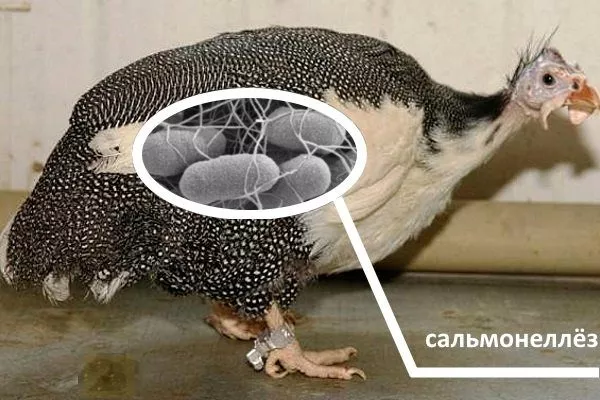
Treatment: Birds are given Furazolidone for 5 days—one tablet dissolved in 3 liters of drinking water. For another 5 days, they are given antibiotics, Levomycetin, and Gentamicin (the dosage depends on the bird's age). Nitrofuran agents are given for the next 5 days.
Healthy birds are given Levomycetin or Biomycin for a week as a preventative measure. Separate rearing of young and adult birds is also recommended, as is maintaining cleanliness in the range and poultry house.
Salmonellosis is dangerous for humans – it is important to take safety precautions when in contact with sick birds.
Prevention of infectious diseases
For all contagious diseases – viral and infectious – the preventive measures are the same:
- regular cleaning of poultry houses;
- periodic disinfection of poultry houses and equipment;
- timely isolation of infectious individuals;
- if necessary – vaccination;
- timely contact with a veterinarian.
- ✓ Optimum temperature in the poultry house: 18-22°C for adult birds, 30-32°C for chicks in the first days of life.
- ✓ Air humidity: 60-70% to prevent respiratory diseases.
- ✓ Stocking density: no more than 4 adult individuals per 1 sq.m.
Non-communicable diseases
The main cause of non-communicable diseases is improper housing and feeding. Guinea fowl most often become ill from cold and underfeeding. The poultry house should be dry and warm, with drafts avoided. The feed must include green and succulent fodder and mineral supplements.
| Name | Cause | Symptoms | Treatment |
|---|---|---|---|
| Gout | Deposition of uric acid salts | Thickening of the joints, loss of appetite, weight loss, inflammation of the cloaca | Atofan, sodium bicarbonate |
| Injuries | Fights, pecking | Blood and wounds, fractures | Wound washing, suturing, splinting |
| Dyspepsia | Overheating, improper diet | Diarrhea, loss of appetite, decreased mobility | A solution of soda and copper sulfate |
| Omphalitis | Infection through the navel | Scab near the navel, limited mobility, enlarged abdomen | Antibiotics, antibacterial ointment |
| Rhinitis | Dampness, cold, drafts | Lack of appetite, heavy breathing, mucus discharge | Antibiotics |
| Yolk peritonitis | Ovarian rupture | Enlargement of the abdomen, loss of feathers, weakness | No treatment, slaughter |
Gout
The disease is caused by the active deposition of uric acid salts. Due to the high nitrogen content of the feed, the salts are deposited in the internal organs and tissues. Guinea fowl over two years of age are affected. Gout typically affects birds with a monotonous diet.
Symptoms:
- the joints thicken;
- the bird cannot move normally;
- appetite hits;
- weight loss;
- gastrointestinal problems appear;
- the droppings turn white;
- the cloaca becomes inflamed.
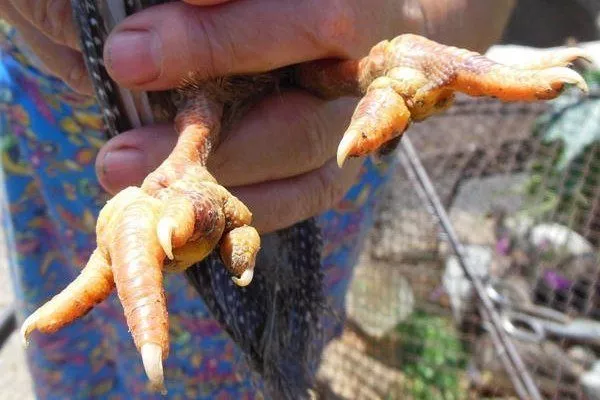
Treatment: Atofan is added to the water for two days – 0.5 g per bird. Alternatively, sick birds are given sodium bicarbonate for two weeks – 10 g per bird. Joints are treated with iodine and salicylic ointment. Prevention involves walks and a balanced diet.
Injuries
Most often, injuries occur due to fighting and subsequent pecking. Aggression can be caused by overcrowding in the poultry house. It's important to maintain the space requirements—4 birds per square meter. Fights can also be caused by bright light, dry air, or a lack of minerals in the diet. Fractures can also be caused by improperly holding the bird by its legs or wings.
The breeder explains the injuries guinea fowl can suffer while being kept in his video:
Symptoms:
- blood and wounds - from pecking;
- In an open fracture, the bones stick out; in a closed fracture, the bones are not visible.
Treatment: Wounds are washed with potassium permanganate or furacilin (one tablet per 250 ml). They are then anointed with iodine and sutured with silk thread. The needle and thread are disinfected. The wound is bandaged and the bird is removed from the flock. For fractures, it is recommended to reset the bone ends, disinfect the skin, apply a splint made of planks, and bandage the wound.
It is recommended to keep birds of different ages separately to prevent older guinea fowl from pecking at the young. Provide the birds with adequate living conditions, and remove any aggressive individuals from the flock.
Dyspepsia
Young animals under three months of age are affected. The disease can be caused by overheating or an improper diet. Dyspepsia is a digestive disorder that disrupts the normal functioning of the gastrointestinal tract.
Symptoms:
- frequent diarrhea;
- the droppings are liquid and foamy, sometimes with an admixture of mucus;
- lack of appetite;
- low mobility.
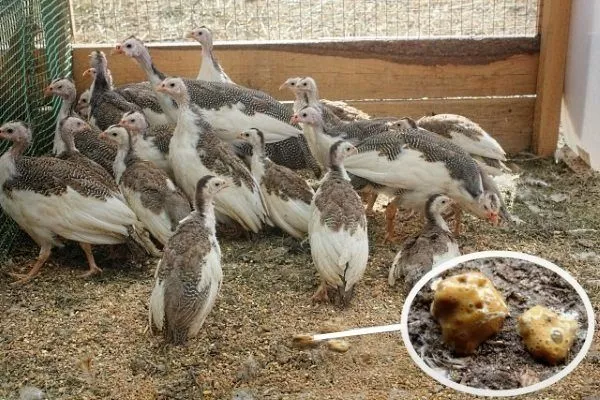
Treatment: Sick birds are given a 0.03% soda solution or 0.2% copper sulfate solution to drink. Vitamin supplements and fermented milk products are added to the diet. Prevention of dyspepsia involves feeding a balanced, high-quality diet.
Omphalitis
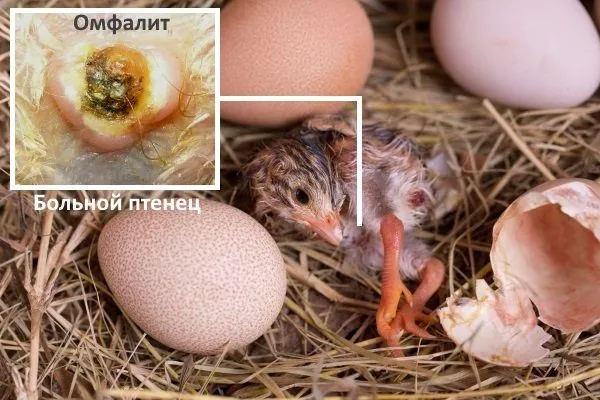
This disease affects only newborn chicks. It is caused by an infection that enters through the navel tissue. Normally, the navel should be closed initially or closes within 3-4 hours. Omphalitis is observed in chicks hatched from improperly stored eggs or when incubation conditions are not met (temperature and humidity fluctuations).
Symptoms:
- a scab forms near the navel, and exudate oozes from the wound;
- low mobility;
- sitting with your head down;
- enlarged belly.
If the chicks are not treated, death occurs within 2-7 days.
Treatment: If the umbilical ring remains open for a long time, the guinea fowl are separated from the flock, given fortified food, and given antibiotic-infused water. The wound is treated with antibacterial ointment. The cage must be kept clean. Prevention involves carefully selecting the eggs for hatching. Be sure to follow these guidelines.incubation mode.
Rhinitis
Runny noses (rhinitis) in guinea fowl are caused by dampness, cold, and drafts. Birds of any age can be affected.
Symptoms:
- lack of appetite;
- heavy breathing;
- profuse discharge of mucus from the nose.
Treatment:Nasal drops of any antibiotic solution. Prevention: creating normal living conditions and adequate feeding.
Yolk peritonitis
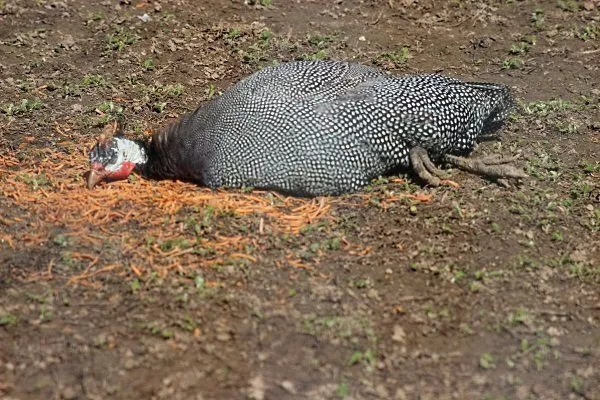
A dangerous, potentially fatal condition. It involves inflammation of the peritoneum due to ovarian apoplexy (rupture). The yolk, leaking into the peritoneum, decomposes, and toxicity sets in. Ovarian damage can be caused by trauma, feeding animal fat, or early egg laying.
Symptoms:
- abdominal enlargement;
- loss of plumage;
- weakness.
Treatment: It doesn't exist. Guinea fowl with yolk peritonitis are slaughtered. Prevention consists of avoiding injury and balanced feeding.
Parasites
Domesticated poultry are constantly attacked by worms, fleas, ticks, and other pests. When infested with parasites, birds stop growing and lose weight. When emaciated, guinea fowl become vulnerable to infections and viruses.
| Name | Symptoms | Treatment |
|---|---|---|
| Helminths | Weight loss, loss of appetite, depression | Anthelmintic drugs |
| Fleas | Damaged plumage, restless behavior | Insecticides |
Helminths
In the early stages, worms are difficult to diagnose. Symptoms become apparent only when the disease has reached an advanced stage. When the worms grow larger and become numerous, the bird's body is unable to cope with the intoxication, and obvious signs of infestation appear.
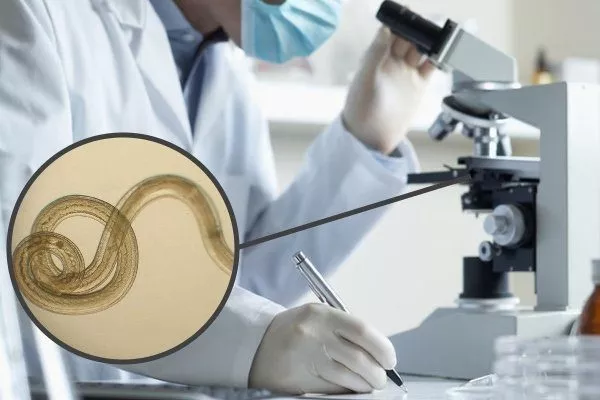
A veterinarian determines the presence and type of helminths after examining the droppings in a laboratory. Dirt, crowded conditions, and dampness in the poultry house contribute to helminth infestation.
Symptoms:
- active weight loss;
- loss of appetite;
- depressed state.
Treatment: Anthelmintic medications are used. However, advanced cases are not treated, and the birds are slaughtered. Helminthiasis prevention involves scheduled deworming of the flock.
Fleas
Poor housing results in the spread of skin parasites such as fleas and feather eaters. Fleas reduce egg production and meat yield in guinea fowl.
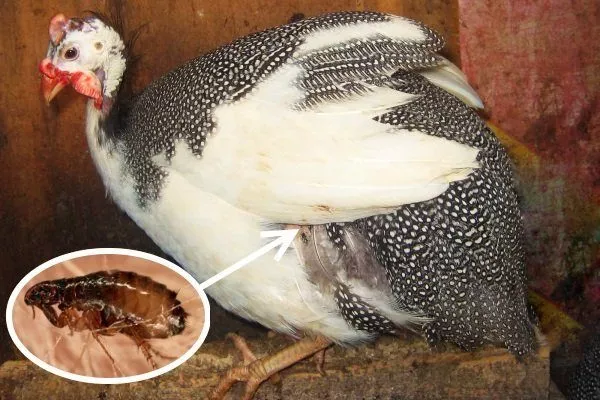
Symptoms:
- damaged plumage;
- restless behavior.
Treatment: Removing fleas is much more difficult than preventing them. Insecticides are used to treat both the room and the birds. A veterinarian selects the appropriate product. For prevention, it is recommended to regularly change the litter in the coop, prevent drafts and dampness, and install sand boxes for ash baths. Adding juniper and wormwood to the litter is also recommended.
Almost all guinea fowl diseases are related to poor housing conditions. Providing the birds with a clean and warm house, feeding them properly, and vaccinating them regularly will significantly reduce the risk of disease.