

I already wrote about the grass I found in my garden that is both useful and dangerous, but exclusively for garden crops. Today I want to share my own experience using this medicinal plant.
How to recognize it?
Goldenrod comes in many varieties and cultivars, but the Canadian one looks like this:
- height is about 2 m, and by the end of summer it reaches up to 3 m (I took the photo during this period);
- stems are predominantly erect and completely unbranched;
- leaves are lanceolate, long and green;
- on the surface on top they are completely bare, but on the back side they are slightly pubescent;
- direction of foliage - at the beginning of the growing season they are directed upwards, at the end of summer they become drooping downwards;
- the root system is very powerful and horizontal, spreading widely to the sides;
- inflorescences – pyramidal, spreading, panicle-like;
- petal color – bright yellow;
- the number of inflorescences on one shoot is many, about ten;
- flower baskets in diameter – 4-5 mm;
- The fruits are cylindrical, the seeds are very small (they don’t have any yet, so I’m not attaching a photo).
What it looks like at different stages of vegetation:
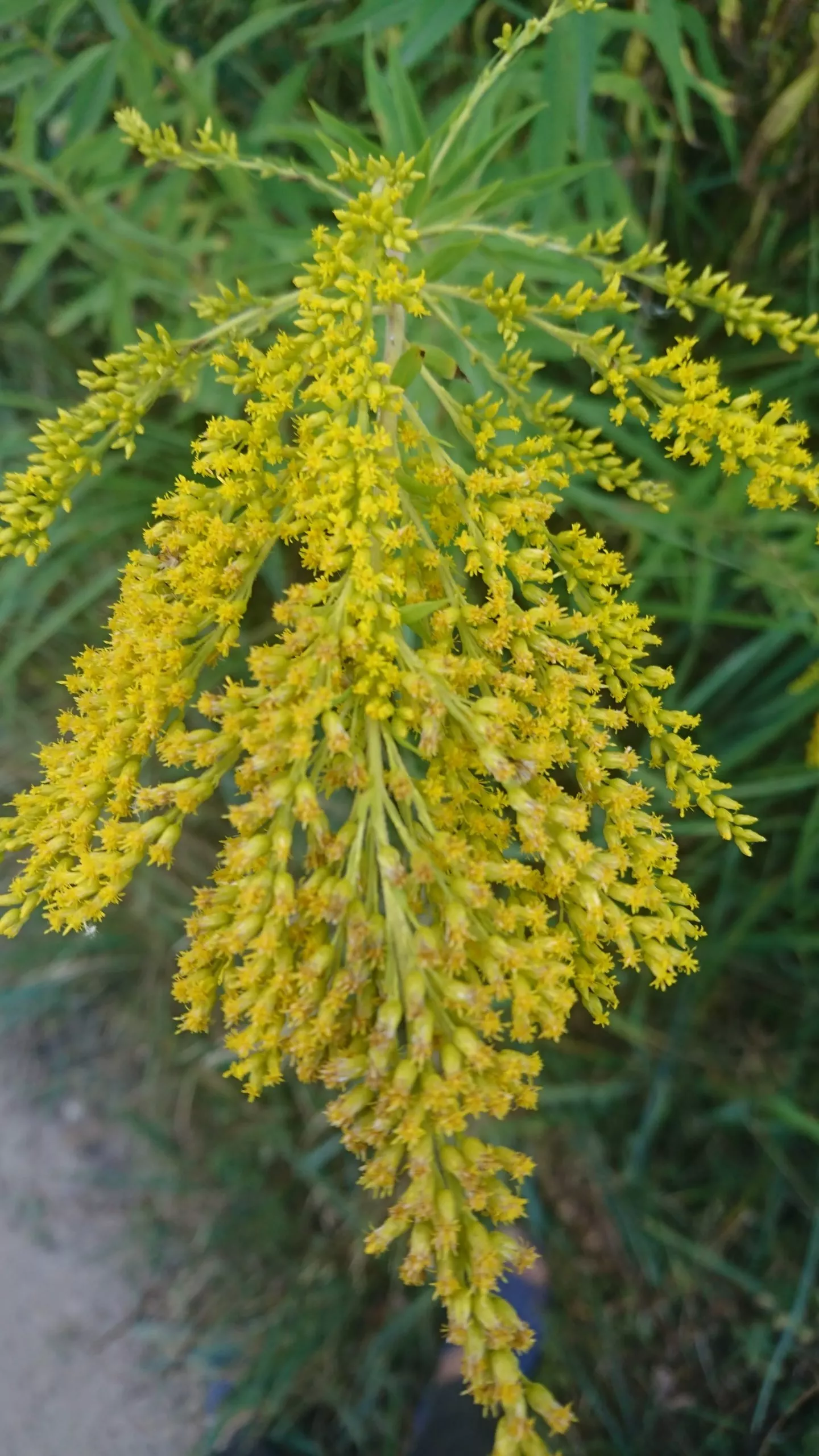
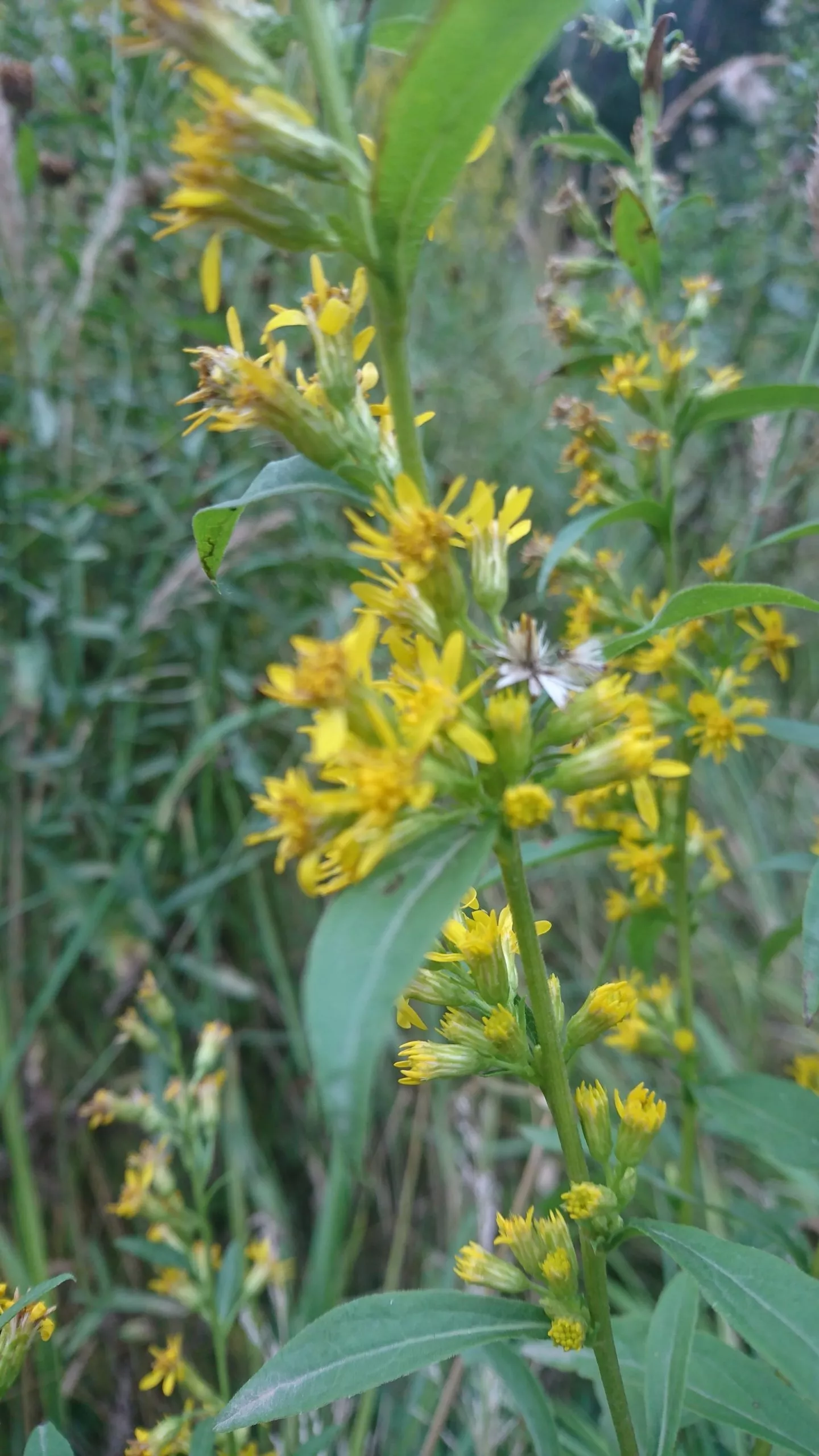
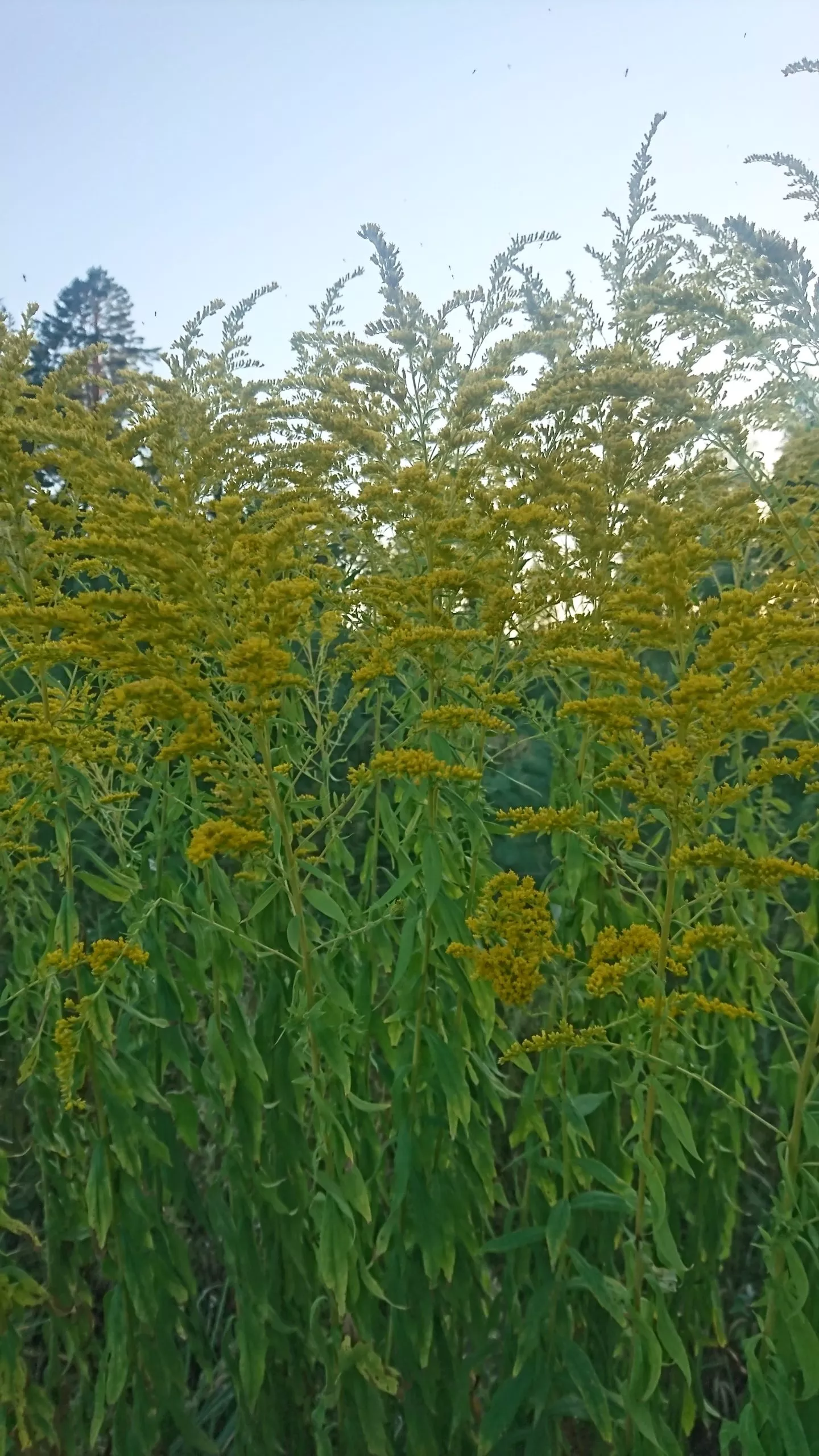
The easiest way to find goldenrod is along paths and trails, in dumps, in hasty places, meadows, and forests. But keep in mind that medicinal plants need to be collected Right (a lot has been written about this).
Please note that goldenrod blooms only from August to October.
What is it used for in medicine?
I spent a lot of time researching the beneficial properties of goldenrod, and as it turns out, it's used not only in folk medicine but also in pharmacology. Extracts and plant parts are used in many medications and dietary supplements, such as Marelin, Prostanorm, and others. Both dried herb and herbal teas containing this weed are available in pharmacies.
The herb contains a large number of microelements, vitamins, coumarins, flavonoids, amino acids, etc., so its range of applications is considered wide:
- diseases of the respiratory system, including bronchial asthma and tuberculosis;
- diabetes mellitus, problems with the endocrine system;
- wounds, abrasions, burns, ulcers, eczema;
- kidney and gallbladder stones;
- prostate diseases (prostatitis, adenoma, impotence, etc.), problems with the urinary system;
- colitis, enteritis, digestive disorders;
- gout, rheumatism, arthritis and other joint problems;
- menstrual irregularities;
- diseases of almost all organs, etc.
I won't list everything—goldenrod has too many uses. I can only surprise you: the herb has been used since the 16th century. It has the following key properties:
- expectorant;
- anti-inflammatory;
- stopping bleeding;
- diuretic;
- wound healing;
- disinfectant;
- hemostatic;
- diaphoretic.
What did you use it for and how did you prepare it?
The main thing I'd like to share are universal recipes that I've personally tried on myself and my friends. These include gargling, mouthwash, oral administration, and compresses.
Problems with the prostate and genitourinary system in men
I tried it on my aunt's husband (he's 58 and had developed prostatitis). The results were amazing – his pain during urination disappeared (goldenrod doesn't have any analgesic properties, but apparently because the inflammation subsided, the pain went away). But most importantly, my aunt said her sex life started to improve.
Recipe:
- prepare a thermos;
- Add 2 teaspoons of dry herb (a mixture of flowers and leaves) to 200 ml of boiling water;
- let it brew for 4-5 hours;
- Take 50 liters 4 times a day before sitting down to eat.
Leather processing
For this purpose, I prepare a tincture; it keeps in the refrigerator for about eight months. I use it for any abrasions, pimples and acne, open wounds, etc.
Recipe:
- buy 500 ml of vodka;
- add 5 tablespoons of goldenrod into it;
- cover with a lid and leave in a dark place for one and a half months;
- Strain and apply as a compress for 15-40 minutes.
You can also make a powder (I crush it in a mortar), mix it half and half with cream and apply it to various types of eczema.
For prevention
It's especially good for the genitourinary system, but it's also helpful in other situations. How to use:
- mix 250 ml of water and 2 teaspoons of herbs;
- bring to a boil, simmer for 2-4 minutes;
- Take a maximum of 500-600 ml of this healing tea per day.
How to remove toxins
Intoxication of the body is commonplace these days – it's a consequence of what we eat and drink, what we breathe, and so on. That's why I periodically cleanse my internal organs with goldenrod. How to prepare:
- Mix 2 tablespoons of dry herbs and 600 ml of boiling water in a saucepan;
- cook for 5 minutes;
- pour into a thermos along with the herbs;
- let it brew for 60-80 minutes;
- strain;
- Drink 4 tablespoons four times a day.
When should it not be used?
When using any medicinal plant, be aware of contraindications. Topical use is contraindicated only in cases of allergic reaction to goldenrod, and internal use is contraindicated in children under 14 years of age, during pregnancy and breastfeeding, with kidney stones, and in cases of renal or heart failure.
There are a huge number of other recipes, but I've only described what I've personally tested. I can confidently say that my family's immune system is now strong, and I haven't had a single adverse reaction.