

Good afternoon
As a novice amateur gardener, when planting different varieties and types of fruit trees in my garden, I encountered the need to mow the grass regularly. Of course, ideally, a garden with a neatly trimmed lawn or dug soil is desirable, which is used for growing vegetables or flowers.
But in practice, not everyone has the time or opportunity to care for their plot so thoroughly. Some people's work prevents this, while others have plots or dachas far from home, and only have the opportunity to visit once every few days, or even a week. So, it sometimes happens: you buy the desired variety, plant it... and the grass doesn't wait, and grows taller and taller.
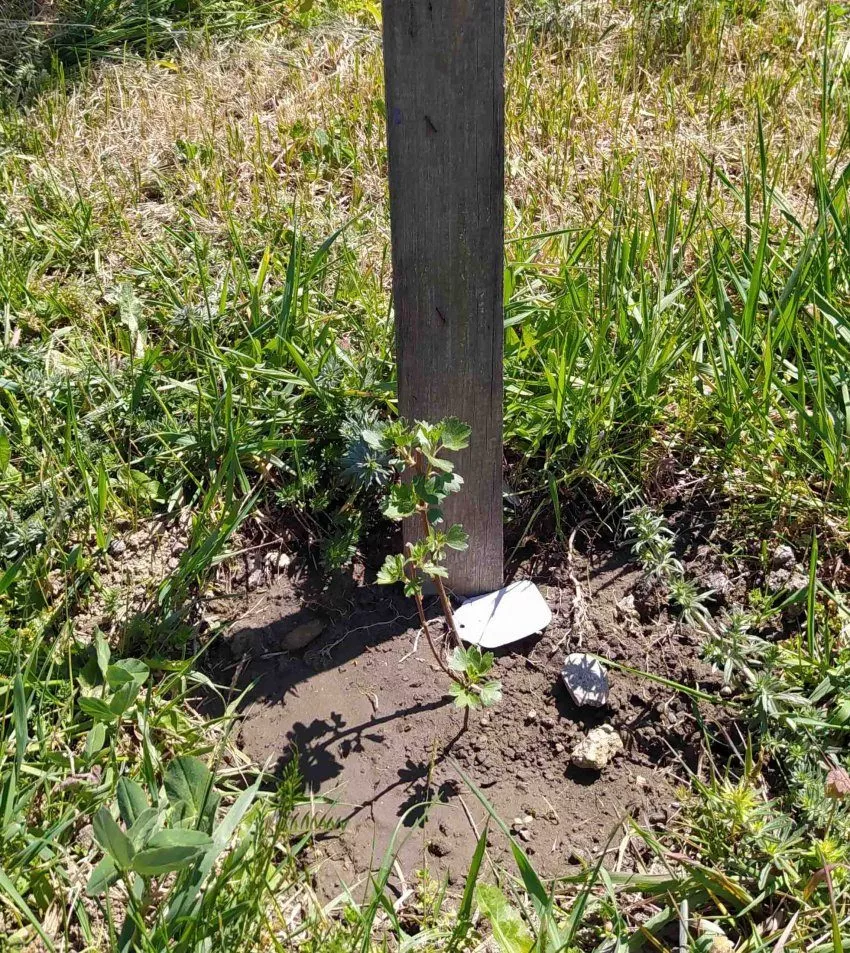
Even though my plot is nearby, sometimes I just don't have the time or the opportunity to mow the grass in time. For example, my trimmer recently broke down, and by the time I fixed it, the young seedlings had already disappeared into the undergrowth.
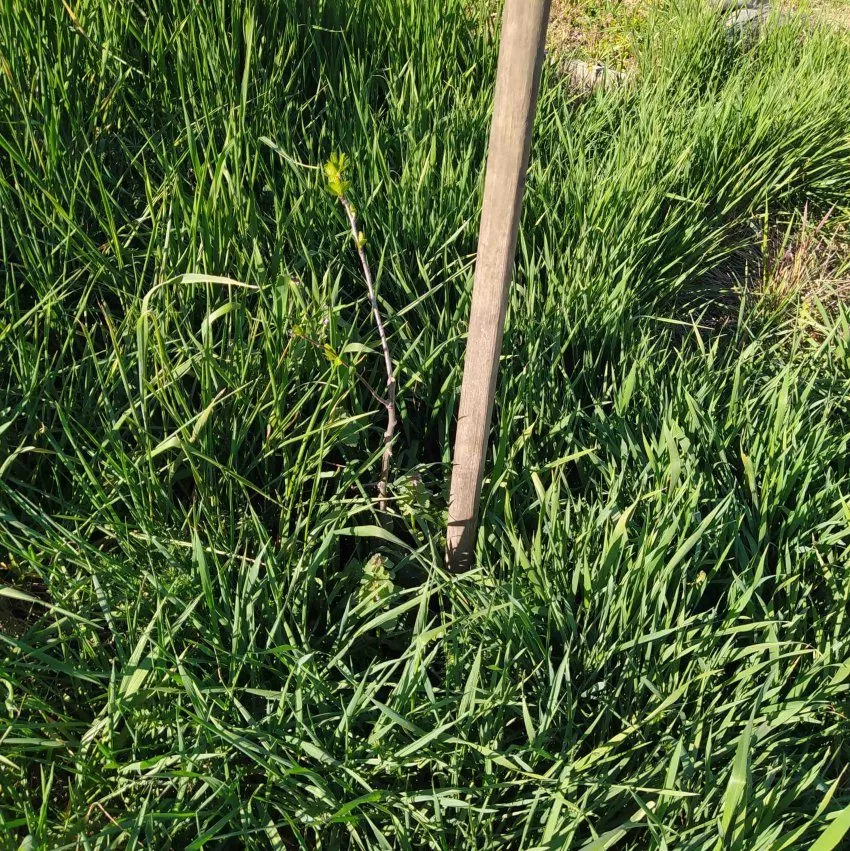
Last summer, due to a similar breakdown, I had to hire someone to mow the grass. However, it's important not to cut young seedlings in the grass or damage their bark, otherwise they could also die. Therefore, when planting fruit trees, I try to protect them in advance.
I want to show you the methods I use to protect young seedlings from trimmer line when mowing.
- First – I always try to mark the planted plant with a stick. This serves as a support to tie the seedling to if it decides to lean to one side. It also serves as a marker to help you easily find the planting spot.
- Second - I protect the stem itself.
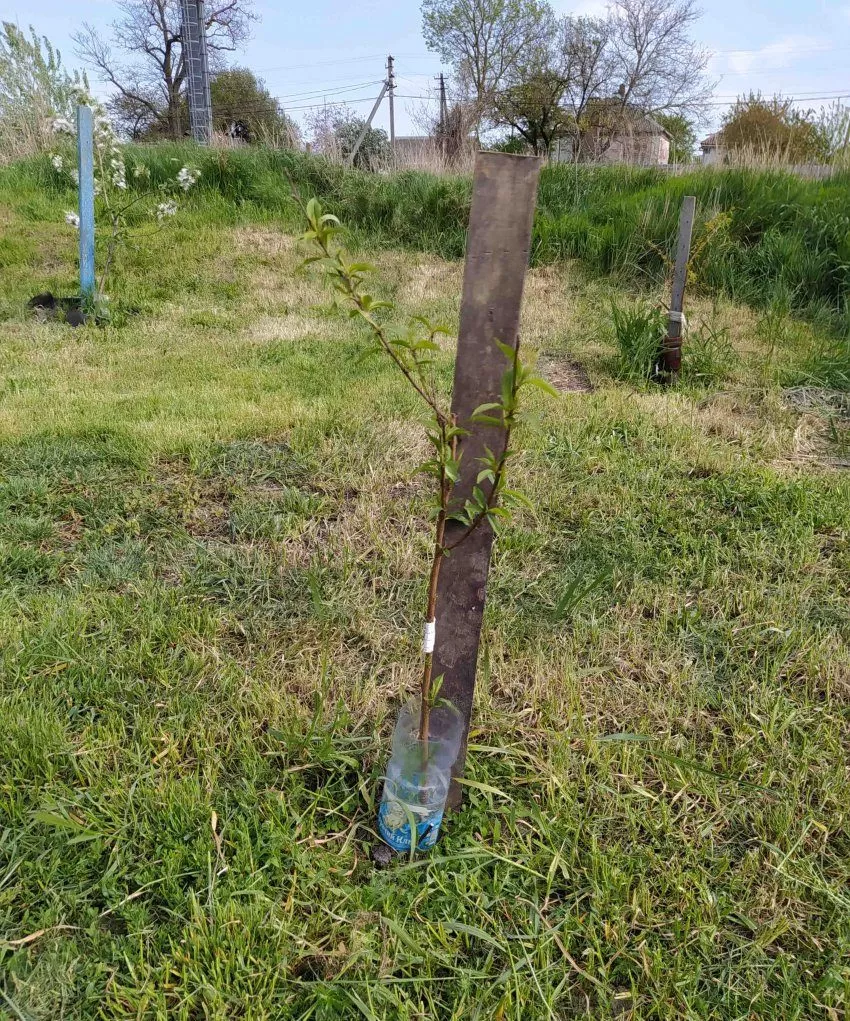
The most convenient option for me turned out to be from a simple bottle
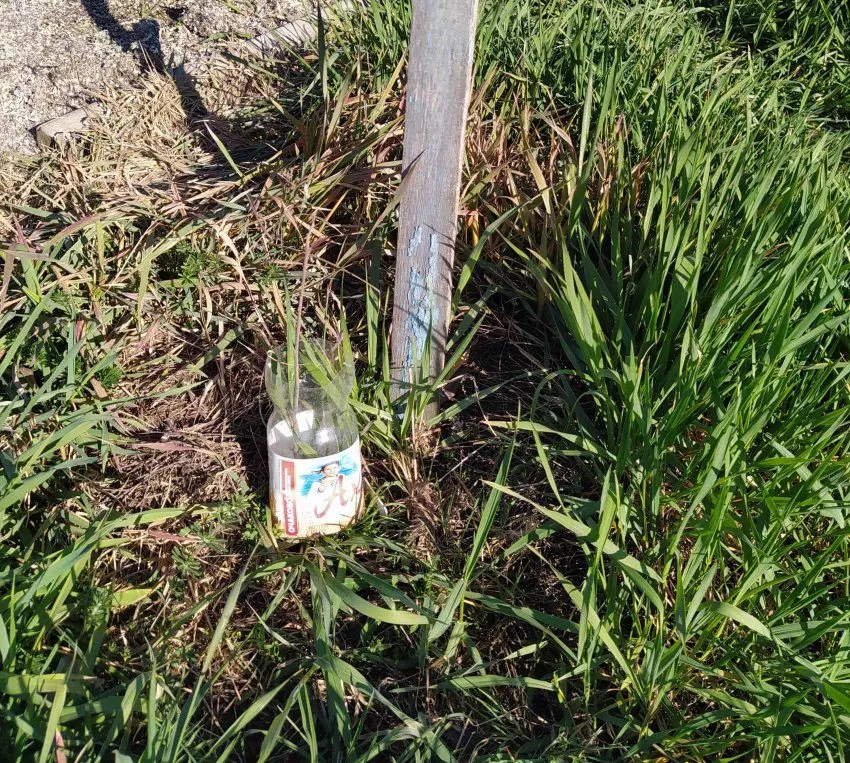
The neck and bottom of a plastic bottle are cut off and the resulting cylinder is carefully threaded onto the barrel.
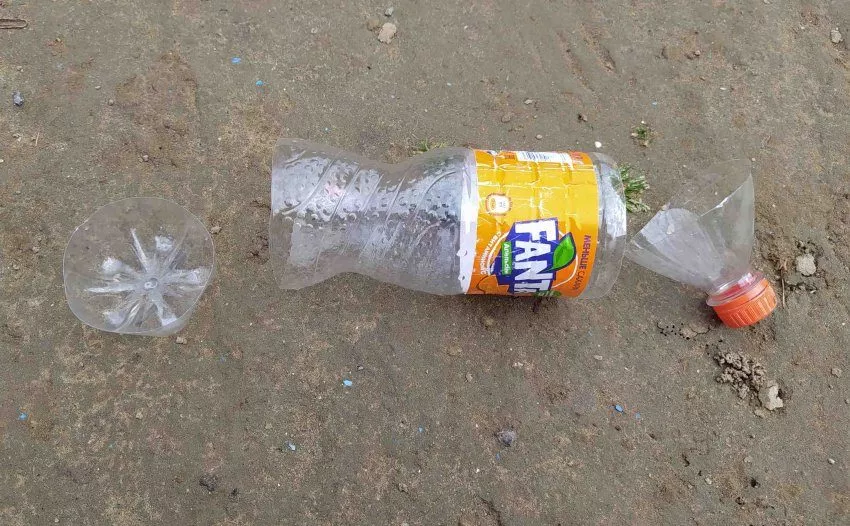
It's best to bury the bottle slightly deeper into the ground to prevent the structure from wobbling. With this protection, even if the grass covers the tree, there's no risk of damaging the bark. The line will brush against the bottle, and the sapling will remain unharmed.
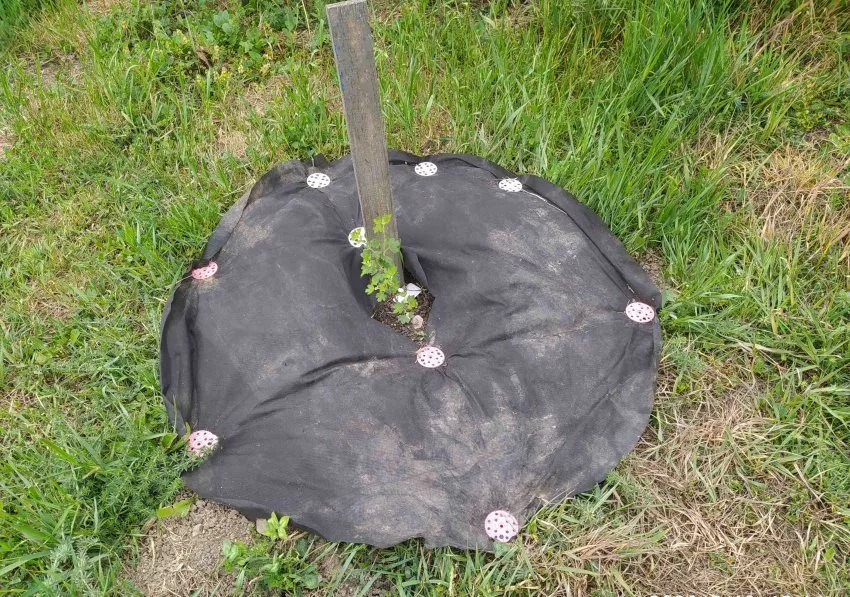
Another option is to create a protective tree trunk circle by securing agronomic material around the seedling to prevent grass growth. However, this circle must be cleaned regularly, removing leaves and debris to prevent grass seeds from catching on.
An improved version of the tree trunk circle is to create a raised bed. You can enclose it with a flexible border level with the ground.
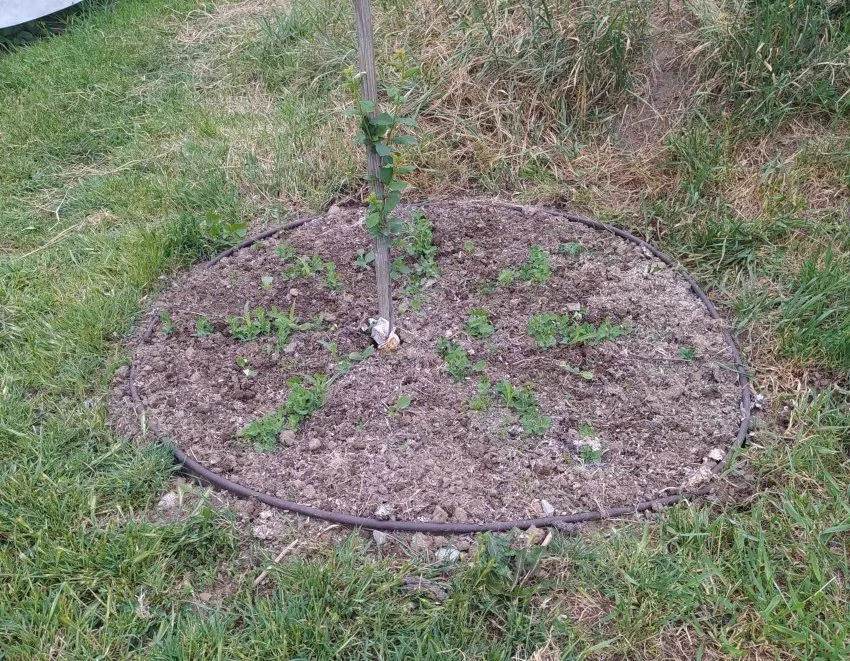
Watering will moisten both the flowers sown in the bed and the roots of the seedling. This will ensure the soil remains loose and permeable. And in summer, the tree will look beautiful among a flower bed or vegetable patch.
You can make a low bed from scrap materials, like some scrap wood. Like this one, for example.
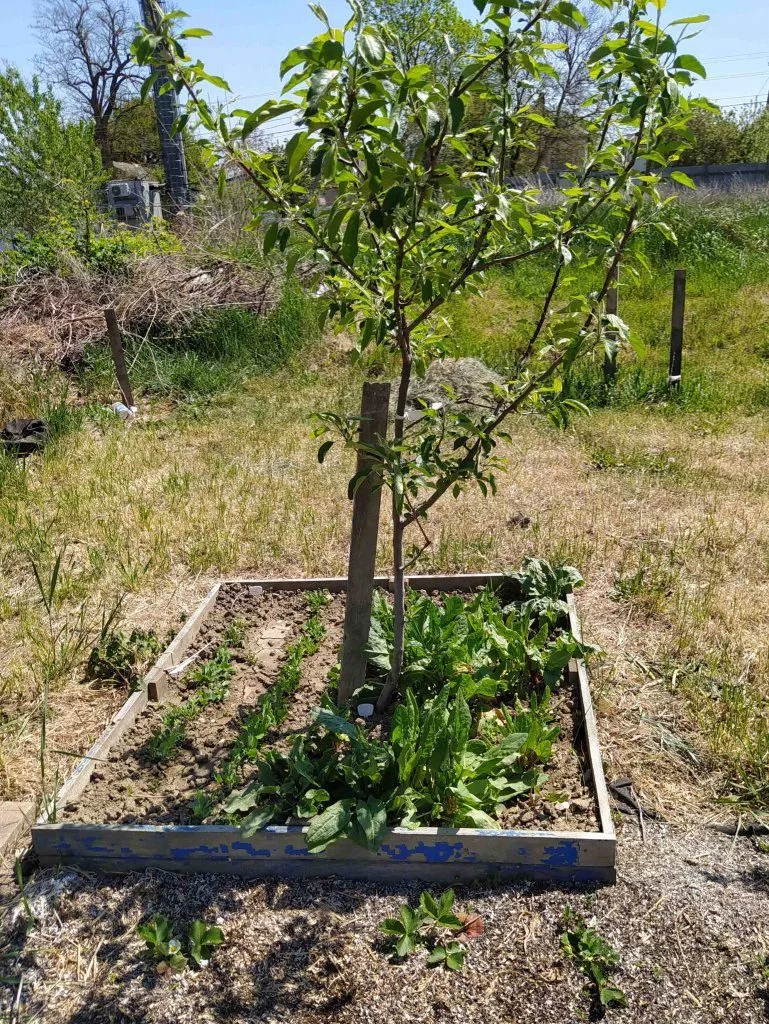
This type of bed is constructed from scraps of boards. It's advisable to treat them with a preservative or paint them before assembly to ensure longer life. With this option, it's best to initially plant the tree so that the root collar is slightly higher than normal. When the bed is filled with soil, it will be at the correct level. Once the sapling grows into a full-grown tree, this difference in soil height will no longer be a factor.
If you need to plant a plant but don't have any boards or agrotextile on hand, a regular cardboard egg tray can be used to keep the growing grass at bay for the first couple of weeks to a month. Cut it open, making a small hole in the center that fits the diameter of the plant's trunk.
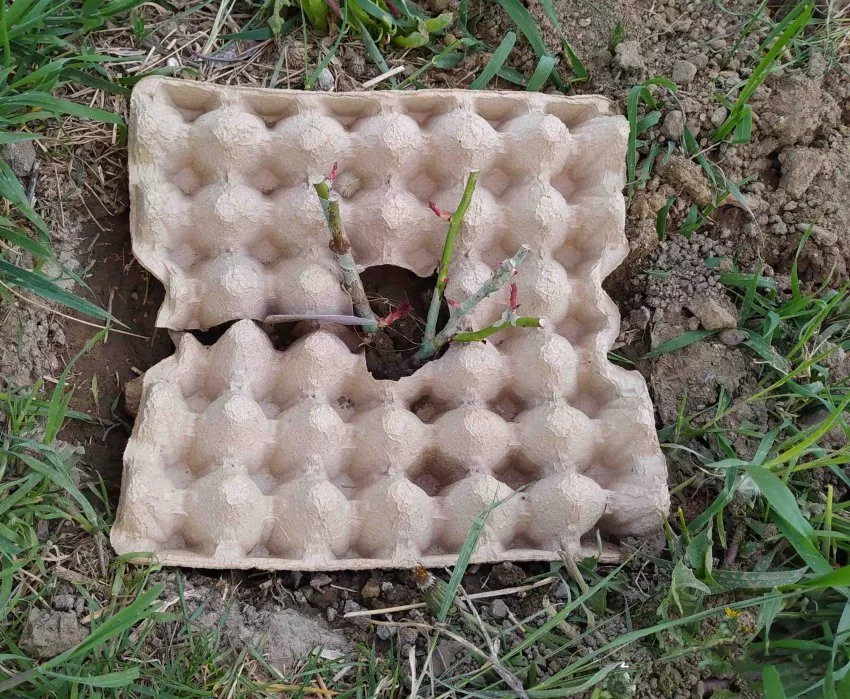
Done! The cardboard is thick, preventing grass from getting in, and moisture will reach the plant without hindrance.
I registered to say this is all nonsense. The cheapest working option is a tire with the sidewalls cut off and turned inside out. No trimmer will puncture it, unlike a bottle.
The story about grass not growing under black covering material is touching. I once believed it too. It does. And very actively. It's just a waste of money. Moreover, grass will grow even under asphalt if you don't prepare the ground underneath.
The "reply" button isn't working for some reason. The tire option is a good idea, but it's more for men's hands. I've been walking around four tires for two years now, using them as a flower bed, then temporarily as a fence for a thin flower twig to keep it from getting trampled. But I can't imagine cutting them, let alone twisting them—it requires a man's strength and a sharp tool, whereas anyone can handle a plastic bottle. And I've never seen a bottle cut with a regular trimmer line. This is also likely possible if a man is mowing with a gas trimmer, and most likely reinforced with a knife or cable instead of line. When mowing with regular line, the bottle is perfectly protected. And regarding the cover material—if you have grass growing underneath it, it seems you either used a low-quality or insufficiently thick material, or you didn't wait long enough and removed it too soon. I've had a covering mat under my fruit trees for about five years now, covering a fairly large area. During that time, it's practically "stuck" to the ground; not a single blade of grass grows underneath it, but in the cuts, yes, of course, some sprouts. Just like in any open soil. But I've encountered some poor-quality covering that turns into cotton wool within a single winter, falling apart into tatters; that kind of covering certainly won't hold back the grass.
The button has been fixed. Thank you!