

This year was a bountiful year for apples. Our young apple trees were literally covered in fruit.
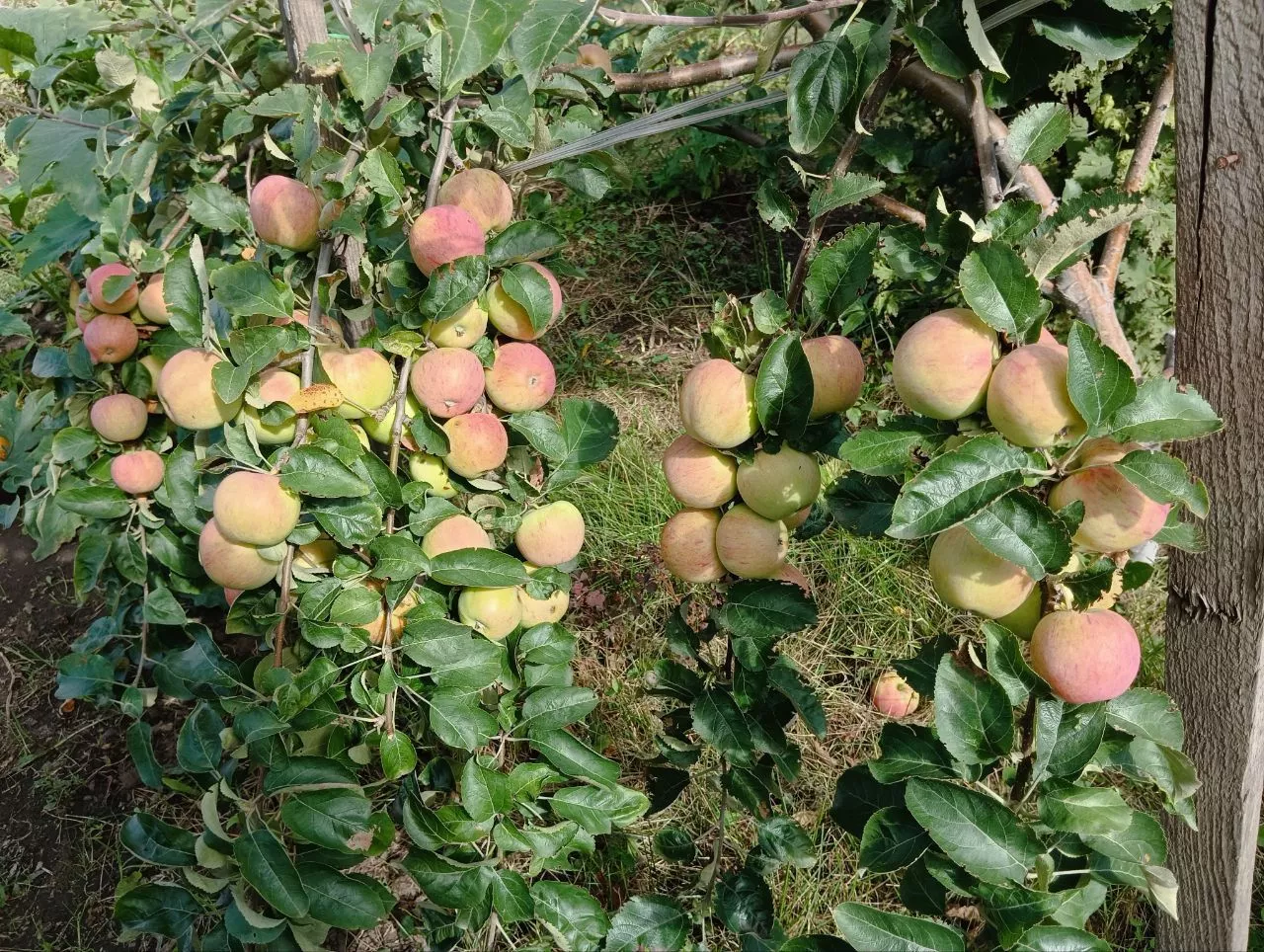
We ate our fill of delicious, fresh apples straight from the trees, and treated our family and friends. We made some preserves from the apples—very delicious honey jam And compote of whole apples.
And when no one wanted to eat apples anymore, and there were still some left and they started to spoil, I decided to make apple cider vinegar.
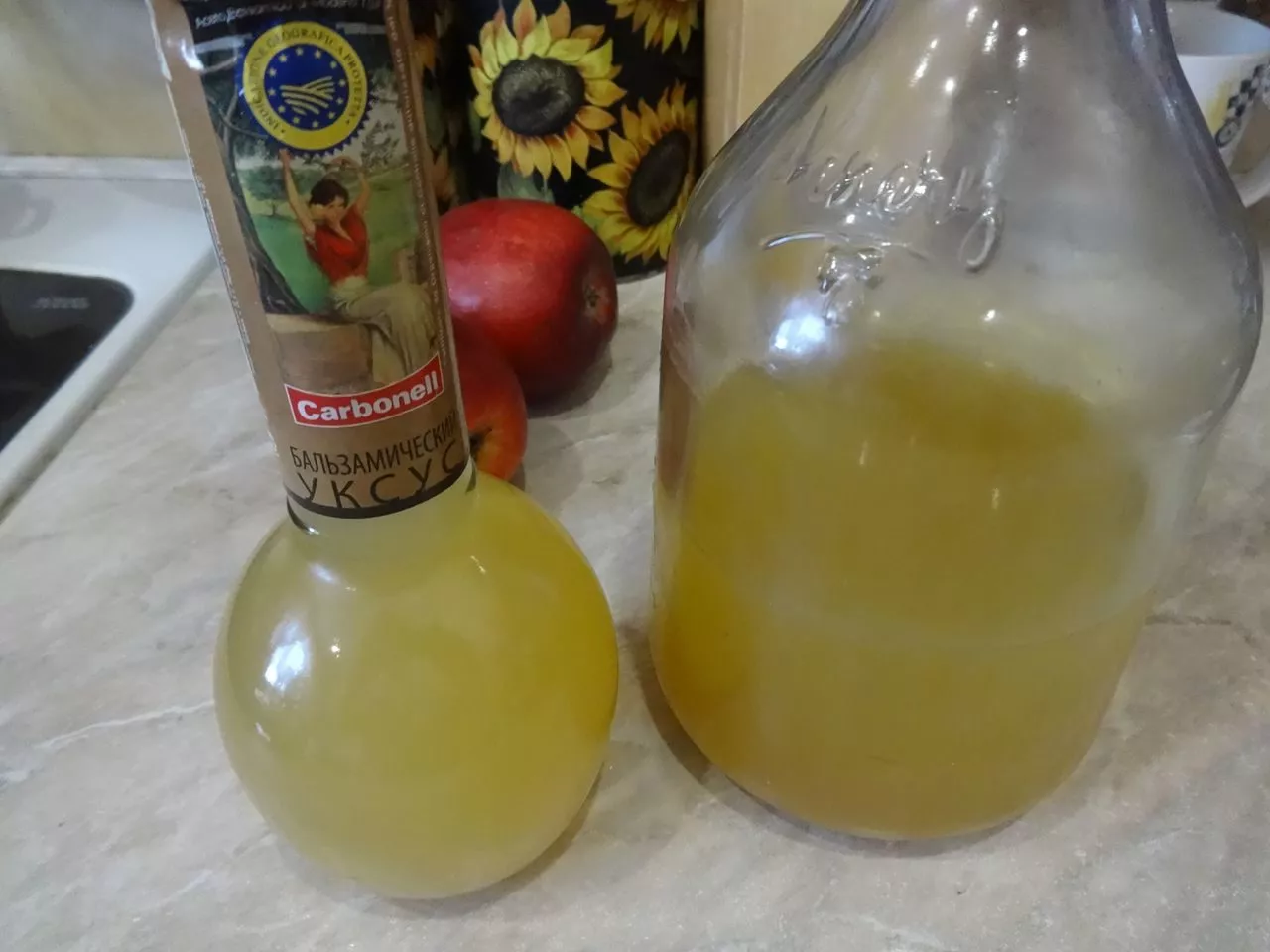
I still have some vinegar left over from last year; I use it in marinades and add it to ketchup instead of regular vinegar if a recipe calls for it. I also use it to boost my immune system and for prevention and treatment. I periodically drink water with apple cider vinegar and honey.
Making apple cider vinegar at home is very easy. You'll need the following ingredients: apples, sugar or honey, and a crust of black bread.
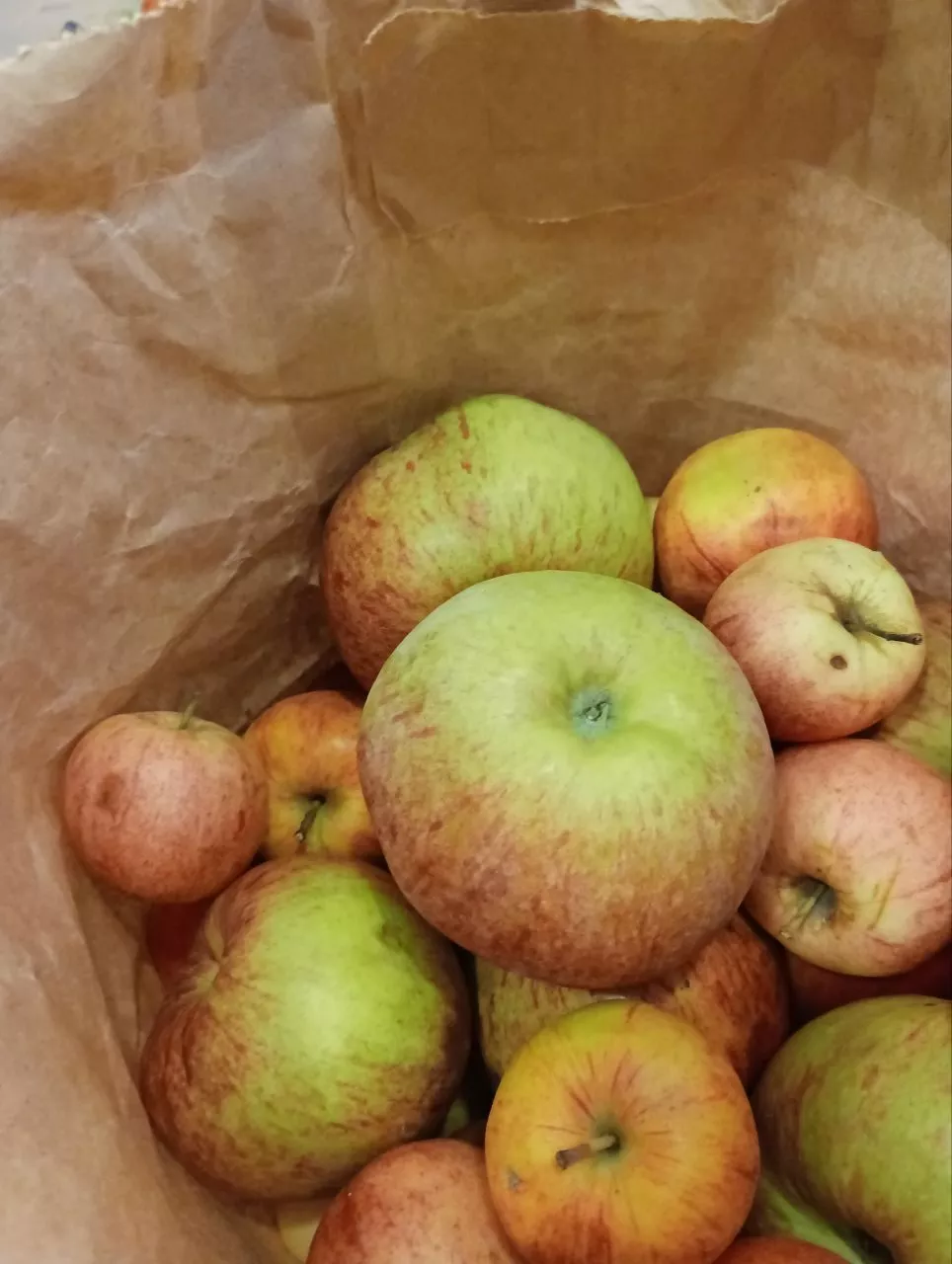
If you have your own apples, you can even use slightly spoiled ones, with wormholes; of course, you need to cut off the spoiled parts and wash the apples well.
You can use store-bought apples, but they don't necessarily have to be expensive; cheaper ones will do just fine. This fall, apples in stores became very expensive. You'd think it would be the peak harvest, so they'd go down in price, but for some reason, they're actually starting at 190 rubles and up.
To prepare the vinegar, I took 1 kg of apples, 1 liter of warm boiled water, a 30-gram rye crouton, and 100 grams of honey, which is 3 tablespoons. Honey can be replaced with sugar, also 100 grams.
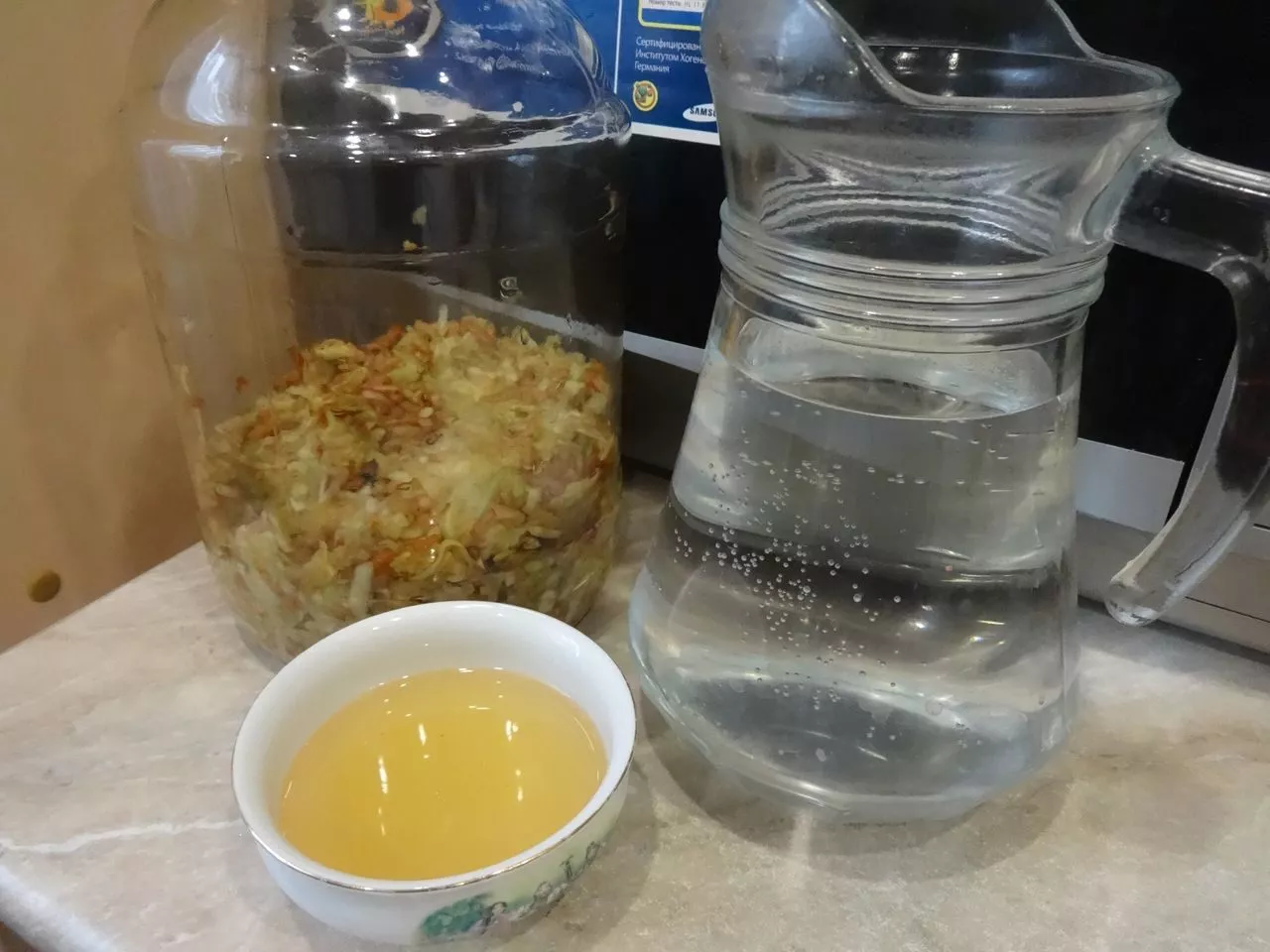
The apples need to be grated without peeling them, together with the cores and seeds.
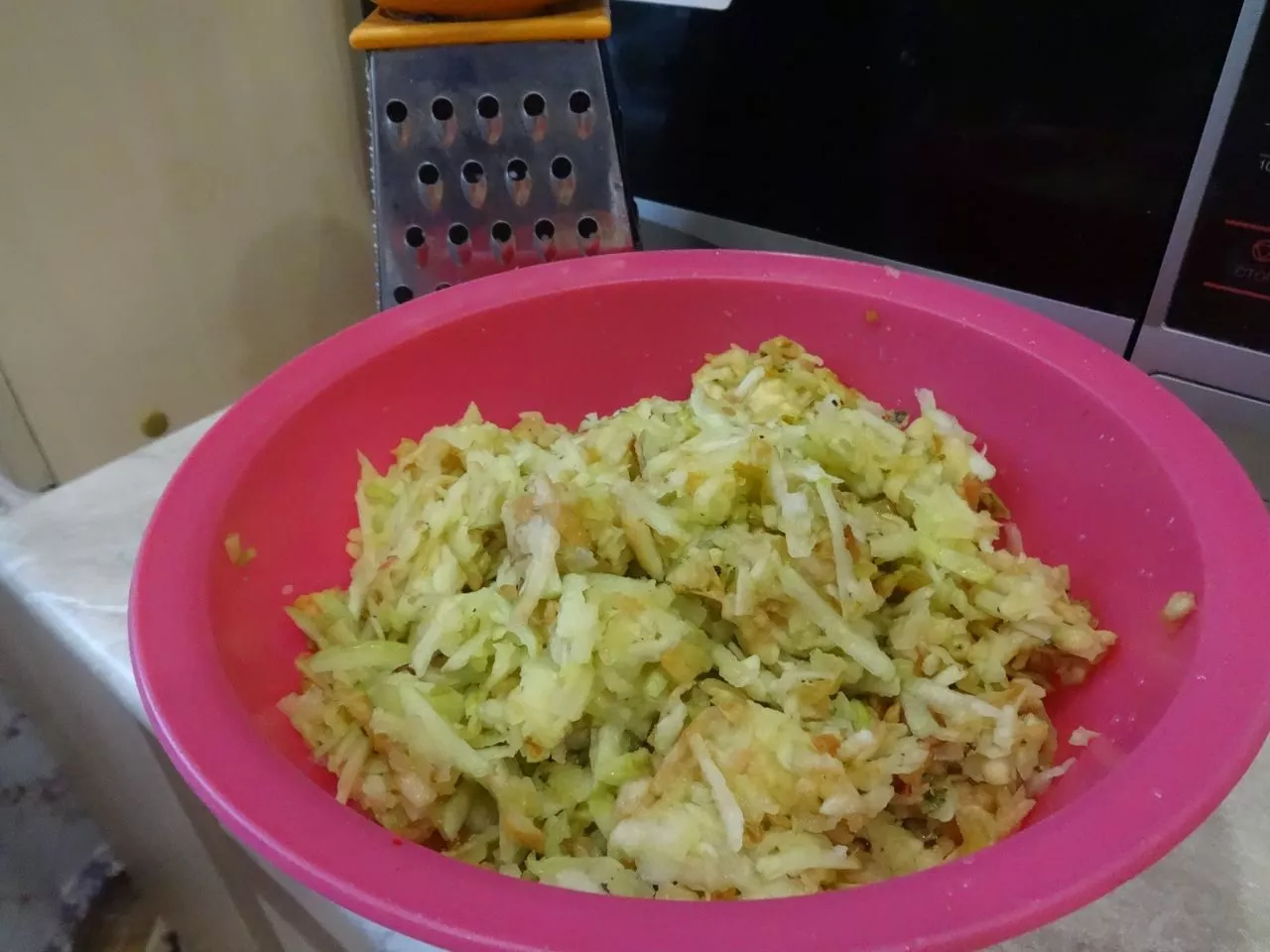
Place the apple mixture in a 3-liter jar. Fill with warm boiled water. Dissolve honey or sugar in a small amount of water and pour into the jar. Place a crust of dry rye bread on top.
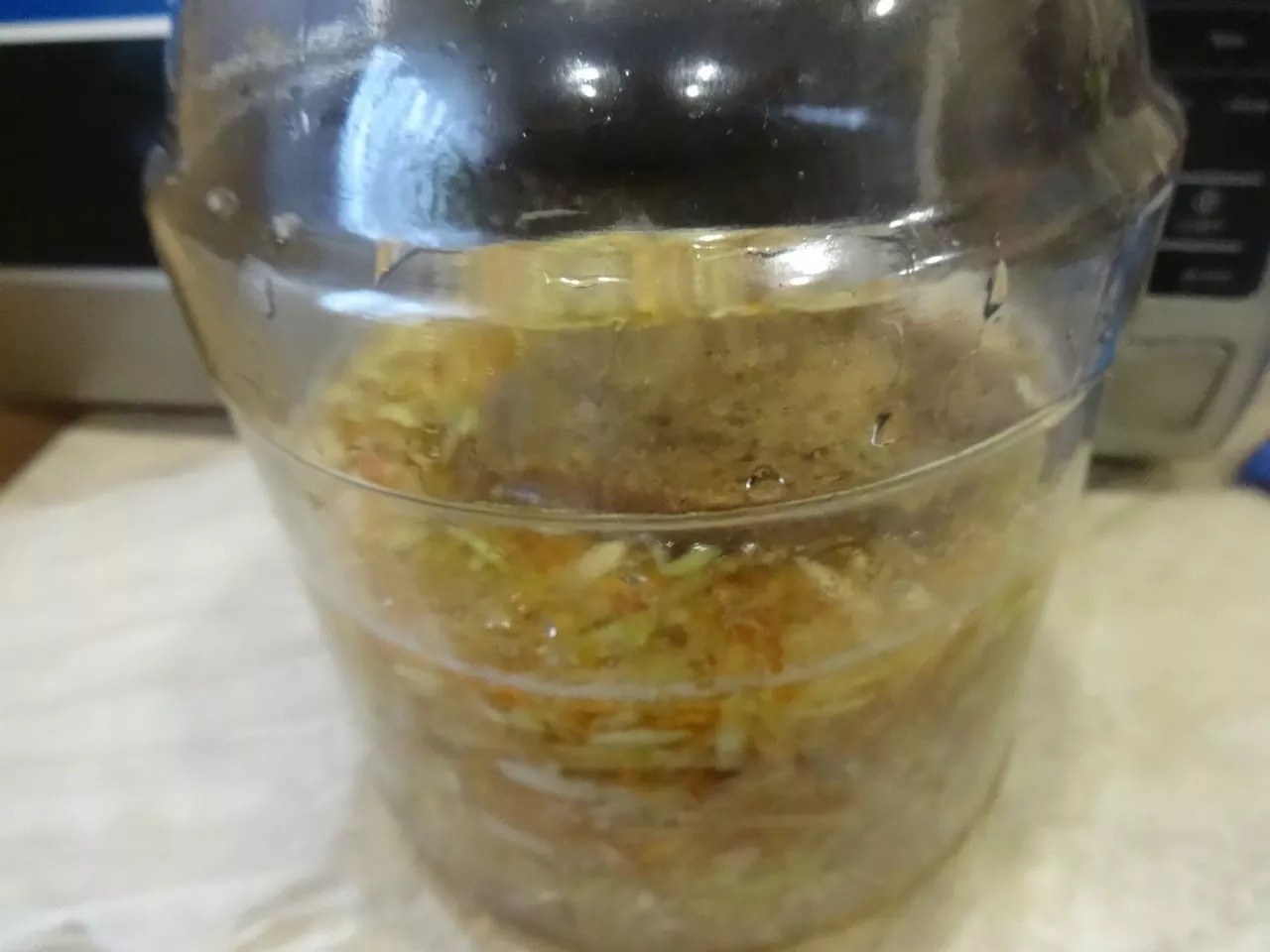
Mix the mixture in the jar, cover with gauze folded in two to four layers and tie the neck of the jar with a rubber band.
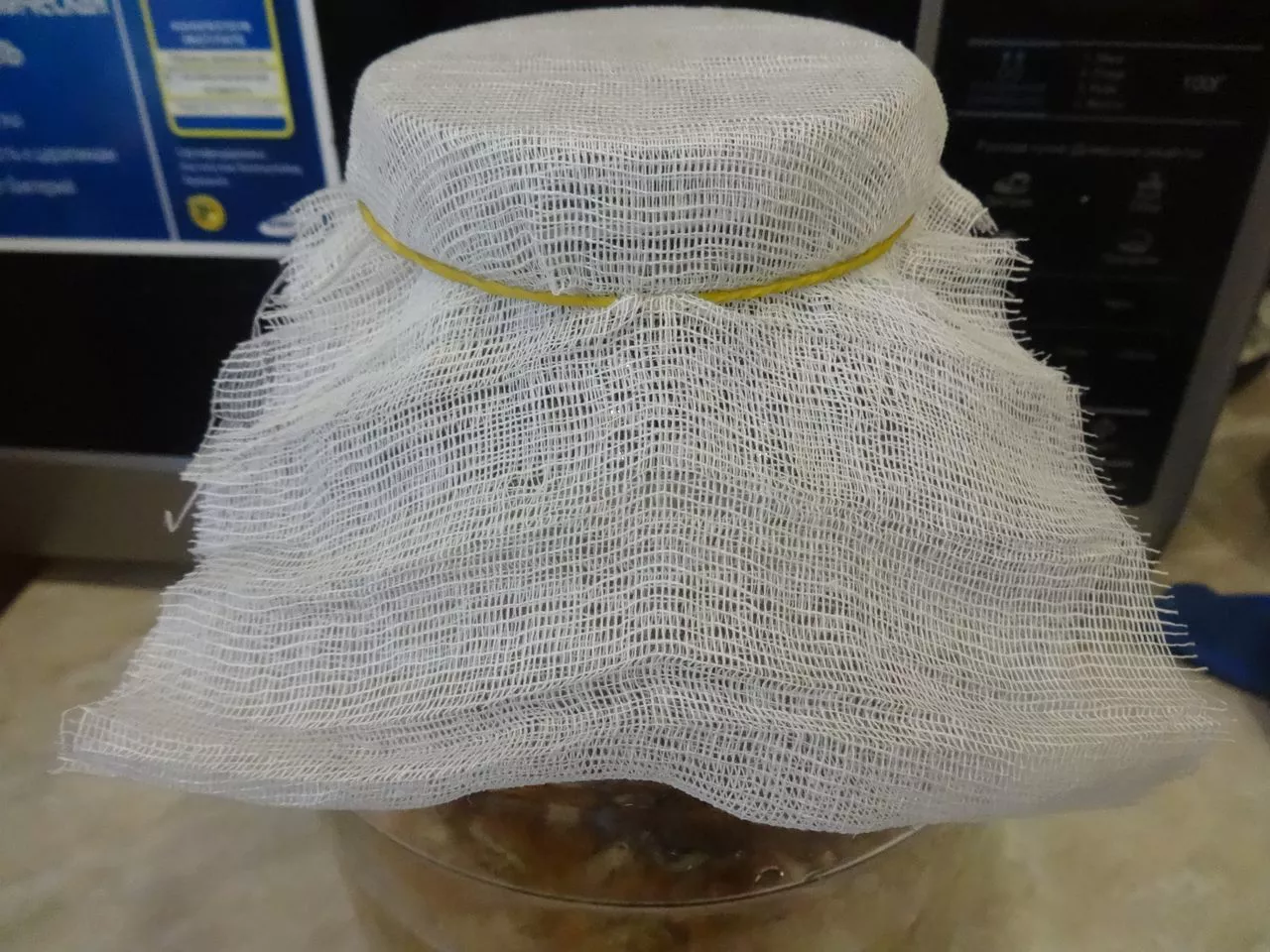
Place the jar in a dark, warm place to ferment for 10 days, but if the room is cool, you can keep it for 15 days.
It is essential to stir the mixture with a wooden spoon every morning and evening.
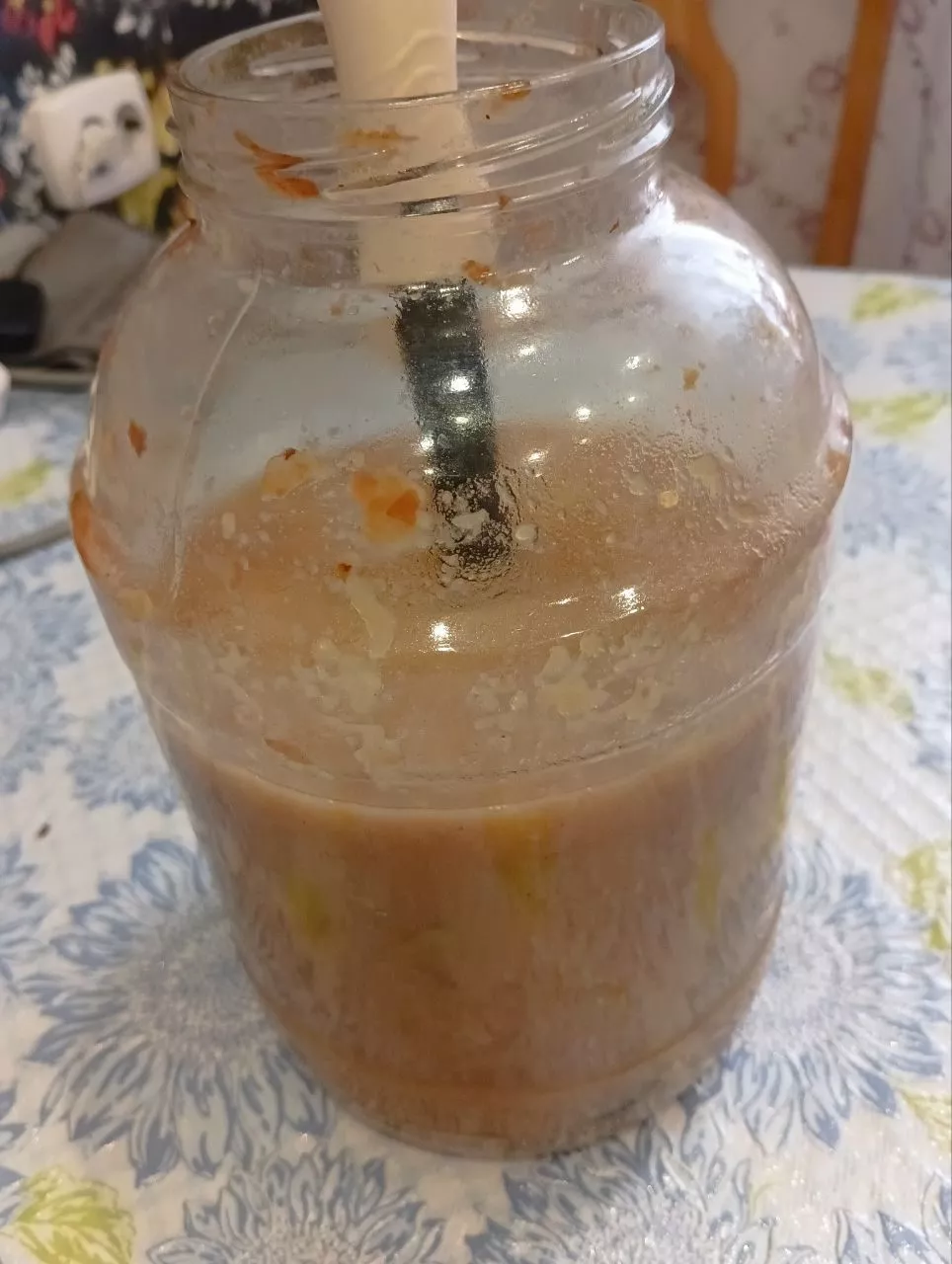
After 10-15 days, the fermented apple mixture should be thrown into a colander and squeezed with a spoon to separate the juice better.
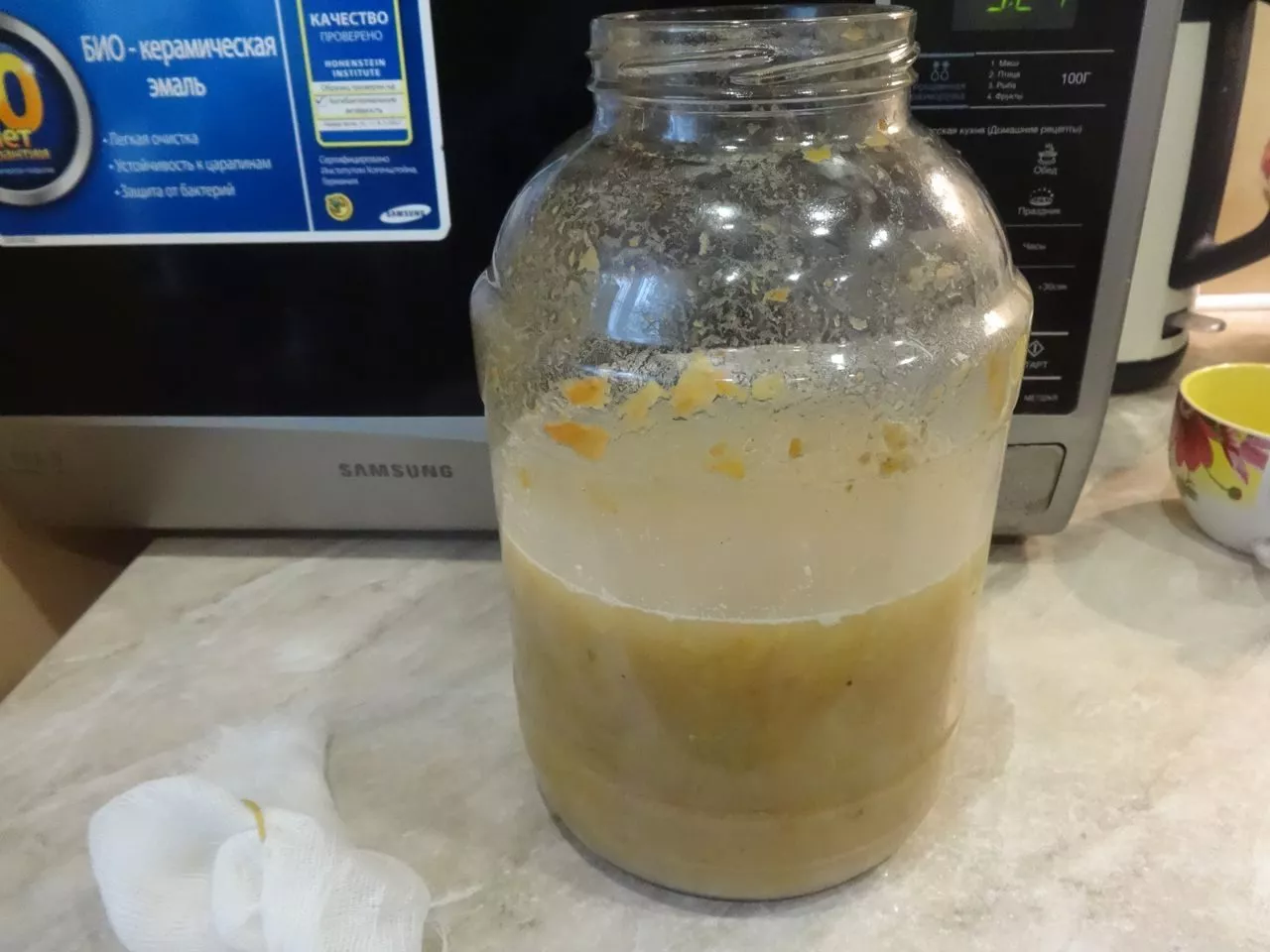
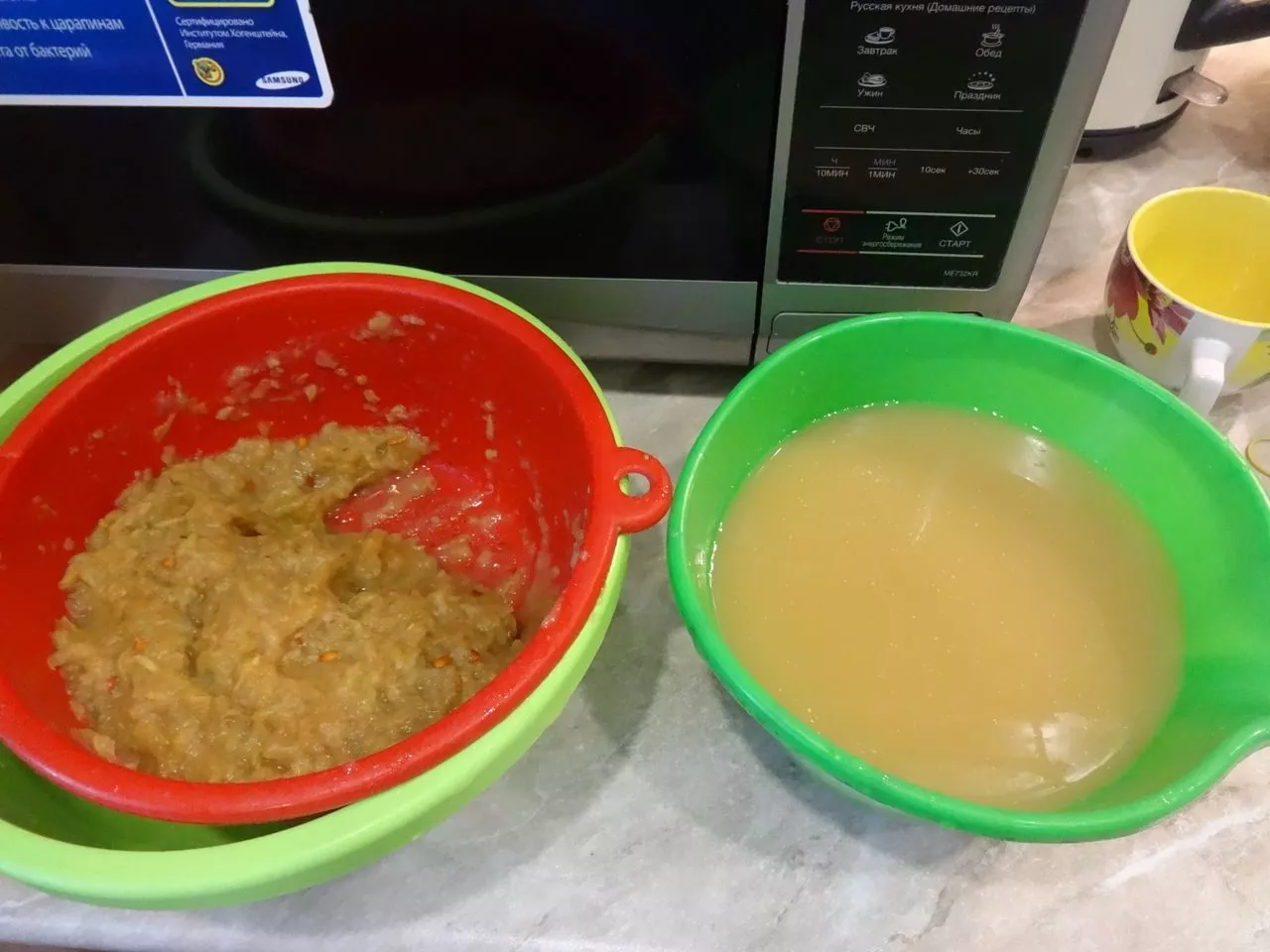
I squeeze the squeezed mass again in a sieve, the holes are smaller there and the juice separates better.
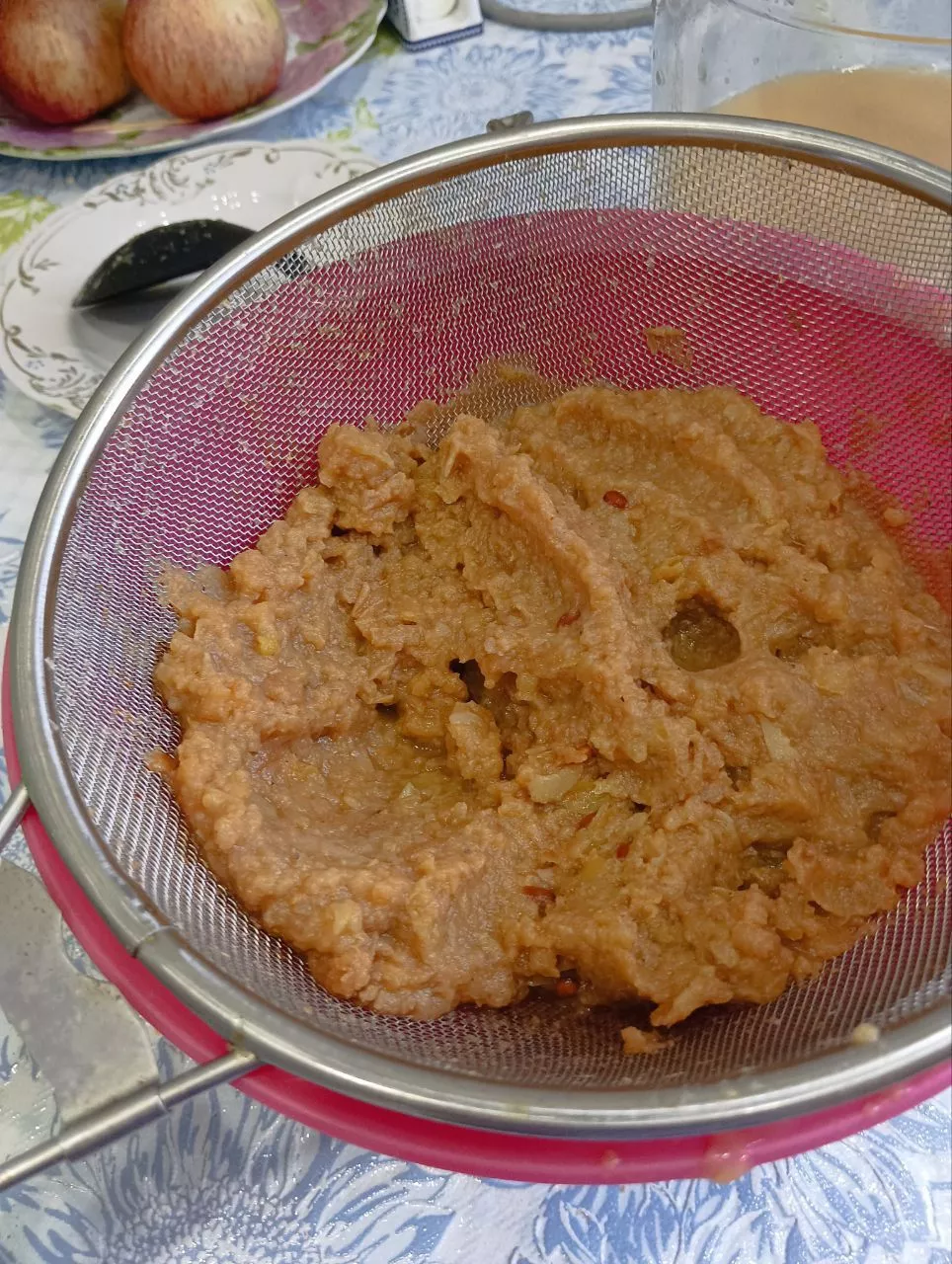
To squeeze out almost all the juice, I wrap the pulp in cheesecloth and squeeze out the juice with my hands.
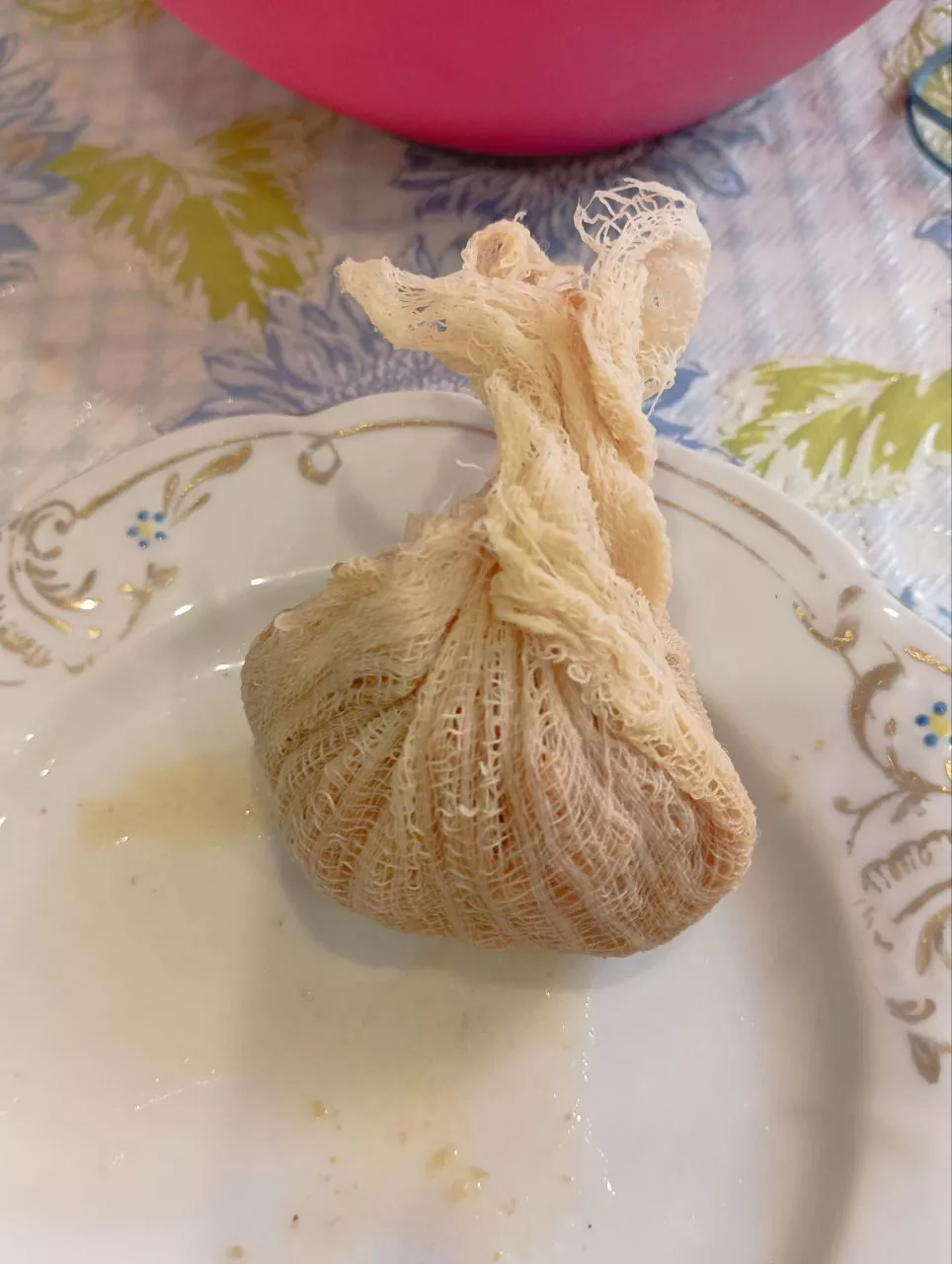
I want to warn you: if you're squeezing juice through new gauze or bandages, be sure to wash them before use. The bandages are bleached and sterilized with special chemicals during production. I once tried squeezing strawberry juice through a fresh bandage. I had to throw the juice away because it smelled like the bandage.
I got 1.4 liters of juice. I passed the juice again through a small sieve lined with two layers of cheesecloth.
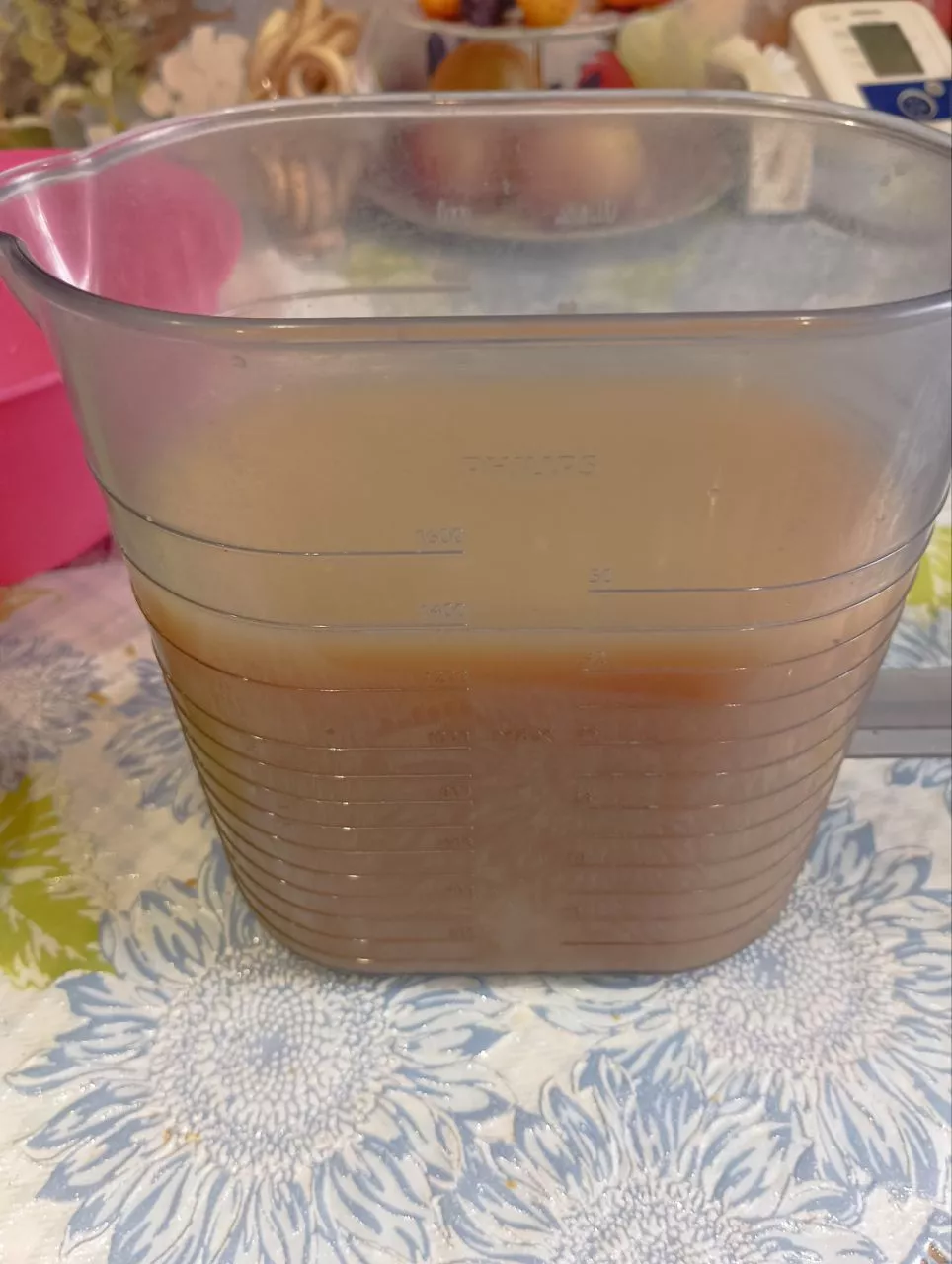
Now you need to add more honey or sugar - 50-100 grams, diluted in the juice, to the juice for further fermentation.
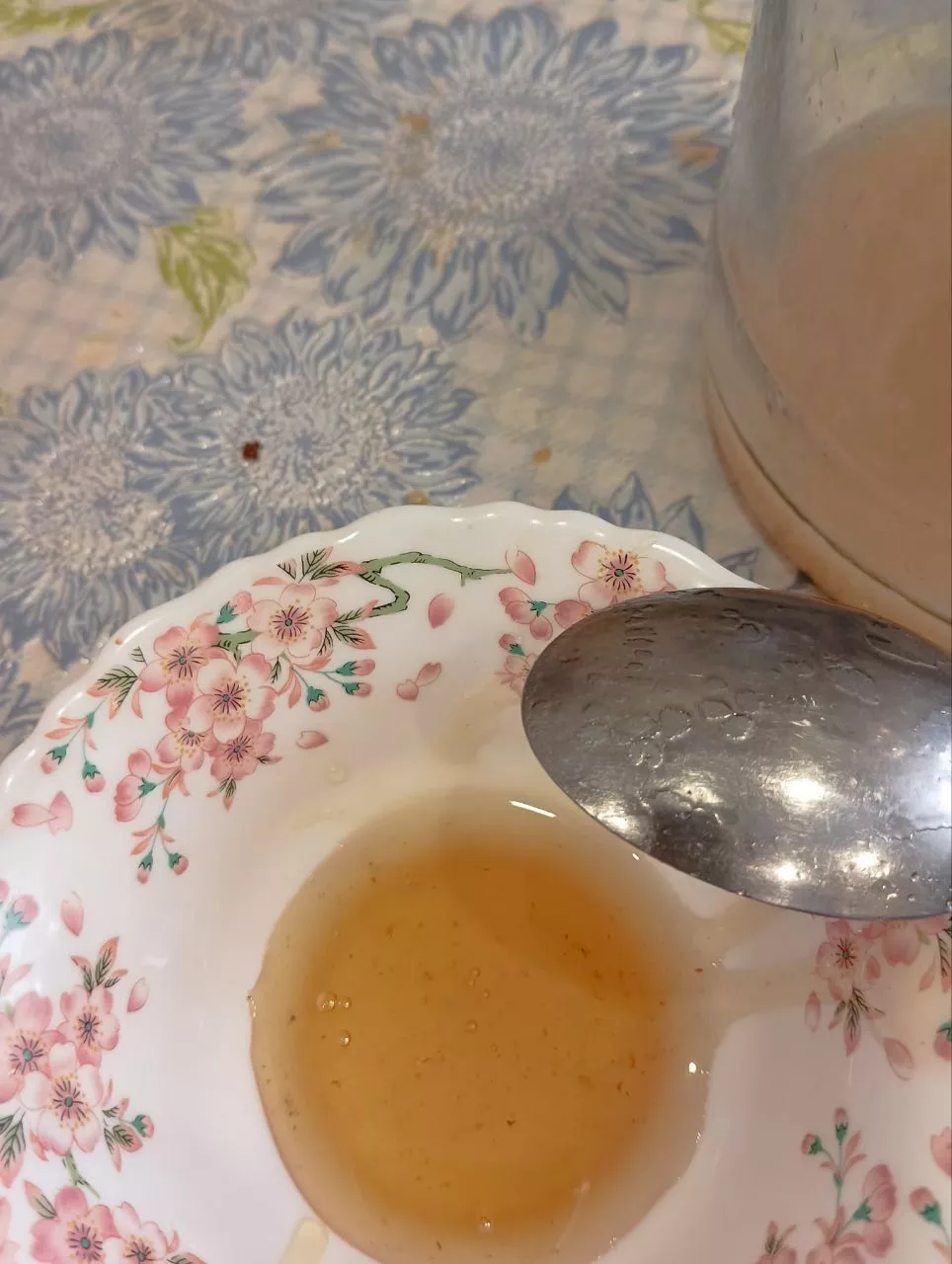
Be sure to cover the jar with gauze, tie the neck with a rubber band, and place it in a warm, dark place for two months. I keep my vinegar in the kitchen cupboard.
There is no need to stir the contents of the jar anymore.
During these two months, fermentation will occur, and a whitish film—the vinegar mother—will form on the surface of the vinegar. This film can vary in thickness, indicating that fermentation is proceeding normally.
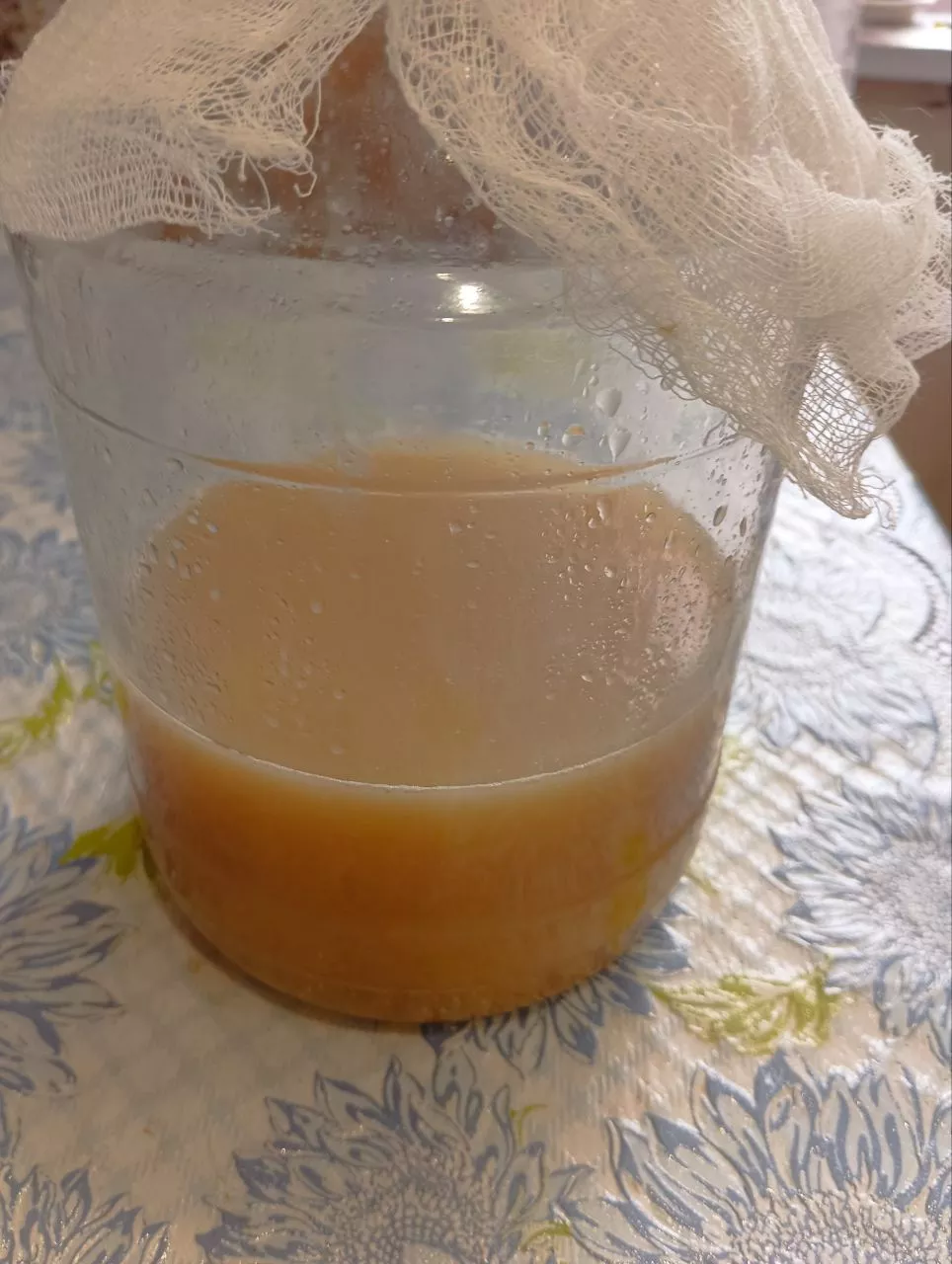
During this time, all the sediment will settle to the bottom of the jar. The apple cider vinegar will be completely ready. It should be carefully poured through cheesecloth folded in several layers into glass containers—bottles or jars. Now, tightly seal with lids.
The finished apple cider vinegar has a pleasant honey-apple aroma. It is clear and a beautiful golden-amber color.
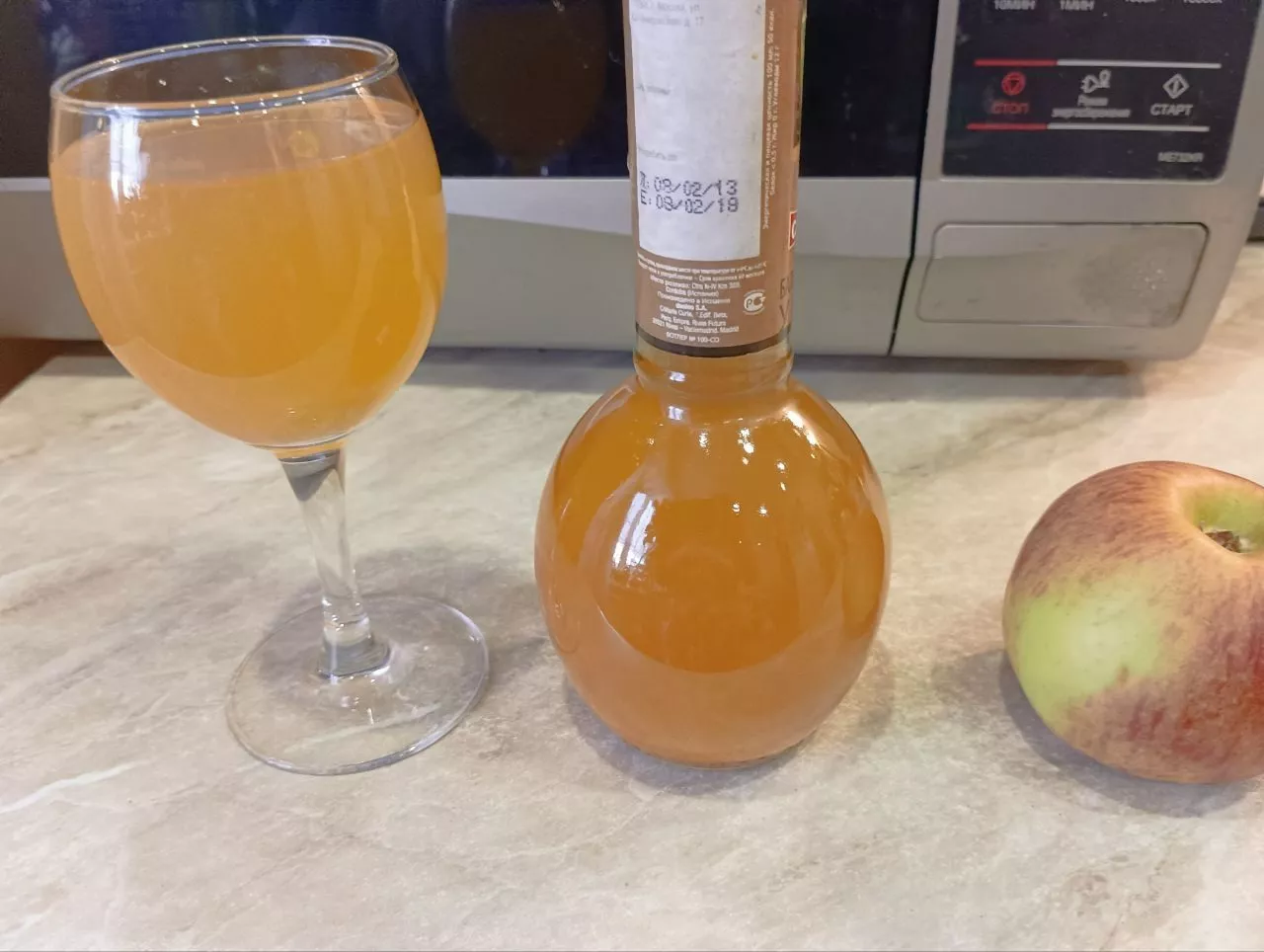
But there may still be a small amount of sediment at the bottom. The strength of natural homemade apple cider vinegar ranges from 4 to 6%.
Apple cider vinegar should be stored in a cool, dark place. We store it in the refrigerator.