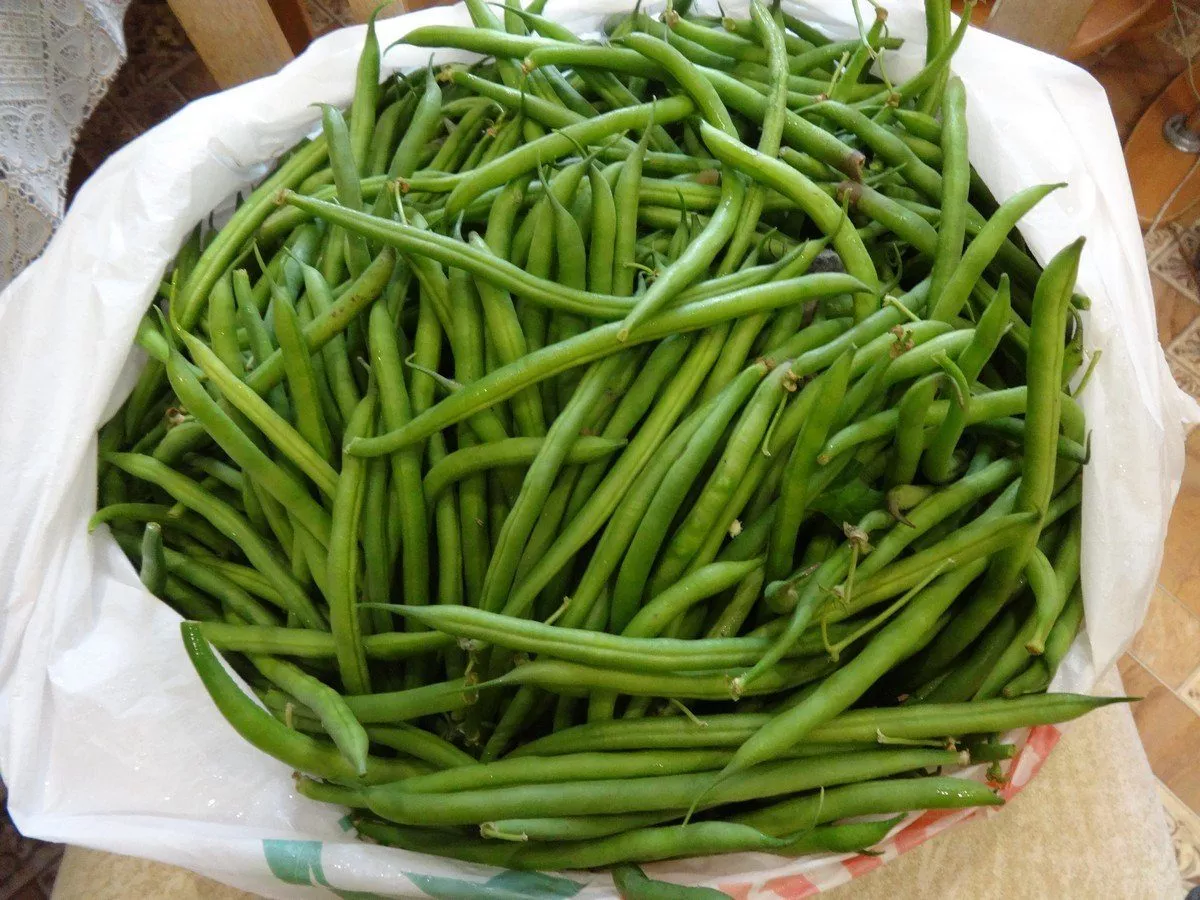
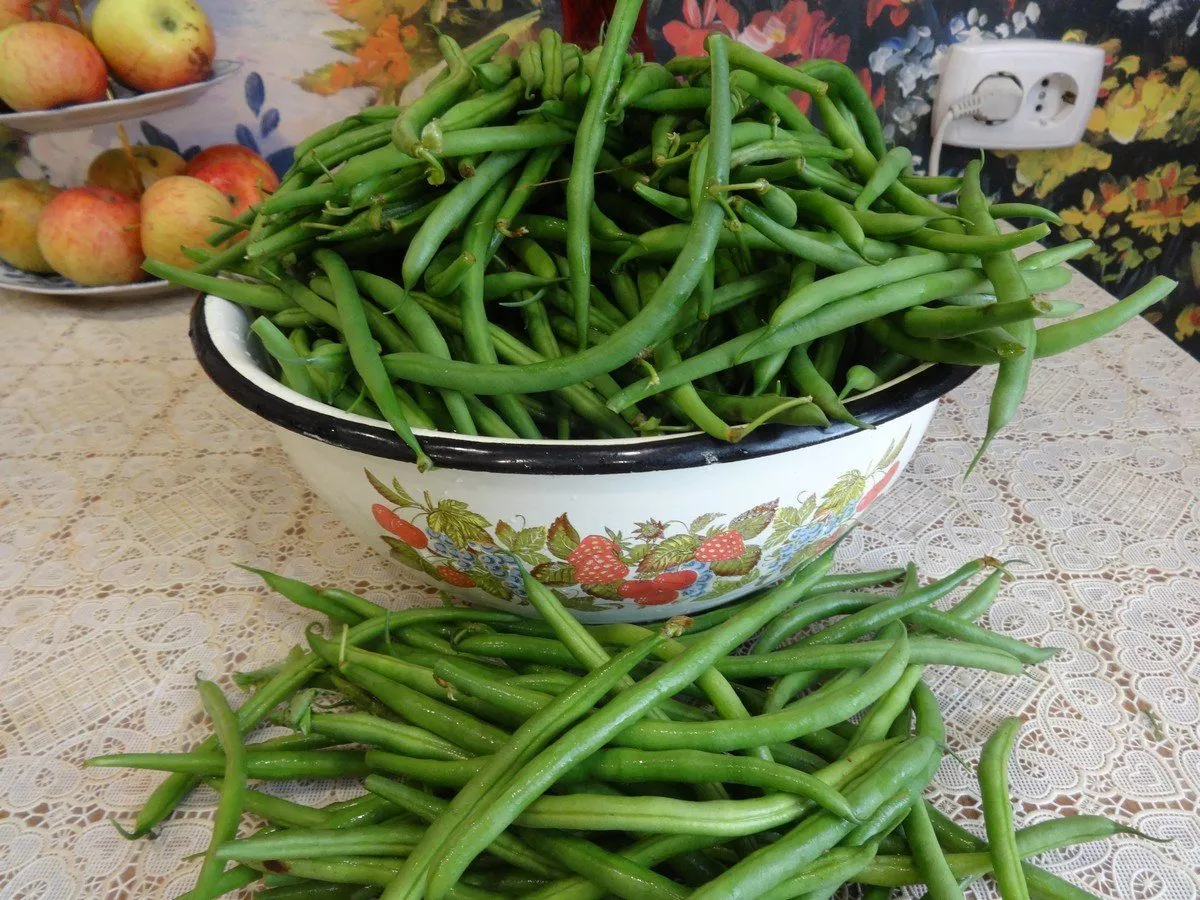
We harvested green beans, also known as asparagus beans. Despite the cold, rainy summer, the beans produced a good harvest. We planted three varieties: Chef, Fiesta, and Zhuravushka. We ended up with two ten-liter buckets of large, beautiful green beans.
To preserve this vitamin-rich vegetable for the winter, we decided to freeze it. Freezing preserves almost all the beneficial nutrients, vitamins, and fiber, and frozen beans contain twice as much protein as fresh beans. Preserving should be done immediately after harvesting. If you leave them for several days, the beans lose their vitamins.
Freezing is the easiest way to preserve beans for the winter. The beans turn out just like those you'd buy in a store.
First, you need to wash the pods well.
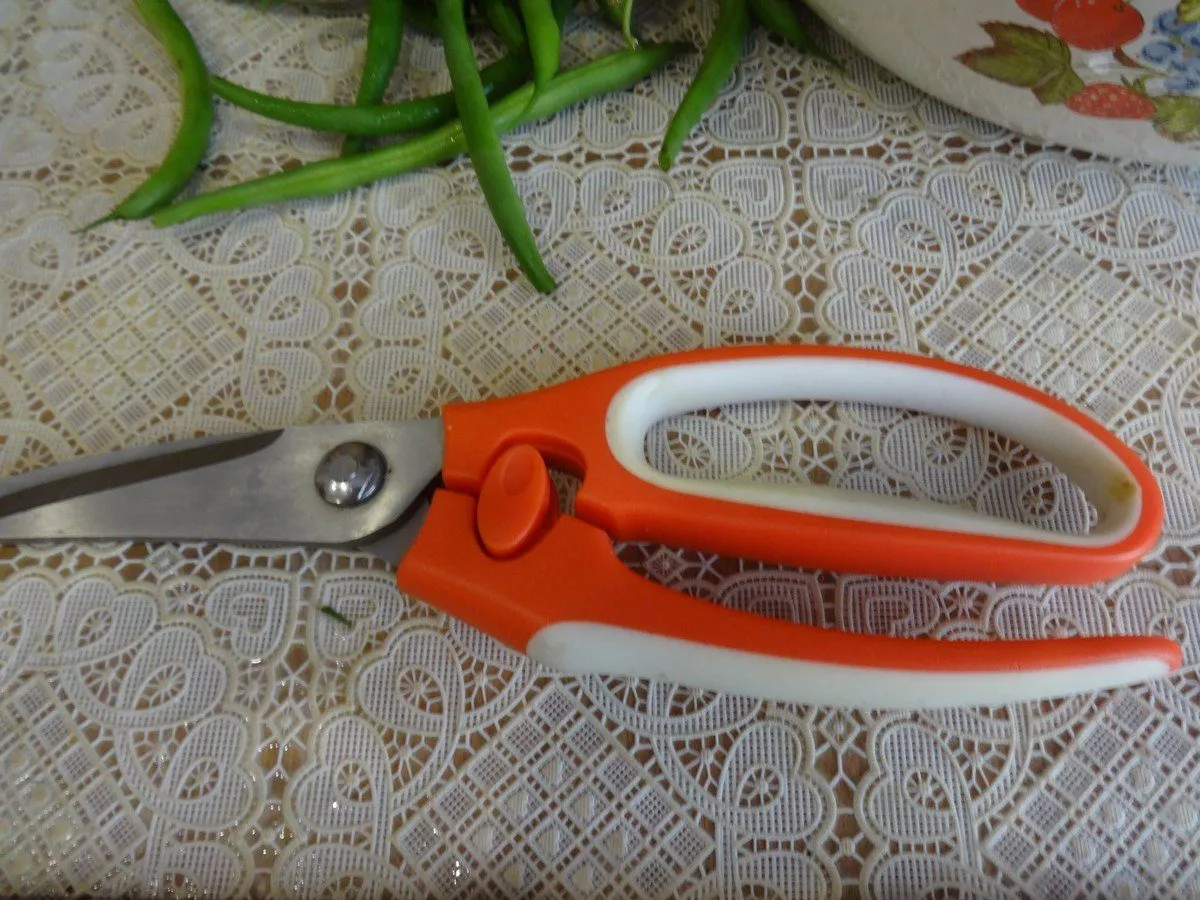
Remove the ends and cut into 2-3 pieces. You can use a knife or scissors, but it is easier to tear off the ends with your fingers, and it is also easier and faster to simply break the pod into pieces.
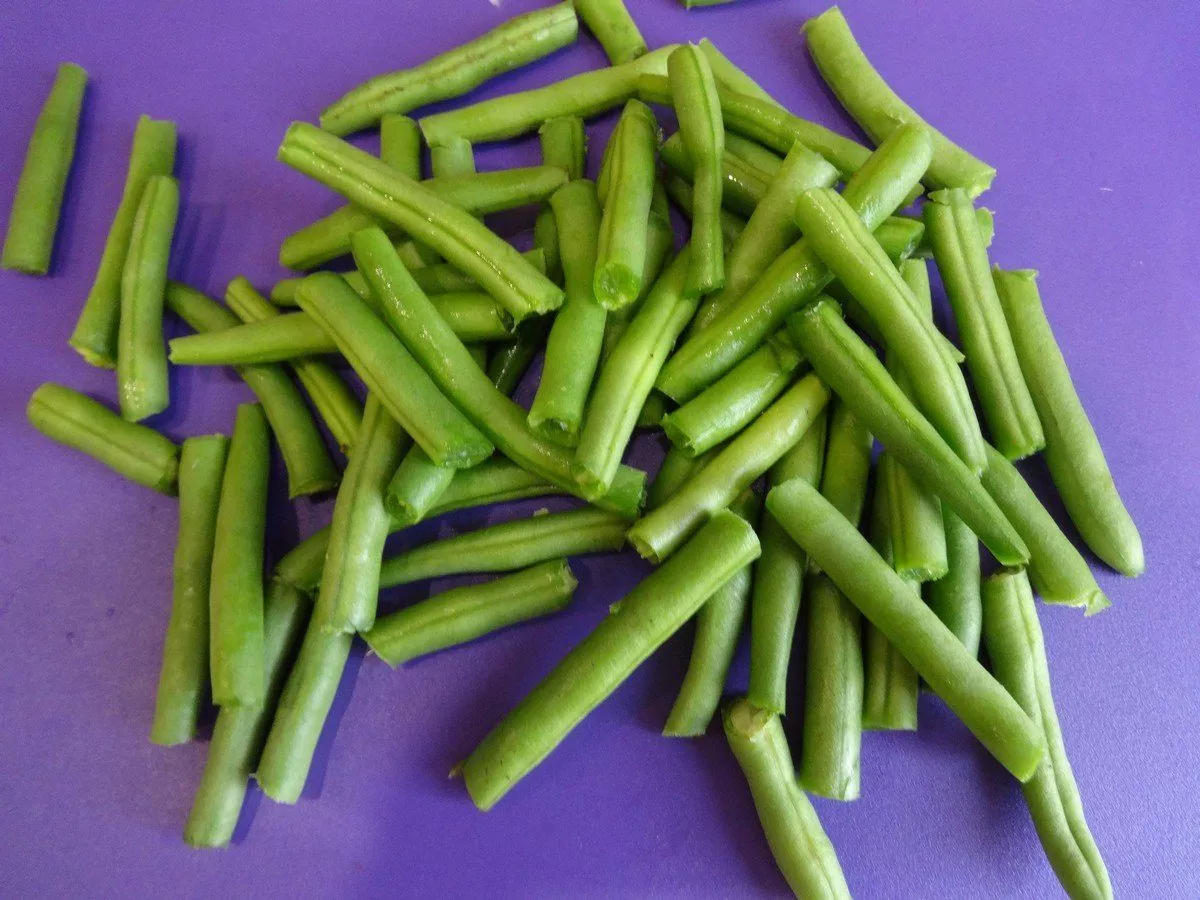
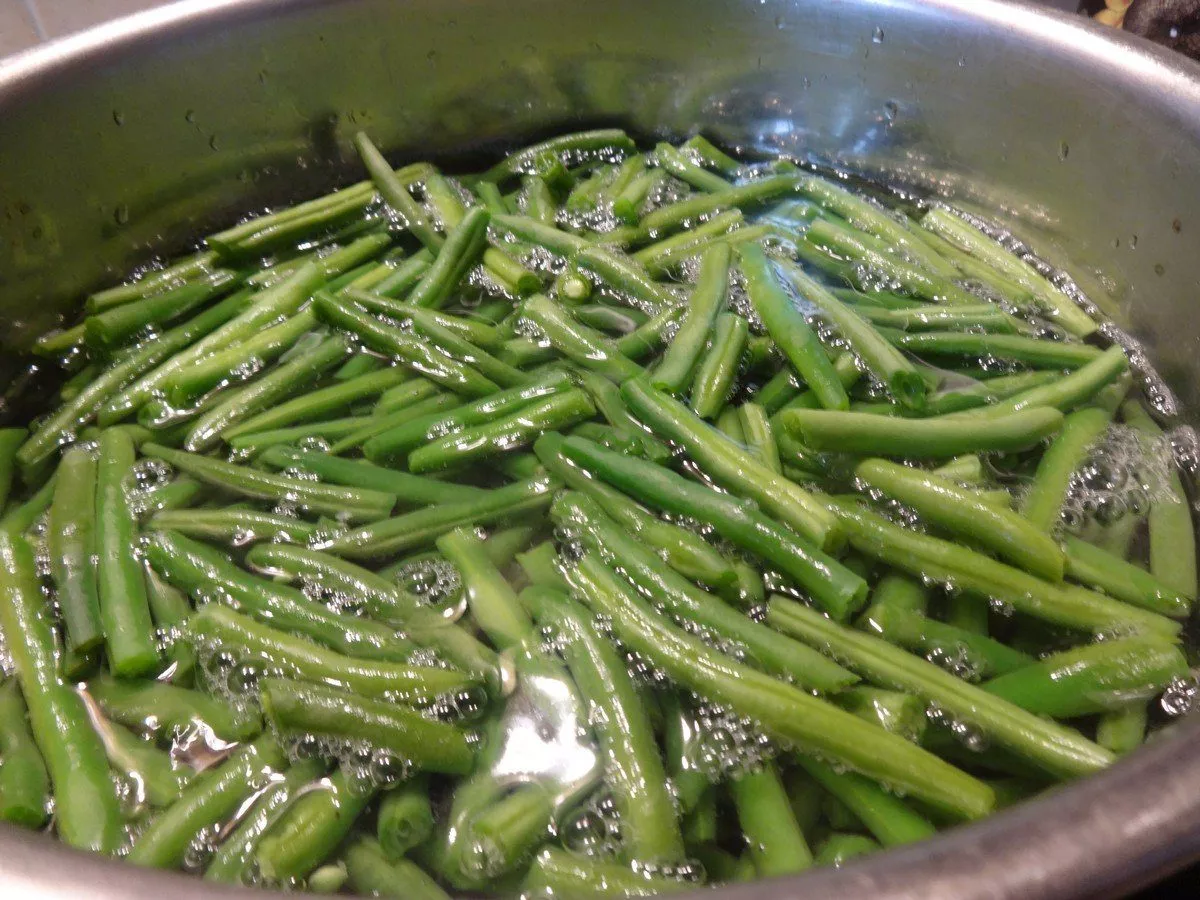
Place the chopped beans in a large saucepan, cover with hot water, and cook for about ten minutes. This will allow the beans to soften slightly. I don't add salt, although many recipes call for boiling beans in salted water.
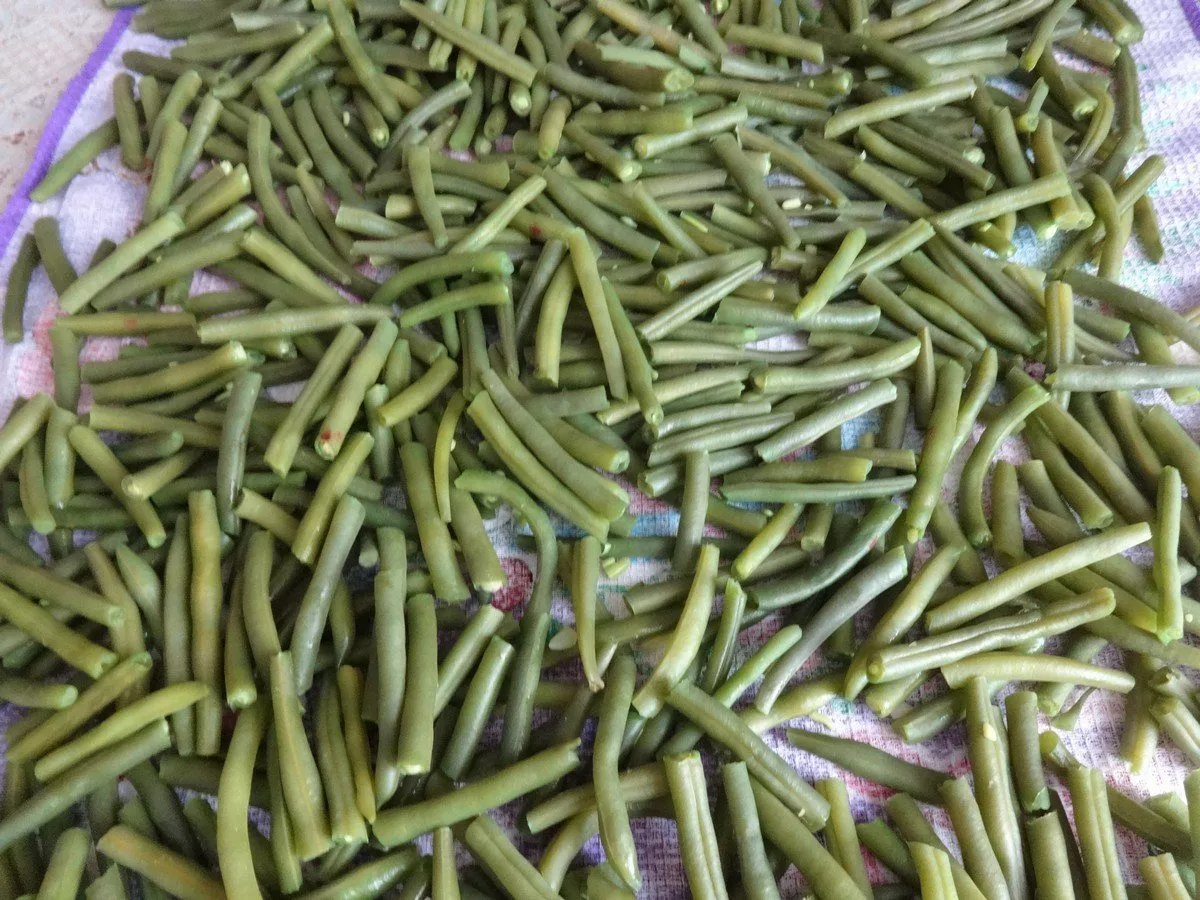
Drain the water from the pan and place the beans on a cloth or towel to dry.
Then place in a freezer tray, stirring occasionally to prevent sticking.
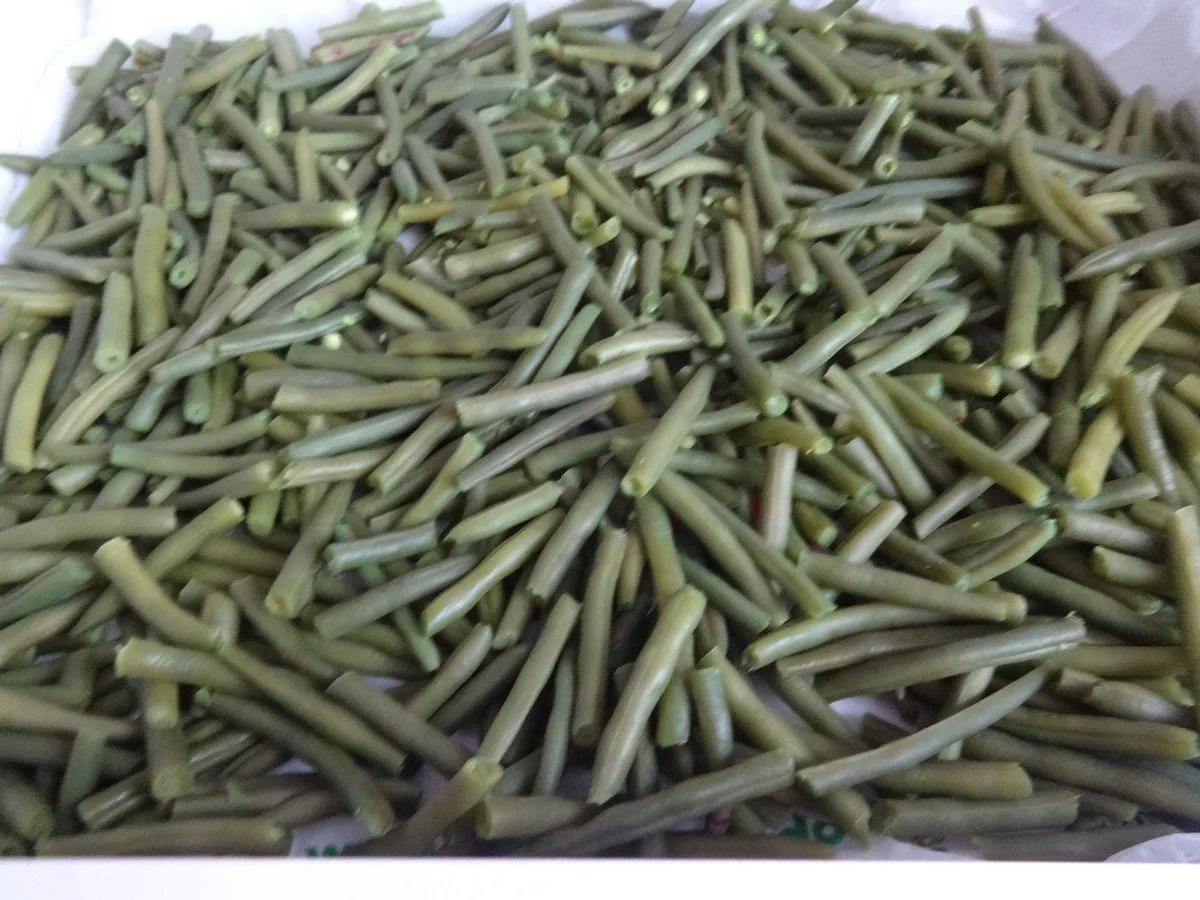
Once the pods are frozen, pour them in small portions into cellophane bags, it is best to take two bags, and place them in the freezer.
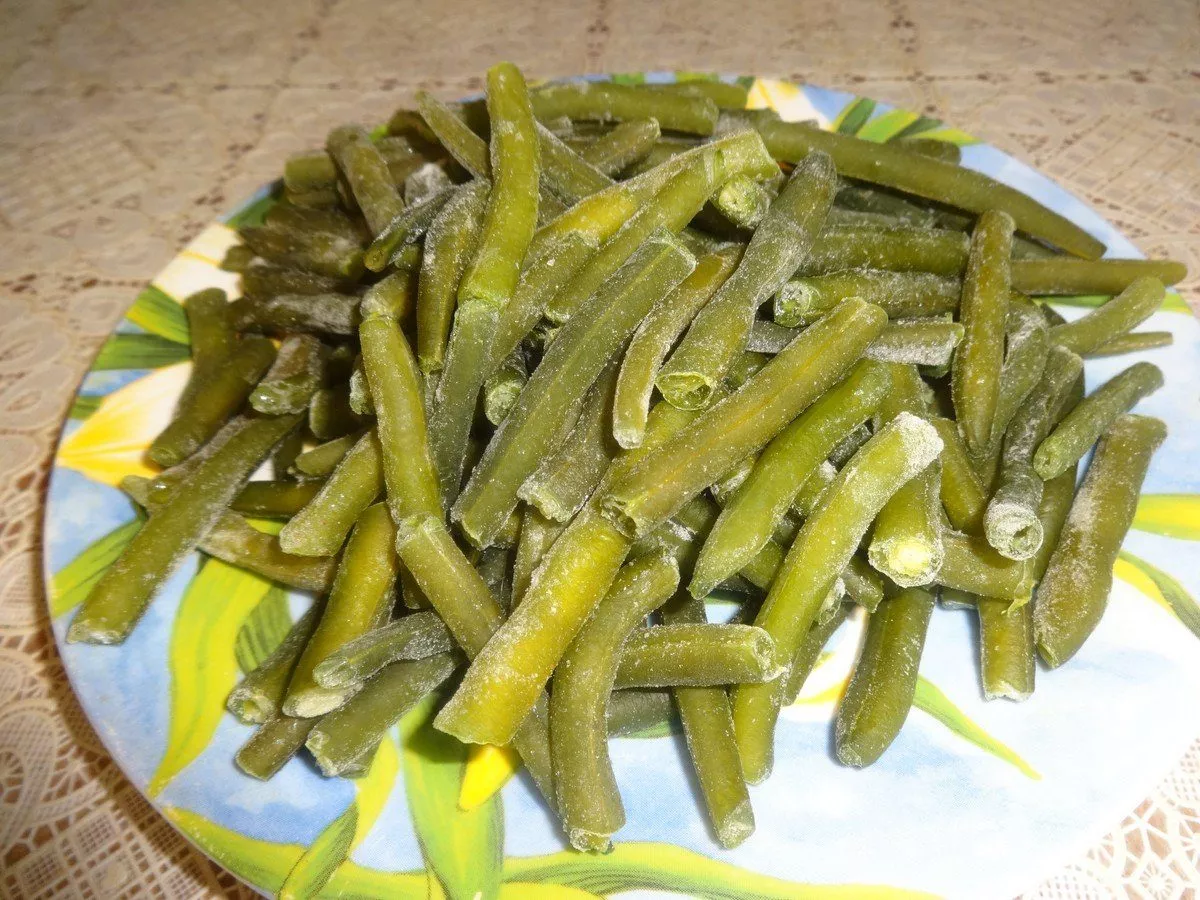
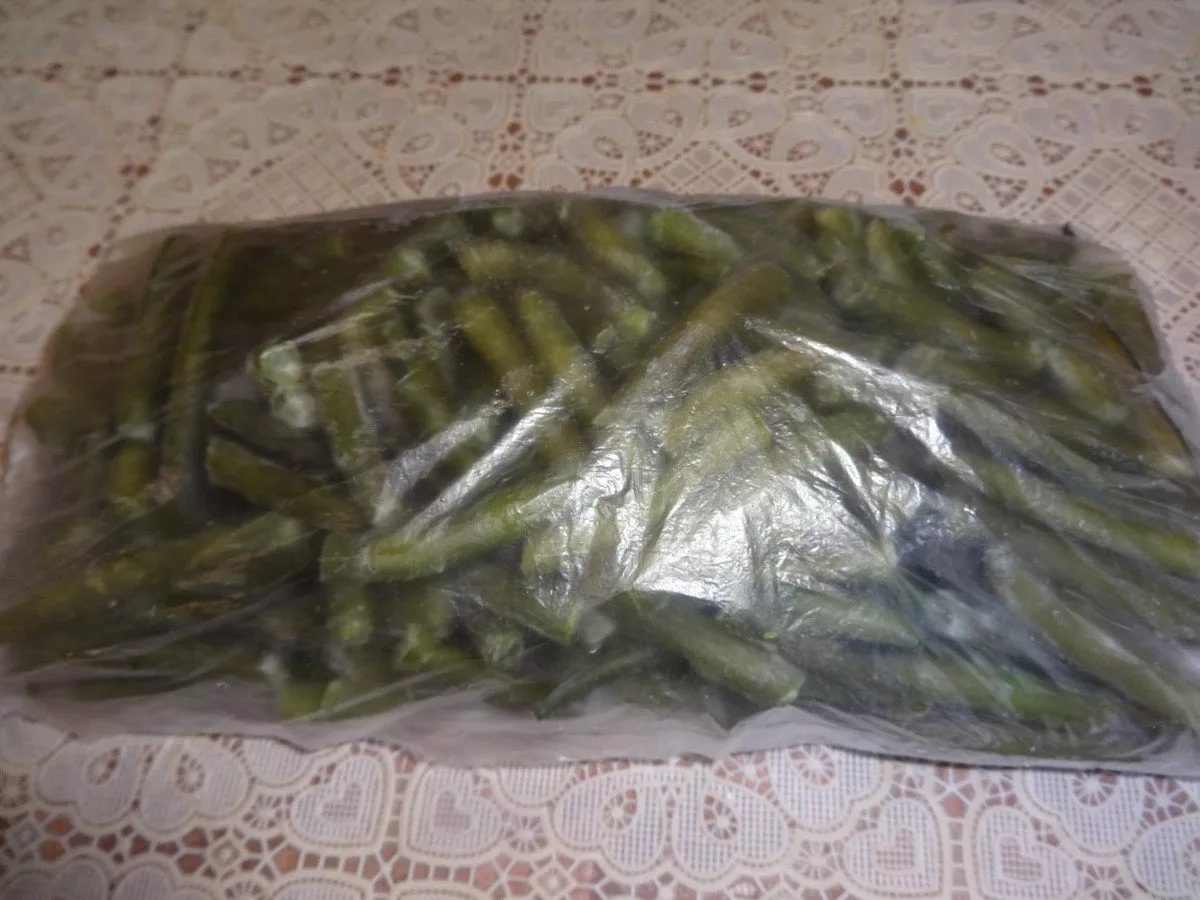
In winter we will prepare various delicious dishes from frozen beans.
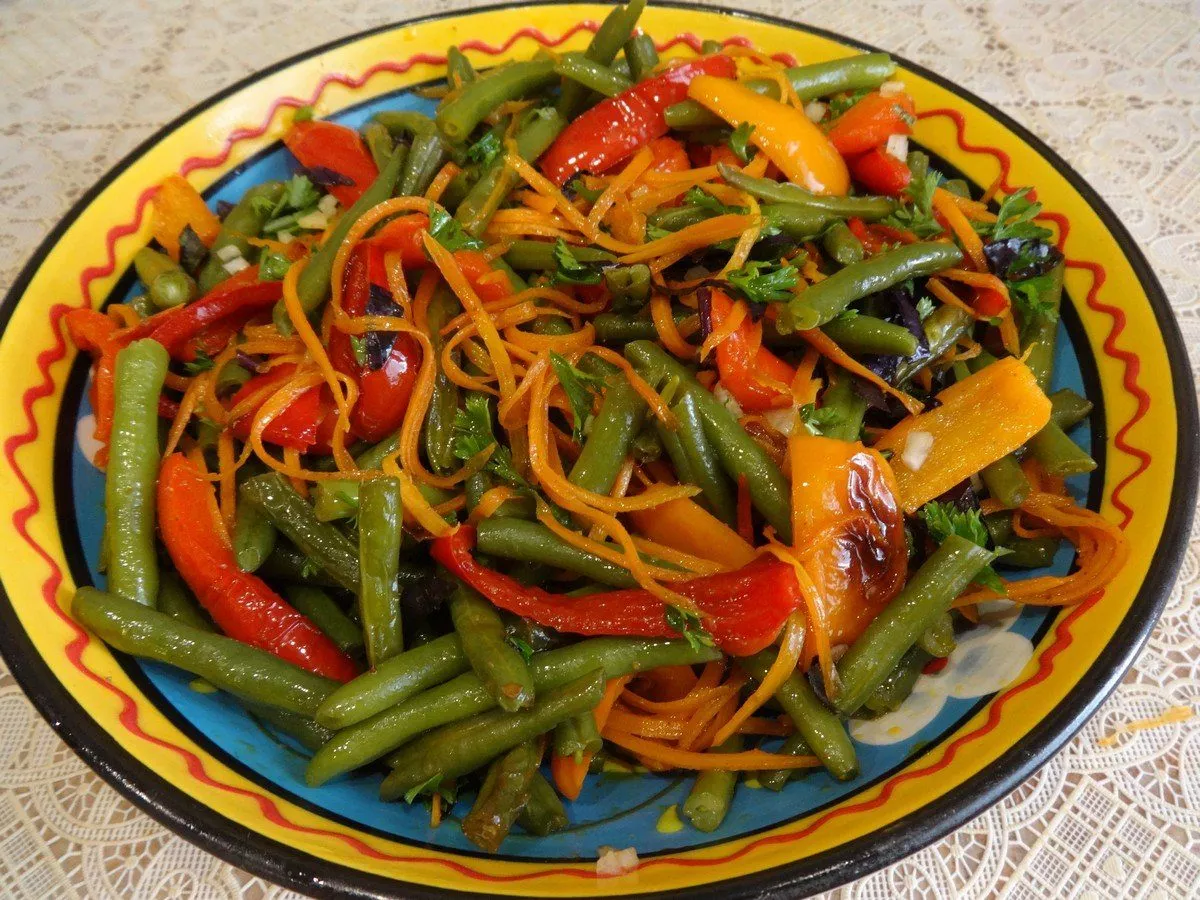
While I was busy preparing beans, I made beans with bell peppers and carrots for dinner.