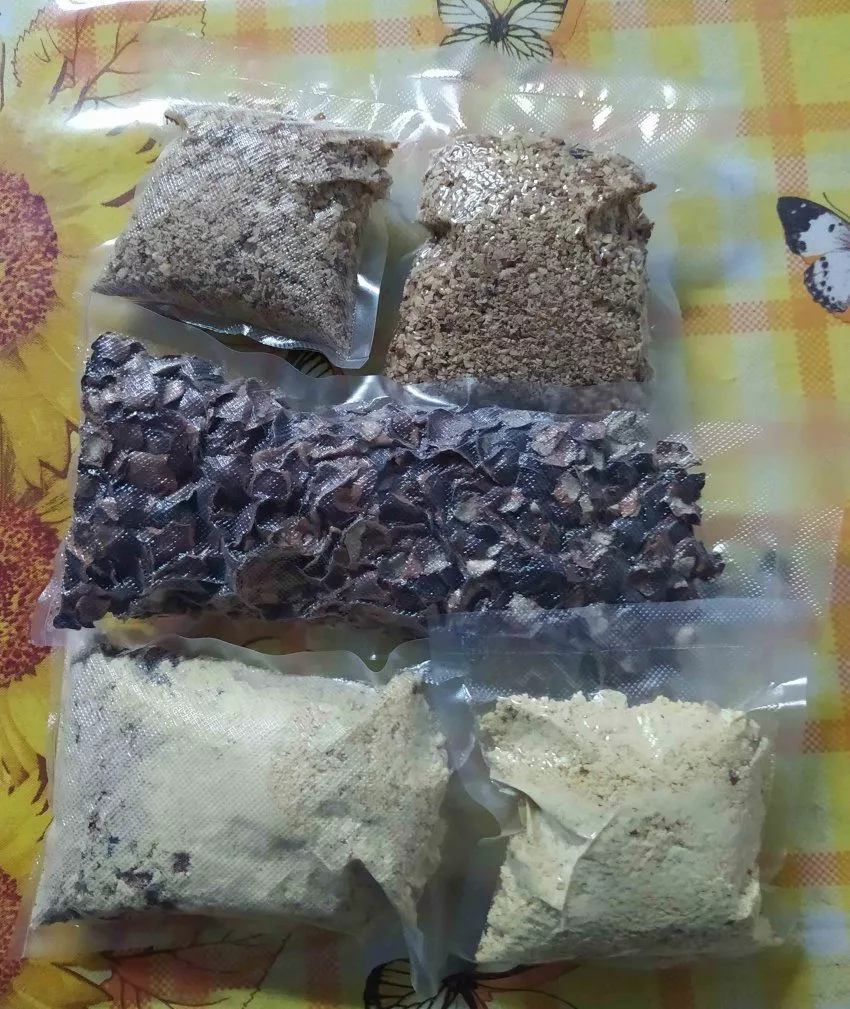
Good afternoon. Today I'll tell you how I harvest medicinal herbs, specifically horse chestnut. Relatives from Siberia sometimes ask me to send them medicinal plants that grow here in southern Russia.
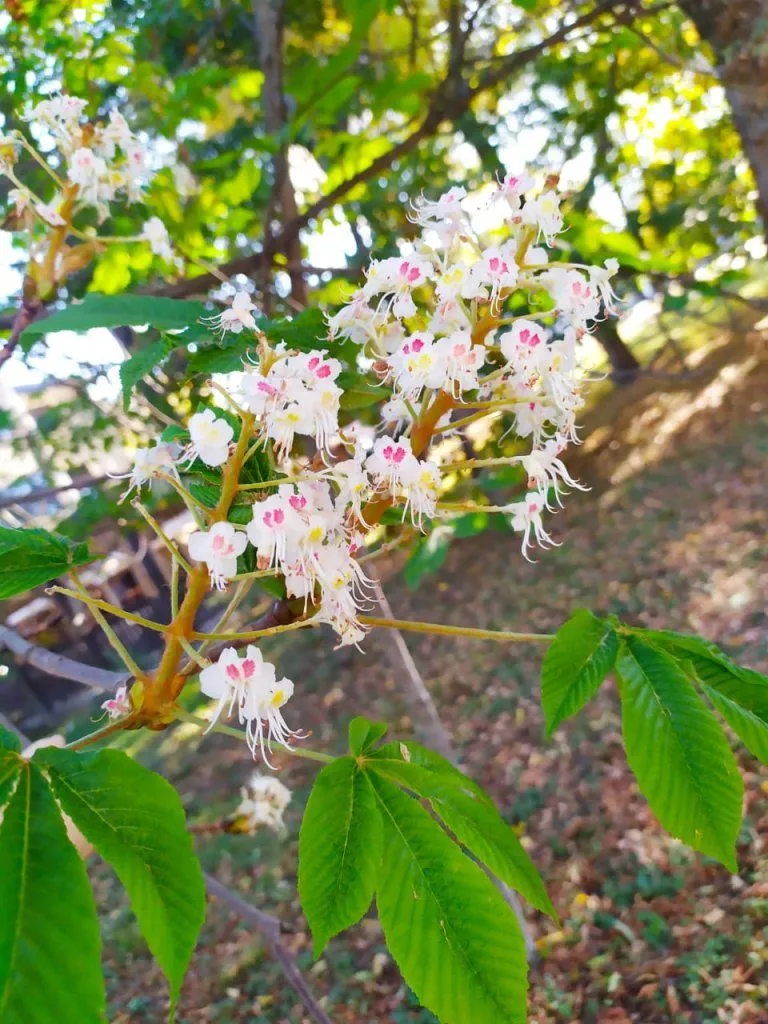
One of them is the horse chestnut. This large tree, up to 25-30 meters tall, blooms in May with beautiful, large (about 30 cm) white-pink inflorescences—candle-shaped flowers. This tree apparently got the season wrong and bloomed in the fall.
Its fruits, which are capsules covered with thorns, are considered medicinal.
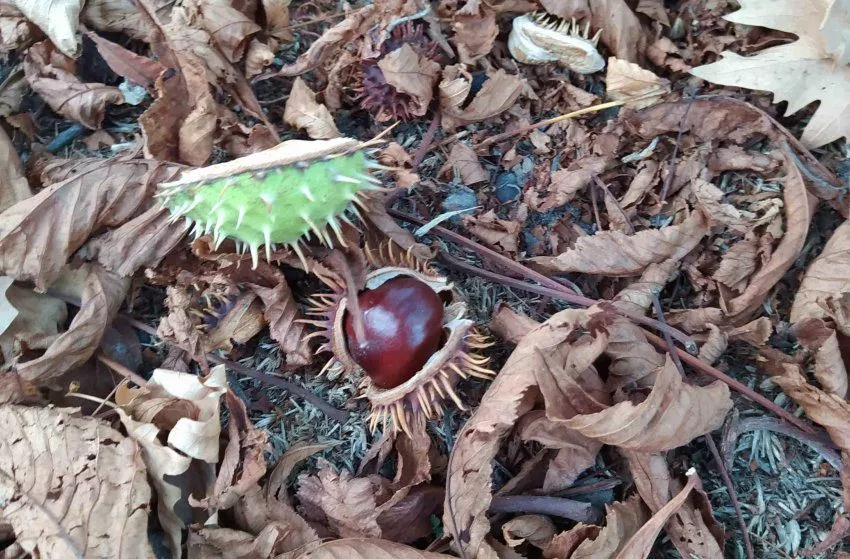
They ripen in September-October. These capsules contain chestnut nuts, which, when dried and ground, are used to treat many ailments.
Chestnuts contain several types of acids. They are also rich in calcium, iron, lecithin, and vitamin C.
In folk medicine, chestnuts are used for varicose veins, to restore circulation, to treat thrombophlebitis, to remove trophic ulcers of the legs, and to treat arthritis. When the fruit ripens, this shell dries and cracks, revealing 2-3 nuts.
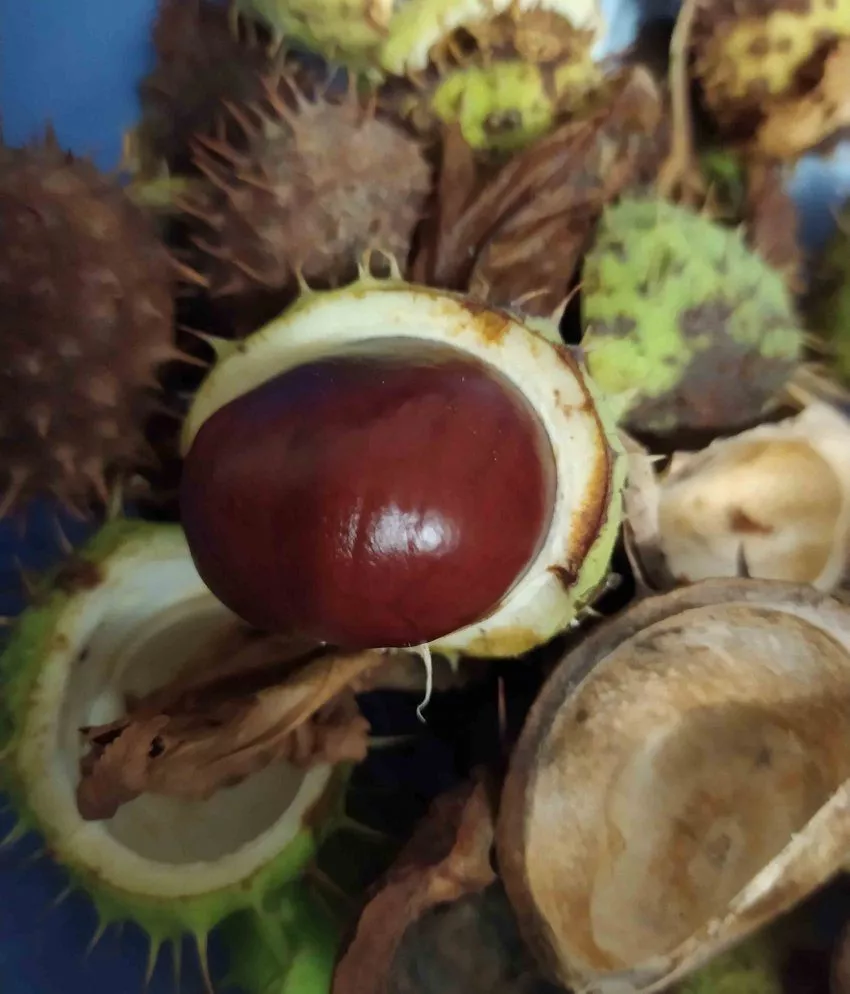
I used to buy ready-made horse chestnut powder at the pharmacy, in a nice little box for over 100 rubles a pack. But this time, I decided to research horse chestnut preparation and make my own powder.
In our town there is a quiet park with a chestnut alley, it is located by the river in a quiet, peaceful place away from roads.
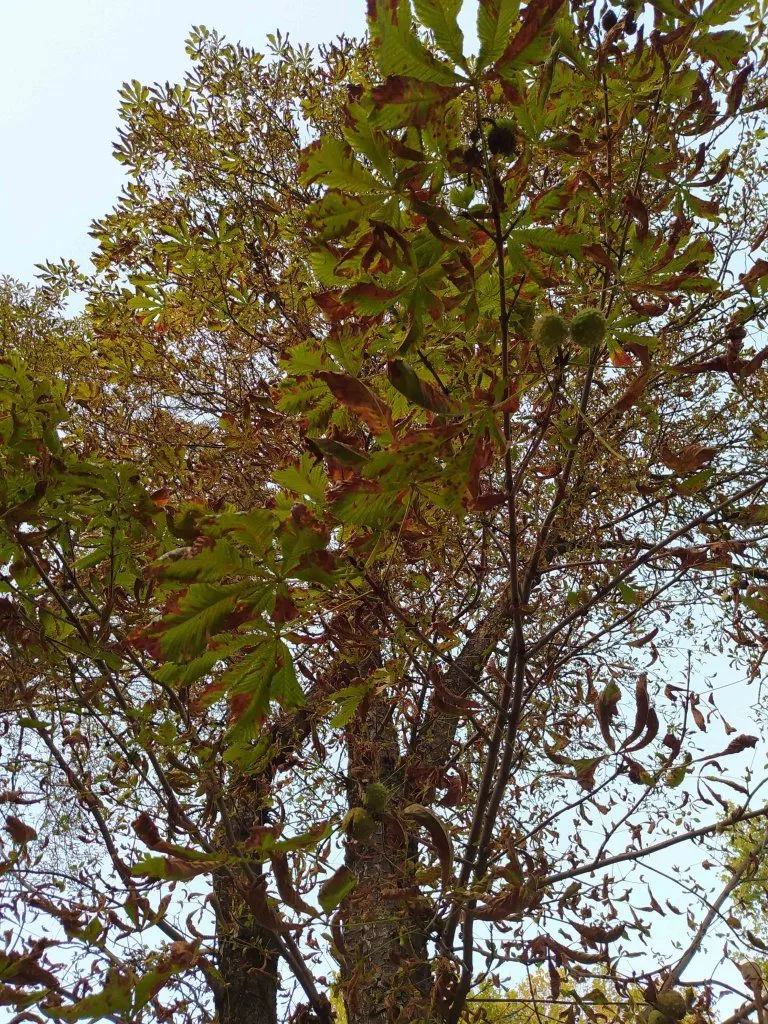
That's where I went to collect nuts.
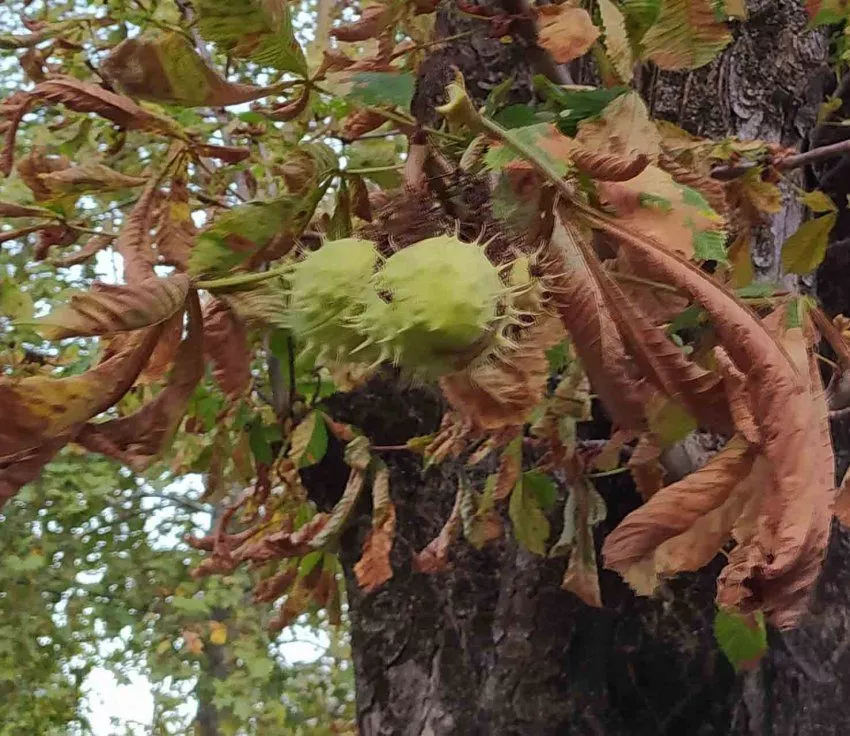
When chestnuts are fresh, their shells are quite soft. But if they sit for a couple of days and dry out, both the shell and the kernel itself harden, making them difficult to peel.
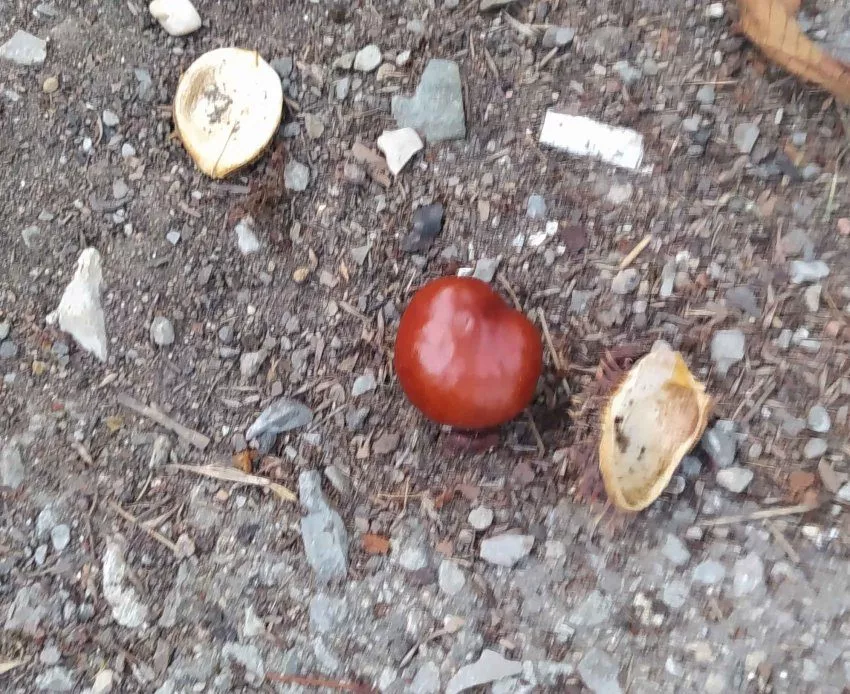
So, after collecting the nuts, I sorted them out at home and carefully freed them from their prickly shells:
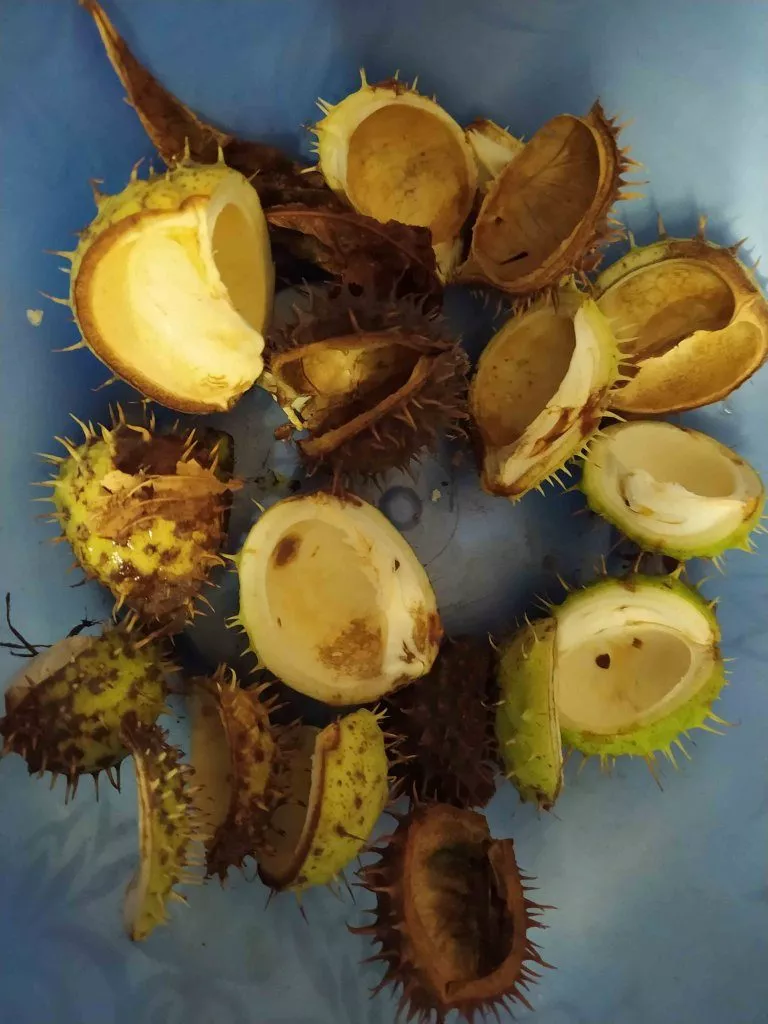
I washed the nuts and carefully, with a sharp knife, cut a circle in the shell of each nut - like this:
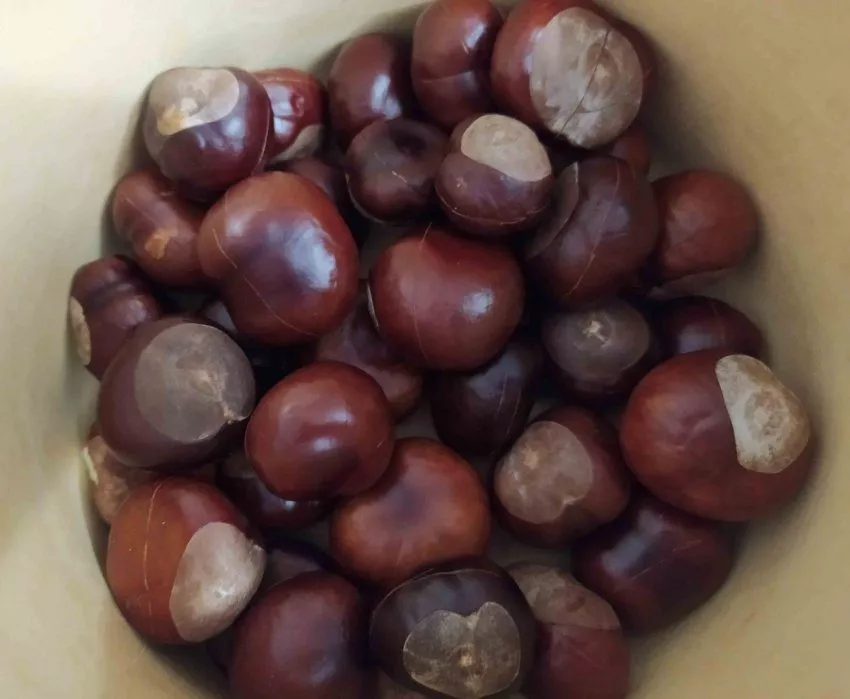
Next, I boiled some water and dropped the prepared nuts in for just a minute. Then I turned off the heat and let them sit in the water for another 15 minutes.
After this treatment, water, getting under the shell, will separate it from the pulp and steam the shell itself:
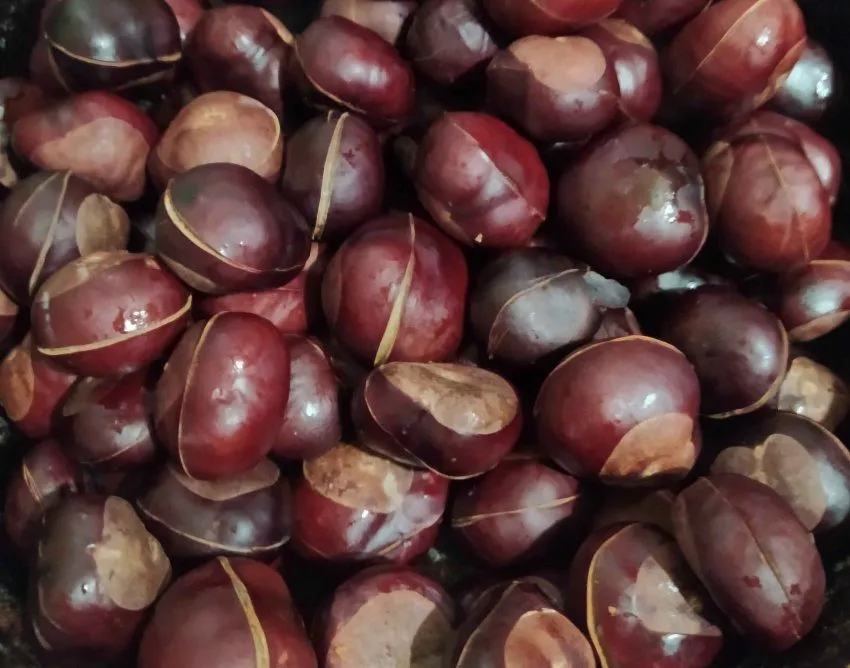
Now, armed with a knife, I carefully remove the nut kernels from the shells.
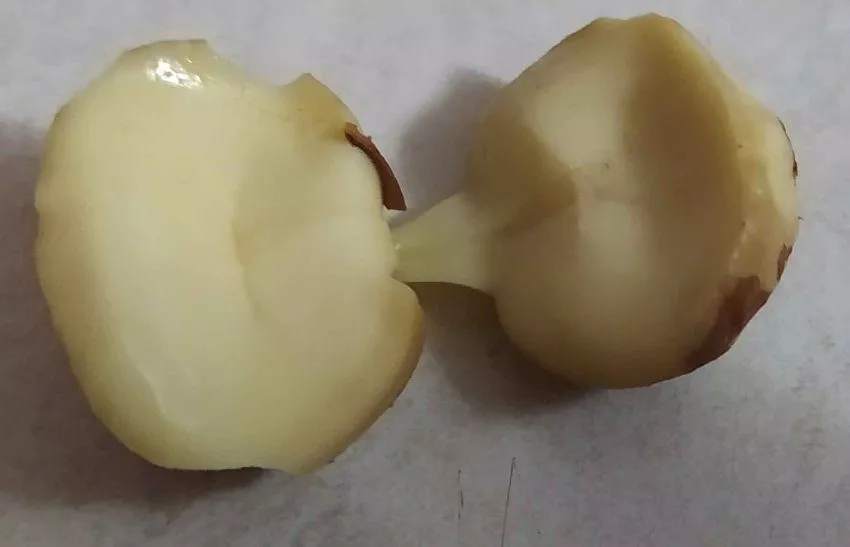
If they still do not come off easily, the steamed shell can simply be peeled like potatoes.
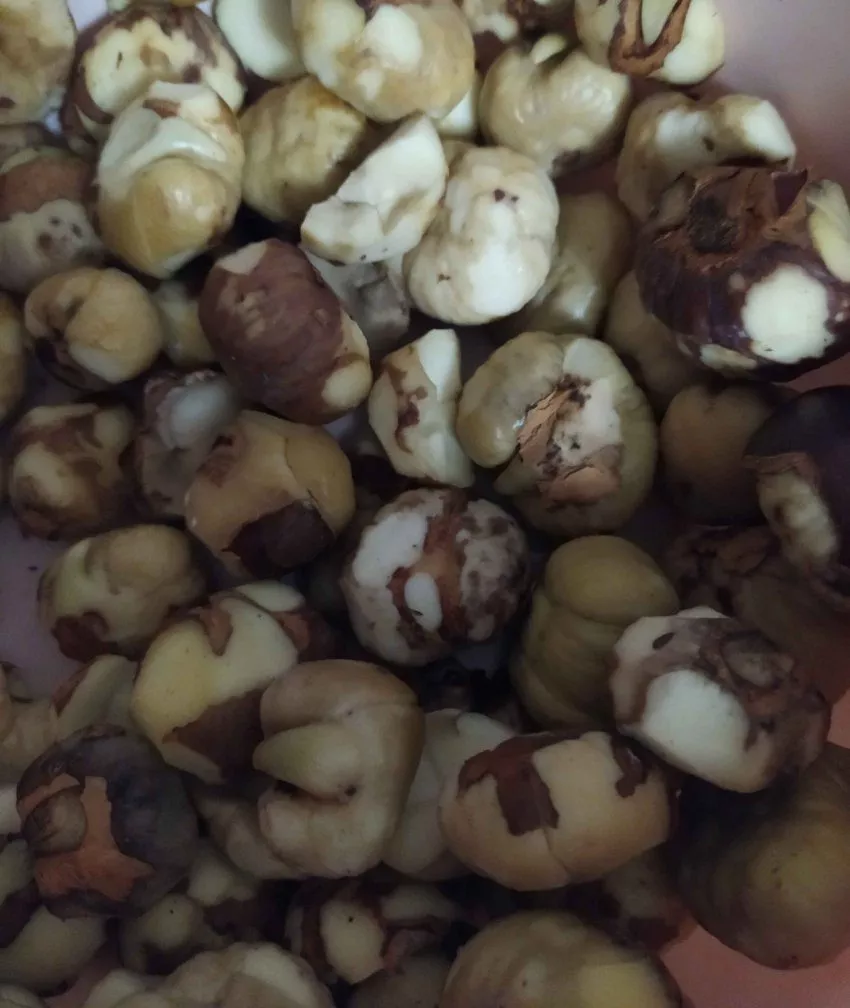
So, the nuts are peeled. The hardest part is over; next, I chopped them into small pieces:
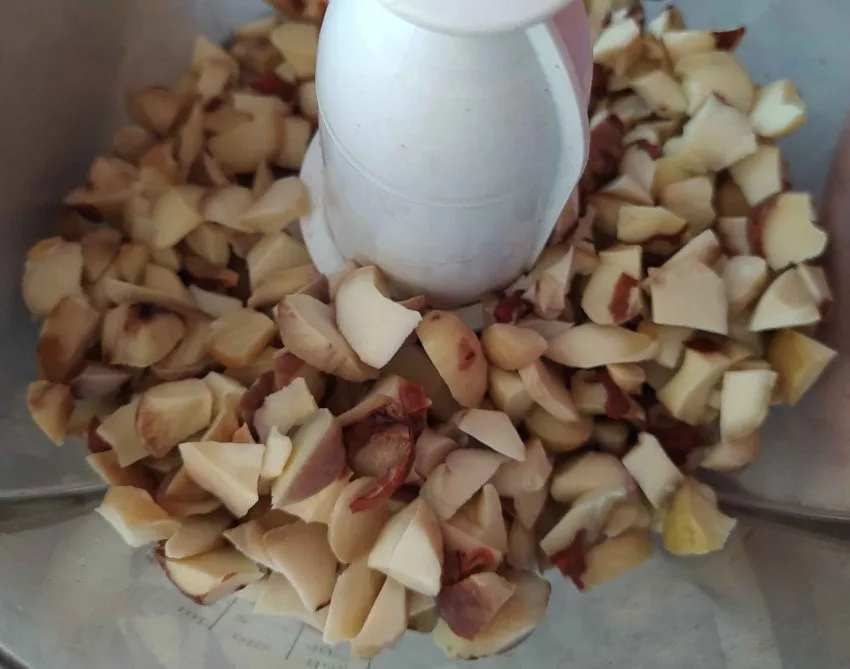
And ground it into powder in a food processor:
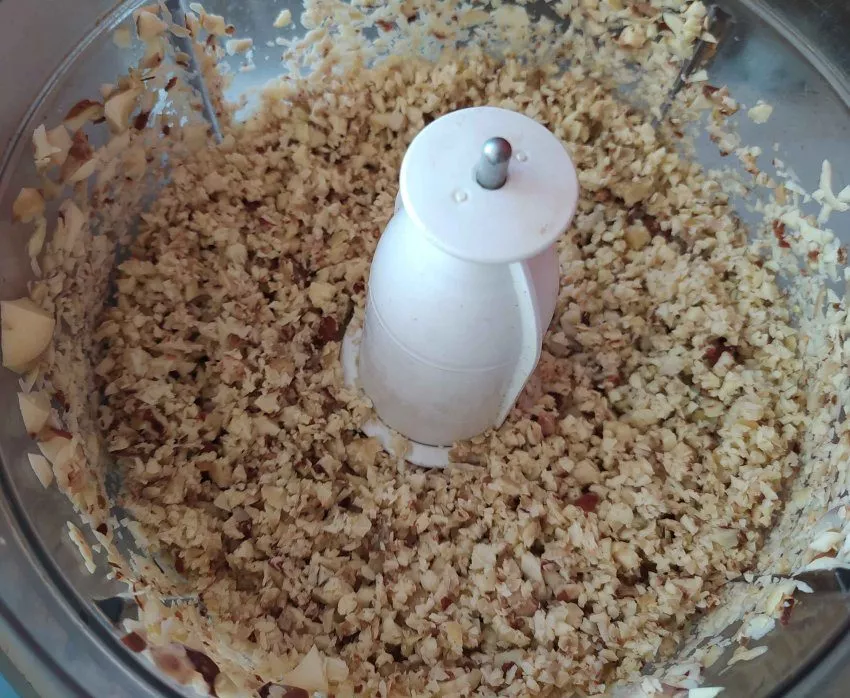
I scattered it onto special trays in the dryer.
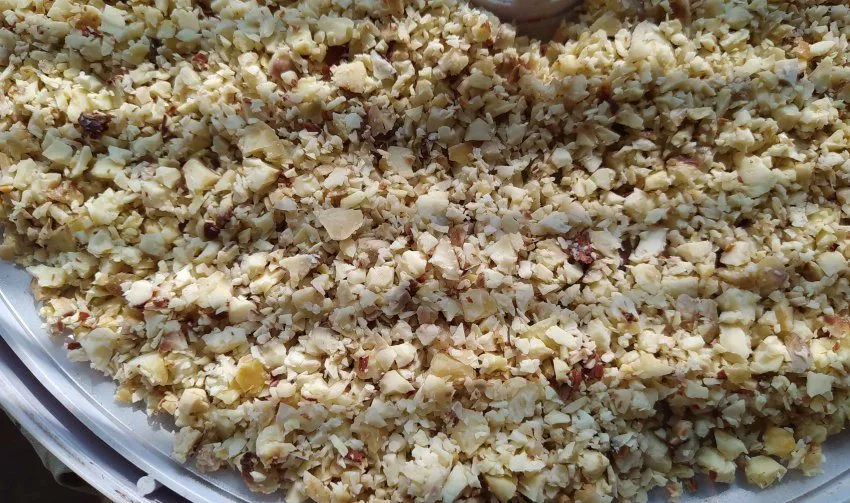
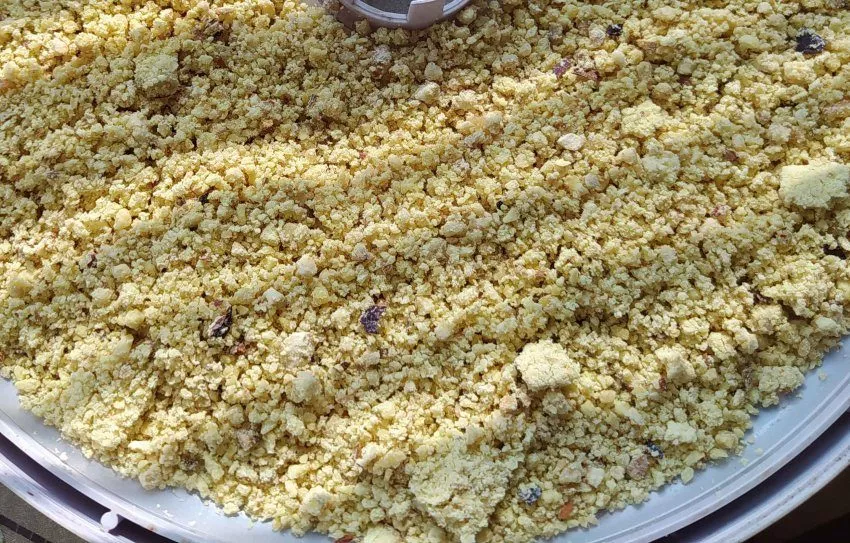
The next day I collected the already dried chestnut powder.
Since all parts of the chestnut fruit are medicinal, the shells should not be thrown away, but torn into small pieces by hand and scattered for drying.
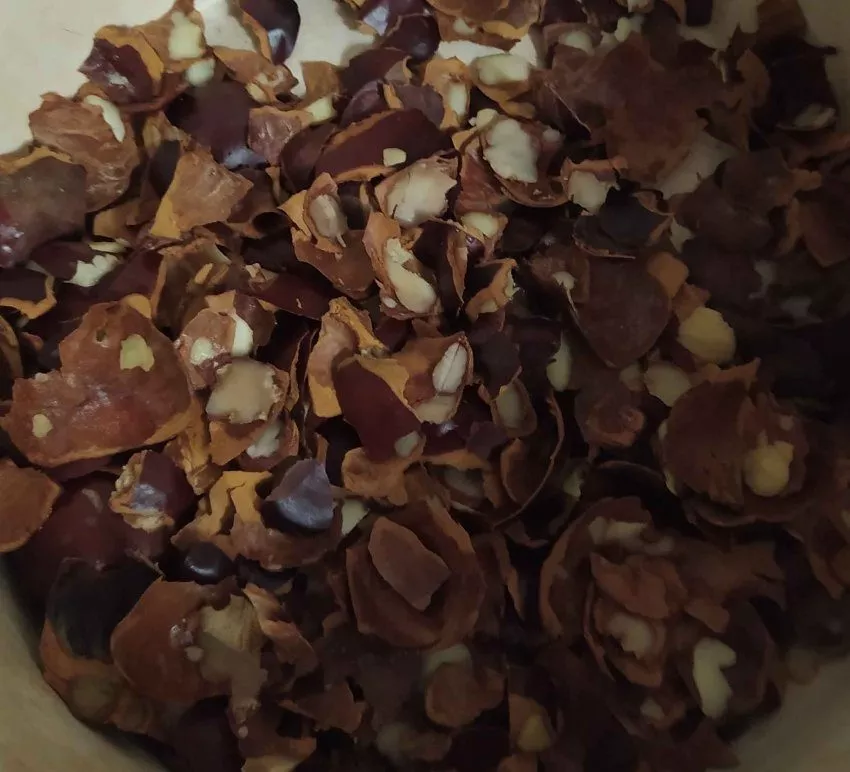
These are the dry shells that came out.
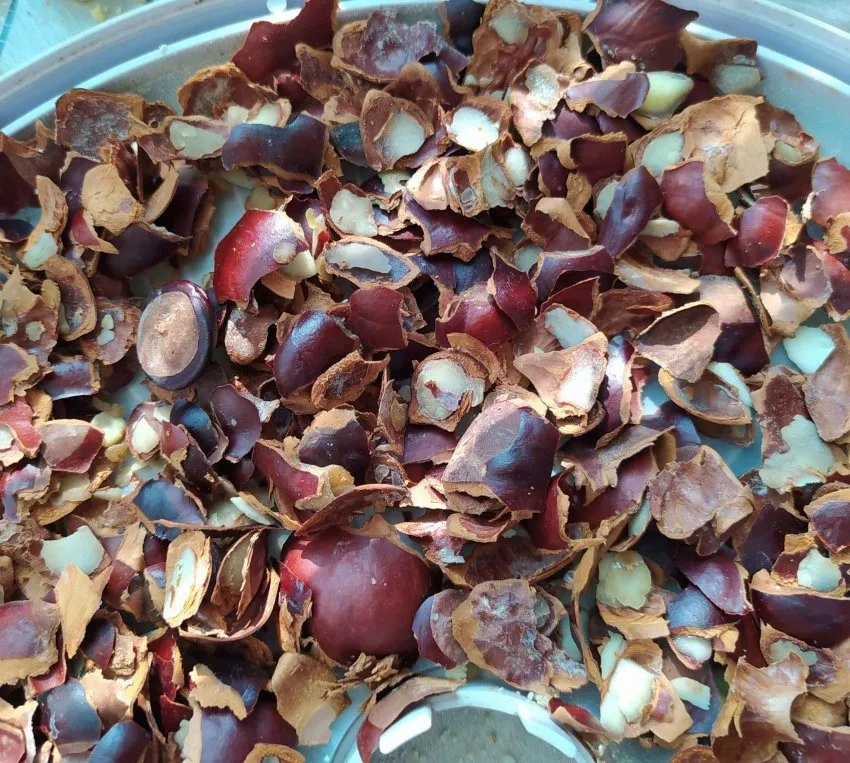
Now you can brew or steep the nut and consume it in the desired dosage. You can either use the kernels separately or combine them with the shell, depending on the recipe.
In the meantime, I packed it in vacuum bags like these.