

Spring has finally arrived! The weather is still cool for the south, with daytime highs hovering around 10-15°C (50-59°F) and nighttime temperatures sometimes dropping to 2 or 3°C (33-48°F). It rains regularly, daily, in fact, and the roads are slushy and puddle-like, leaving the soil damp and heavy. While I'd like to dig in the beds, I don't get a chance every day. So far, I've been forming the beds in stages—the first day, I turned over the heavy soil and picked out some weeds. The second day, I gave the area another shallow tillage. Then, another round of loosening, and it's time to plant.
I remember last year around this time, we had a drought from the very beginning of spring, and people were complaining that entire fields of crops were wasting away without precipitation. But this year, we've decided to bless us with some rain. So we're waiting for warmth and sunshine to get back to the garden.
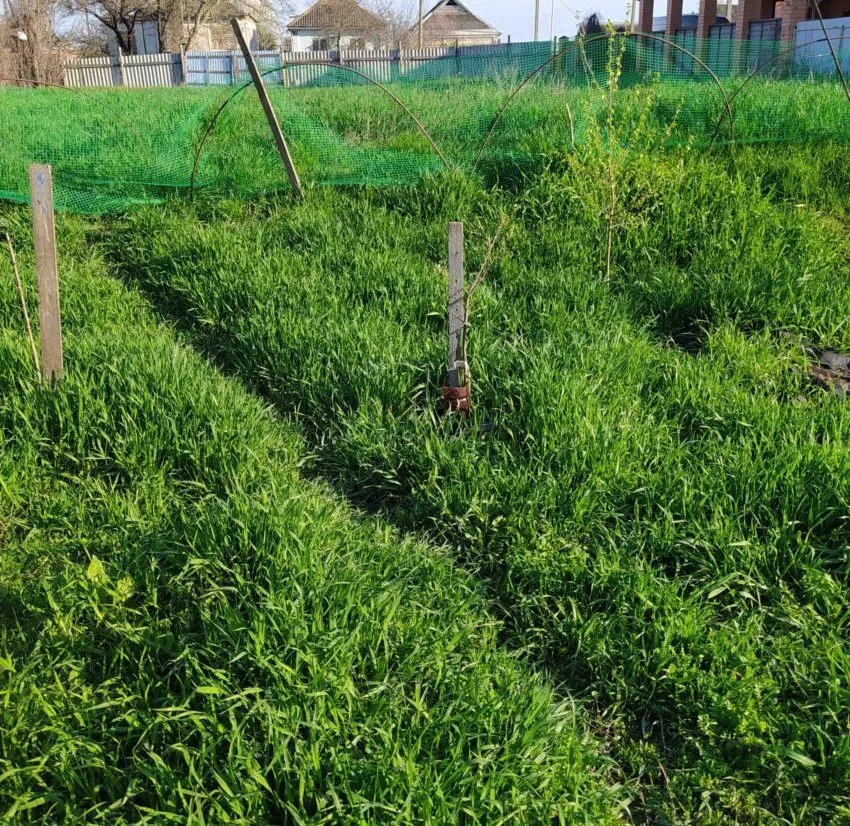
But the grass is enjoying this weather—in the far part of the garden, it's already grown about a foot tall, time to mow! But then again, the grass is all wet, so I'm waiting for a dry day to go over it with the electric mower.
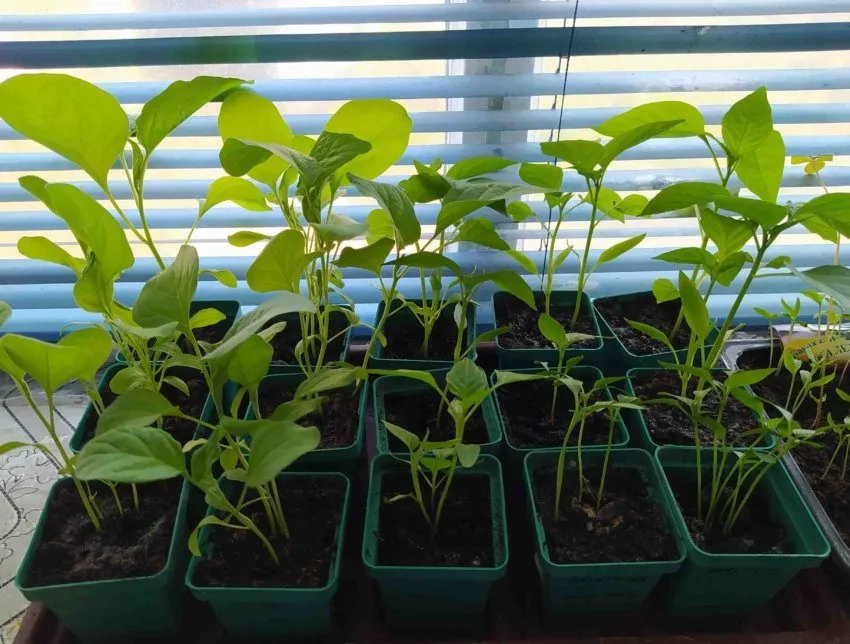
So far, we've only managed to plant some of the tomatoes, as it's still cool at night, and the first seedlings have already started to grow and are asking to be put into the garden bed.
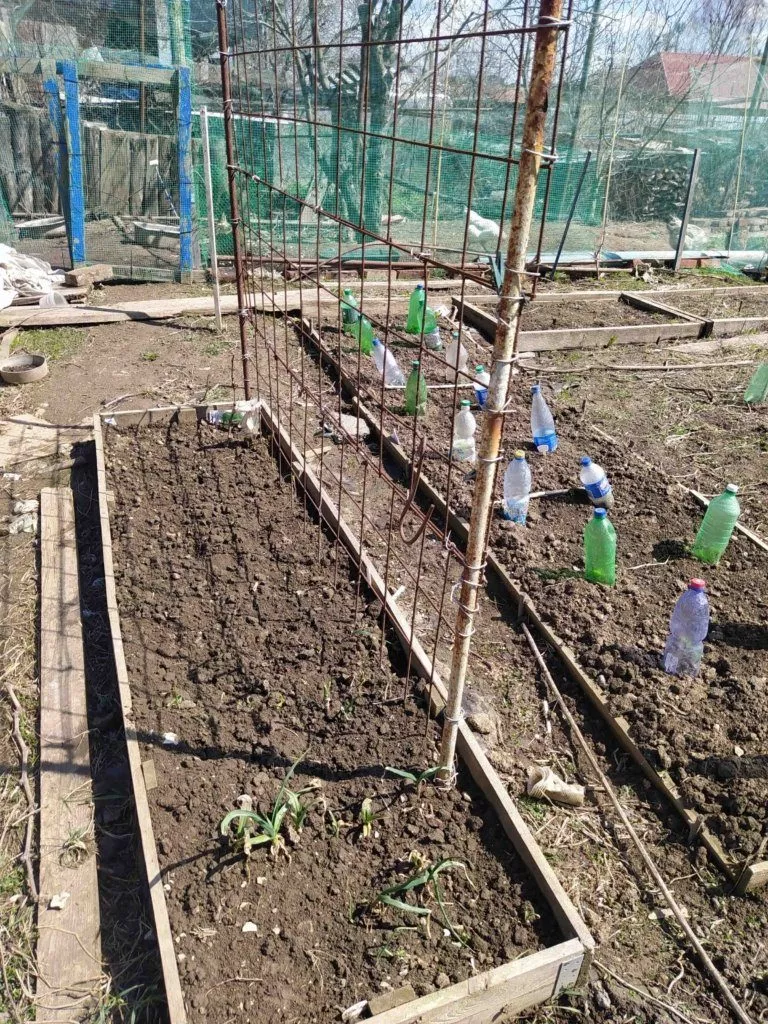
I took the risk of planting some bottle bushes, fortunately I had stocked up on them last summer.
We don't plant a lot of vegetables; at a family meeting, we decided it would be more profitable to buy potatoes, for example, at the market during the season. Besides, the garden isn't even 200 square meters, and the climate allows us to grow fruit trees (cherries, peaches, plums, and others). Overall, 80% of the garden is garden space, and the other 10-20% are beds.
I combined tomatoes with radishes and beets. By the time the large plants emerge, the radishes will have already faded. I plan to combine peas with corn, and dill with onions, since by summer there won't be any dill left. Again, because of the heat, it doesn't grow for me in the summer. In the spring and early summer, it's great and thick, but then it bolts and dries out, so for the second half of summer, only onions will be left to grow.
Since I oversowed a bit of seedlings this year, if a severe frost hits, I'll have something to replace the fallen ones. And if there's no frost, the already planted plants will root better and earlier.
First, I planted tomatoes in the open ground under the bottles; these were planted about a week and a half ago. I've already removed the bottles and covered them with plastic wrap.
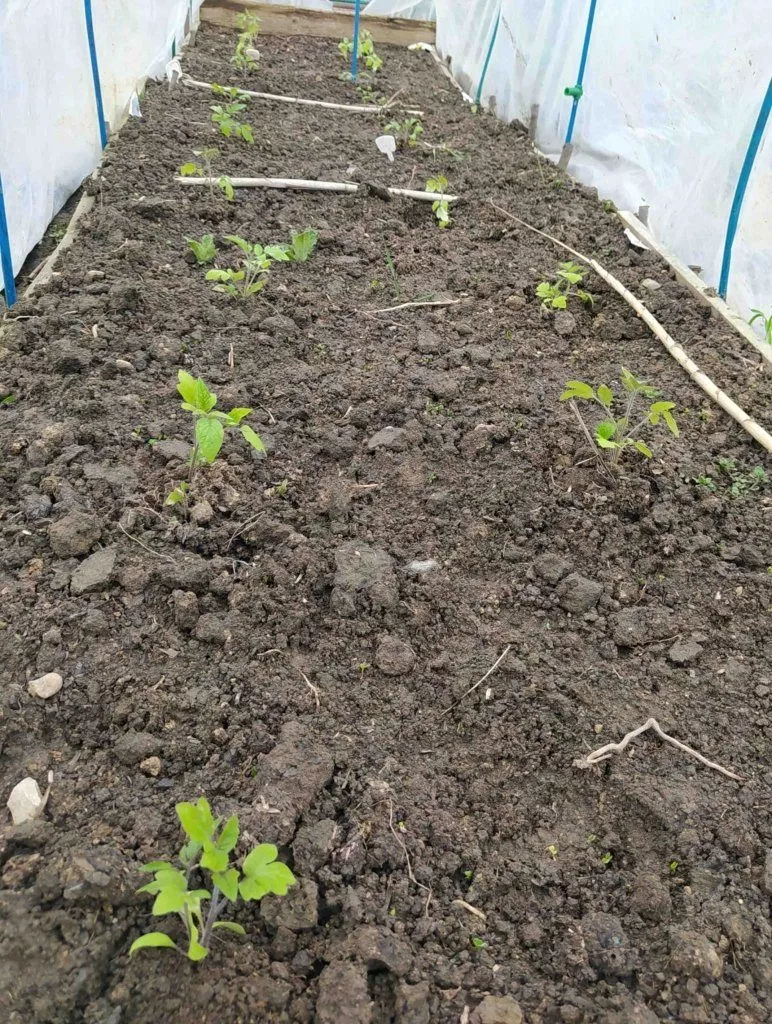
This is the second batch:
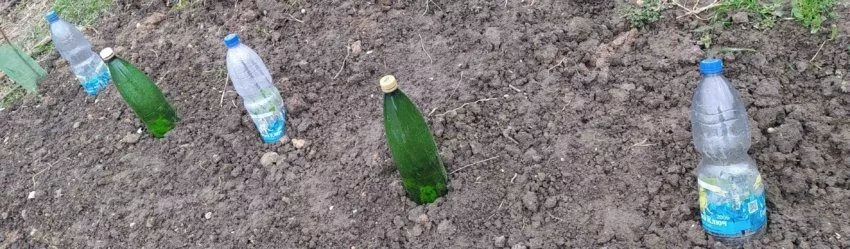
I planted them three days after the first ones. And, seeing that all the tomatoes planted in the ground were growing well so far, I decided to transplant some of the peppers into the garden. Tomorrow, the eggplants are next. For now, everything will be in mini-greenhouses made from bottles, once the warm, sunny weather sets in.
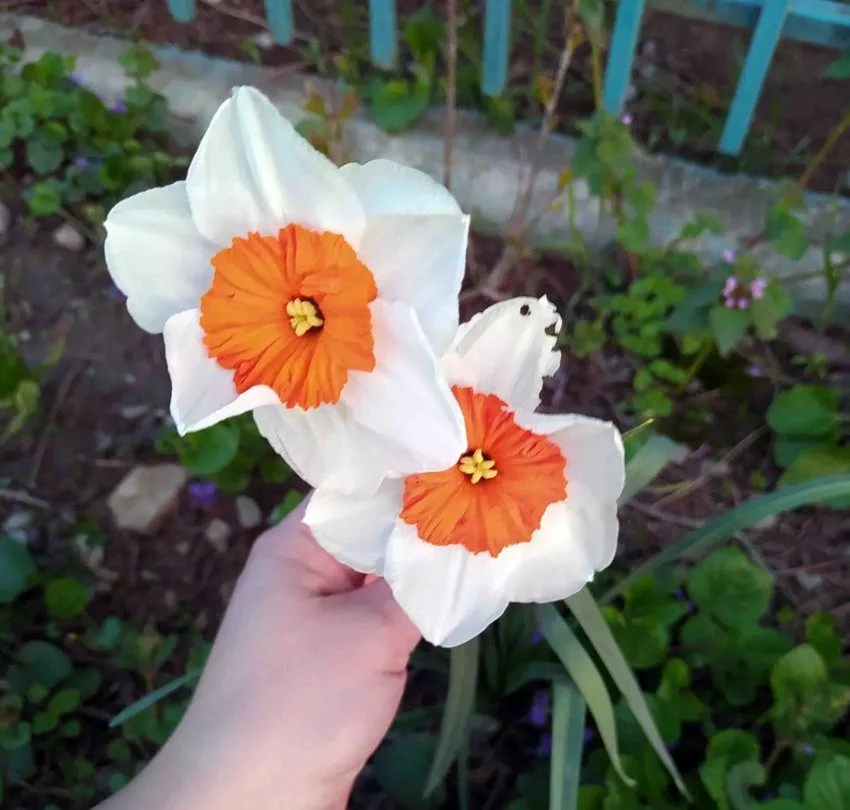
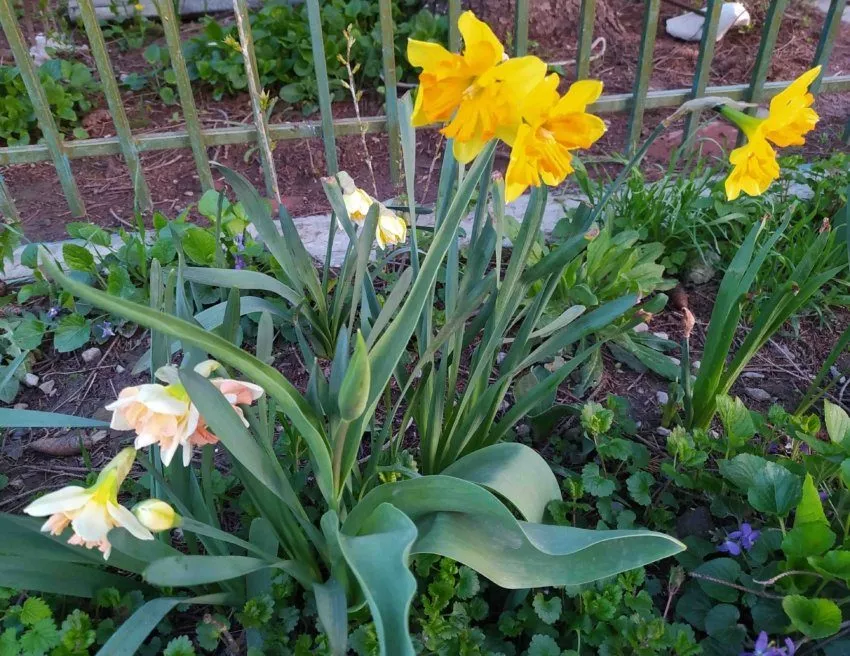
Spring blooms of plants and fruit trees are in full swing. These patches of daffodils and hyacinths are spreading out in the garden and along the fence.
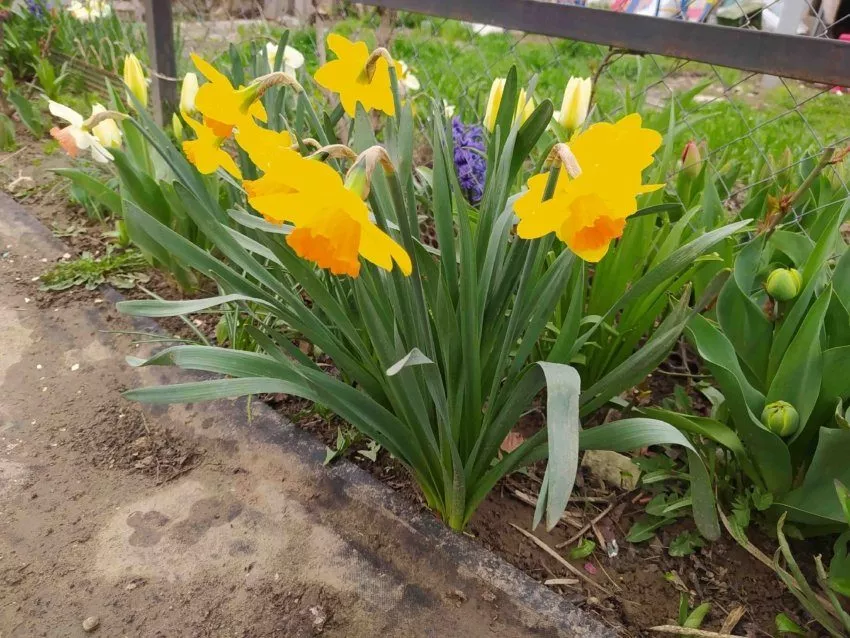
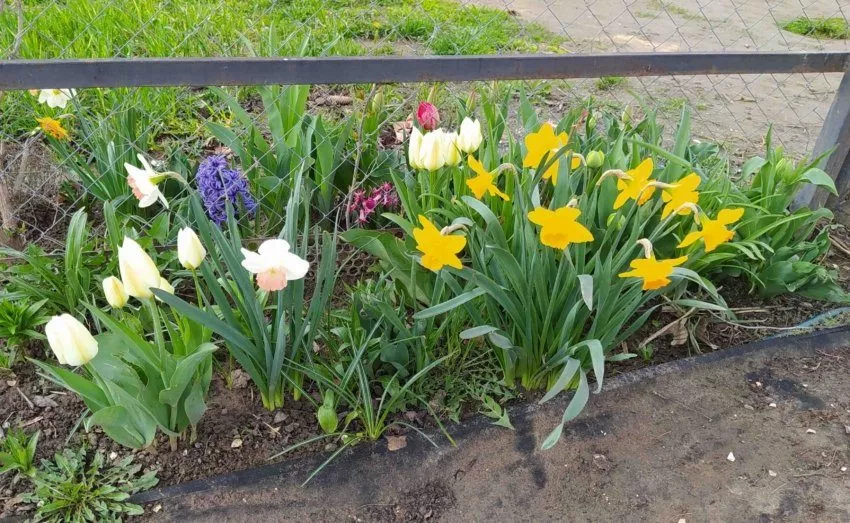
And these:
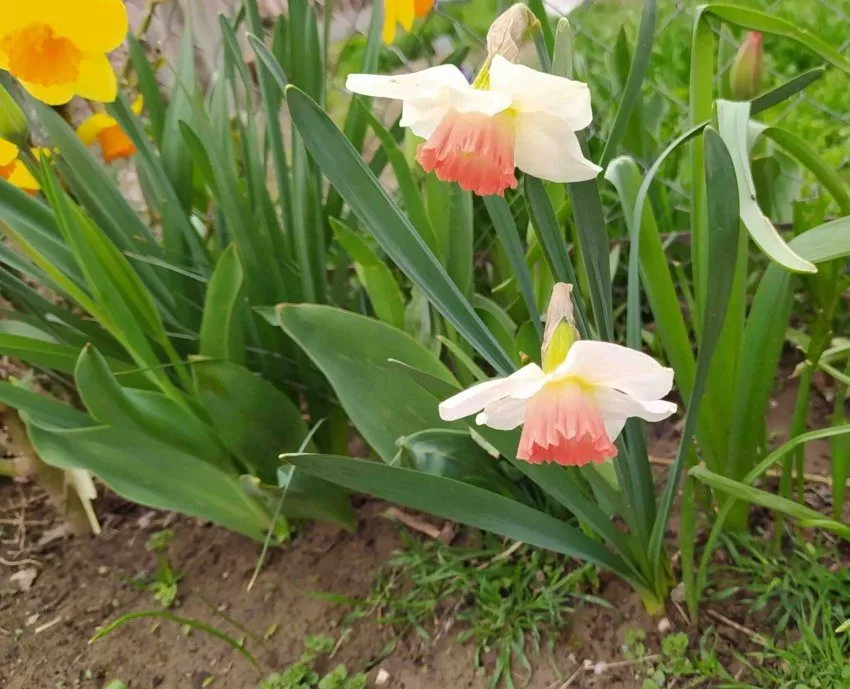
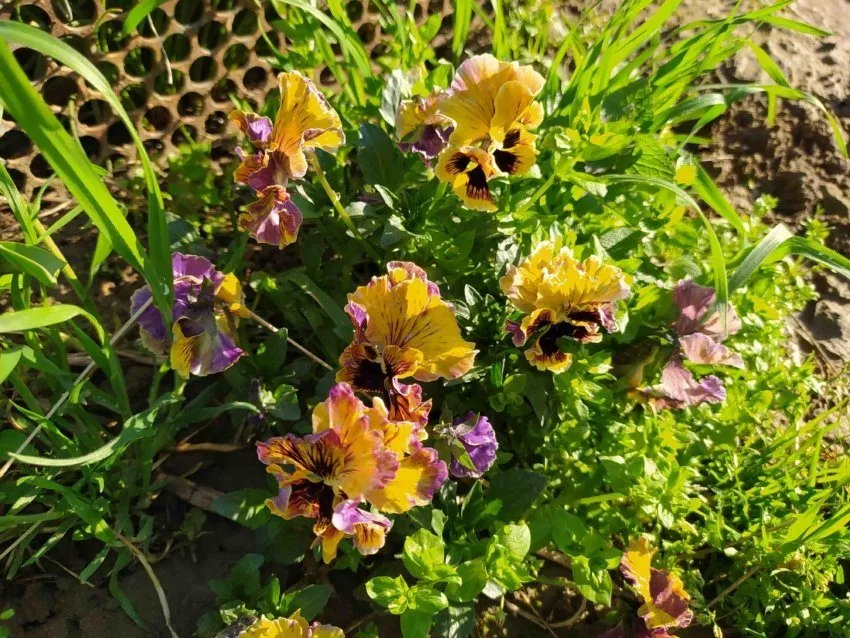
I noticed pansies in the grass, apparently self-seeding.
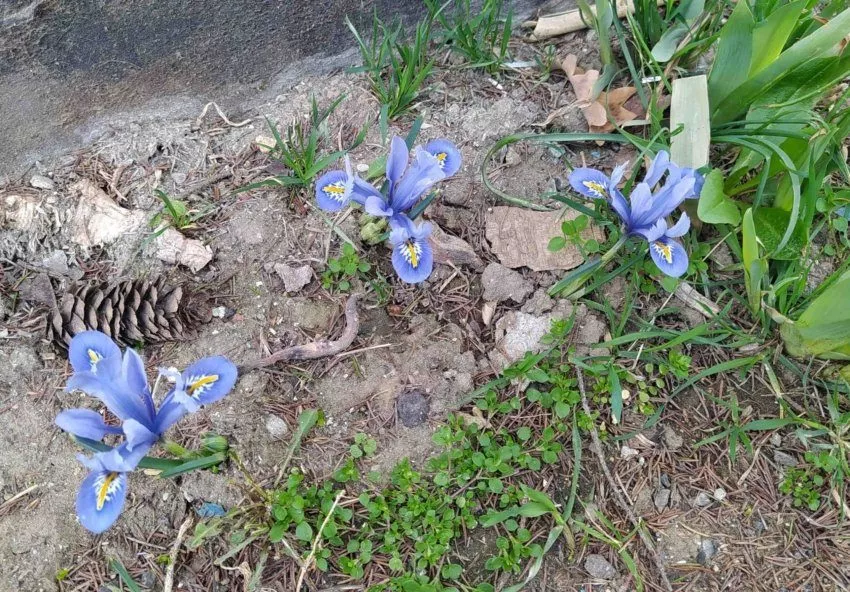
The first irises have bloomed.
Beautiful clouds of blossoming trees fill the streets. This is how the June Rose cherry plum blooms.
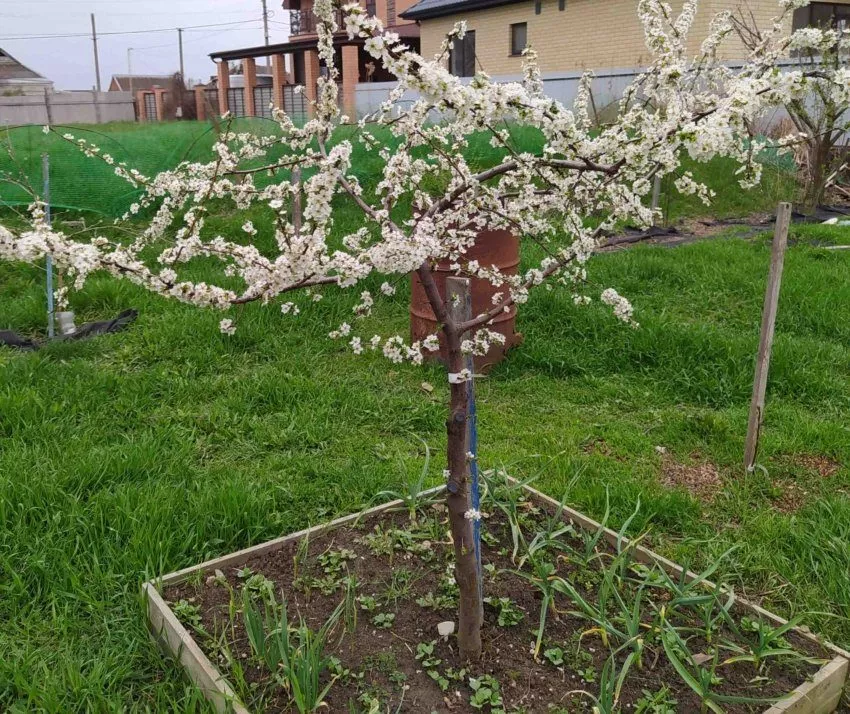
The plum tree of an unknown variety is just beginning to develop buds, while the grafted branch of the Stanley variety is already finishing its bloom.
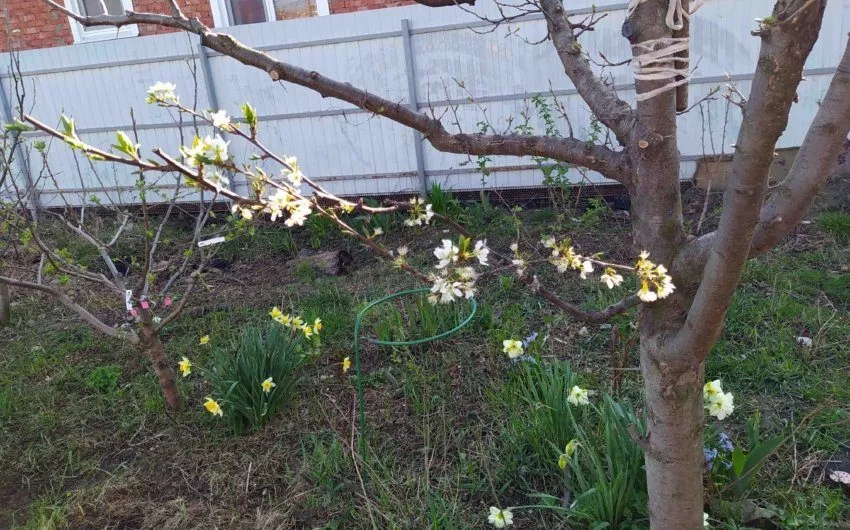
The apricot tree seems to have escaped frost this year (last year all the blossoms were destroyed by frost), and it is blooming with flowers like these.
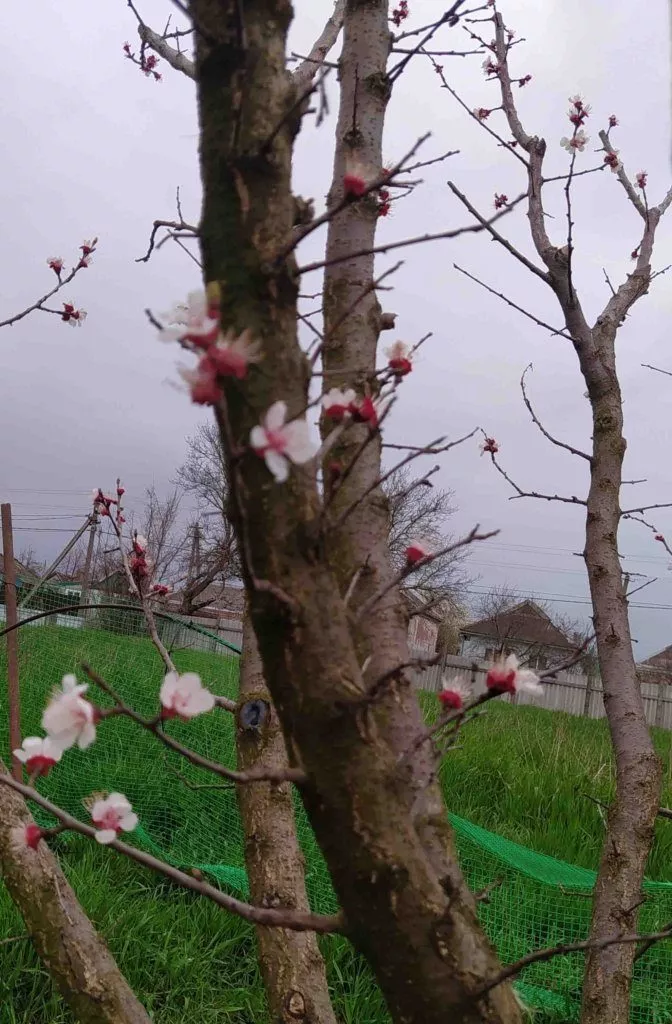
The peach blossoms are modest this year. Last year, there was a riot of bloom, but since it was a shame to harvest the excess fruit, there were many, but small, peaches. So I'm hoping that this season, while there may be fewer, they'll be larger.
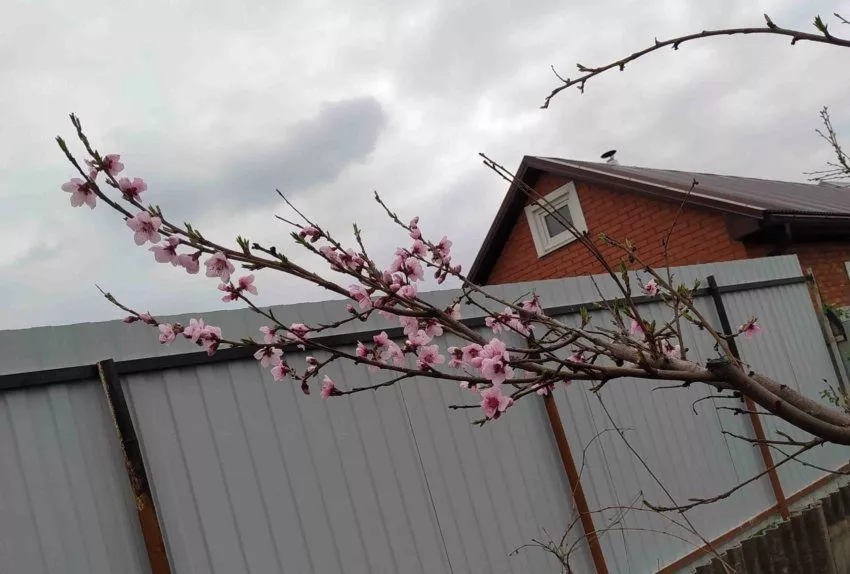
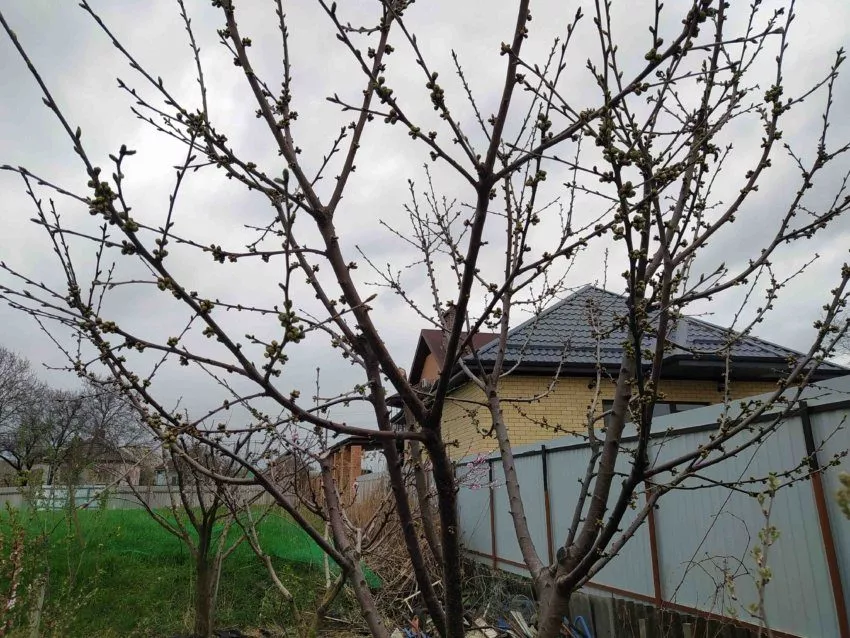
The cherry trees are also about to blossom:
And the felt cherry, the earliest berry, is already fading:
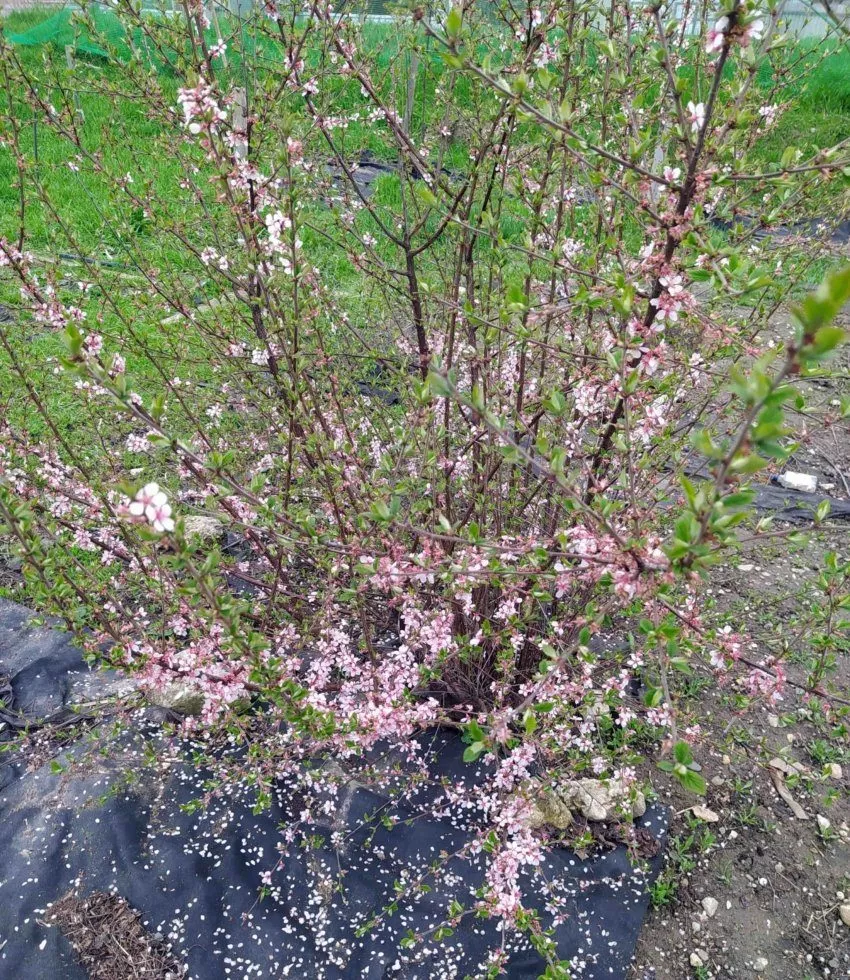
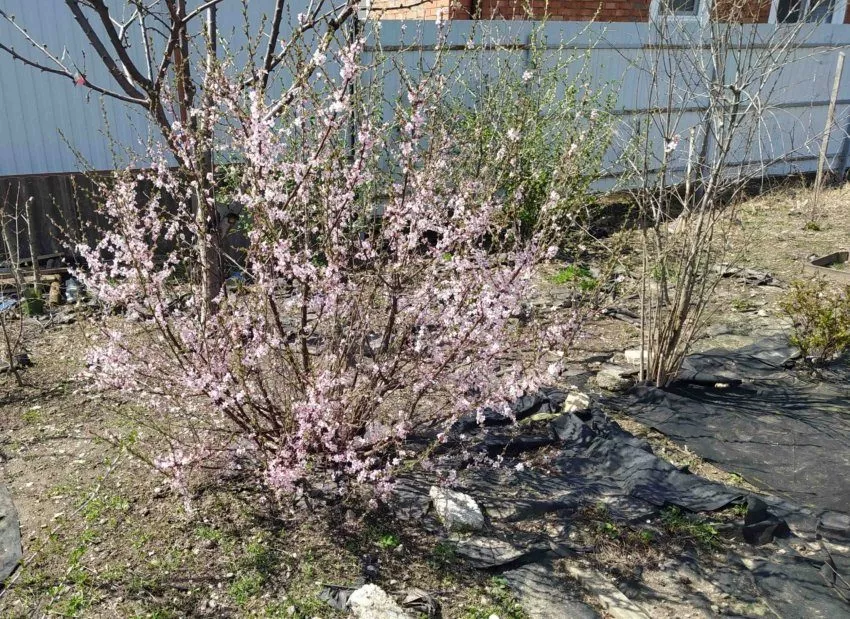
This pink cloud:
I treated the fruit trees a second time. The first time was with Preparation 30+, before bud break. The second time was in March, with Abiga-Peak.
I don't want to use unnecessary chemicals, but while there's no fruit, there's at least some chance of disinfecting the trees from diseases and pests. Last year, even without chemicals, I had to cut back branches to combat spider web caterpillars that were attacking the cherry trees, and moniliosis ruined the harvest. So, although I'm not a fan of chemicals, I'll try to at least partially treat the trees this year.
The chickens had to be restricted from roaming freely in the garden during the winter, but now they will have to sit in a pen to prevent the crops and plantings from being dug up.
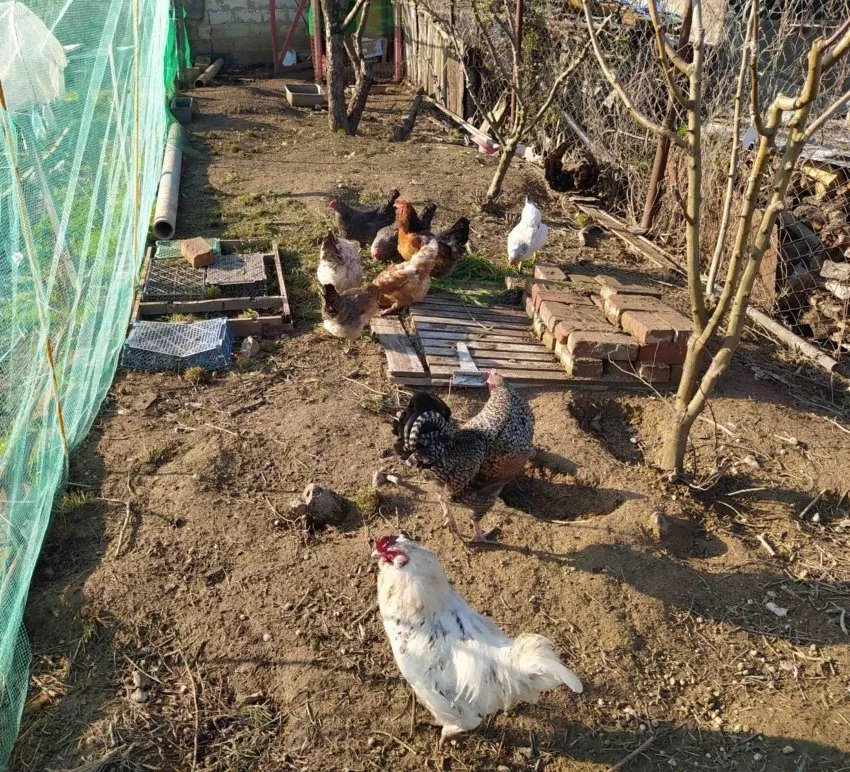
And even though they've cut back on the number of eggs during the rains, we still have plenty for our family. We currently have seven hens and two roosters. I'm coming to the conclusion that four or five hens would be enough. I'm not sure what to do with the roosters yet. One is tame, runs around with my daughter, climbs into her arms, and is kind, but as a rooster, he's nothing. He's kind of clumsy, he can't even jump on a hen to trample her, he just rips their feathers off, and if he does jump on her, well... He jumps on the hen, tries to hold on, and the hen screams and runs around the pen, rolling the rooster on his back until he falls.
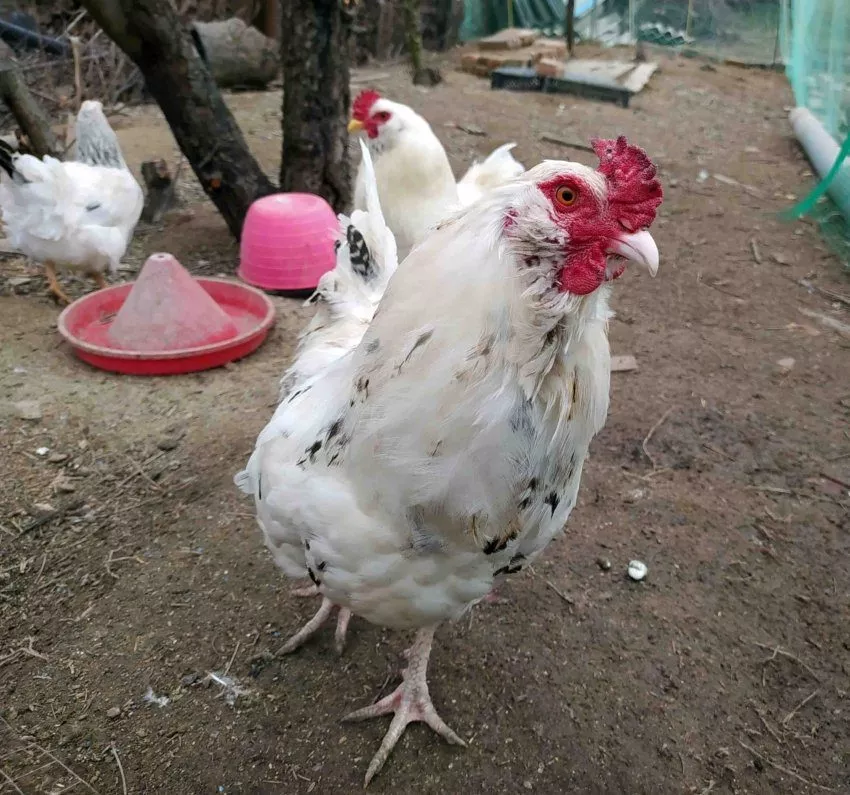
The second Petya is a good boy, easily trampling the chickens, herding them... but he's started fighting. As soon as my daughter appears, he immediately gets cocky and tries to attack. He's a bit wary of me, but when the opportunity arises, he also tries to seize the opportunity to attack. For example, if I turn away and pour out feed or take out eggs.
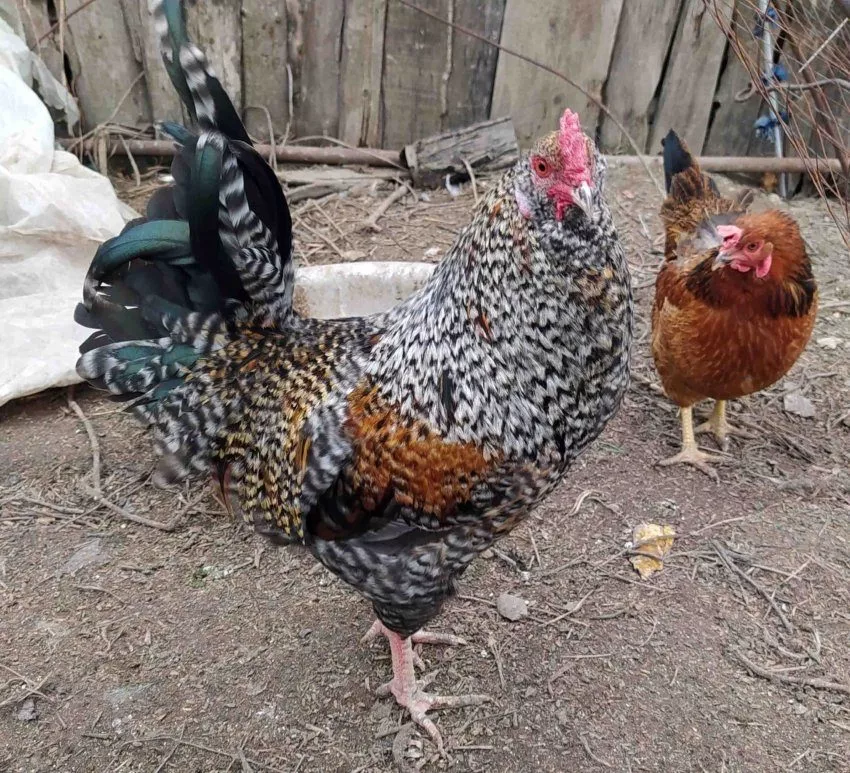
The white rooster reacts before I do and rushes to intercept the fighter. I don't know what these roosters are thinking, maybe we're being too humanistic, but this situation has happened many times: whenever the gray rooster tries to jump up and attack me, the white one appears in his path and starts a fight with him.
I don't want to kill the gray one—he's young and caring with the hens. But if his aggression increases, I'll probably replace him. Leaving the white one alone isn't a good option either, since while he's kind, he's not much of a rooster.
These are the beautiful eggs our hens lay.
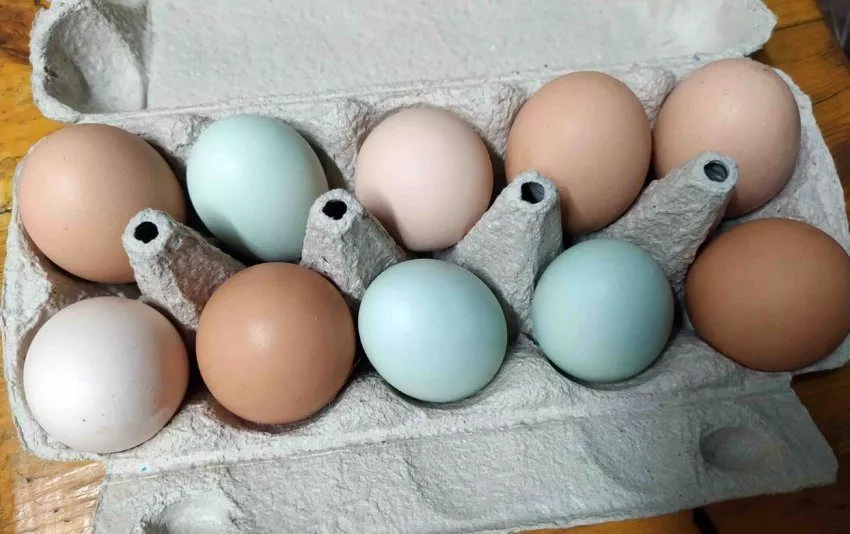
Now I'm resisting the temptation to get more Uheiluy and Maran hens. While the egg count is a bit high, the egg color is worth trying, and I'd like to see even more variety. I'd also like to have chocolate and green eggs.
New plants have appeared in the garden too – I planted Maravilla and Pshekhiba raspberries. I've read very good reviews about them, so we'll see what grows. I ordered some pawpaws – I'm always craving exotic plants. I just picked them up today, and I'll go find a place to plant a narrow-leaved peony.
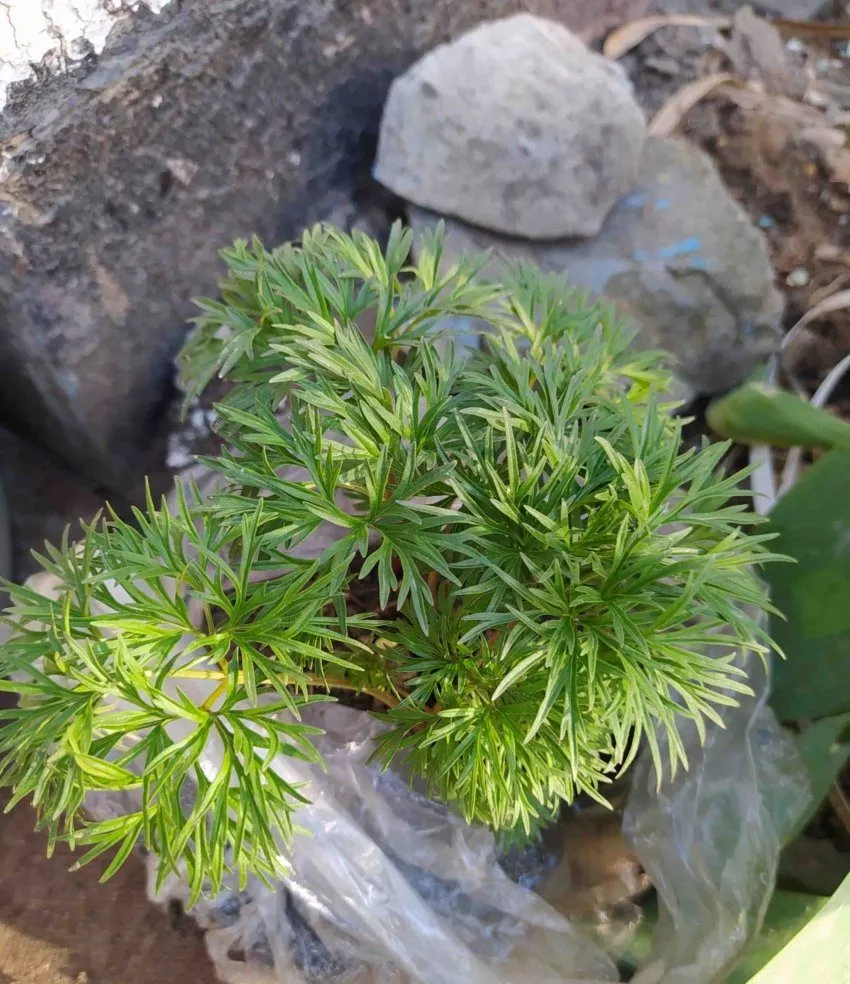
I've been wanting one like this for a while, but I've never seen one in our area; most people grow regular peonies. I wanted one like this, though; the main thing now is for it to take root and bloom.
I'm also trying to grow sweet potatoes. Last year I planted two plants, but they apparently didn't like our heat. I only got a small harvest—a few tubers. Two of them survived the winter (the others were small and dried out, apparently I didn't store them properly). In the spring, I placed the whole tubers in a jar of water, and they sprouted roots and sprouted.
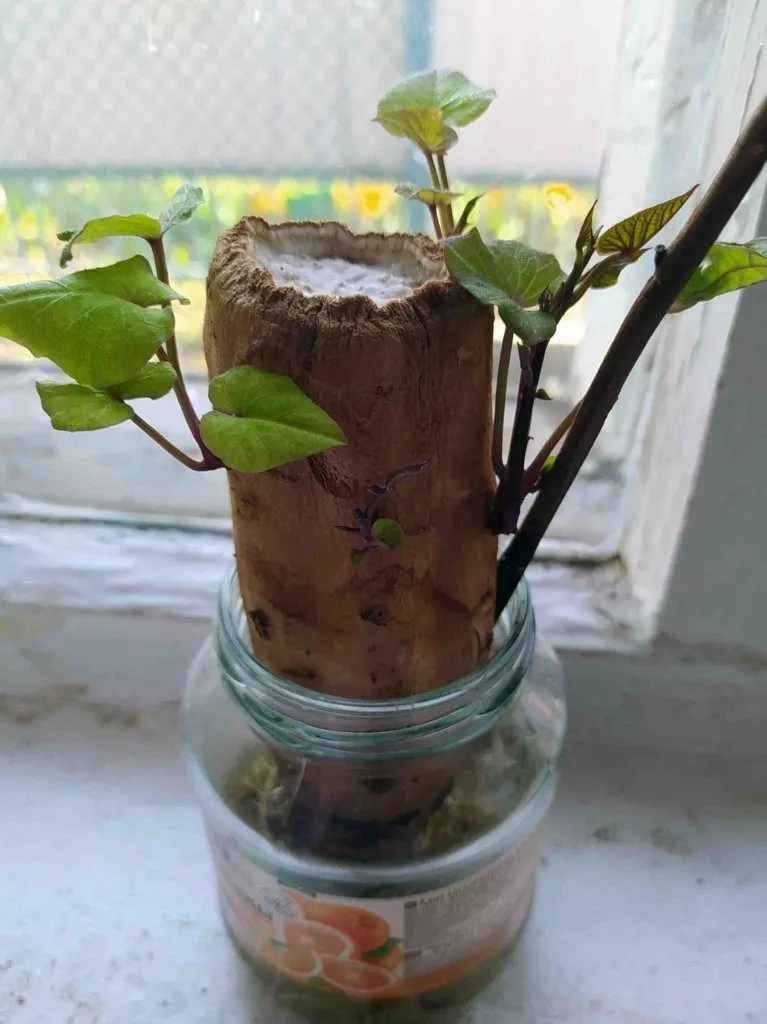
As the sprouts grow, I break them off and root them, first in water:
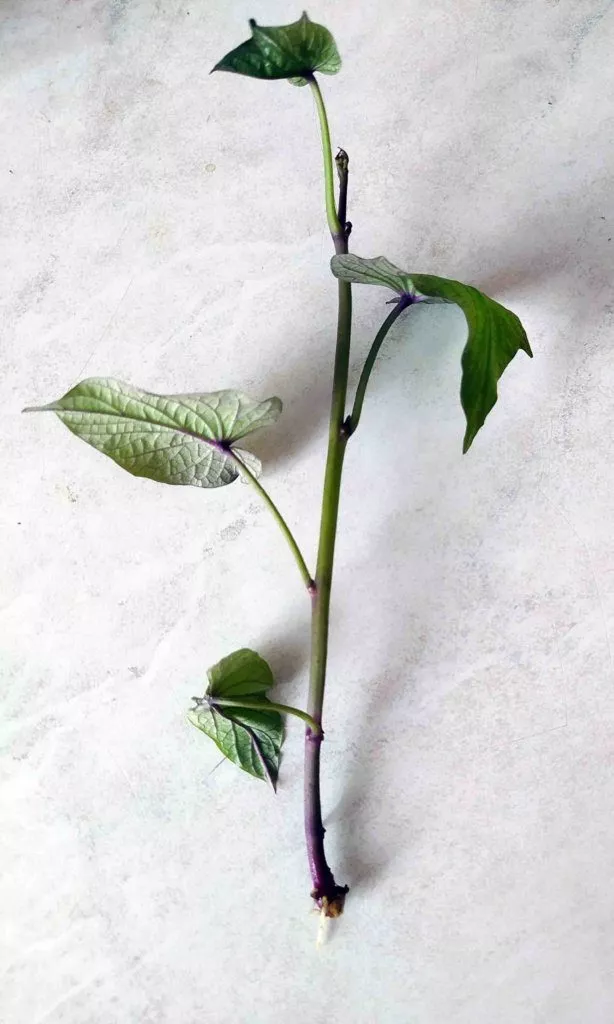
Then - into the ground.
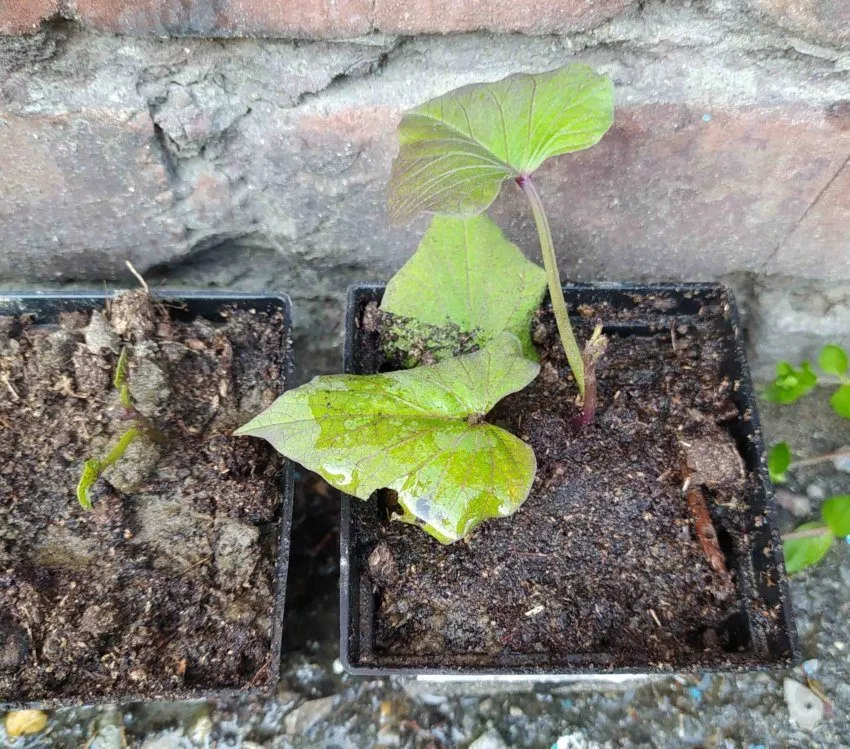
Let's see what we can grow from them this season.