

It's apple season in Krasnoyarsk, and every garden plot is covered with apple trees and crabapples.
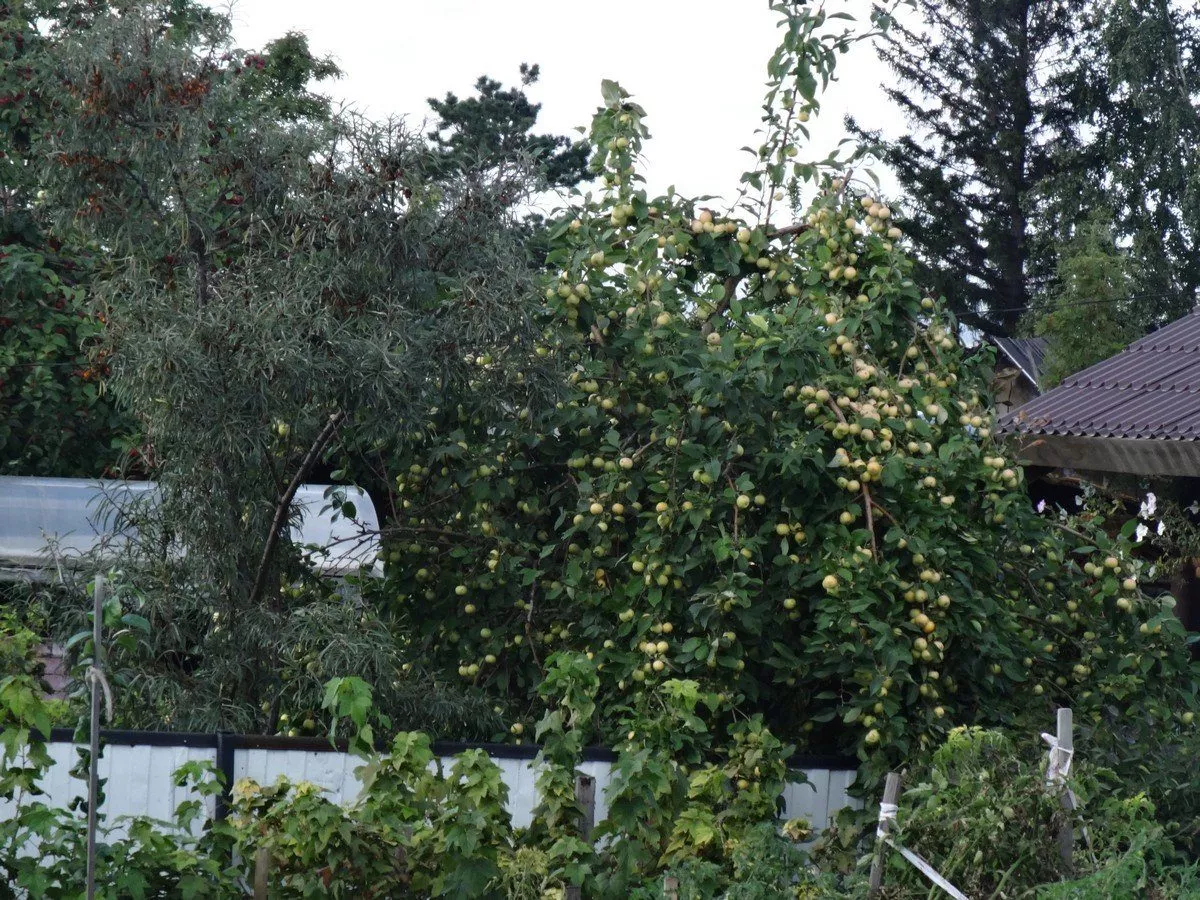
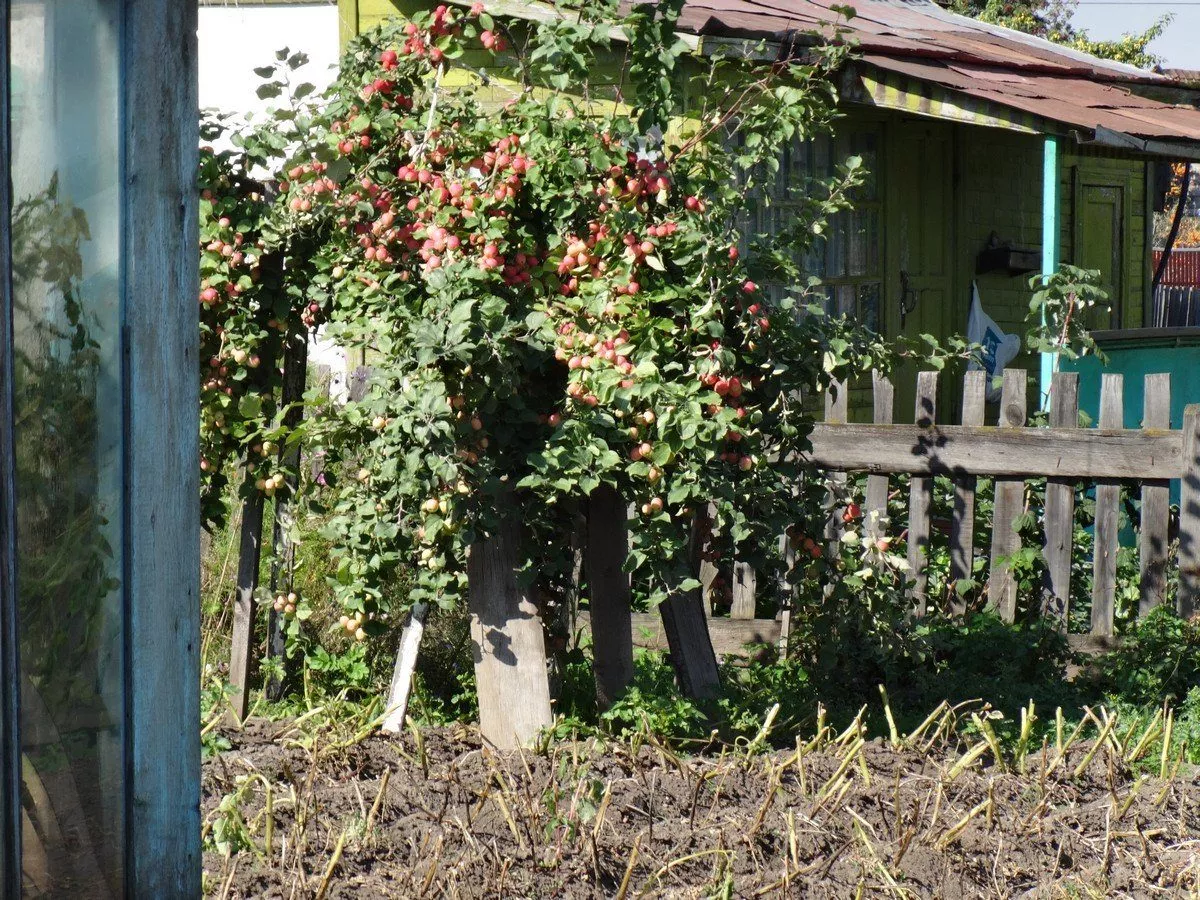
The branches, weighed down by the harvest, bend all the way to the ground.
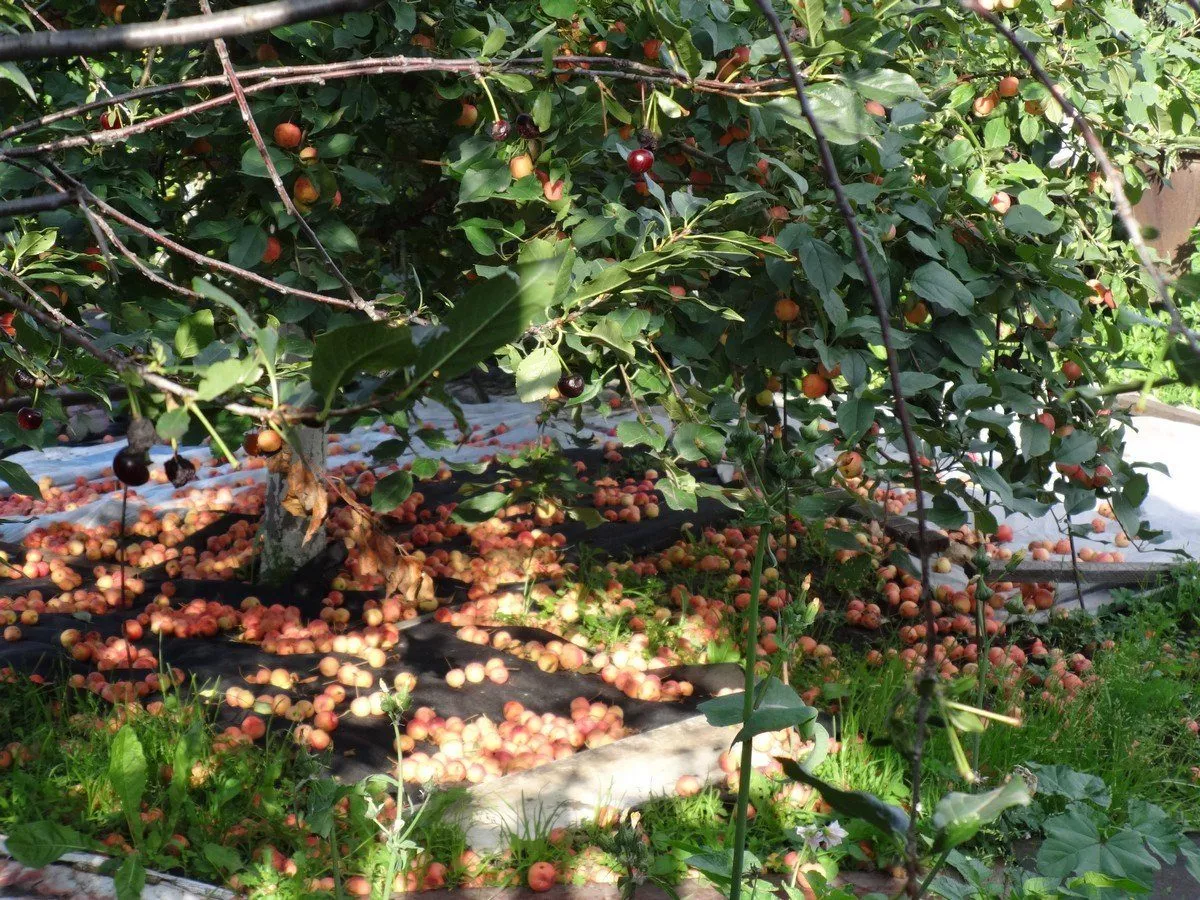
Summer residents harvest their fruit by the bucketful and stand outside stores and along the roads, selling the crabapples. The most popular and delicious apples are the Vospitannitsa variety—beautiful, dark red—and the Uralskoye Nalivnoye variety—bright yellow, golden crabapples—selling out in no time.
Here in Siberia, semi-cultivated apple trees called crabapples grow well, but they produce small apples, and we want real, large apples. Gardeners plant apple trees, but they often freeze; even varieties adapted to the Siberian climate suffer from frostbite at the tops and branches.
When we bought our dacha, there were three trees growing on it: two old crab apples, each with thick, dry branches. Only the young branches bore fruit. We cut down the dead branches, sealed the cuts with garden pitch, added compost and fertilizer, and watered them periodically. The trees rejuvenated and, for a while, produced a good harvest. But after a while, one of the trees withered, and we uprooted it—it was Vosputannitsa.
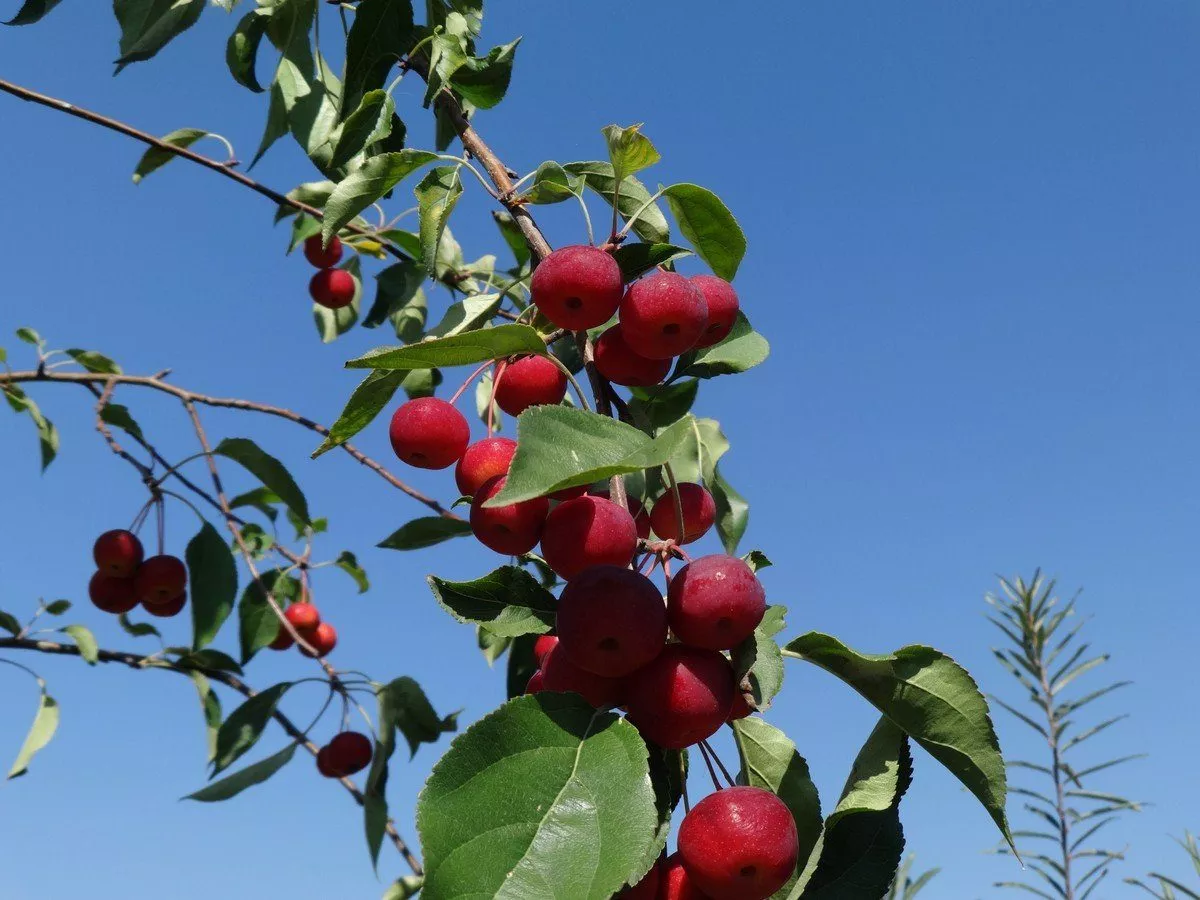
The second apple had green-yellow juicy fruits with a red blush on the side. During the ripening period, the apples became plump, acquired a yellowish-brown color, and simply shone through in the sun.
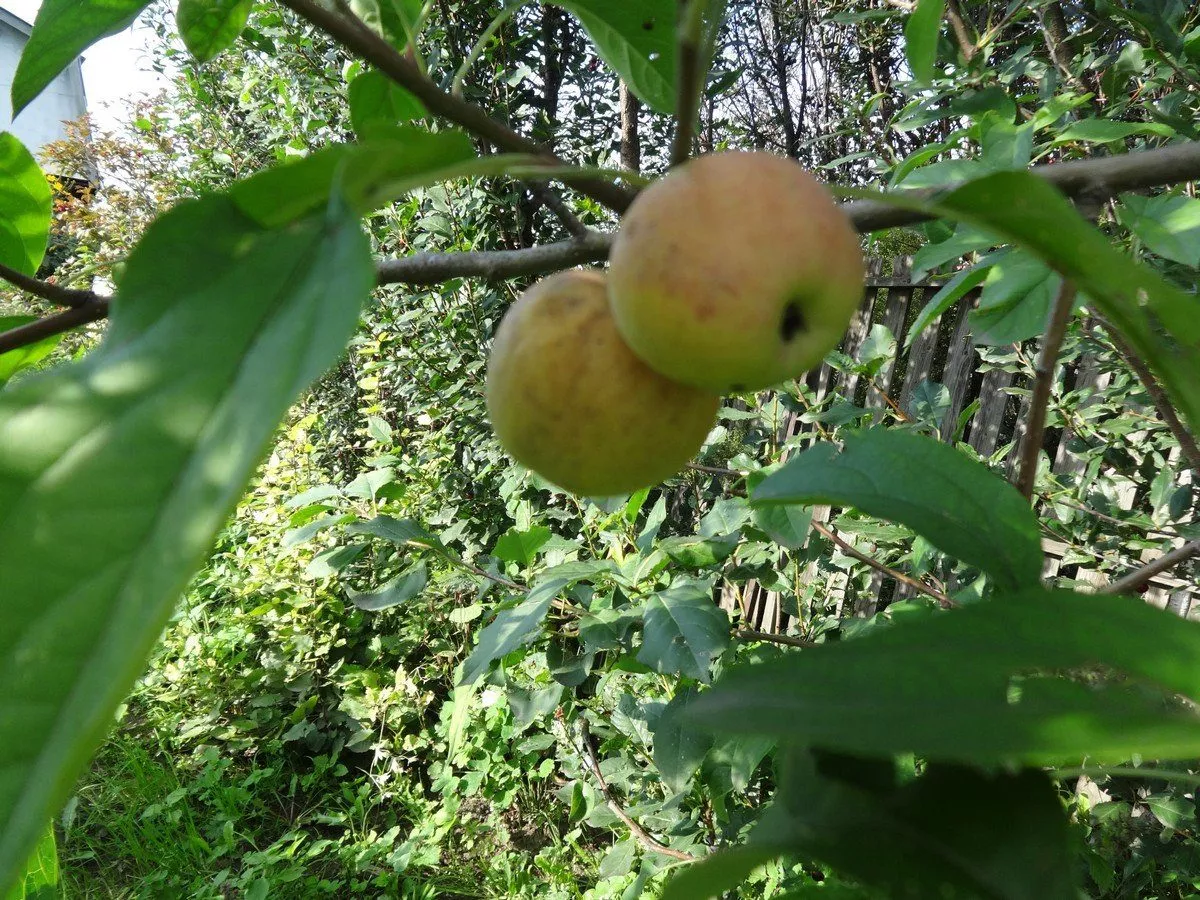
And this is what the unripe fruits looked like.
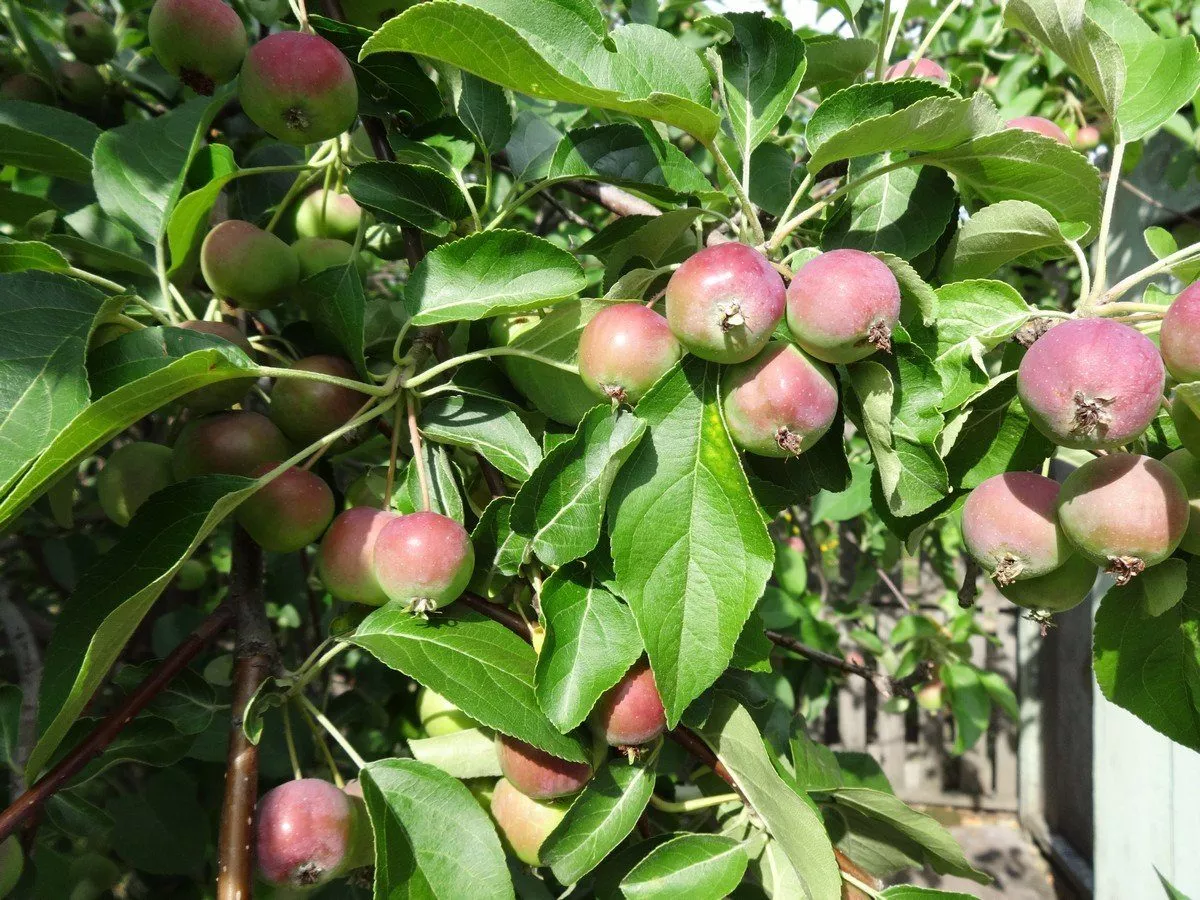
We made juice from the apples, cooked jam, I made apple cider vinegar, and we enjoyed eating the juicy apples.
Since last year our apple tree has started to dry out.
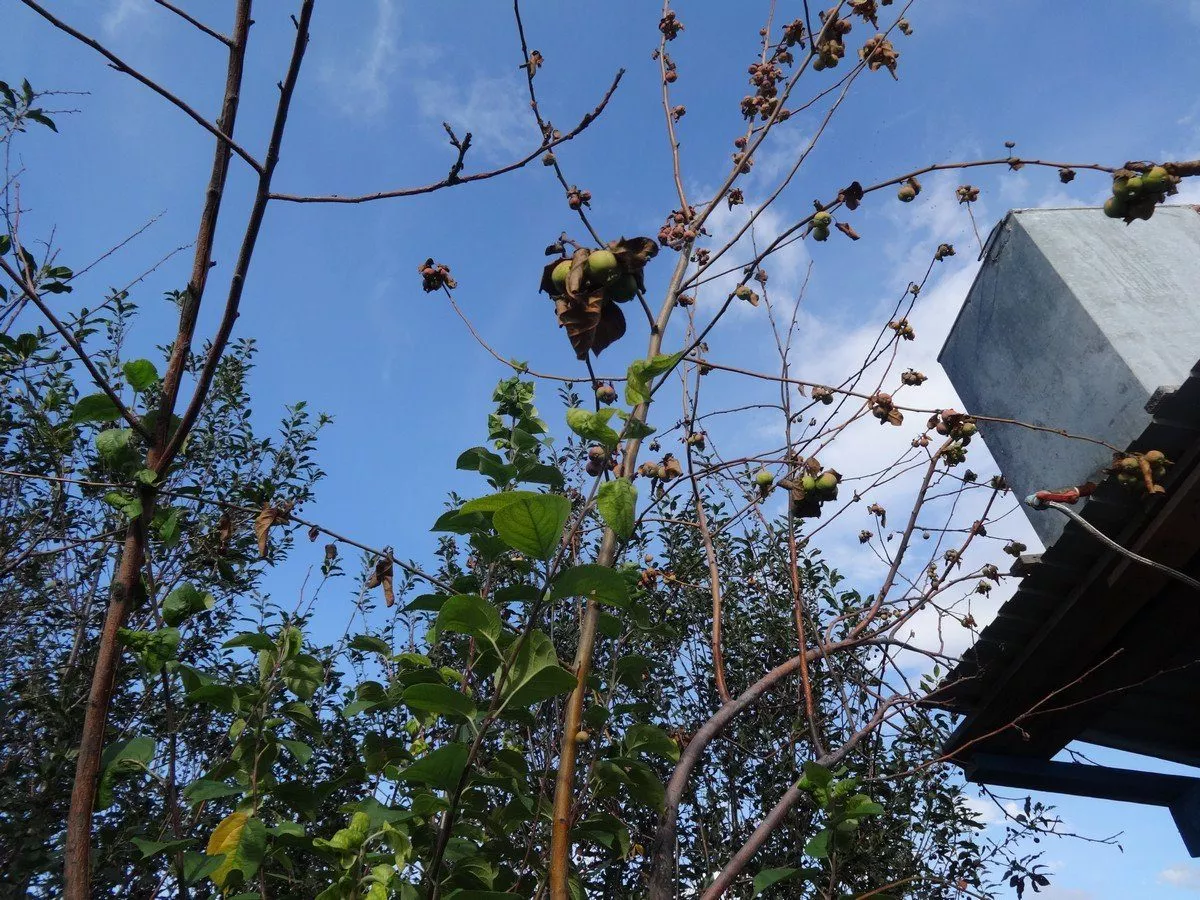
This spring, only one branch blossomed, and many apples were set on it. I kept wanting to take a photo of this fruitful branch, but I didn’t have time; it broke under the weight of the apples.
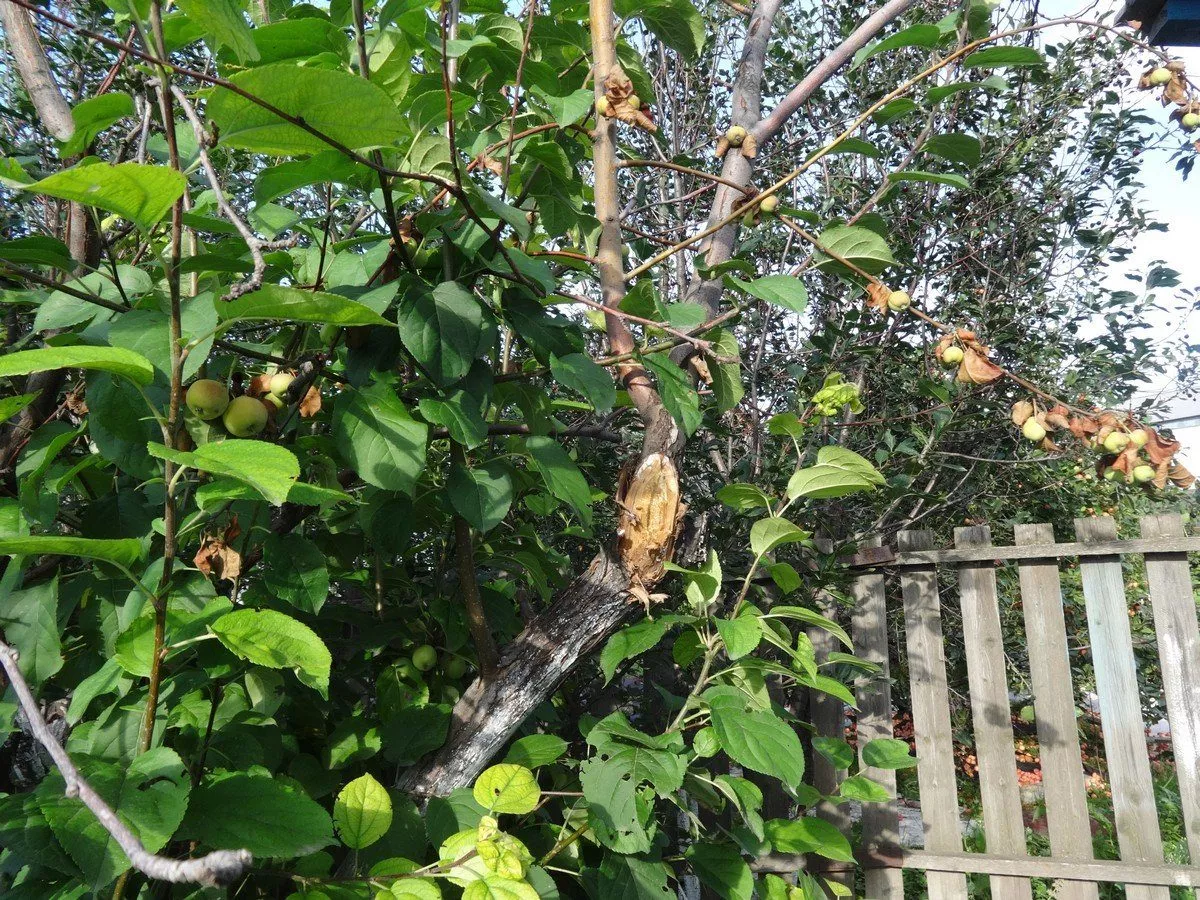
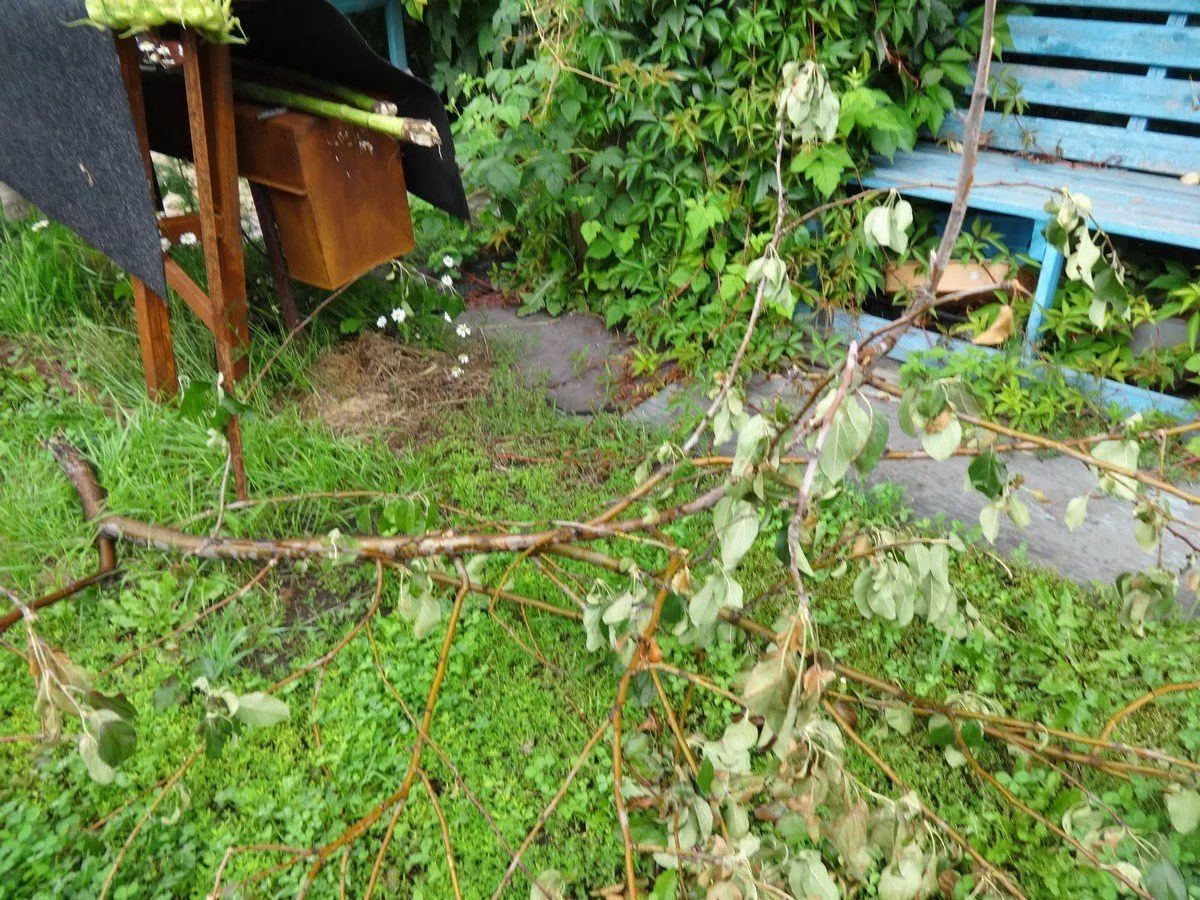
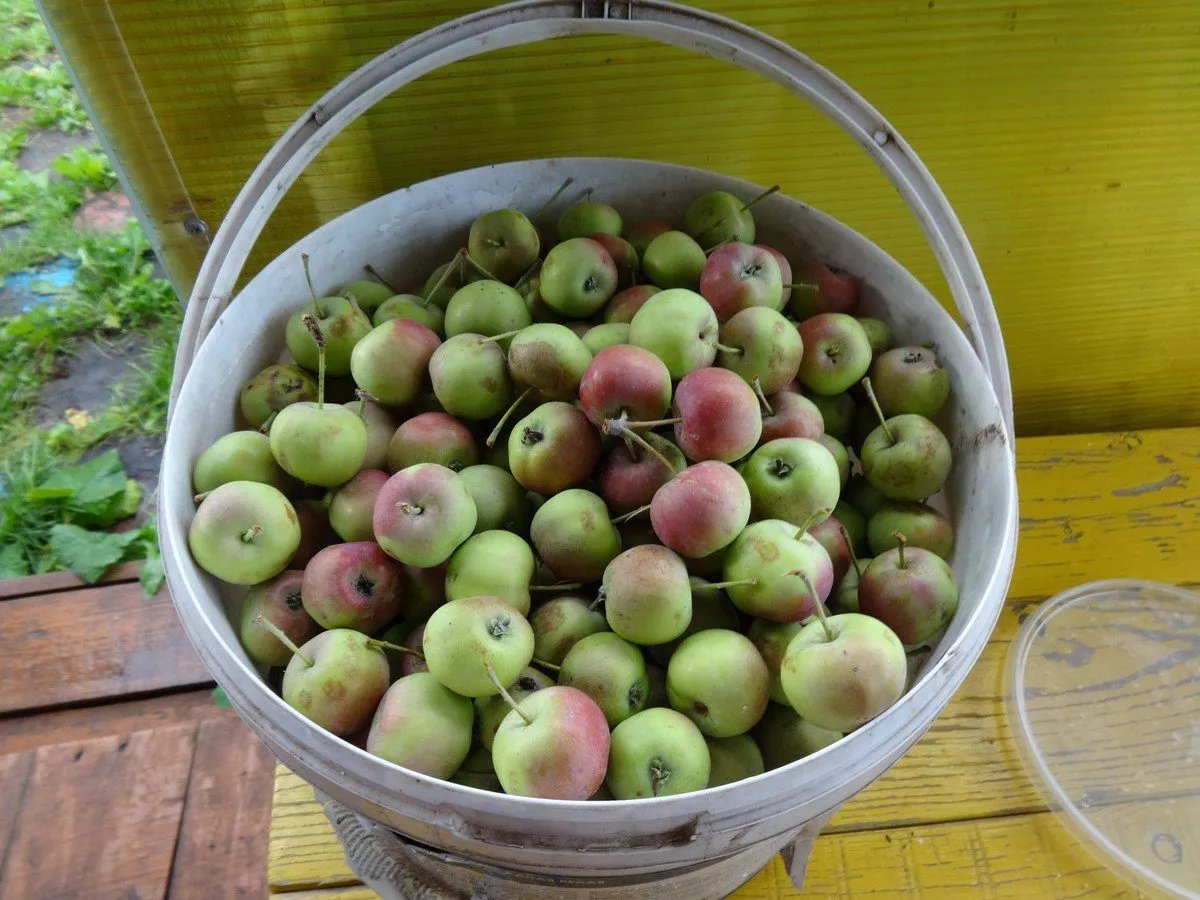
We collected a bucket of unripe apples from it, it was a shame to throw them away.
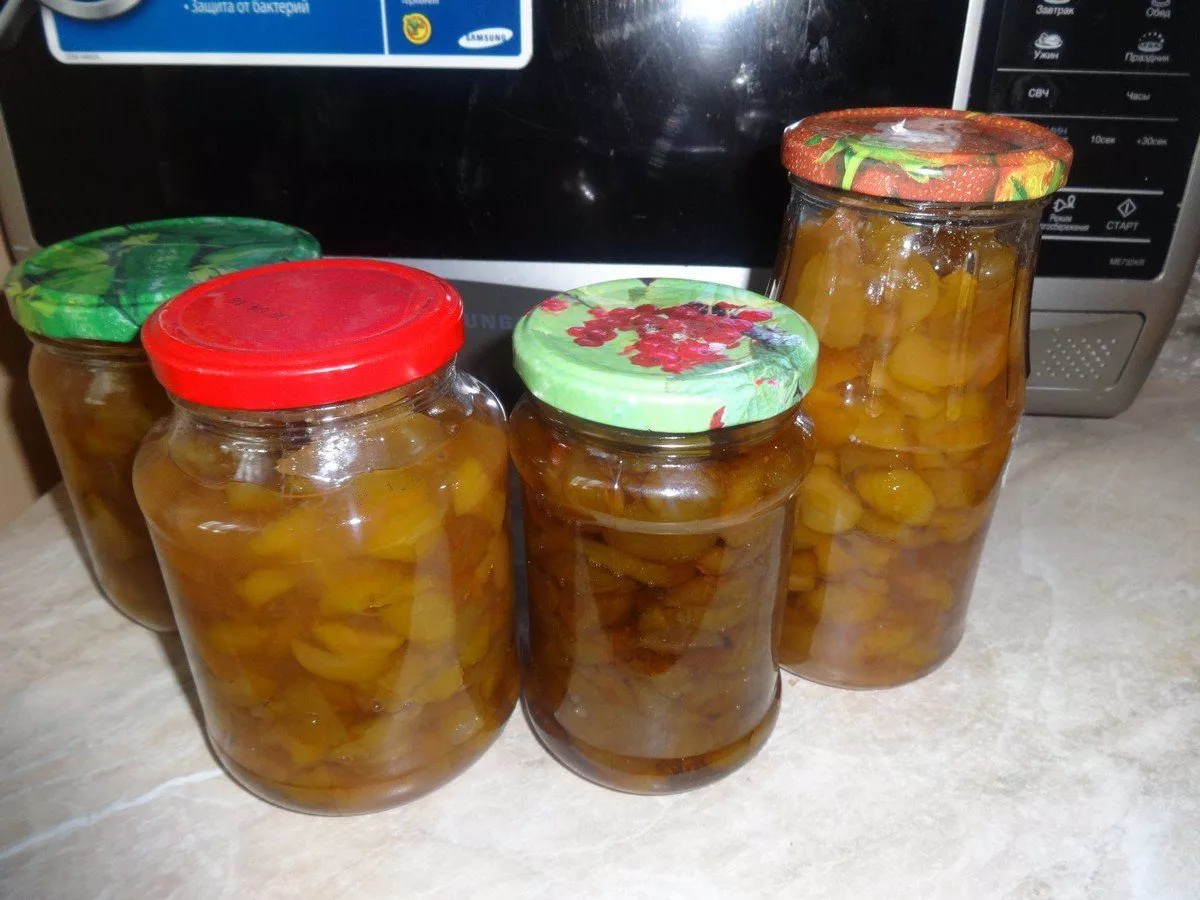
We made several jars of jam from some of the apples. It turned out delicious in a clear honey syrup.
The remaining apples were used for juice. We'll cut down our little crabapple in the fall.
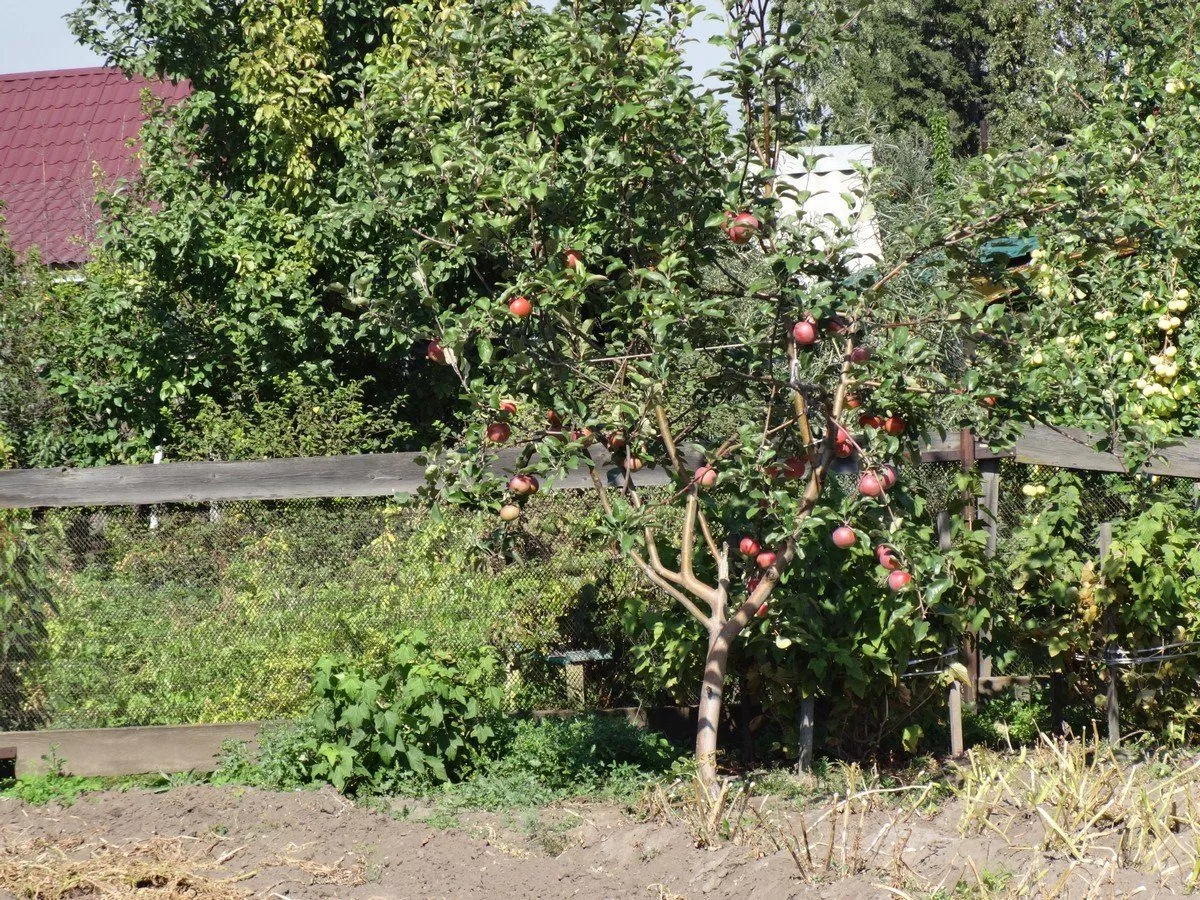
The third tree was short and had pink apples, they were much larger than the wild apples, tasty and juicy.
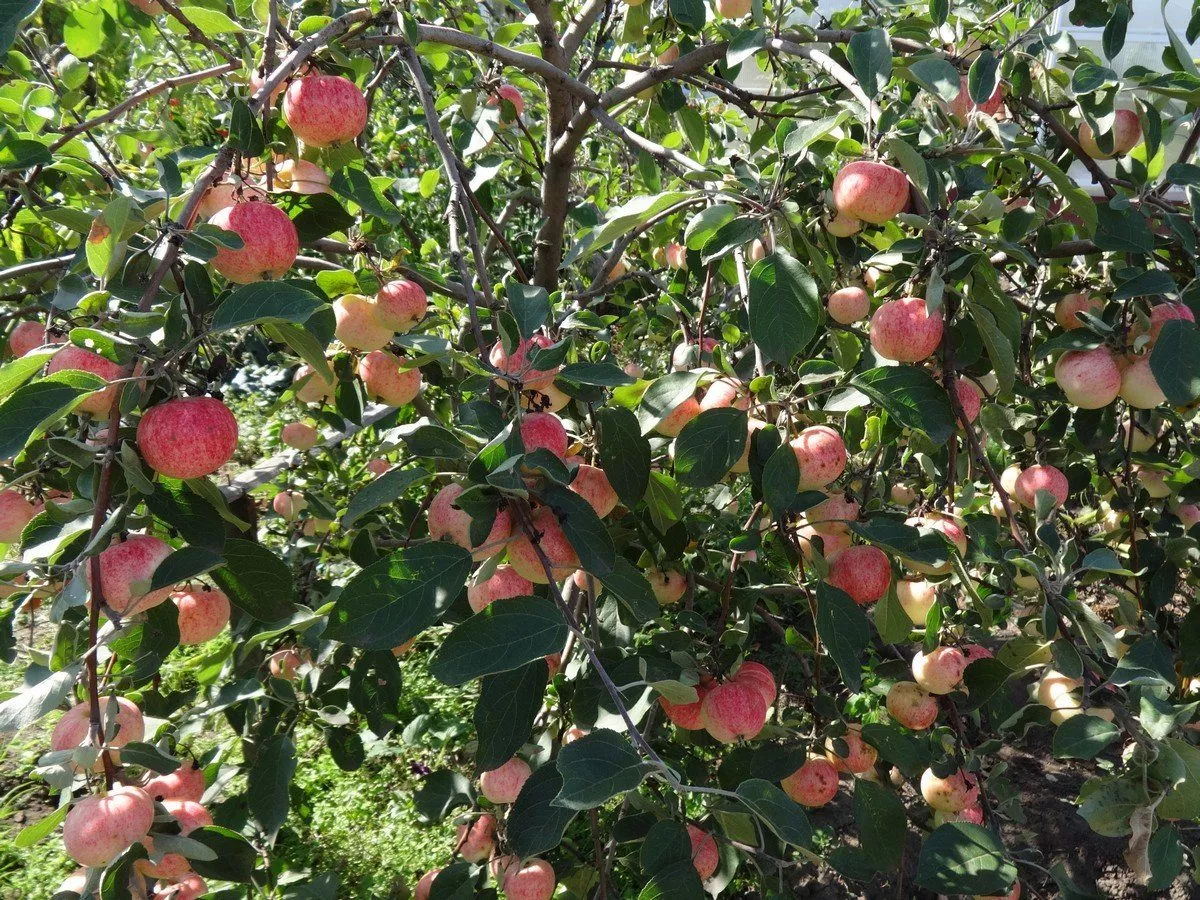
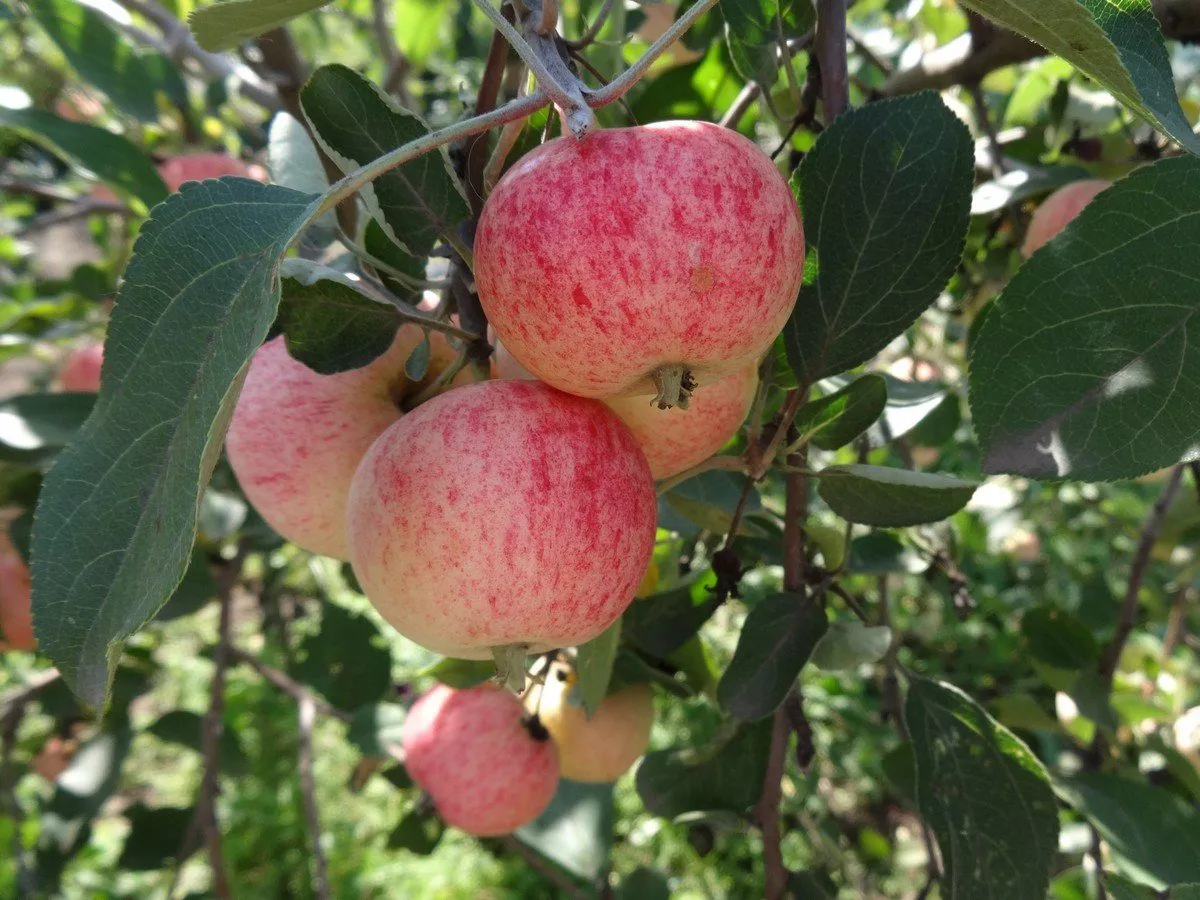
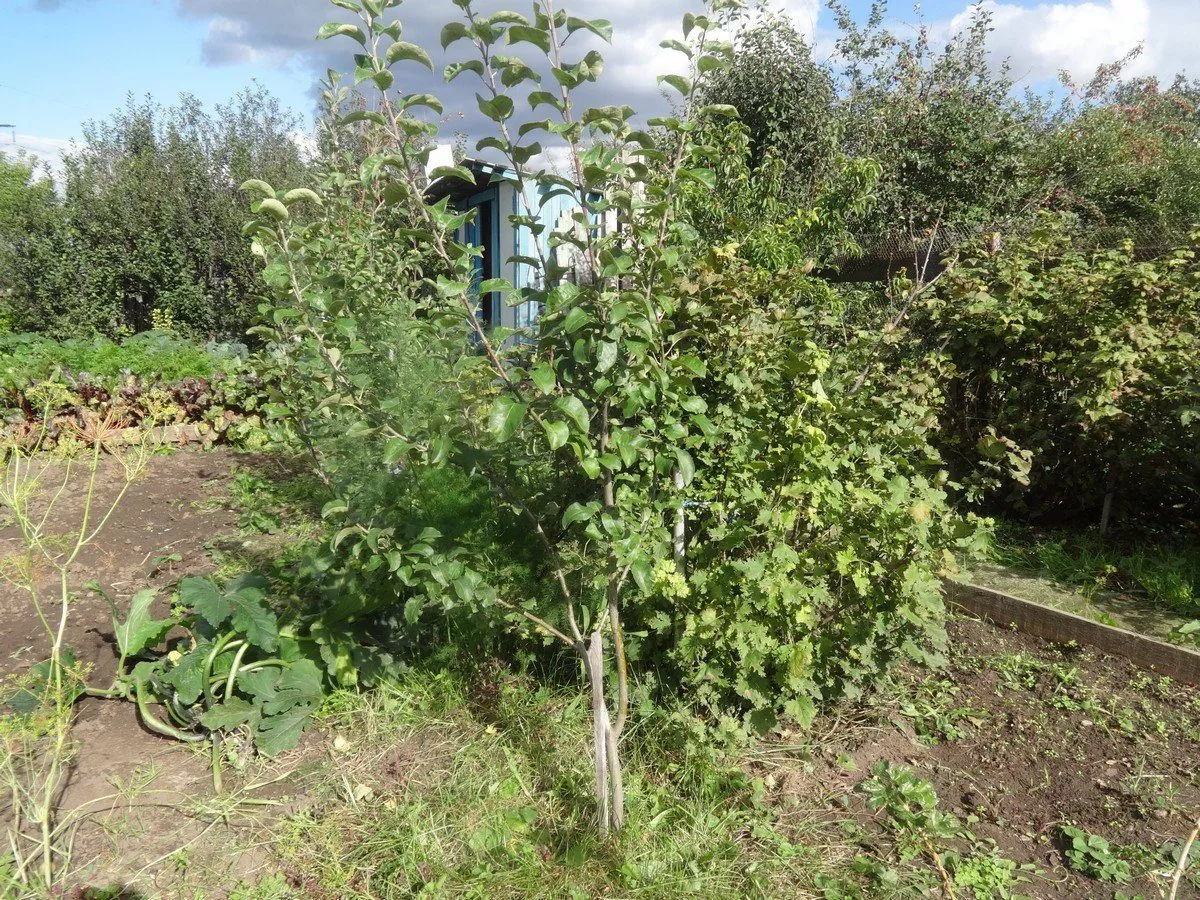
But in the spring of 2019, the apple tree disappeared; new branches had grown from the trunk over the summer. My husband cut down the lost parts and left the new growth. The branches grew and turned into a small tree. This is what it looks like now.
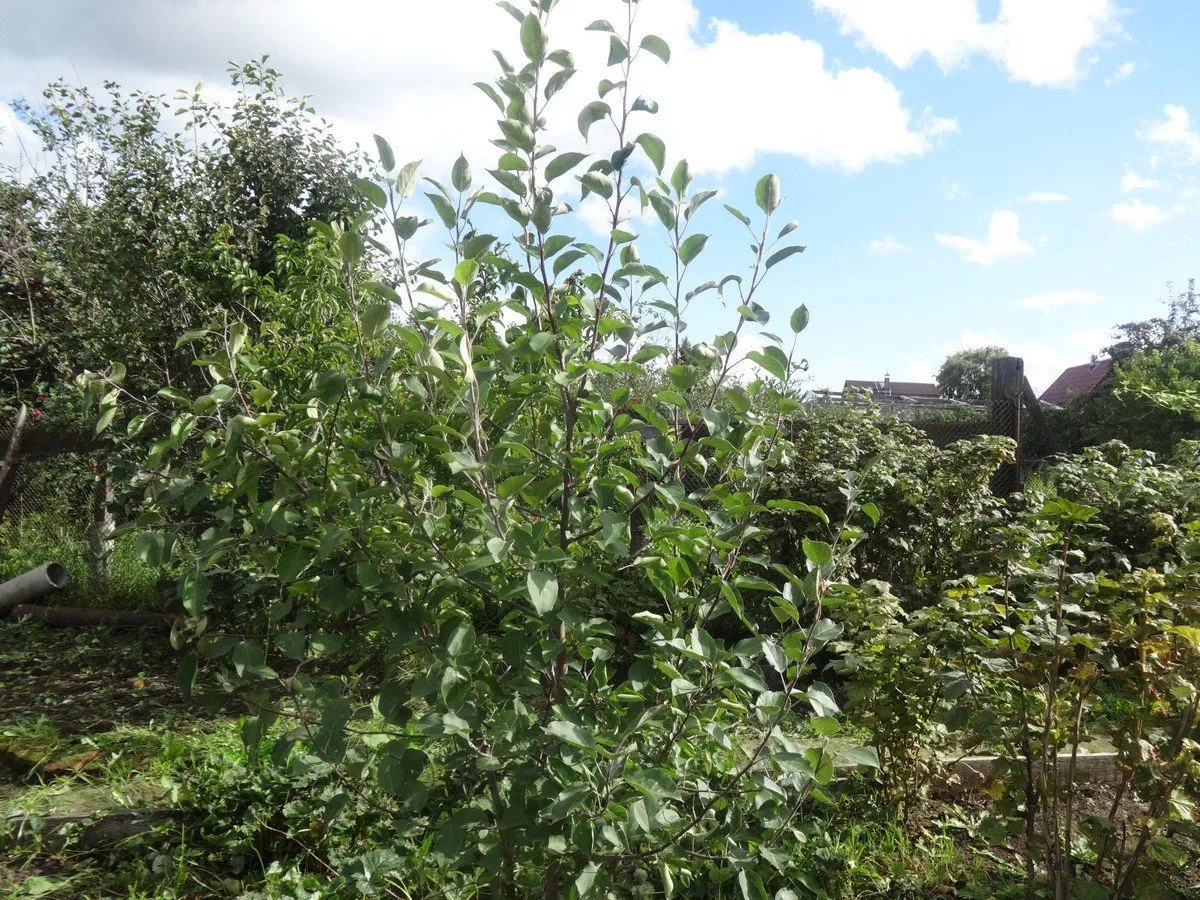
In the fall, I'll trim some of the branches, shape the crown, and maybe the tree will rejuvenate and delight us with a harvest.
In 2015, we planted two large-fruited apple trees – the Borovinka and Melba varieties.
Borovinka
Borovinka gave its first harvest after three years.
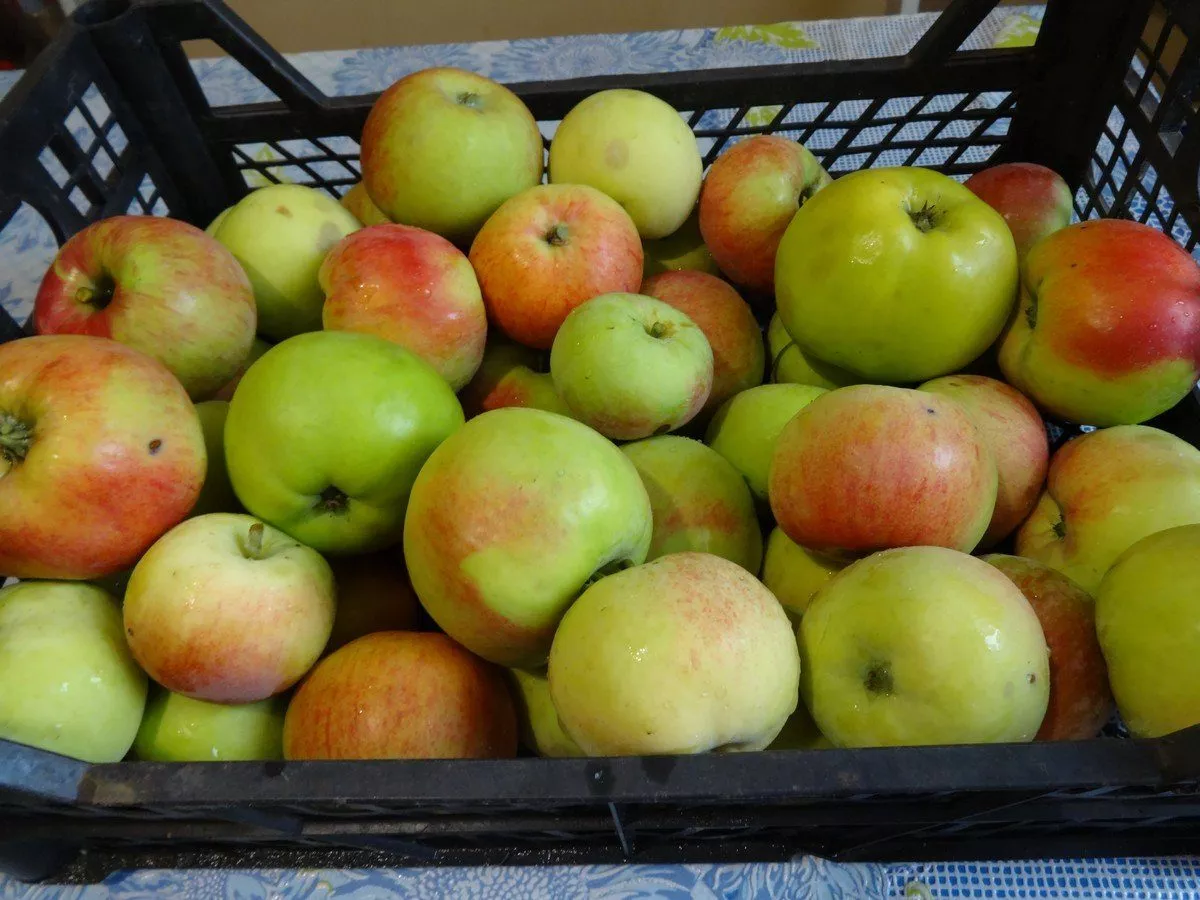
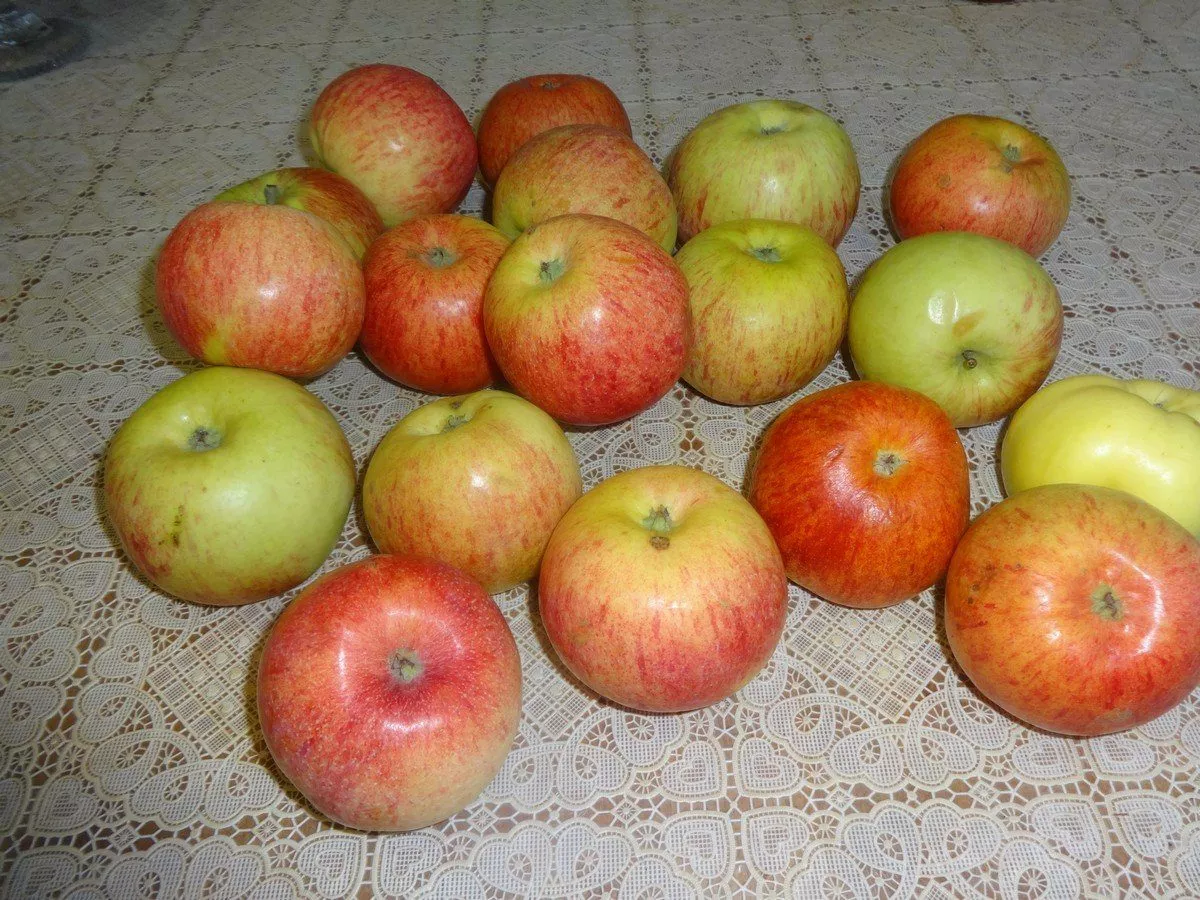
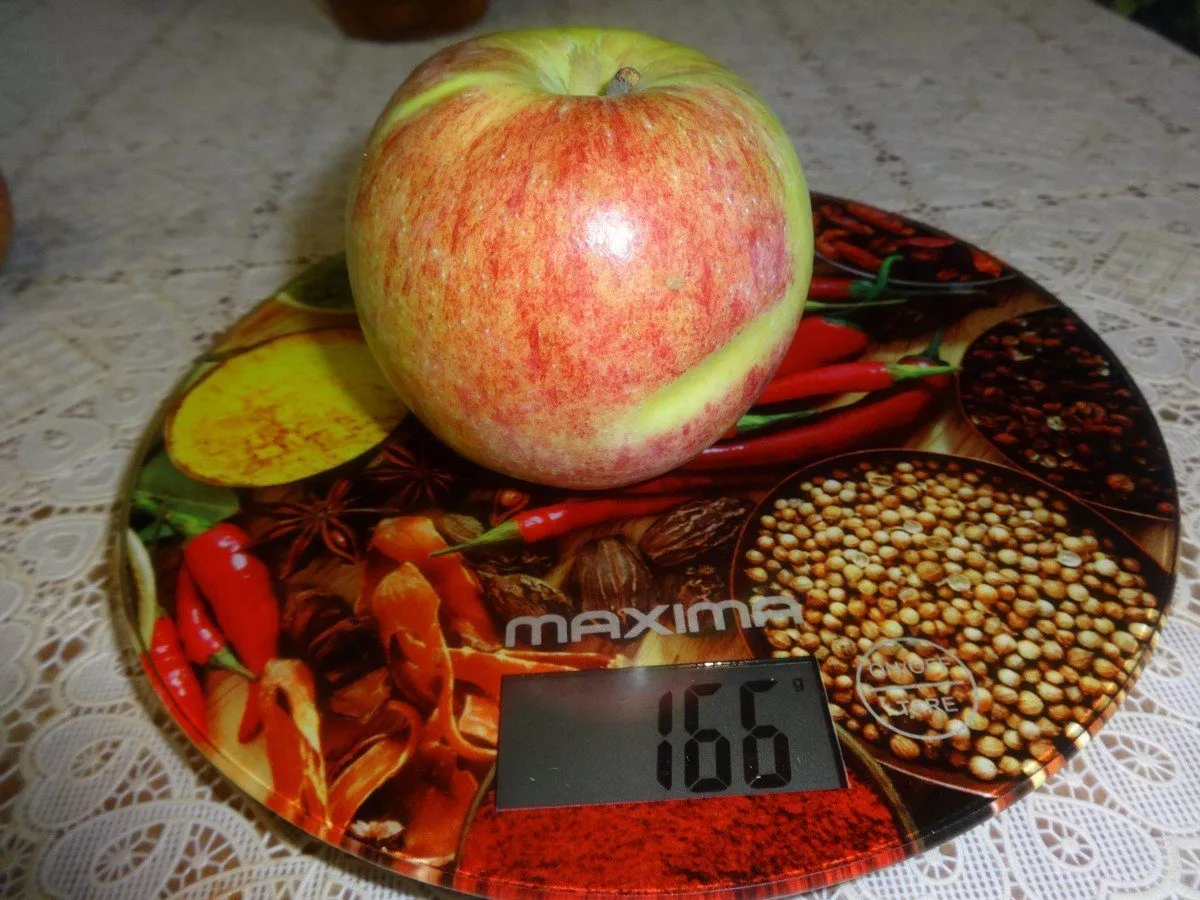
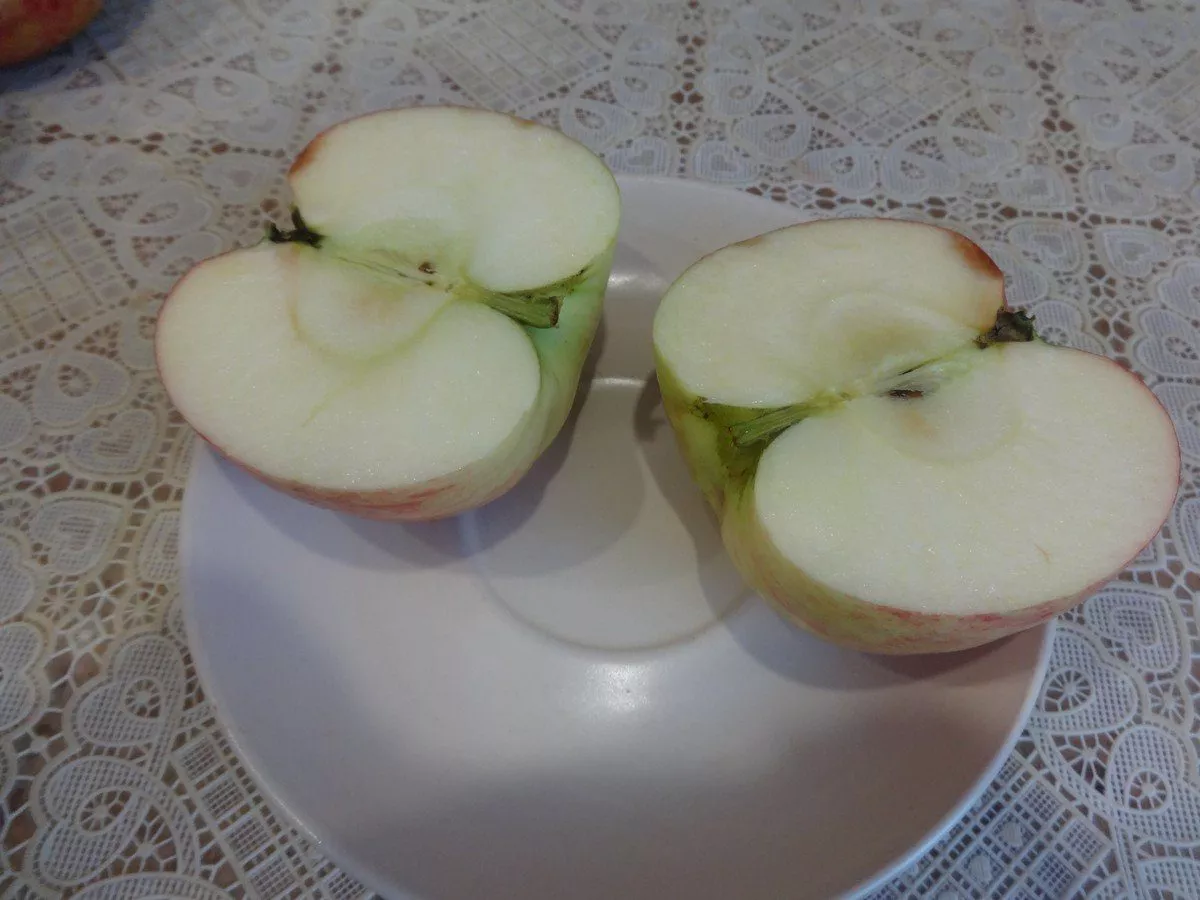
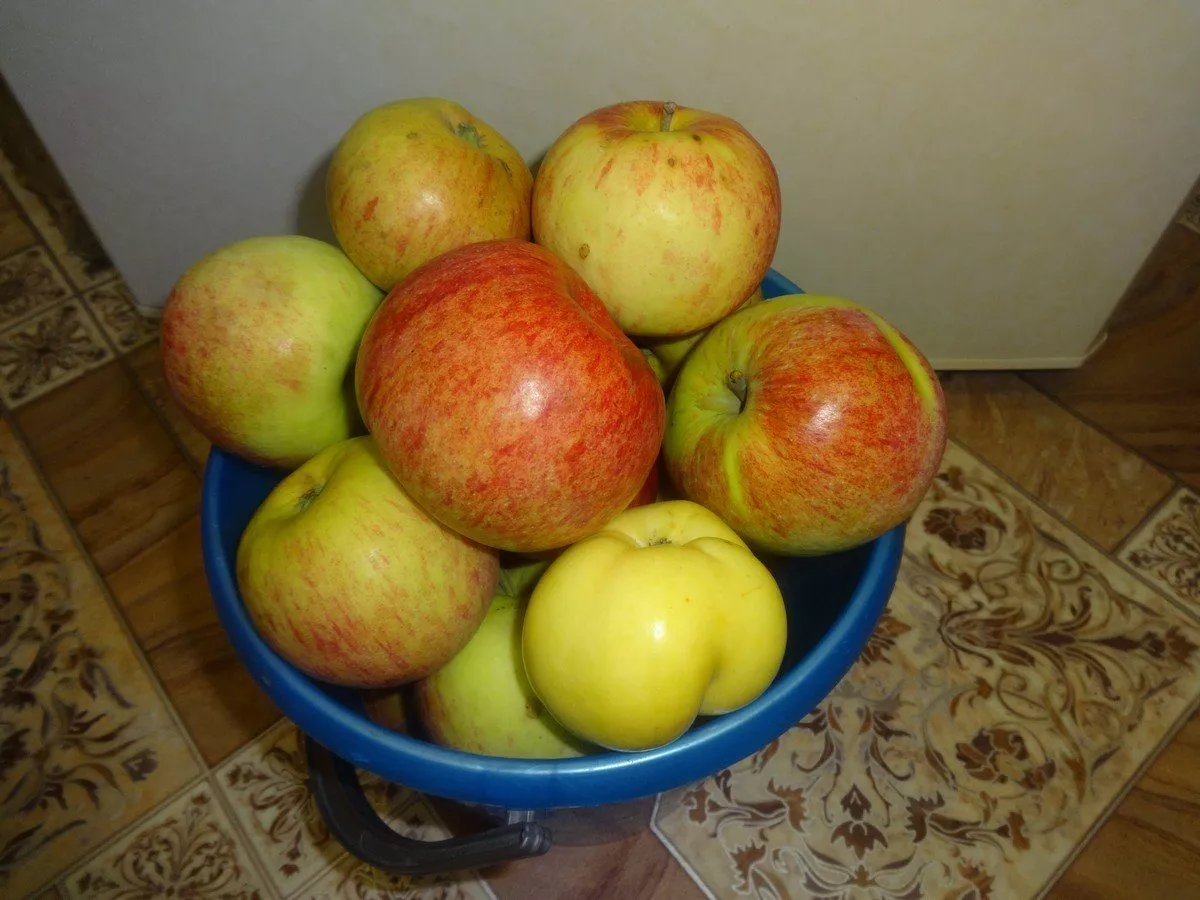
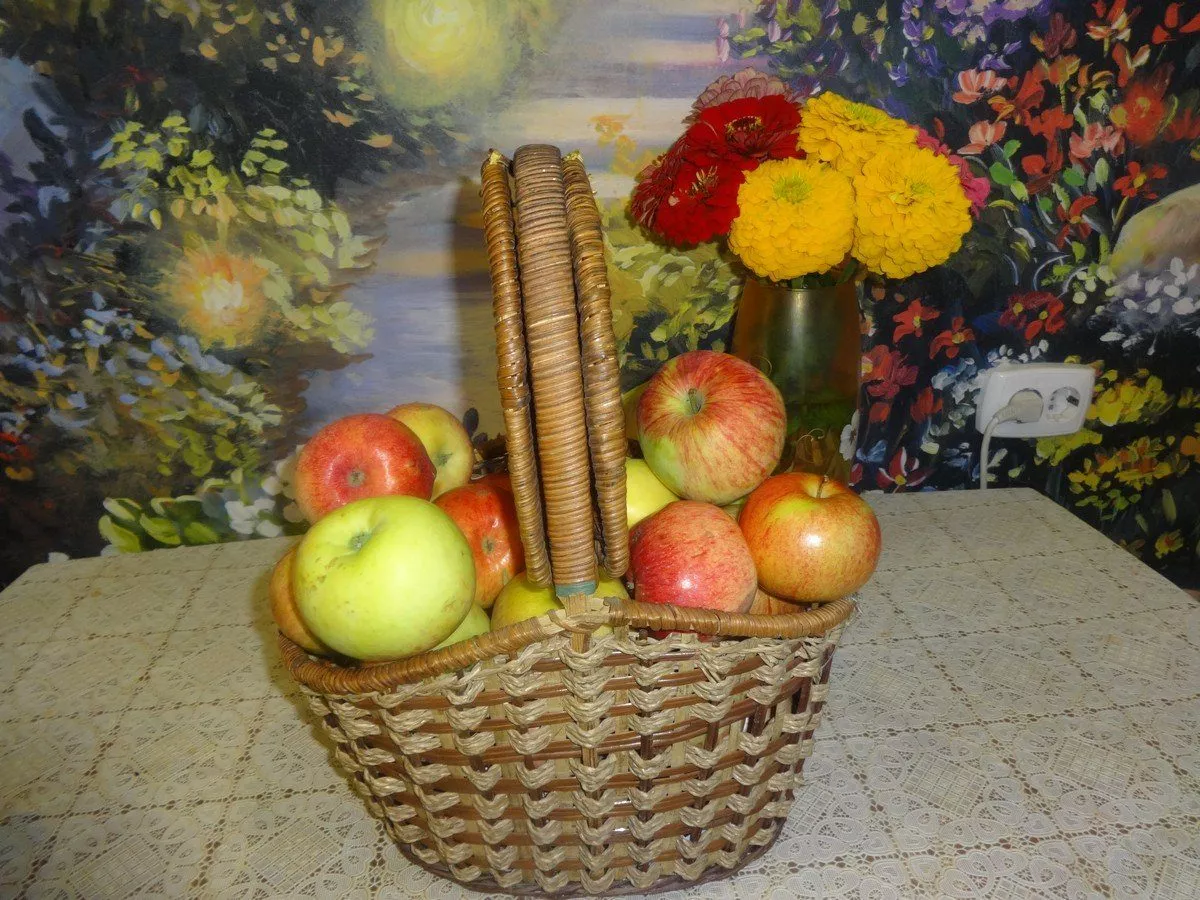
It has round apples, light yellow with pink streaks, when ripe they become bright pink, weigh 150-200 grams, have a sweet and sour taste, the flesh is light yellow, juicy.
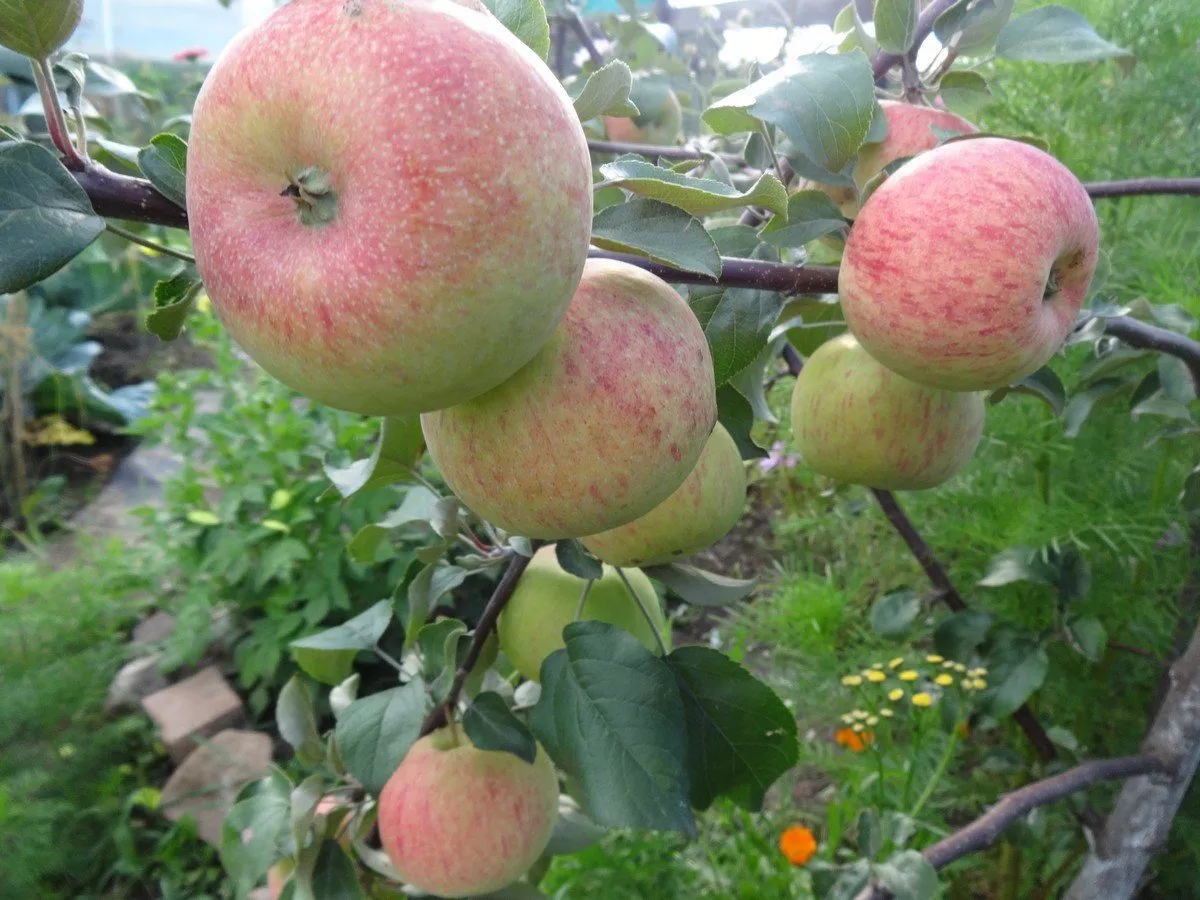
In 2019, our Borovinka dried up. Its buds swelled in the spring but didn't open. The entire upper part of the tree was gone, leaving only a few lower branches, which I kept wanting to cut off because they were growing close to the ground. Perhaps it didn't get enough moisture, and the tree died.
Since the spring of 2019 was rainless, and there was little snow in the winter, it melted by February, and we forgot to water it. This tree loves moisture, and if it's not watered enough, it can even lose its apple crop. Of course, we were disappointed, but in the summer, a powerful branch grew from the trunk. And this year (2020), to our surprise, it's completely covered with apples.
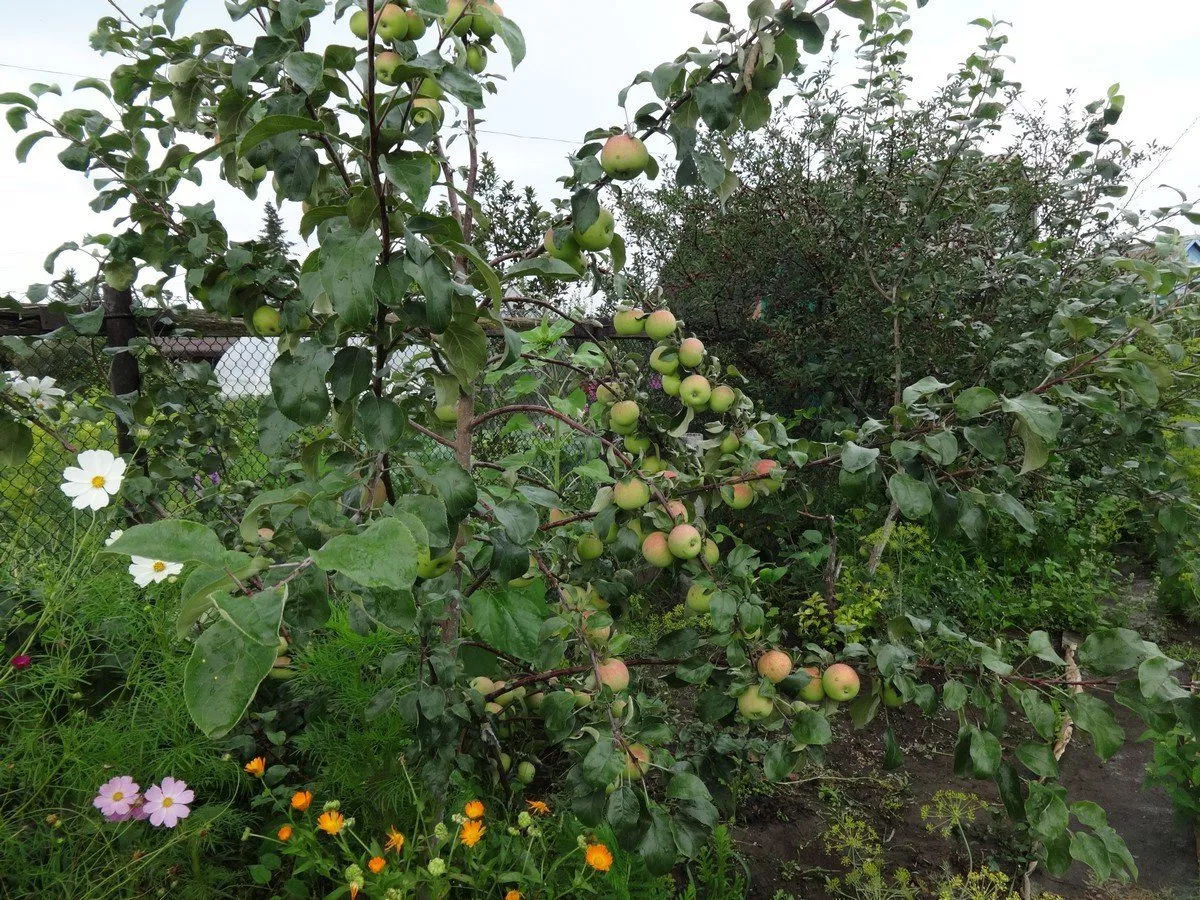
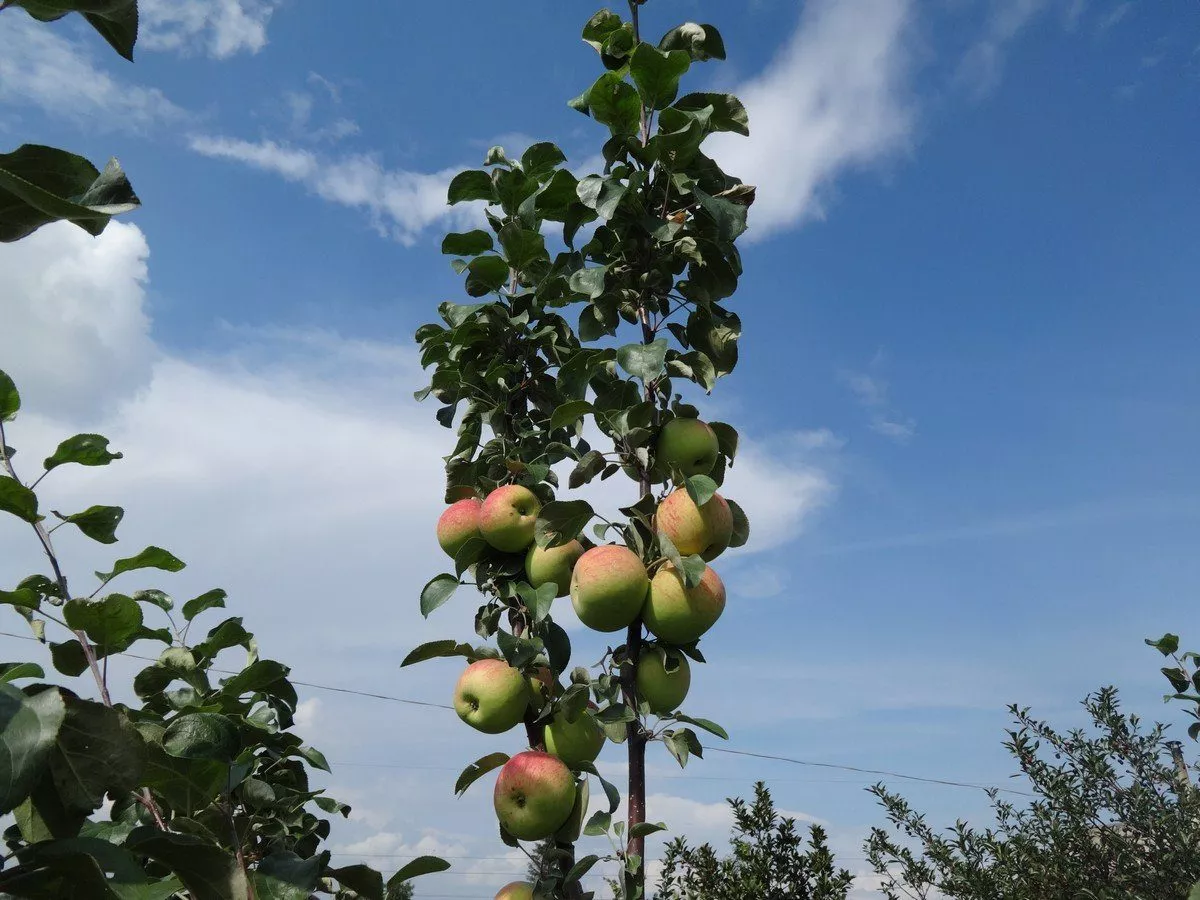
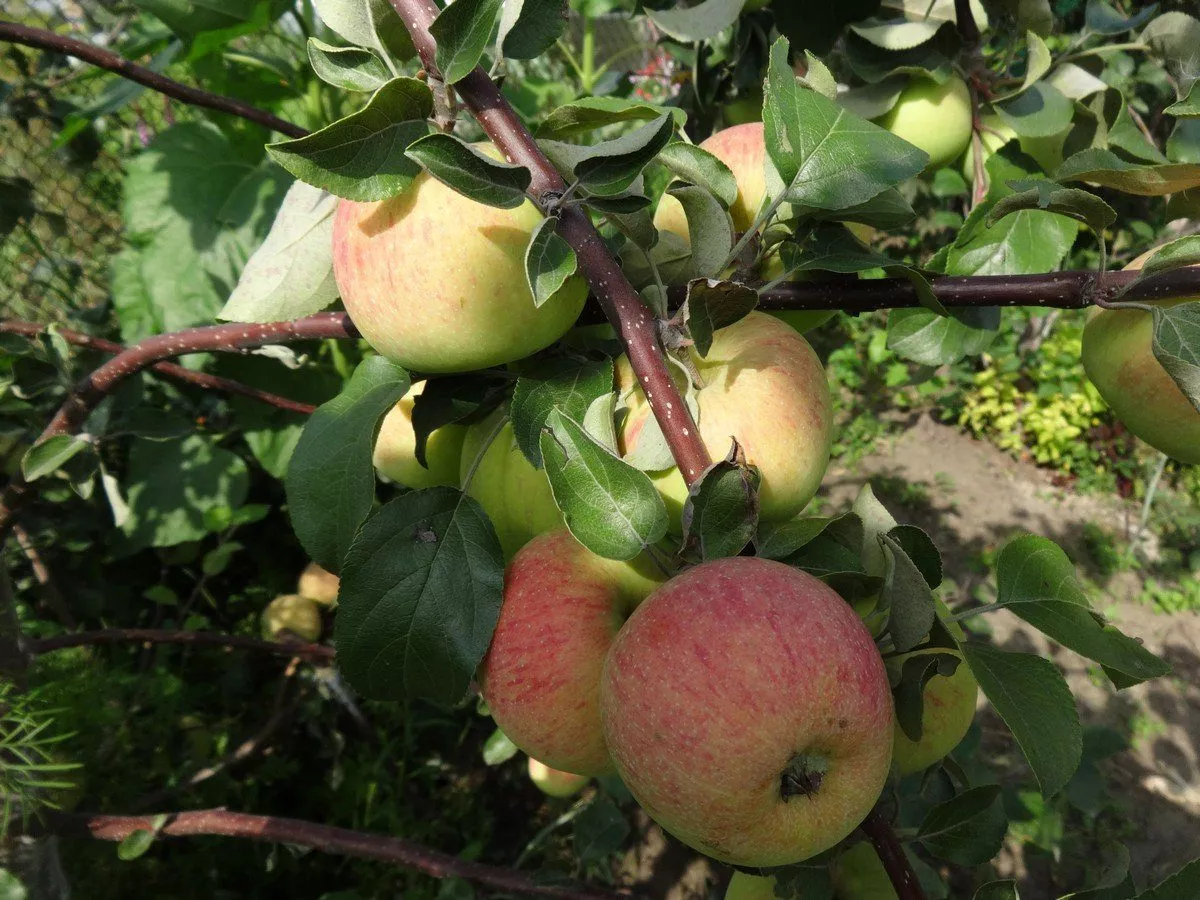
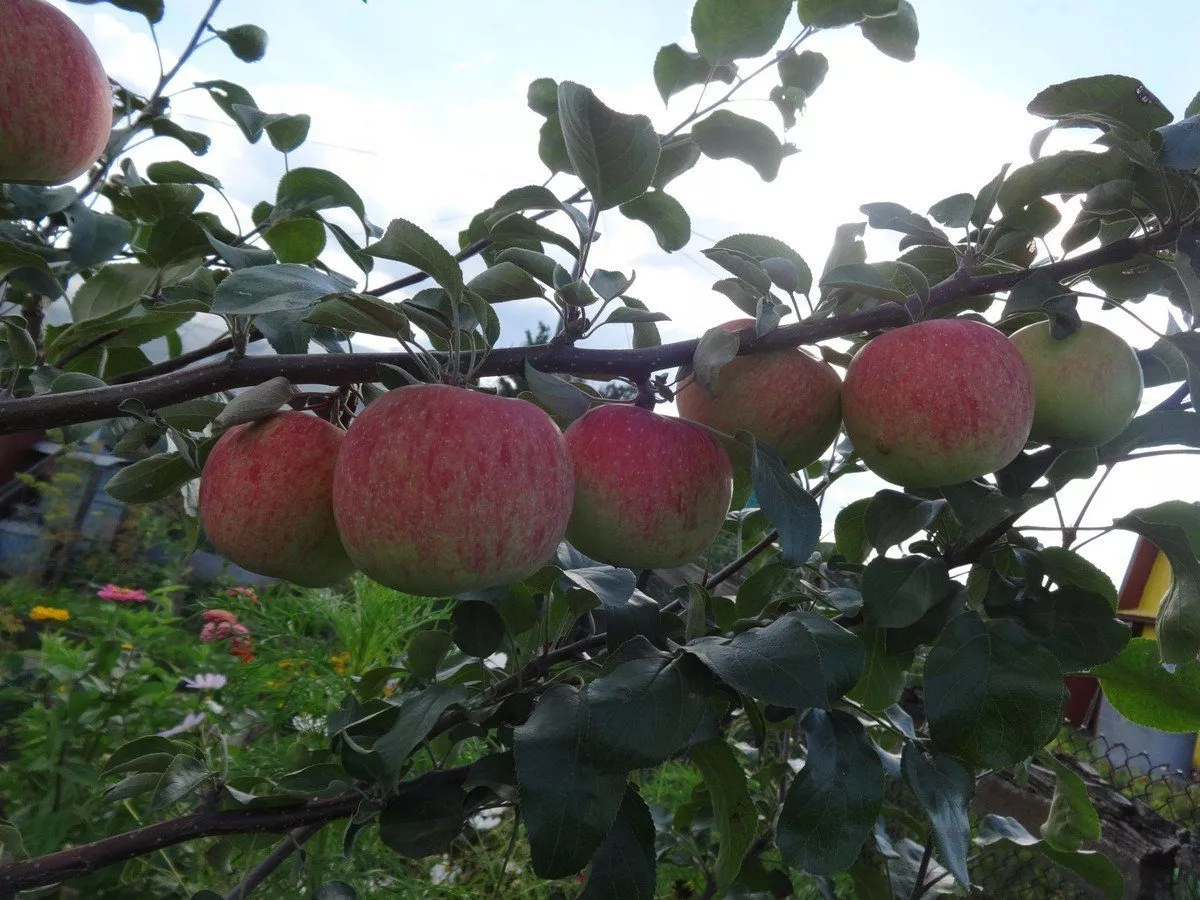
Apples started ripening in August. We love apples; we never run out of them, buying them year-round. Now we're eating our own.
Melba
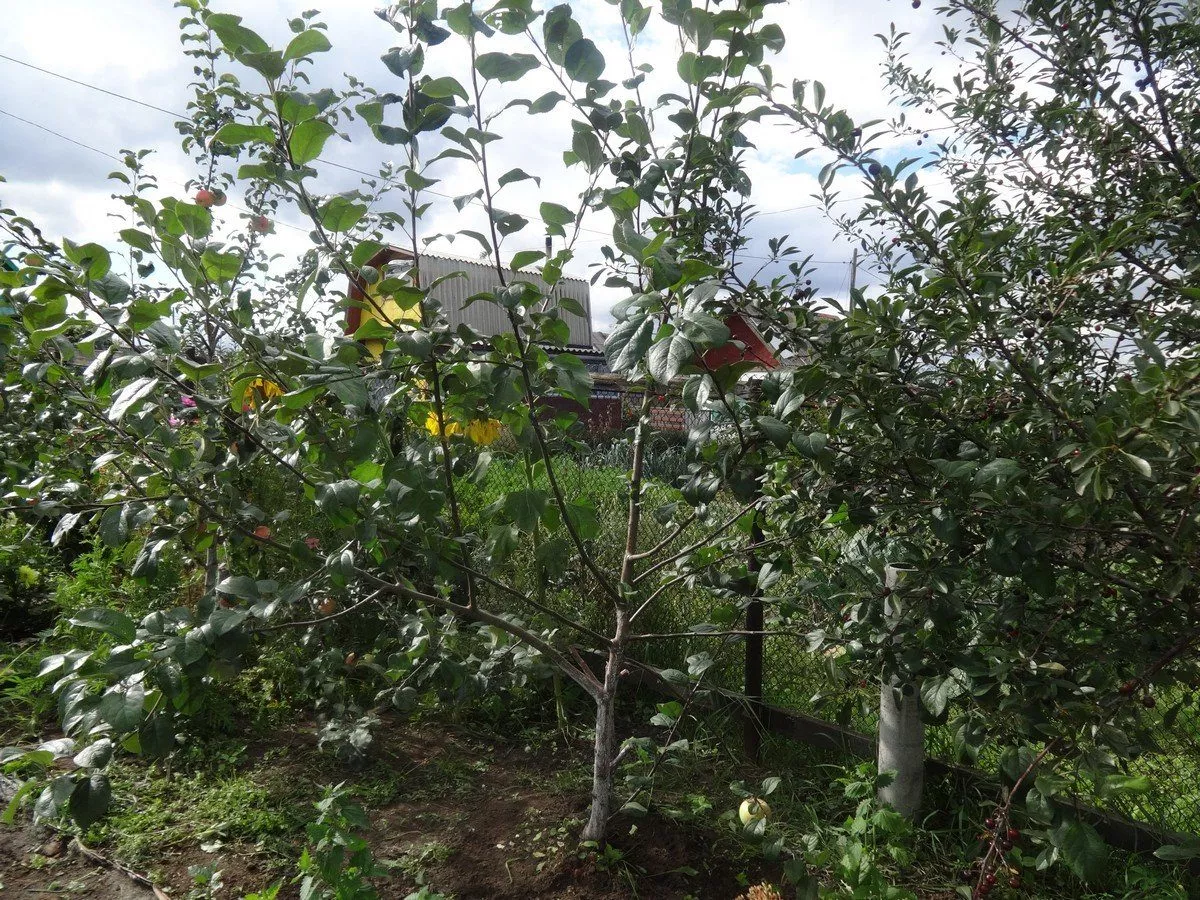
We've had no luck with Melba, though. The tree refuses to grow; almost all its branches freeze every year, but new ones grow throughout the season. This year, it bloomed for the first time, with just a few flowers, but the ovary fell off, leaving only one apple. It's still green, so we're waiting for it to ripen.
President
We have a columnar apple tree, the "President" variety. It's not suitable for our region; it's too cold in Siberia. It's been growing here for seven years now. The top of the tree froze during its first winter, but the small side branches didn't, and new side shoots gradually grew.
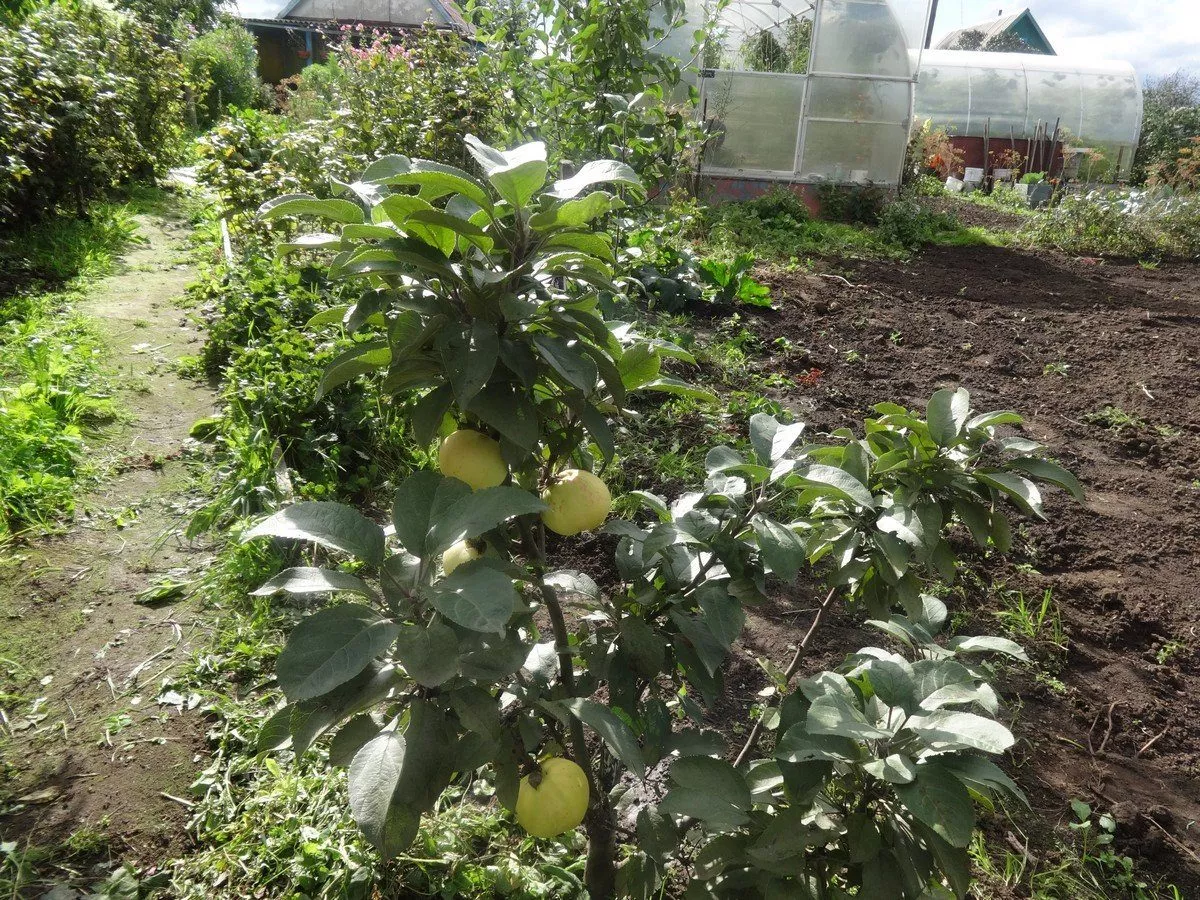
The tree doesn't look columnar; it's more like a bush, small and low, but it bears apples almost every year.
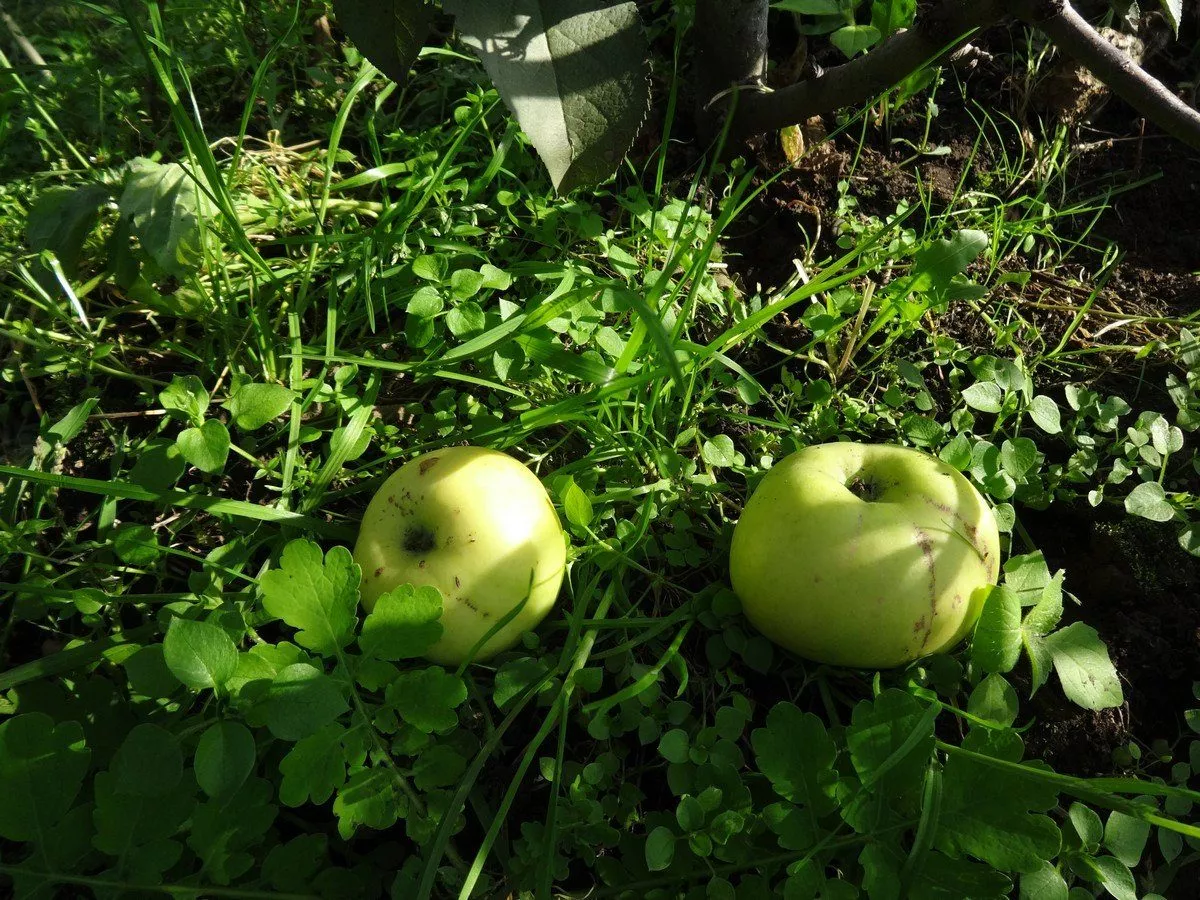
Of course, there aren't many of them, but they are very tasty and medium-sized. This year, our dwarf apple tree produced 13 ripe apples. Sure, some would laugh at such a harvest, but for us, it's a joy. The President's unripe fruits are green, and the ripe ones are yellow-white. The apples are quite large, rounded and flattened, somewhat reminiscent of a turnip, and very tasty and aromatic.
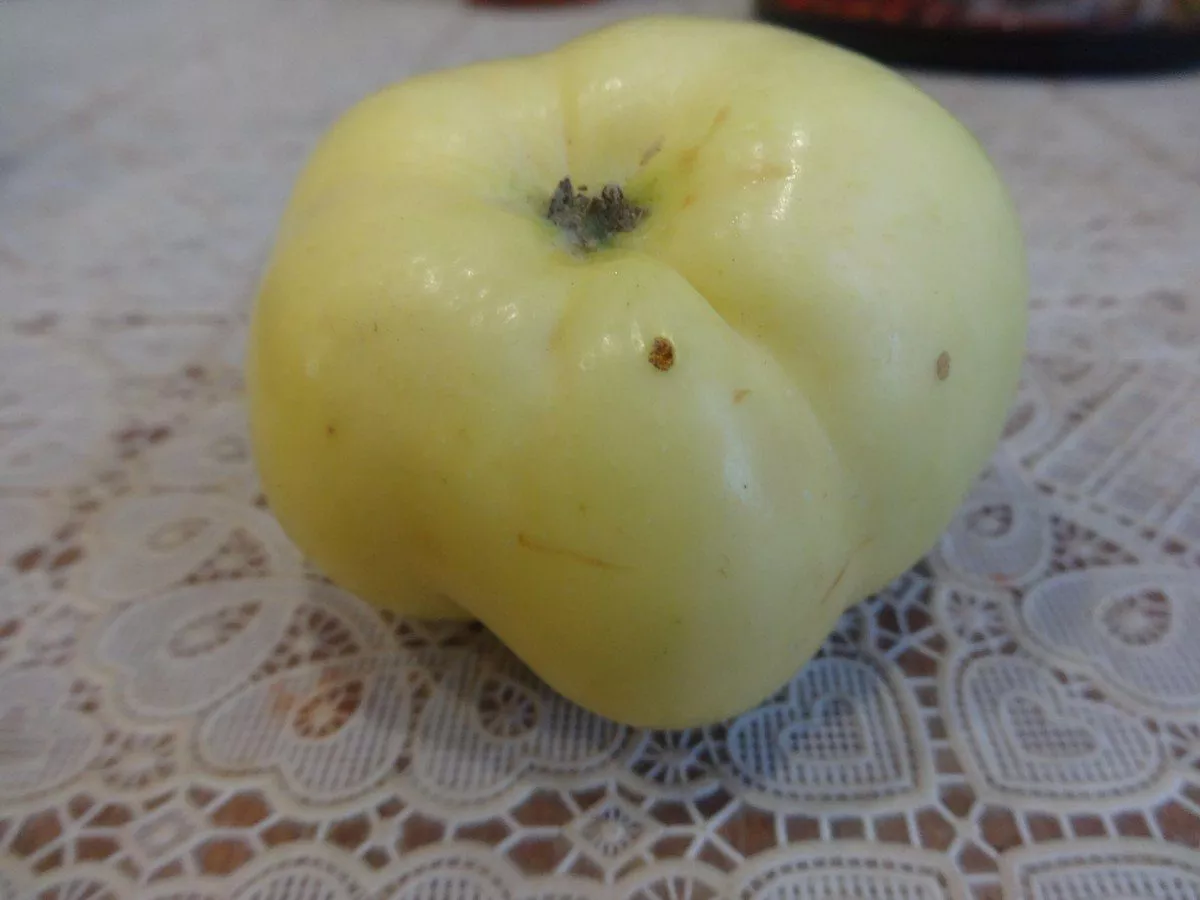
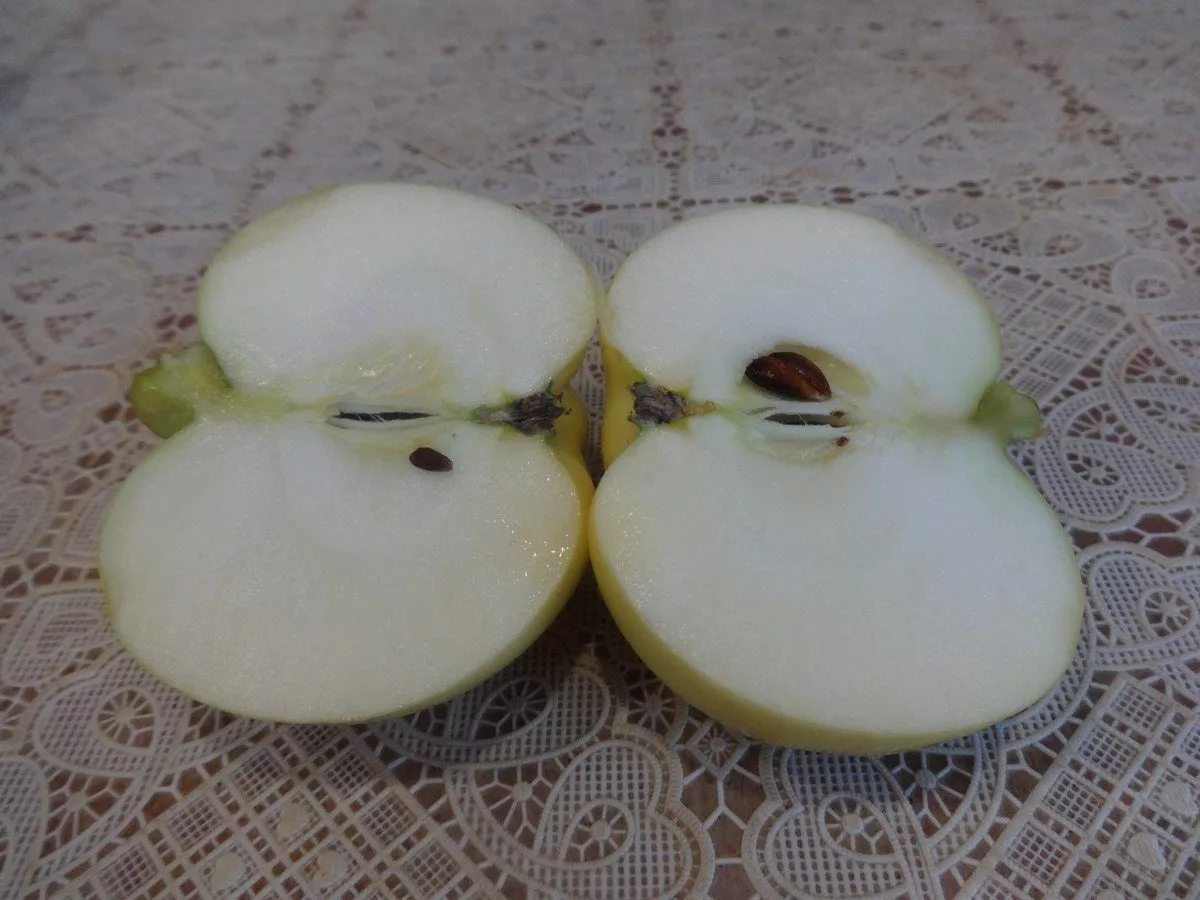
We all like them very much.
Tolunay
Two years ago, we bought another apple tree sapling with the unusual name Tolunai, which translates from Altai as Full Moon.
This variety was created by pollinating several varieties resistant to harsh climates. The tree is frost-resistant and medium-sized, reaching up to 3 meters in height.
The apples ripen in early autumn. They are round, weighing up to 130 grams, golden-yellow in color, and completely covered with dark red stripes. Ripe apples are juicy, crisp, and creamy in texture, and delicious.
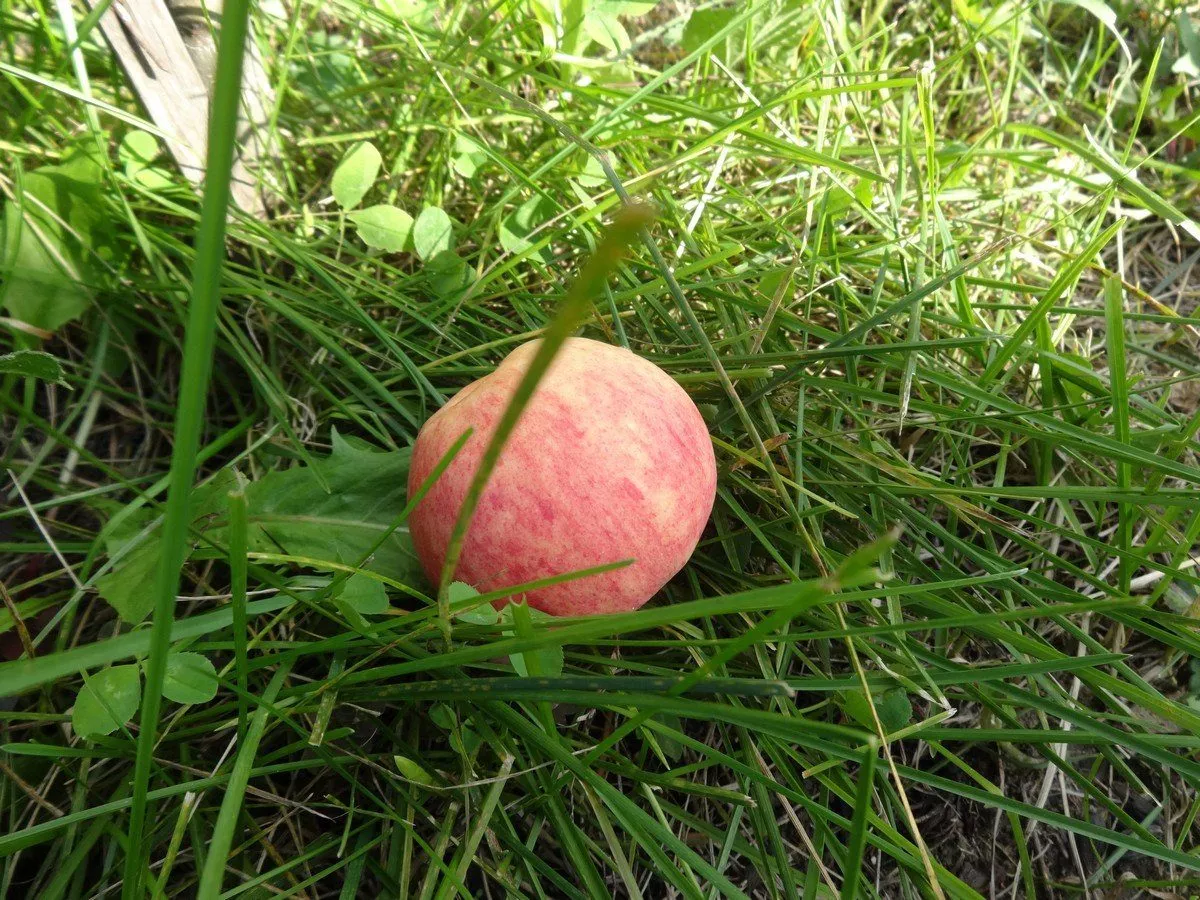
This is what we have for now.
The apple tree has grown well in two years and also blossomed this year and produced its first harvest - four apples ripened.
Pupil
In 2019, we bought three more seedlings, one of them called "Vospitannitsa." This tall, semi-cultivated apple tree tolerates severe frosts well and grows well in Krasnoyarsk. It bears small, 20-30-gram fruits, purple-red in color, with juicy, tasty greenish flesh. The fruits ripen in late August and have a very long shelf life.
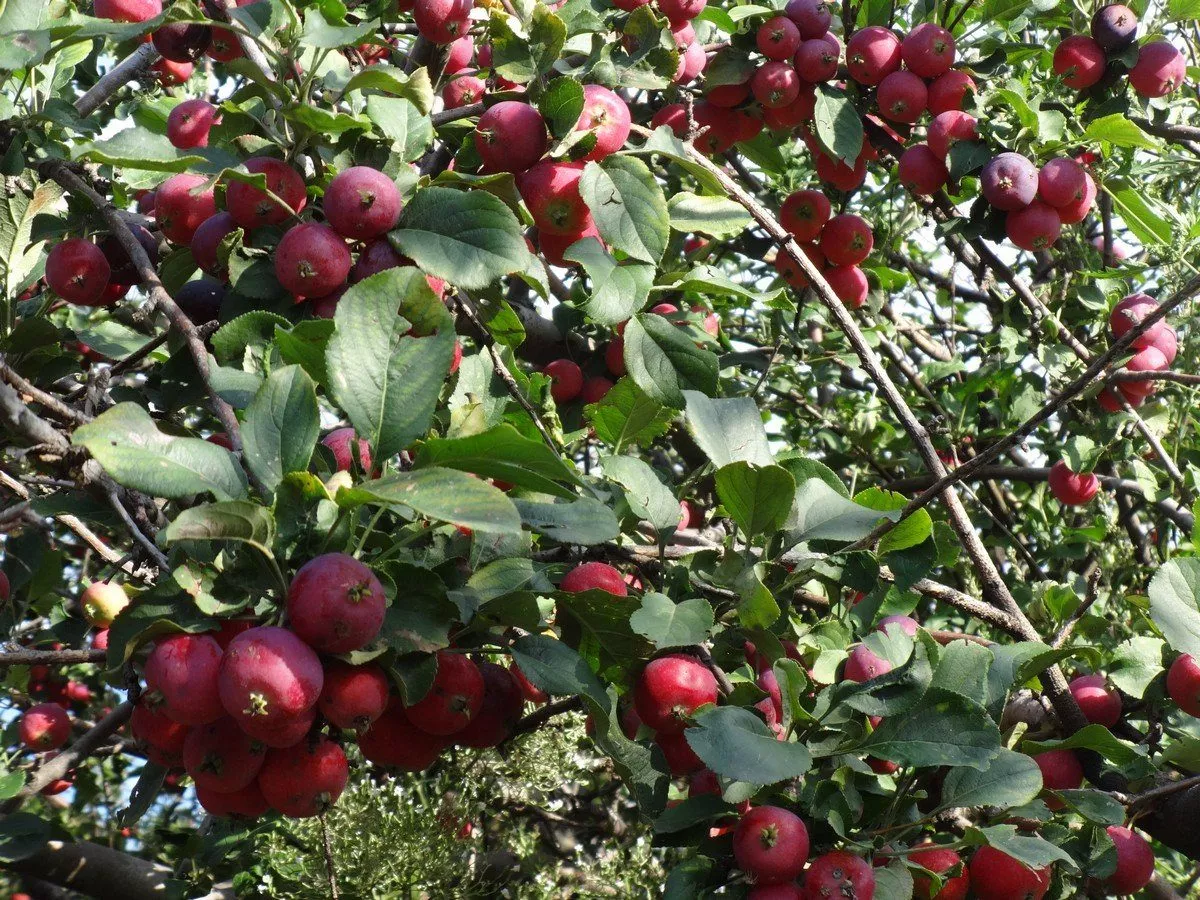
This is what it looks like now: the branches grow at an acute angle, the top consists of three branches.
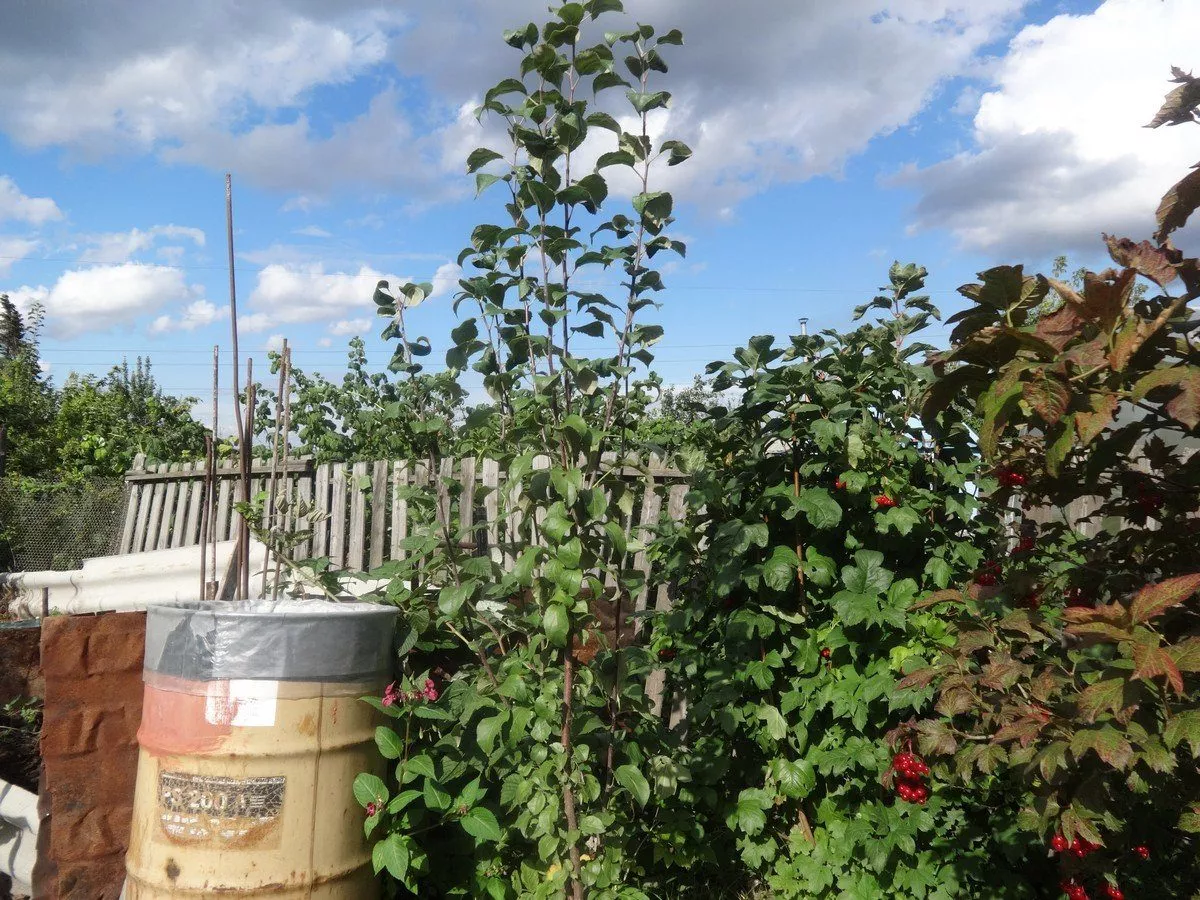
The crown needs to be properly formed, otherwise, when the apple tree bears fruit, the branches may break. My neighbors' young crape myrtle apple tree had almost all its branches break off under the weight of the harvest, as they were at a sharp angle. I'll think about what to do in the fall. I'll probably prune two branches at the top, leave the strongest one, and try to bend down the side shoots.
Brother of the Wonderful
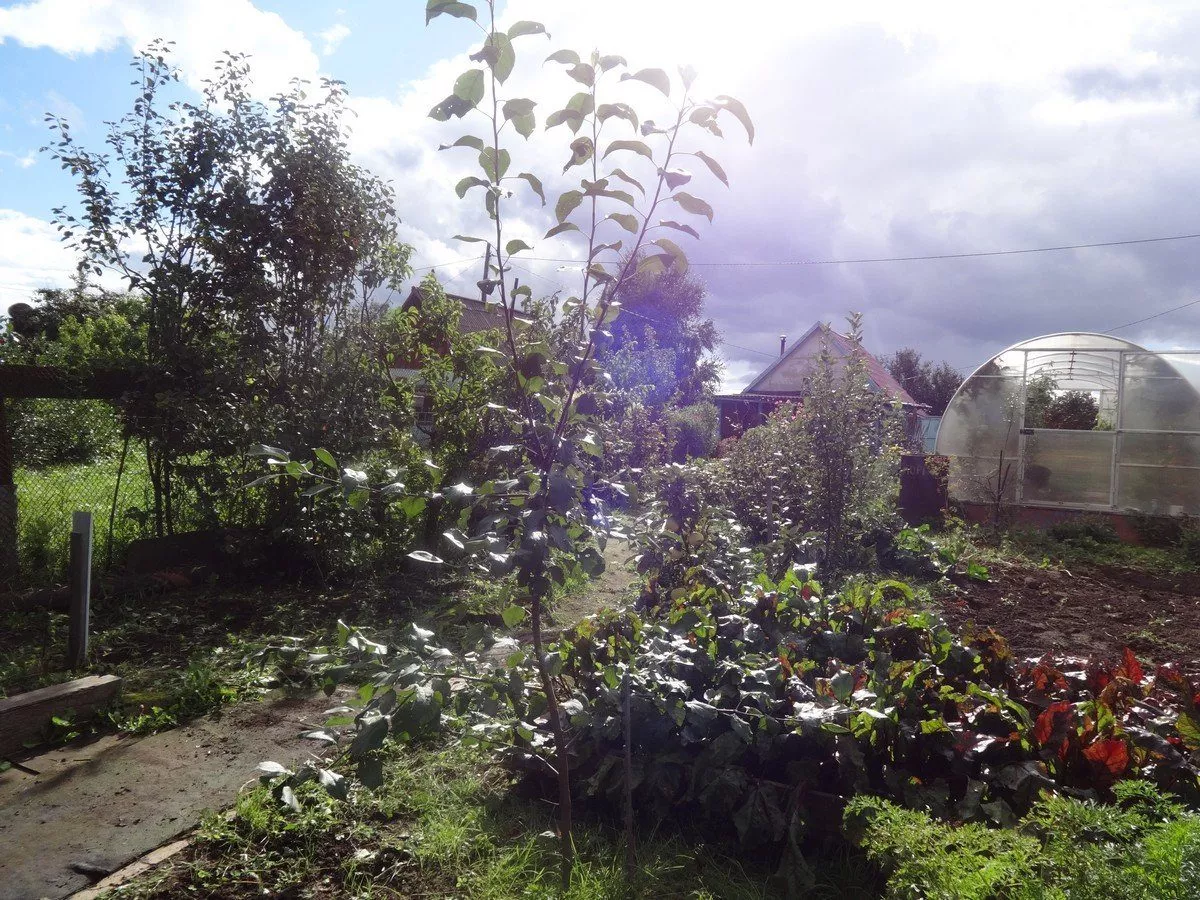
Brother Chudny is a dwarf apple tree with high winter hardiness, reaching a height of up to two meters. This apple tree produces medium-sized, greenish-yellow fruits with a red blush on the sides. The flesh is white and has a sweet and sour taste. The apples store well for up to 140 days.
The tree overwintered well and grew well this summer. Its crown needs to be properly shaped, with the lower branches bending down to the ground.
Cherished
We planted this semi-cultivated apple tree, the Zavetnoye variety, in the fall. We covered it with protective material for the winter, as we do with all small seedlings.
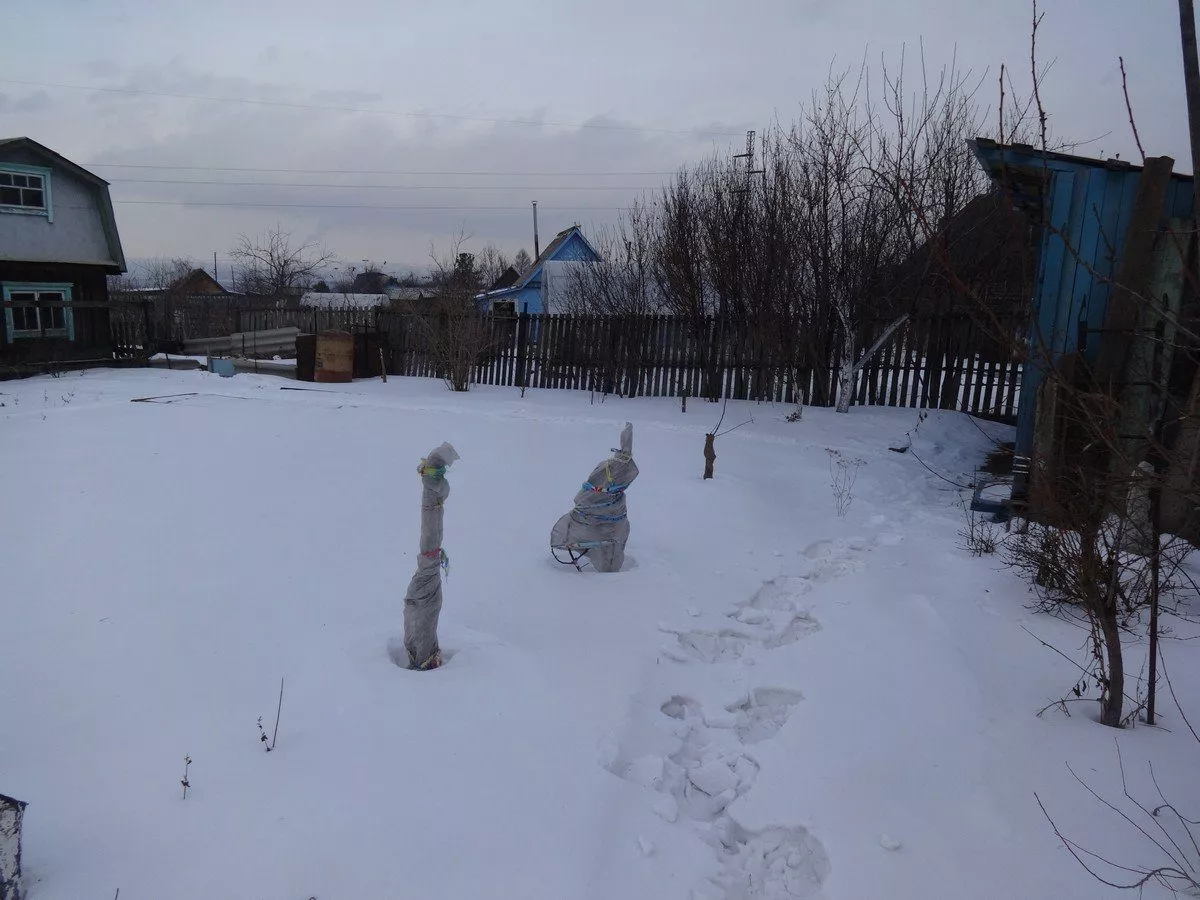
In the spring, it was all the same; part of the top was dry. The sapling barely grew over the summer; something about it not being happy with where we live at the dacha.
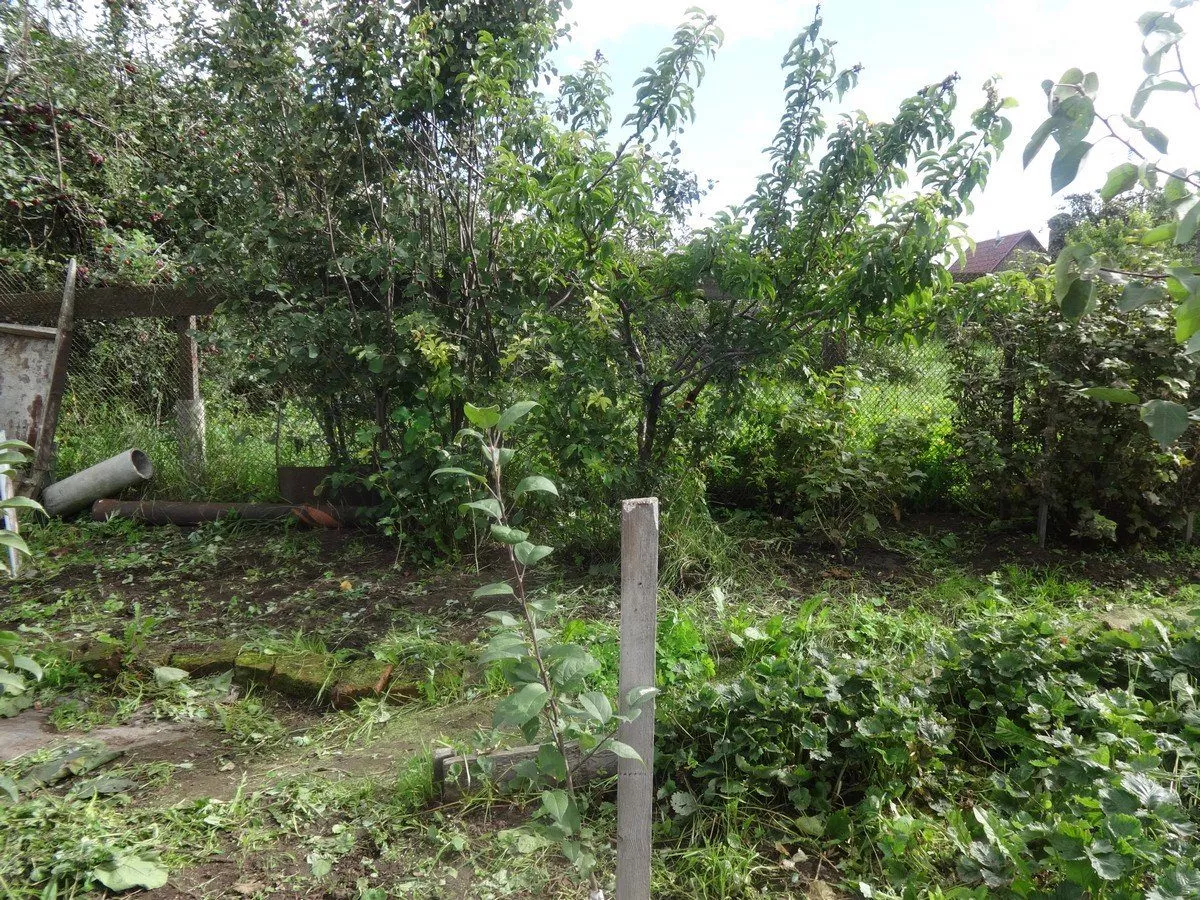
The tree should be short, with bright red, small fruits weighing 30-60 grams. The apples are juicy, delicious, crisp, sweet, slightly tart, and have a hint of strawberry. They store well. I really hope this apple tree takes root and continues to delight us with its bountiful harvest.
These are the apple trees growing at our dacha. I recently fed them with phosphorus and potassium fertilizer. As soon as we get a sunny, rainless evening, we'll treat the trees for pests and diseases.
Later, we'll trim off excess branches, whitewash the trunks, mulch the soil under the trees with humus, and closer to winter, wrap the young seedlings in covering material so they can survive the winter well.
A very interesting overview of your plantings. Surprisingly, your apple trees are starting to bear fruit quickly. My husband and I have apple trees in the southern Kuzbass region. We replant them every year. How do you protect the trees from mice, and what do you use to whitewash the young trees?
Good afternoon! Before planting apple trees at my dacha, I chose frost-hardy varieties suitable for our climate, varieties that begin bearing fruit in the fourth or fifth year after planting.
Ours are still very young, so for the winter, we wrap the trunks with covering material or light-colored tights. We sprinkle the soil under the apple trees with humus, and you can cover them with dried grass or pulled flower bushes—for example, marigolds—which will also protect the plantings from pests.
In winter, we add snow under the apple trees several times a year. It needs to be packed down firmly, making it harder for mice to reach the trunks. Mice have never chewed our trees, but to protect them, you can wrap the trunks with burlap, old nylon stockings, tights, fine wire mesh, or roofing felt.
In the fall, we whitewash the trunks with tree whitewash. We buy a ready-made acrylic paint-based mixture from flower shops, which already contains all the necessary ingredients to protect against diseases and pests. This whitewash is better than limewash alone, lasts longer on the trunks, and doesn't wash off in rain. We also whitewash the trunks in early spring to protect them from sunburn.