

Good afternoon, gardeners and summer residents. Are you ready for the new gardening season?
Perhaps some of you are already seeing the first sprouts, their tiny leaves reaching for the sun. And for others, as my husband says, "the seedlings are already sprouting." I haven't planted anything yet. But I'm stocking up on seeds and checking for germination.
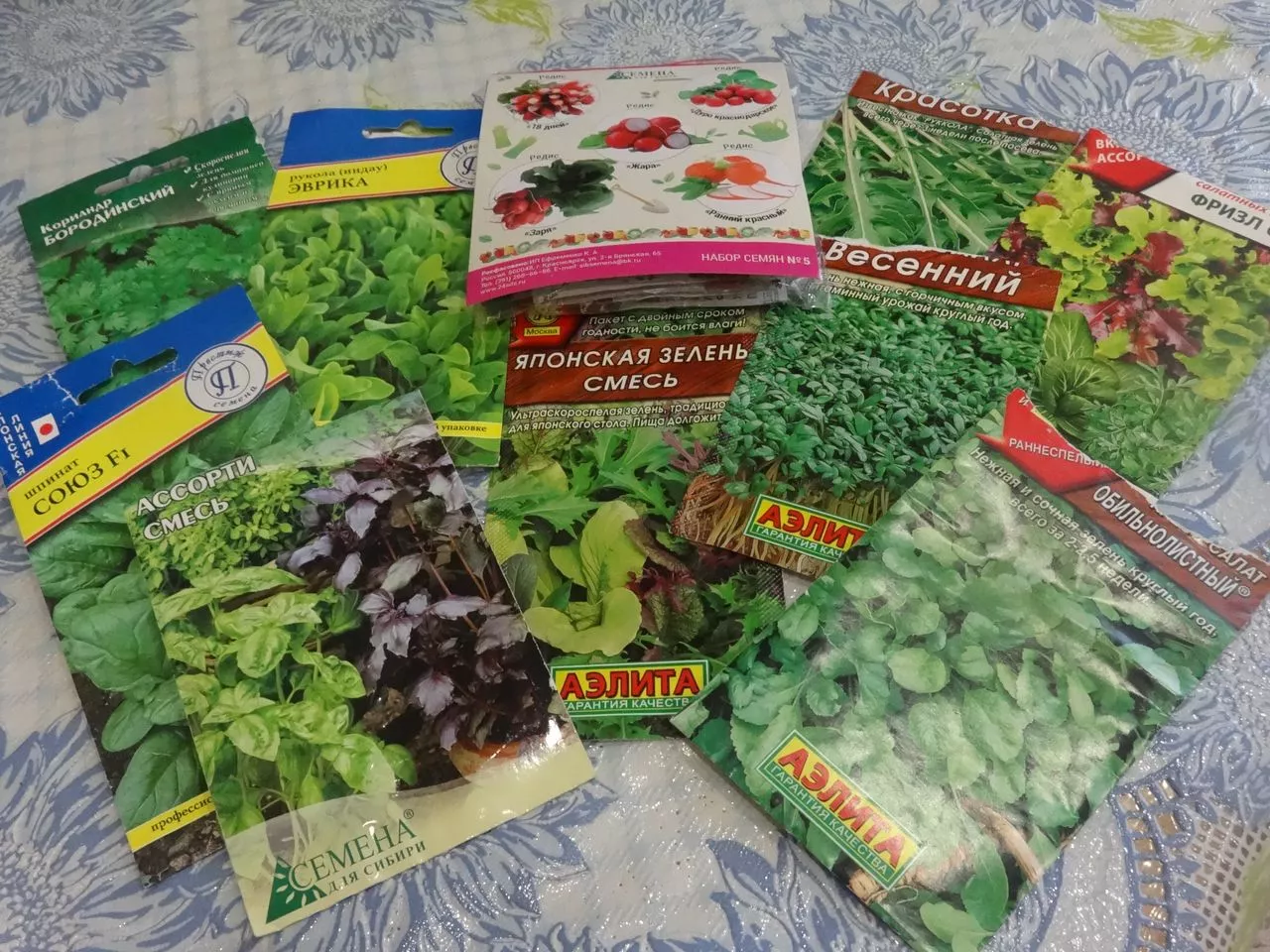
I want to tell you how we adapted to getting salads and other greens, as well as radishes, earlier.
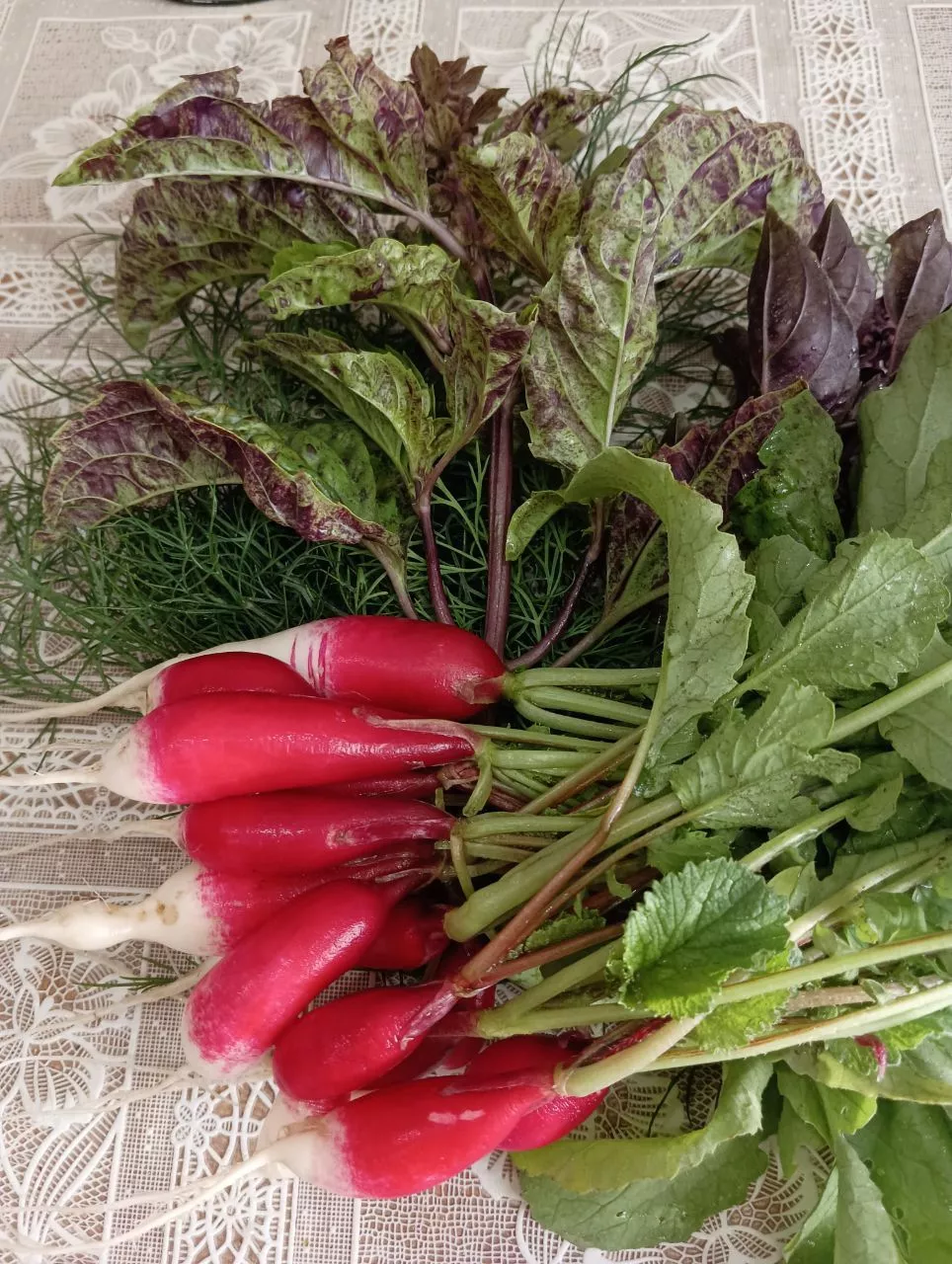
Here in Siberia, March can be considered a winter month, with nights sometimes dropping below -20°C. We have a greenhouse at our dacha, and by mid- to late March, we begin planting our first crops. Our greenhouses are kept closed in winter, and we pile snow inside throughout the winter.
Closer to the time of planting, we cover the ground with covering material or dark film; the soil underneath it warms up faster.
We dig and sow the seeds. We make furrows, water with phytosporin or a weak solution of potassium permanganate, bury the seeds in the soil, and cover with a covering material.
If it's really cold, we also cover the plants with plastic wrap. After about a week or two, the first shoots will begin to emerge from the soil.
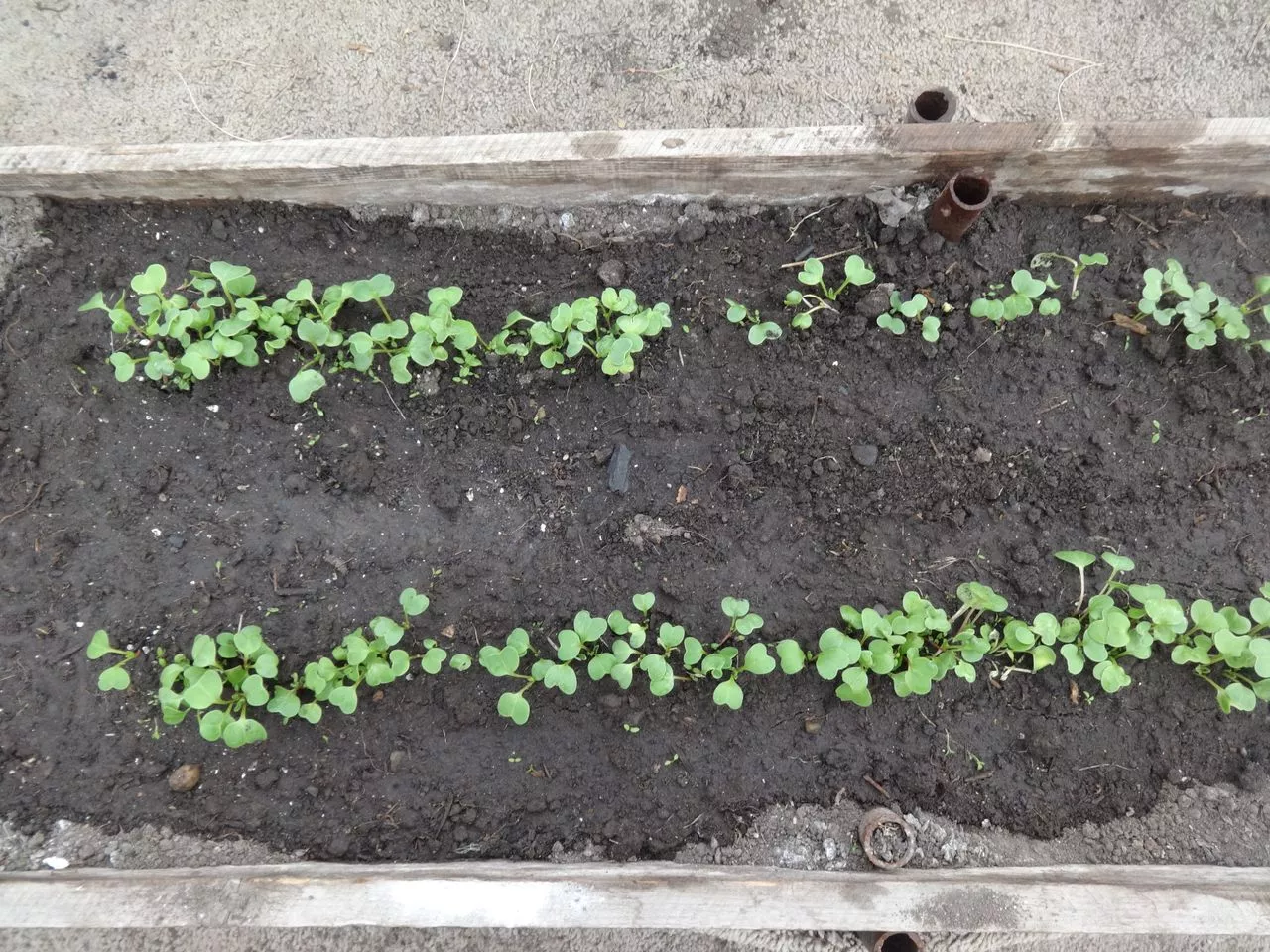
At this time, it's important not to overheat them under cover. Ideally, they should be uncovered during the day and covered at night. But in the spring, we don't visit our dacha every day—once a week and on weekends. The days are warm at this time, the sun warms the air and soil, and weeds begin to sprout in the greenhouses, even though it's still frosty at night. And sometimes, snow falls in April and May.
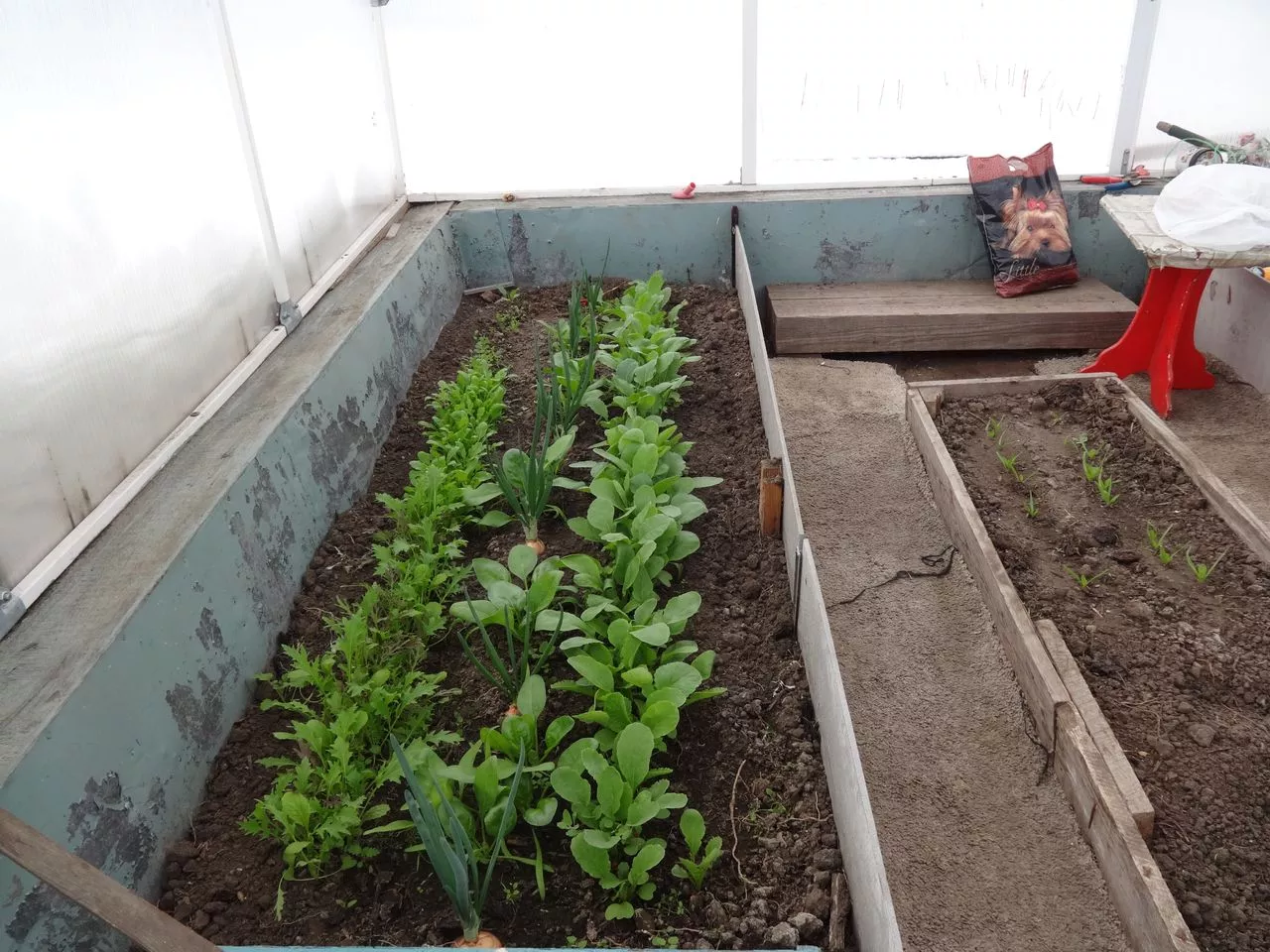

What do we grow in the greenhouse?
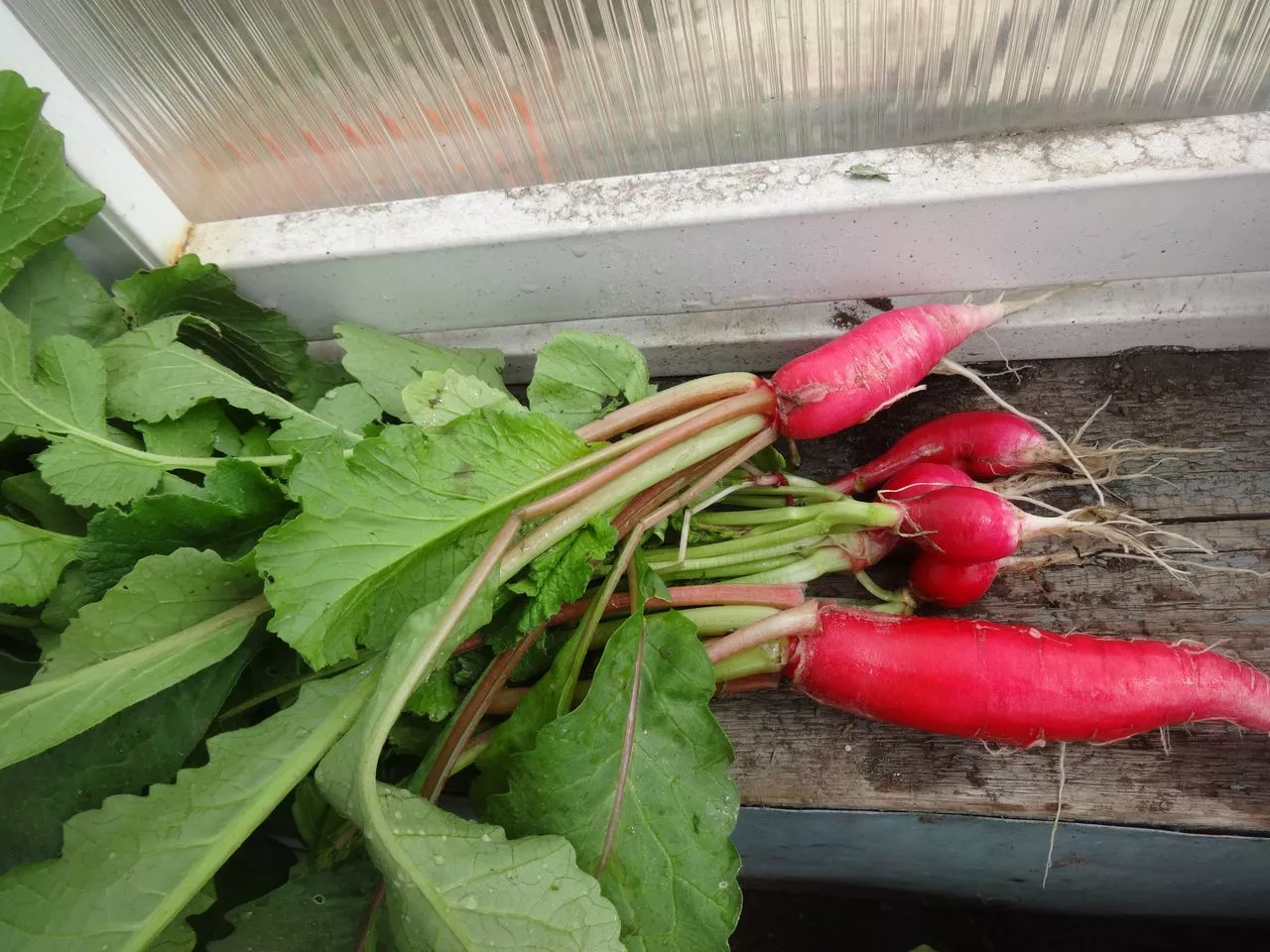
Radish is the very first spring vegetable.
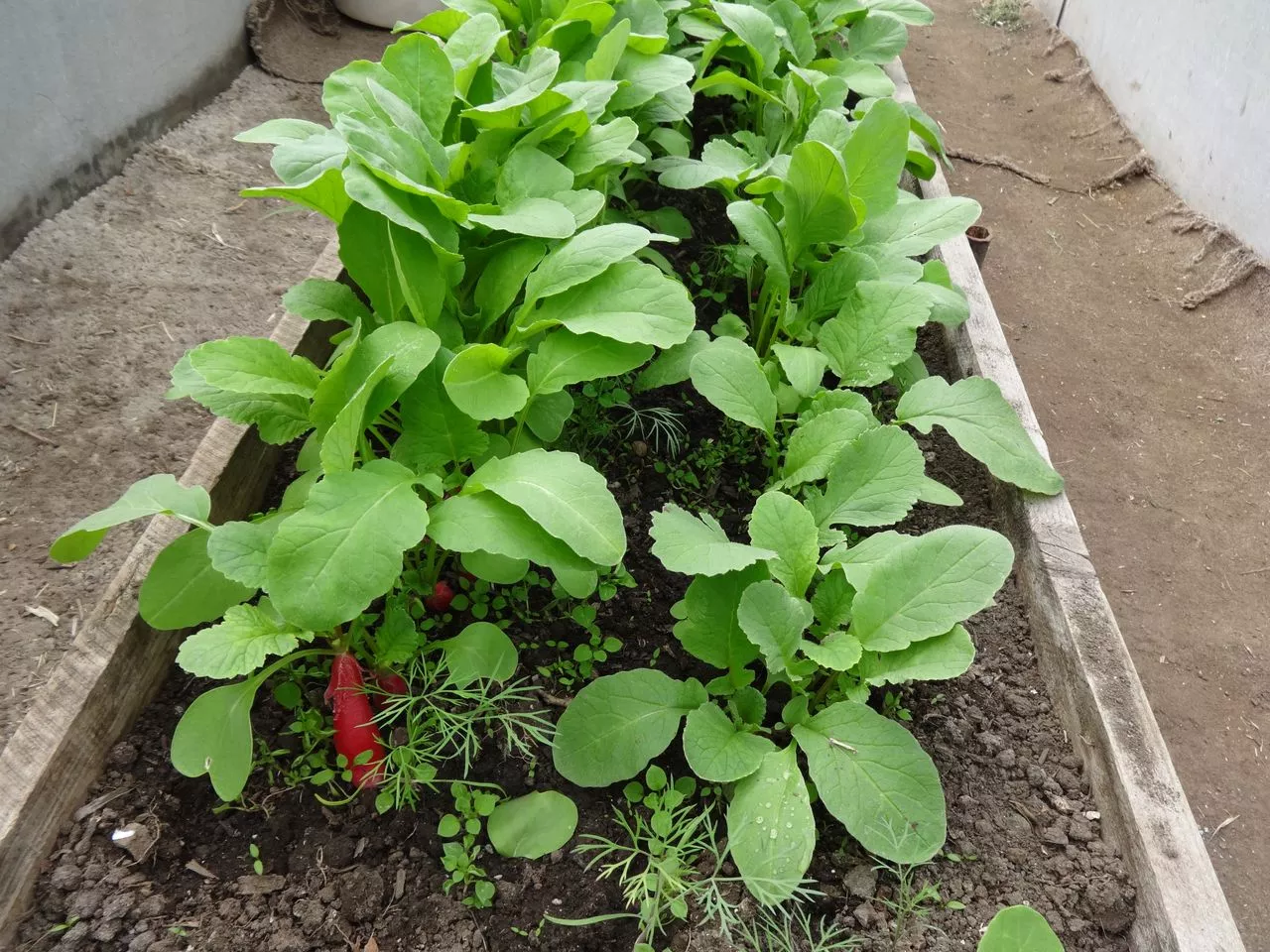
We try to grow early varieties, such as '18 Days,' 'French Breakfast,' 'Zarya,' 'Zhara,' and 'Ranniy Krasny.' They grow quickly and don't like the heat in the greenhouse. To prevent them from bolting, sow early; remove the covering material as soon as the seedlings emerge. Radishes require ample watering; if the sprouts are underwatered, they won't be useful. The roots won't fill out, and the radishes will produce flower stalks and bloom. Instead of a juicy, crunchy radish, you'll end up with a bouquet.
We place containers of water in the greenhouse; if the snow hasn't melted yet, we fill them with water. But we mostly bring water from home. Water doesn't appear at the garden plot until May. We pick our first radishes in early May.
We're planting onions in greenhouses, using small bulbs. I soak the bulbs in warm water at home first, then wrap them in a damp cloth and keep them in the refrigerator to encourage rooting. I plant the rooted bulbs in the greenhouse.
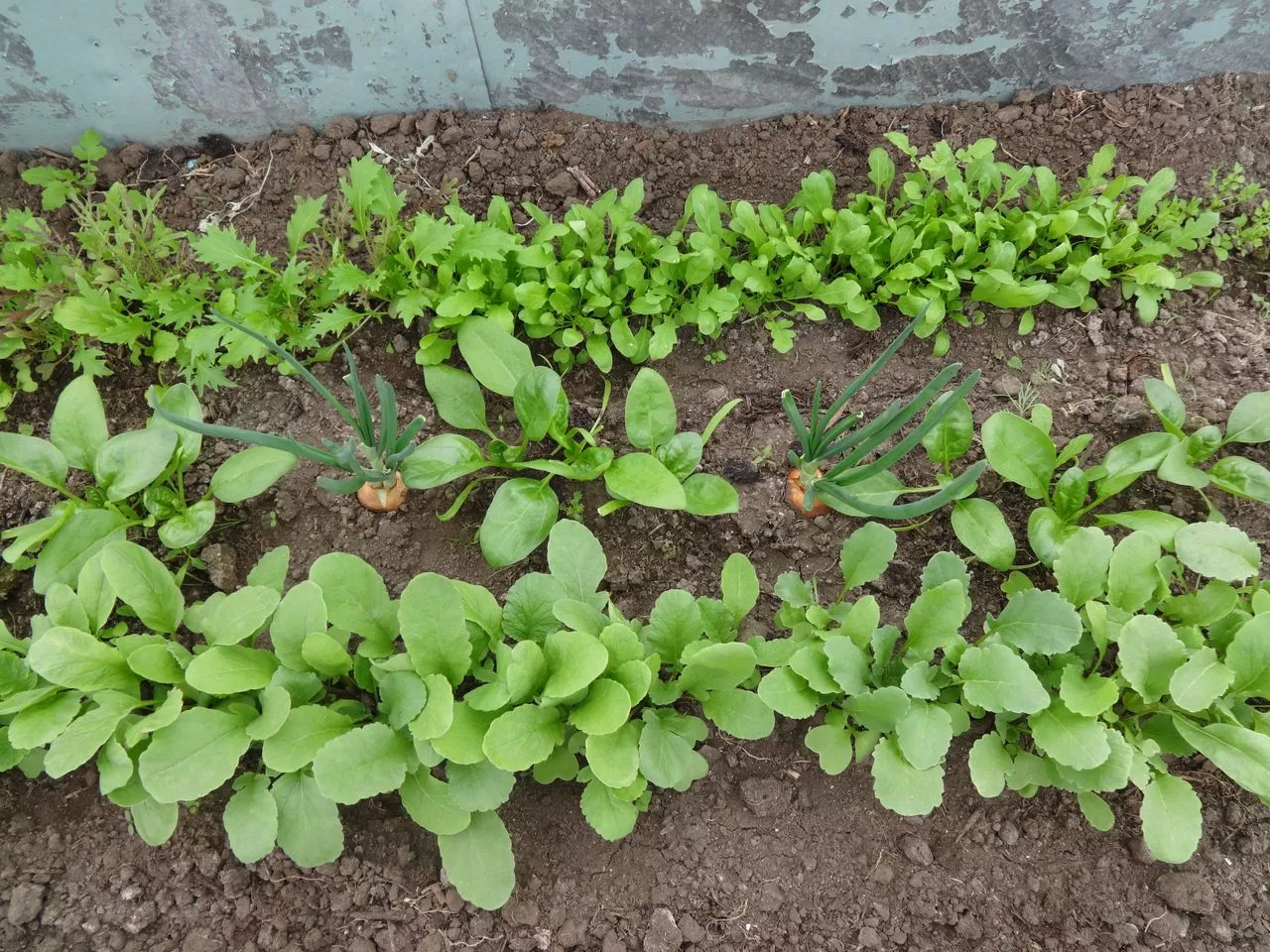
We are used to eating green onions all year round; we grow them on the windowsill all winter, and since the end of March, the onions have been growing in the greenhouse.
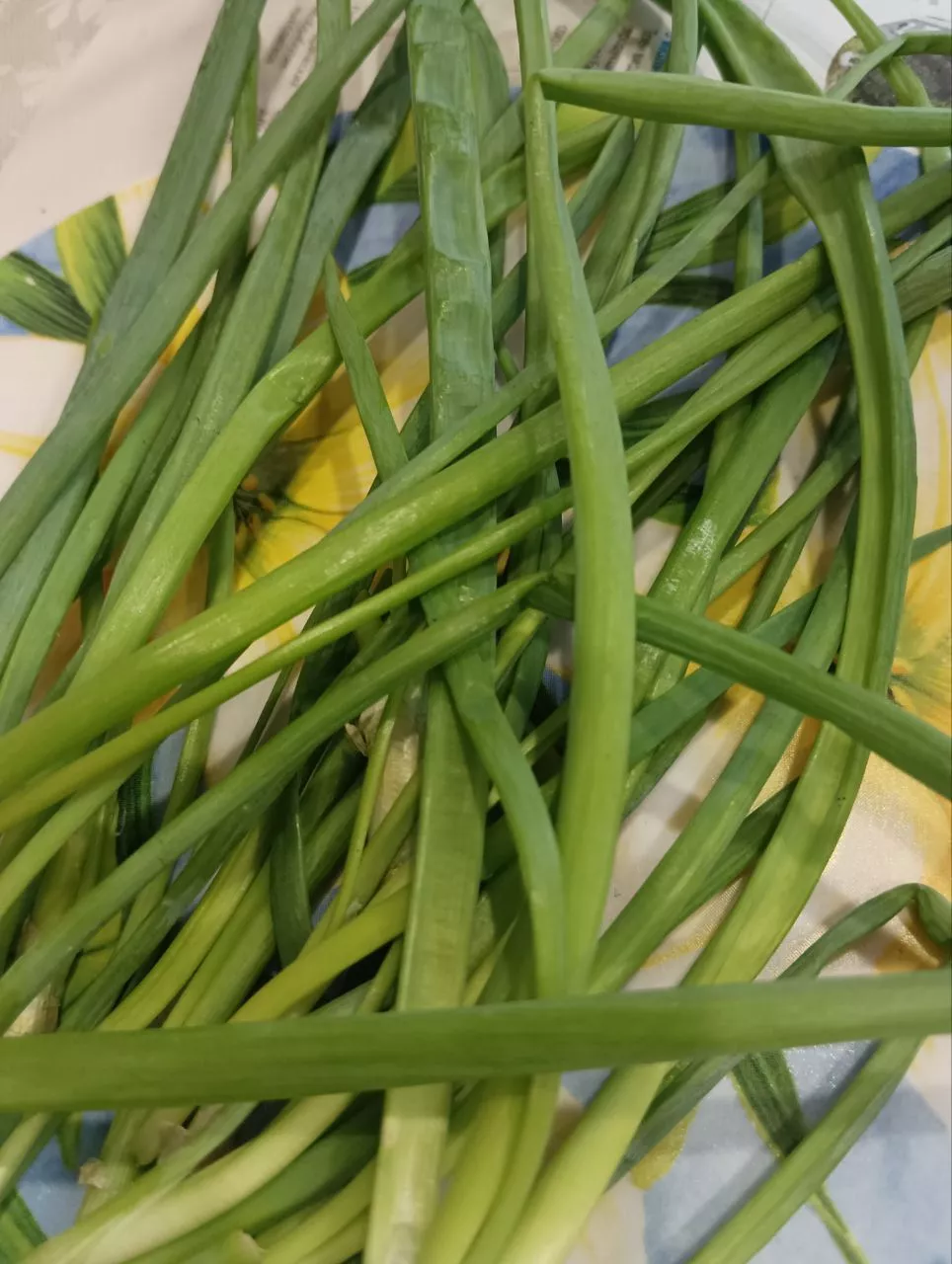
Soon, the first sprouts of chives, chives, and scallions will appear in the garden. Until the ground thaws, the onions will grow in the greenhouse.
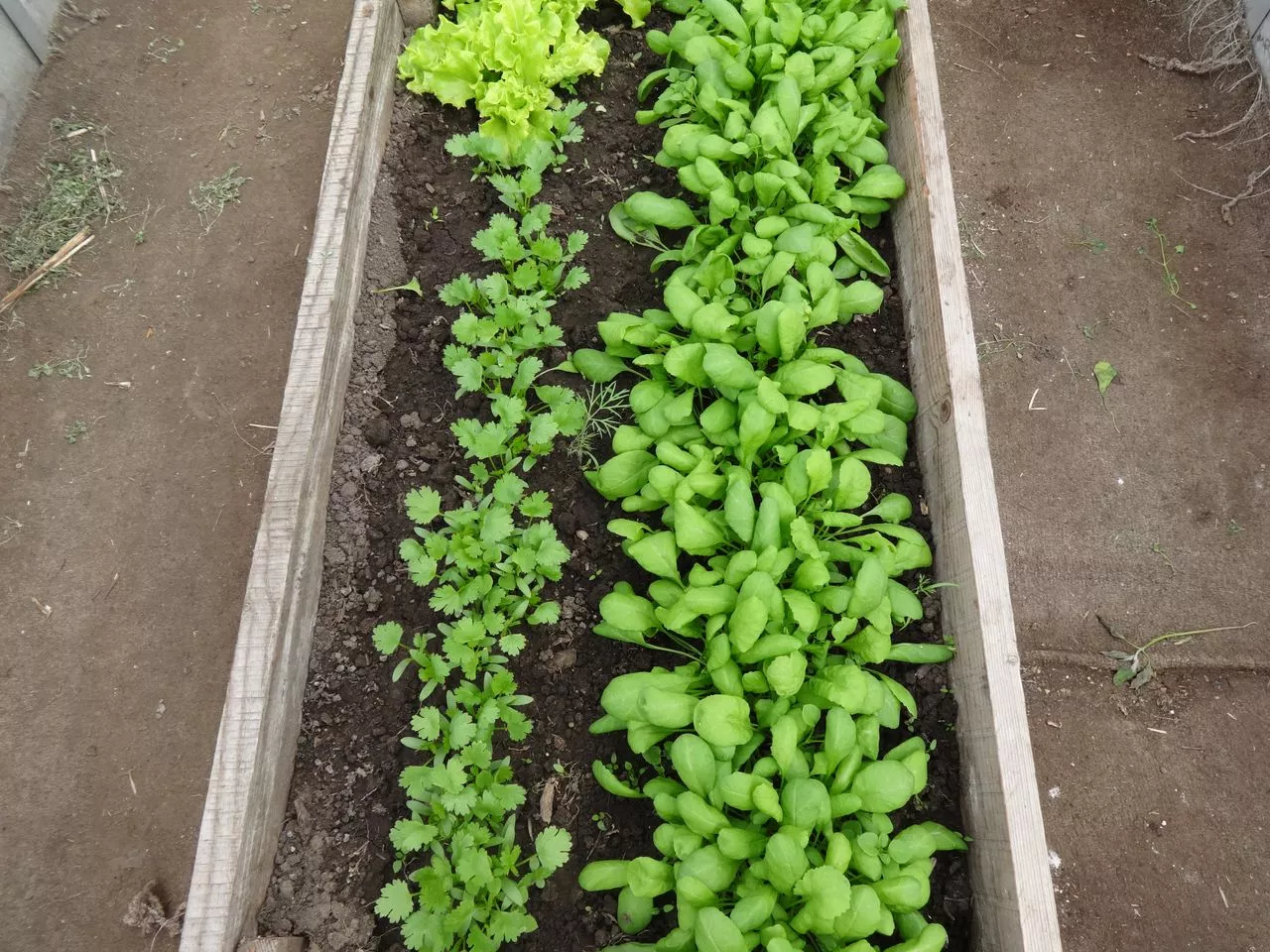
The next crop that is ideal for growing in a greenhouse in early spring is spinach.
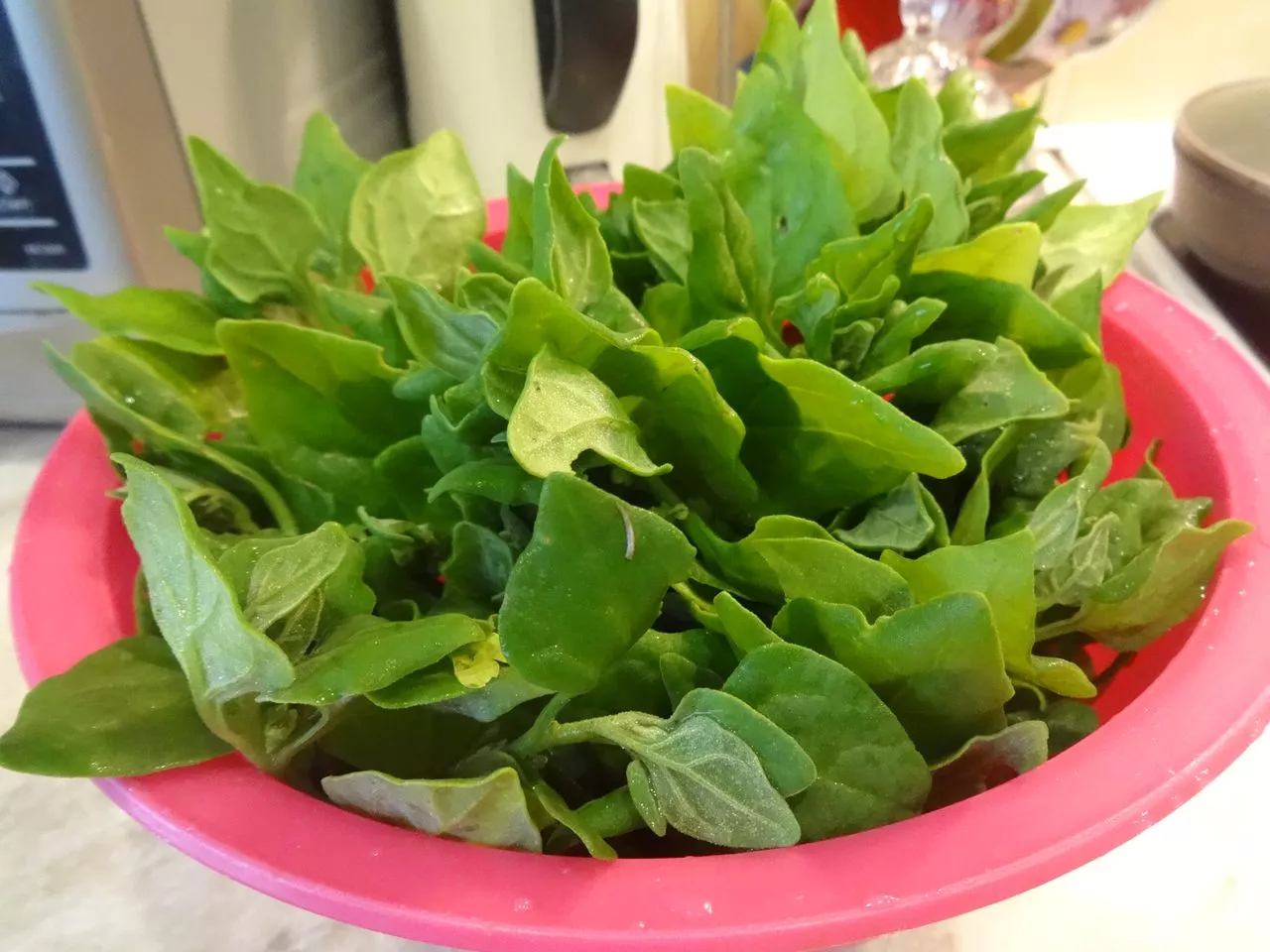
Like radishes, it thrives in cool conditions. If sown in mid-March, you can harvest as early as early May. We grow varieties such as Krepysh, Zhirnolistny, Matador, and Soyuz-F1. When the greenhouse is hot, spinach quickly blooms.
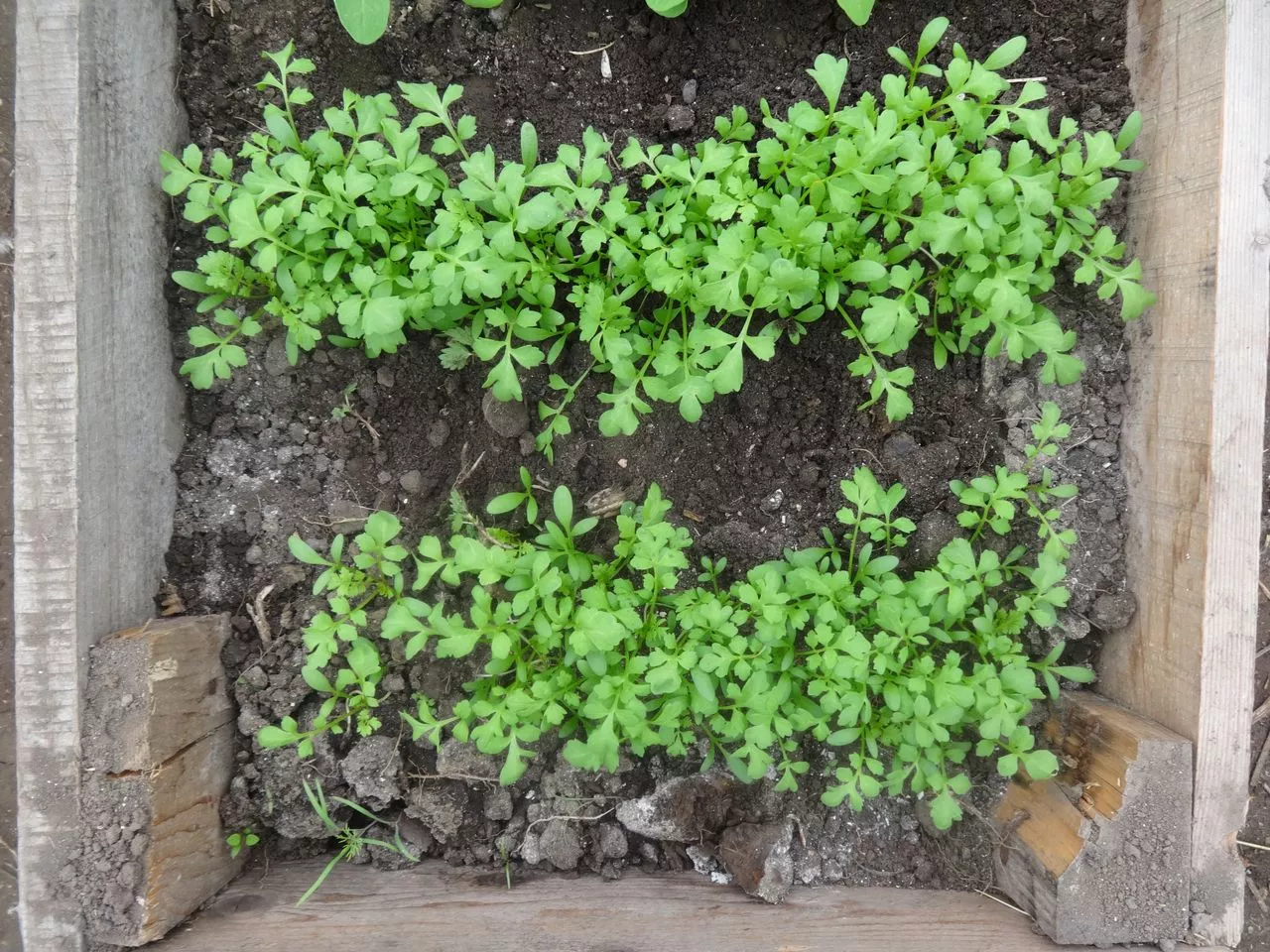
Watercress is perfect for growing in early spring; seedlings emerge quickly, and juicy, spicy greens with a mustard flavor develop in 2-3 weeks. We sow the Vesenniy, Zabava, and Obilnolistny varieties.
Leaf lettuces - Obzhorka, Emerald Lace, a mix of salad crops - Frizzle Sizzle, which includes such crops as lettuce Typhoon, Carmen, watercress - lettuce Vanka Kucheryavy, Indau variety Hudey yummy, Chinese cabbage Krasa Vostoka, Sarepta mustard Chastushka.
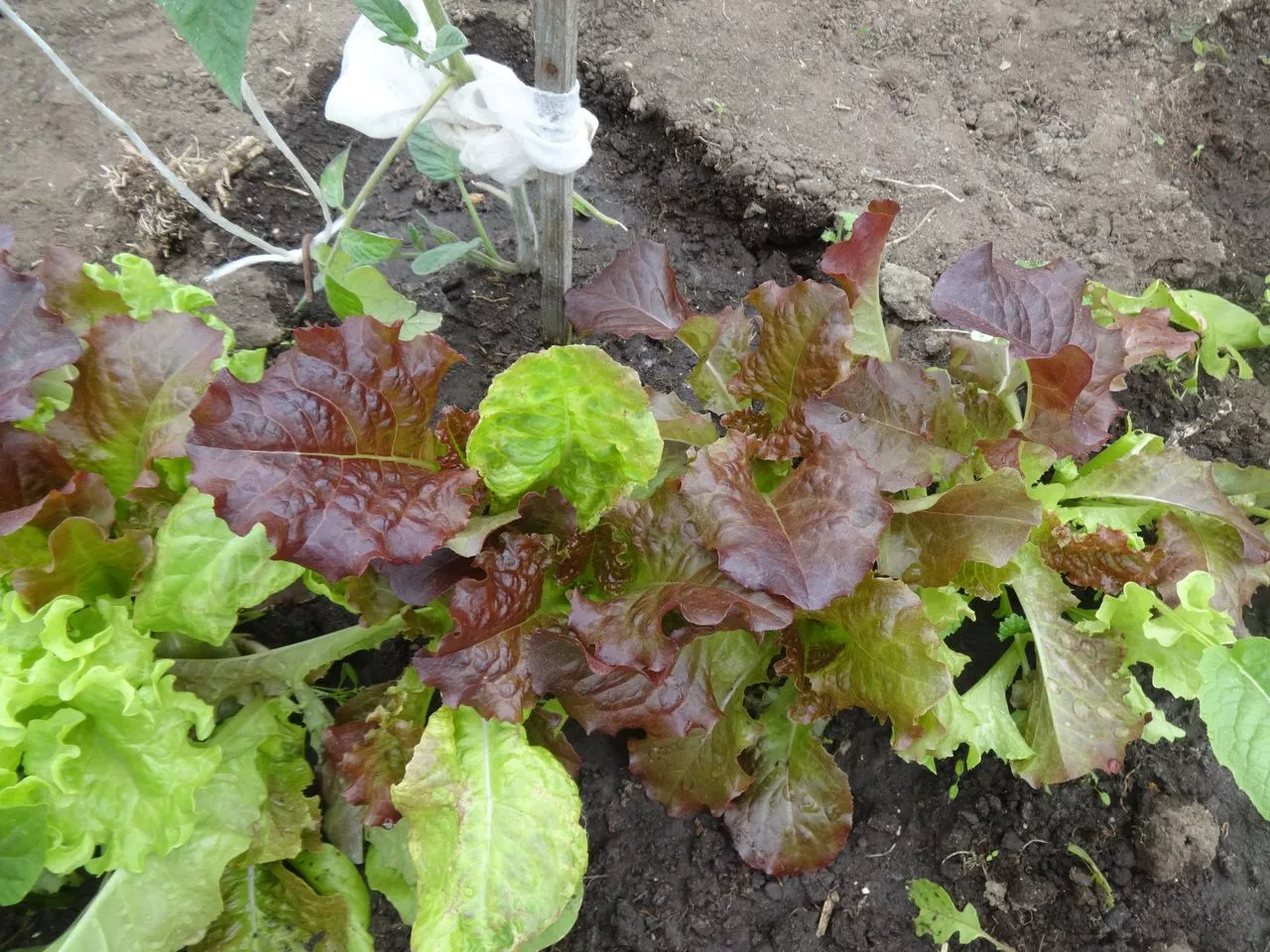
I really like this mixture. I plant it outdoors several times during the summer.
I also sow Japanese greens every year, which include Chinese cabbage called "Swallow," Japanese cabbage called "Mizuna," vegetable amaranth called "Krepysh," and salad mustard called "Volnushka." The mixture grows quickly, and within two to three weeks after germination, you can harvest the greens, which are rich in vitamins and microelements.
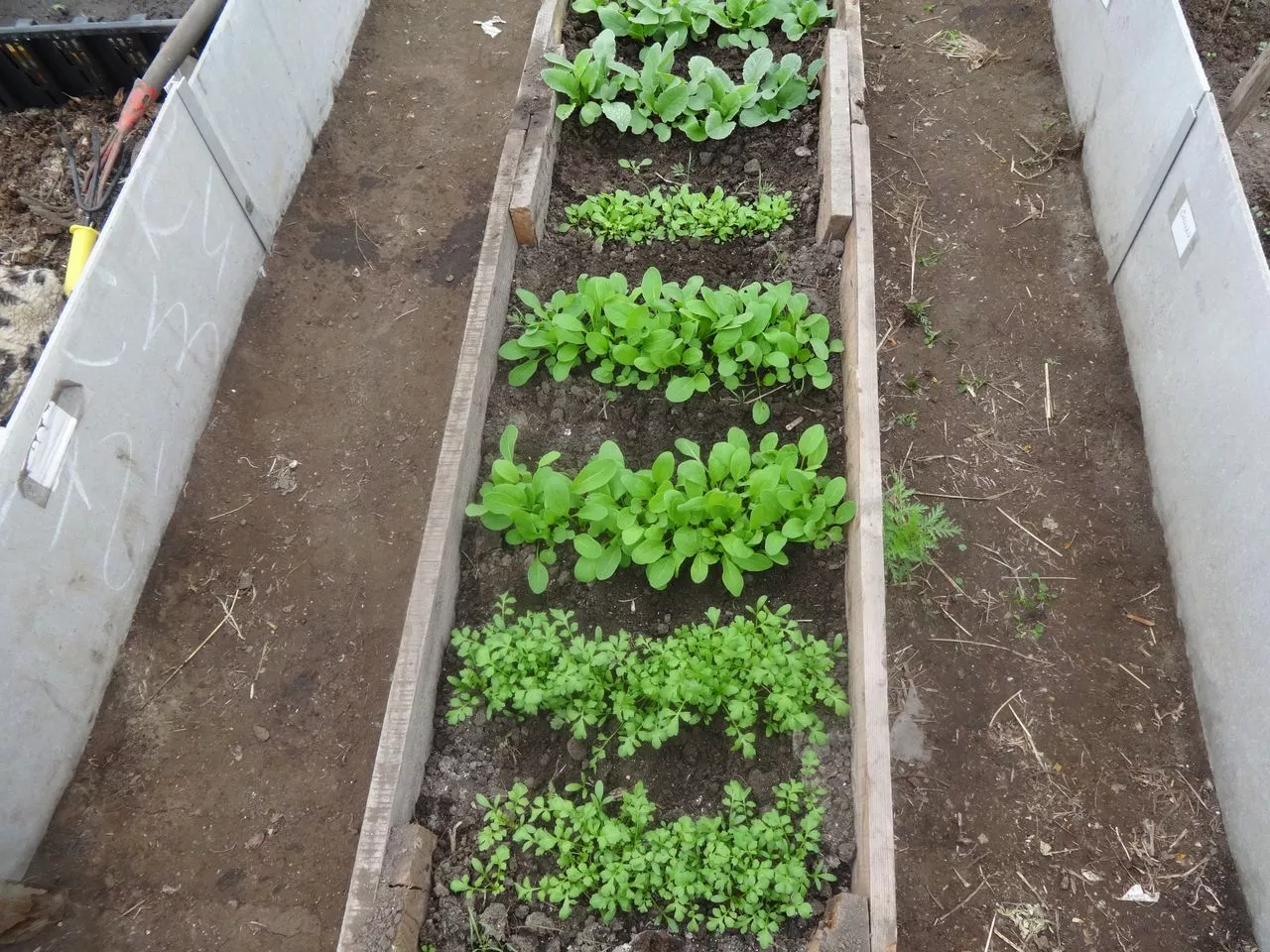
Arugula, coriander, dill, and basil also grow in the greenhouse in the spring.
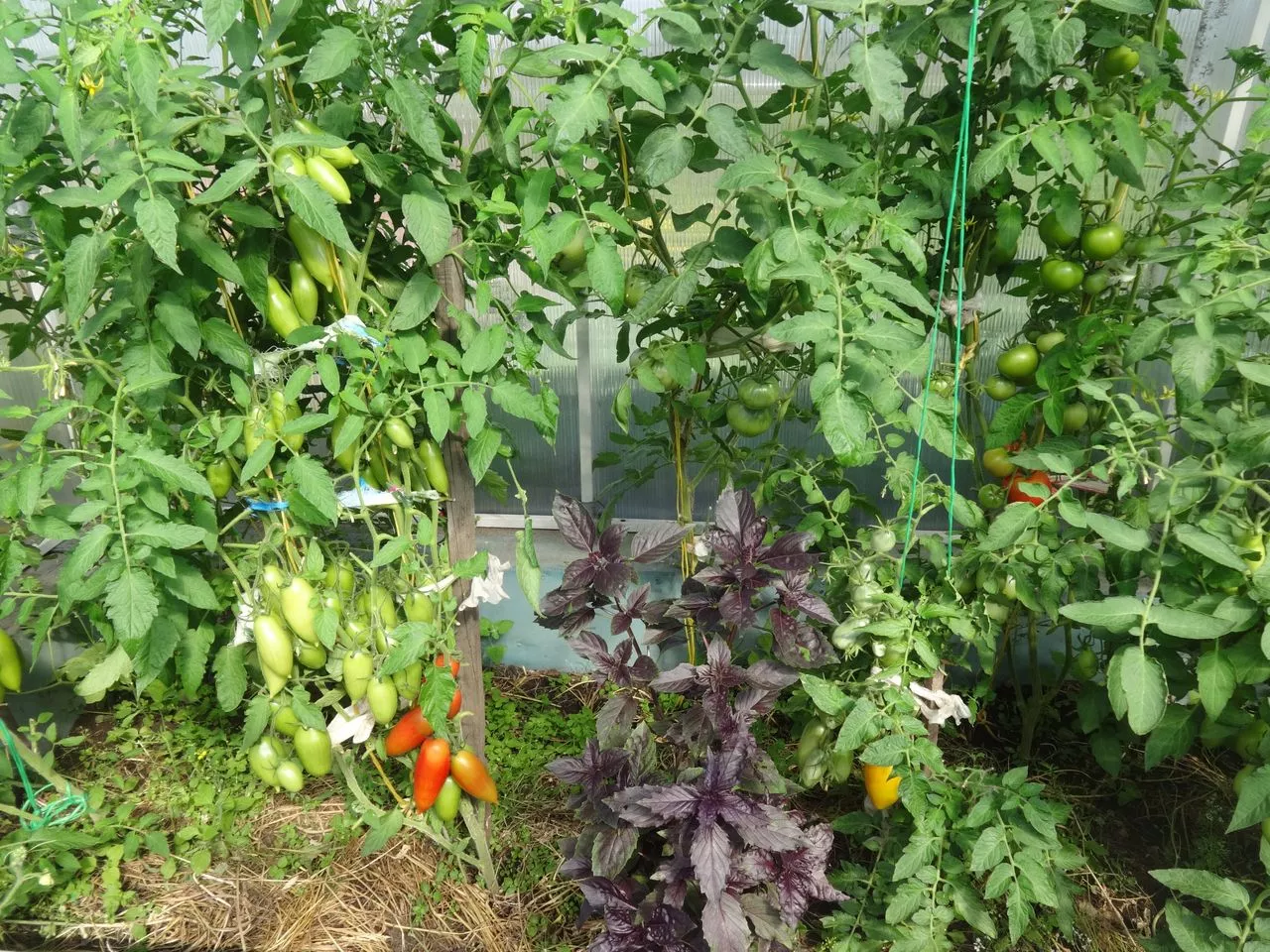
I sow basil later, at the end of April, and then plant it between the tomatoes; it is believed that basil improves the taste of tomatoes.
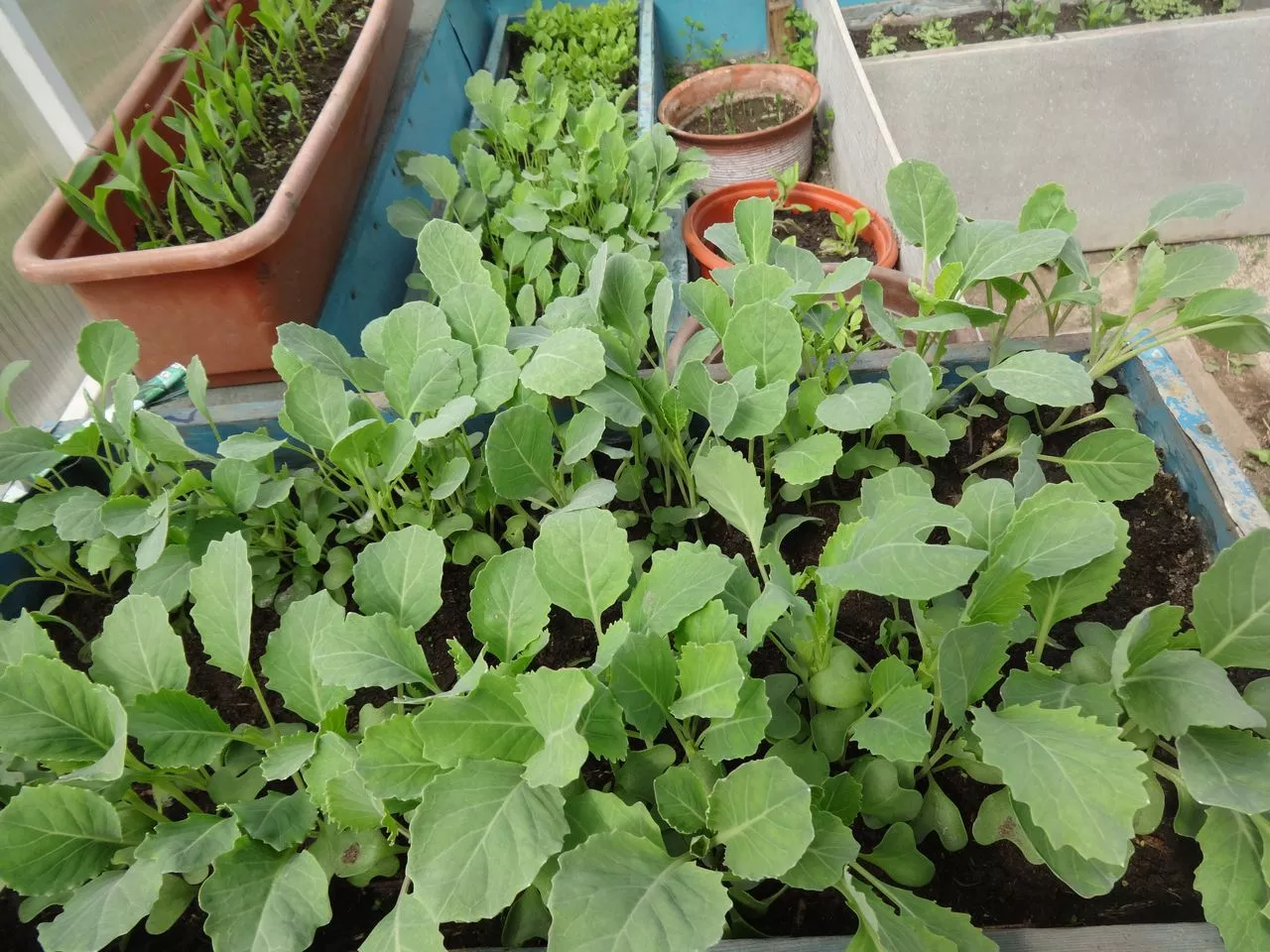
In mid-April I sow flower seeds, cabbage, at the end of April zucchini, pumpkins, corn, watermelons, sunflowers and all these boxes with seedlings grow in the greenhouse.
We plant our main greenhouse crops—tomatoes, peppers, and cucumbers—from late April to mid-May. By this time, we've harvested the greens and radishes. However, I leave some lettuce plants along the edge of the bed between the tomato and pepper plants.
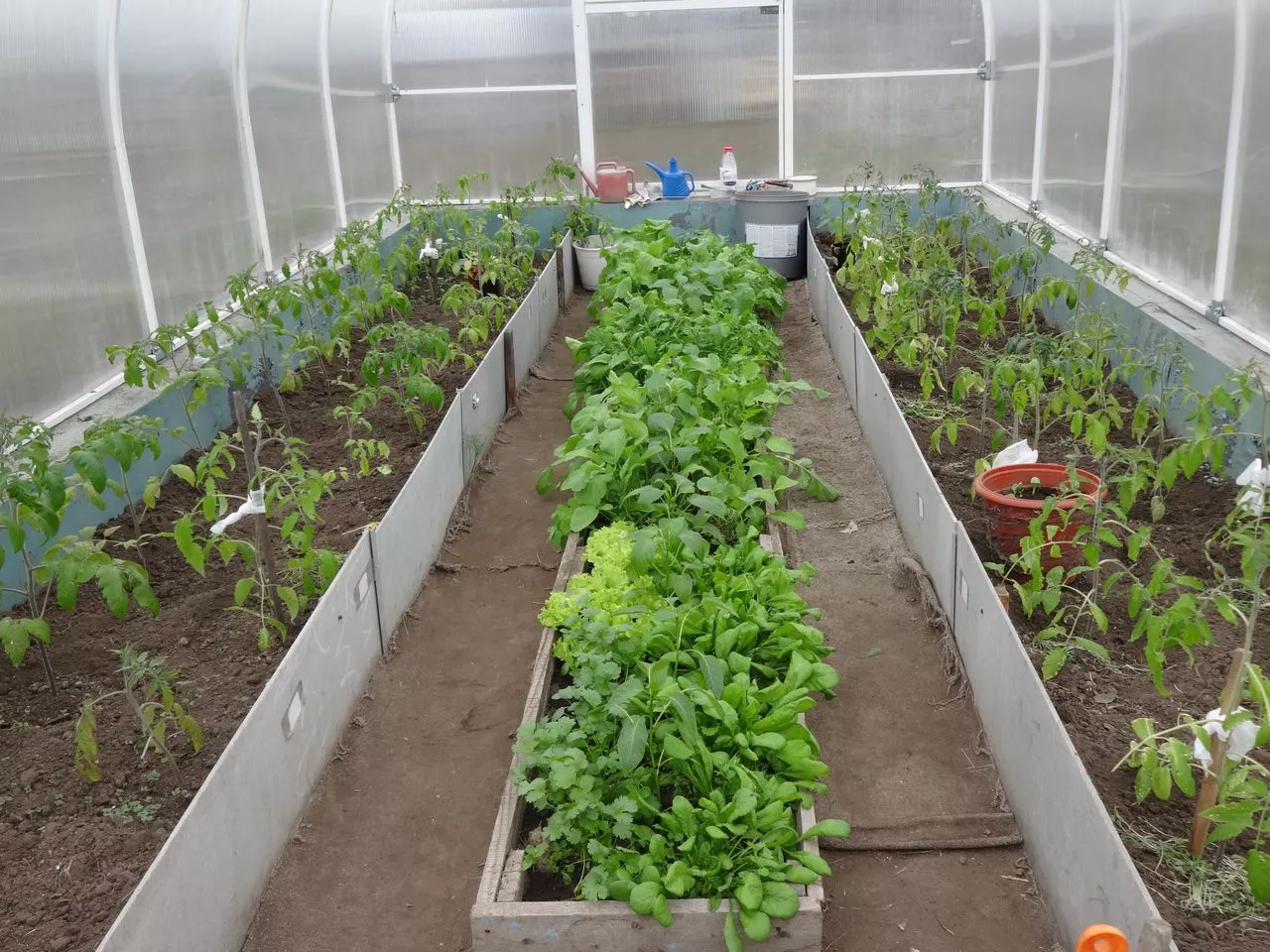
To ensure the first spring greens grow quickly, sow seeds in fertile soil. We usually do a thorough cleaning of the greenhouses in the fall after harvesting tomatoes, cucumbers, and peppers, digging the soil, adding humus, wood ash, and phosphorus-potassium fertilizers. You can read more about this. here. Over the winter, the soil rests, and in the spring, the rested, nutrient-rich soil is ready to grow a new crop.