
I'll show off my harvest first, and then I'll explain everything in detail. 
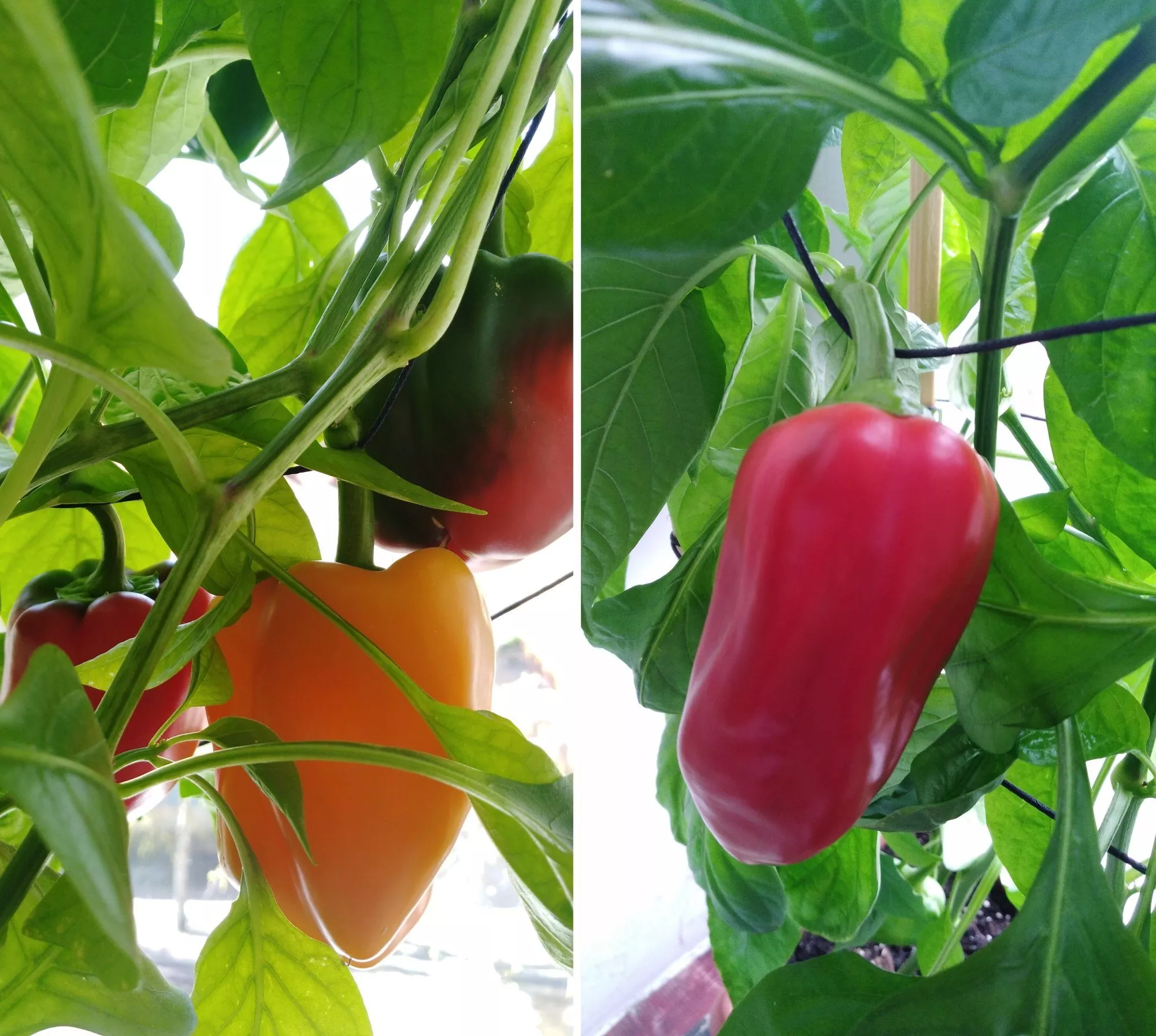
I used the "California Miracle" variety, but I think they mixed in both the right variety and some other seeds, because some of the peppers are different in color and shape than the manufacturer stated. Maybe this happens accidentally during packaging at the factory… I don't know.
Our family loves vegetable salads with young cabbage, cucumbers, bell peppers, and greens. Vegetables and greens are expensive out of season, and their taste isn't always pleasing. So, I decided to try growing some vegetables on the windowsill for my beloved family.
It was a wet winter outside, so I decided not to stratify the seeds, as I bought them from a street stall. Consider the seeds already stratified.
If anyone doesn't know what this is stratification, this involves keeping the seeds in a cold and moist environment to simulate the natural processes of "winter hibernation" and subsequent spring awakening. This helps them germinate better and faster.
Stratification of pepper seeds involves keeping them for at least 1 month in wet sand, for example, at a temperature of 1-5 °C, as experts say.
Seed disinfection I haven't used any antiseptics, fungicides, or anything else. In general, of course, disease prevention is good and important (it will help avoid seed diseases and grow healthy seedlings).
Remember that fungicides are only active against fungal pathogens, while antiseptics (potassium permanganate, boric acid, etc.) are effective against bacterial pathogens. I don't believe in antiviral products for plants, although many manufacturers claim their "fungicides" can combat viruses, which is ridiculous in itself (those with a good understanding of microbiology will understand what I mean).
I think the risk of serious plant diseases isn't that great when growing plants indoors. After all, you've bought new soil, it's been treated to remove any nasty bugs, there are no unwanted neighbors, etc. But if you're taking soil from outside or in your garden, be sure to disinfect it and treat it with insecticides (to kill harmful insect eggs)!
I'm just here for a day soaked the seeds in a growth stimulatorMy dad brought me this (it's a Ukrainian product, but you can use any other):
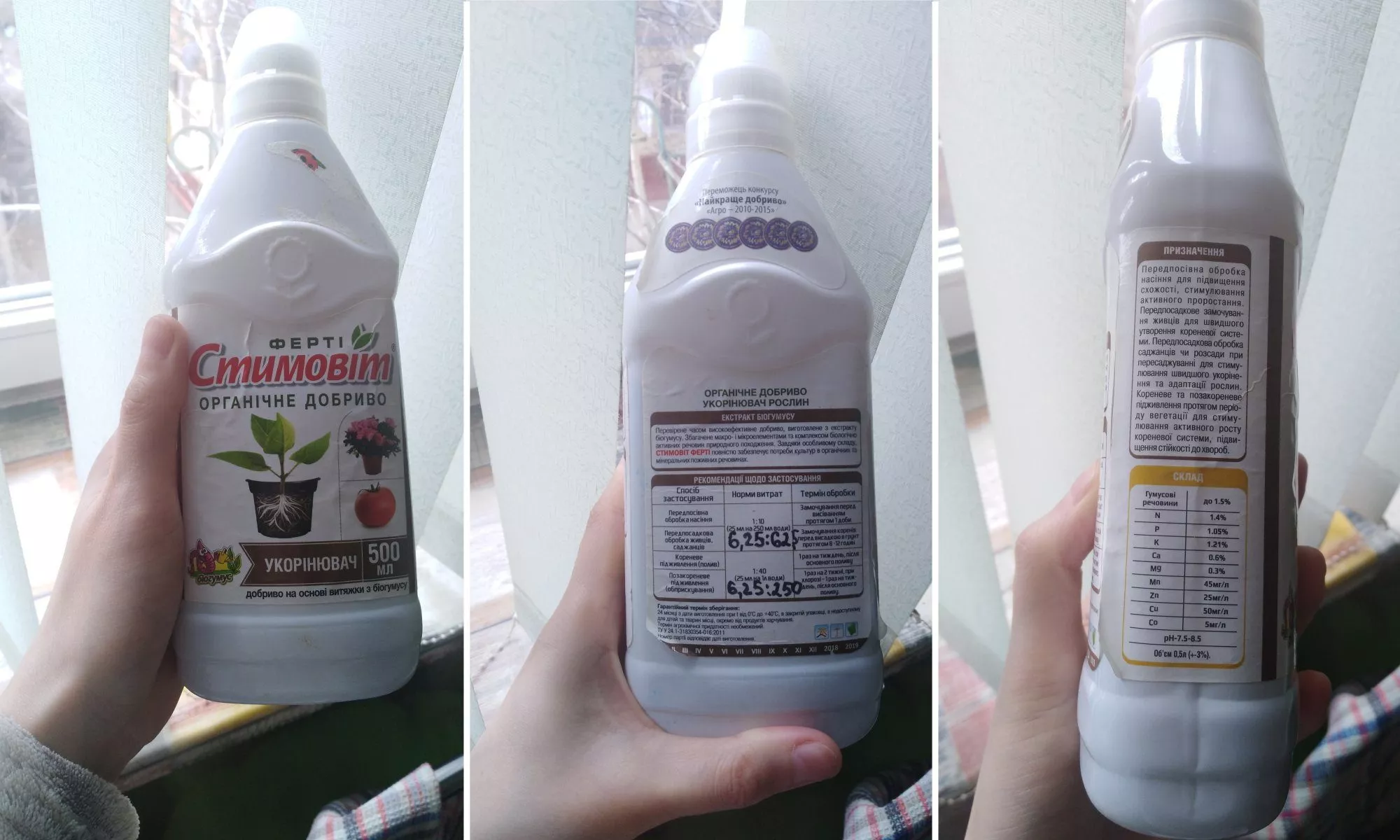
And right away planted in the groundIt would have been possible to pre-germinate the seeds, but even without this they sprouted well and, most importantly, the sprouts were almost identical.
By the way, without any growth stimulant (I simply planted the seeds in the ground, watered them, and the sun warmed the soil during the day, and the radiator under the window provided warmth in the evening), the sprouts turned out differently. See for yourself:
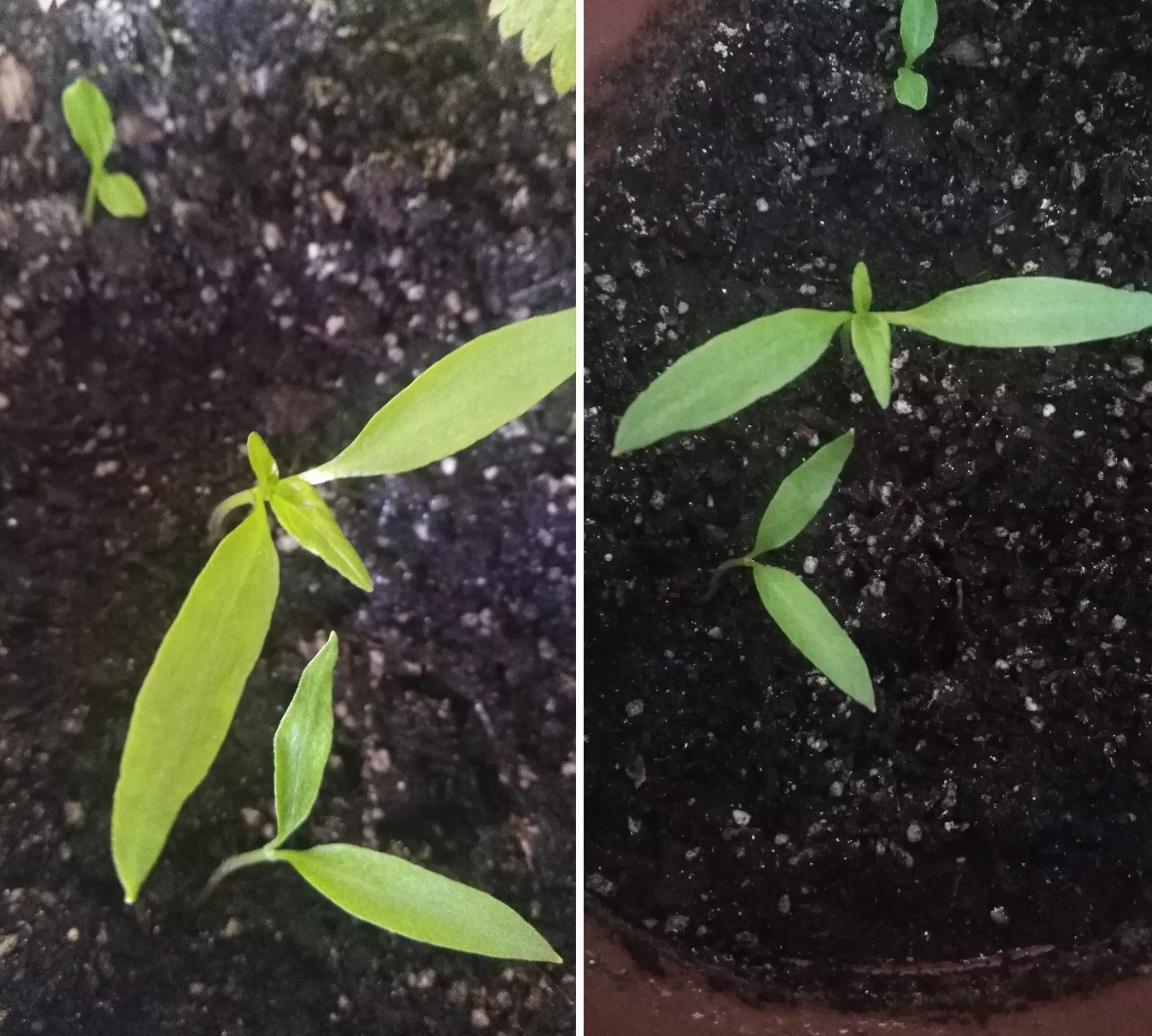
Seedlings without the use of a growth stimulator did not develop harmoniously
So I'll continue to use a growth stimulant to get strong seedlings (many friends recommend Epin... I soak the seeds for 2-4 hours and that's it). It's a shame I didn't take a photo of these awesome seedlings on the biostimulant.  All you have to do is take my word for it...
Seedlings I didn't dive, since this time I planted the seeds directly in planter boxes. I'm generally against transplanting, as there's a high risk of damaging the plants' delicate roots. For example, I grew cucumbers in peat pots, which I simply tore apart and crushed by hand after a thorough watering and planted in five-liter plastic bottles. The peat pot, in this case, served as fertilizer.
Peppers are blooming became approximately 4 months after emergence.
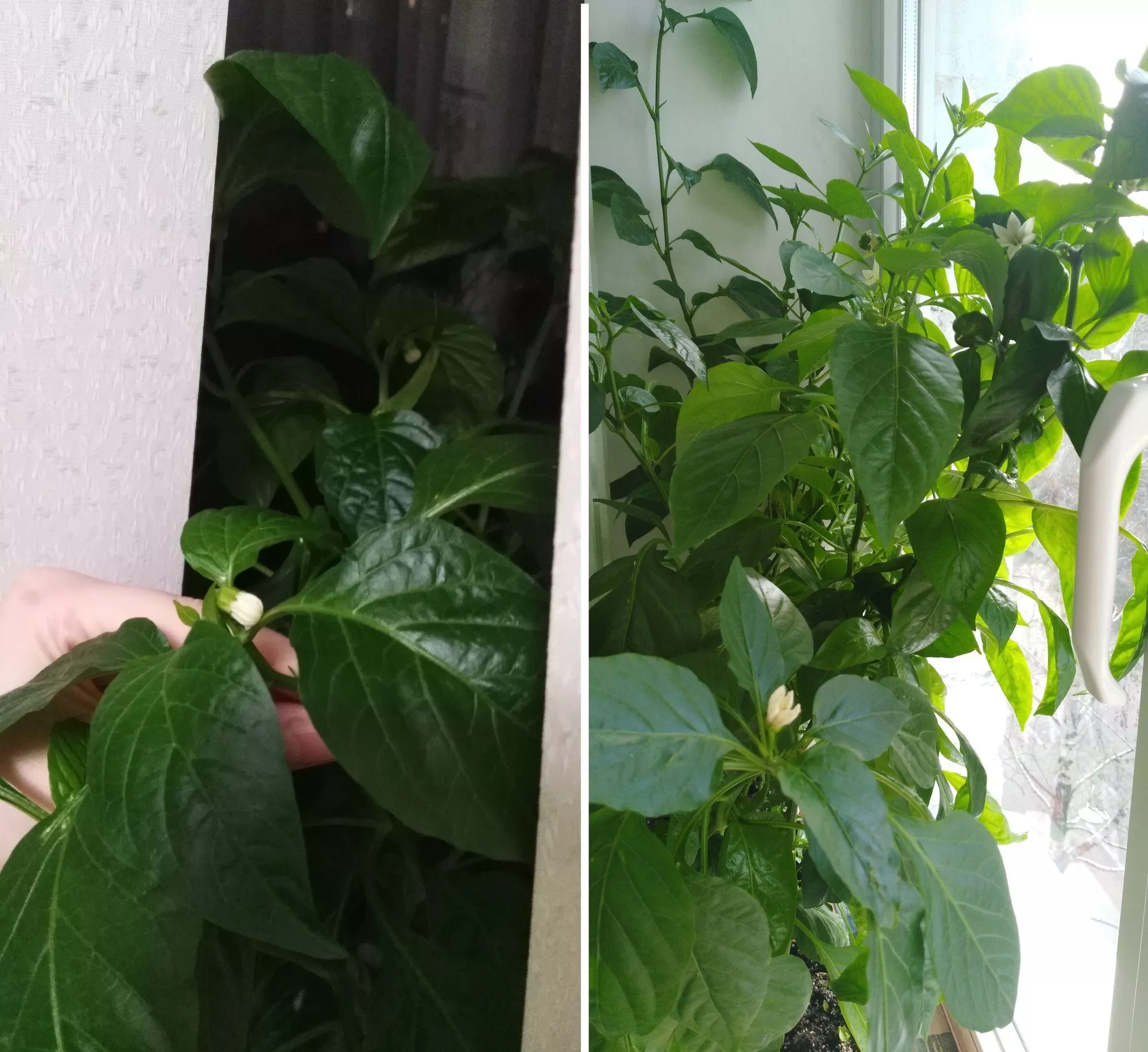
And then the peppers appeared, and in abundance. But I did not thin out the ovariesGenerally, I prefer to avoid getting involved in such processes. Nature itself discarded the weak fruits. Look at the interesting little pepper inside:
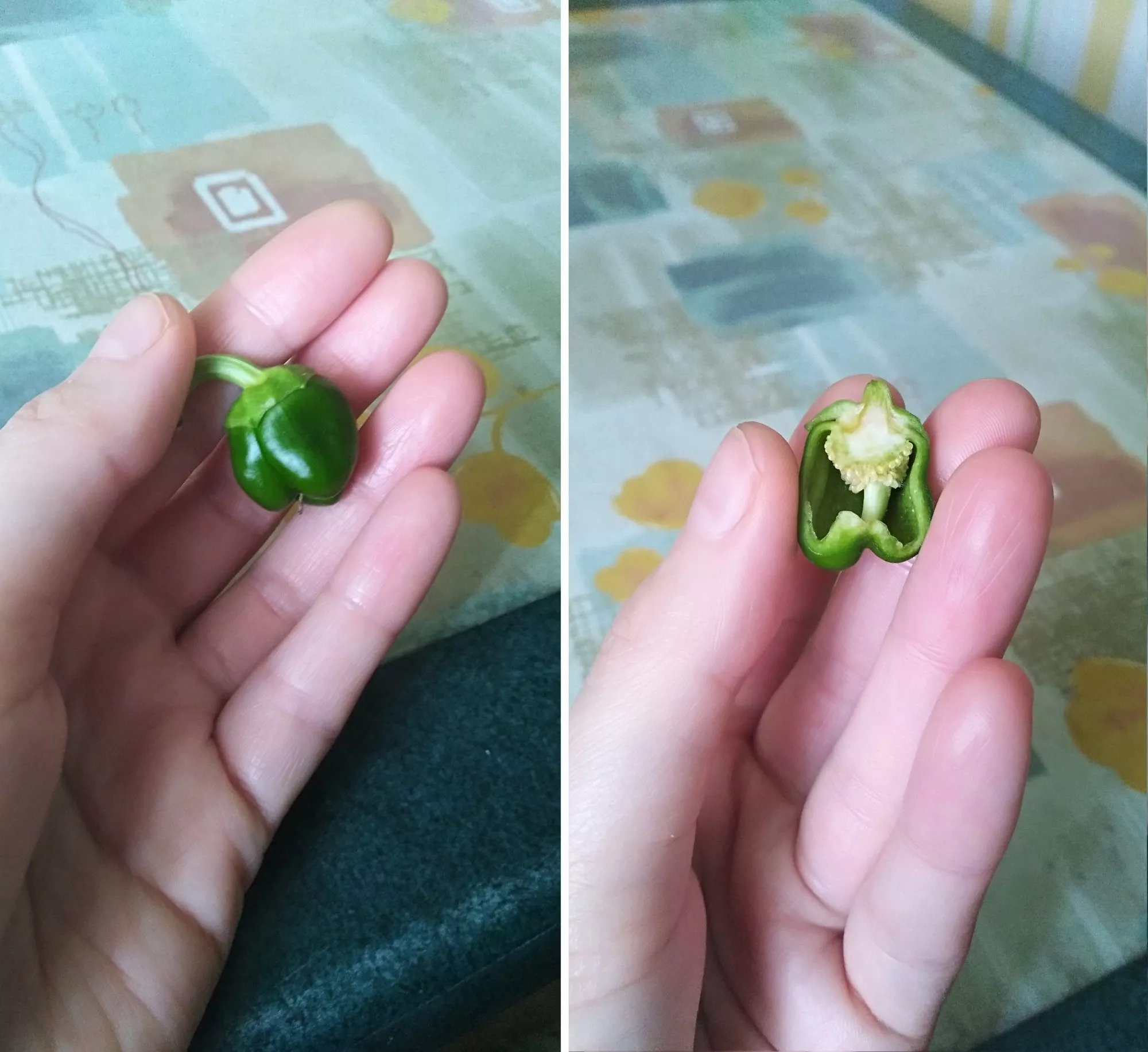
So, from germination to ripening, it took about 4-5 months... It took another 1-2 months for the peppers to turn red. And when the peppers acquired a bright color, it was possible harvest.
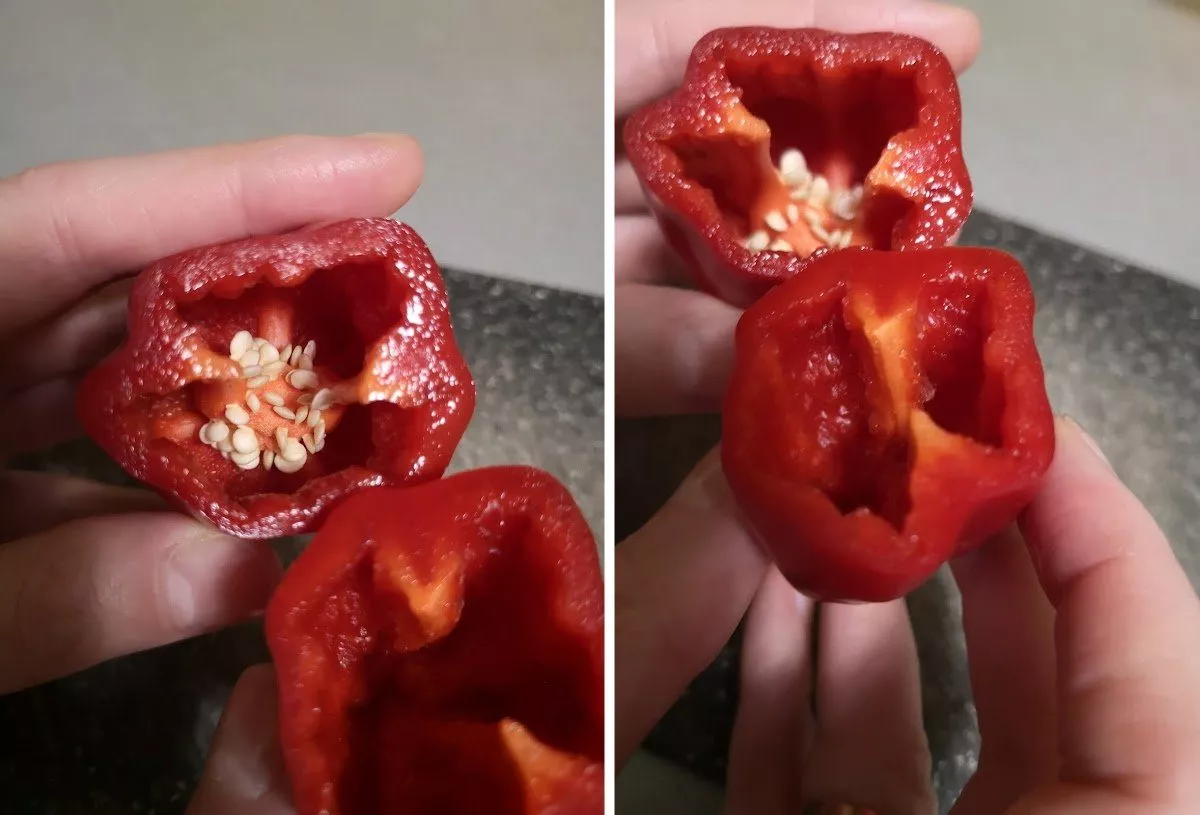
This is a cross-section of a ripe pepper. The fruit in the photo is from the second or third harvest. At first, the peppers were large, but later they became smaller, as the root system and stems themselves clearly became "aged and worn."
I didn't shade the plant because the winter sun didn't reach the leaves or fruit, and my window faces west. However, in the summer, when growing vegetables on the balcony, I always protect the plants from direct sunlight. For example, I hang a "curtain" of white agrofibre on a clothesline or stretch a special shade net.
What I want to say in the end... The pepper turned out sweet and juicy, with a rich aroma, but the skin on the pepper was tougher than store-bought bell peppers. My husband says store-bought bell peppers have a soft skin, while regular sweet peppers (also store-bought) have an even tougher skin, while mine are firm, shiny, and beautiful. So, the skin is actually pretty normal in terms of toughness. I think that for transportation, storage and preservation, on the contrary, this is what is needed.
Overall, the peppers are good, and overall I'm happy, and the fact that my expectations were too high is no big deal! My family already loves it when I peel the skins off the vegetables (whether they're limp or thick), so I either blanch the peppers with boiling water (if I'm making a vegetable stew) or thinly slice off the top layer of skin with a knife.
PS: I believe the main factor that can lead to poor results is insufficient soil height. It's understandable that, at home, it's unrealistic to provide the plant with the necessary container volume and fill it completely with soil. I've come to the conclusion that the pepper roots are cramped in the container, and the soil quickly loses moisture, so watering should be regular And with mandatory fertilization (I applied organic fertilizer to the roots once a week, sprayed the plants once every two weeks, and watered them as needed). Otherwise, you might end up with unjuicy, elongated sweet peppers that can taste bitter.
My experience growing sweet peppers on a windowsill was a success. And since I started this process in winter, the heating season could have interfered. But we have someone in our building who regulates the radiators, so even in winter, my apartment created optimal conditions for the plants to thrive. Otherwise, I would have had to work hard to keep my peppers from overheating or freezing (my friends' apartments are freezing, while my relatives' apartments are dry and stuffy because the boiler is blazing hot, and I guess I was lucky).
Growing bell peppers indoors is a really interesting idea. I'll definitely give it a try, and I want to thank you for the detailed description—it's all crystal clear.
Thank you for your comment, I really appreciate it!