

As usual, I had some opened packets of seeds left over from last year. I realized that these seeds don't germinate well, so I try not to sow them. But I didn't throw them away; I decided to grow microgreens from them and get some vitamins from the sprouts. After all, I'm so short of them in the spring.
What seeds did I have? Radishes, watercress, arugula, dill, basil, lettuce, cilantro, carrots, and peas.
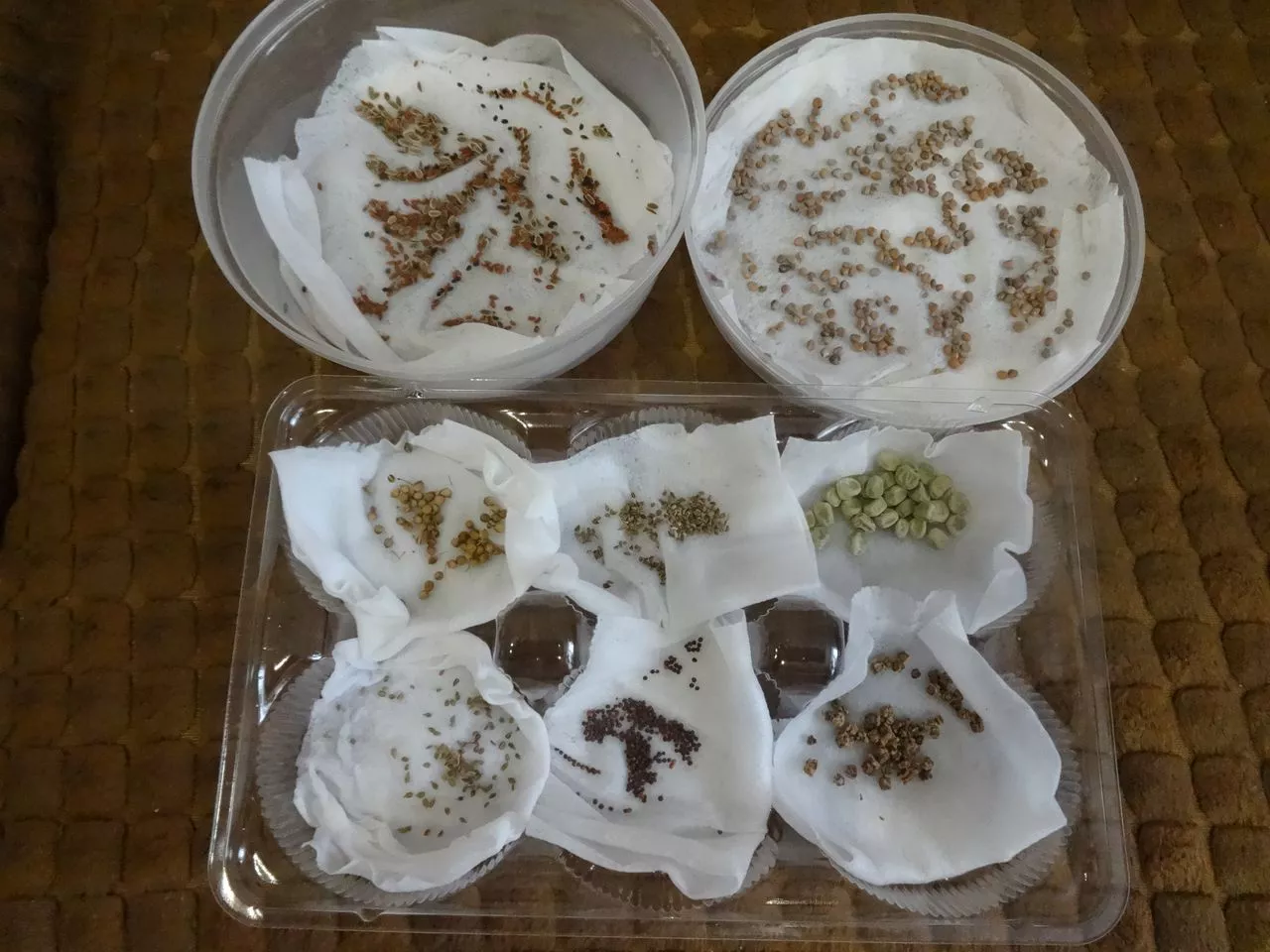
Also, to grow microgreens you need containers - plastic trays, cheese tubs, small jars, boxes, containers.
Wet wipes are not suitable; paper ones won't work, as they'll get soggy from the water. Cotton pads, bandages, or gauze can be used. I rinsed the wipes in water, as they're treated with an antibacterial solution.
I poured out the seeds, filled them with warm water, and covered them with transparent lids, or perhaps with cling film. I placed two containers on the windowsill and the third under a lamp.
The radishes began to sprout literally on the second day.
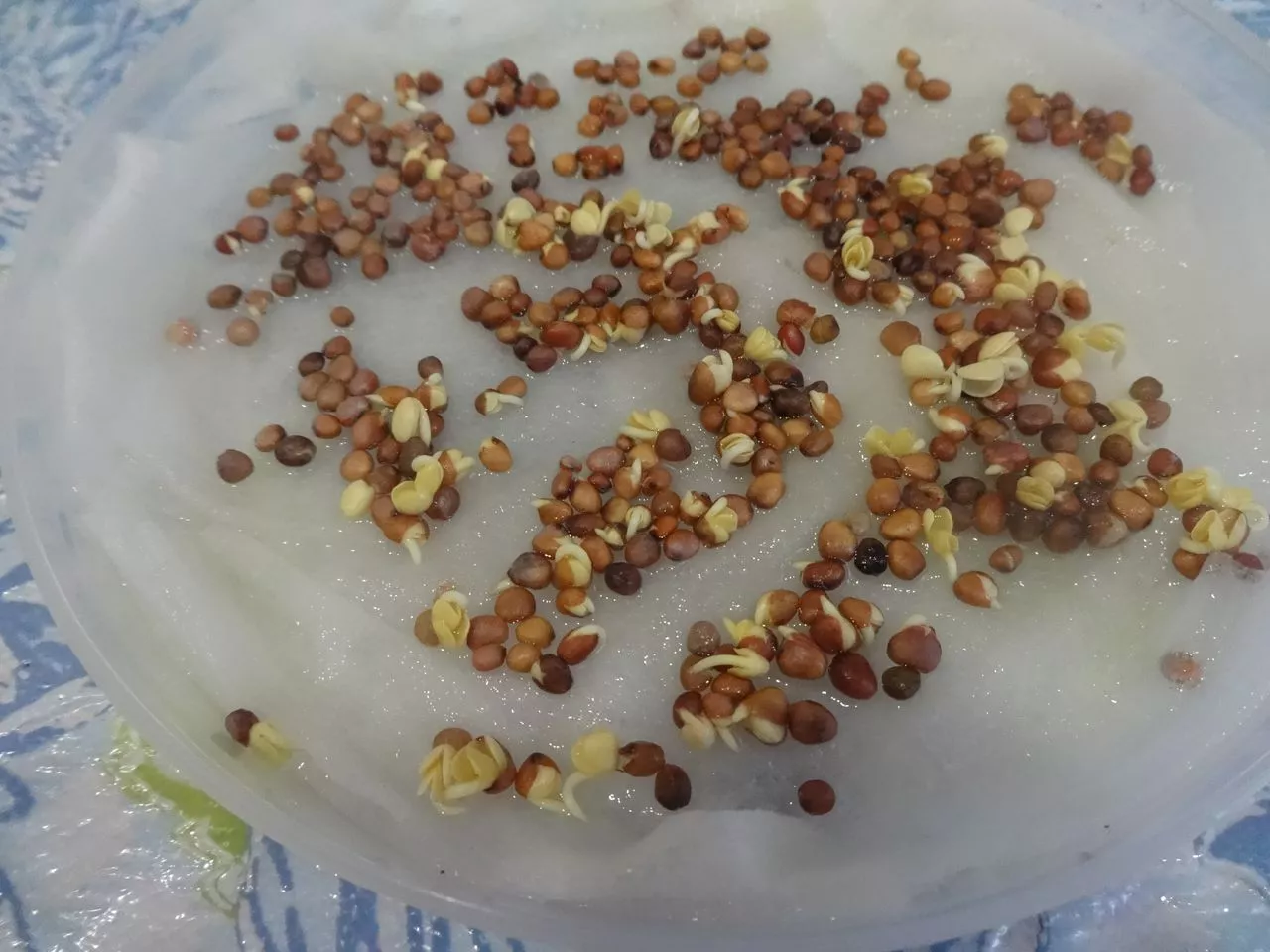
Soon, sprouts appeared on the peas, arugula, and watercress. I removed the lids and moved the third container to the windowsill. Here are my microgreens a week later.
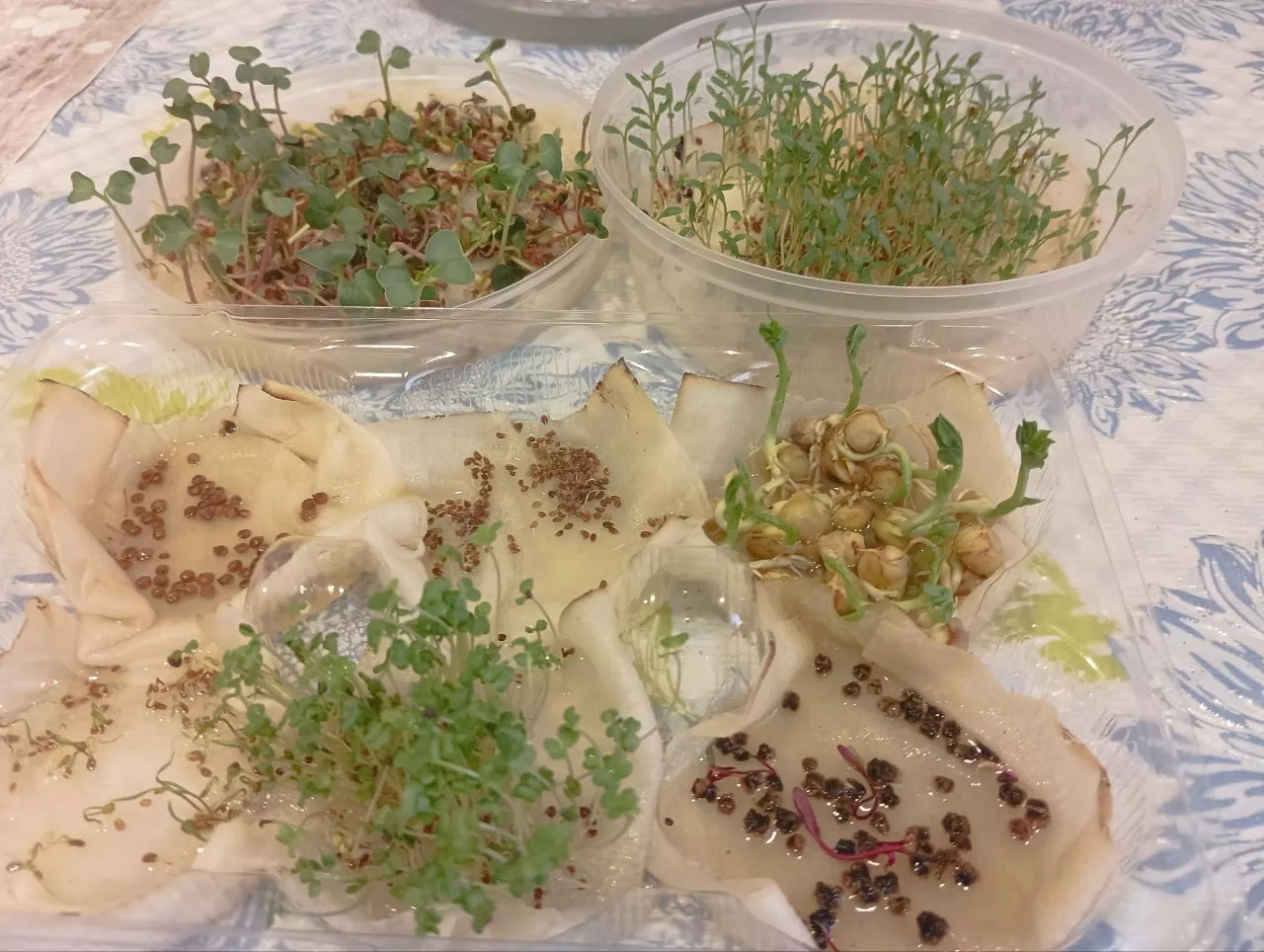
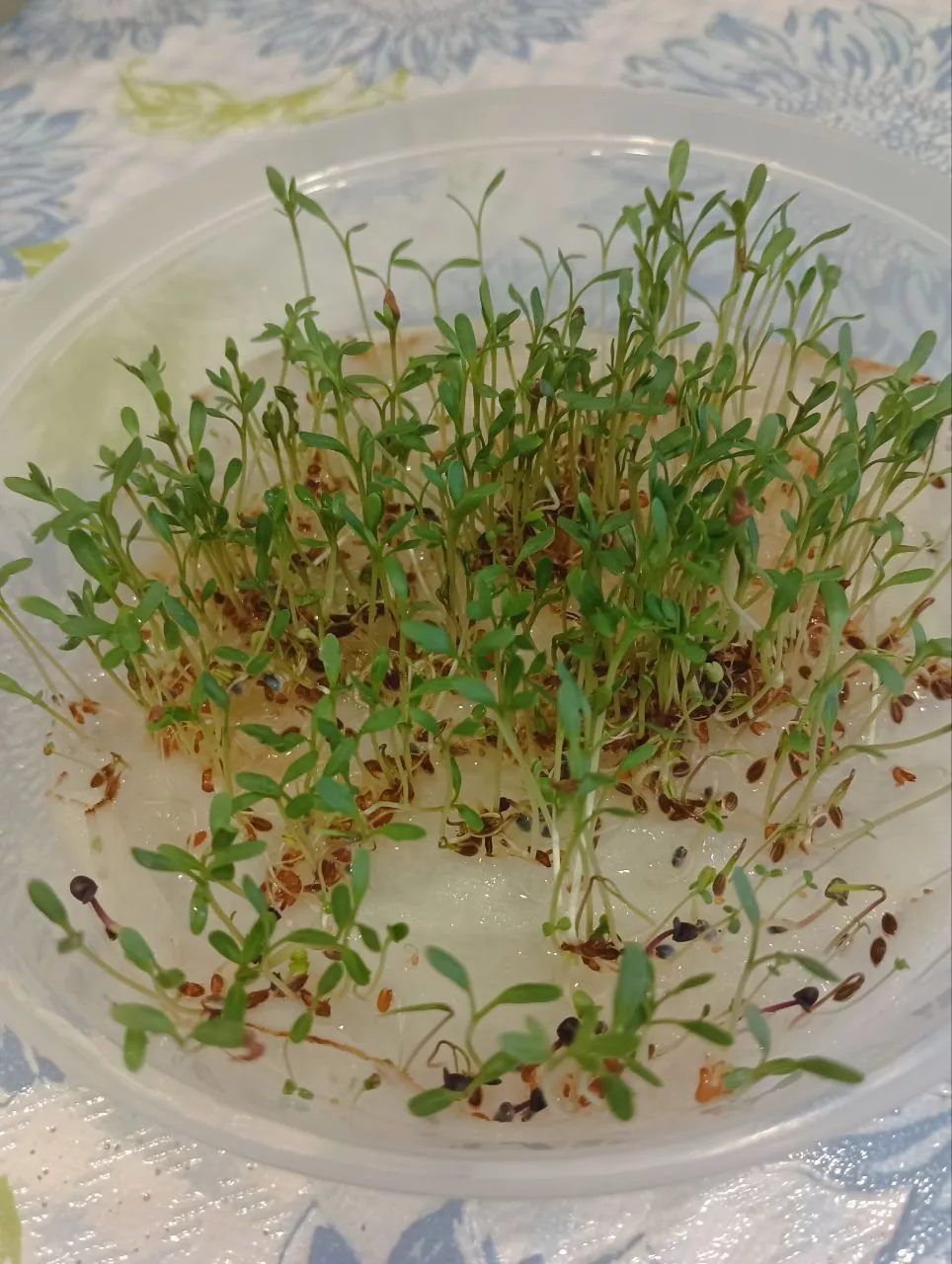
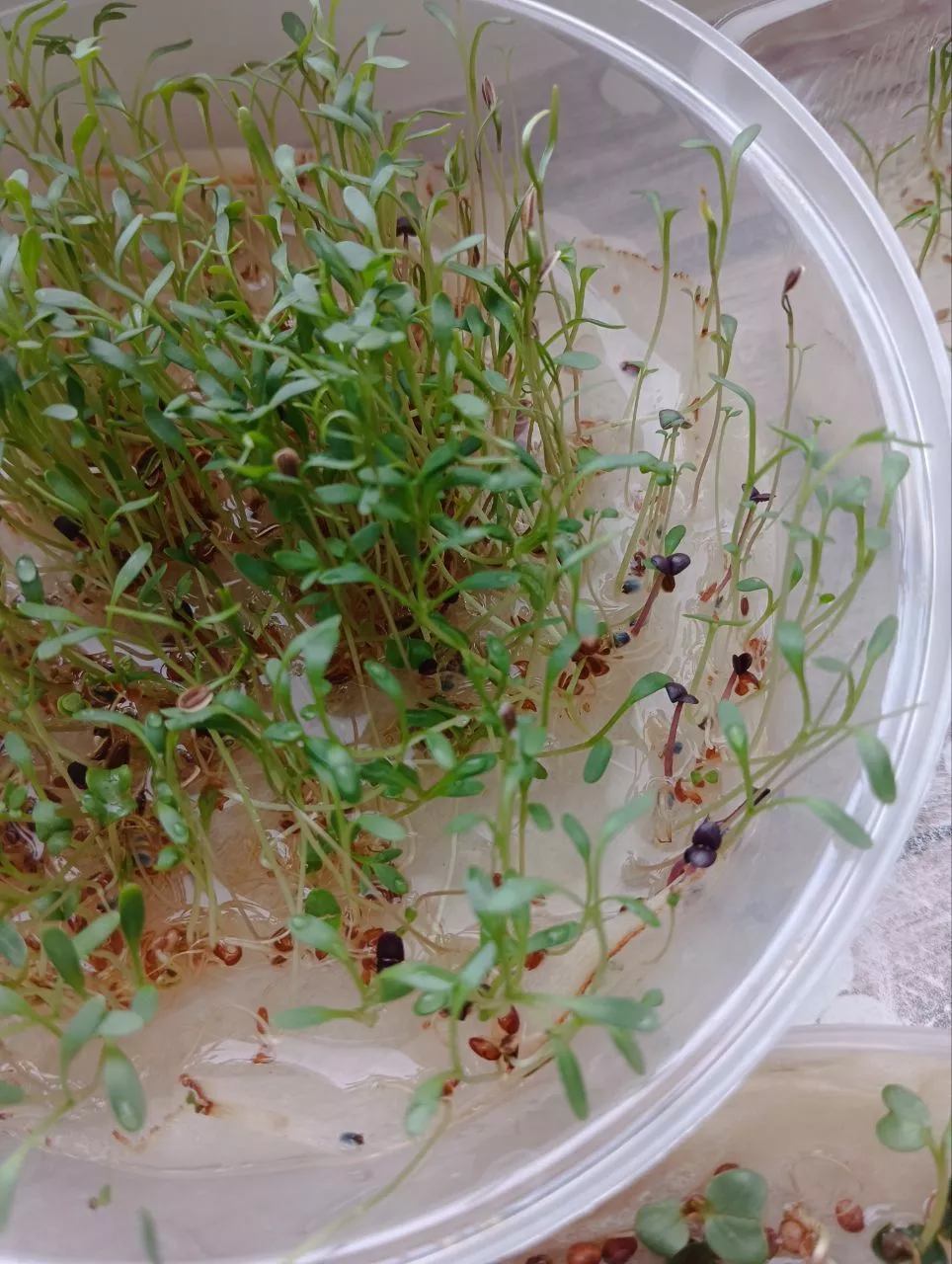
These are watercress sprouts. The seedlings are strong, like a brush, so to speak. True leaves are already beginning to appear. Along with the watercress were dill and basil seeds. At this point, there are no sprouts.
Some of the radish seeds didn't sprout. The radishes needed to be placed in a container with higher sides, otherwise the seedlings were falling over. They don't have any true leaves yet.
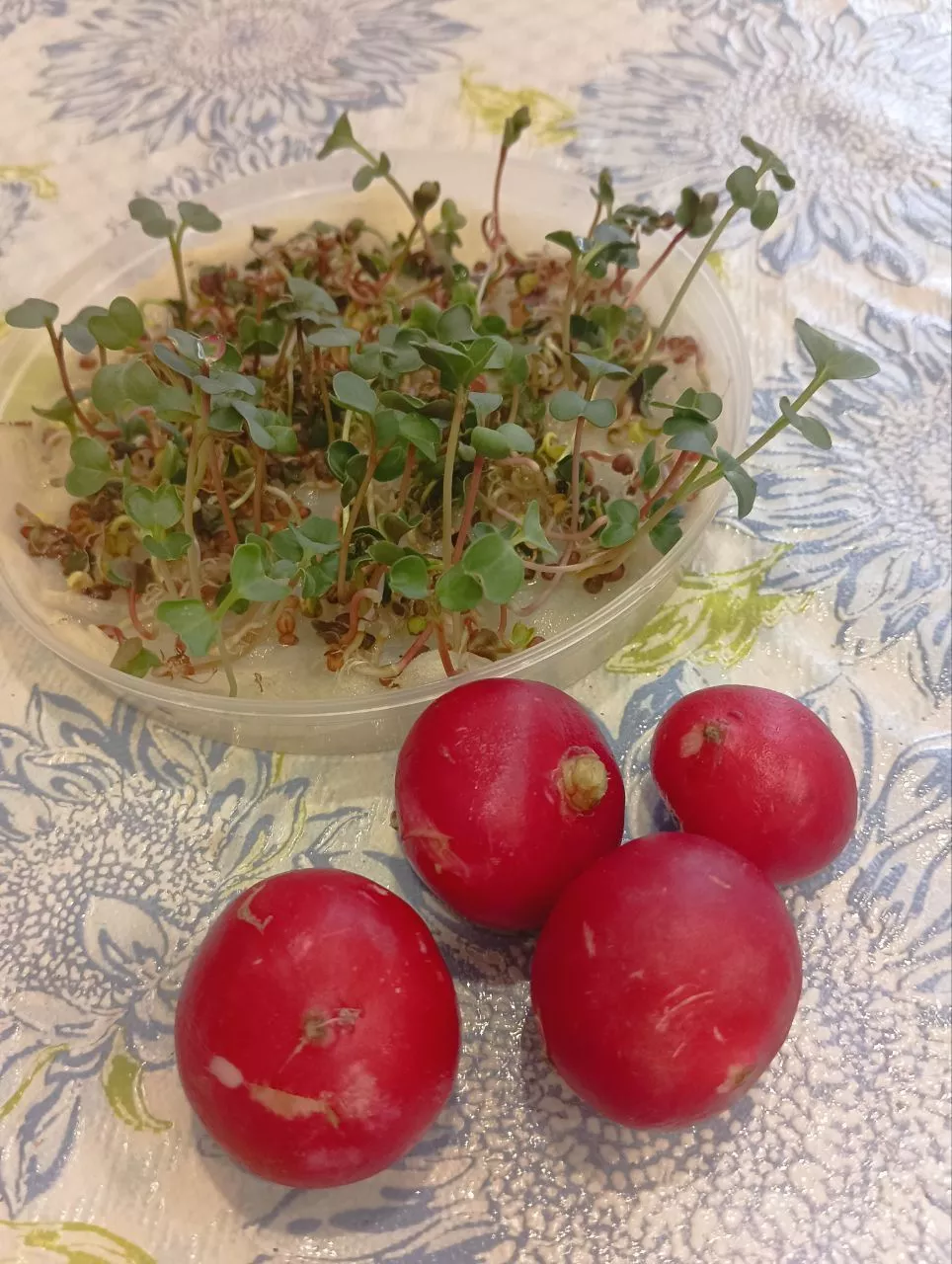
Beetroot—only a few seeds sprouted. Not a single cilantro seed sprouted. Not all carrot seeds sprouted either. And the lettuce seeds are just starting to sprout. Perhaps a week isn't enough time for the seeds to germinate.
The peas are doing well; every pea has sprouts and real leaves. Peas are growing the fastest.
I monitored the microgreens every day, adding warm water as needed. I once tried growing basil microgreens, buying seeds specifically for the purpose. The seeds germinated well, and the seedlings developed normally. But if I didn't water them in time, the napkin dried out, the sprouts drooped, and died. Well, I was really busy, so I didn't have time to worry about the sprouts.
What changes occurred at the end of the second week?
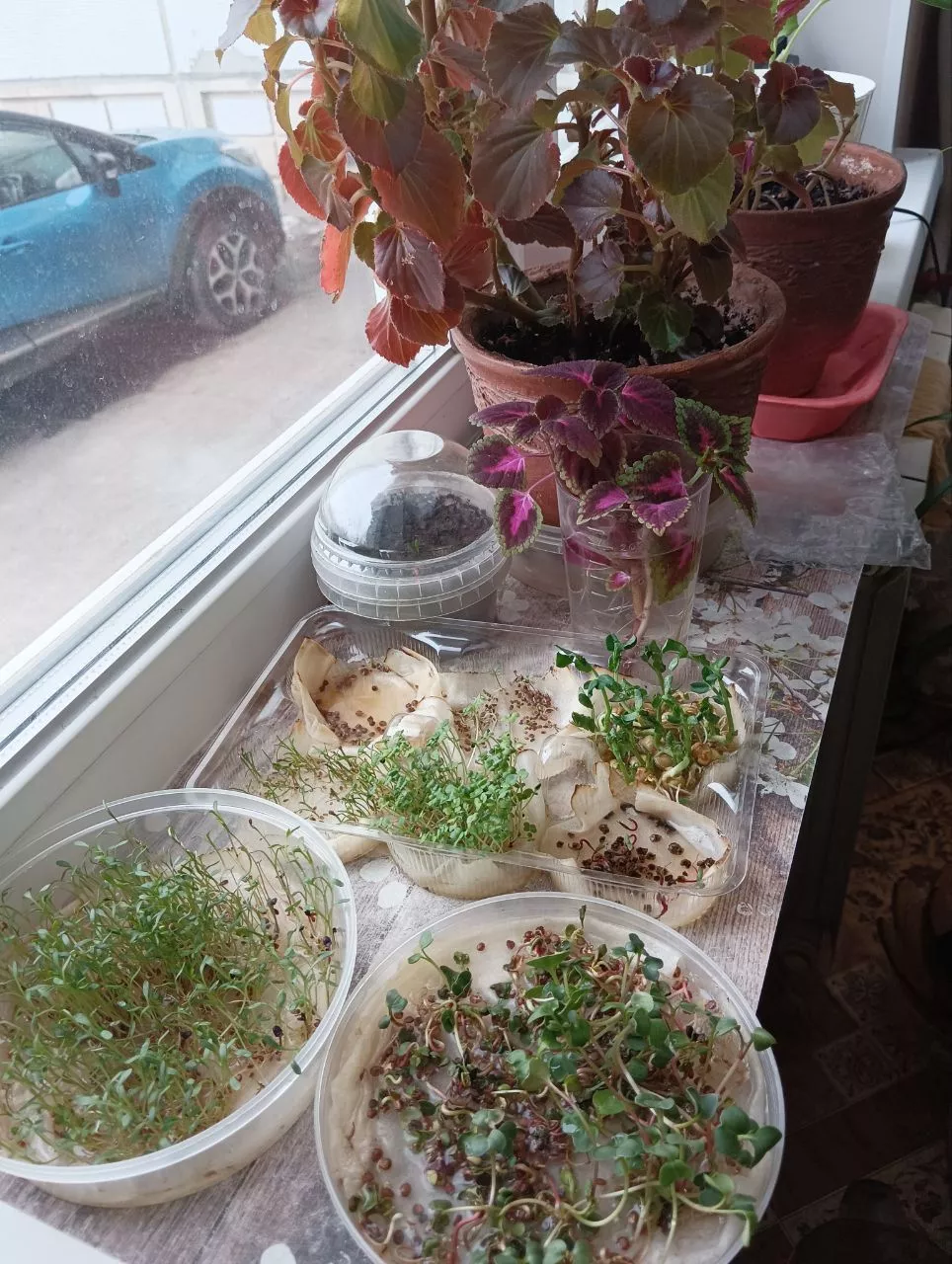
A week later, the remaining seeds sprouted as well. Dill began to emerge, and purple basil sprouted. Red beets and cilantro sprouted less well.
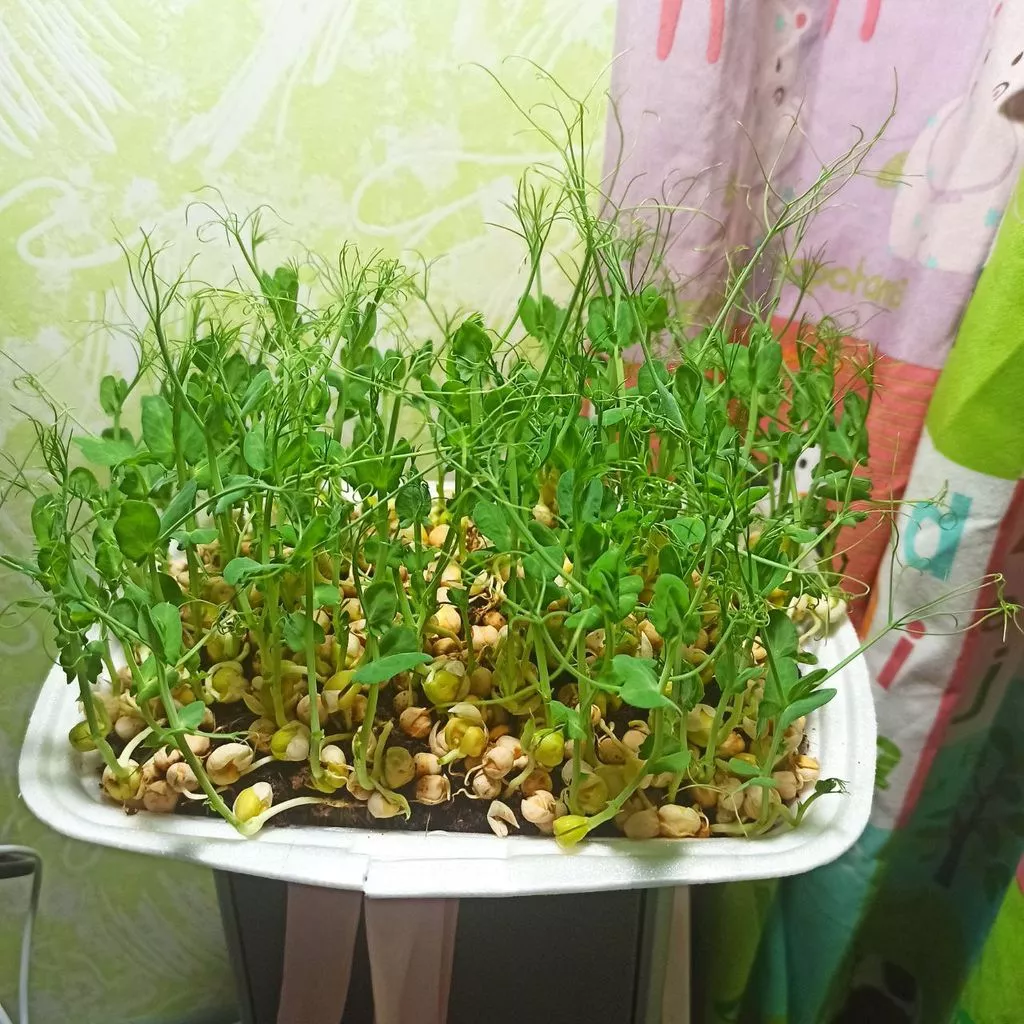
But the peas surprised me; they grew by leaps and bounds. The sprouts developed tendrils, and their roots became strong.
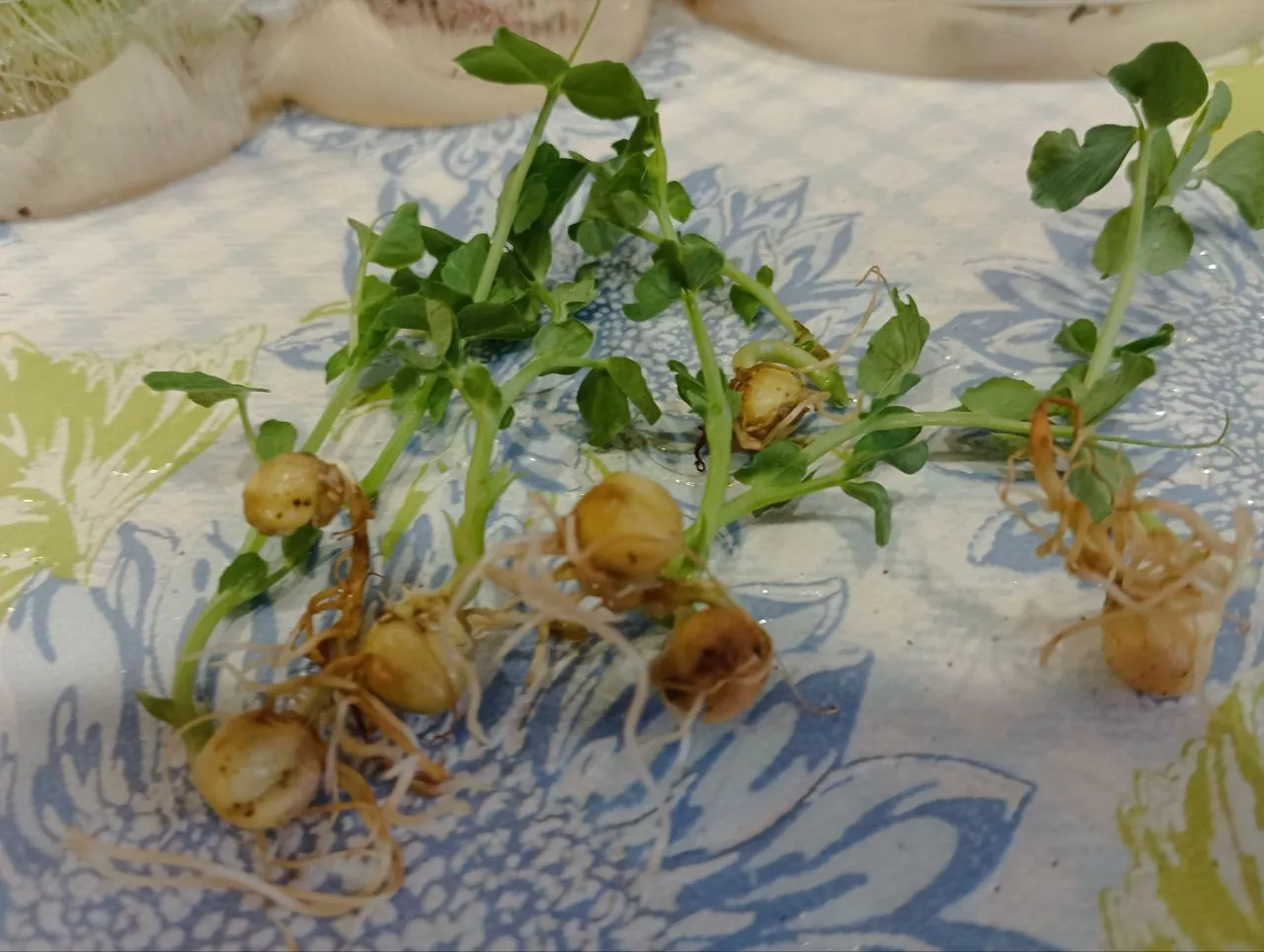
I had this idea: soak and sprout peas before planting in the spring. Then plant them in the garden bed already sprouted. Although I won't have time to mess with them in the spring. Often, when sown with dry seeds, they germinate poorly and slowly. I have to replant the bed, sowing additional seeds in empty spaces. Most likely, poor-quality seeds are to blame.
This is what my youngest's pea microgreens look like; of course, these sprouts are more than two weeks old.
I didn't grow any greens for more than two weeks, because it was time for seedlings, time to remove all the plants from the windowsills and put out the boxes with tomatoes and peppers.
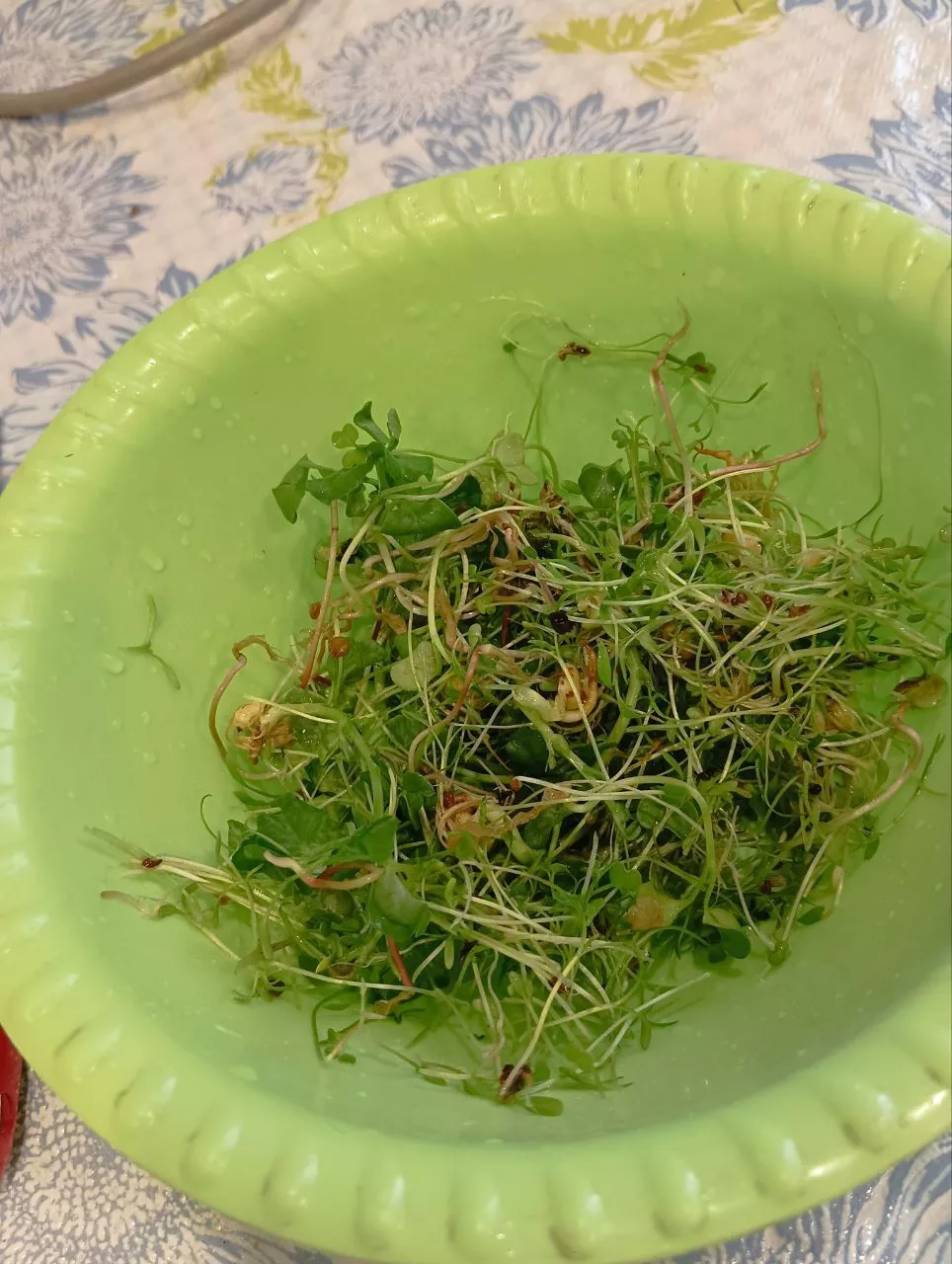
I washed the greens and added them to the cucumber and tomato salad.
What conclusion did I draw from my so-called experiment? In winter, you should grow microgreens from radishes, peas, and sunflowers. Mustard seeds, watercress, basil, and cilantro are also good for microgreens. And I will most likely grow microgreens in winter.
Very interesting. I sprouted peas too. It worked. We'll experiment with that next winter, too.
It's an unusual idea, but I like it. I'll try it too – it's still very early for us to plant them outdoors, so why not experiment! By the way, the microgreens look delicious, it's making my mouth water... They must be really tender.