

Houses covered in greenery look very beautiful and unusual. But opinions differ regarding the damage to the house itself. Some say such plant decor is harmful and detrimental to the building. Others, on the contrary, believe that such landscaping prolongs the life of the structure.
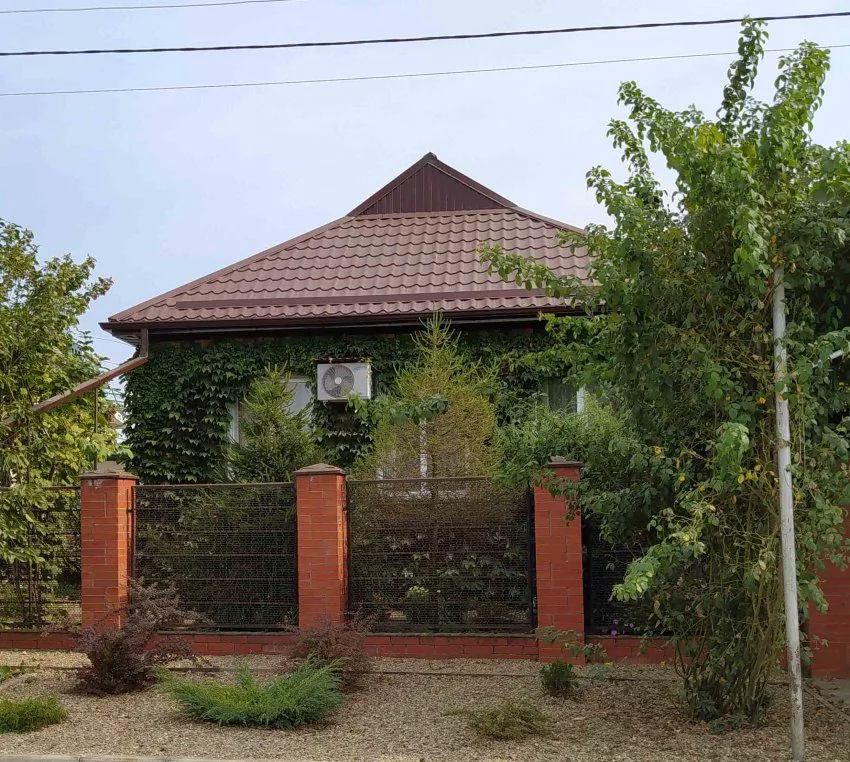
On our neighboring street, there are several houses covered in plants. One is brick, the other is cinder block. This is basically an option for those who don't have the budget for siding. For a few years, this house stood gray and unsightly, then the owners planted a vine. I don't know what kind of ivy it is; it looks like Vichy vine, but I could be wrong, but in about three years the house has been transformed. Now it looks like this.
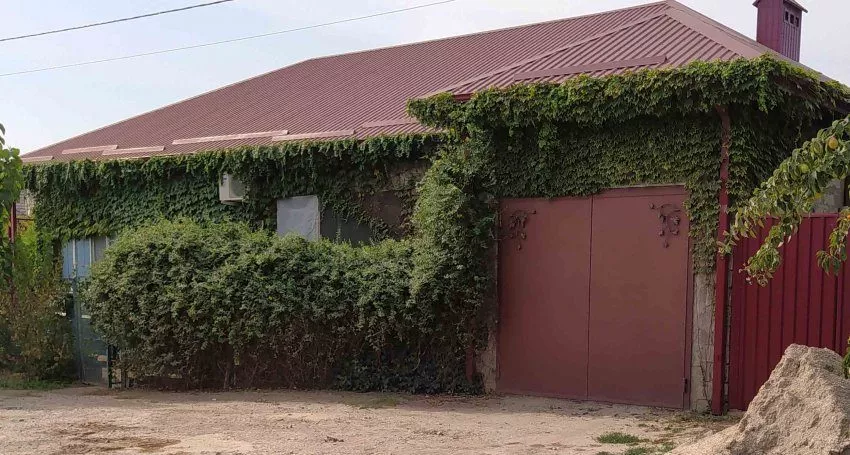
I didn't take any winter photos, but when the leaves fall, the wall is left covered in a brown mesh of shoots. Since the walls are tightly woven, it also looks original and decorative.
I also tried to green the outbuildings. But I decided to experiment first in places where I wouldn't be as concerned if something went wrong, and since these outbuildings are lower than the house, there's no need to worry about the plant growing up and out of reach.
There are many advantages to this type of landscaping:
- Plants consume moisture, so they also dry out the soil around the wall they climb.
- They cover the walls with leaves, like an umbrella from the rain.
- This green wall looks very beautiful and decorative.
- They grow quite quickly; 1-2 seasons are enough and the entire wall surface will be covered with foliage.
But here are the conclusions I came to:
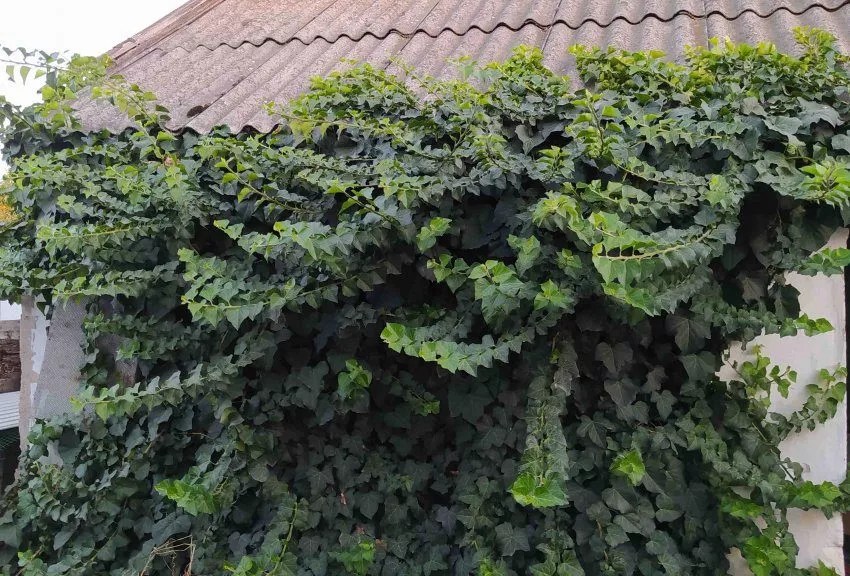
- Even ivy needs regular trimming. I neglected it for a month, and here's what I saw. I'm already off to conquer the roof.
This ivy does not shed its leaves in winter, and the wall remains just as green.
 Dry leaves and dust accumulate near the wall, making it difficult to remove without cutting the plant itself. They become lodged between the branches and shoots attached to the wall.
I pulled back and tore off some of the ivy shoots from the wall to show what was behind them:
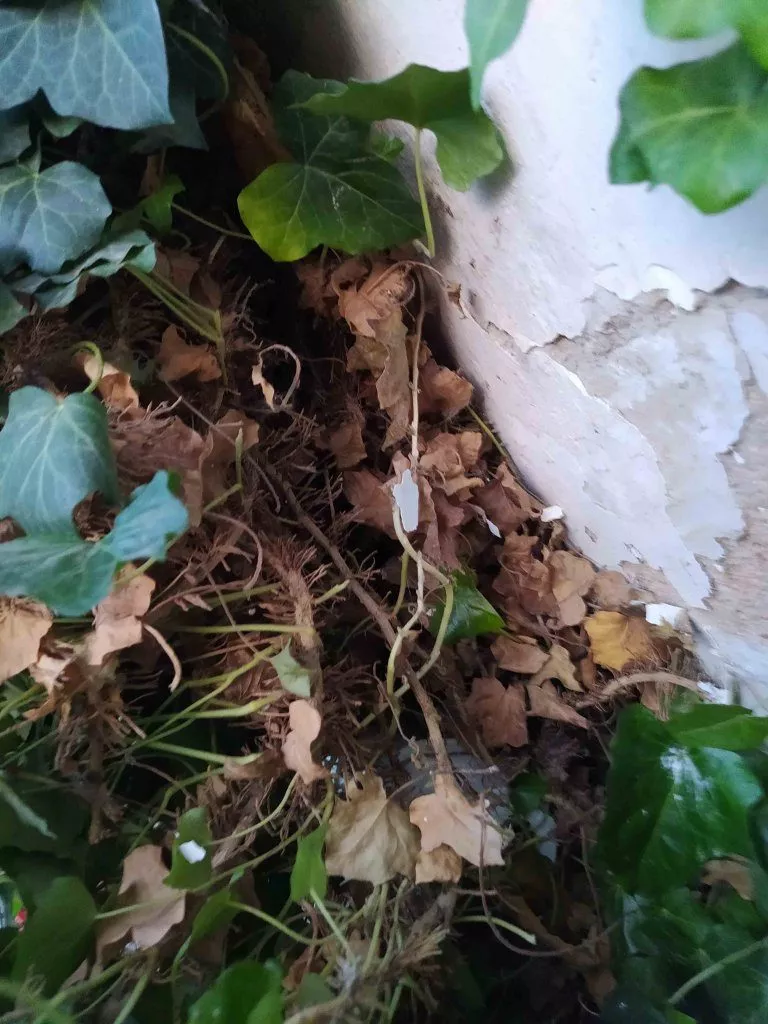 By the way, this plant is attached to the wall surface with roots like these:
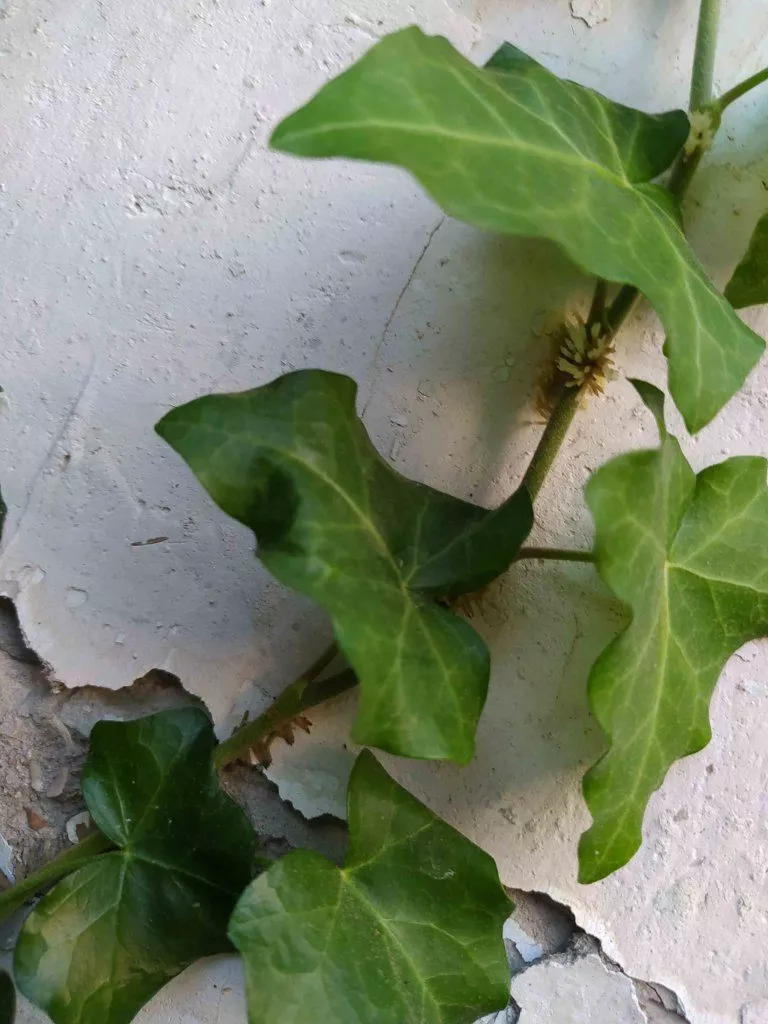
It grew rather slowly in the first few years; it took about seven years to cover this section of the wall, but now it's growing at a brisk pace. However, the whitewashing of the shed may have had an impact. The roots don't like lime, so most of the shoots didn't cling to the wall and had to be cut off, without increasing the area covered.
Trimmed:
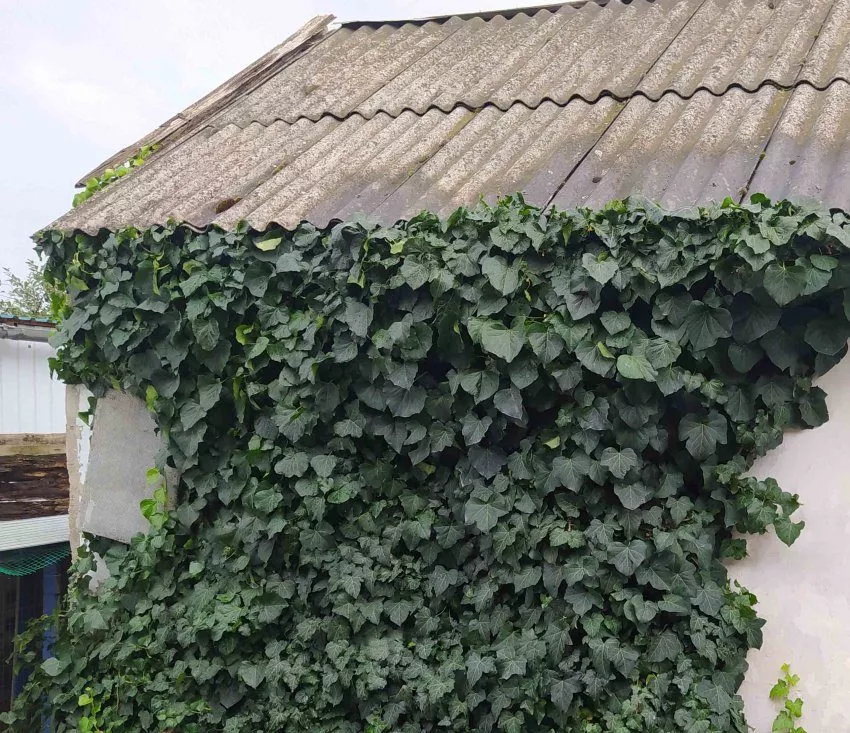 By the way, you can see in the photo that they trimmed it after the rain, the roof had already dried out, but where the shoots lay on the roof, there was still some moisture left.
- This method of landscaping is good for sealed buildings (without gaps under the roof and in the walls).
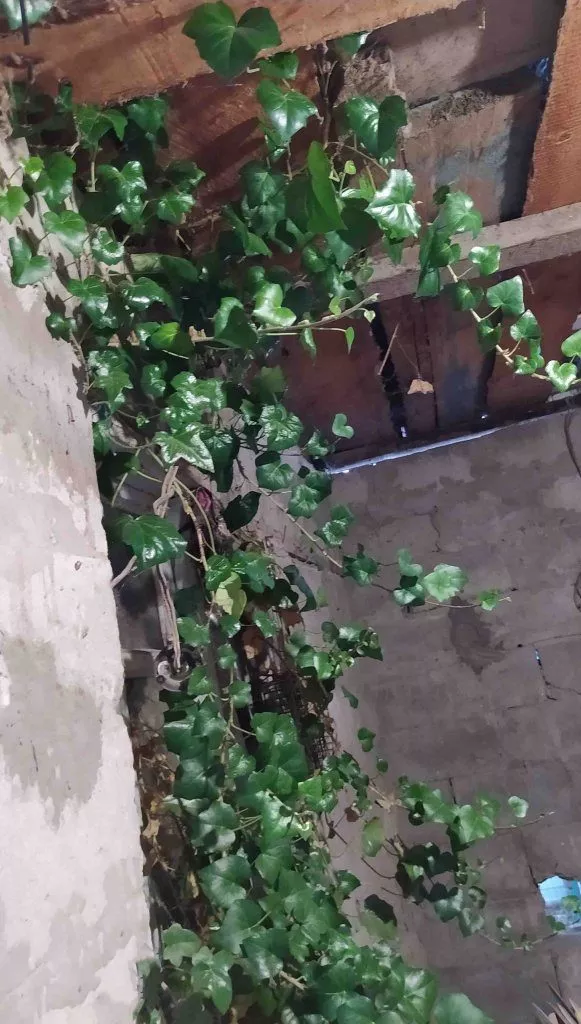
If you're not careful, the ivy will grow into these cracks and begin to destroy the structure. As it crawls through the cracks, it will widen them further and further. This is what's happening inside the shed: the ivy has found a gap between the slate and the wall. It's cracked the walls and is pushing inward. I don't think this will strengthen the structure. But since we plan to demolish this shed, we'll probably just cut it down and forgive the ivy.
 But this plant is not as aggressive as maiden grapes.
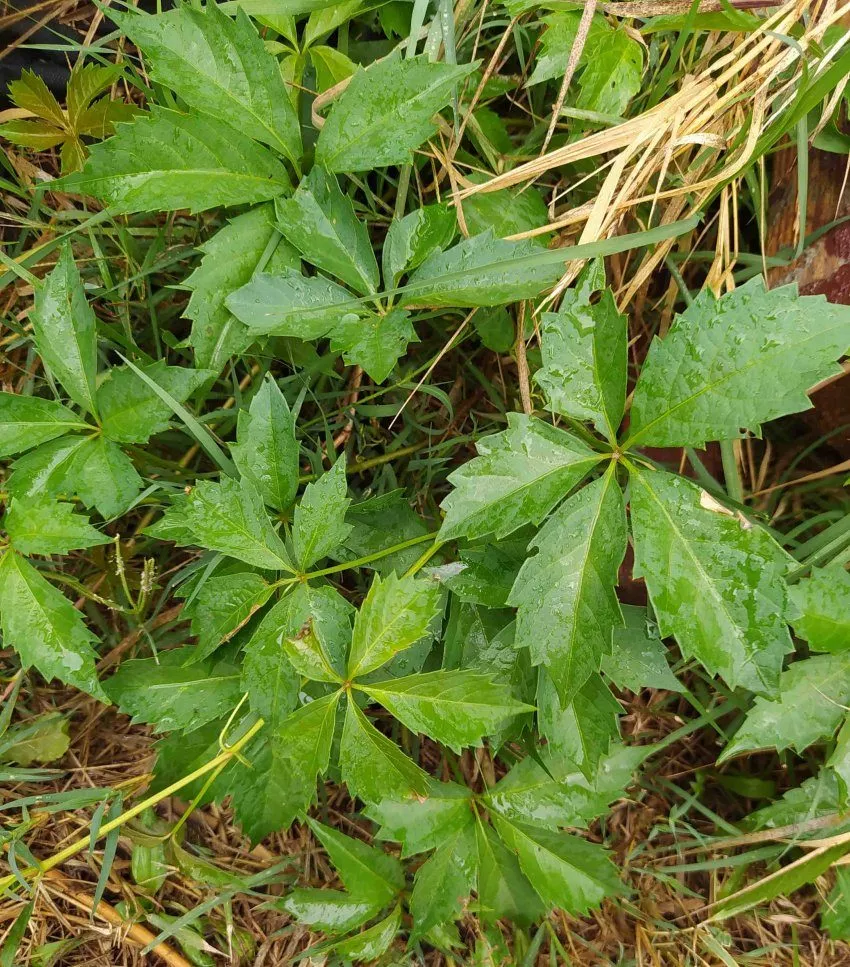
I once had an impulse to plant it against the wall of the garage. Unfortunately, I couldn't find a photo of what it looked like when it had climbed the corner. It was beautiful, I admit, especially in the fall, when the leaves turned gold and red, but its shoots, just like ivy, immediately found cracks between the roof and the wall and began spreading along the ceiling inside the garage. Only its shoots grew not 30 cm a month, but a meter a week, apparently because in addition to the plant's rapid growth, they also stretched in the dark.
- Under the shelter of a climbing plant, the wall of the house is well preserved - the foliage protects the structure from bad weather: in the rain, it does not get wet, in the heat, it does not allow the sun's rays to heat the structure and it will remain cool.
But if the house is built of adobe or other hygroscopic materials, despite this green covering, the wall may absorb moisture in damp weather and then not dry sufficiently, which can lead to mold growth under the ivy. If the wall is made of dense material, this is not a concern. - The wall itself should be dry and solid, made of brick or cinder block. Adobe, clay, and boards are not suitable. If the wall has cladding or plaster, it must be undamaged. Plants will begin to destroy the coating at the crack or chip. Plants will find cracks in the boards and then, using their thick stems, will begin to tear the boards apart, splitting them.
Bottom line: the climbing plants I've encountered personally are quite aggressive in my garden. For example, maiden grapes, under favorable conditions, easily root from the tips of their shoots and send out underground shoots away from the walls. It's a good thing they don't end up on your neighbor's property. Otherwise, they'll have to deal with the chore of removing the shoots, too.
The situation is exactly the same with wisteria.
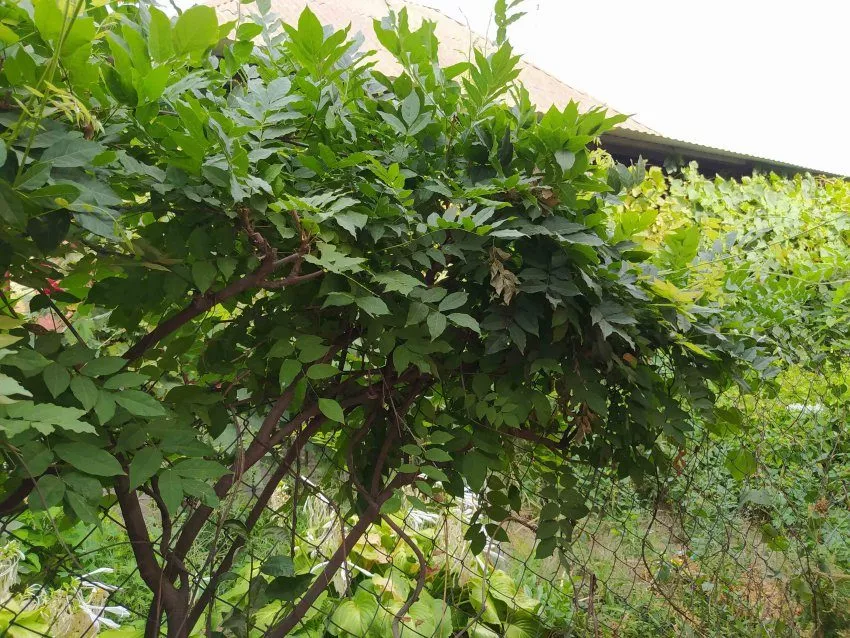
My neighbors planted it, but I regularly trim its shoots from my yard, several times a season. I really want this wisteria to take root on our house. I'll weave around the gas pipe leading to the house, the fence, the viburnum...
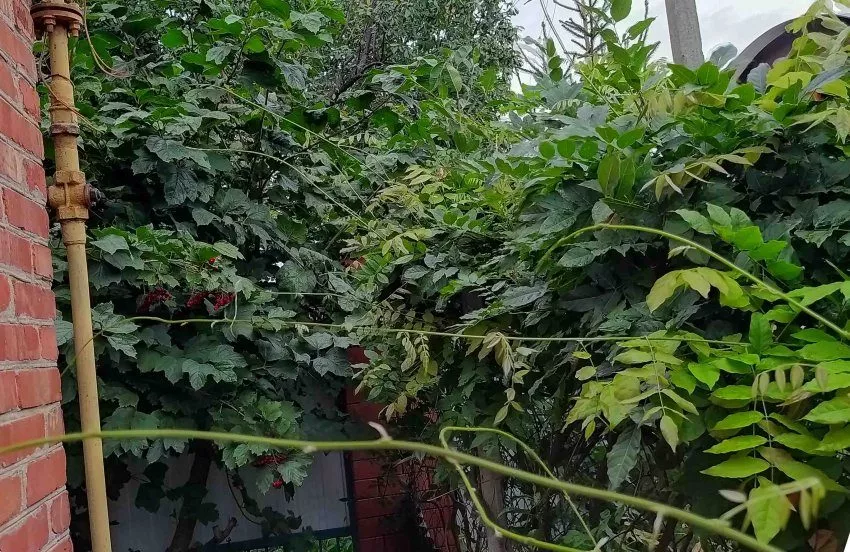
And everything that comes its way. The growth is very large, easily sending up 2 or even 3 meters of shoots per month. It crawls above, on, and underground.
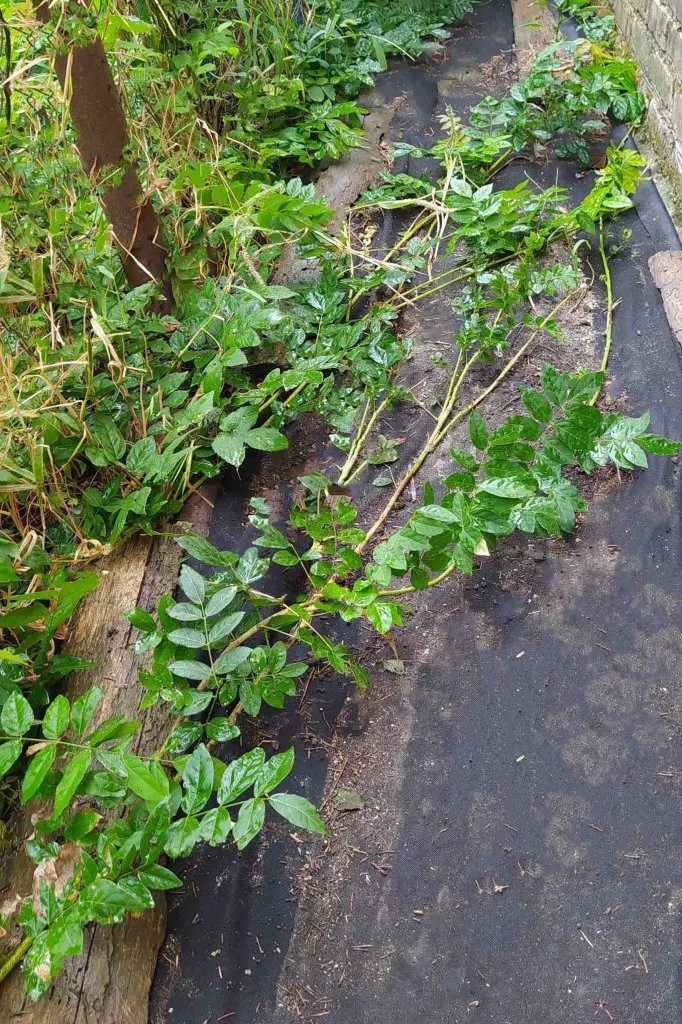
Regular pruning? Then you'll need a ladder. The shoots reach the roof and climb up the slate. If you don't trim them regularly, they'll become braided, trapping debris in the summer and snow in the winter.
There used to be a gate here – now, to open it, you have to arm yourself with pruning shears.
Hops are also not a very good option, especially for the south.
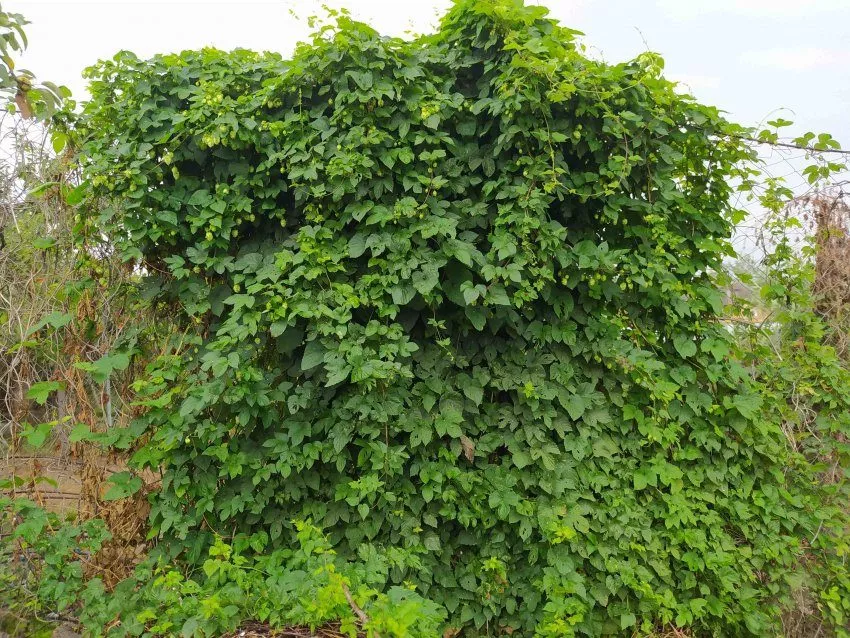
It has the same problems – it grows quickly. It entangles everything, but on top of that, it sows well from its own cones.
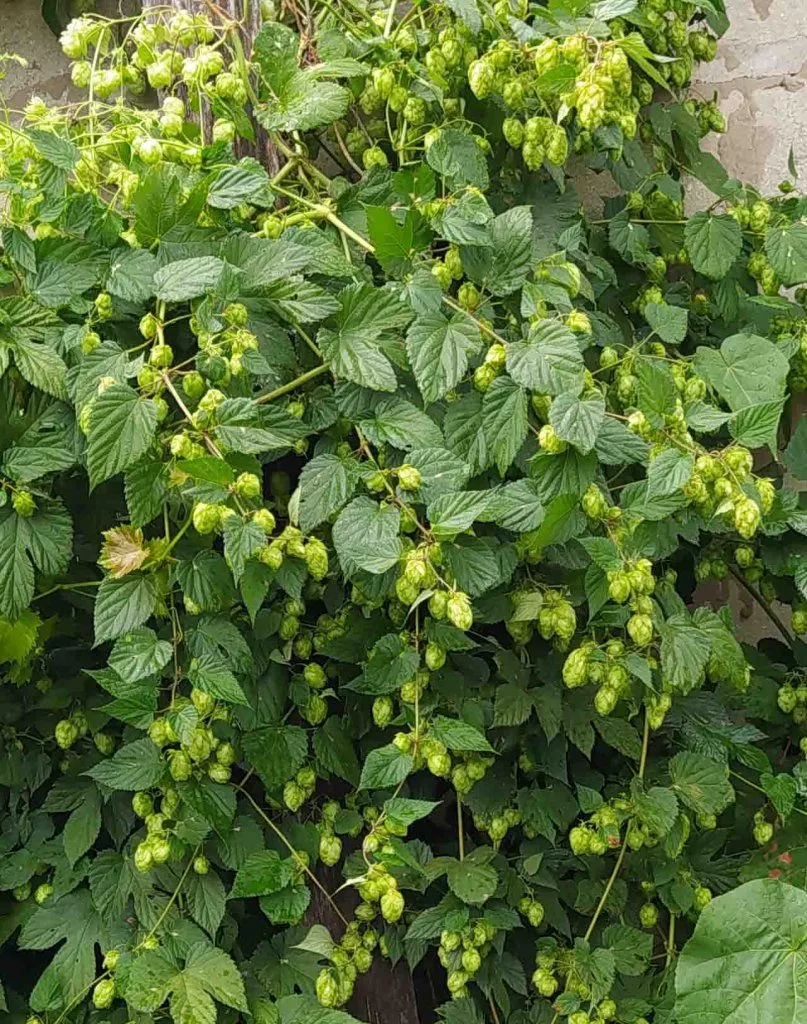
Young hop shoots are covered in tiny hairs; accidentally snagging one can cause a burn. For some, the burn isn't as severe, but for me, it often leaves a permanent, painful mark where the young shoot scraped the plant. The wound looks like a scratch, but it takes a long time to heal, sometimes even leaving scars.
Hops are difficult to eradicate—even treatments with products like Roundup or Tornado only weaken the plant. If the plant has become overgrown, manual root removal and constant pruning of the above-ground portions are the only options to prevent it from gaining strength.
Therefore, despite the beauty and decorative value of such vertical gardening, I advise you to consider: are you prepared to prune several times a season? Is your structure airtight enough to prevent shoots from getting inside? And if we are talking about plants that spread by root shoots, perhaps it is worth immediately fencing them off at planting, like raspberries, by digging sheets of dense material into the ground or planting the bush in a container.
But since this type of vertical gardening, with proper care, looks unusual and beautiful, I haven't given up hope of finding just the right plant that will require minimal care and monitoring. So far, I've tried planting a climbing hydrangea. We'll see how it goes...
We have problems with hops too—the neighbor's chain-link fence is covered in them. We're constantly scratching ourselves trying to clean up the area around the fence. And how much trash it creates!
Ivy was creeping up the brickwork of our house. We got rid of it, but dried marks remain on the wall, even though it's been four years.
I dream about wisteria! I didn't think it was so treacherous... Now I'll reconsider my views.