
I'm continuing to share my winter fishing results. The other day, I was out fishing for perch again. It was a brutal -37 degrees Celsius. The location was a little different this time, but still on the Kopylovo Peninsula (Samara Region).
My husband has been very lucky with his catches lately, perhaps due to his extensive experience. He rarely brings in less than 4-5 kg. I remember back then, when he'd bring in 3-5 palm-sized fish, we considered it a successful catch. Now even 4 kg doesn't impress! We've become so spoiled in no time.
To save you the trouble, I'll show you the results of the fishing trip right away:
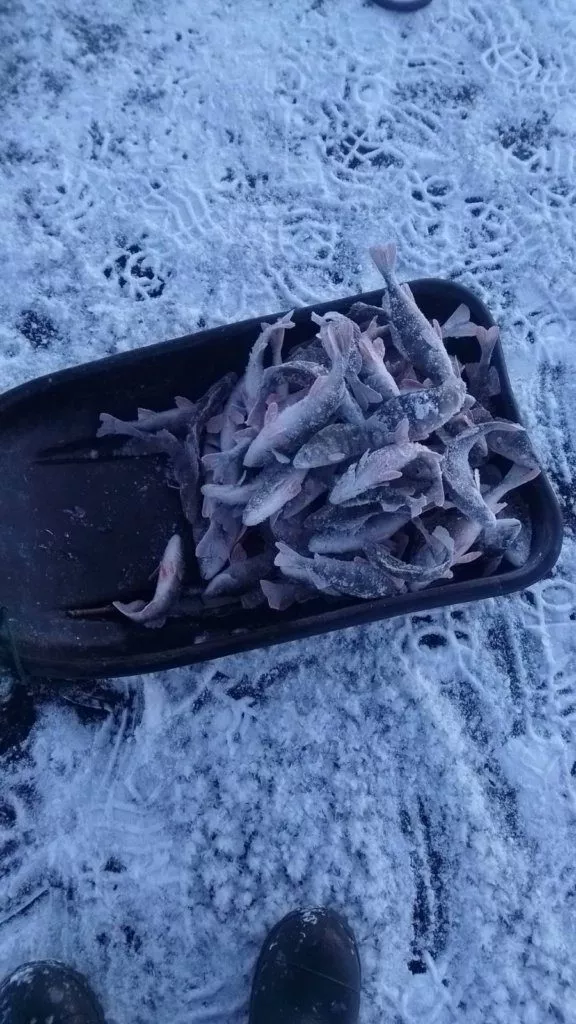
The perch are steady and large. The bite is active, but only on "special" lures. Other anglers were sitting there with little success.
This time, the fish started biting on Lucky John's Nordic balance jig. Even the classic jig wasn't working. Look at these fish, they're showing off—today they want a Rapala for 600 rubles, tomorrow a Mebar for 800 rubles, and next week they'll be catching on a Golden Goat for 150 rubles. It's as if the fish are negotiating among themselves what to bite on and what will be "in fashion" next week. Back then, our grandfathers used nothing but an empty hook, and a worm was pure fun!
Now, let's talk about the fishing spot in detail. Local fishermen call this spot "The Dock." It's right next to the hydroelectric power station. Nearby is a mini-island called "Telyachiy," but the locals call it "Telyachka." This is what it looks like:
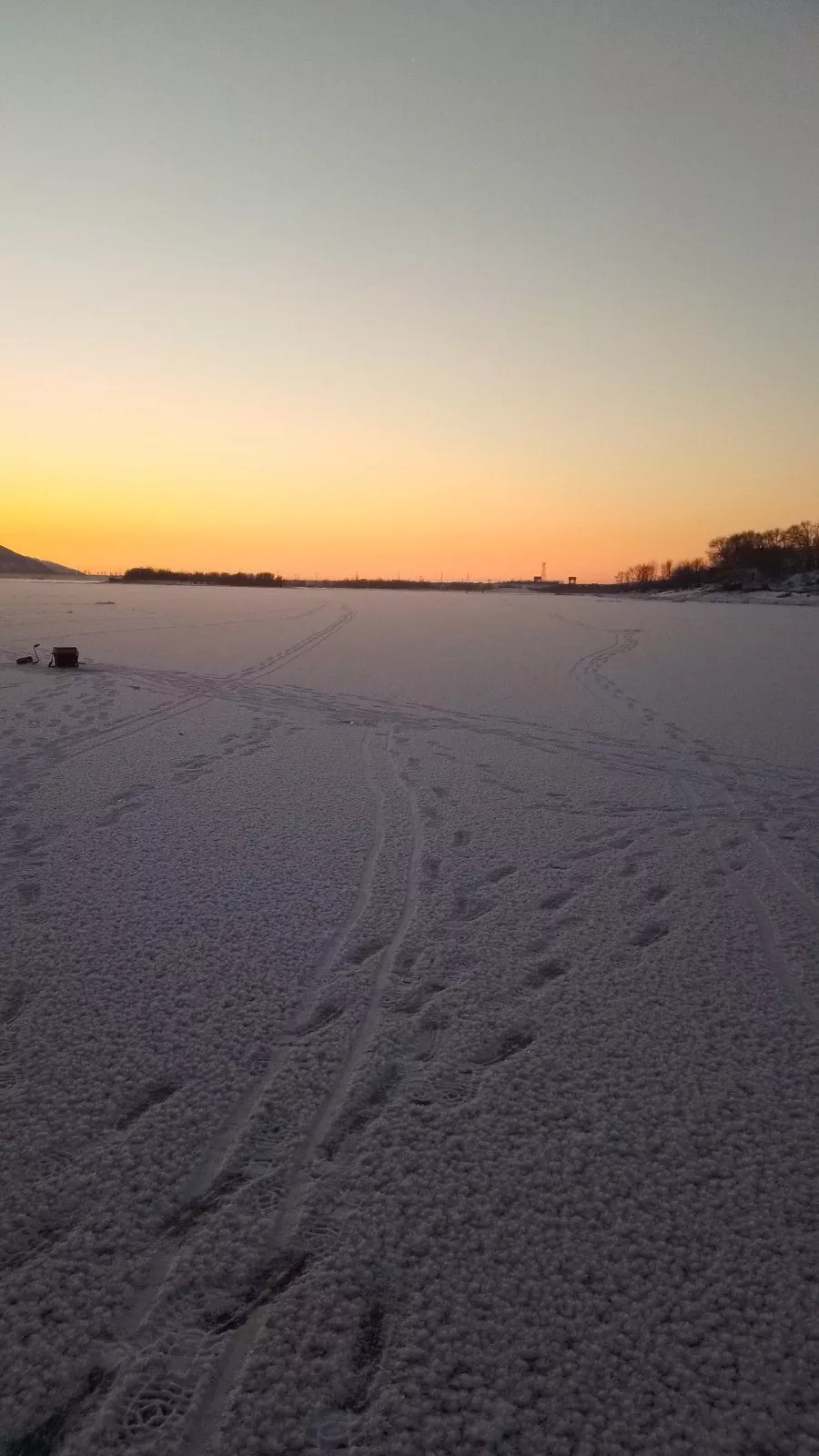
The dam is visible on the horizon. To the left is Telyachiy Island and the edge of the Zhiguli Mountains. The fish were biting not far from the shore (Kopylovo Peninsula). The photo turned out beautiful—at sunset.
Despite the freezing temperatures, my husband stayed out from early morning until sunset. He dressed warmly. Not every fisherman can handle such cold, especially with a north wind. A special hat covering his face, which only covers his mouth and eyes, is essential. A fishing tent would be a great help in such conditions, but my husband doesn't like to carry it, which is a shame.
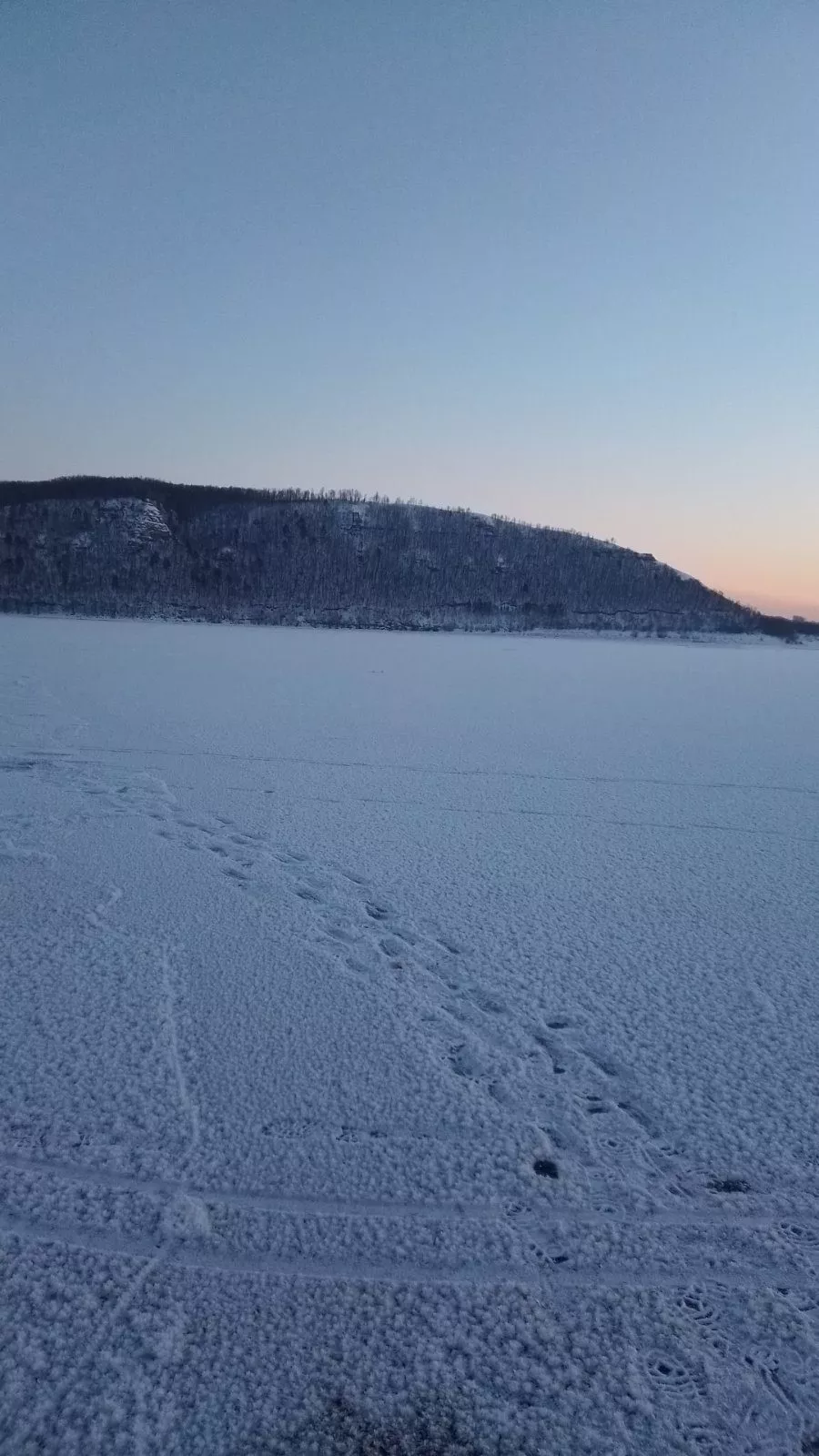
I'll also show you where to enter the ice; this is important for fishermen to find that "cool" spot:
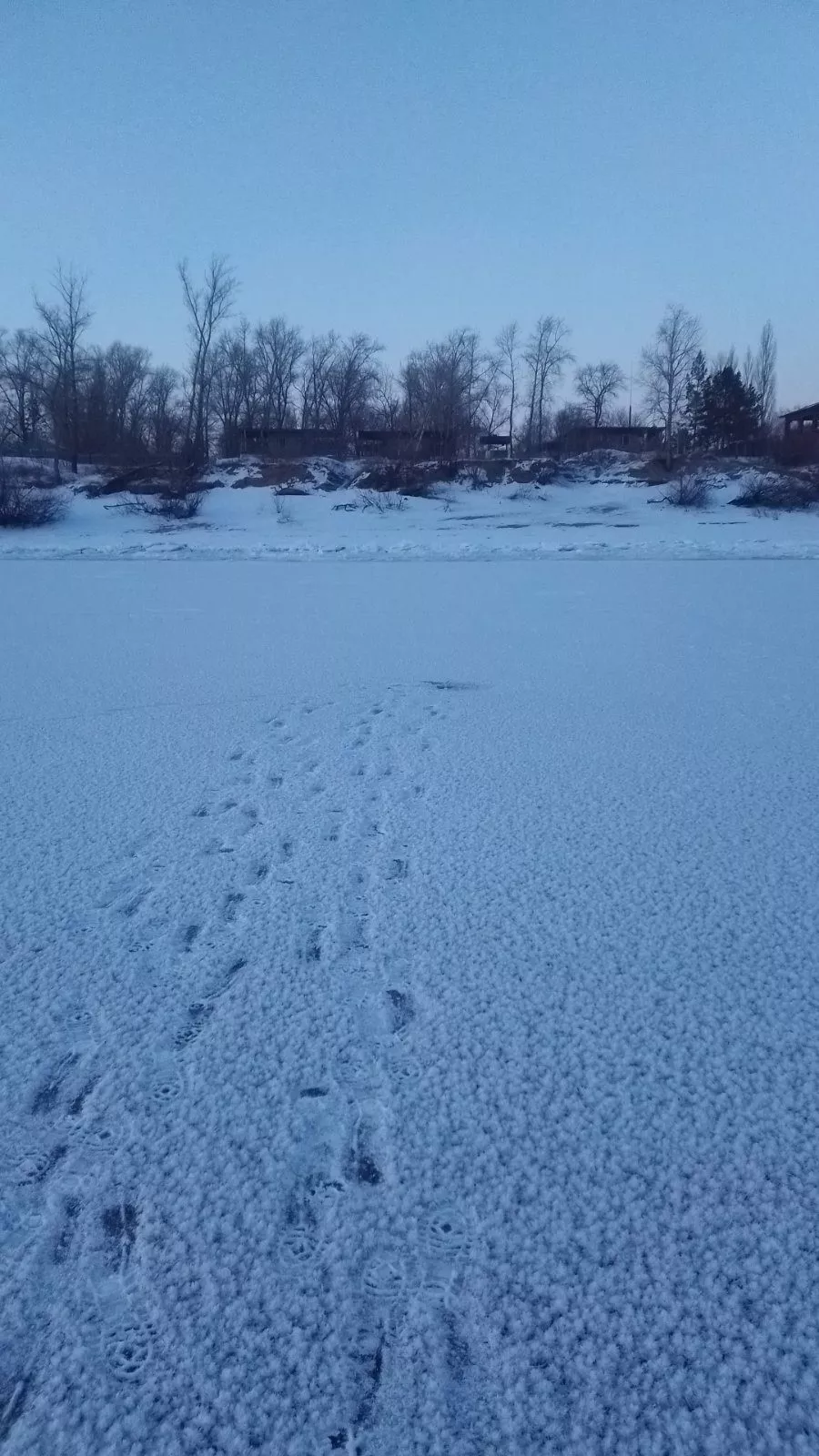
The entrance is to the left of the tourist centers shown in the photo. It's easy to drive up and park your car. However, on weekends, there are so many cars there that the parking lot stretches for a kilometer!
It's also worth noting that fishing isn't strictly permitted in this area. There's a hydroelectric power station nearby—a water protection area of some sort. Going any higher than the dam isn't allowed—you could run into the fisheries inspector and get a hefty fine. But here, it seems like no one's bothering anyone nearby, allowing people to fish in peace.
Another important detail: the ice in this area is unstable, and even during week-long frosts of -15 degrees Celsius, solid ice rarely forms. There are often water spots here, making fishing very dangerous. Therefore, fishing is only possible during severe frosts. Moreover, the water level at the hydroelectric power station can rise or fall the following day, causing the fresh ice to shift and break.
It's happened more than once that my husband would arrive at this spot in -20 degrees, and there would be no entry—just water splashing and broken ice floes floating around. He'd have to go elsewhere, either a little lower or to the opposite side—to the canal (there's always ice there).
He's had a fantastic time fishing again. We'll go fishing together soon, before the ice melts in March, and we'll report back!