

I have two gorgeous American Staffordshire Terriers living in my apartment. Richard is two years old, and Chara is almost a year old.
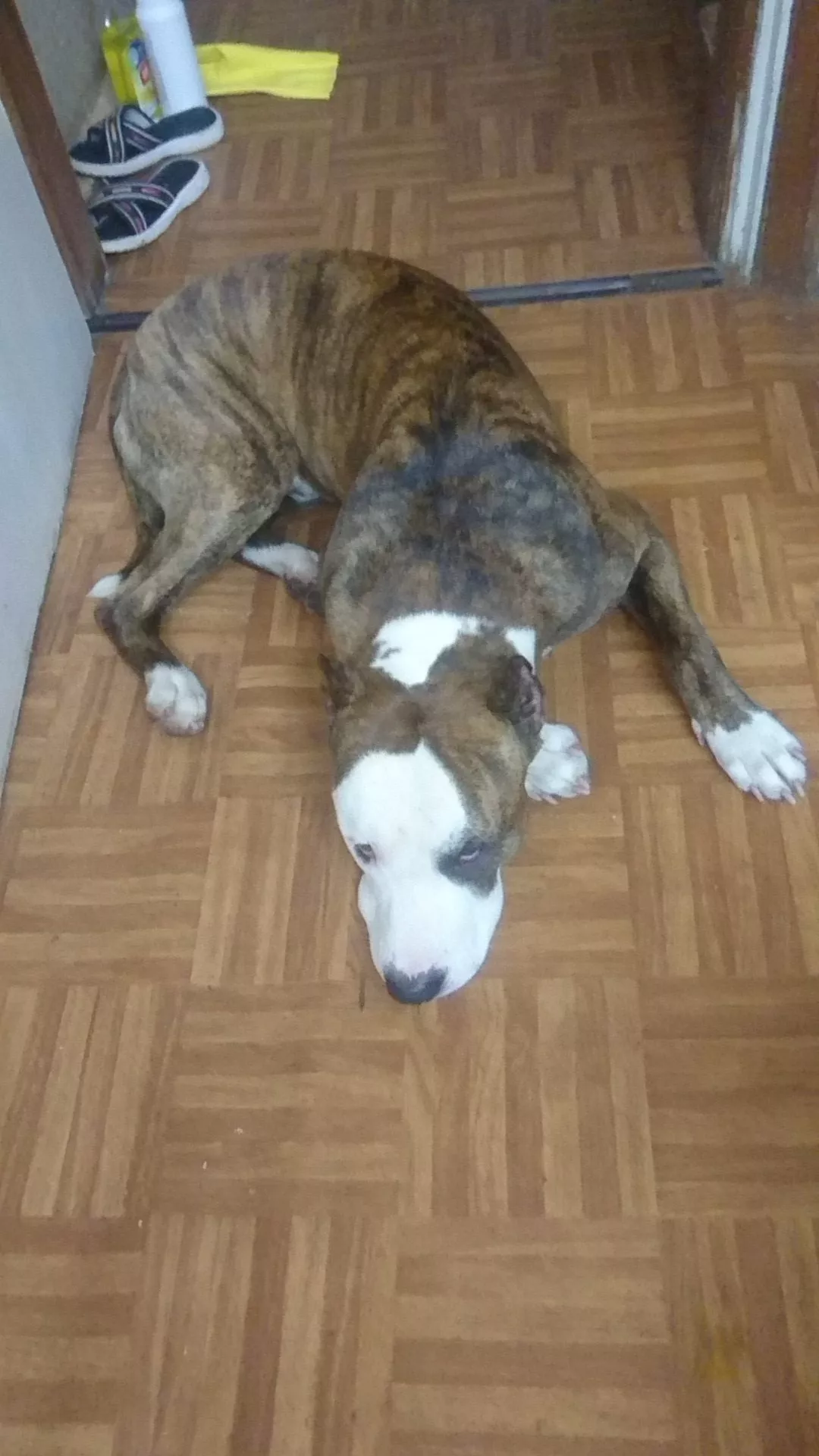
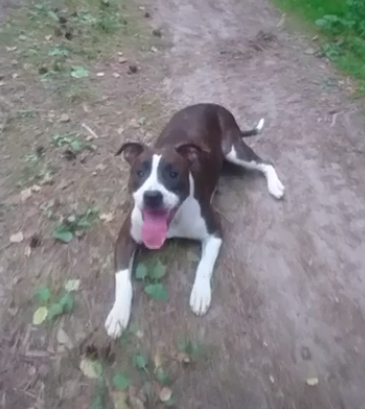
Around 8 months of age, they develop an unpleasant odor—what's commonly called a "doggie" odor. Knowing that bathing them too often isn't recommended, I didn't even try, so I started searching the internet for solutions. There are all sorts of suggestions out there, and frankly, many are completely outlandish.
After consulting with the veterinarian, I realized that they were trying to push expensive shampoos and sprays on me, especially those that are available in the sales department at the veterinary clinic.
In short, by questioning experienced dog breeders (my dear sister runs a dachshund kennel) and analyzing articles ourselves (taking the logic into account), we began experimenting. Naturally, Rich was the first to undergo this experiment, as Chara hadn't yet been born at the time.
I tried a lot of things, but most often the dog's scent lingered. Incidentally, to rule out health issues (that could also be the cause), we had various tests done. The result: the dog is completely healthy!
Afterwards I came to the conclusion that:
- You can bathe your dog as usual—twice a month—but use a high-quality shampoo specifically for dogs. I also use an odor-eliminating conditioner (I won't mention the name or brand to avoid advertising, but it's best to use products designed for long hair). If you don't have conditioner on hand, you can make a solution of 1.5 liters of water and 1 tablespoon of vinegar instead.
- Washing dogs with water without shampoo or other products is acceptable at least every day, and this really helps, especially during periods of animal noise.
- After every swim at home or in a pond, as well as after a walk in the rain, I recommend thoroughly drying the coat. You can use a hair dryer (on the lowest setting) or absorbent towels. Let me explain why this is necessary: when a drop of liquid remains, it begins to mold, which contributes to fungal infections and stench. This doesn't apply during the summer.
- Dogs should be brushed at least once a day, but twice is better, especially if your pet has long hair. This is because their skin secretes oils that get tangled in the fur (believe me, even if the hairs are short!), resulting in microscopic tangles. These tangles are what cause the doggie scent.
- Don't neglect hygiene measures—brushing teeth, ears, and eyes, and trimming nails. These factors also affect odor production.
- I'd like to specifically mention nutrition. An improper diet disrupts metabolism, which affects the functioning of the glands that actively participate in scent production. Feed your dog according to the requirements for its breed and age. This is important.
Many people online recommend using perfume, cologne, air freshener, and similar fragrances to instantly get rid of the odor. They say, "Spray your dog and it'll go away." Complete nonsense!!! Because these products are harmful to animals.
The first and most harmless thing that can occur is an allergic reaction. I won't even mention what happens after the dog starts licking the perfume residue off its fur. Besides, it's pointless—the smell will be masked, but only for half an hour.
Remember, there is no product in the world (at least we haven’t come across or heard of one) that will instantly remove the dog smell and make it never come back.
Yes, many veterinarians and specialists recommend using special dog deodorants, but firstly, they're incredibly expensive (and you'd have to keep using them), and secondly, I'm not at all sure they're safe. So, it's up to you to decide.
Now about another unpleasant thing - the smell on carpets, dog beds, on bedding, blankets, etc. I'm not talking about other smells, for example, urine and feces on flooring, because that's a completely different topic, I'm only talking about the smell emitted by pet fur.
You can remove these odors from items by washing them. However, a carpet, for example, is difficult to wash and can't be done frequently. Nevertheless, I'll share a few recipes we've personally tried:
- Be sure to buy an air ionizer. It reduces unpleasant odors in your apartment and simultaneously neutralizes bacteria—a useful thing.
- Water mixed with essential oil has the same effect. A couple of drops per 0.5 liter is enough.
- If you need to neutralize odors from your carpet, sprinkle a thick layer of baking soda on it (don't believe people who say a thin layer—it won't work). Leave it for about a day (at least, otherwise it won't work either). Better yet, as I've been doing for the past four months, lightly mist it with a spray bottle, but only very lightly. Then, every other day, simply vacuum the surface.
- You can spray with vinegar diluted with water. I use a water-to-vinegar ratio of 2:1.
- Rubbing alcohol also works well, although it has a strong smell and lasts for an hour.
If you have dogs at home, try to wash the floor every day and open the windows more often (we almost never close them, and in the winter I turn on an ionizer).
By the way, Amstaffs are terrible allergy sufferers, but so are other breeds. So, when our Charochka grew up and developed allergies (and really bad ones at that), the smell became very strong. As soon as we treated her, the stench went away.
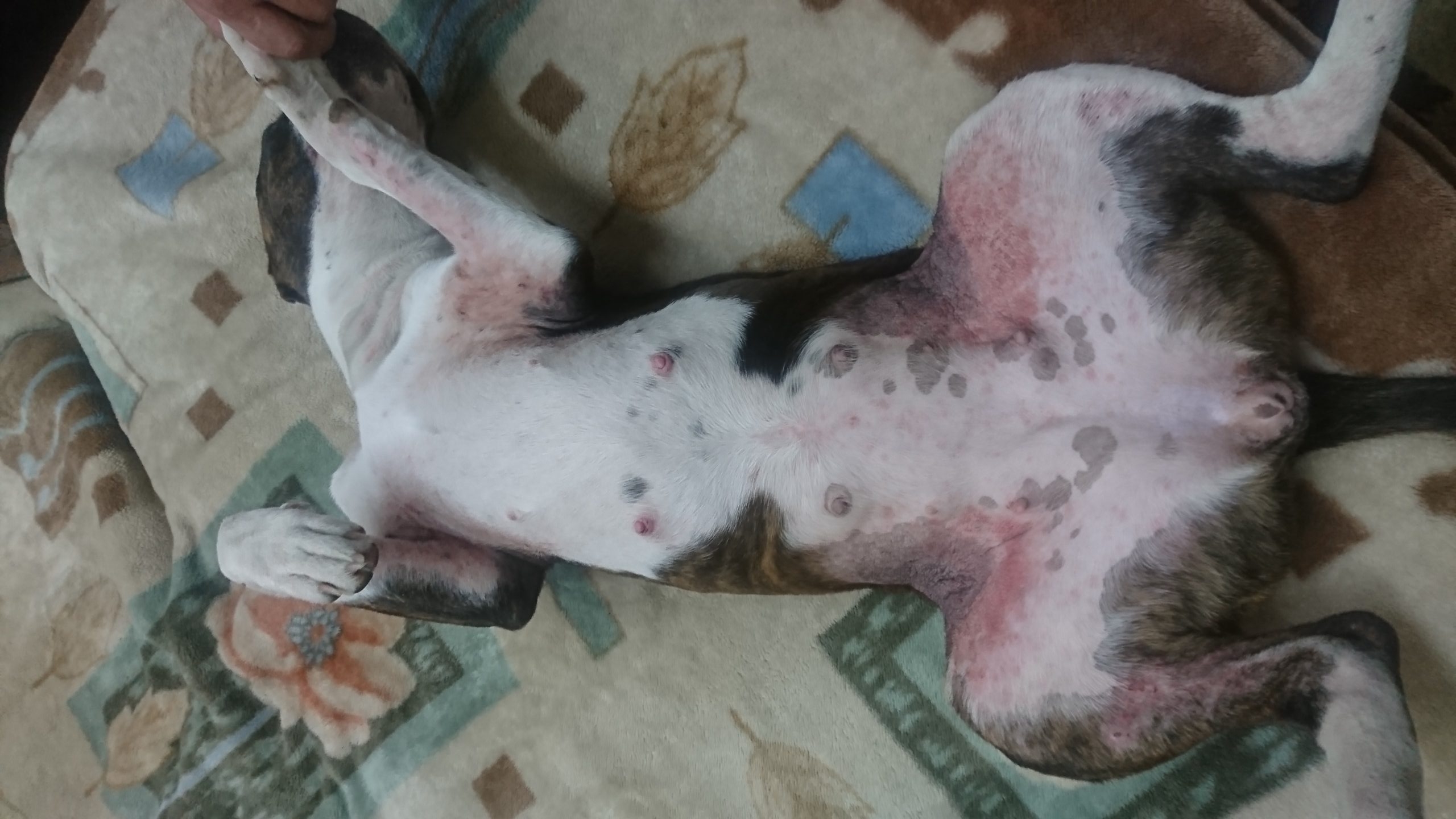
That's why I'm convinced that the function of the excretory glands depends on the pet's overall health. We don't have any odor problems now because we've learned to properly and efficiently care for our pets.