
Good day! It's been a while since I've shared any news from my poultry house.
Since we keep hens for eggs—it's a shame to slaughter them, and the scale is not the same; we only have a few hens, and we know them all. So I try to focus on egg-laying hens. And also on the interesting eggs they lay. I'd like to tell you about one rather exotic, but increasingly common, breed of chicken—the Ukheylyui.
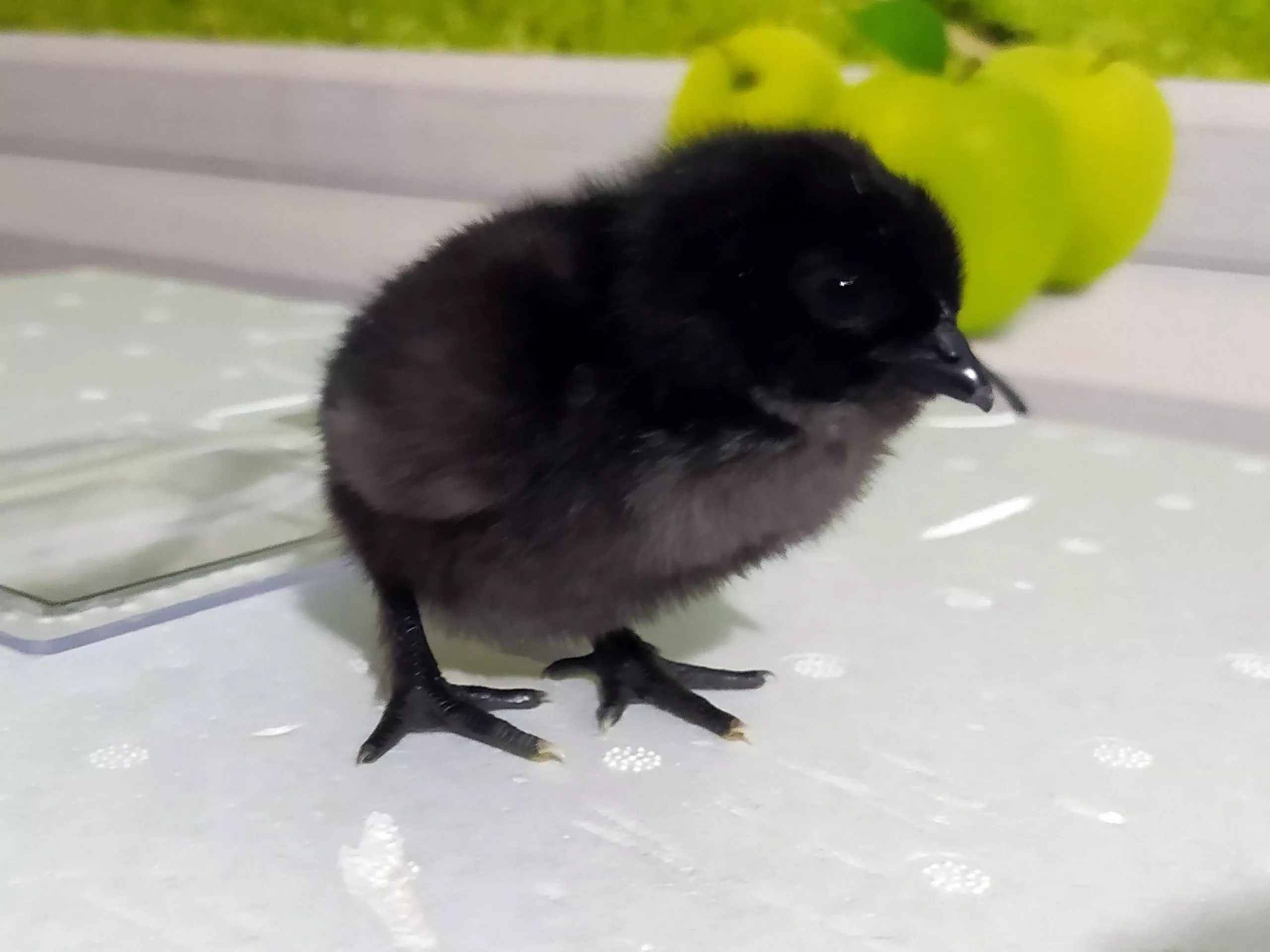
I found a breeder and bought a few eggs from her. I don't want to breed eggs on an industrial scale, but rather out of curiosity, so the ones that hatched were enough: a cockerel and two hens. That was last summer. Now I can tell you what's so special about them.
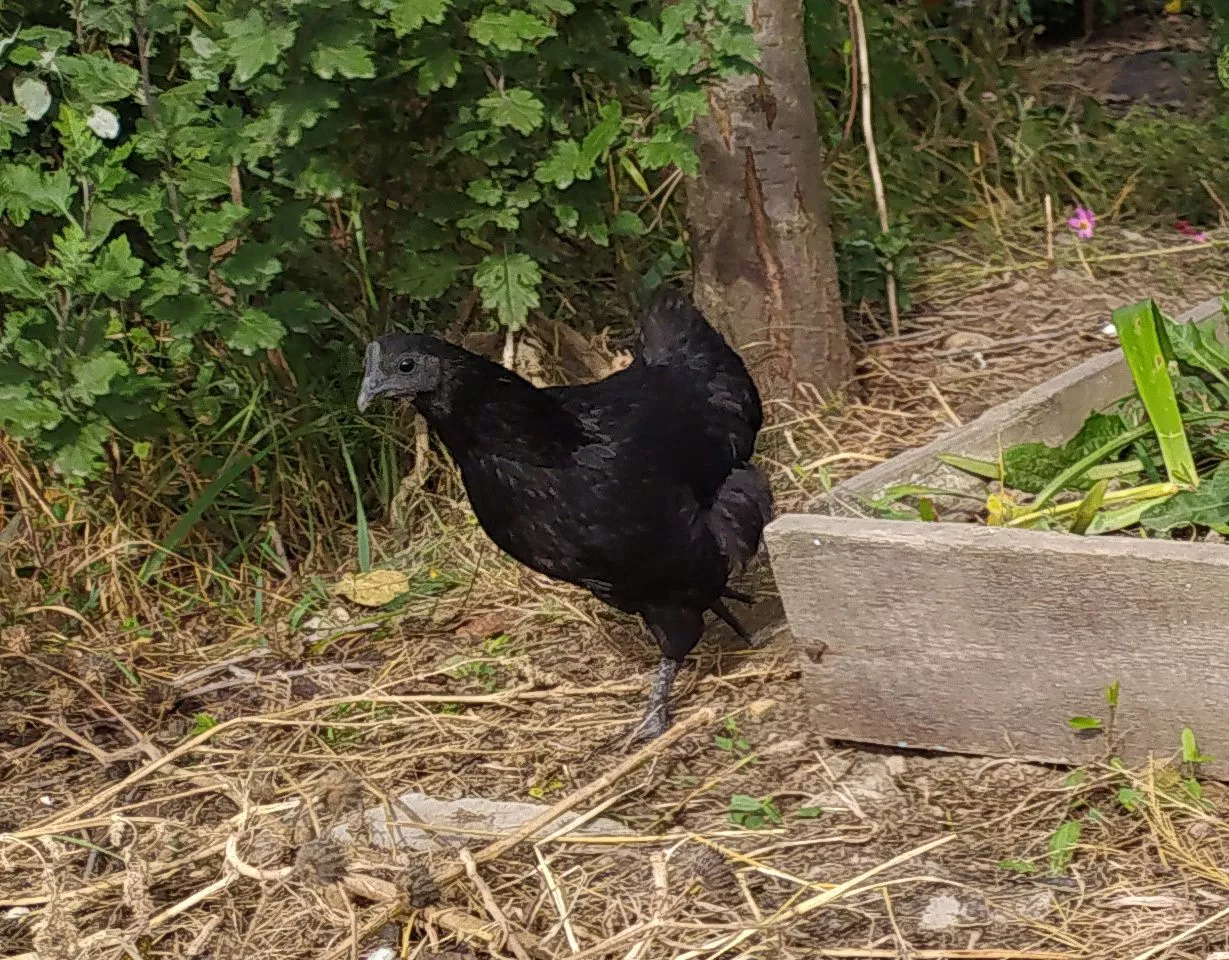
The Wuheiluy breed originates from China. It's interesting because the chickens are black, not only in their feathers but also in their skin. I've read that their meat and bones are also blackish. However, since we don't want to use ours in soup yet, I haven't had a chance to verify this. However, they do look black compared to regular chickens.
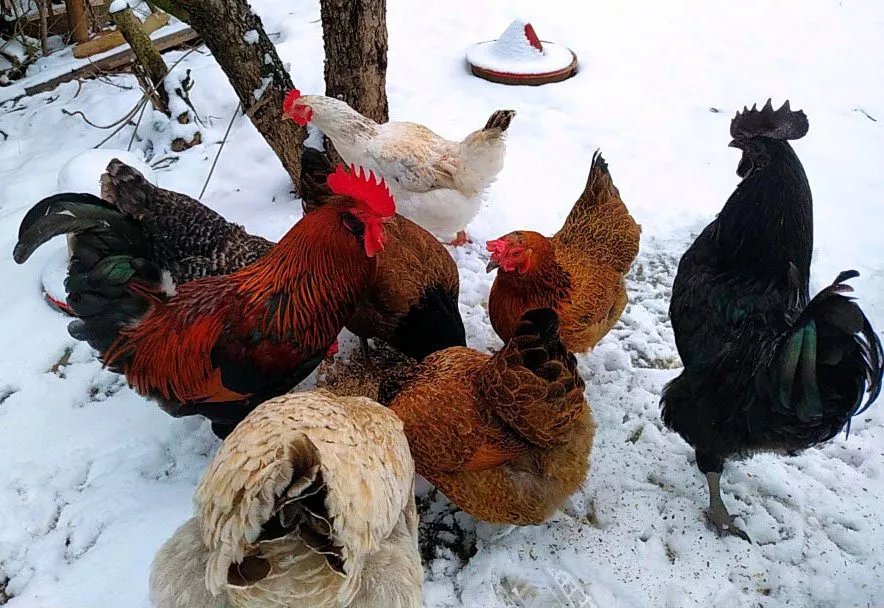
The Uheiluy has very black eyes, so the pupils are indistinguishable from the iris, and black legs, beak, comb, and beard. The rooster's feathers are black with a beautiful green sheen. The Uheiluy is not pugnacious (I'm not sure if this is due to luck with the rooster or a characteristic of the breed). This is an Uheiluy compared to a common, domestic, crossbred rooster.
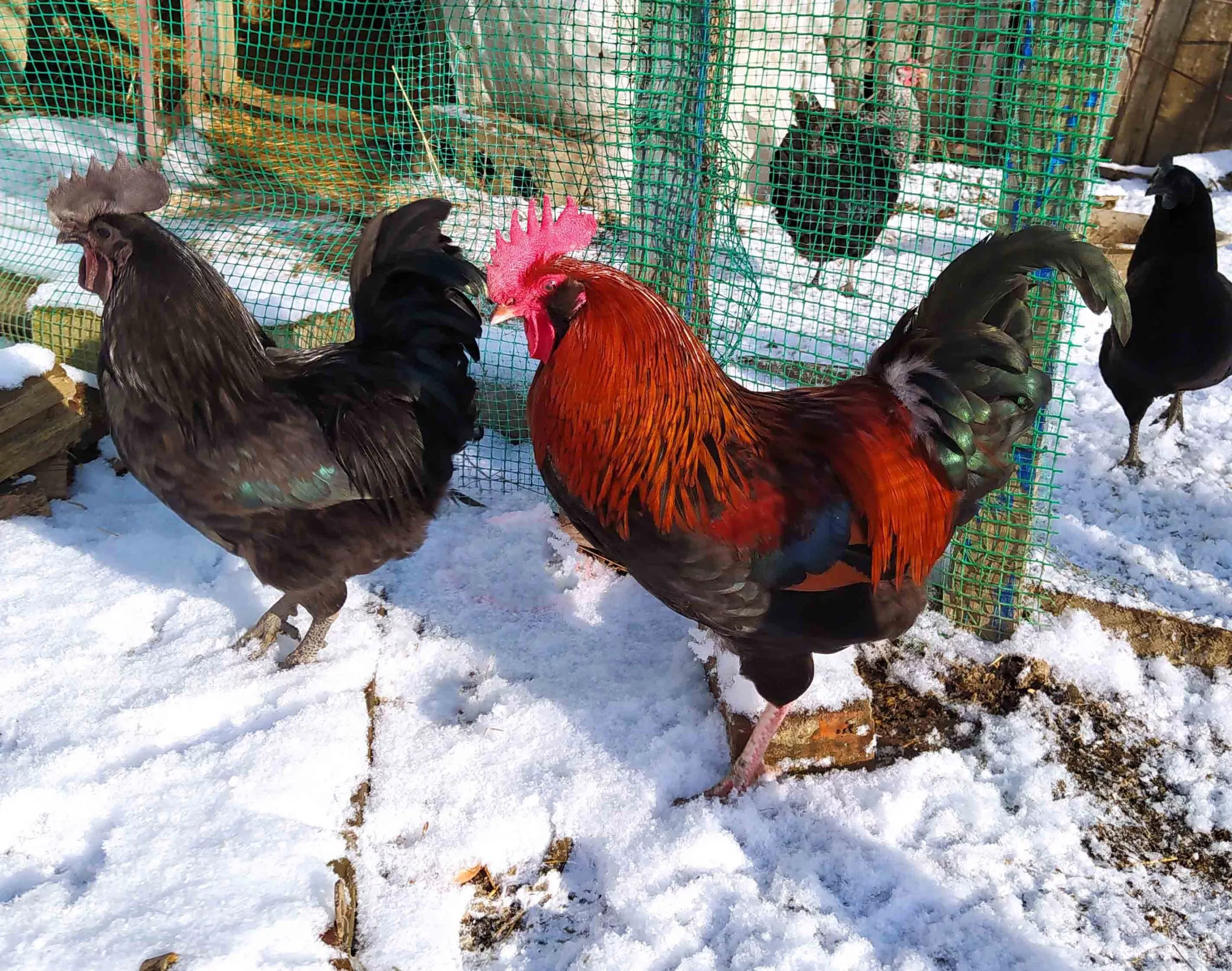
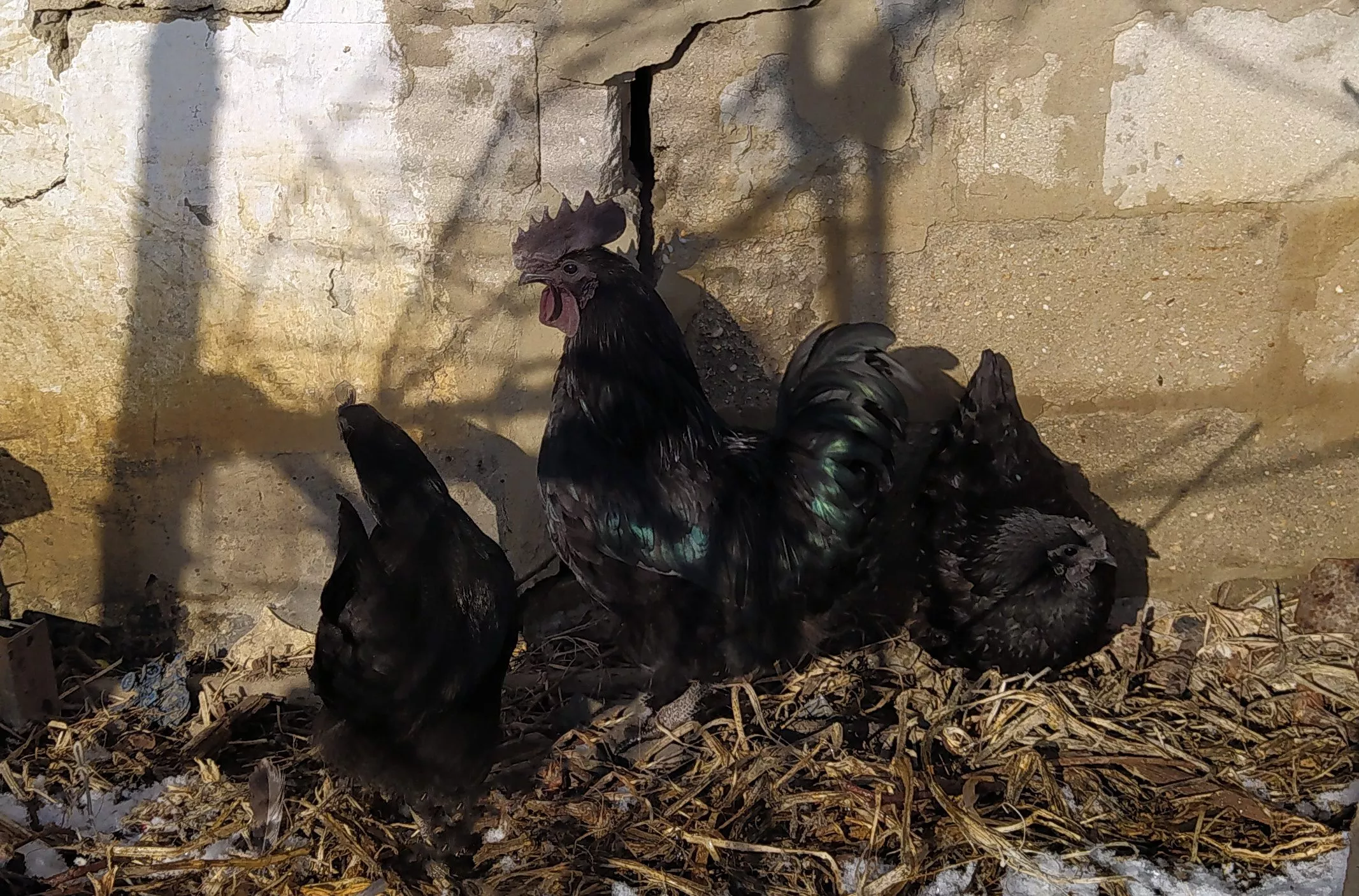
The hens themselves are small, agile, and fly well. The rooster is also small. They are larger than decorative silkies or dwarf hens, but smaller than silver or Kuchin hens.
Here's the whole family assembled:
The eggs they lay are also unusual—a greenish-turquoise hue. They're not large; if you measure them by store standards, I'd say size C2. I've read that the greenish tint of the shells is due to a pheasant gene, with which these hens were supposedly crossed in ancient times.
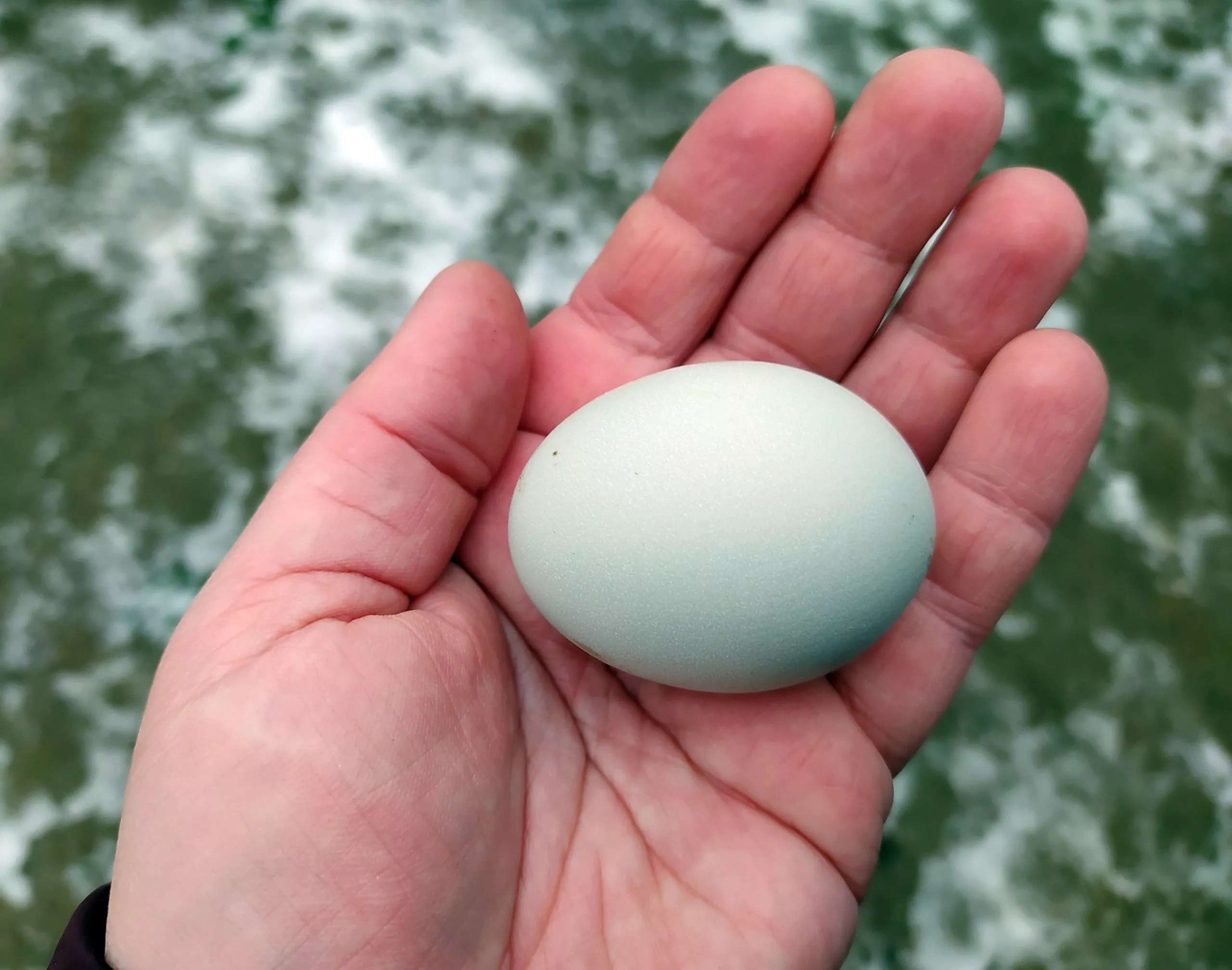
The entire shell is turquoise, not just the surface. When you crack an egg, the inside of the shell is also a bluish tint. The yolk is a bright yellow.
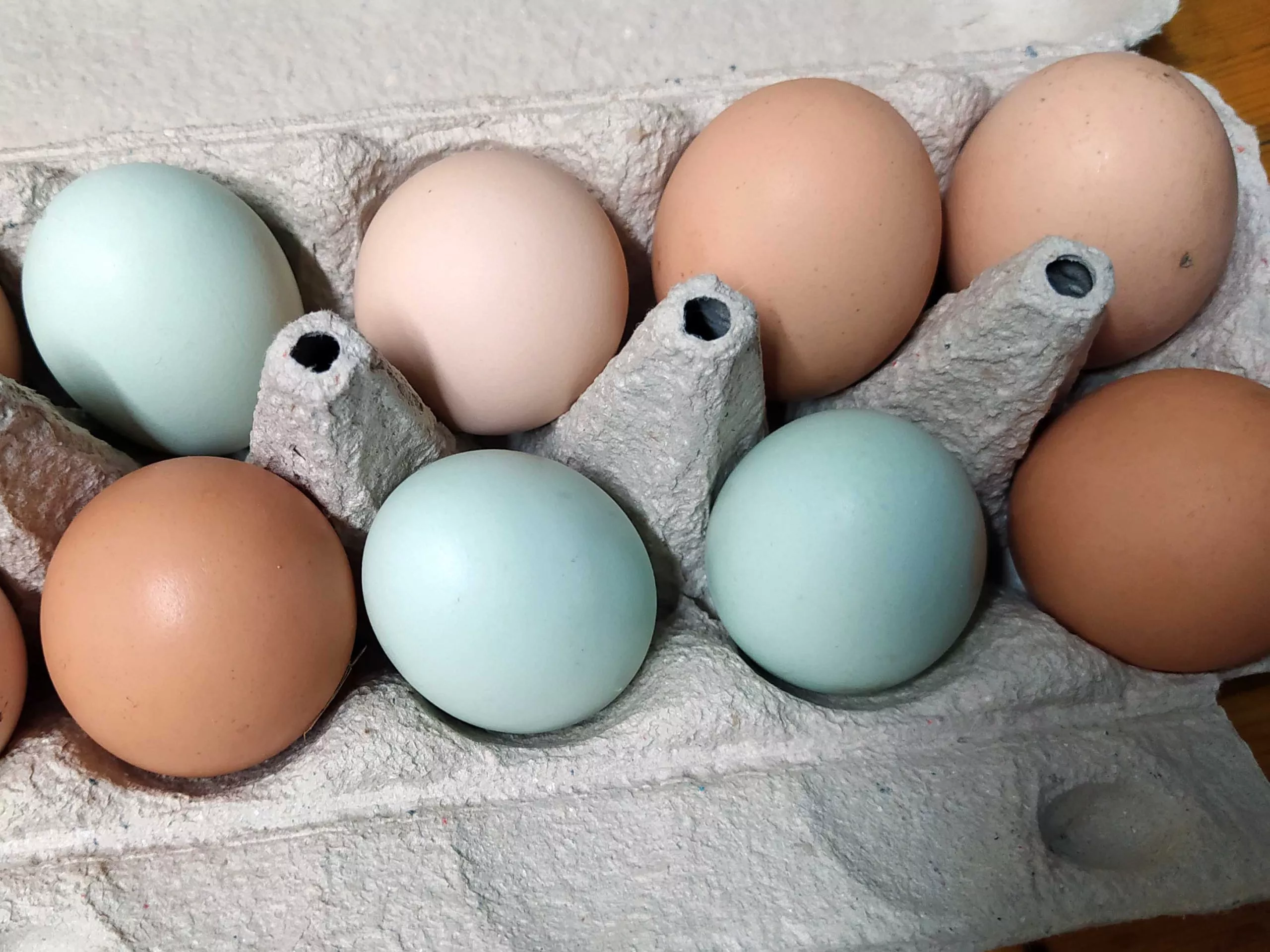
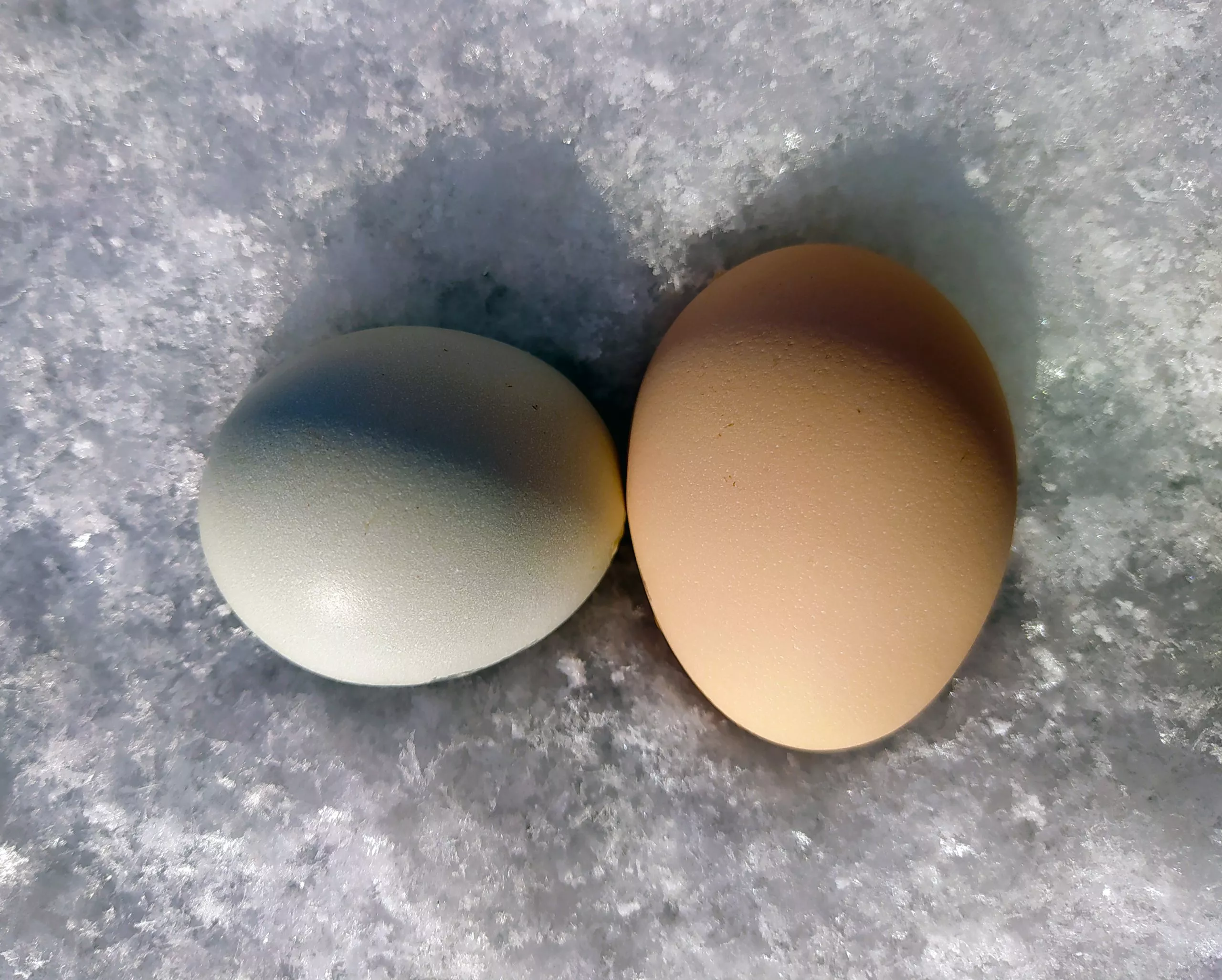
Here's a photo comparing it to an egg from a regular chicken. You can see the difference in size. The color, however, is difficult to capture, as it's not bright, but a soft blue, and the camera also performs its own color correction when taking the photo.
Here you can see the difference in the shade of the eggs of the Uheiluy and the Ameroukan.
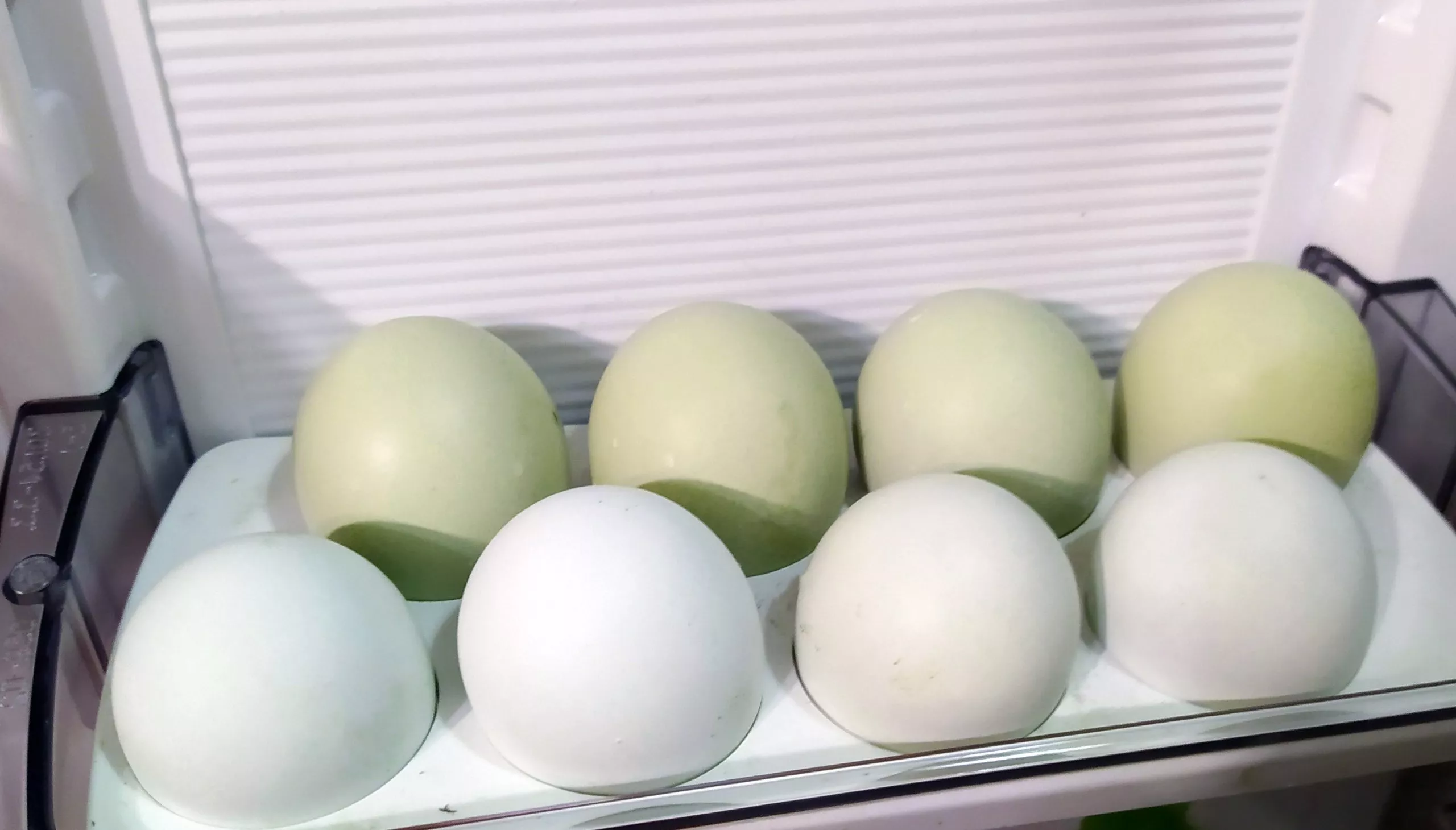
The ouchee is closer to blue and has a matte shell, while the ameroucan is closer to olive and has a glossy shell.
But the photo managed to reflect the difference in shades, but in reality sometimes you have to look closely; at first I couldn’t even tell the difference, but later my eye became more trained.
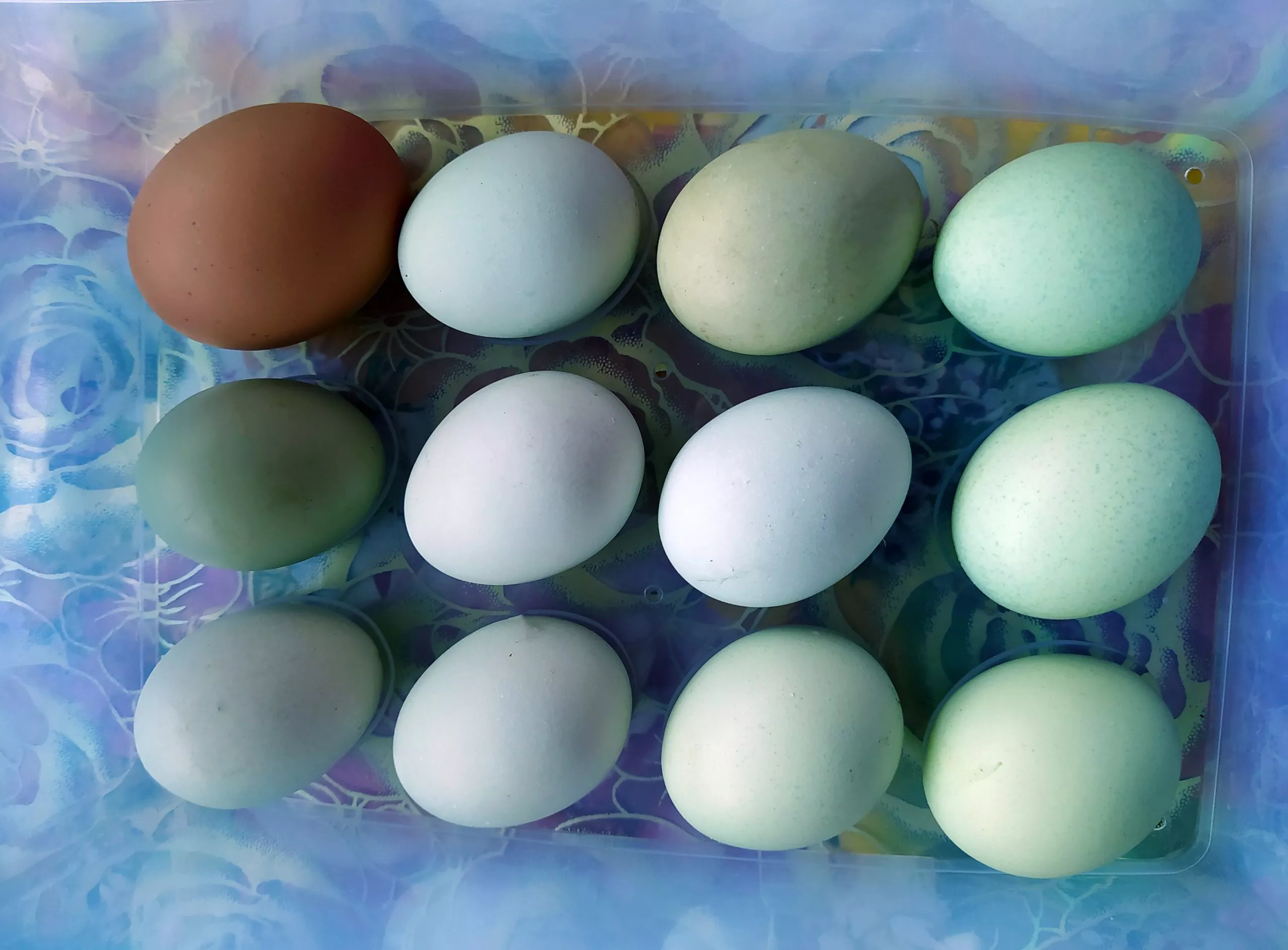
They haven't shown any signs of being a broody hen. So far, not one has wanted to be a mother. But as layers—even though they say there are breeds that lay longer and more productively—my hens are still doing well. They continue laying, even when the other hens are resting. Of course, there are breaks, but for example, for the second week now, the hens have been taking a break, molting and growing new feathers. After a week without eggs, they're already laying again, while the other hens are still resting.
By nature, these birds are timid. While other breeds are curious and indifferent to us, and even ready to fly on our heads, these little black birds keep to themselves and don’t let you pick them up easily.
This isn't a meat breed—they're compact and not large. However, their meat is said to be healthier than that of regular chickens, used to make medicinal broths, and their eggs contain more vitamins A and E than those of other chicken breeds. Ukhei eggs are also rich in iodine.
Overall, I liked this breed of chickens. I won't be switching completely to Uheiluy, as I still want variety. Since we also have Ameroukana chickens, which also lay turquoise eggs, this season we hatched these little crossbreds.
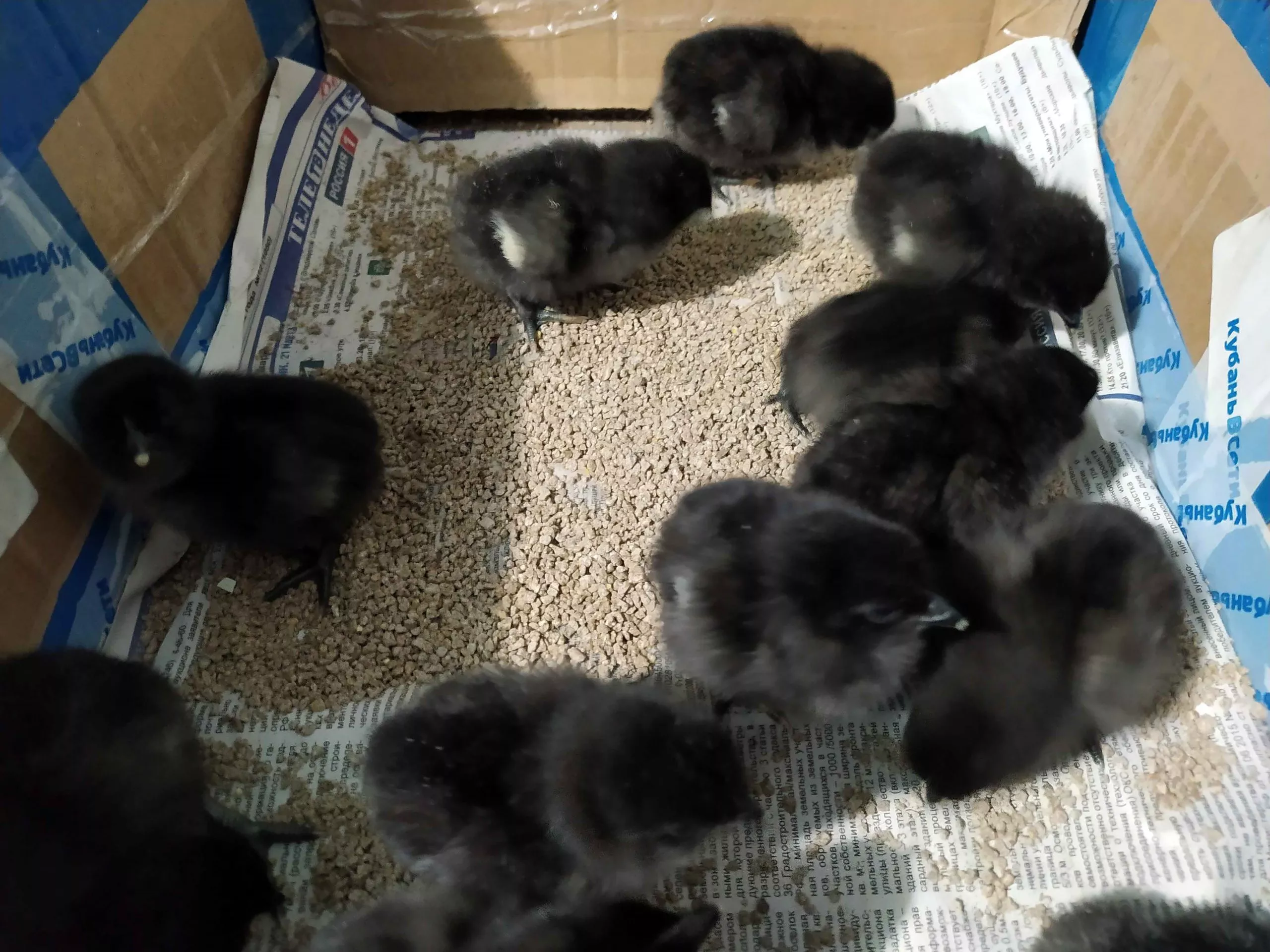
They've already found their new owner. Although I'm a little sorry I didn't keep a couple of these chicks for myself. I read that the first cross between two purebreds produces good production results. Well, if it works out, I'll try to breed some next season. I'm curious to see what traits they'll inherit and how they'll differ from their parents.
You can read more about this breed here, on website.