

When I got seeds of this variety, I wanted to know the meaning of such an unusual name. It turns out there's a fabric dyeing technique that involves twisting the material into knots, creating multicolored stripes on the fabric. So, breeders developed this unusual tomato, drenched in a golden, pearlescent dye, and named it Berkeley Tie Dye Haat.
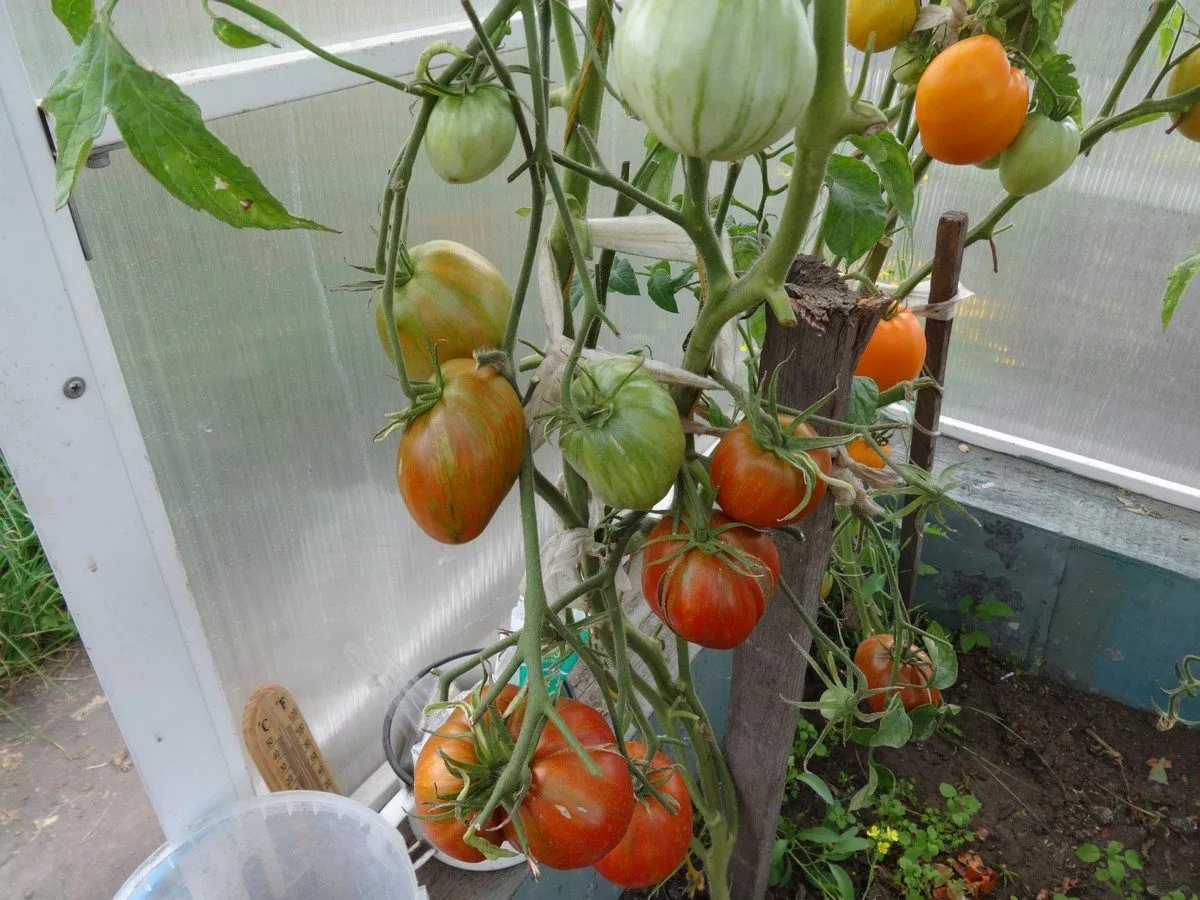
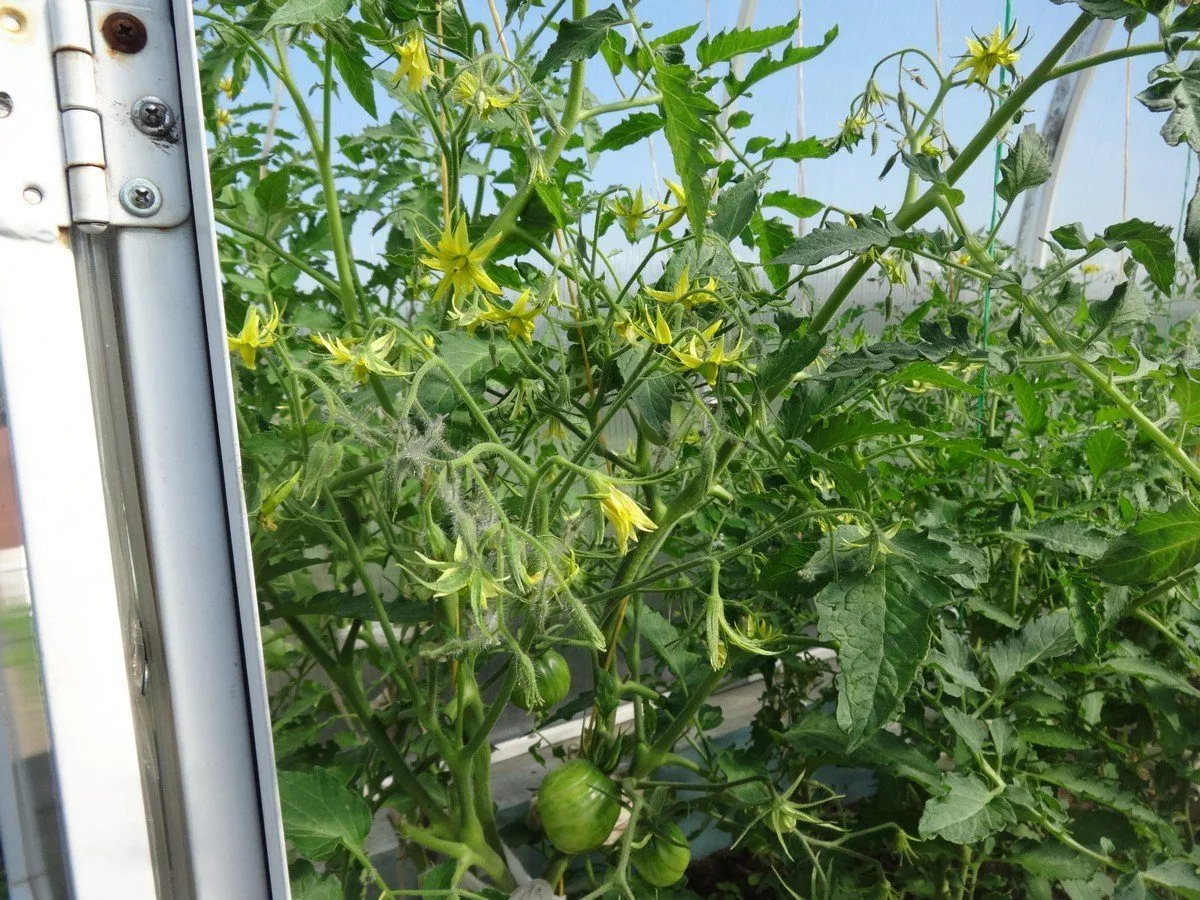
The Berkeley Tai Dai Haat tomato is tall, has a strong, beautiful bush, and produces numerous flower clusters that set fruit well. The lower clusters have more tomatoes, but closer to the top, the flower stalks are not fully pollinated, and some of the flowers have fallen off. This may have been due to the bad weather; our summer is cool and rainy.
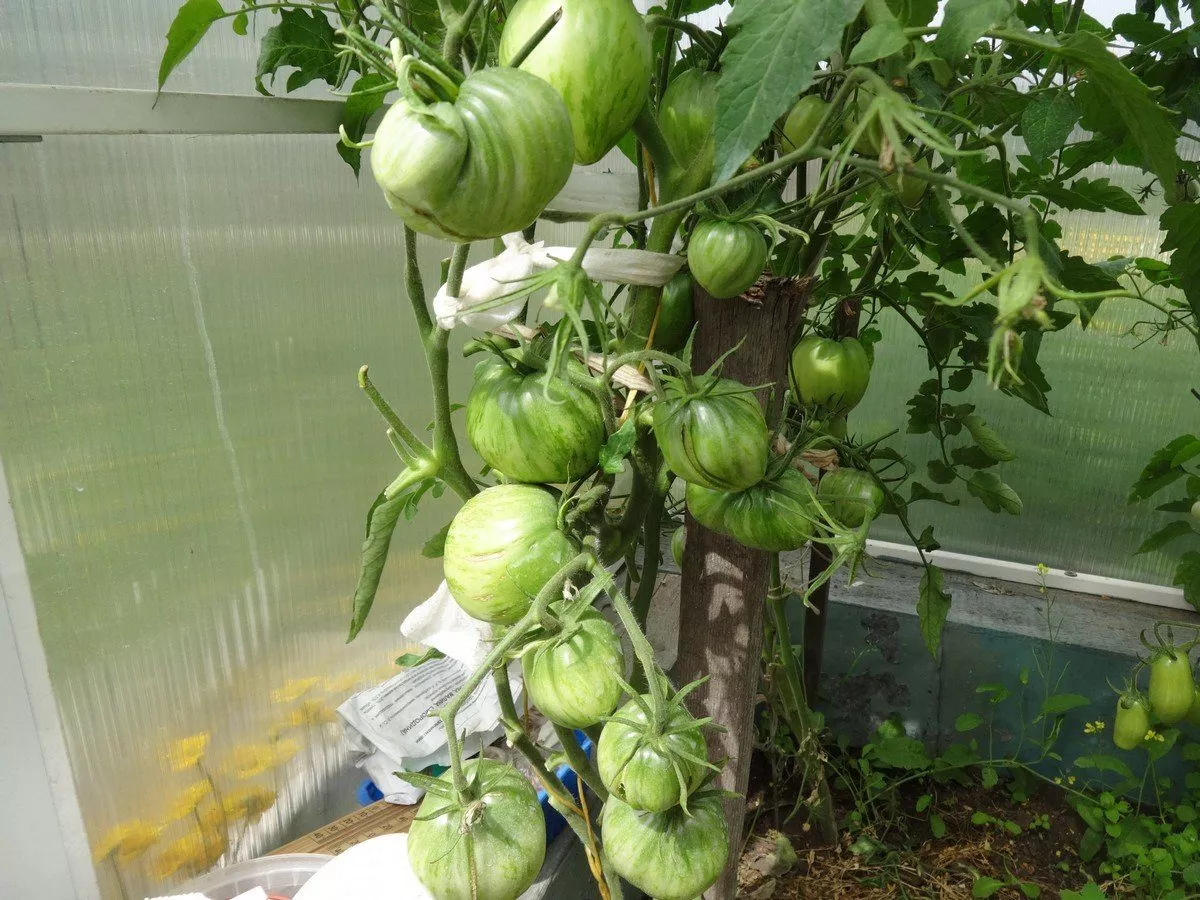
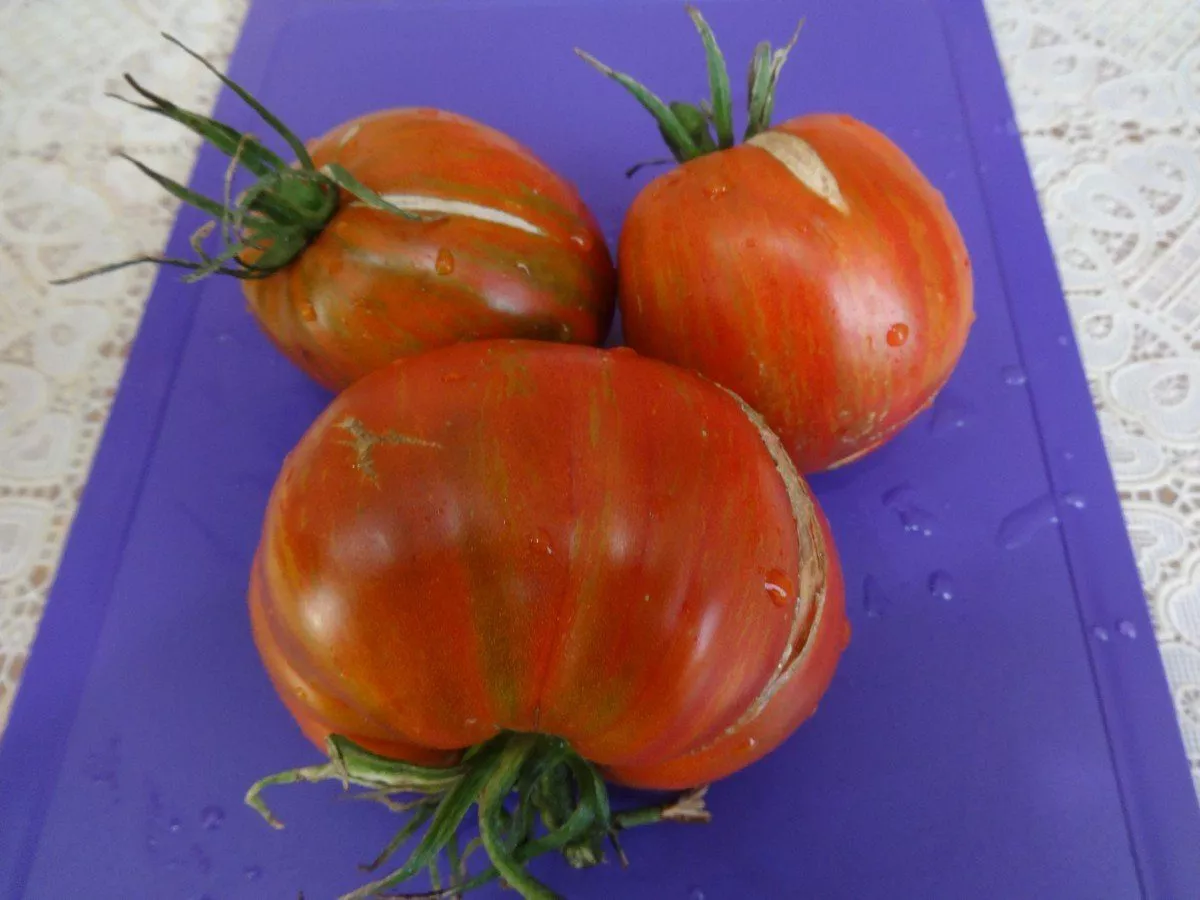
Some rough stripes have formed on some of the fruits, but most of the tomatoes are clean and smooth.
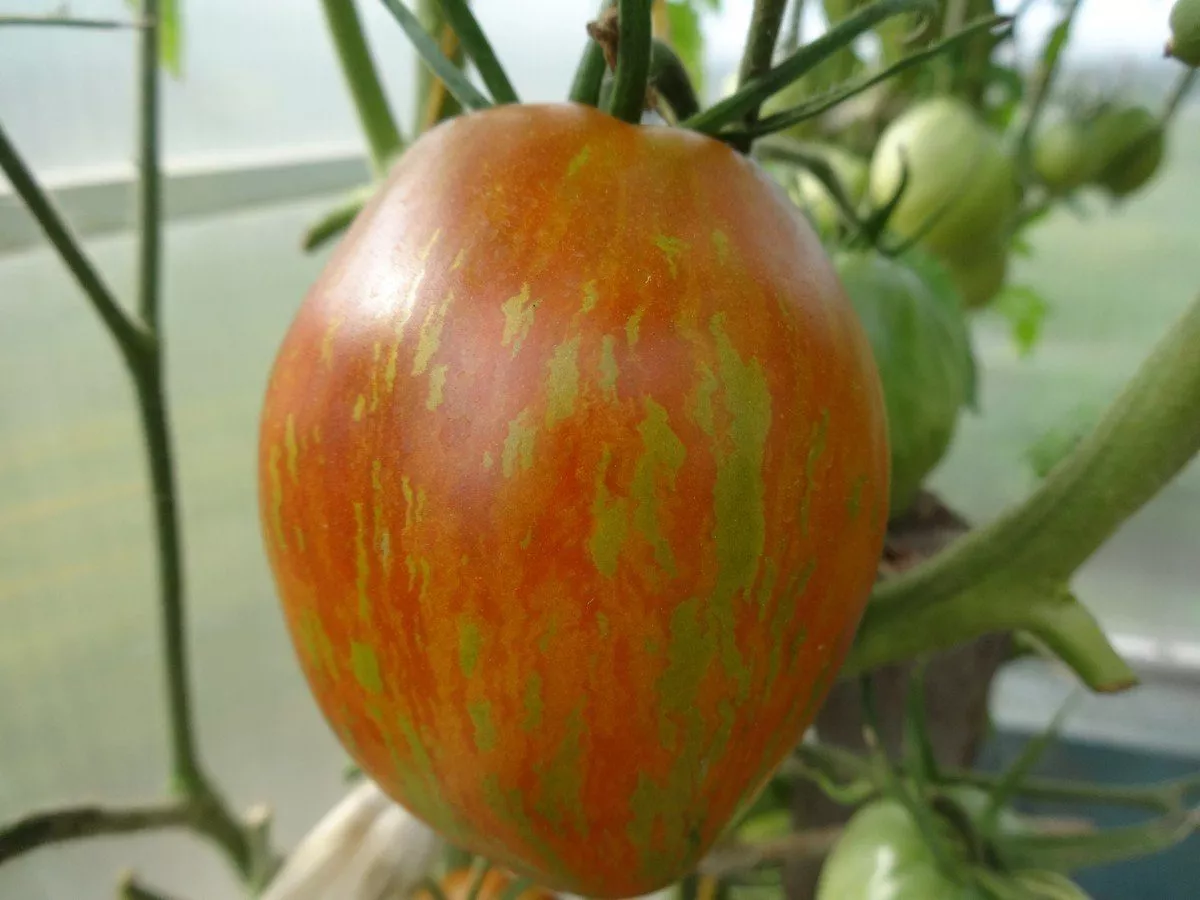
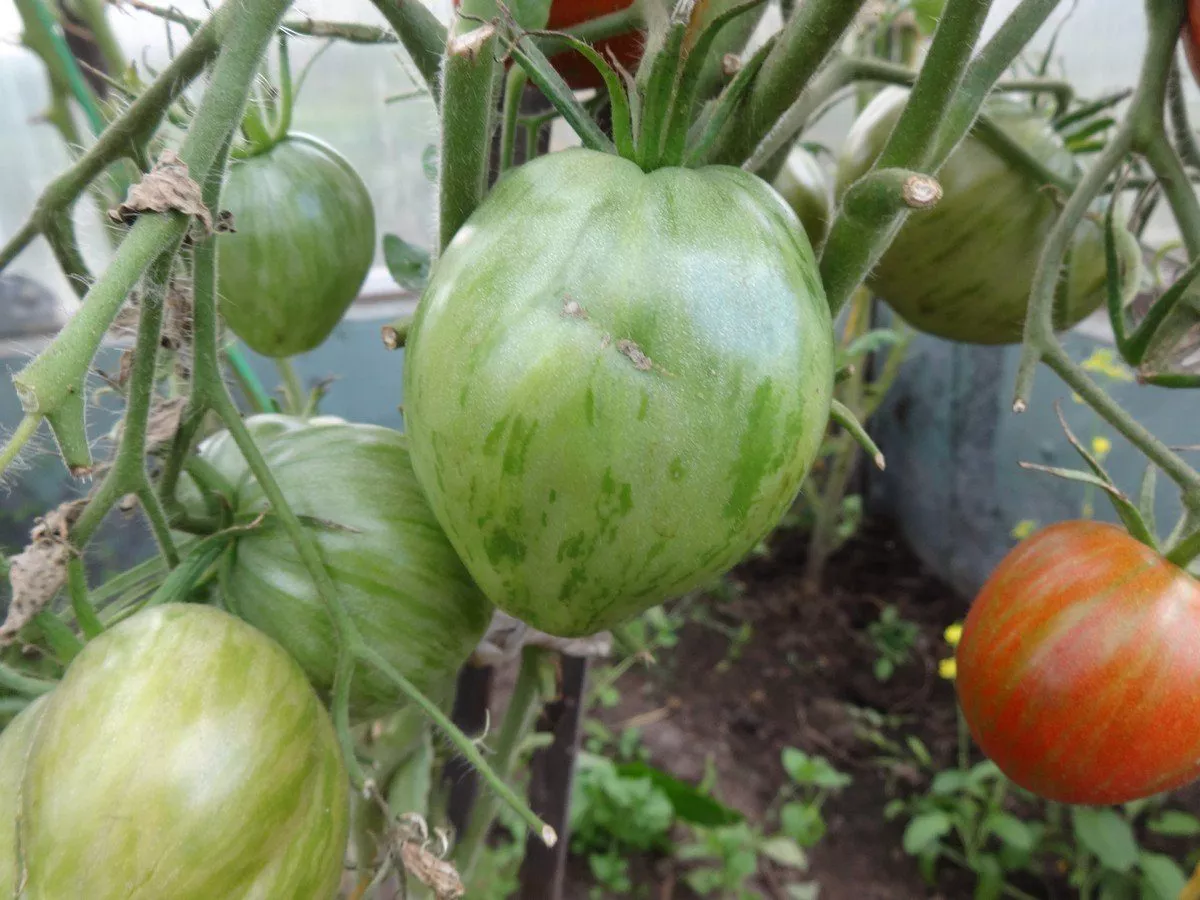
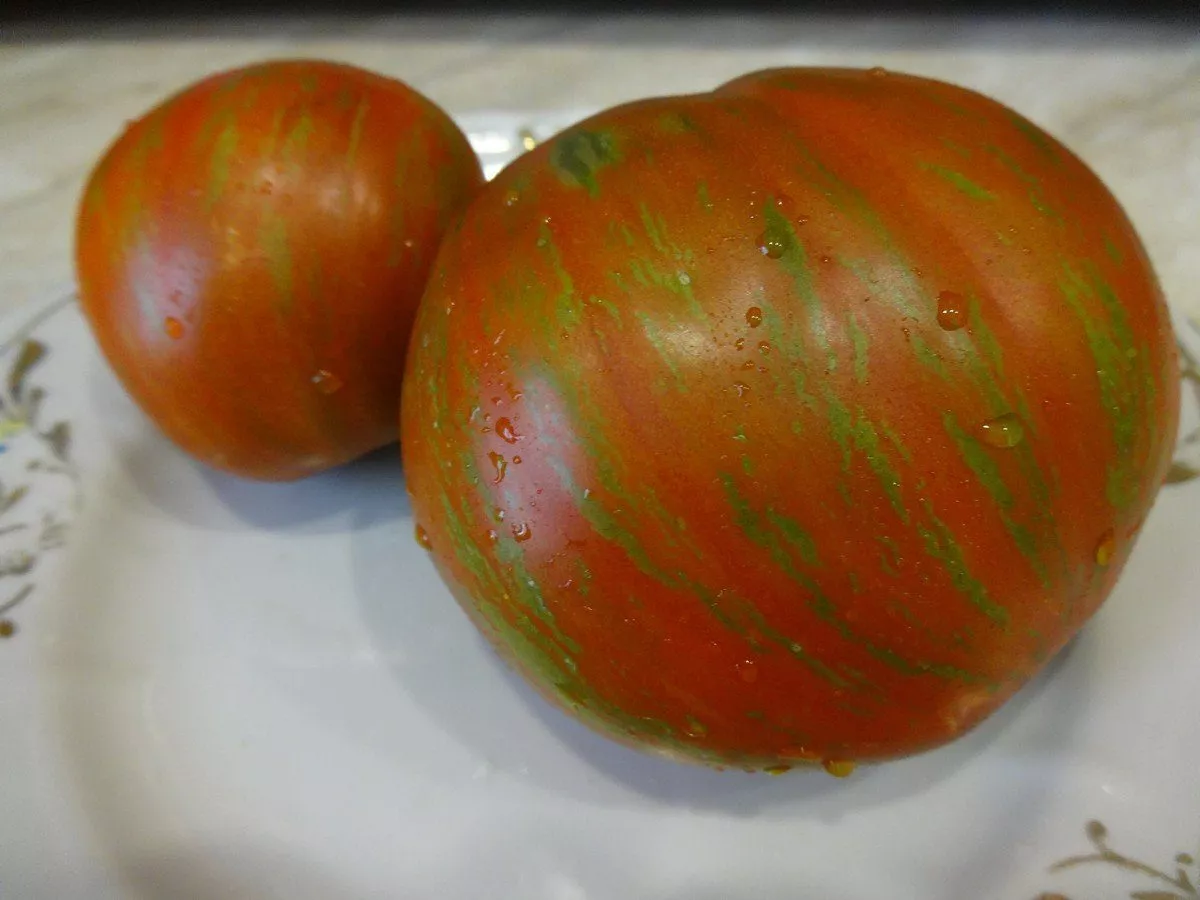
It looks very decorative, unripe fruits are light green with dark green stripes, in the shape of a heart.
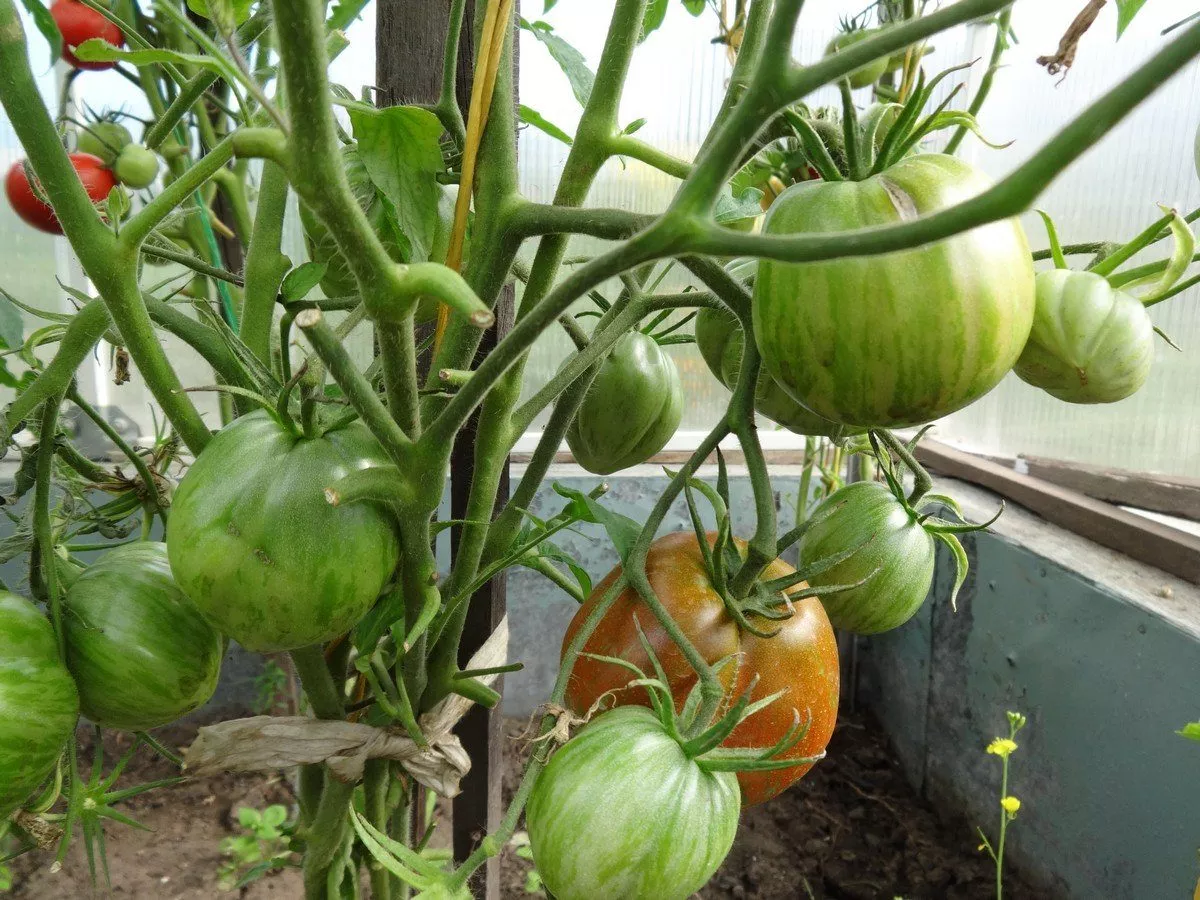
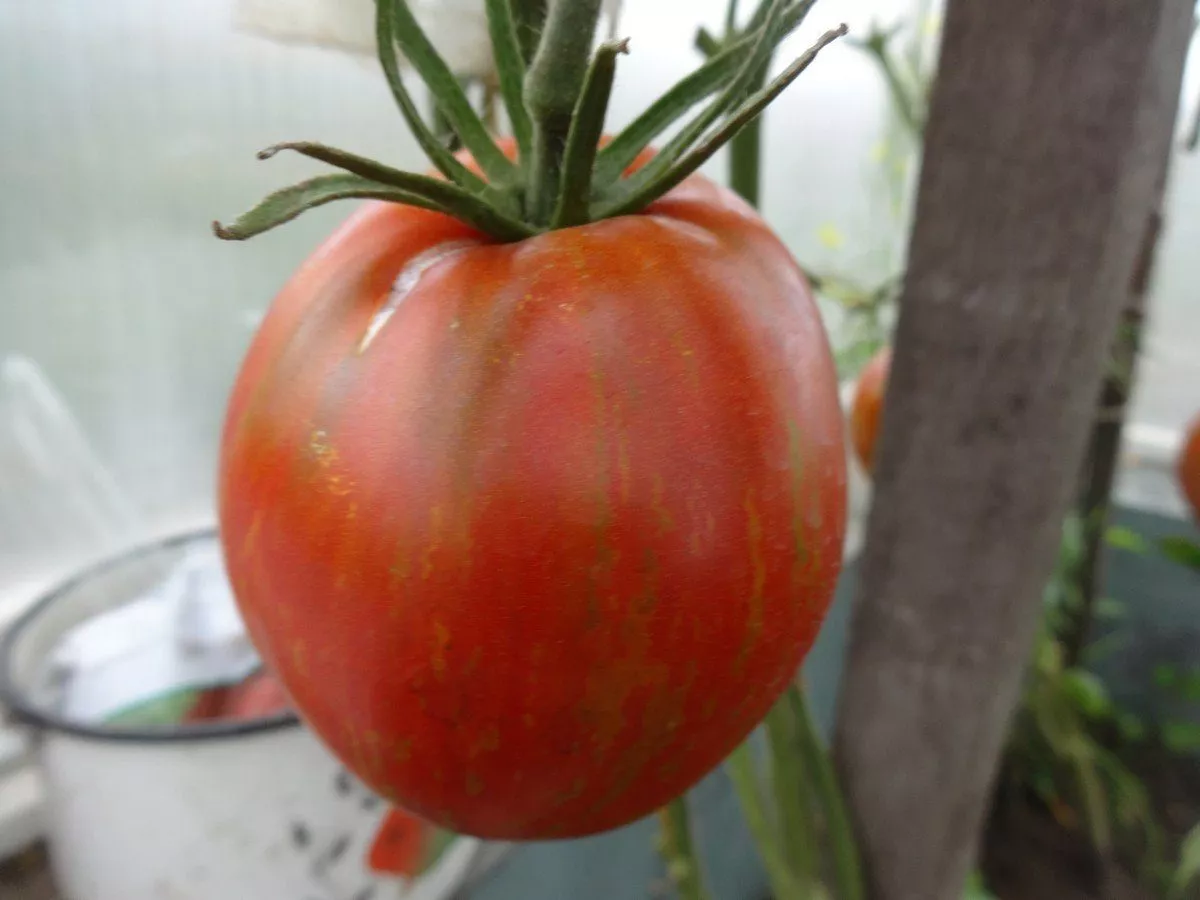
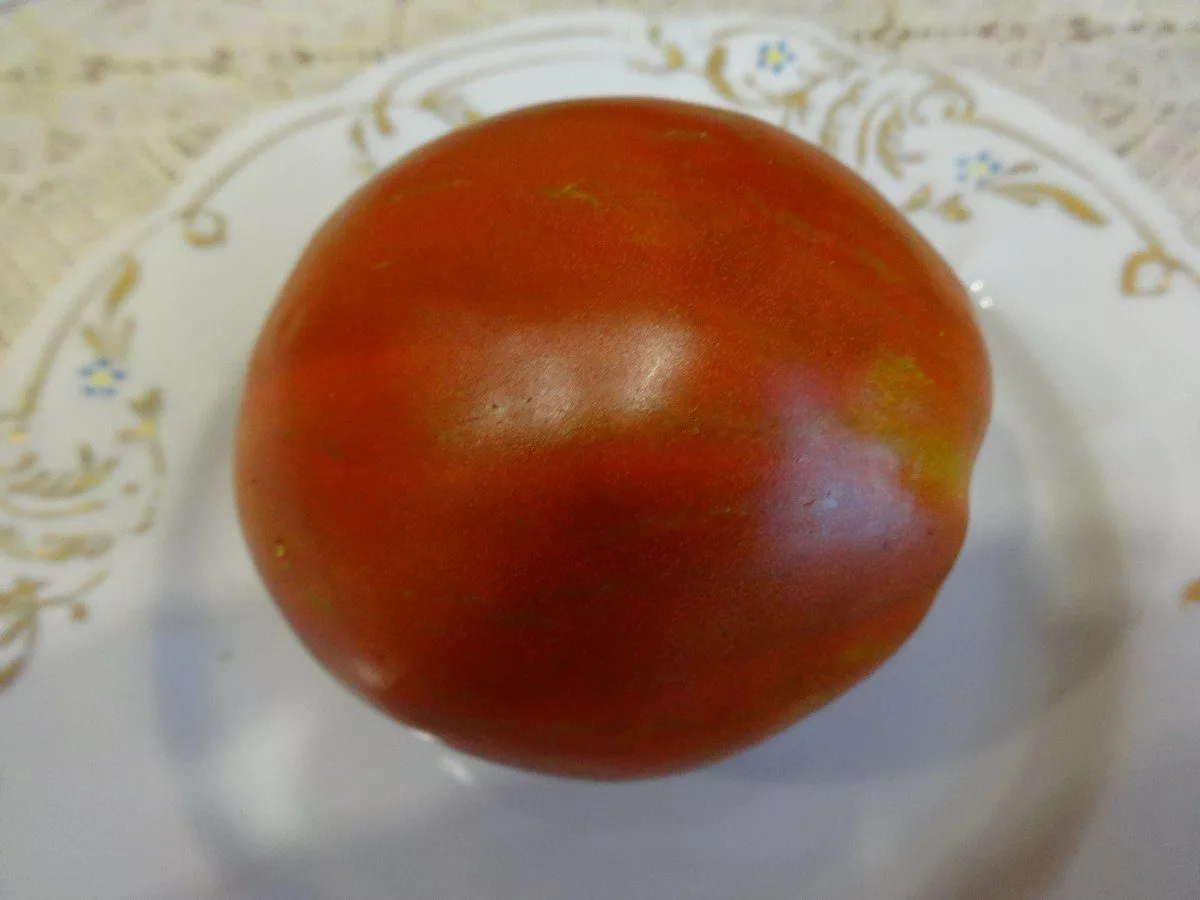
Ripe tomatoes are reddish-brown in color, and the stripes are yellowish-green with a golden pearlescent sheen.
I have two bushes, growing them in a greenhouse. One bush is tall, the other is shorter.
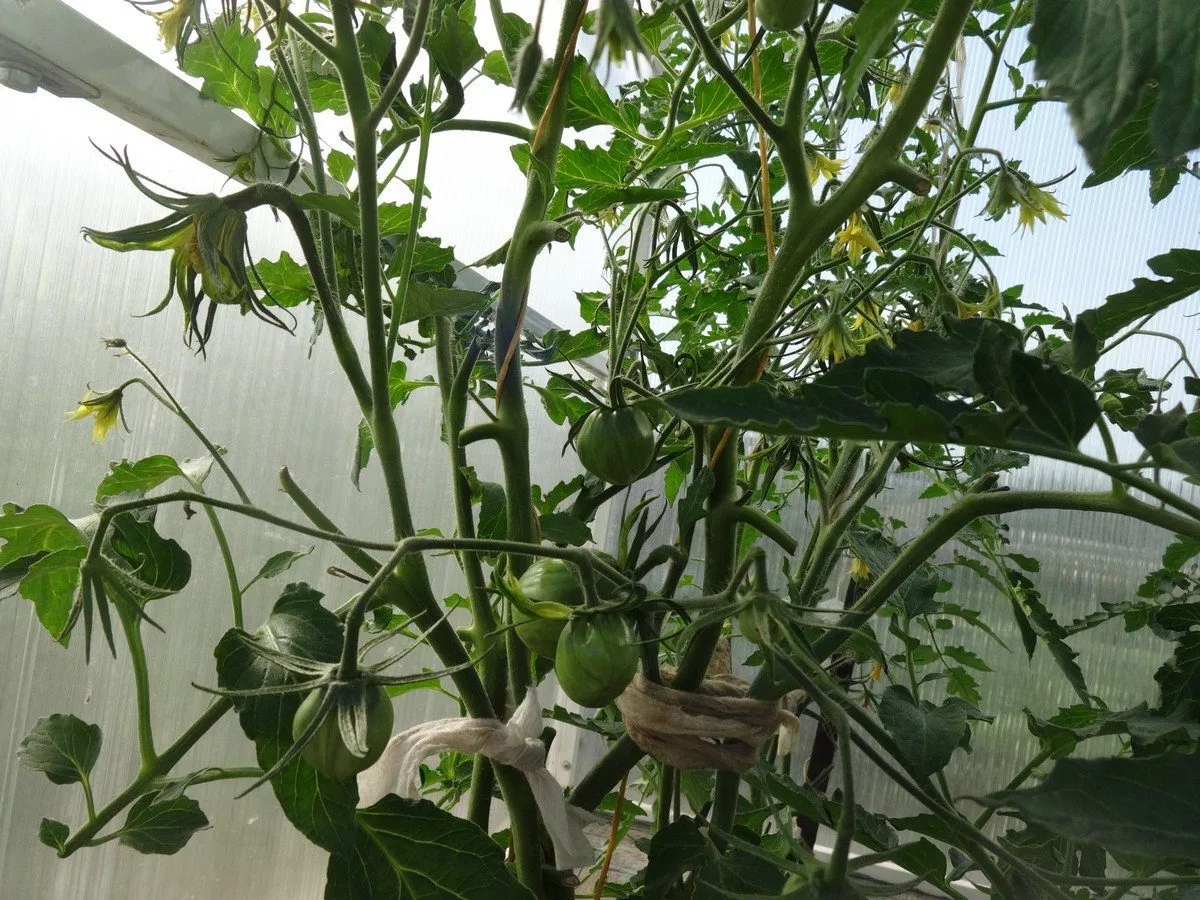
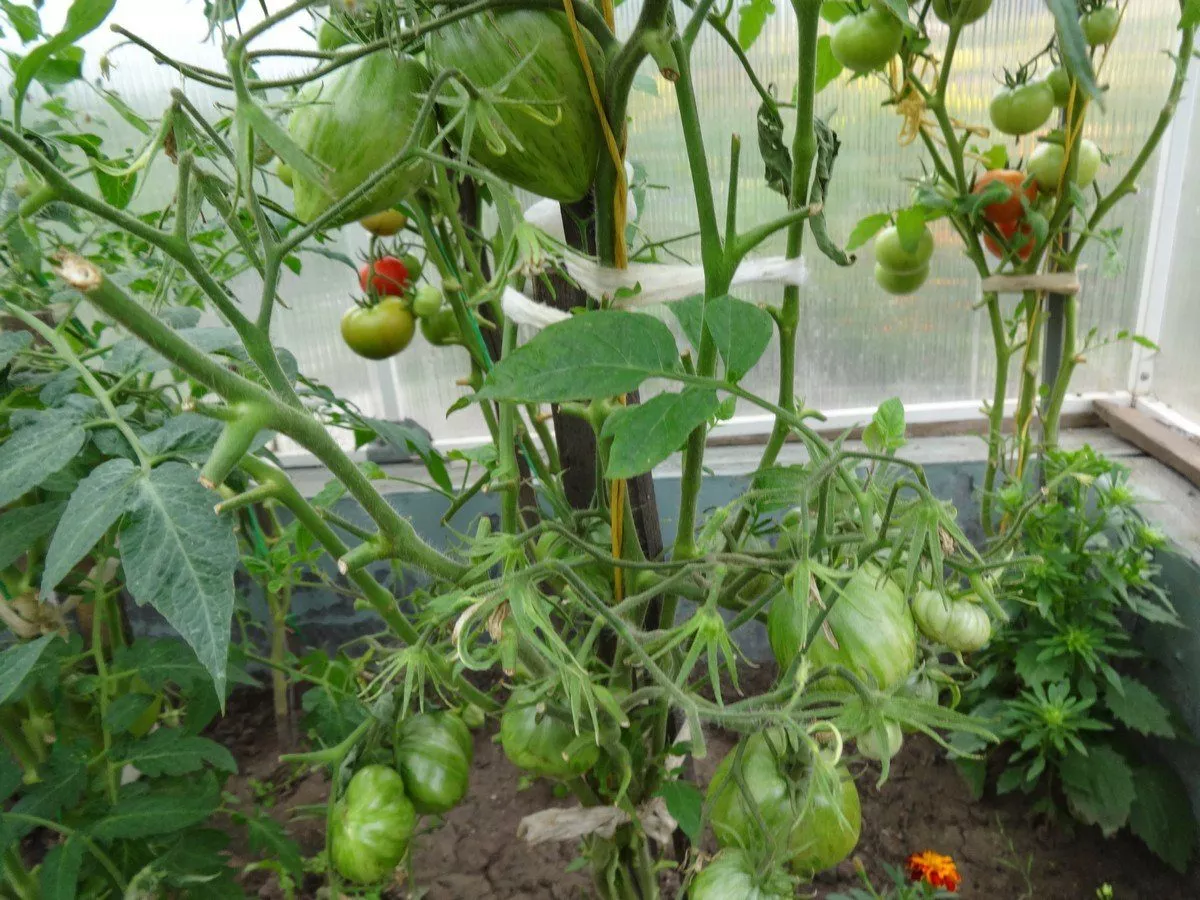
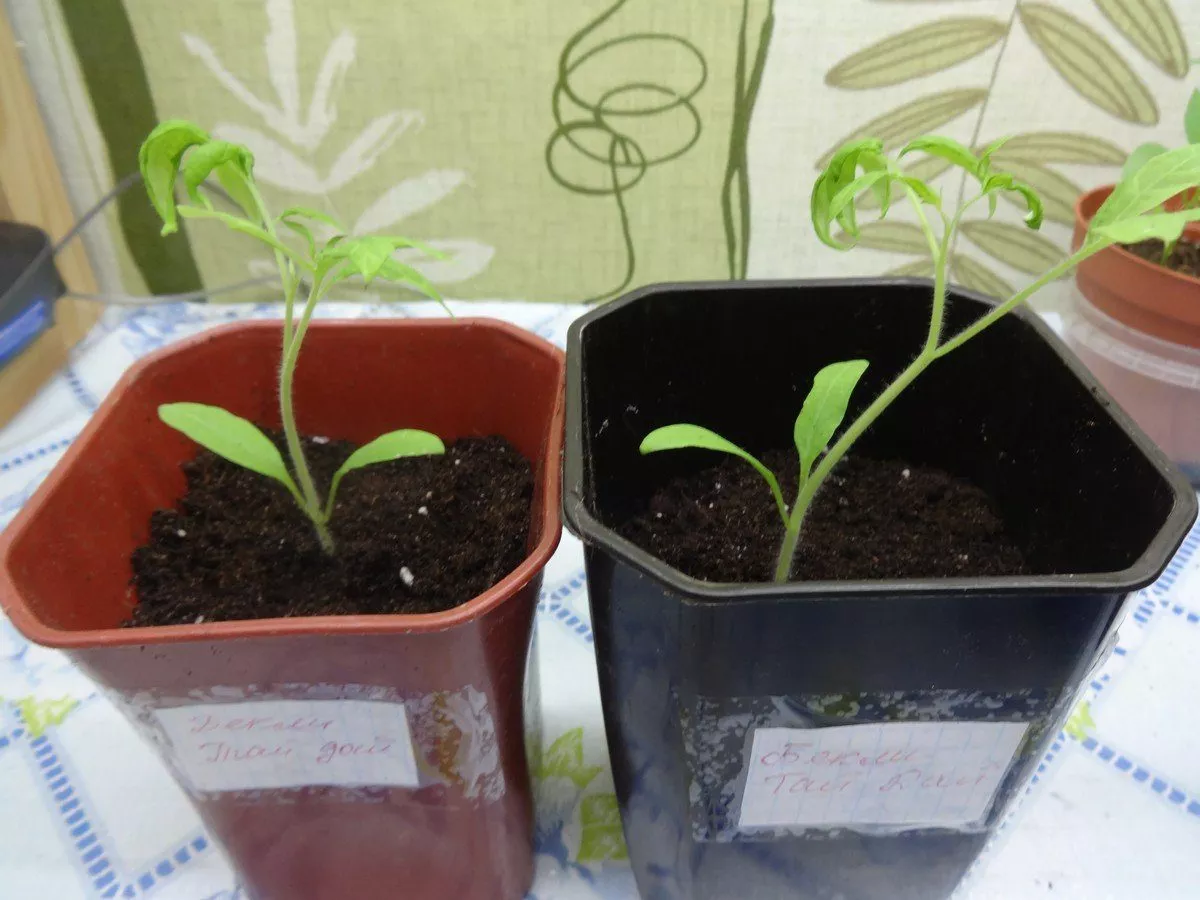
The seedlings were weak and crooked, growing on a shelf with a backlight, perhaps lacking sunlight. After transplanting to the greenhouse, they quickly recovered and grew into sturdy bushes.
The tomatoes started to turn red on July 20th.
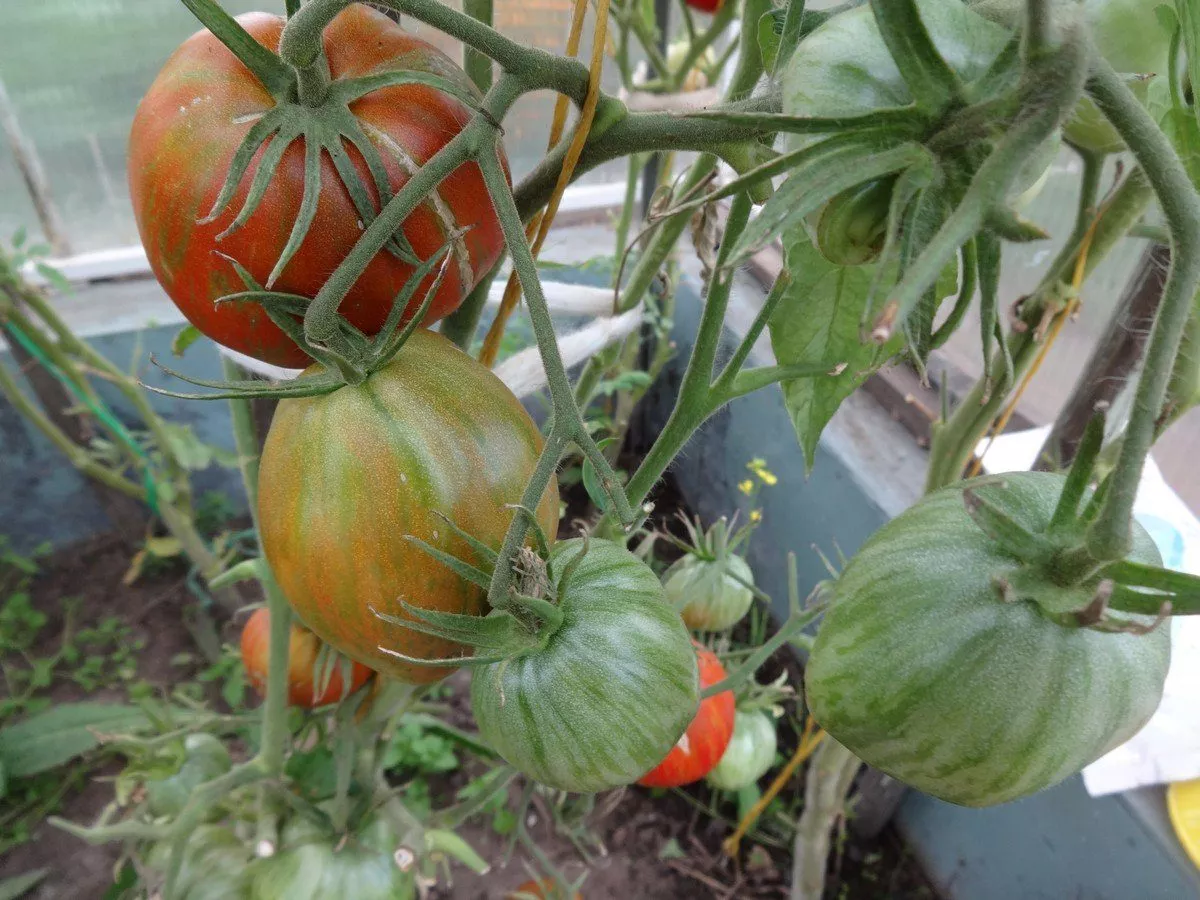
The size varies - there are large ones weighing around 300 grams, and there are smaller ones - 150-200 grams.
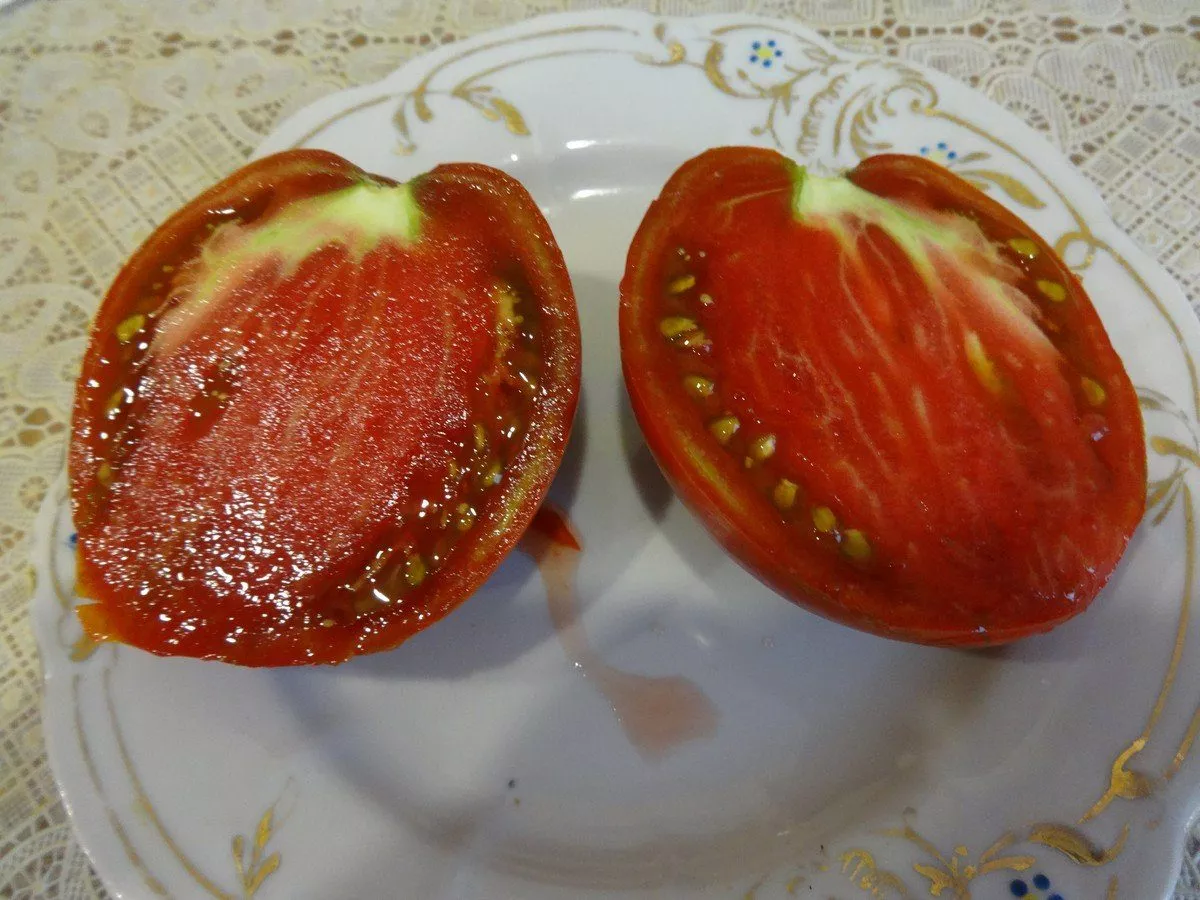
A cross-section of the Berkeley Tai Dai Haat looks like this: the flesh is red and juicy. The tomato is tasty, slightly tart, and aromatic; overripe tomatoes have more acidity.
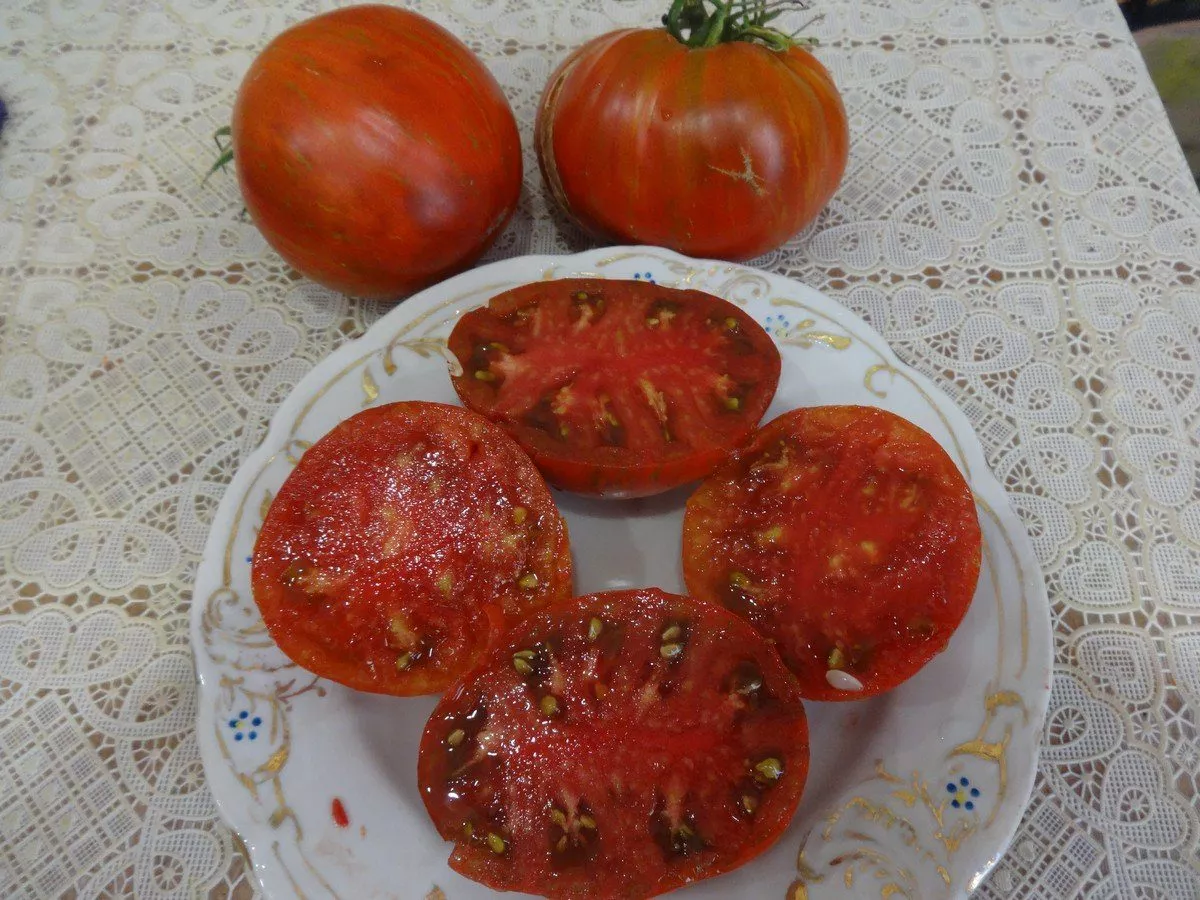
I collected some seeds and will definitely be growing the Berkeley Tai Dai Haat tomato variety. Everyone I've tried it on has loved it.