

Aloe arborescens (also known as century plant) is a popular houseplant. It was once a staple in every home and apartment, but today, gardeners prefer to grow Aloe Vera with its thick, large leaves.
Aloe arborescens is an evergreen succulent that grows as a shrub with straight trunks, with numerous lateral shoots forming in the lower part.
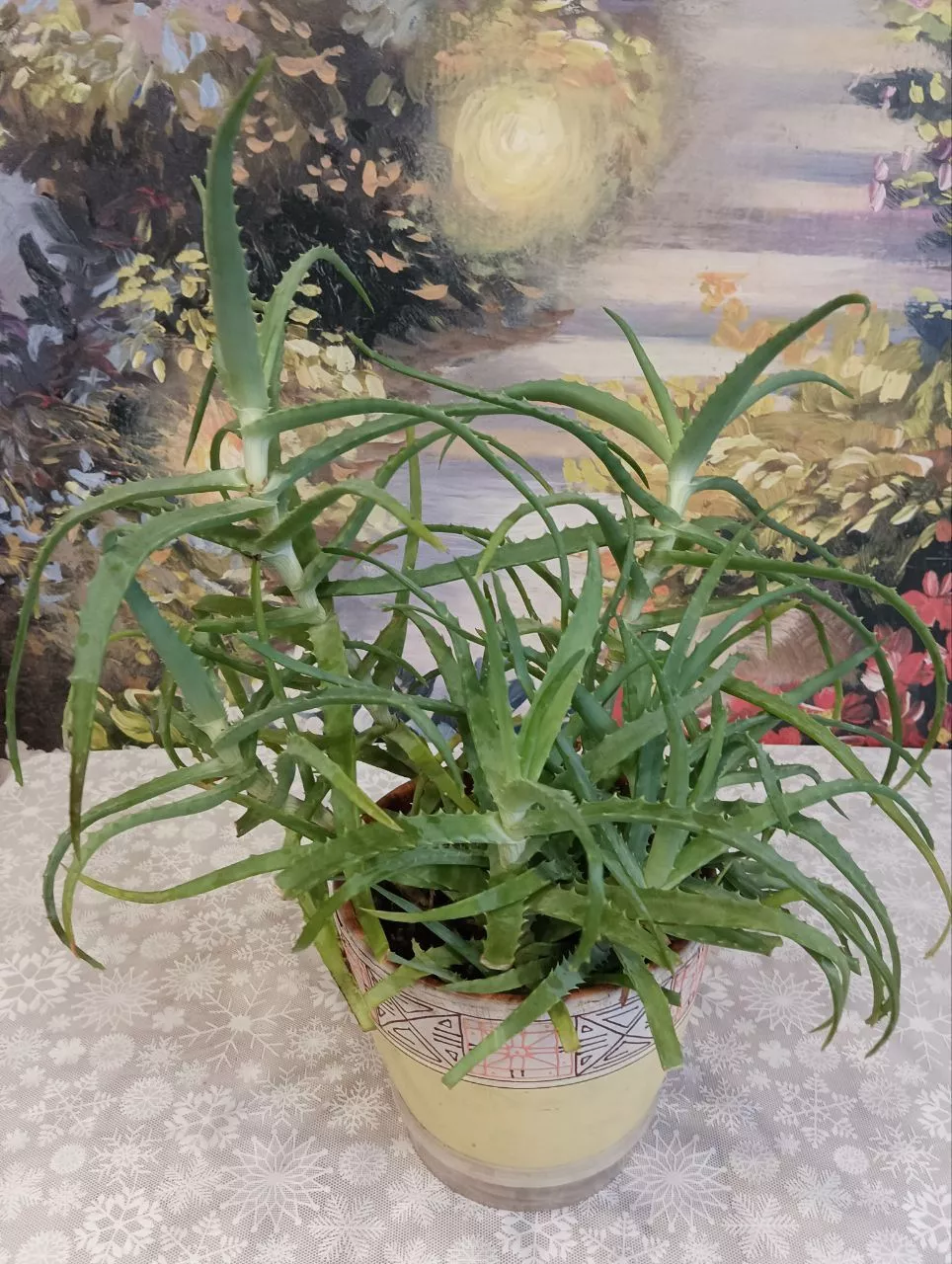
Aloe leaves are alternate, greenish-grey in color, linear-lanceolate in shape with sharp teeth along the edges.
Aloe blooms, but I've never seen a flowering plant. I've only seen pictures, so I won't describe aloe flowers.
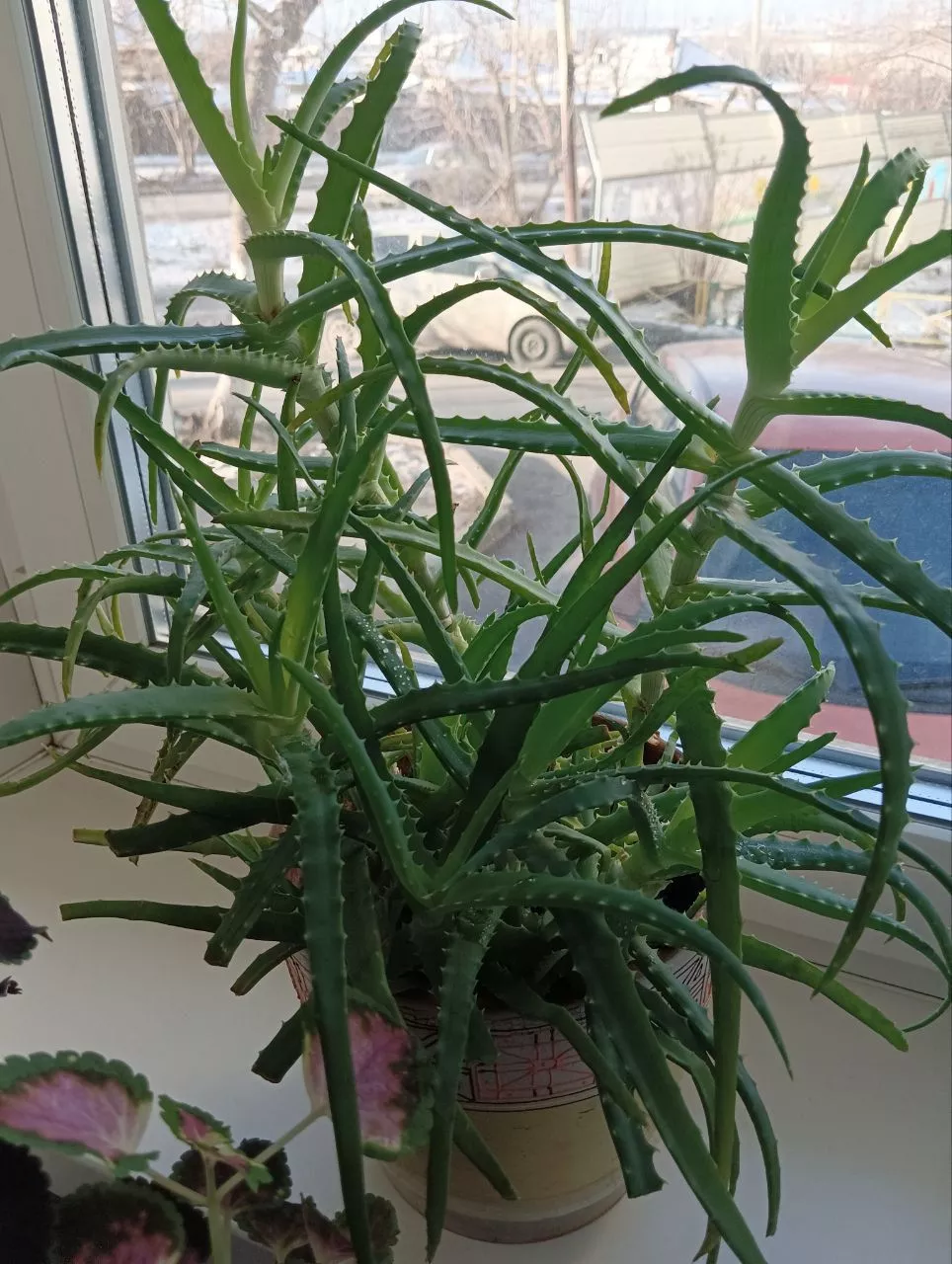
It's a useful plant that requires little care. It grows well on my windowsill, and I can say it doesn't require much attention. I water it, occasionally wash the dust off the leaves in the shower, and occasionally fertilize it when I fertilize my other houseplants.
Aloe always grew in my grandmother's house. I remember when we'd get blisters on our heels, we'd apply a cut leaf to them and the blister would deflate, and the pain would quickly subside.
When we were already living in Krasnoyarsk, my eldest son cut his heel on a piece of glass, and the wound became infected. It was painful for him to walk. I went around to my neighbors looking for aloe, but no one had one growing at home. Late one evening, one of the neighbors brought me a sprig of aloe, borrowed from her grandmother. We tied the leaf to his heel overnight and changed the leaf several times during the day. The festering wound burst, and soon the heel healed. I placed the sprig in a glass of water, it took root, and ever since, aloe has been growing in our house.
Aloe vera can easily be considered a home medicine cabinet. Any wounds, cuts, burns, or blisters can be treated with the plant's leaves.
The juice treats gastrointestinal tract diseases, lung diseases, and helps get rid of coughs and runny noses.
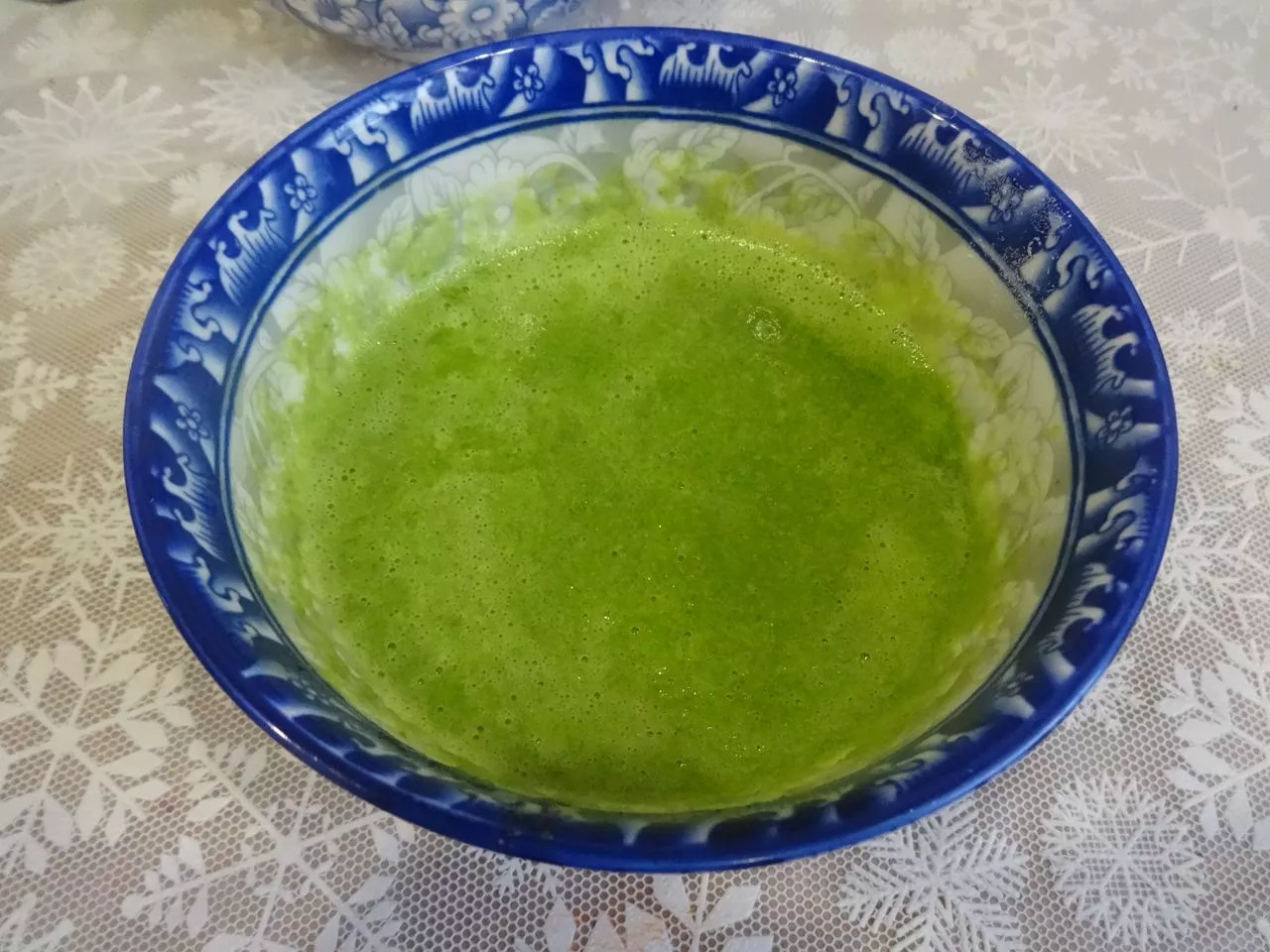
Healing elixir
Aloe suitable for medicinal purposes must be at least three years old. It is believed that the older the plant, the more beneficial substances it contains.
Do not water the plant for a week, then cut off the branches.
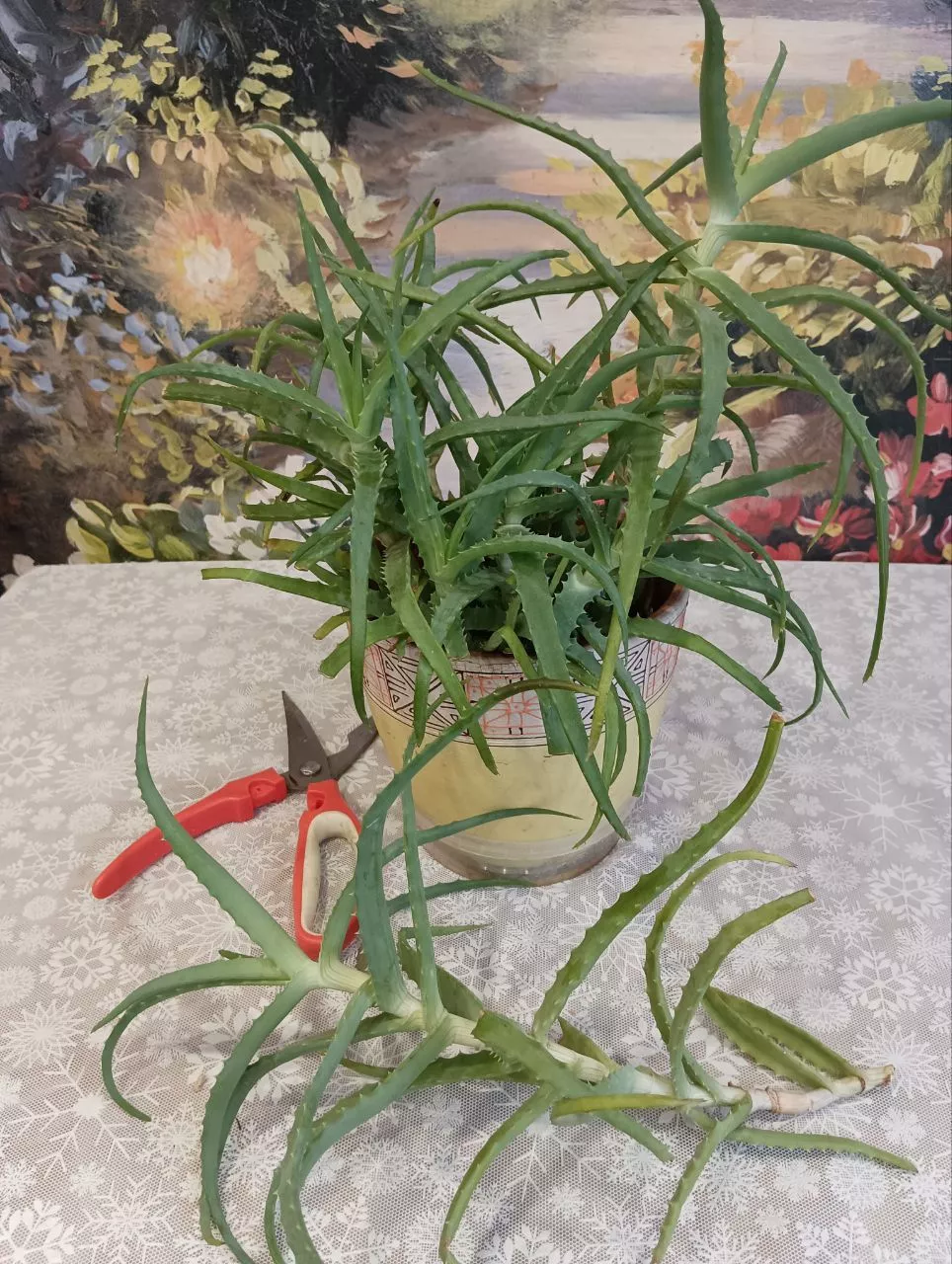
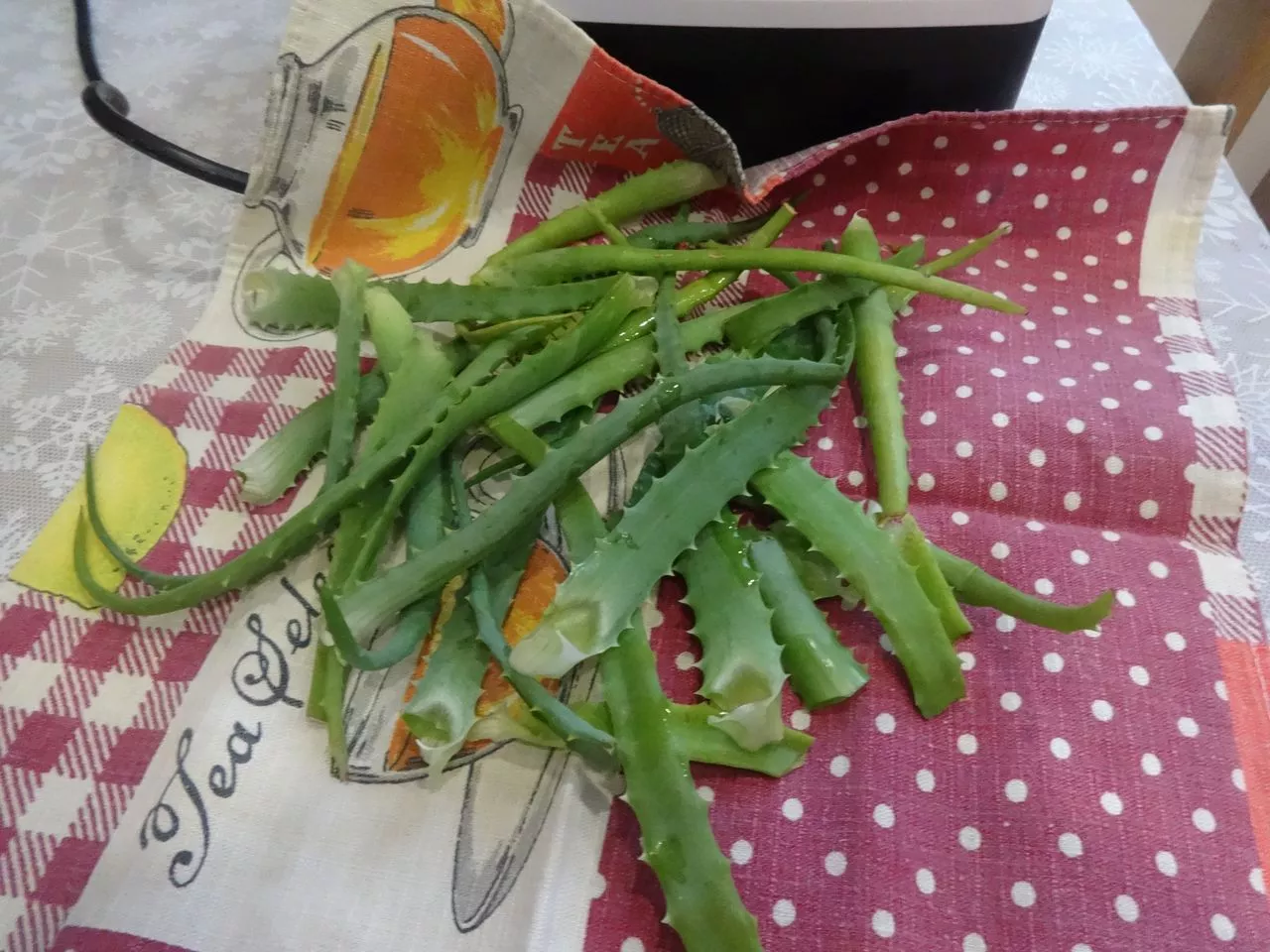
Wrap them in parchment paper, newspaper, or a plastic bag and store them in the refrigerator's crisper drawer for 10 days. Then rinse the stems under running water, remove the leaves, and dry. Extract the juice using a meat grinder or blender.
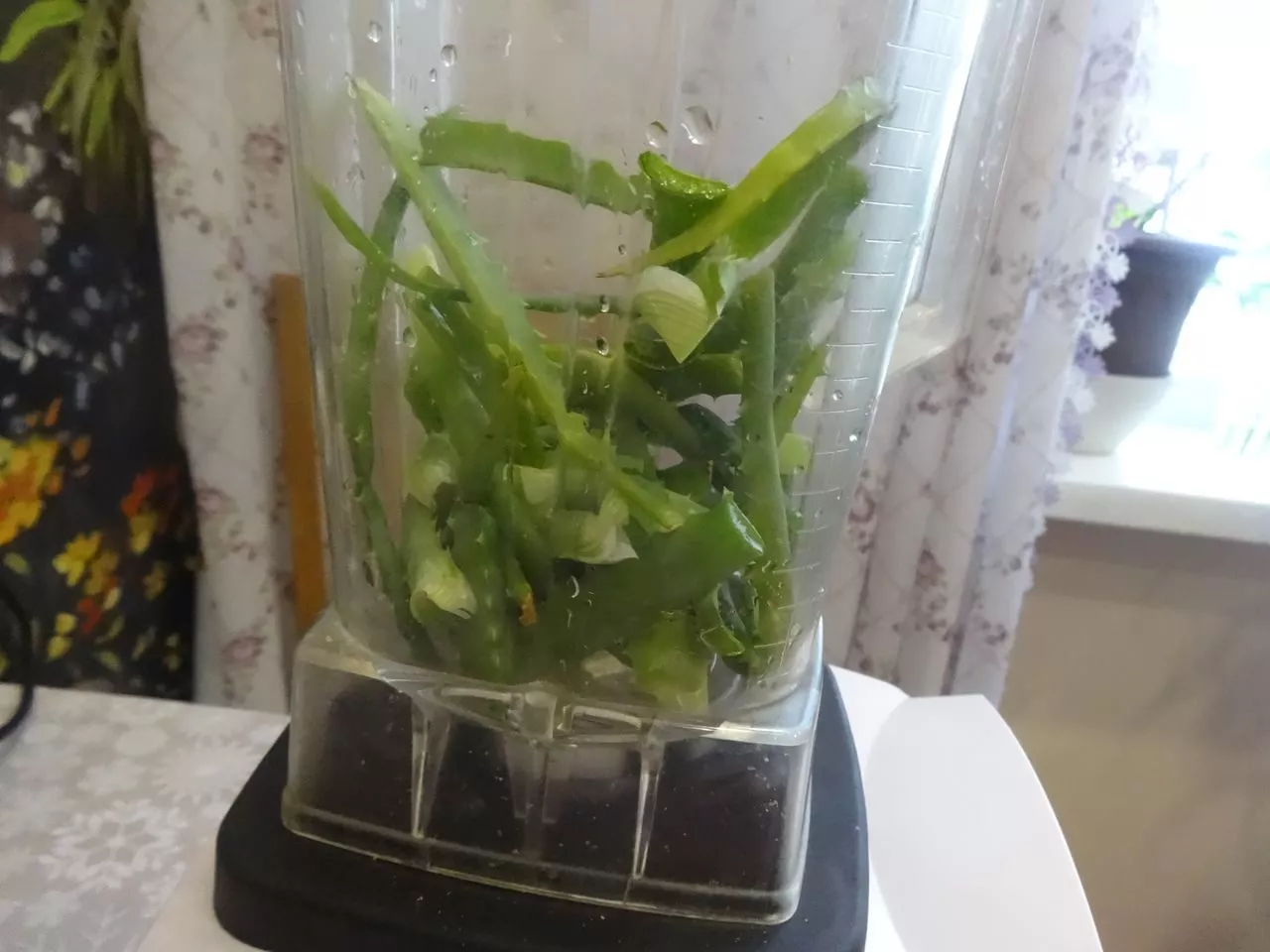
The juice must be strained and mixed with honey in a 1:1 ratio.
Take 1 tablespoon of the elixir on an empty stomach 1-3 times daily. The course of treatment is 15 days, then take a break and repeat.
This remedy is especially good during cold, flu, and cough season. This potion boosts strength, improves mood, has a general tonic effect, and enhances the body's immune system and resistance to infectious diseases.
For purulent wounds
Wash the leaf, trim off the thorns, cut it lengthwise, apply the pulp to the abscess, and wrap it with a bandage. Repeat the procedure after a few hours. Continue applying the leaf until the abscess bursts and the aloe leaf draws out all the pus. Aloe juice can also be used to treat fresh wounds and cuts to prevent suppuration.
For the treatment of pneumonia, bronchitis, severe cough
You need to take equal amounts of aloe leaves, natural honey, and melted butter, all minced through a meat grinder.
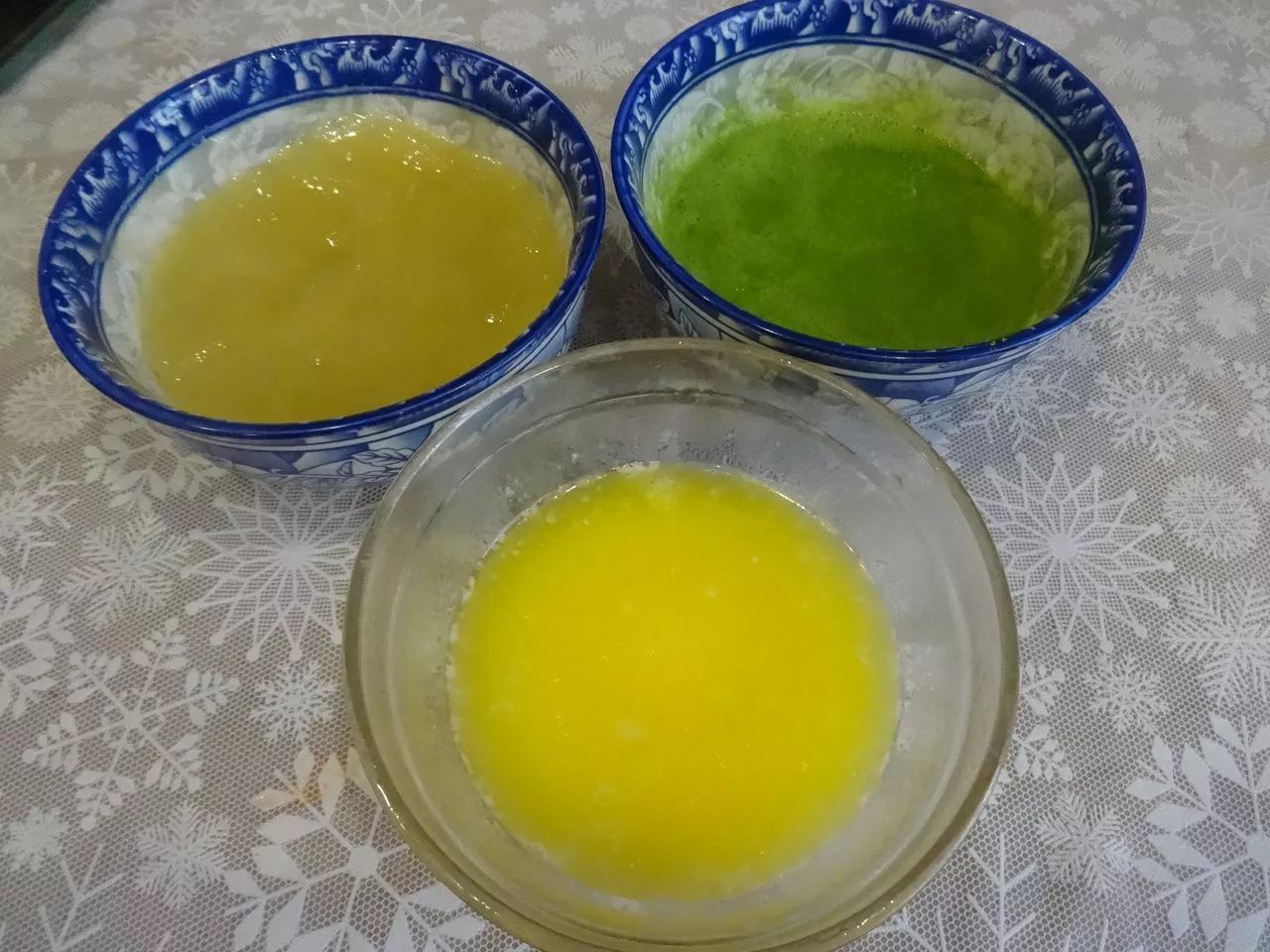
Mix everything well, let it sit until the honey dissolves, and transfer to a glass jar.
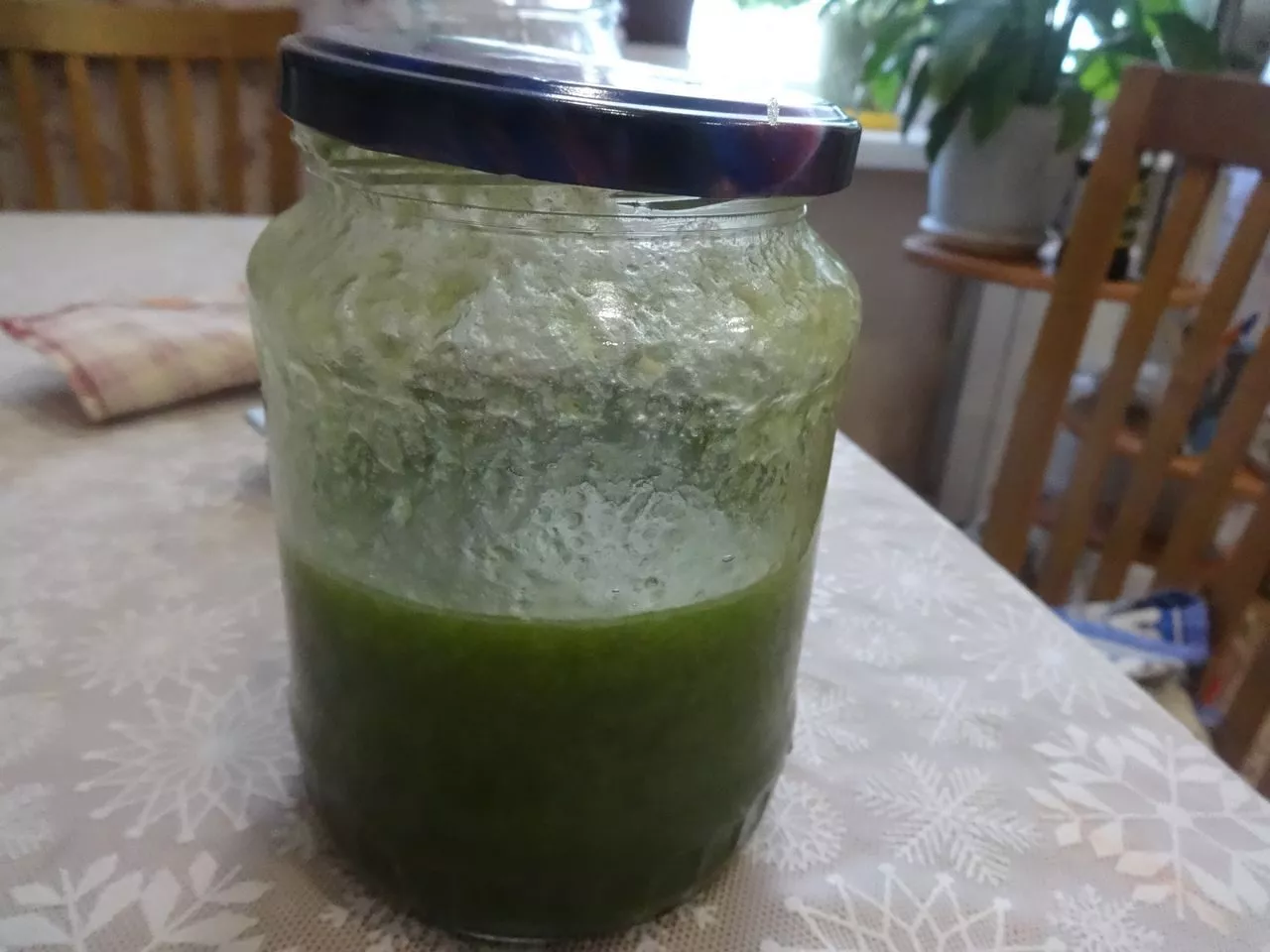
Store in the refrigerator. Take one tablespoon on an empty stomach in the morning and at night. The course of treatment is 7-10 days.
I made this medicine because I had a cold in December and my cough didn't go away for a long time. I'll try taking the course.
Aloe, like any medicinal plant, has contraindications. Before using aloe for treatment, you should check whether the ingredients used in the preparation will cause harm. Both aloe and honey can cause allergic reactions.
Recipe for eternal youth
Take one teaspoon of aloe juice 2-3 times daily, half an hour before meals. This remedy improves blood flow to the pelvic organs, which promotes the production of sex hormones that prevent aging.
For beautiful hair
Aloe vera juice can be rubbed into the roots of the hair, providing better nutrition and promoting hair growth. Hair appears healthier and gains a natural shine.
What else can aloe be used for?
This plant is a great help for gardeners and summer residents. Tomato, cucumber, and other seeds are soaked in aloe juice; it is said that even expired, old seeds can be revived. Aloe juice disinfects the seeds, kills pests and pathogenic fungi, and accelerates germination. The resulting seedlings are stronger and more developed.
How to prepare juice for sprouting seeds. You'll need the lower, strong leaves of a plant that hasn't been watered for 10-14 days. Place the leaves in the refrigerator for 10 days, wrapped in paper. Then, grind them into a paste using a blender or grater, strain, and squeeze the juice into a jar or small cup. You can soak the seeds in 100% aloe juice, wrapped in cheesecloth, or dilute it with water at a 1:1 ratio. Leave the seeds in the juice for 18-24 hours. Then remove the seeds and store them in a warm, dark place for further germination. As soon as the seeds begin to sprout, they should be sown in soil. When sowing the seeds for seedlings, I'll try soaking some of them in aloe juice.
I found an interesting method online for germinating seeds in an aloe leaf. Cut the aloe leaf lengthwise, place the seeds on it, and cover with the other half of the leaf. Once the seeds swell, transplant them from the leaf into soil.
Aloe for stimulating plant growth
Soak a few aloe leaves in 1 liter of water for a week. Dilute this solution with water in a 10-liter bucket and water plants that are growing poorly or have completely stopped growing. This often happens under unfavorable weather conditions.
I remember everyone used to grow aloe, and we also used it for medicinal purposes – we used drops, ate it with sugar… I don't remember now why or how exactly, but thank you for the information! I was especially surprised that it removes blisters and is used for germinating seeds. I'll definitely try it this spring. I'd forgotten about its medicinal properties; it sits on the windowsill, just collecting dust))). Oh, and thanks for the recipes.