

After work at the dacha, we picked various berries - a little bit of everything.
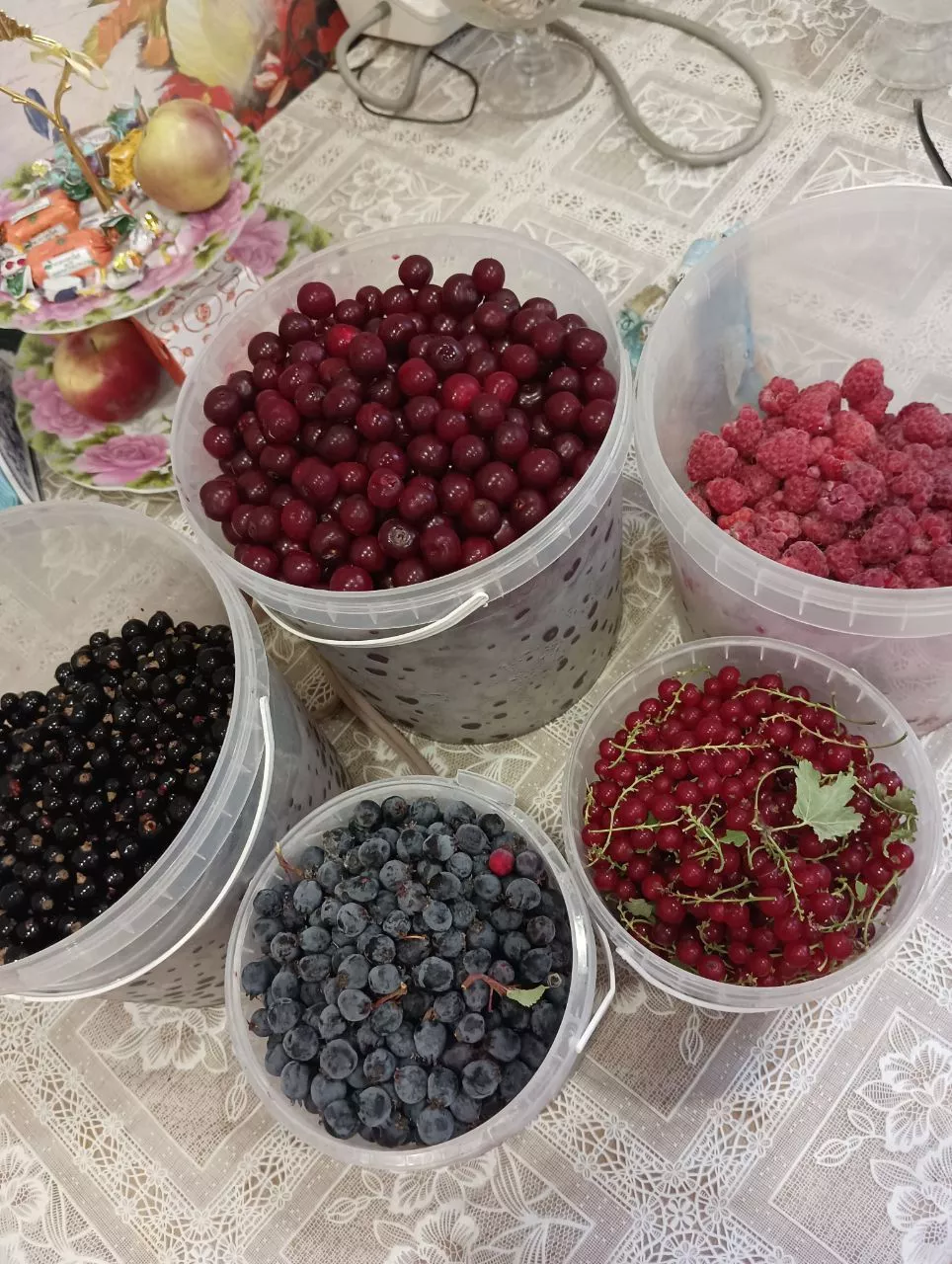
We pick raspberries every evening. This year, they froze, leaving only a few living bushes. We try to gather the entire harvest of these healthy berries—roughly 1 kg or a little more. After harvesting, we immediately process them—freeze them or make jam, and, of course, eat them.
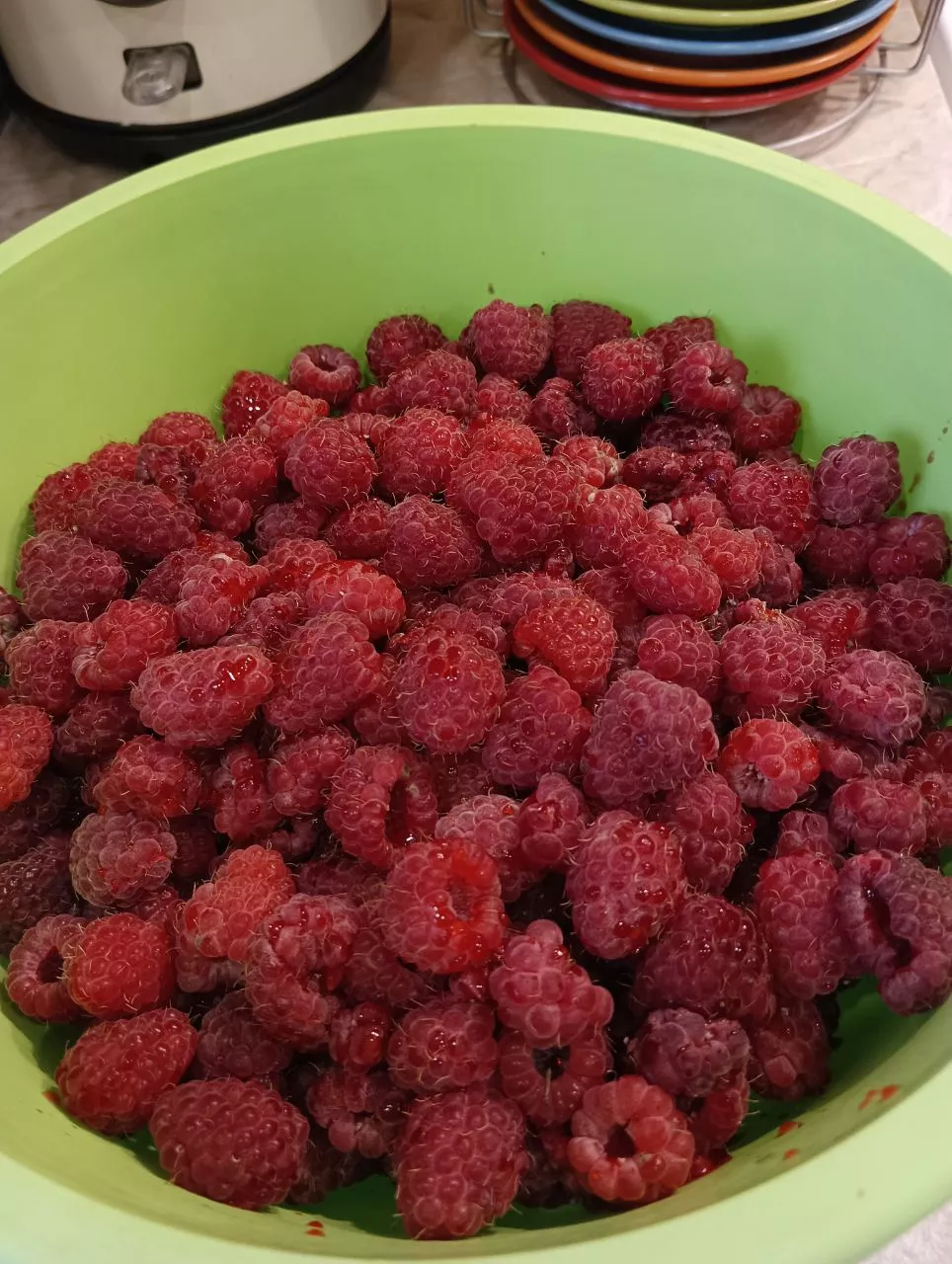
Freezing raspberries
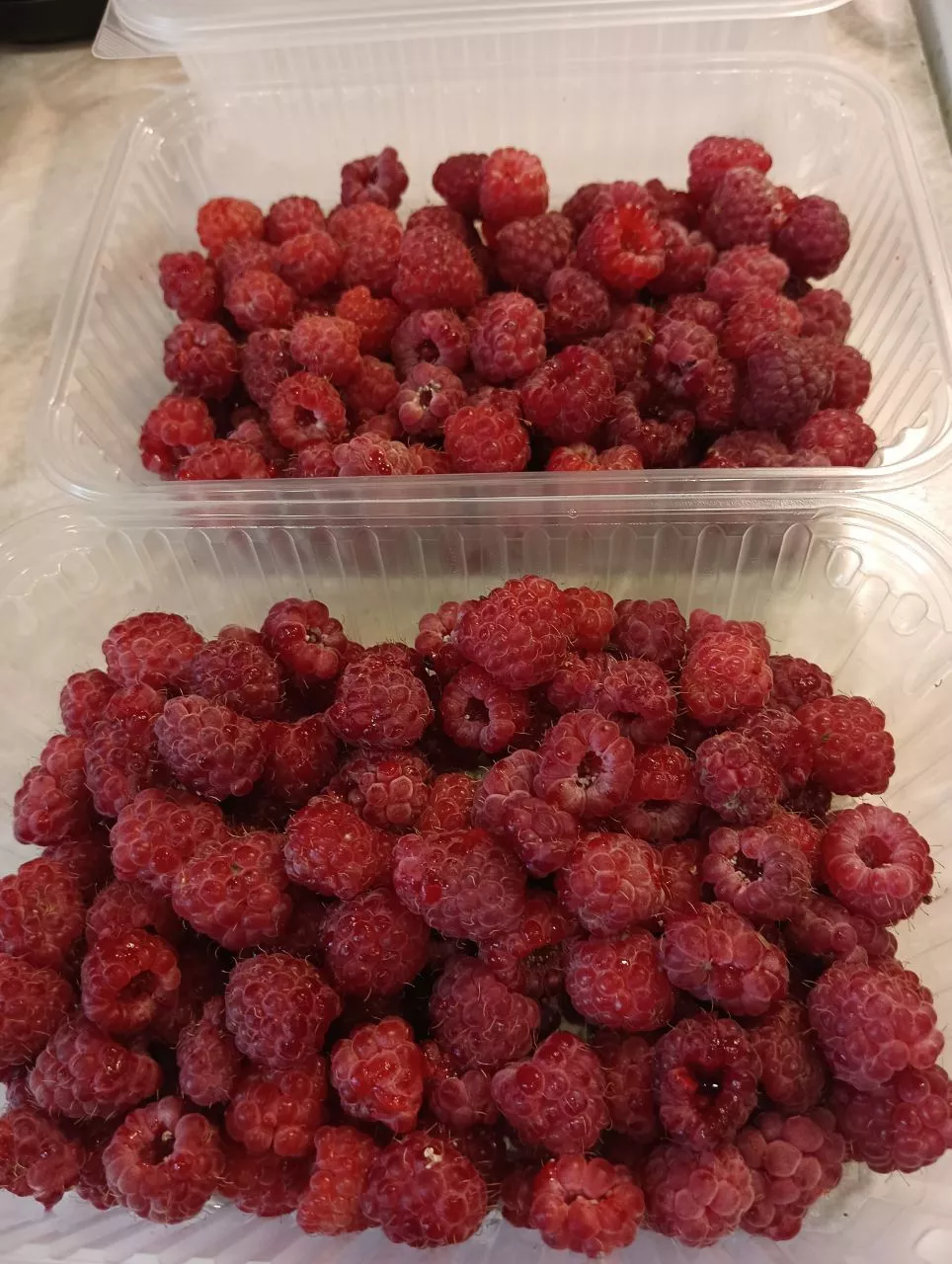
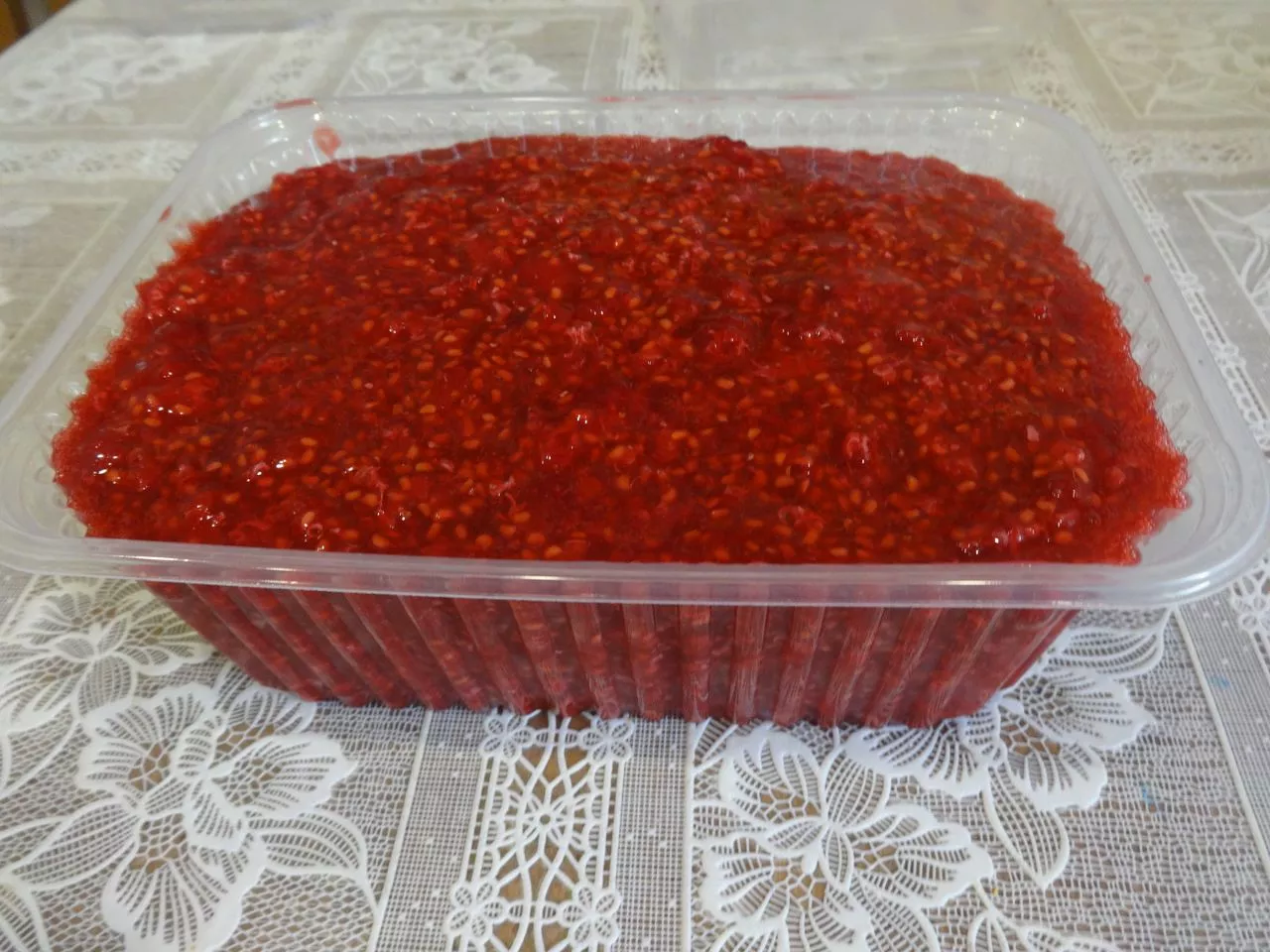
I freeze whole berries in containers without sugar, and add a little sugar to the ones I grind in a blender.
The blackcurrants are ripe, even overripe—I'll make jam. I froze the ones I picked earlier, ground with sugar. Another bush is full of berries, but neither we nor the kids have time to pick them.
The cherries are also ripening—I'm using the ones I picked today to make jam, and I plan to make compote later. I also froze some pitted cherries; I spent half the evening removing the pits.
We also picked some chokeberries—my grandson loves them, so I gave them to him. And some red currants—I want to add them to some cucumbers. I found a recipe for red currant cucumbers online; I'll try making some. I won't make anything with the red currants; I don't like jam, and I don't want to mess with jelly; I have some frozen ones left over from last year. The red currants yielded a good harvest this year. Let the kids pick them and freeze them for themselves.
Raspberry jam recipe
When I got home from the dacha, I put all the berries except the raspberries in the fridge. I'll do those in the morning, and I weighed the raspberries and sprinkled them with sugar.
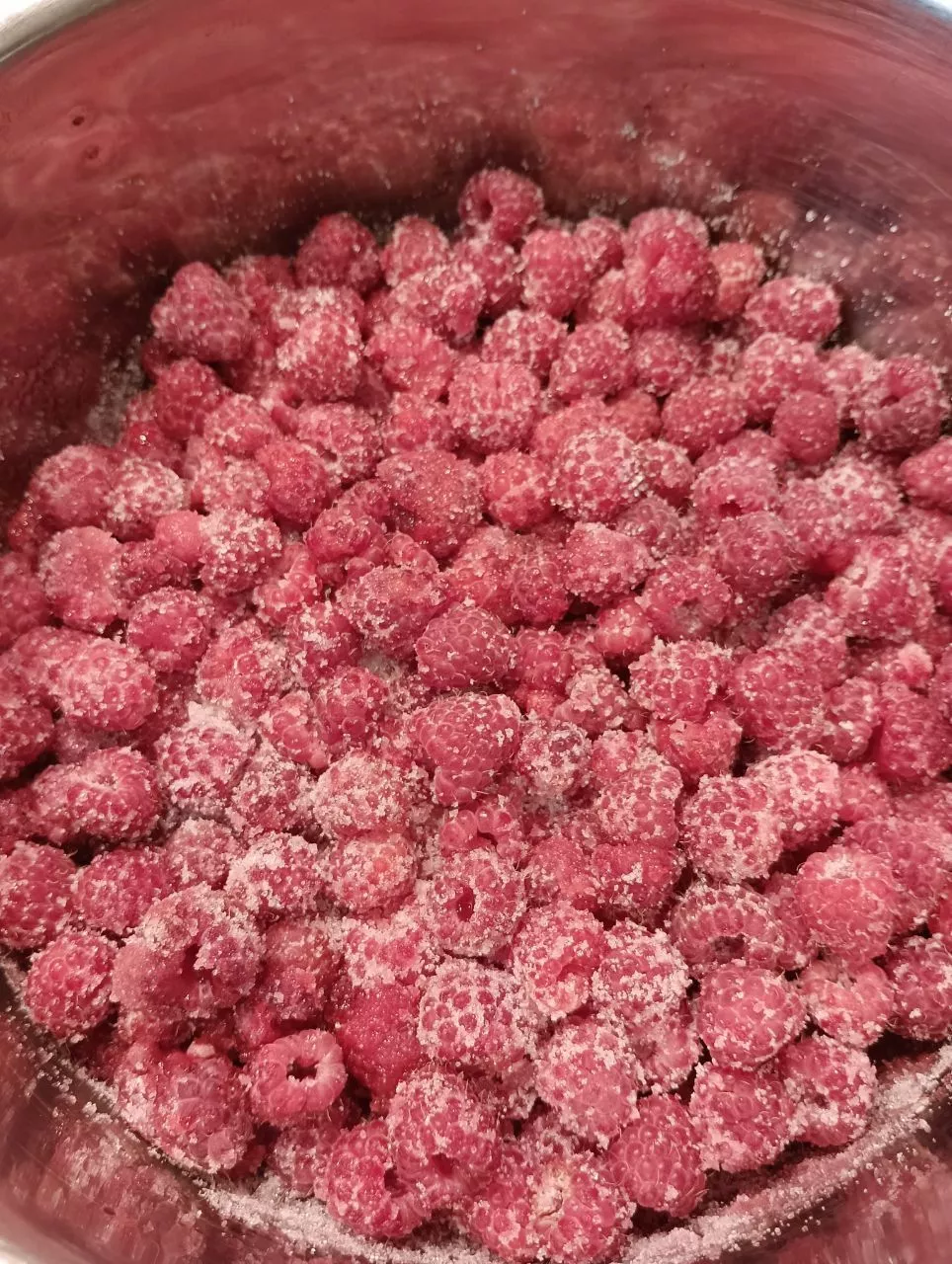
I picked them myself, the berries were dry and clean, so I didn’t wash them.
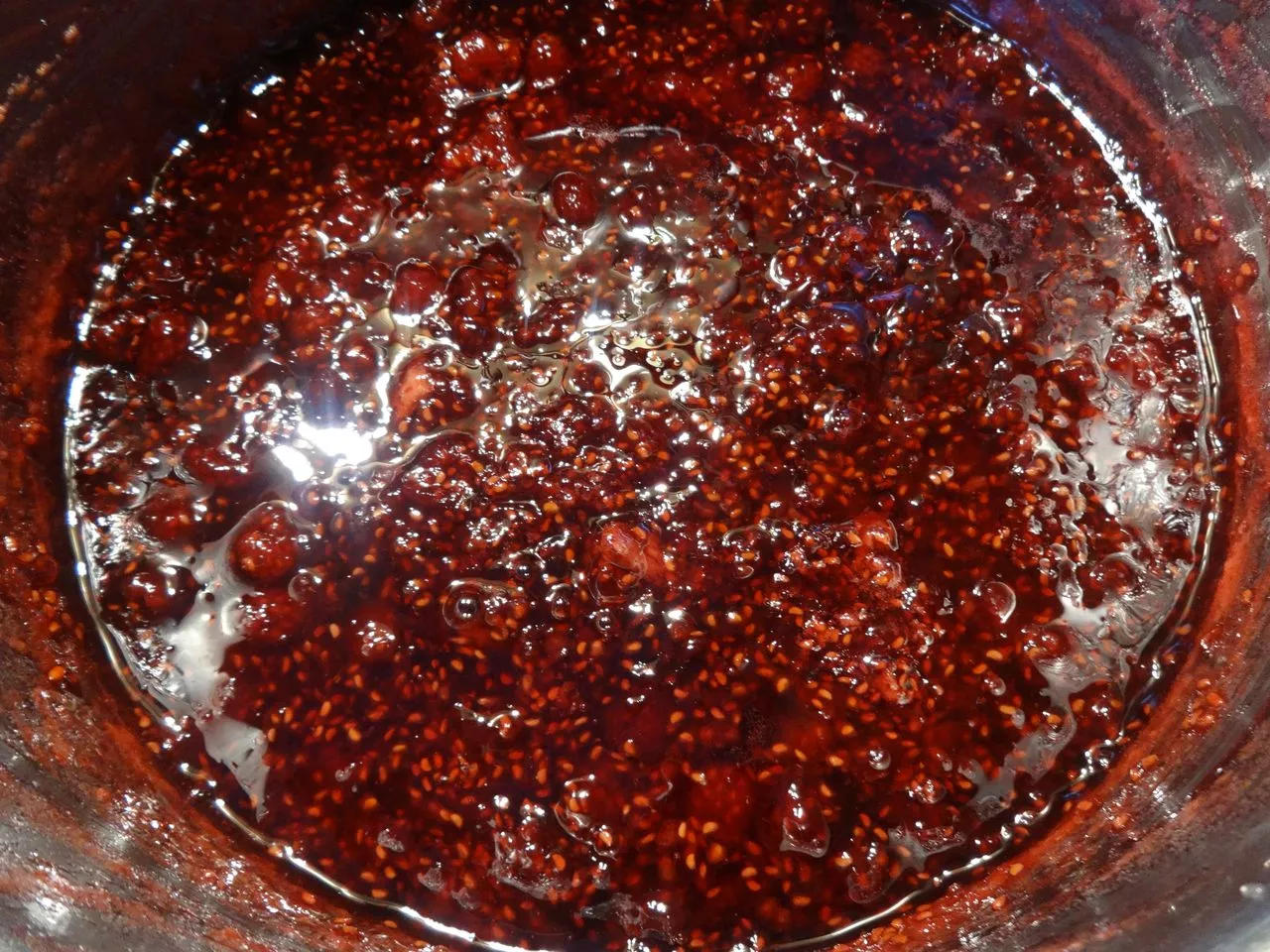
A little later, I carefully stirred it and placed it on the stove, brought it to a boil, skimmed off the foam, simmered it for about five minutes, and turned off the heat. I left it on the stove to let the berries warm up thoroughly and soak up the syrup.
In the morning I boiled the jam again and added a little citric acid to it, I really want to keep the berries from boiling over.
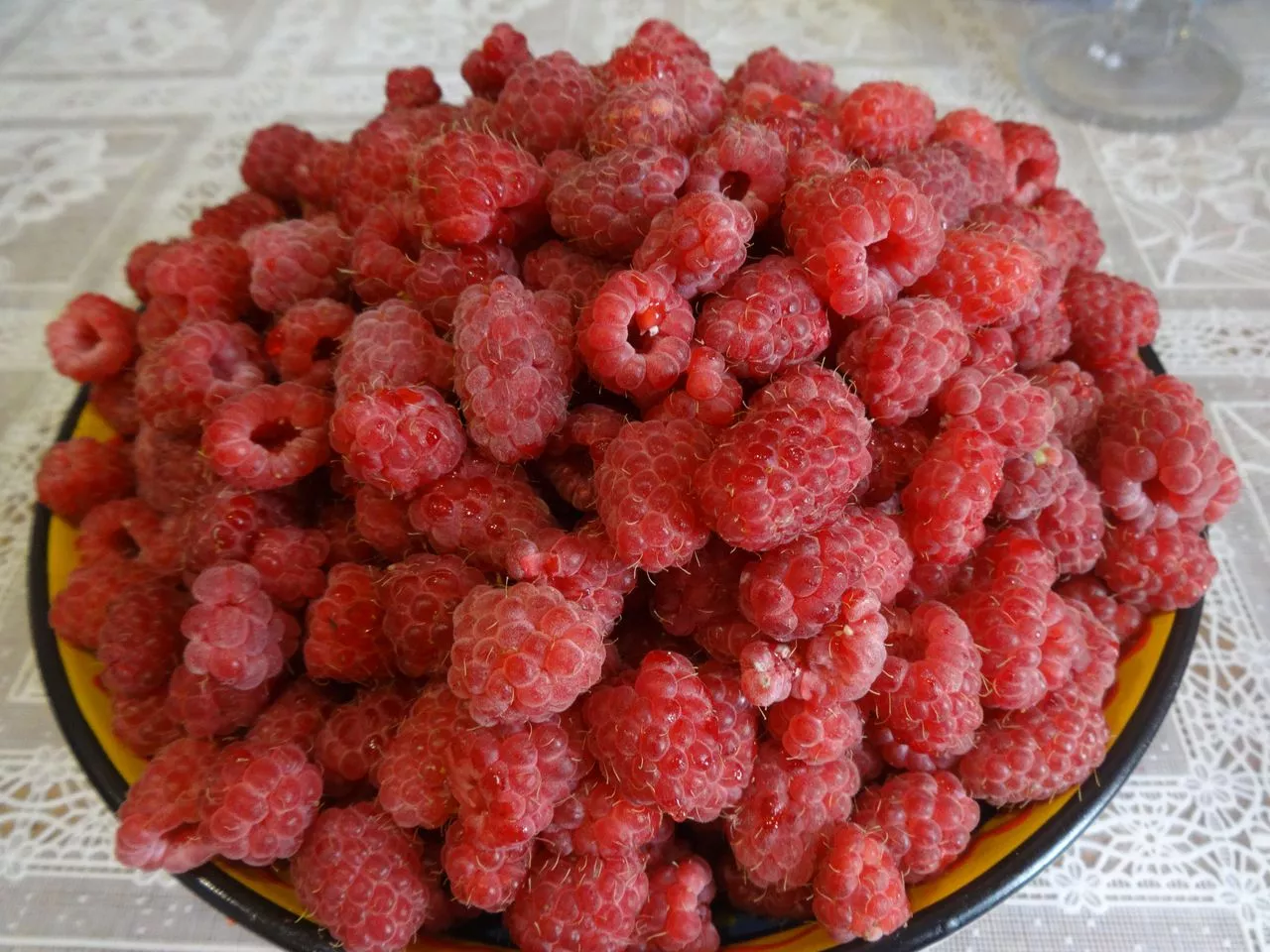
I always remember my mother's jam with whole berries, but I think it's all about the raspberries. Our raspberries are long, dark pink, and very juicy, and it rains every day, so the berries absorb the moisture. But in Kazakhstan, we had a different kind of raspberry: round, light pink berries, firm and dry, and it didn't rain often there. My mother always cooked the jam for a long time, but it never boiled over.
I cook all the jam in several stages: bring it to a boil, simmer for 5-7 minutes, cool it, and repeat the process again so that the syrup becomes thick and viscous, but not overcooked, so that the syrup tastes of the berries, and not burnt sugar.
I don't like runny jam, so I add sugar in a 1:1 ratio for sweet berries, and for sour berries, I use 1.5 kg of sugar, or 1200 grams, per 1 kg of berries. I always taste it; if it's too sour, I add a little more sugar. If there's not enough sugar, the jam will be runny and may turn sour, and if there's too much sugar, it will crystallize. My jam is stored in a cupboard in the hallway and doesn't spoil.
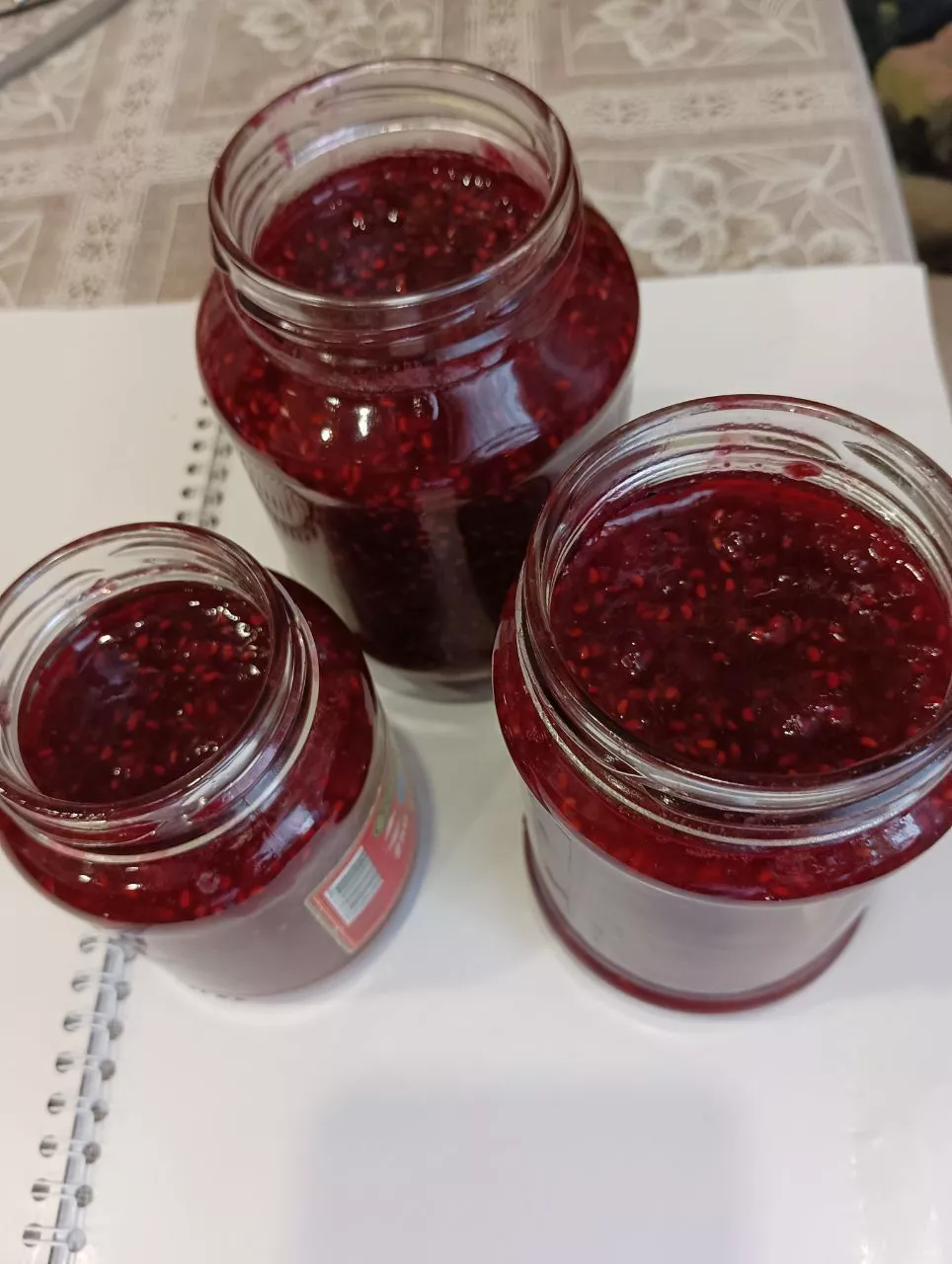
I ended up with three jars of raspberry jam with some whole berries, but most of the raspberries still fell apart.
