

While winter is still lingering, many people are browsing online gardening stores, eagerly anticipating the arrival of spring and the opportunity to plant new plants in their gardens. I decided to share a story about a rowan variety I planted a couple of years ago. Perhaps this will help someone make a choice.
I've wanted a rowan tree near my house for a long time. I remember the schoolyard with its large rowan trees. They looked beautiful in the fall, with their red berries and bright leaves. But those were just ordinary rowan trees—wild ones. Beautiful, good for liqueurs, but you can't eat them—they're bitter. Putting them in the freezer would take away some of the bitterness.
Since then, I've moved from Siberia to the south, to the Krasnodar region. And here, I don't see such an abundance of rowan trees. Either it's a coincidence that they don't grow nearby, or the climate is too hot for them.
I really wanted to plant such a beauty in front of the house, but again, there are limitations—height, since there's a power line in front of the house, and electricians drive by every spring and fall, trimming any trees that reach the wires. Besides the tree's beauty, I also wanted it to be useful, since my square footage of land is far smaller than the number of plants I want to plant. We won't eat the bitter rowan berries, nor will we make tinctures of them, except perhaps for a little indulgence. But I really want a rowan berry in the yard...
And so, having studied its cultivated varieties, I chose and planted the Garnetnaya rowan variety.
This is a hybrid of the common rowan and Siberian hawthorn—also a good berry, not quite suited to a small garden plot, but hawthorn is also very rich in vitamins and nutrients. So, this is a two-in-one.
However, the pomegranate rowan tree isn't as large as its wild relative when fully grown. A mature tree reaches 3-4 meters, while the common rowan can grow up to 8 meters. However, there's a downside: this variety isn't long-lived, living up to 25 years at most.
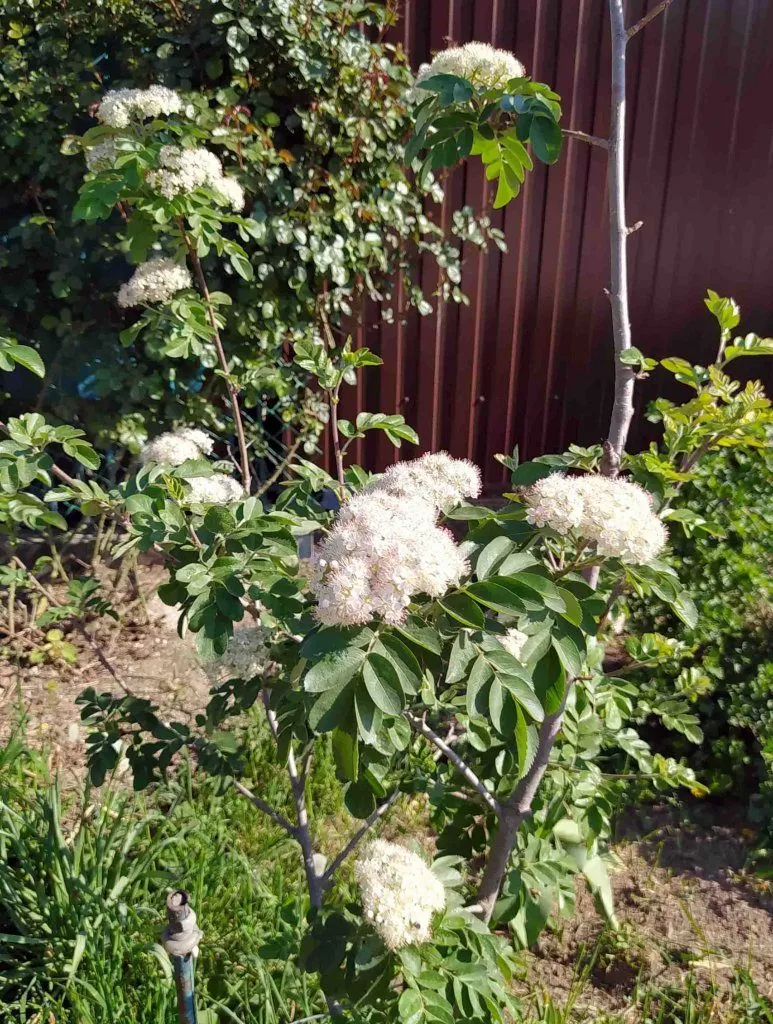
The leaves are dark green, and the ripe berries are dark burgundy with a bluish tint.
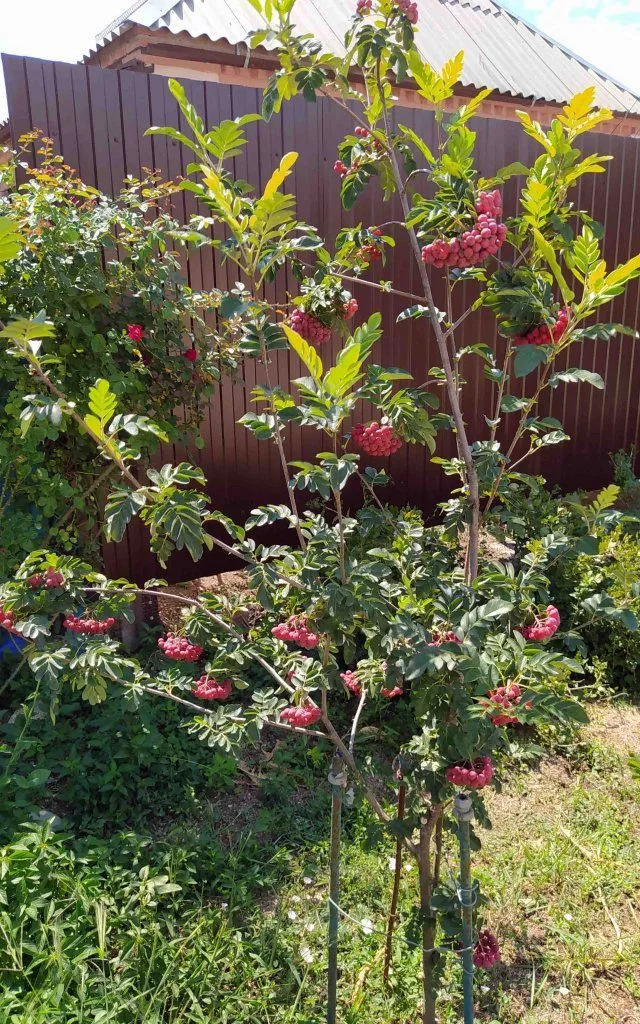
The first year, the bush took root and gained strength. But already in the second summer after planting, it produced its first harvest—a cluster of berries. Now the rowan tree is bearing fruit more abundantly and has grown larger.
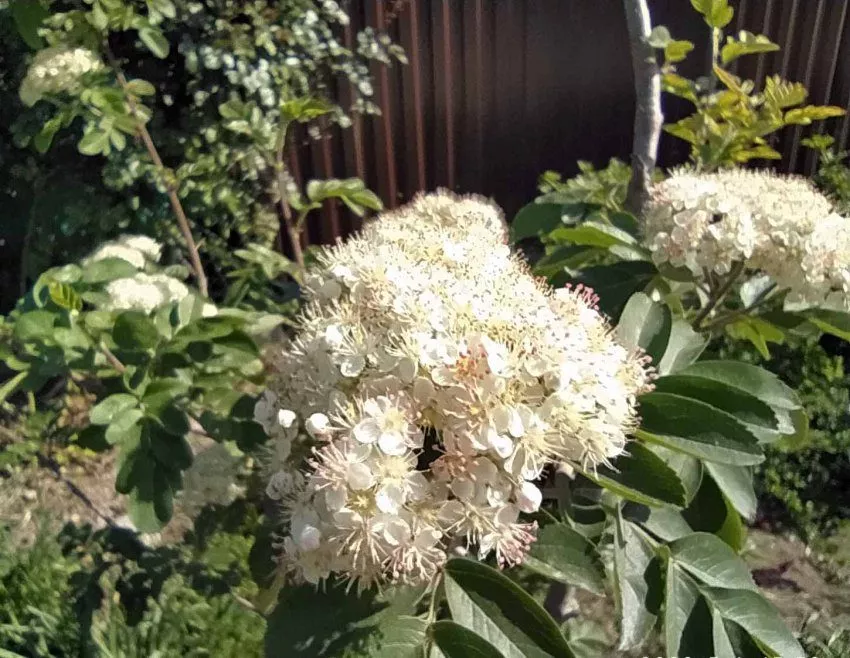
Rowan tree blooms with bright white inflorescences:
This is how the berries ripen:
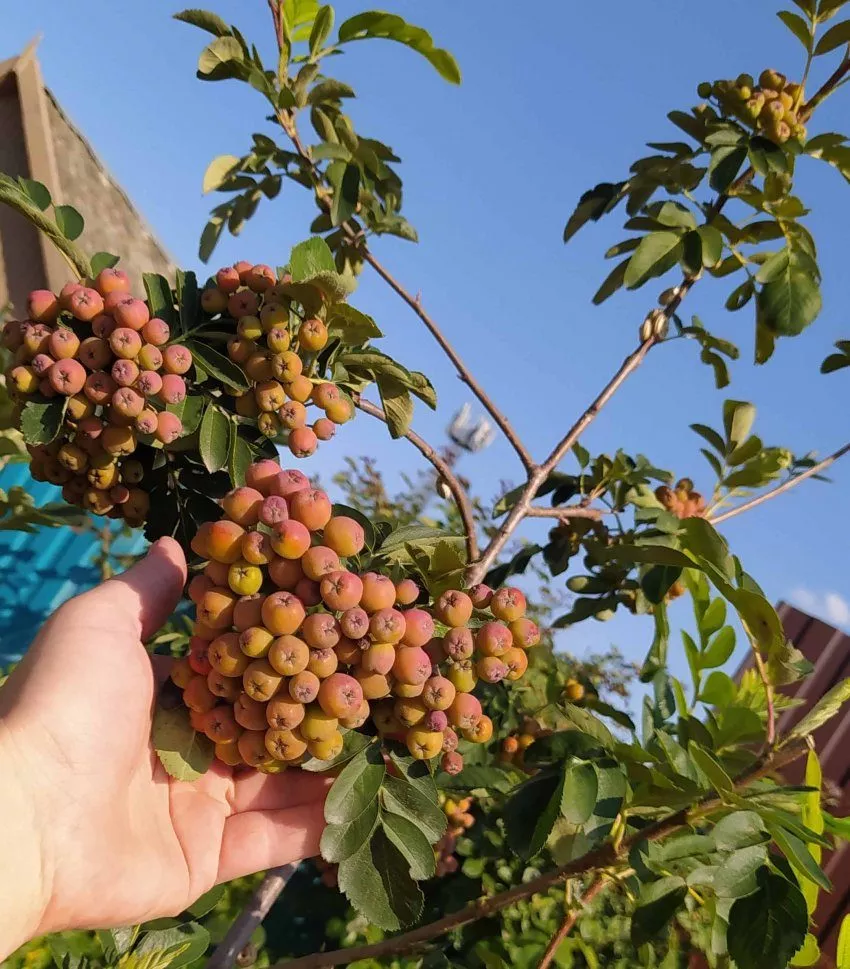
At first, they're greenish, but gradually gain color and sweetness. This rowan tree ripens fully in late August to early September.
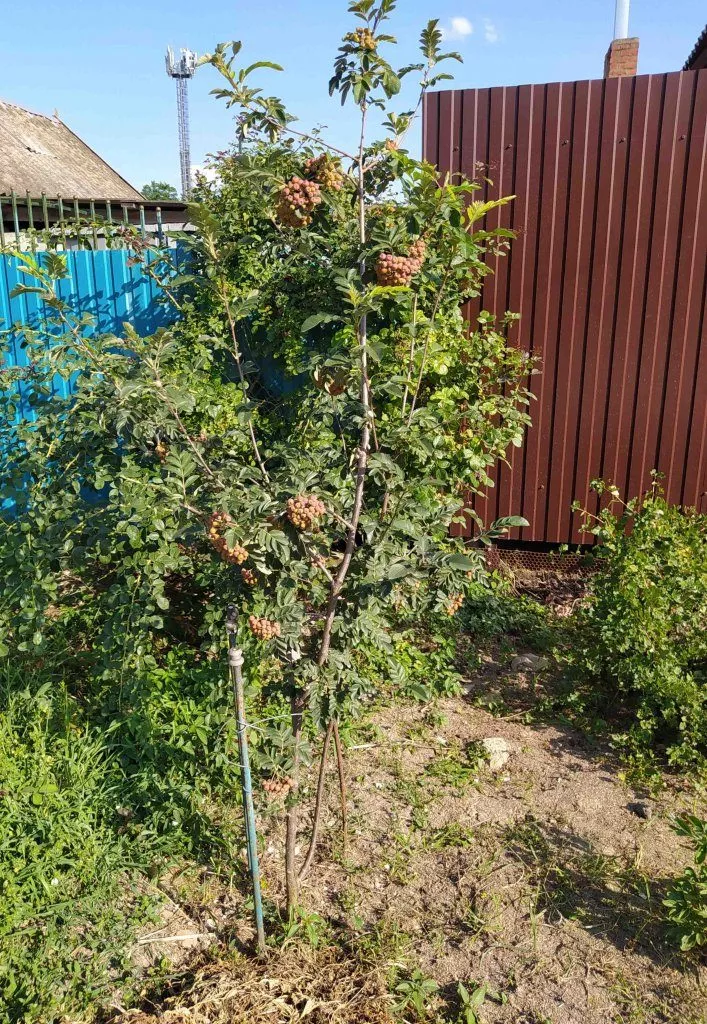
If left unpicked, the berries will hang around until the frost sets in. The clusters are large, and sometimes the branches can't support the weight of the berries and break.
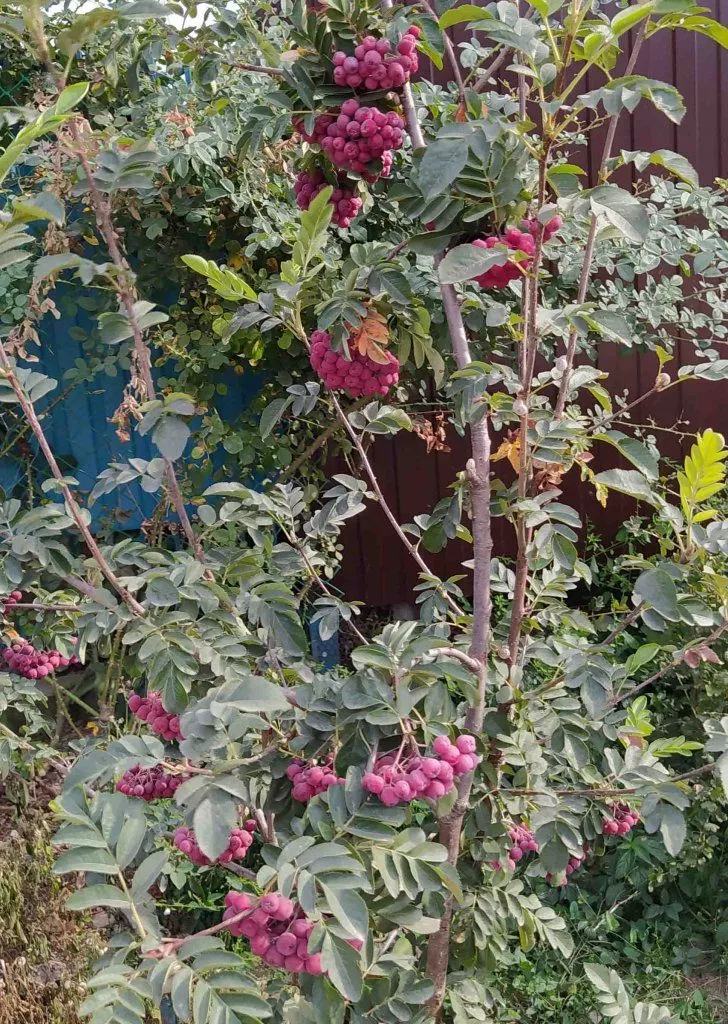
I haven’t weighed them separately, but I think individual bunches can weigh about a kilogram.
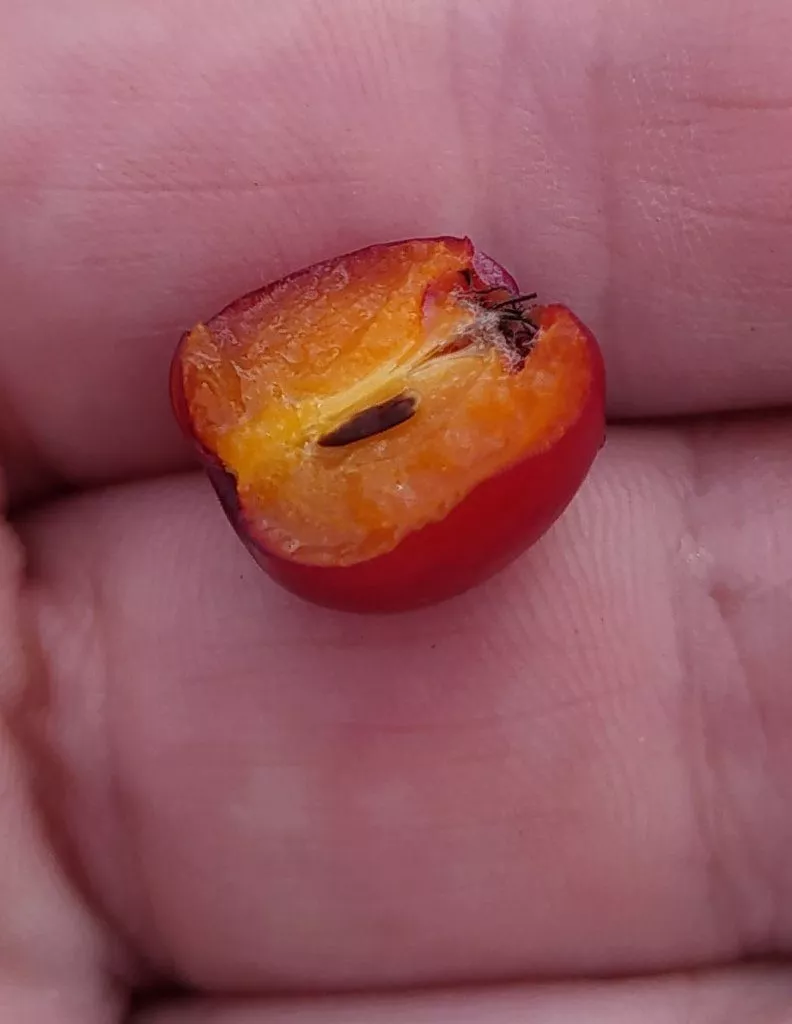
This is what the berry looks like when cut. There are few seeds, they are small and quite soft.
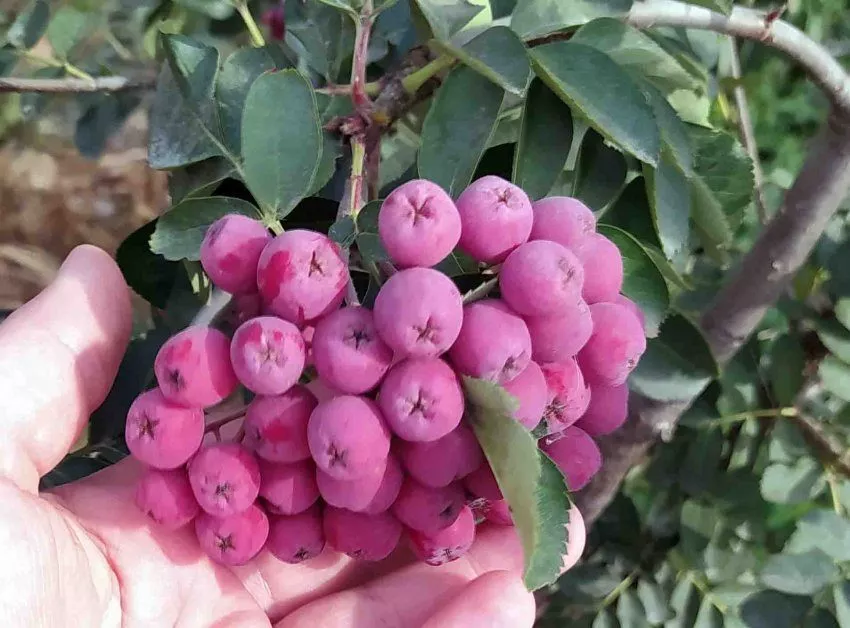
The berries are large – some are up to 1.5 cm in diameter.
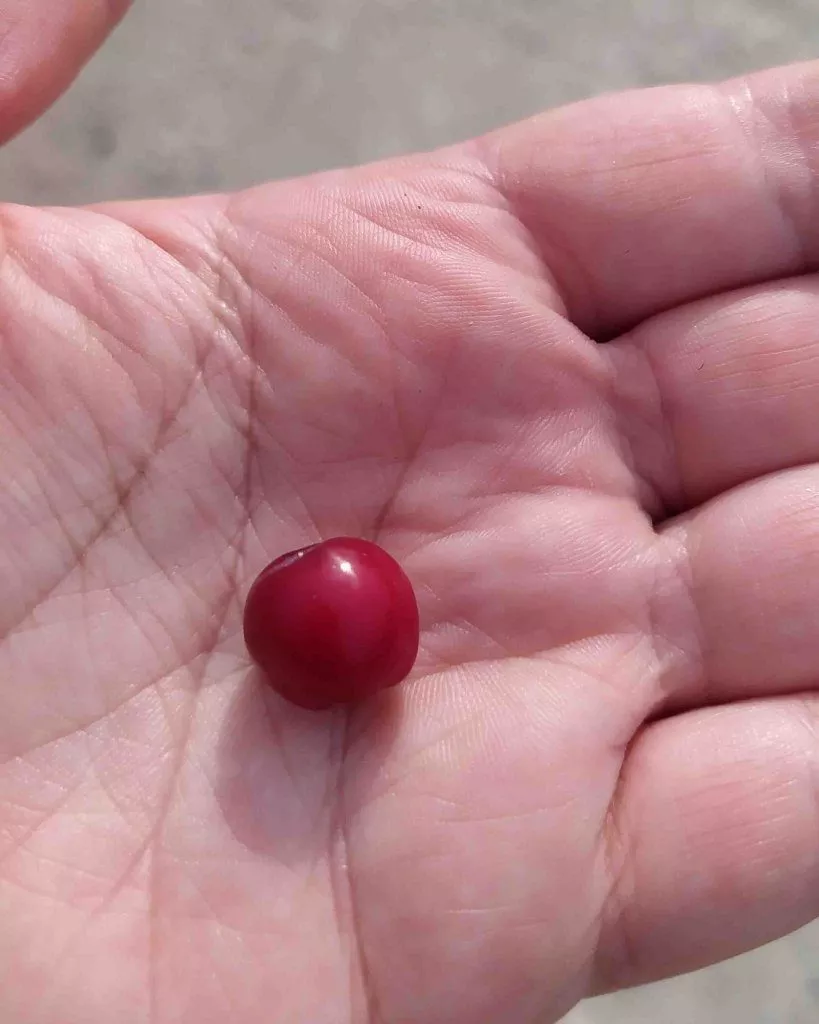
The taste is slightly tart, sweet and sour. The berries are soft, juicy, and aromatic.
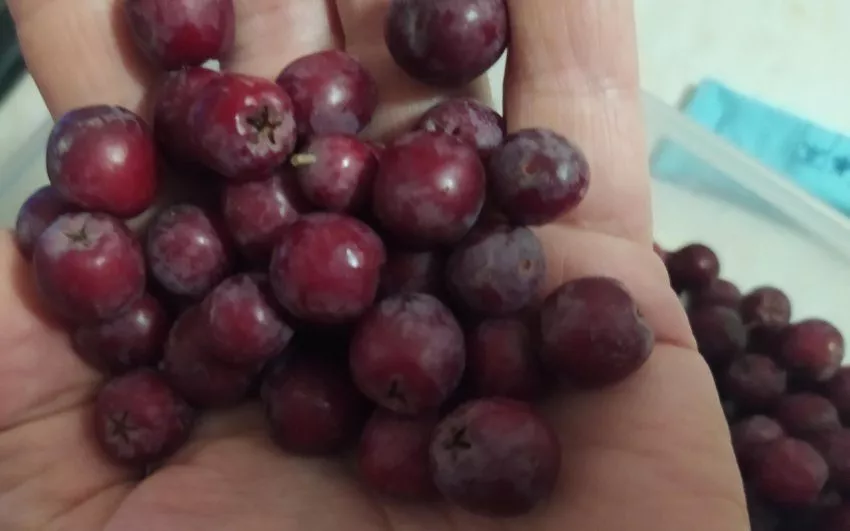
Stores well in the refrigerator - simply collected and dried in a hermetically sealed jar.
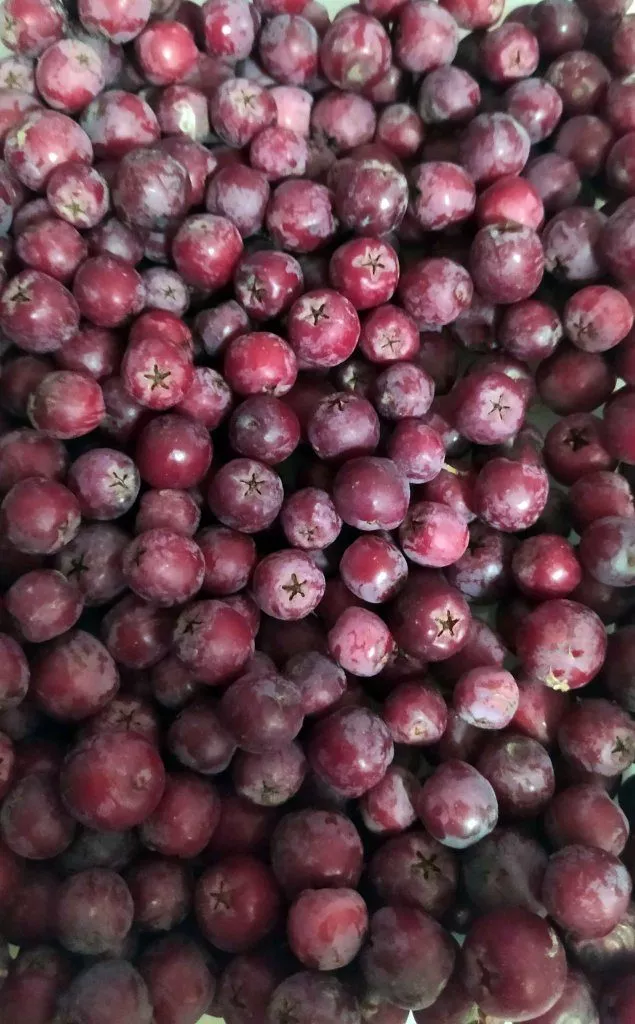
It's delicious and easy to pick rowan berries from the tree and make compote, jam or preserves from them.
This variety is self-fertile, but if there are other pollinators nearby, the yield will be higher.
In general, if you need a rowan tree that combines such parameters as compactness, decorativeness, and tasty fruits, then I recommend the Garnetnaya.