

When it comes time to decorate your yard or garden with flowering plants, roses are among the most beautiful candidates for flower beds. They come in a wide variety of colors, petal and bud shapes, and bush type.
Of all the varieties growing here, some favorites gradually emerged. One of them is the Rosarium Uetersen rose. For the first two years after planting, it sat modestly in a corner, frail, barely growing or blooming. I'd already decided it wasn't a good choice, but in the third year, it showed its true colors, transforming from an ugly duckling into a beautiful swan. I'll admit right away that I'm a mediocre rose grower; I'm just learning how to properly care for these plants. But even with this care, the Rosarium has captivated me with its long and abundant blooms. For several years now, this rose has been the first to open its buds in the spring.
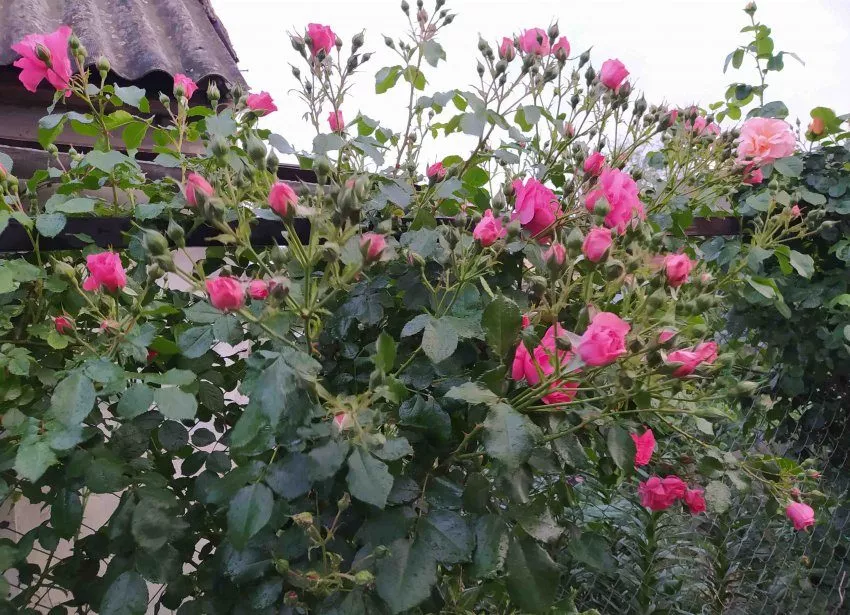
And in late autumn it is the last to bloom, although all the roses are already prepared for winter.
Here is the bush in full bloom:
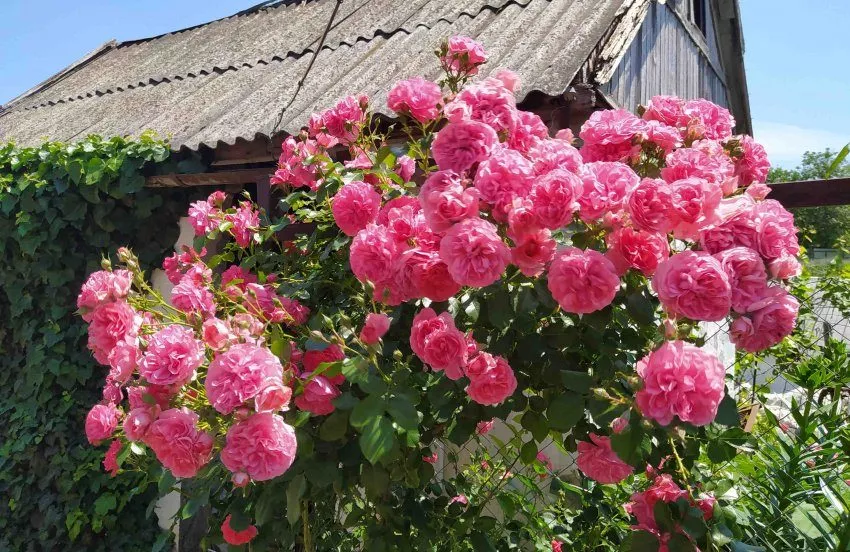
The flower is pink, but of a subdued tone, not very bright, slightly dusty shade, with a diameter of up to 10-12 cm.
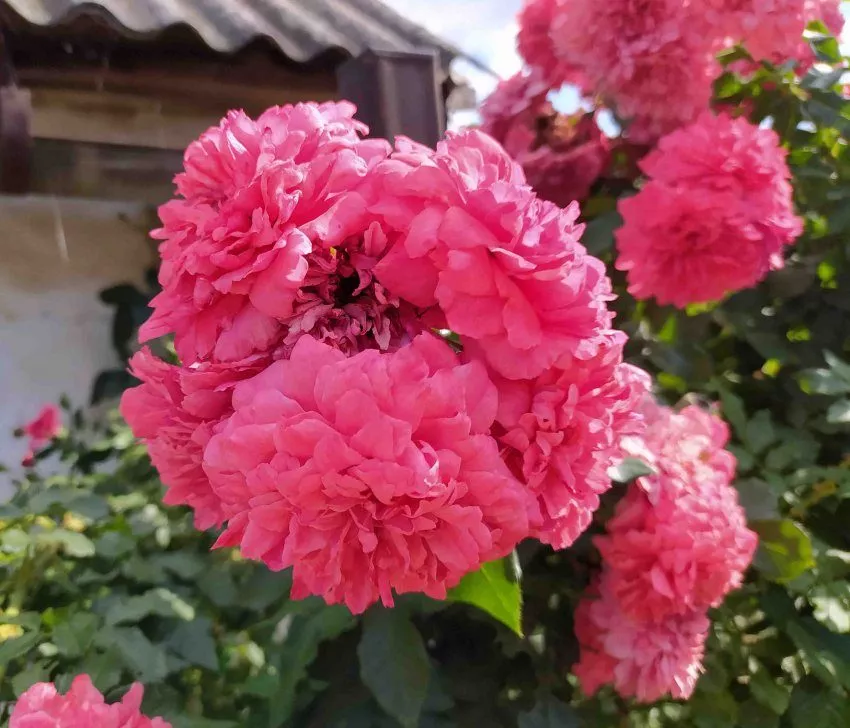
A single shoot bears numerous buds. The flowers are densely packed with numerous petals. The flowers last a long time—I haven't timed them precisely, but in favorable weather conditions, up to two weeks. They hardly fade in bright sunlight.
Here are the flowers compared to the hand:
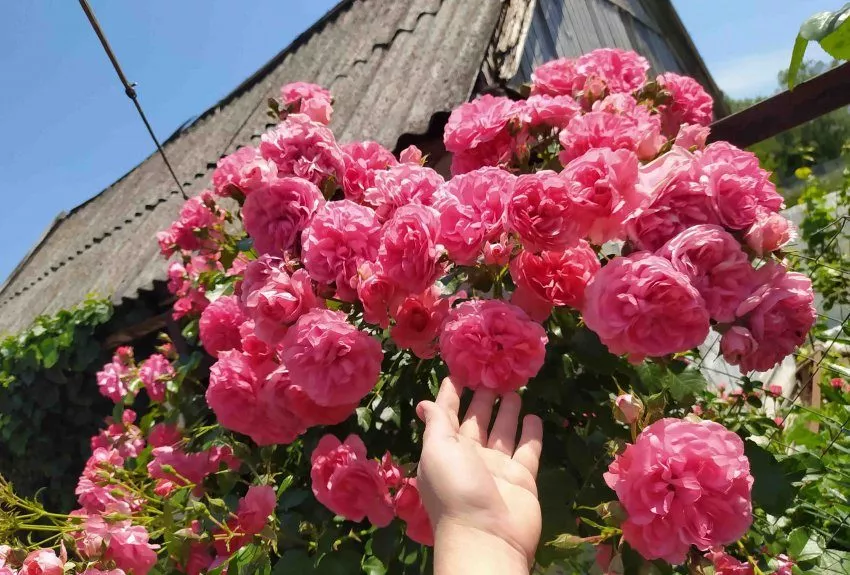
I also liked the shape of the bush – a climber (a large-flowered hybrid of a climbing rose and a hybrid tea rose) or it can be grown as a shrub. The height listed on the website is 3.5 meters, but our maximum height was about two meters.
This is a bush in spring at the beginning of flowering:
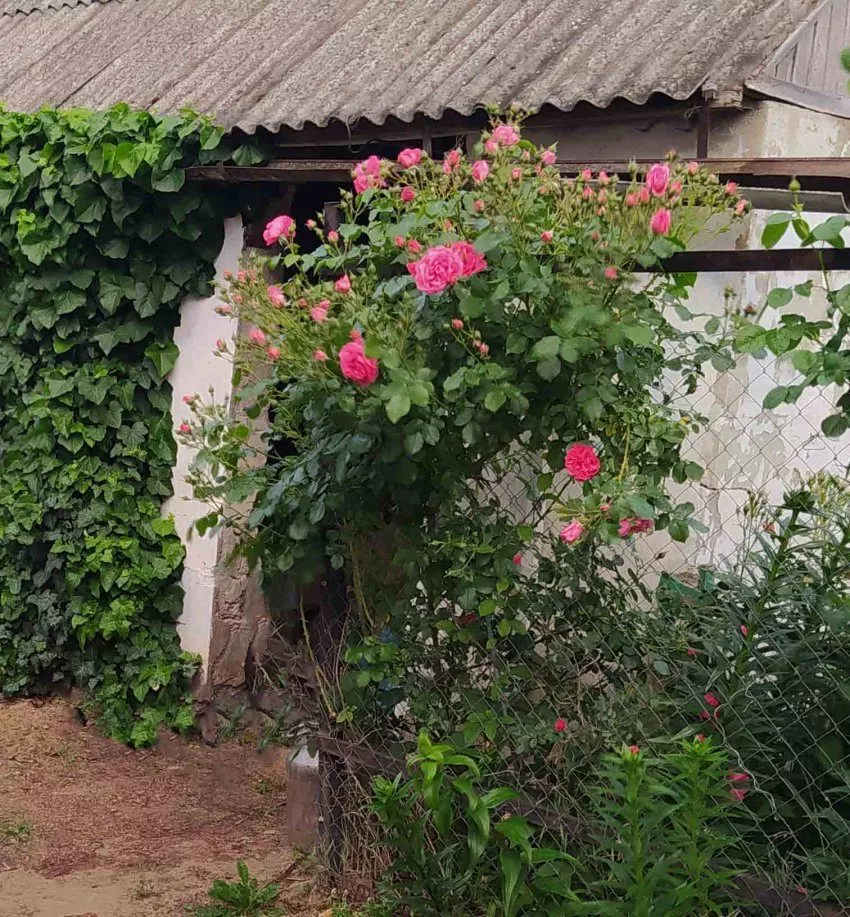
Perhaps the size of the bush depends on growing conditions (lighting, soil composition, etc.), as I've sometimes read reviews of this rose stating that in more northern regions it grows as a small, spreading bush without support. It's perfect for framing a fence. We have a climbing rose called Nostalgie growing on the other side of the fence, which is more challenging to prune and tie. Since that rose is a climber, the fence isn't high enough for it, so it requires a tall support. We haven't installed one yet. Therefore, the bush is shaggy, with its vines spreading unattractively in all directions. Rosarium, however, doesn't have this problem—the height is perfect for our fence.
Another positive aspect is that the fence is positioned so that the house is on the north side. The nearby roses (Hendel and Polka) are steadily growing and opening their buds on the south side of the fence, while the north side is mostly occupied by green shoots. As a result, all the beauty is not under the window, but on the other side of the green wall. The rose garden, however, has plenty of flowers on both sides of the fence. It blooms beautifully on the north side.
The photo shows a view of the bush from the north-facing porch—it's clearly in full bloom. Meanwhile, next to it stands a green wall of bloomless Hendel and Polka roses.
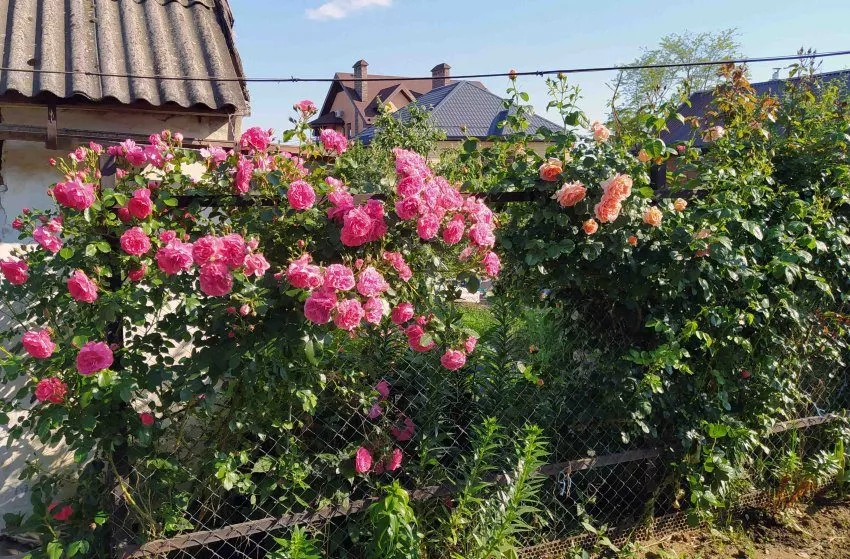
And this is flowering on the opposite, southern side.
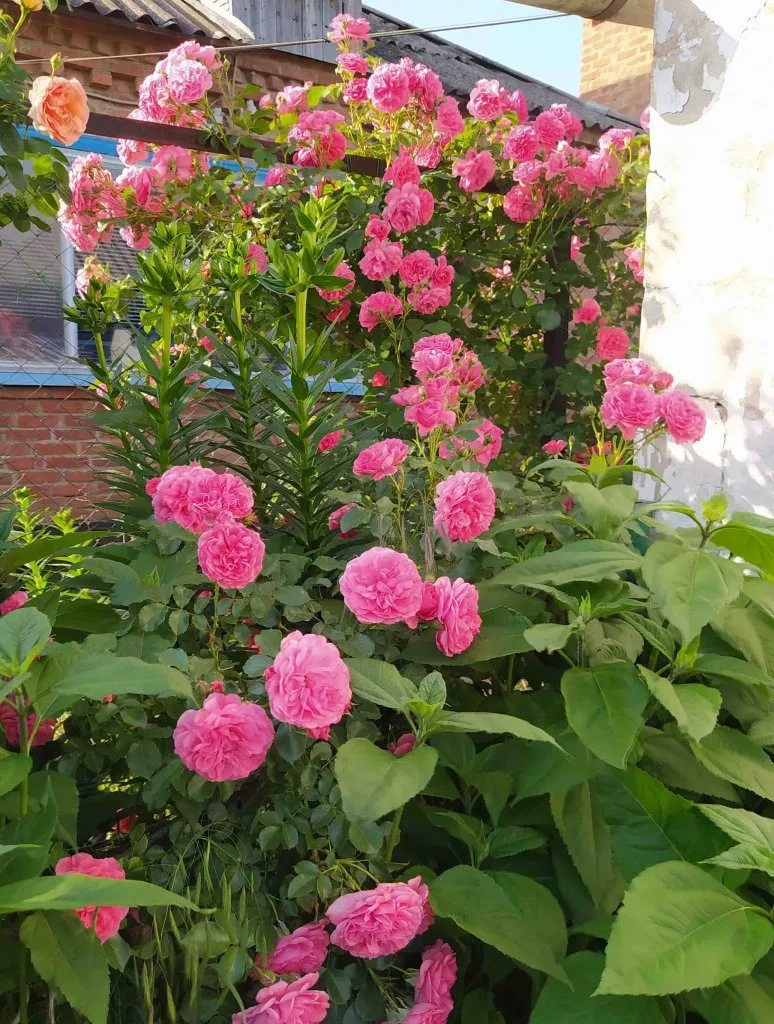
It doesn't require much pruning either; the bush is neat, but it does require support. In our case, I tie it to the fence. I only remove any unsightly shoots and faded buds.
Daughter poses next to a rose:
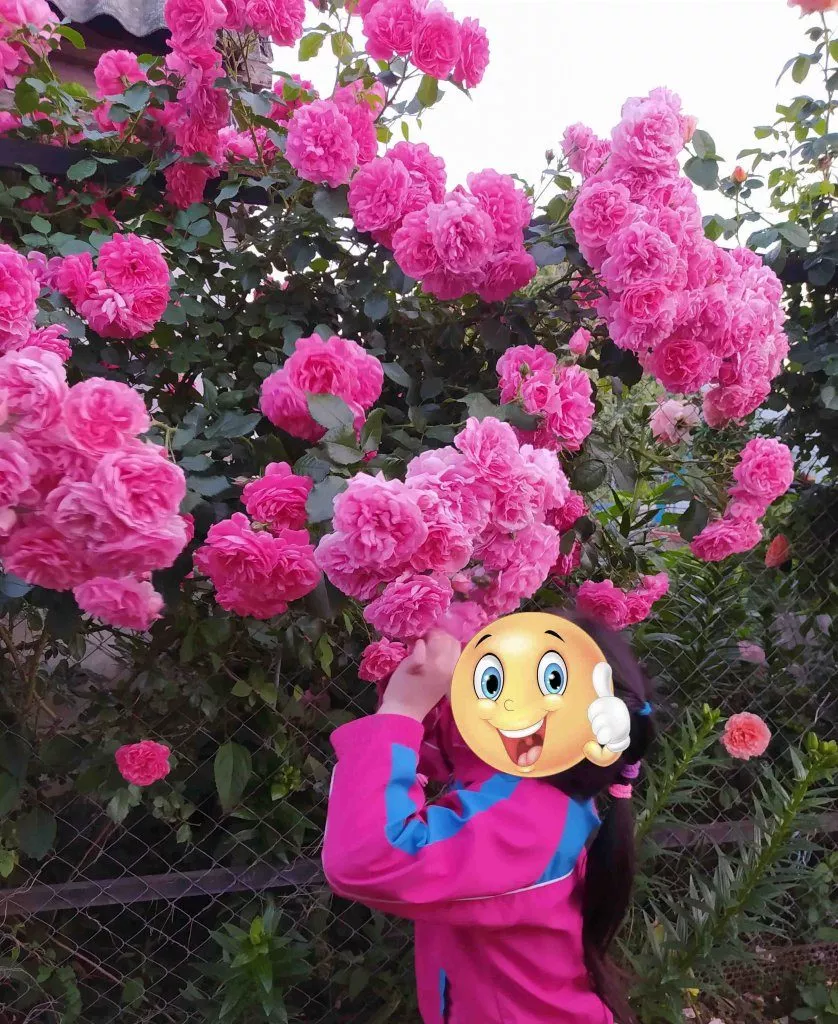
It blooms in three waves: spring, which is very bright and abundant; summer (in hot August), which produces smaller, more modest flowers; and the final bloom in October-November. For more northern regions, this is already a cold time, but here in the Krasnodar region, blooming continues until the frost sets in.
If you need a low-growing, undemanding, and disease-resistant large-flowered climbing rose, I recommend planting this variety.
Very beautiful roses!
I agree with you! I think I can even smell them, and it makes my head spin.