

Finally, the snow has started to melt here in Siberia, with temperatures above zero during the day and still frosty at night. March is ending, and there's not a single blade of green grass to be seen outside, even the buds on the trees are still dormant, but the windowsills are green—the seedlings are growing.
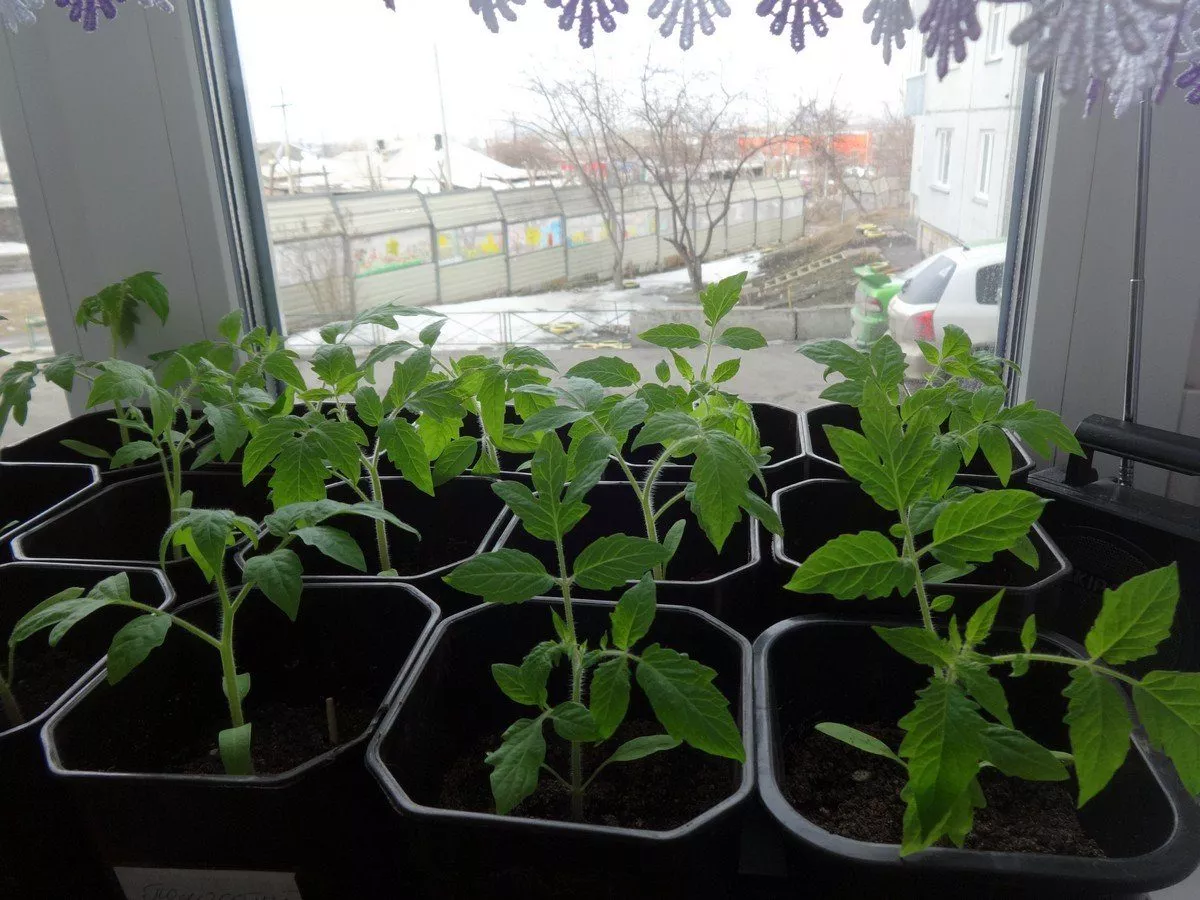
I sowed the late varieties of tall tomatoes at the end of February, and the early and low-growing ones in March.
All seeds are our own, fresh, collected in 2020.
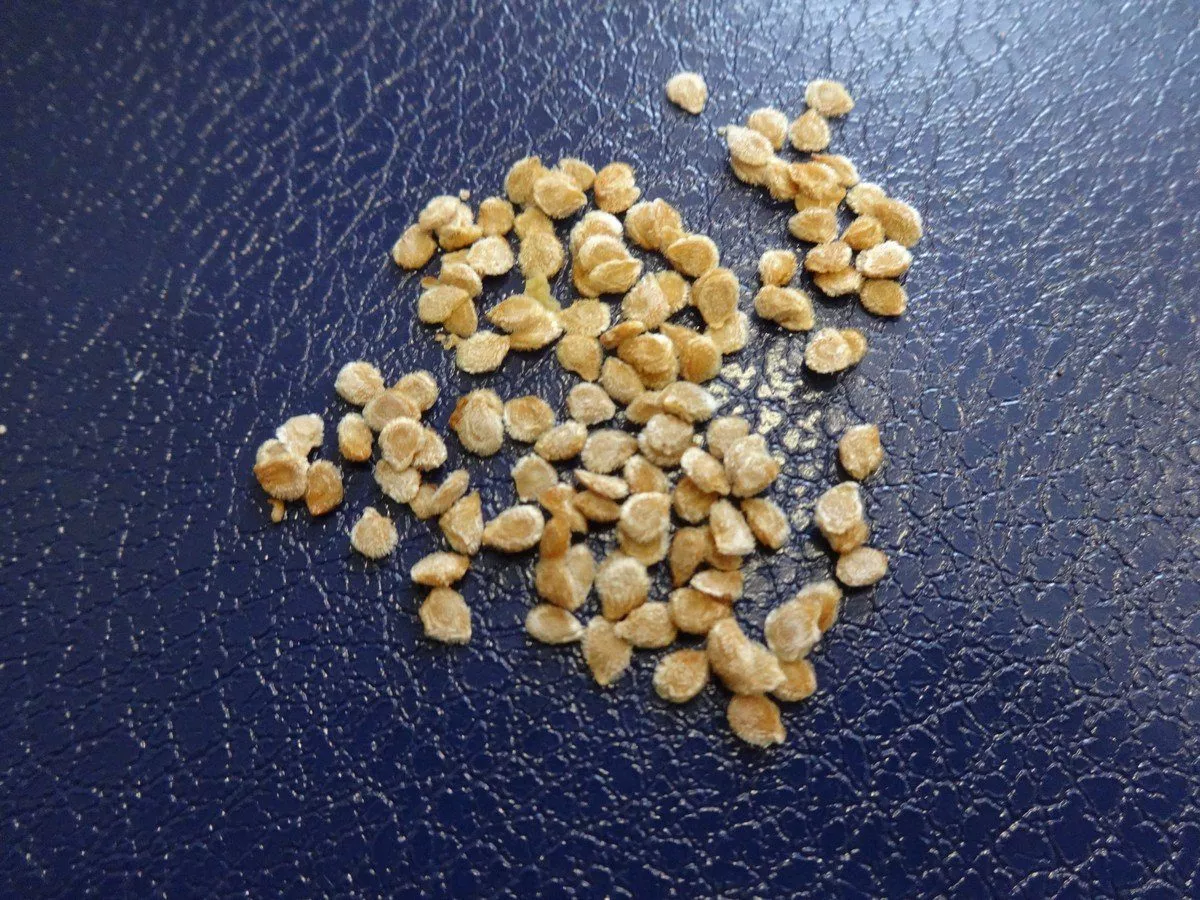
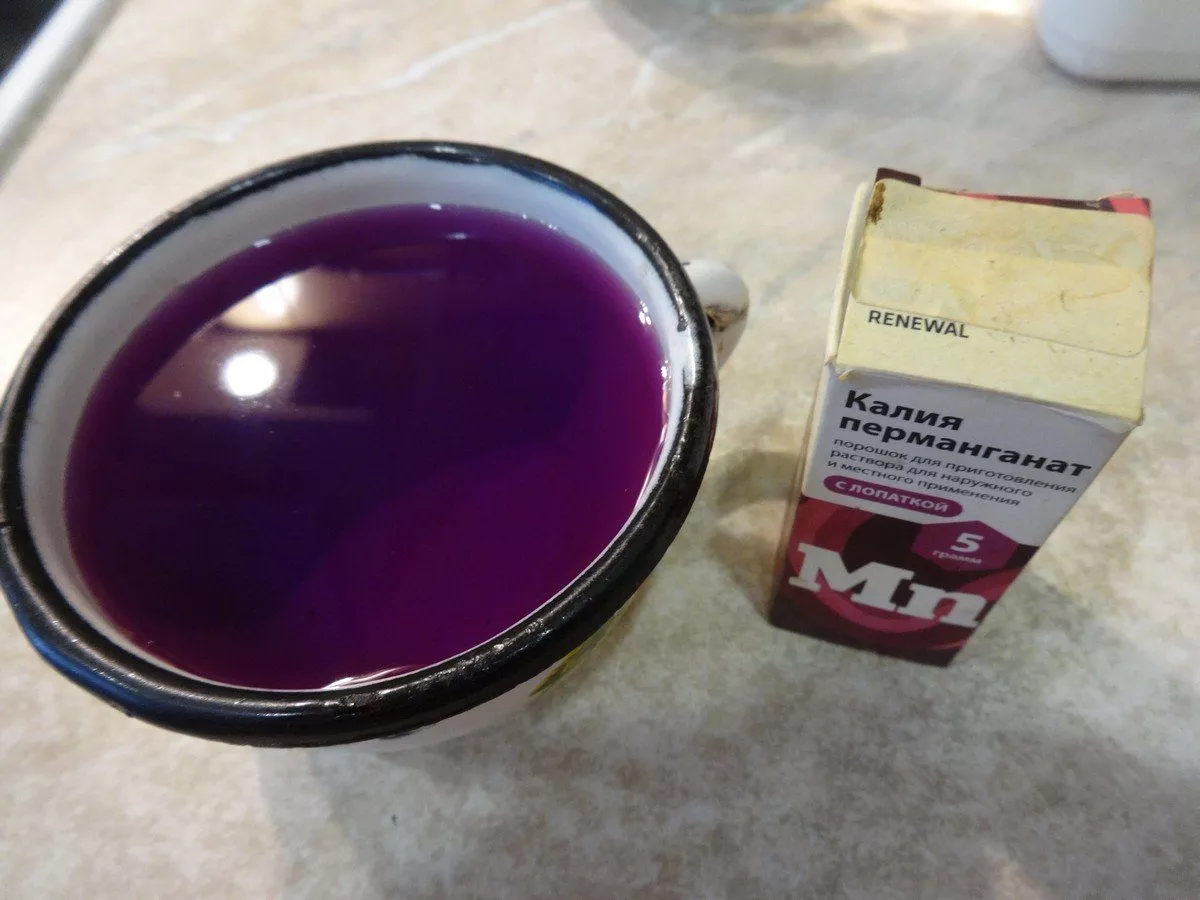
Before sowing, I disinfected the seeds using a weak solution of potassium permanganate.
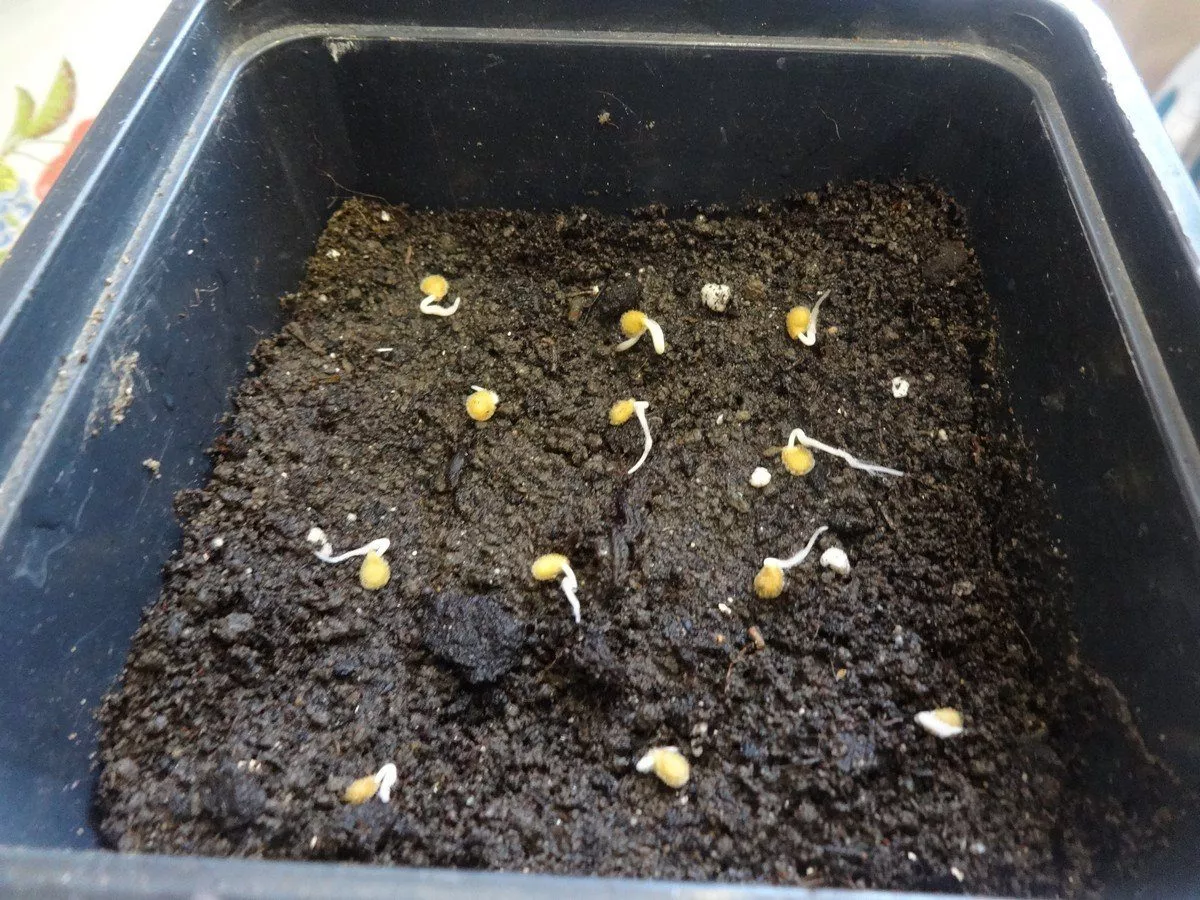
I soaked them on damp cotton pads for germination.
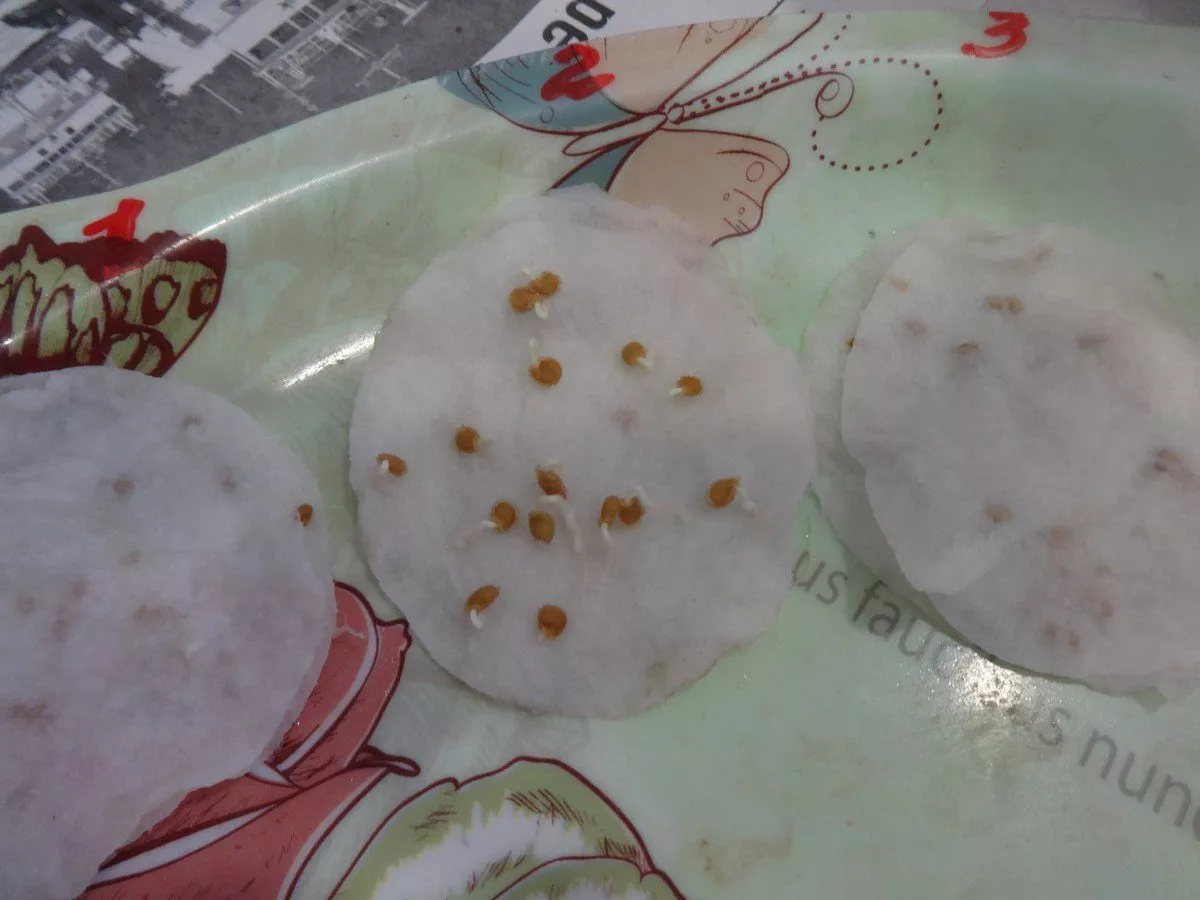
I always spread the seeds on a damp cloth or cotton pads. The damp cloth helps the seeds swell and germinate better. Swollen seeds shed their seed coats faster, but if sown dry, the sprouts often emerge from the soil with the seed cap still attached. A dry seed coat prevents the cotyledon leaves from fully opening and can harm the young sprouts. To help the tender seedlings germinate, soften the seed coat by spraying it with water, cover it with a plastic bag, and then remove the seed coat with a toothpick or needle.
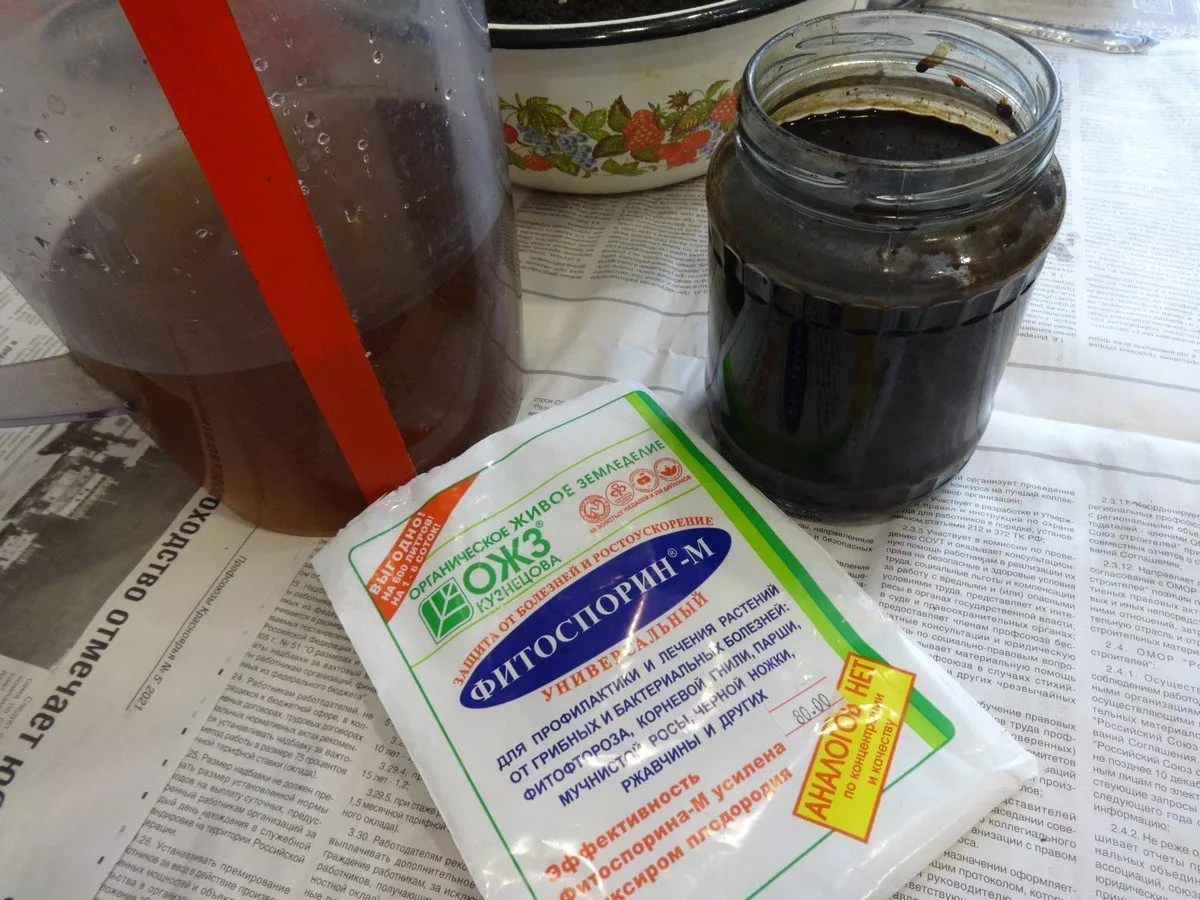
I sowed each variety in a separate cup. I watered the soil in the cups with a solution of Fitosporin-M to prevent fungal and bacterial diseases.
I placed the sprouted seeds in cups and sprinkled them with soil, compacting it slightly.
I watered them and mulched them with a thin layer of loose, dry soil. I covered them with plastic and placed them in a warm spot under a radiator. When the first shoots began to appear, I moved the tomatoes to the windowsill.
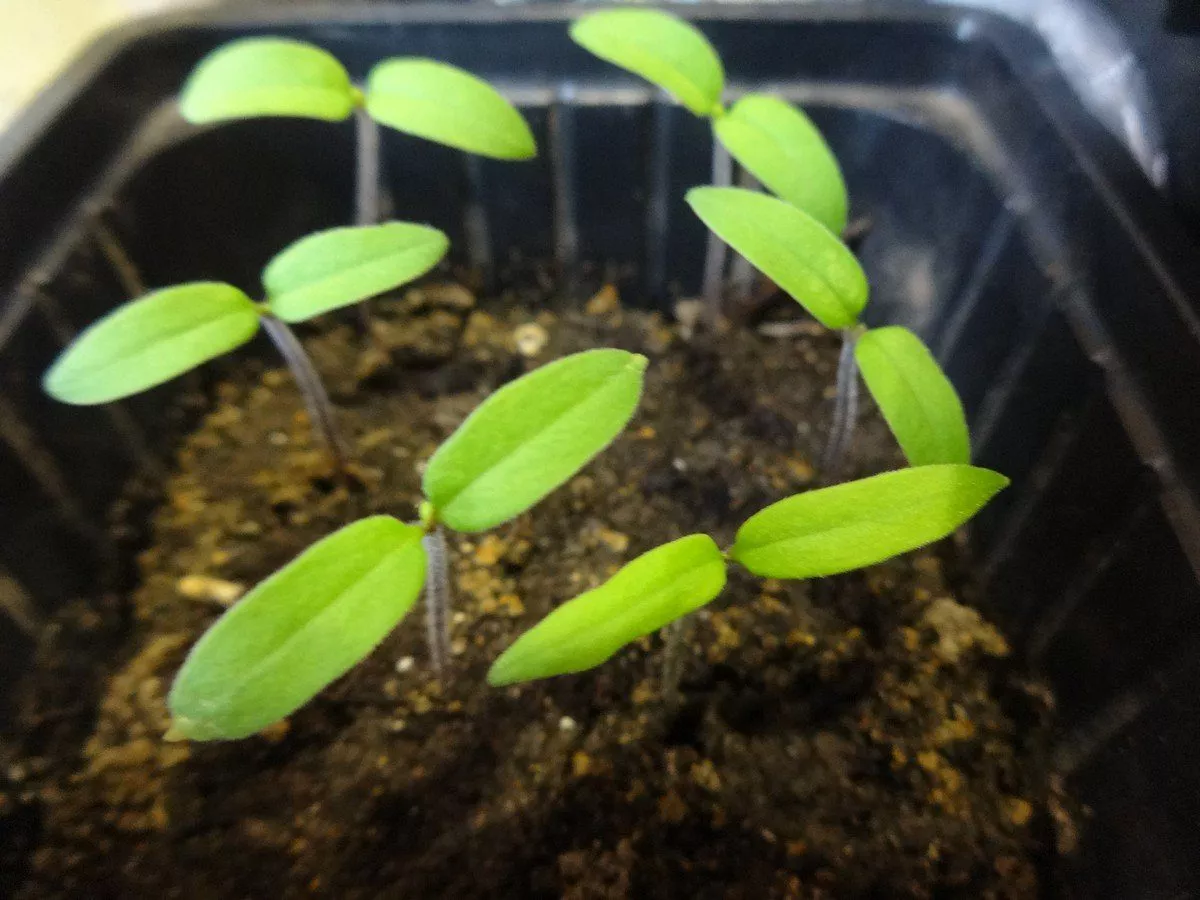
During the first stage of cultivation, it is recommended to create special conditions for the seedlings: keep them in the light for at least 12 hours a day, and reduce the daytime air temperature to 18-20 degrees, and night temperatures to around 14 degrees, so that the seedlings do not stretch out.
We live in an ordinary city apartment, and creating ideal conditions for seedlings is problematic.
At first, my seedlings grew on the windowsill, without additional lighting. To lower the temperature, we turned off the heating at night, even though it was still very cold here in early March.
When the seedlings had two true leaves, I pricked them out and planted them in separate cups.
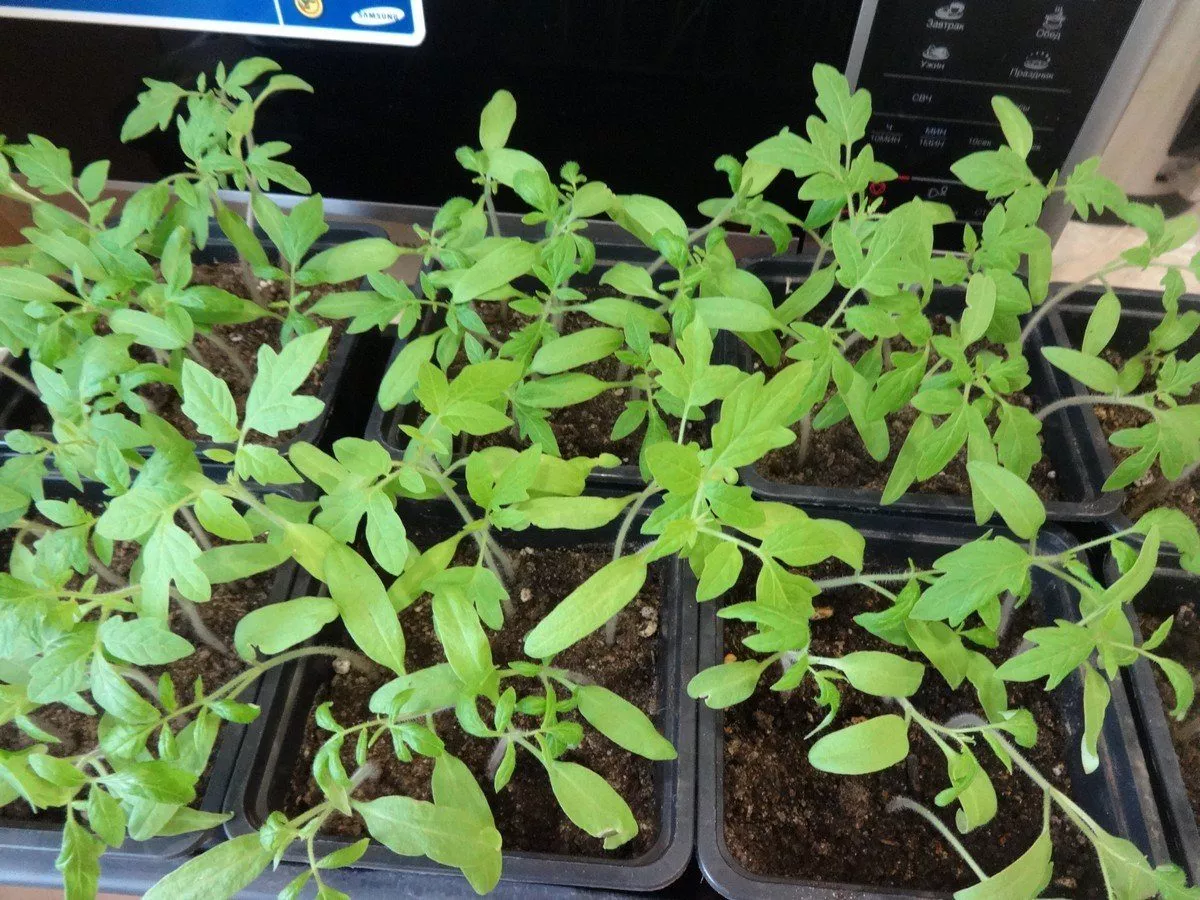
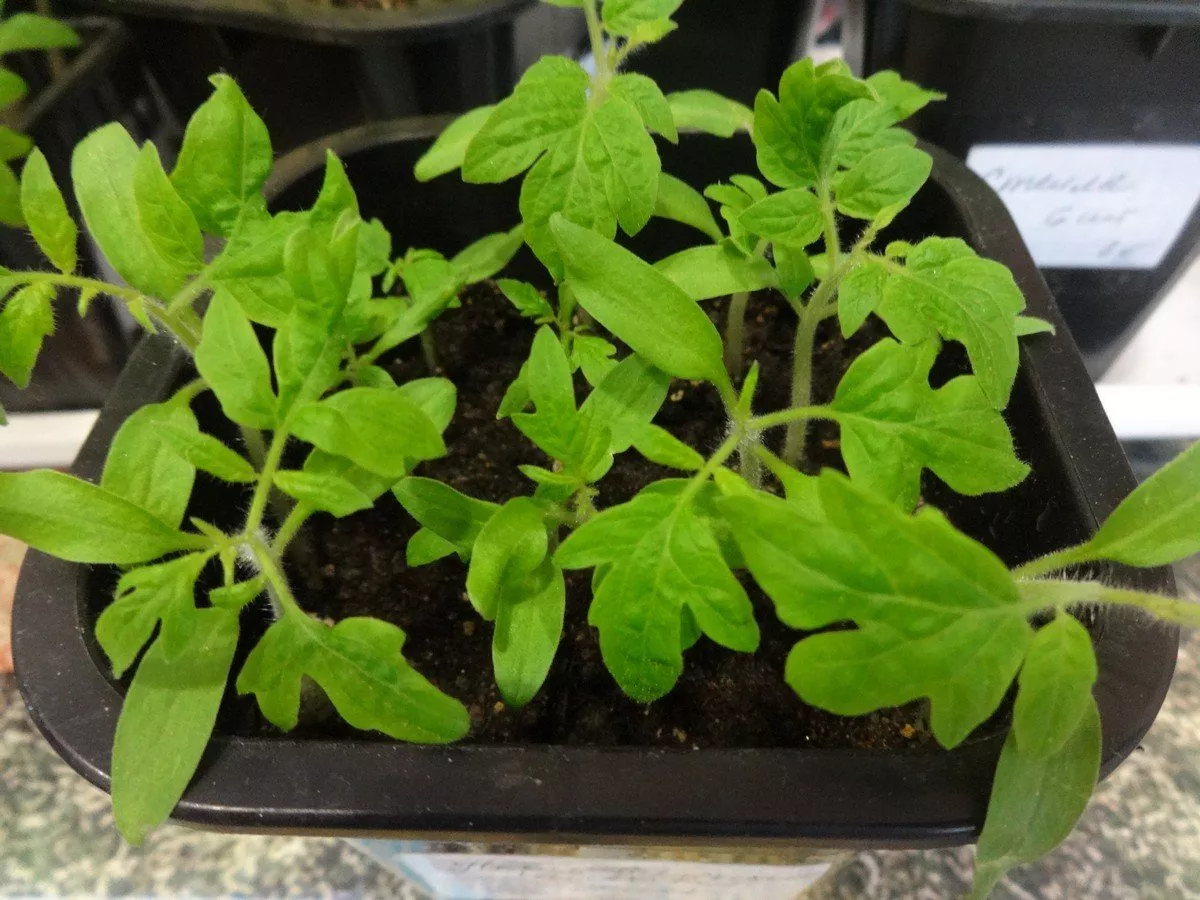
I watered it well with warm water.
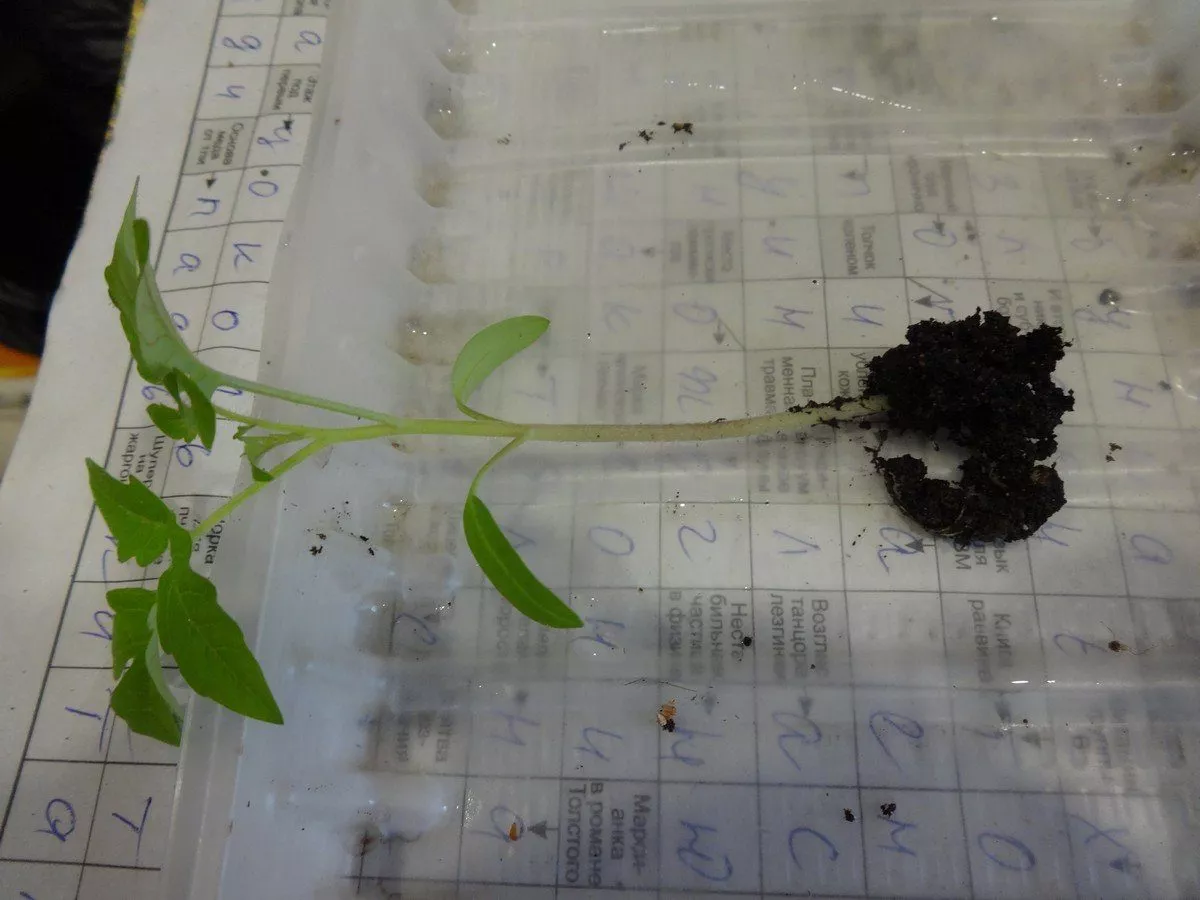
I don't pinch the main root, I think it will damage the seedlings, although they advise cutting off part of the root so that the sprout can grow lateral roots.
The roots on my seedlings were quite normal, I simply transplanted the sprouts into a more spacious container, deepening them to the cotyledon leaves.
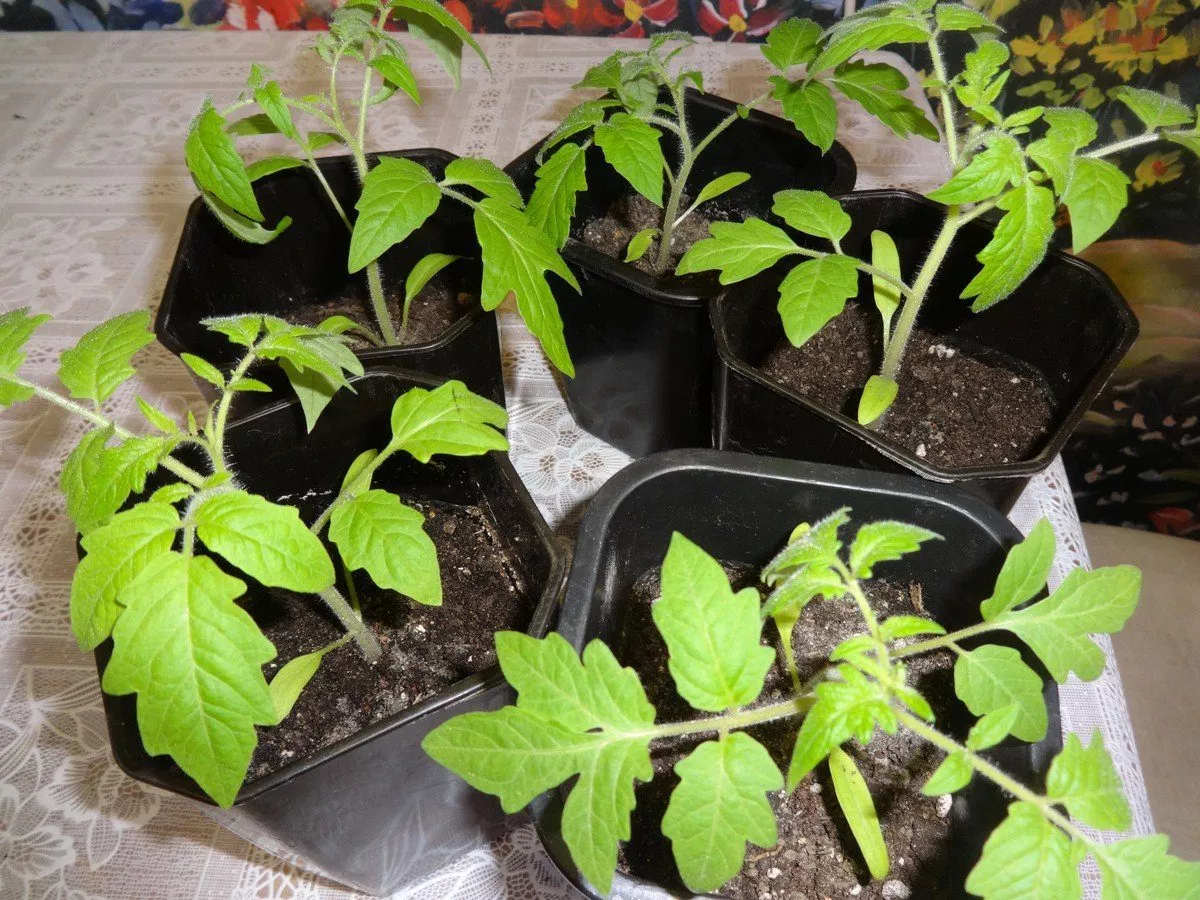
I fill the pots with soil, not to the top, and as the seedlings grow, I add fresh soil to the pots.
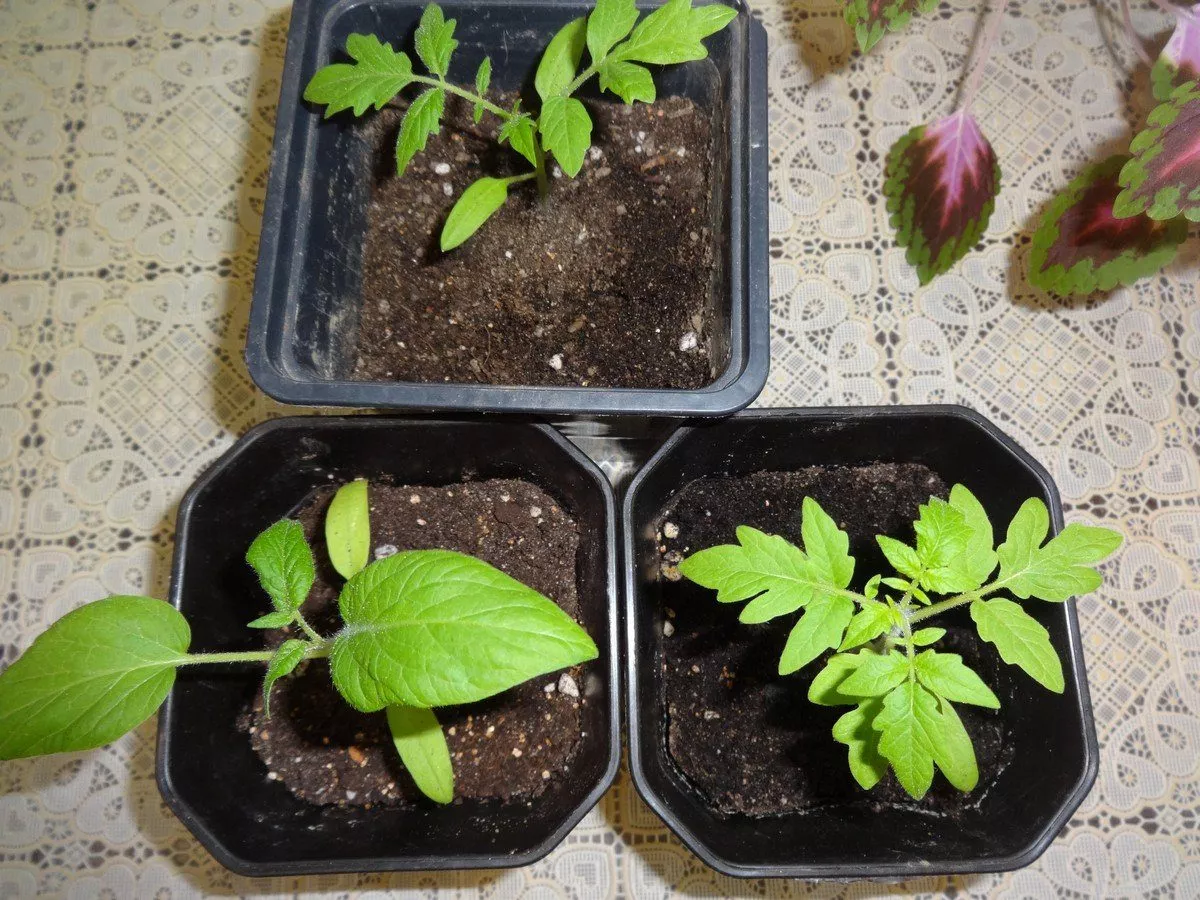
Some of the tomato seedlings are growing on the kitchen windowsill. They stretch toward the light, and to prevent them from becoming crooked, I rotate the cups every day so they face the light the other way. The tomatoes don't stretch or bend.
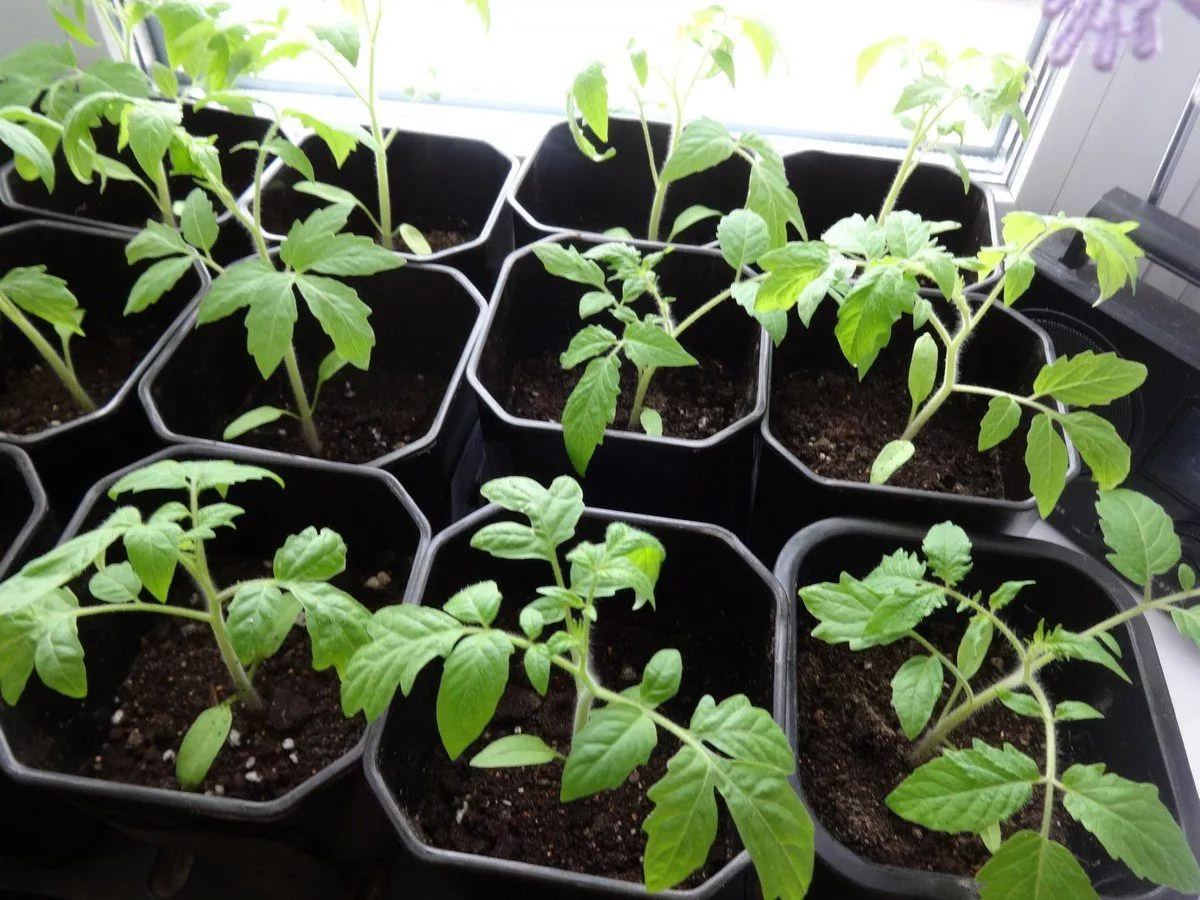
The rest of the seedlings are on shelves with lighting.
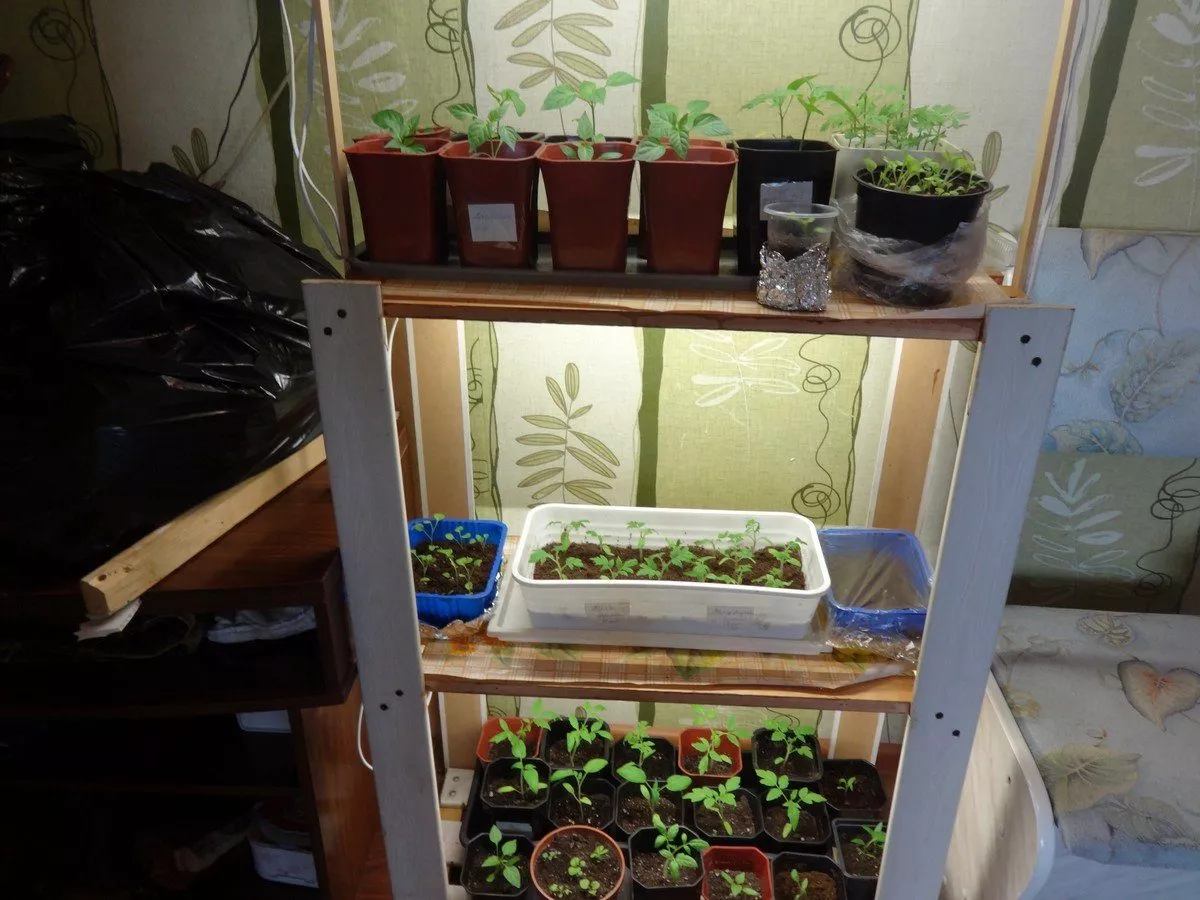
From time to time I change the places of the boxes with seedlings, and I move the seedlings from the shelf to the window so that they also get their share of sunlight.
After transplanting, all the tomatoes are developing normally. In the next few days, I plan to add some fresh soil to the pots and water the seedlings.