

The pepper seedlings have grown and become cramped in the cup, so it’s time to transplant each pepper into an individual cup.
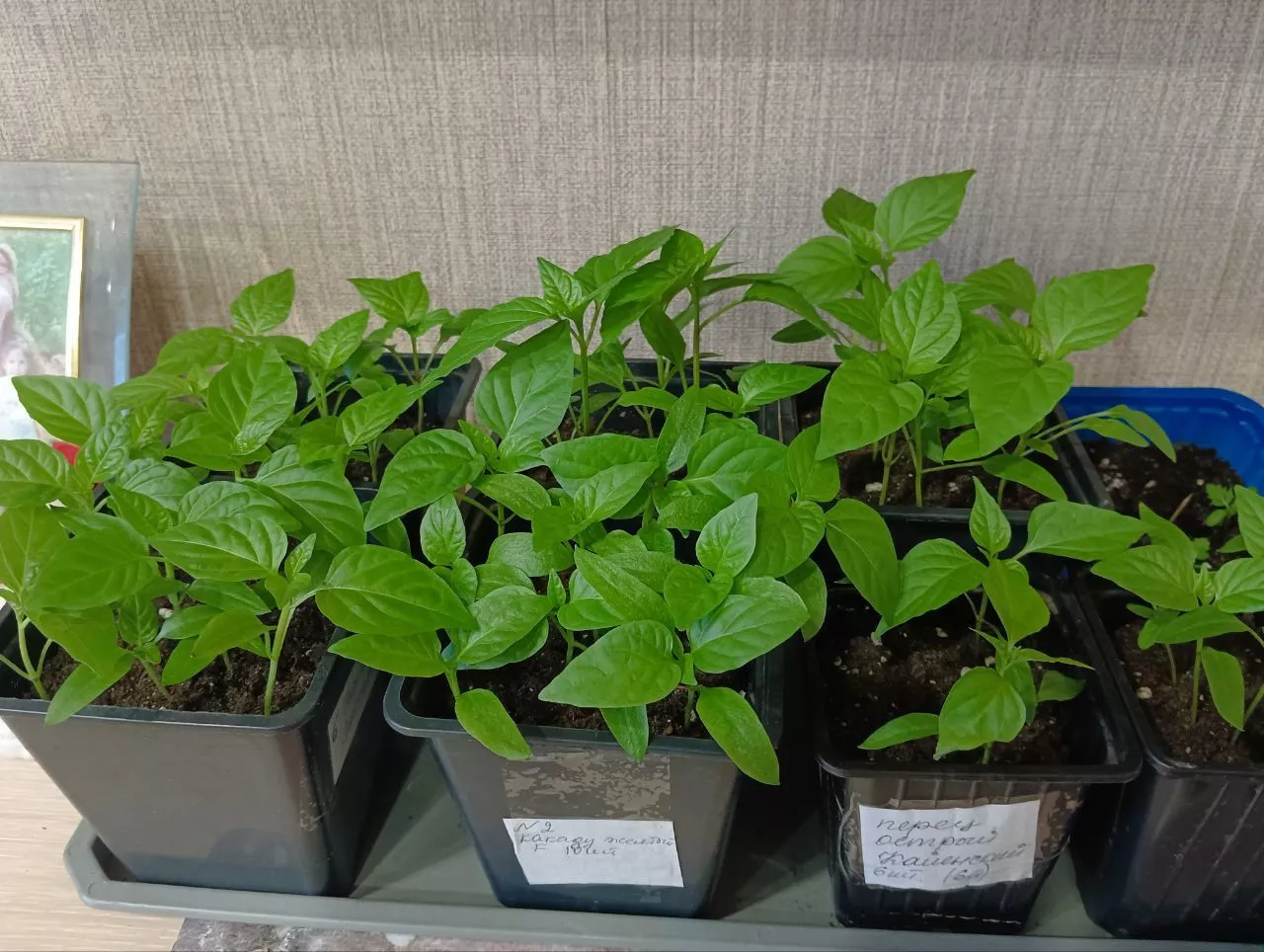
After I planted the seedlings in the greenhouse last spring, I rinsed the soil off the containers in water from the watering can. I put them in a bag and took them to the shed. When it was time to transplant the seedlings, we brought the cups and trays home. At home, I washed everything in warm water and laundry soap and soaked it in a solution of potassium permanganate.
And now it's time to transplant the seedlings. The seedlings are mostly uniform, the peppers sprouted at the same time, with the exception of the hybrid pepper, Red Kakadu, which sprouted later than the others. In the cup, some peppers are tall, while others are very small. I chose the largest peppers with good roots for transplanting.
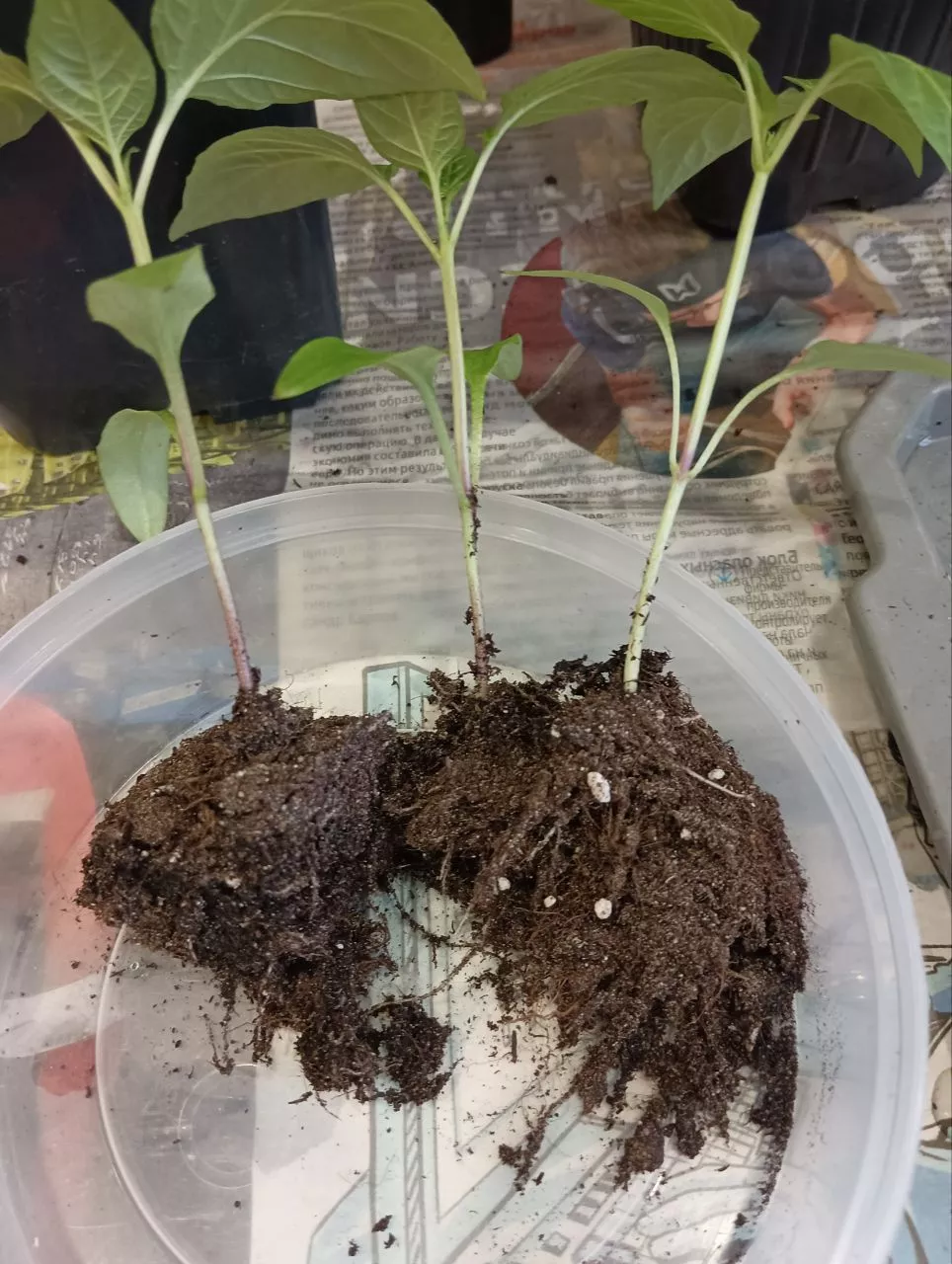
I didn't throw out the weak ones; I wanted to experiment. I decided to water them with mycorrhiza. It's another super product touted by gardening bloggers and vegetable gardeners. Their weak, frail roots quickly transform into powerful ones, soil fertility improves, and the seedlings grow strong. Cucumbers grow in literally a month. I'm not a big believer in these magical transformations; every plant has its own growing season, but I'm not risking anything by experimenting a little.
Garden stores have been pushing a lot of things on summer residents lately.
Without green manure, vegetables simply won't grow, so we buy and sow white mustard or phacelia, and do extra work by incorporating the mown green manure into the soil.
Without perlite and vermiculite, you can't grow seedlings; without mustard cake, there won't be a carrot or onion harvest. And then there are all sorts of medicinal products advertised for fertilizing houseplants, vegetables, and flowers, and now here's mycorrhiza, a root feeder with mycelium and fungal spores. I've gotten distracted.
To transplant peppers, I fill the cups with soil and make a hole in the center. I water them with a solution of potassium permanganate or phytosporin.
I have this little wooden honey tool called a spindle. It's great for making little holes in cups and grooves in boxes. You can also use a spoon or spatula to make the holes.
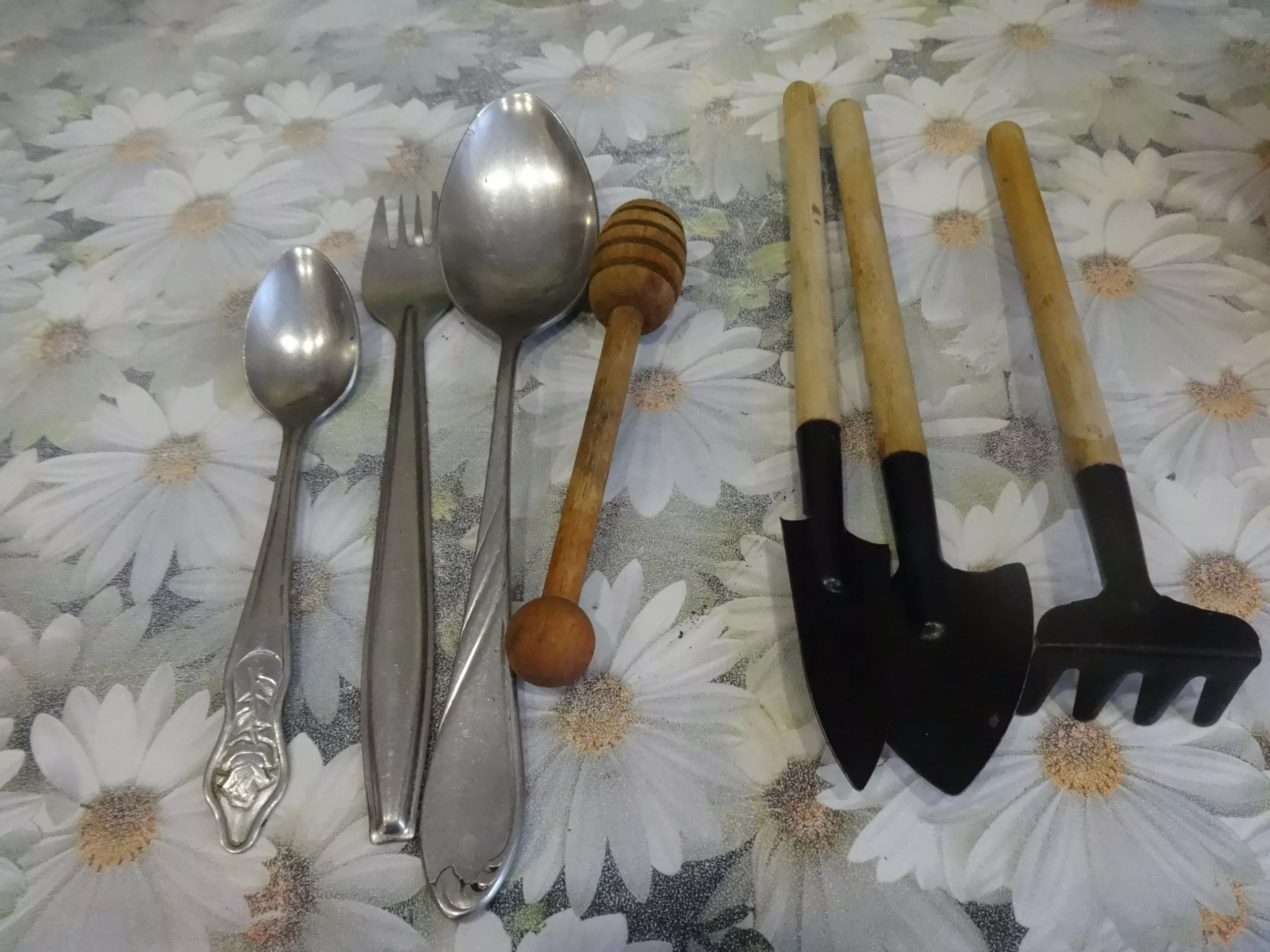
I recently purchased this seedling set: two small shovels and a rake. It's very convenient for digging up small seedlings, and the rake is used to loosen the spaces between rows of flower seedlings.
I plant pepper seedlings deep down to the cotyledon leaves.
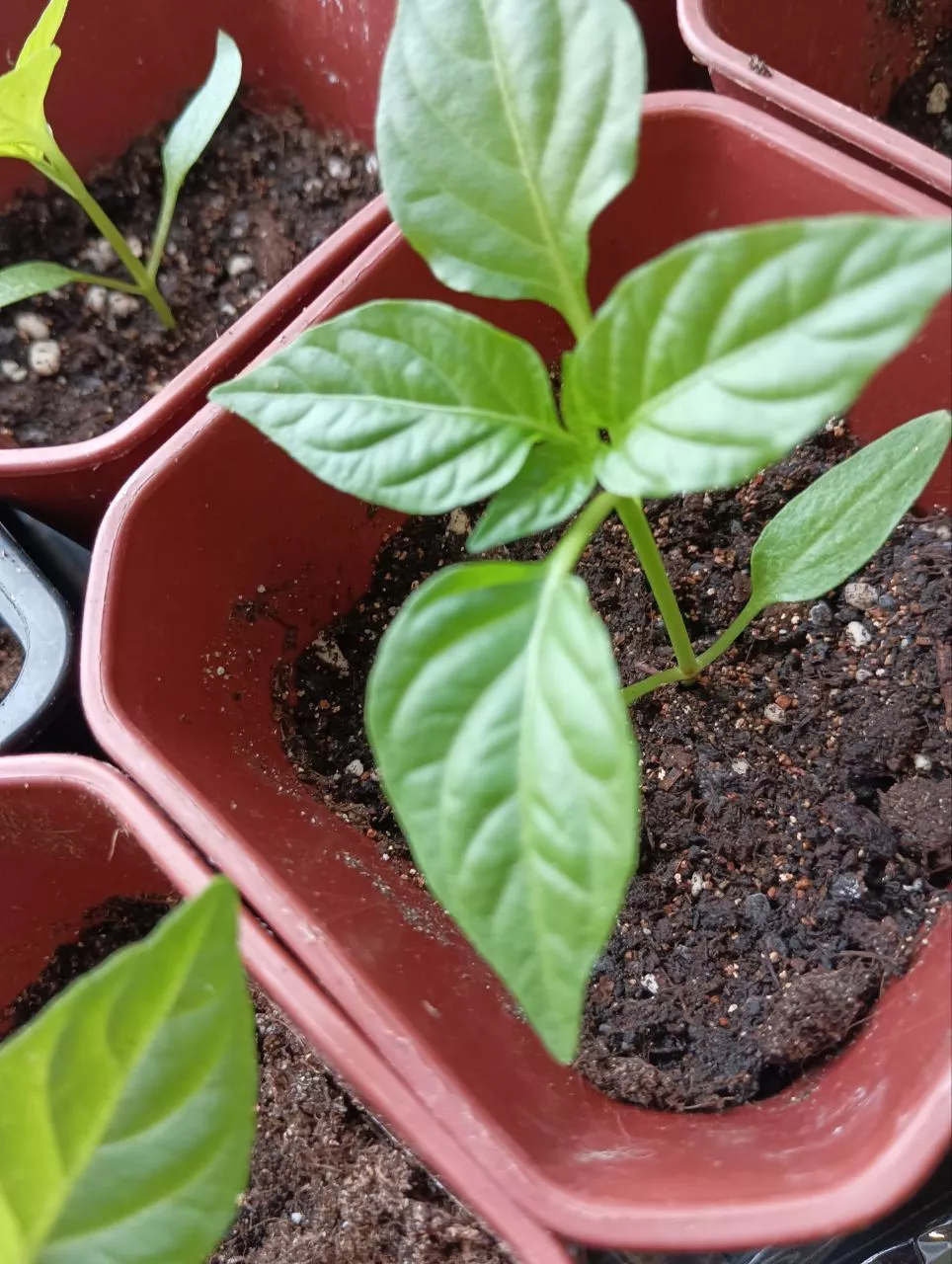
I read somewhere that it's best not to bury pepper seedlings too deeply, but to plant them at the same level they were growing at initially. This is because the stem, which grew above ground and is then buried, can rot and the plant will die. But I always bury the stem down to the cotyledons and have never encountered any rot.
It's also believed that planting too deep slows the pepper's growth. Notice how, after transplanting into a separate container, the pepper grows by leaps and bounds, quickly developing true leaves, which become wider, and the stem thickens.
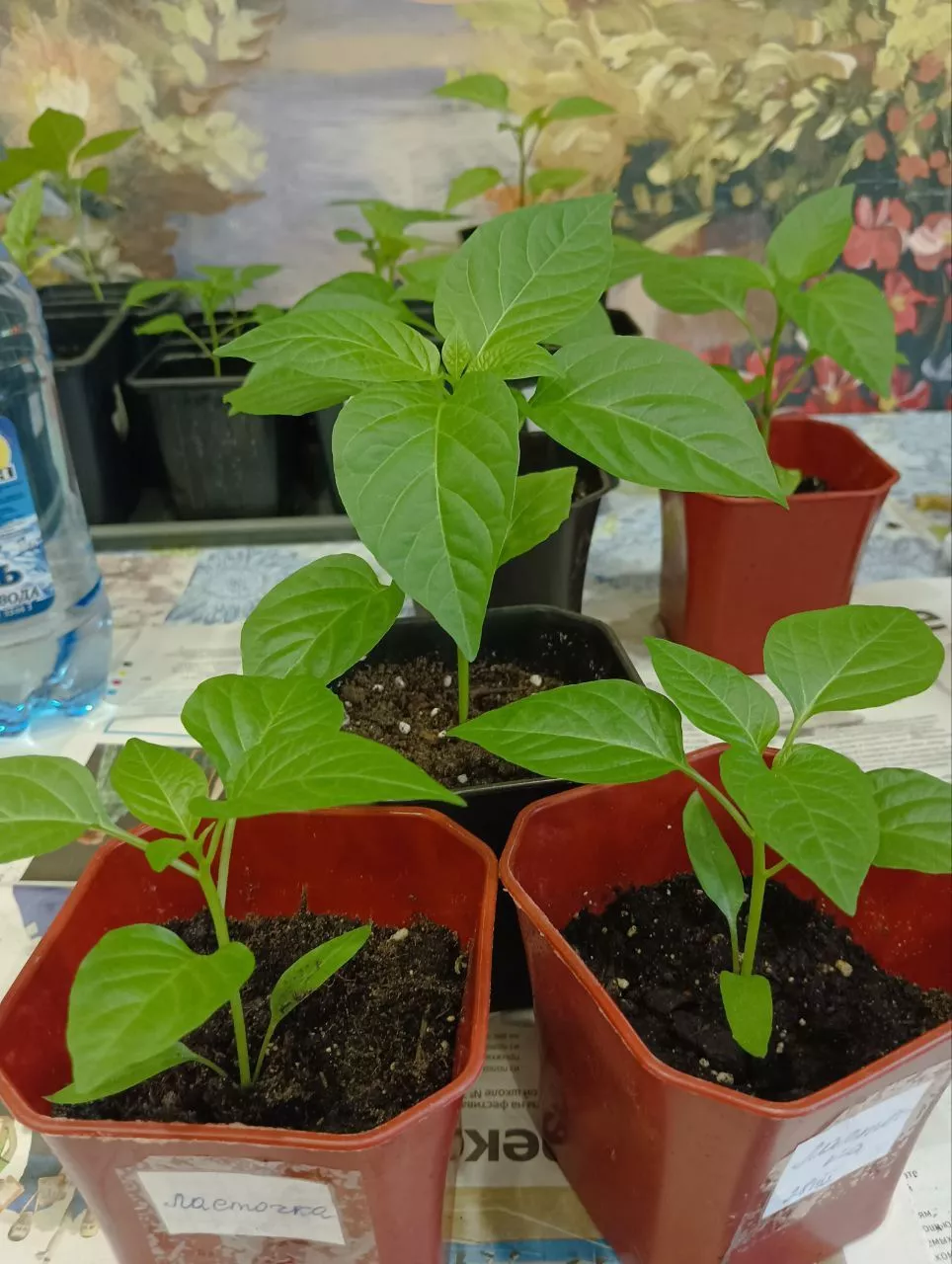
I don’t fill the cups with soil to the top, but as the pepper grows, I add soil to the cup.
I don't fertilize the seedlings; I think the soil has plenty of nutrients. Of course, if the soil isn't fertilized, then they need some fertilizer. But if the seedlings are weak, the stems are thin, and the leaves are small, then they definitely need some fertilizer.
My transplanted peppers will grow under a phytolamp for a while, then I will move them to the windowsill.
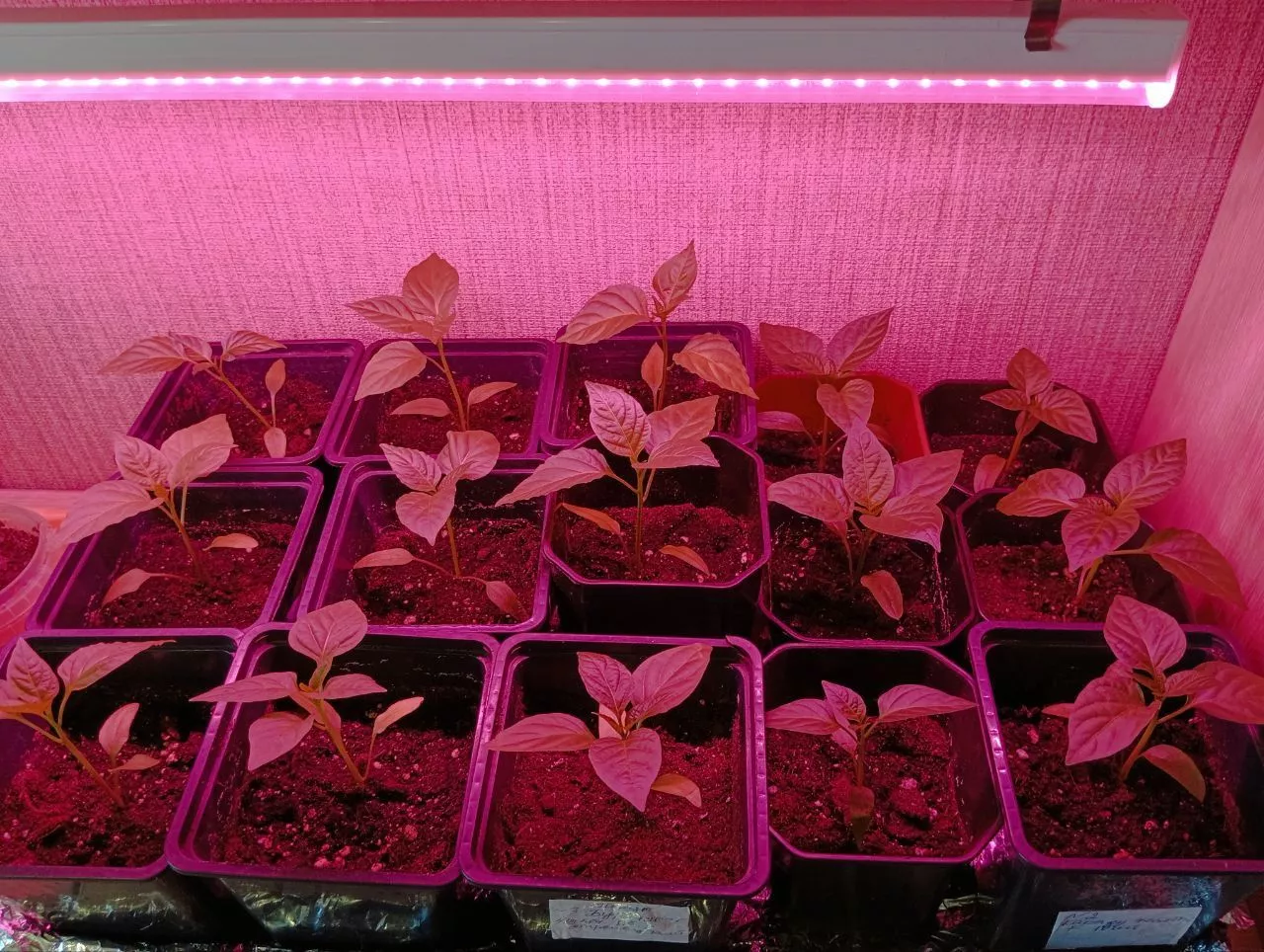
This is what the pepper seedlings look like two days after transplanting. The leaves haven't wilted; they're still standing tall like soldiers.
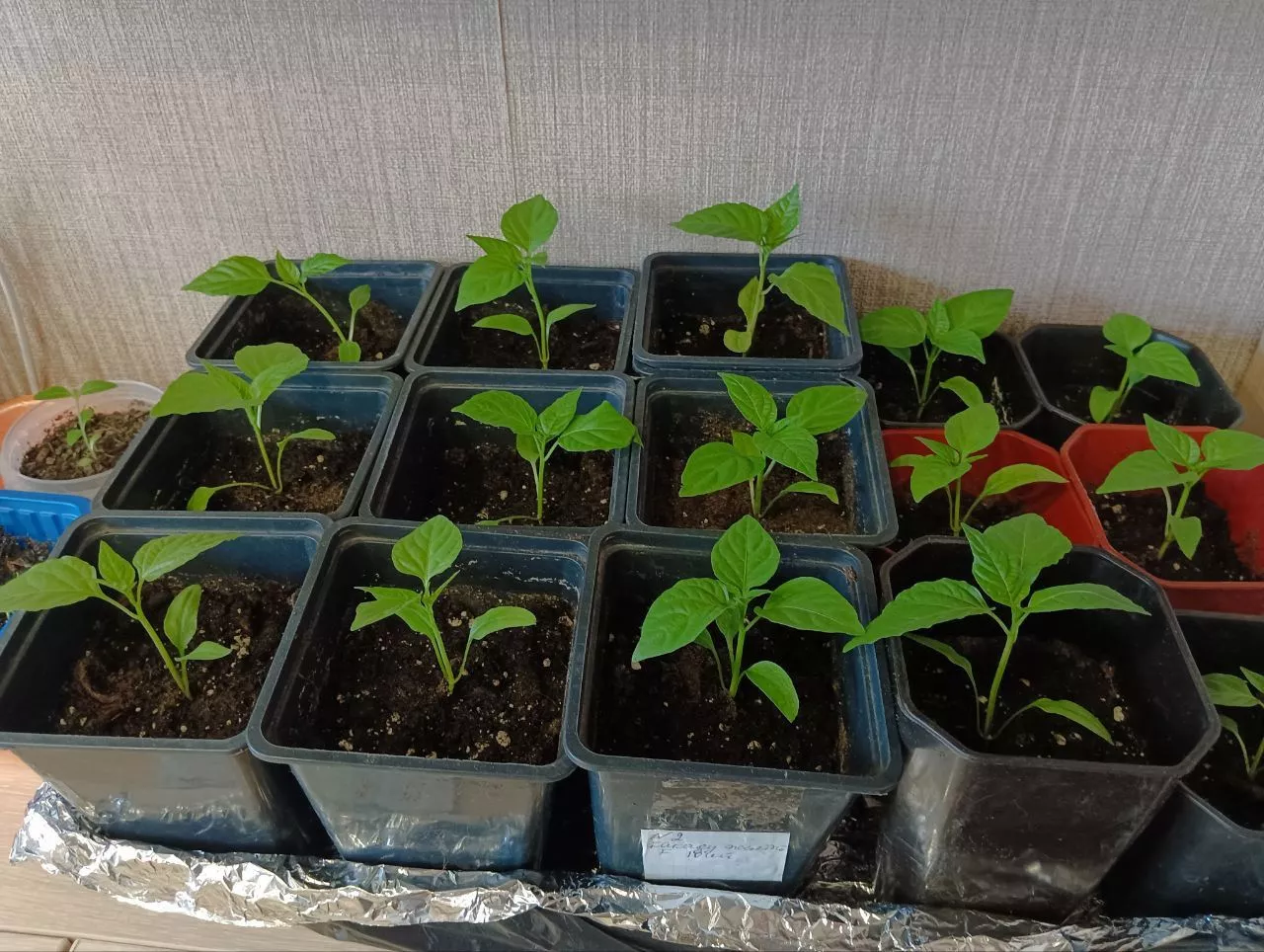
I simply transplant the peppers from the common container into separate, more spacious cups, without picking them, although I always say that I have pricked out the seedlings.
When transplanting seedlings, a portion of the central root is cut off or torn off. This procedure promotes stronger root growth, but it also temporarily halts the seedling's growth, as the plant experiences stress.
Even transplanting can be stressful for seedlings, so it's recommended to sow peppers one or two seeds at a time in a separate pot. Then, leave only one plant.
I like to grow peppers from seedlings; the seedlings are always strong, don't stretch out, even if you're late with the transplant, adapt well, and don't get sick.
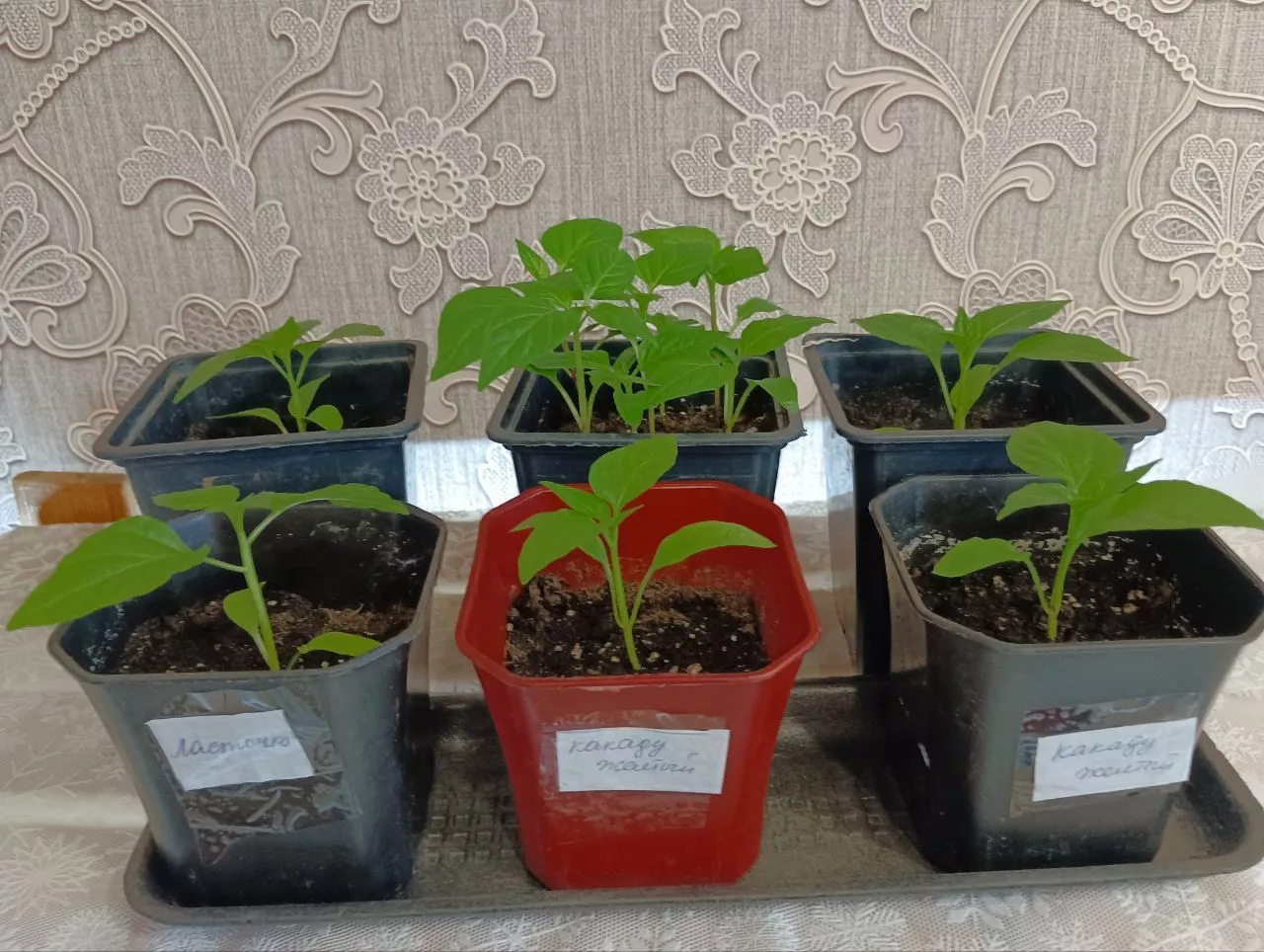
And these peppers, Bogatyr and Red Kakadu. I haven't transplanted them yet; they sprouted later. Some have four leaves, and some have two.
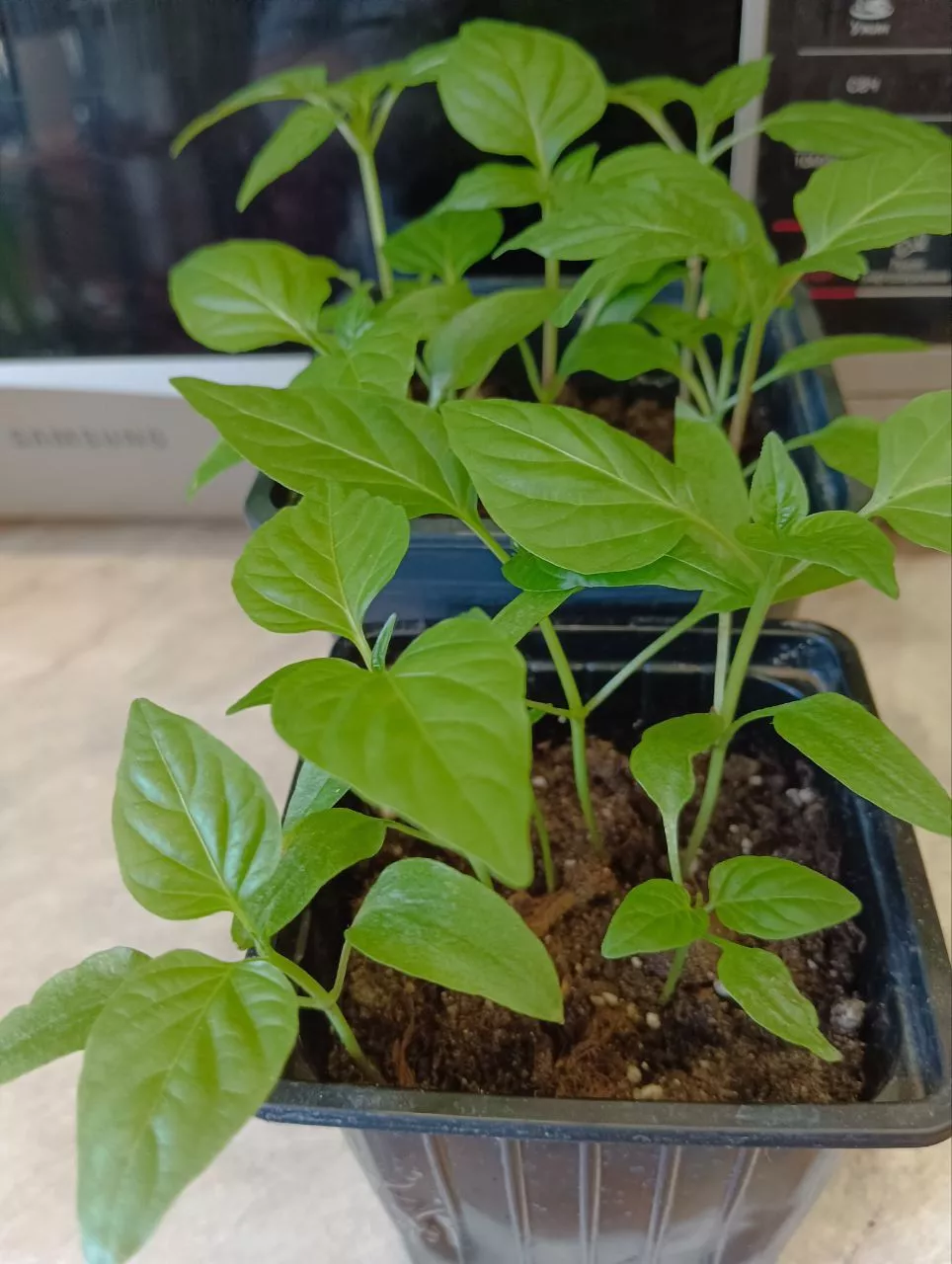
I think it's all about the seeds; they weren't very good. I'll replant the strongest ones; I'm just out of potting soil.
How do you grow peppers? Do you transplant them by cutting off part of the root, or do you simply transplant the seedlings into separate, more spacious cups, or do you grow one pepper per cup?