

You've probably all seen and heard ads for Fokin's flat cutters. I, too, once bought one after hearing rave reviews.
But first, I bought a fake one at a regular gardening store. It was painted lilac and had no sharpening. I tried using it, but it didn't work.
Then they gave me a set of genuine Fokin flat cutters (large and small). They had a more convenient shape and were sharper. The base, which attaches to the handle, has two holes that allow you to adjust the angle most comfortable for working.
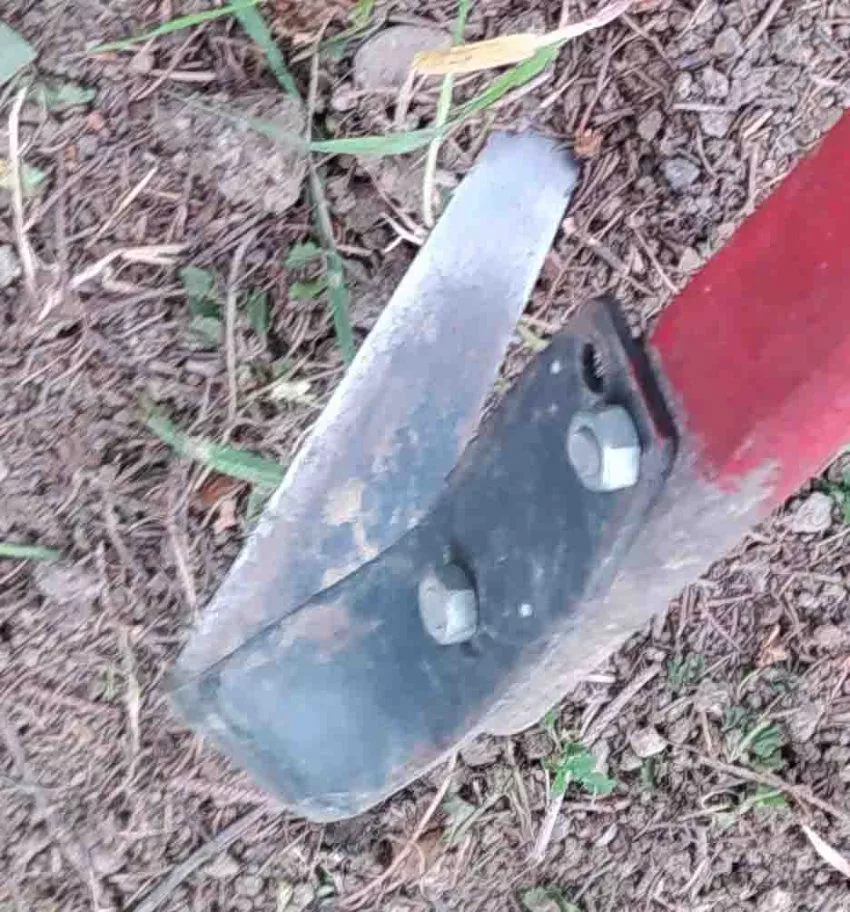
The handle isn't round, but flat, making it more comfortable to hold while working. But at that point, I only tried it on already-dug, loose soil. On such beds, another tool—a hand cultivator and a small hoe—was sufficient. But in our virgin soil, the soil is compacted and rocky. Overall, it seemed better than the first, but I couldn't use it to its full potential. A hoe and a shovel proved more useful.
For several years, the flat-cutter sat idle in the shed. But this season, I decided to return to it again. And suddenly, I realized its merits. It turned out that it works well on overgrown grass. In many places in our garden, the soil is heavy and rocky.
This metal "G" is not designed for brute force, but it does a great job of cutting the base of grass when used in a glancing motion, pushing it a couple of millimeters into the ground.
Below I will show you how to use this gardening tool and the results of soil cultivation in the most neglected areas.
Densely overgrown irises and daisies. They'd been forgotten; the grass nearby had been mown, and weeds had tangled them up. The soil is a kind of loam (I don't know the proper name); during prolonged rains, this soil gets soggy, sticking to shoes, slippery, and sinking, and in dry weather, it hardens and becomes very hard.
This is what the grass looked like when I first decided to clear the flowers. There was couch grass and dandelions:
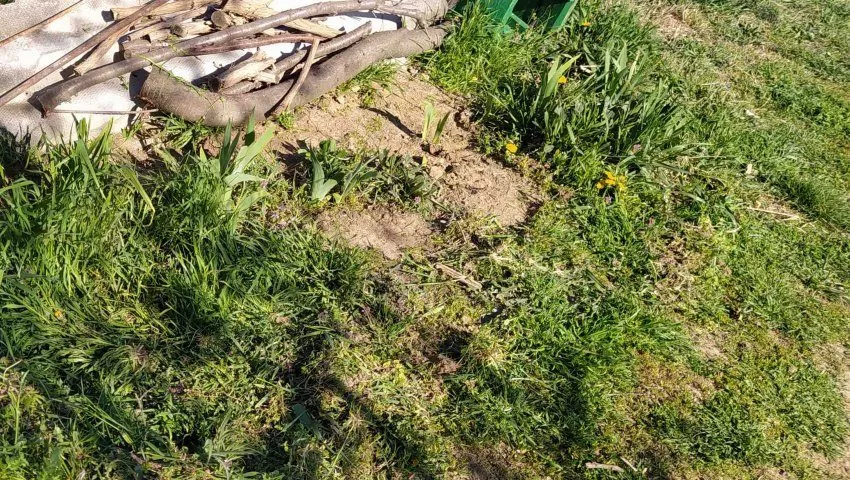
I walked a bit through the grass with a flat cutter, then realized that I forgot to take a photo.
So, a minute of work and the grass around the flowers is already cleared!
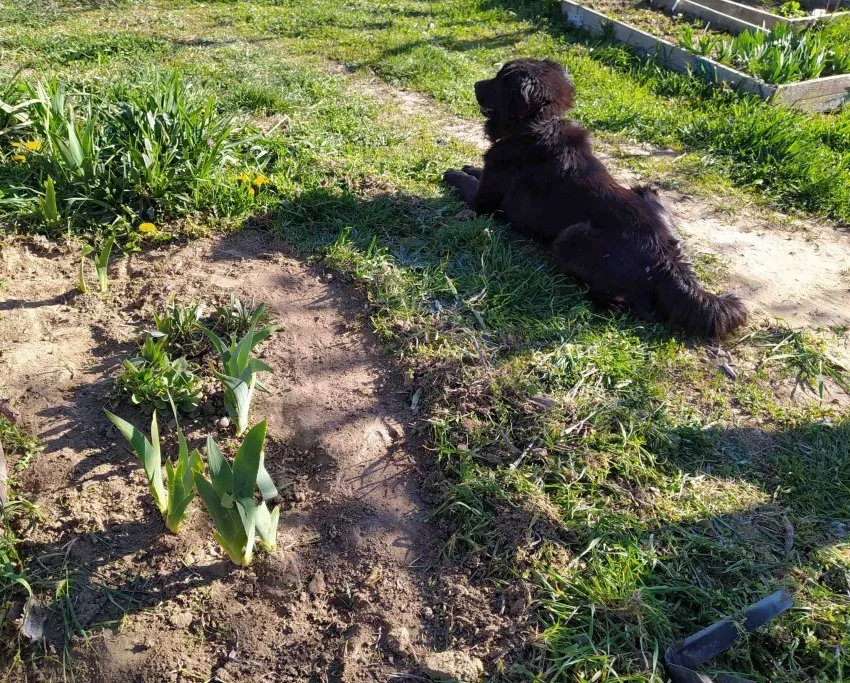
A flat cutter is lighter than a hoe, requiring less effort to swing. Its shape also allows it to perform multiple functions. A hoe is ideal for hilling and removing weeds in previously cultivated soil.
Moreover, thanks to its special treatment, it doesn't require frequent sharpening; the more you work, the sharper it becomes. This is achieved by the hardened top of the blade, while the metal underneath is softer. When it rubs against the ground, the metal on the bottom wears down, sharpening the cutting edge. For now, the factory sharpening is sufficient for me, but if you need to, you can sharpen it yourself.
Now about the working methods:
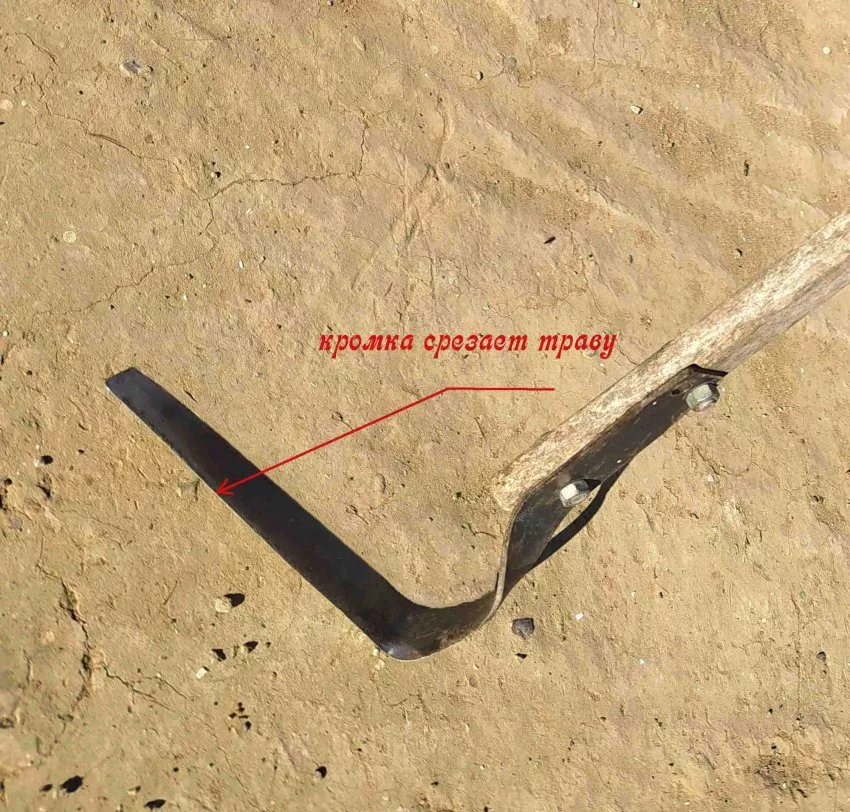
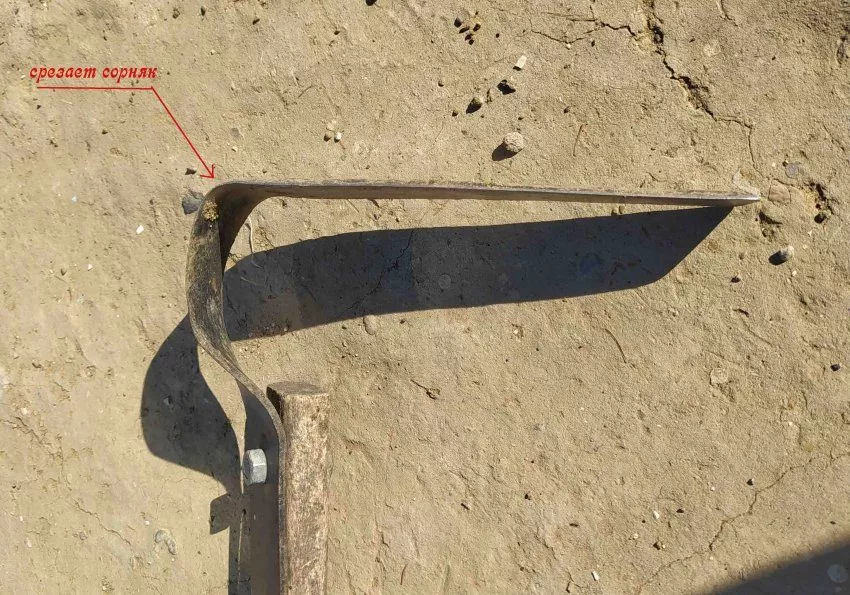
- This is a cut (cutting the grass close to the ground) – simply move it along the ground, holding the blade at a slight angle. Hence the name, meaning it cuts with the entire surface.

- Cutting off the growing points of weeds a few millimeters below the topsoil. If we cut the plant above ground, it will recover within a couple of days and produce new shoots. If we cut it just below ground level, just below the growing point, only the root, without buds, will remain in the soil, which will die. This means we've already cleared the area of weeds by 80%.
I cut with the other part of the flat cutter, this one: Since the curved part is located just under the shaft, it doesn't require much effort to operate. At the same time, the top layer of soil is loosened.
This is how you place the tool, slightly deepening it into the ground, and move it with pressure on the handle.
- Deep loosening, digging up complex roots, such as fruit shoots, and removing stones.
 The fact that this tool can easily maneuver around rocks while still loosening the soil is especially important to me, as this is a problem on our property. There are a lot of rocks, and they're so evenly distributed in the soil, that when you try to dig with a shovel, the blade inevitably hits a few rocks and slides over them, preventing you from digging deeper. When you try to move the shovel, you bump into adjacent rocks. The same thing happens when using a hoe—the wide blade bounces off hidden boulders.
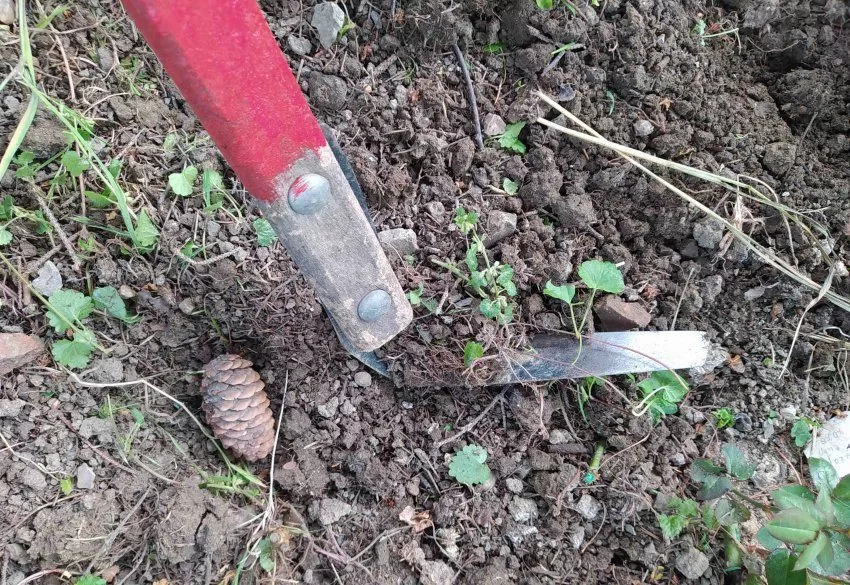
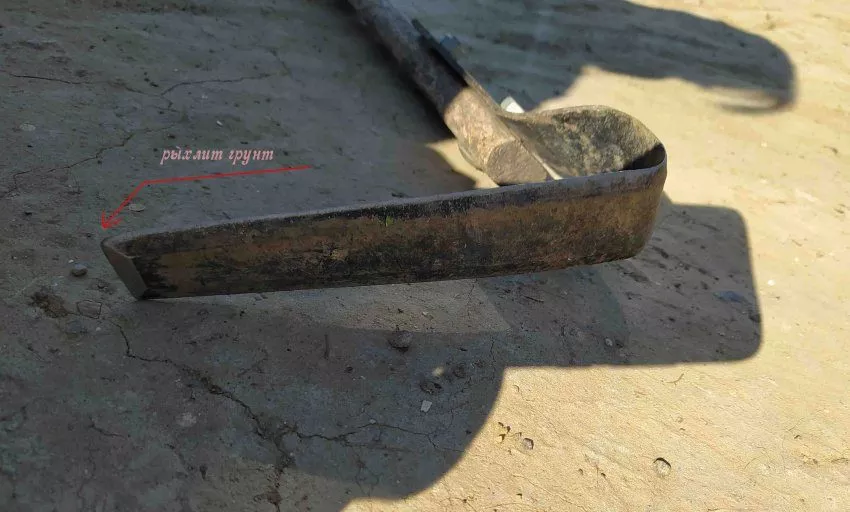
Here's an example: I tilled a bed of strawberries and raspberries, only going over the surface to remove weeds and loosen the top layer of soil. I only removed any stones that were interfering with the process, and only from the surface.
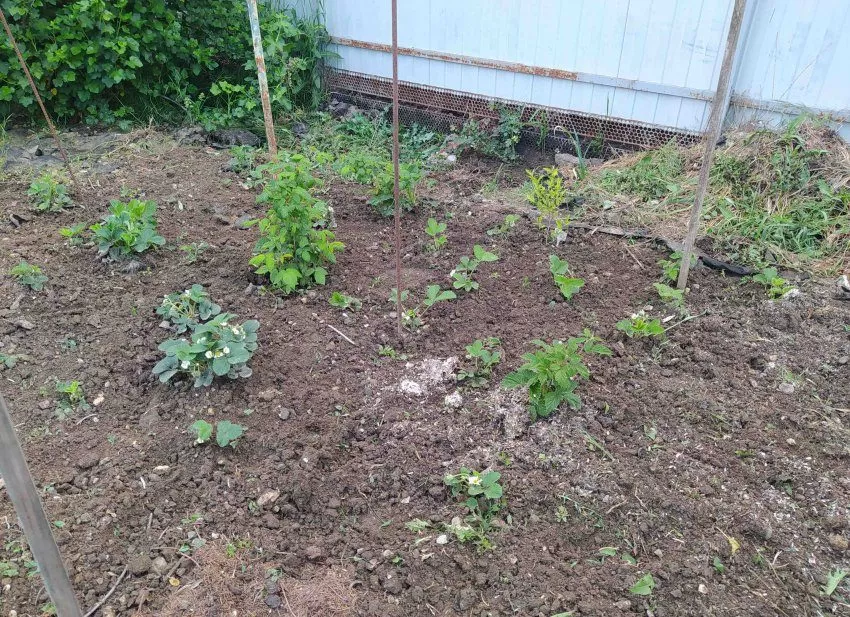
Look at the harvest:
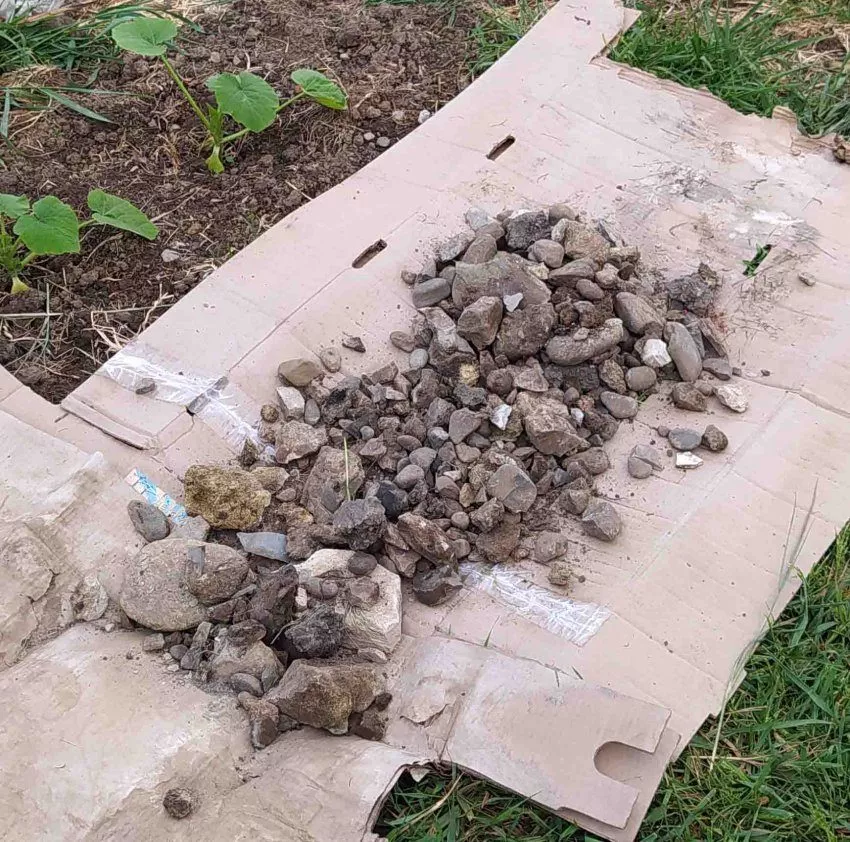
A bucket full of cobblestones was collected
This is where the flat cutter comes to the rescue again. The narrow, strong tip of the blade will spread and lift any stones. It will fit under any root.
The main condition in this case is to point the tip downwards and work with it like a hoe, swinging and thrusting it into the ground.
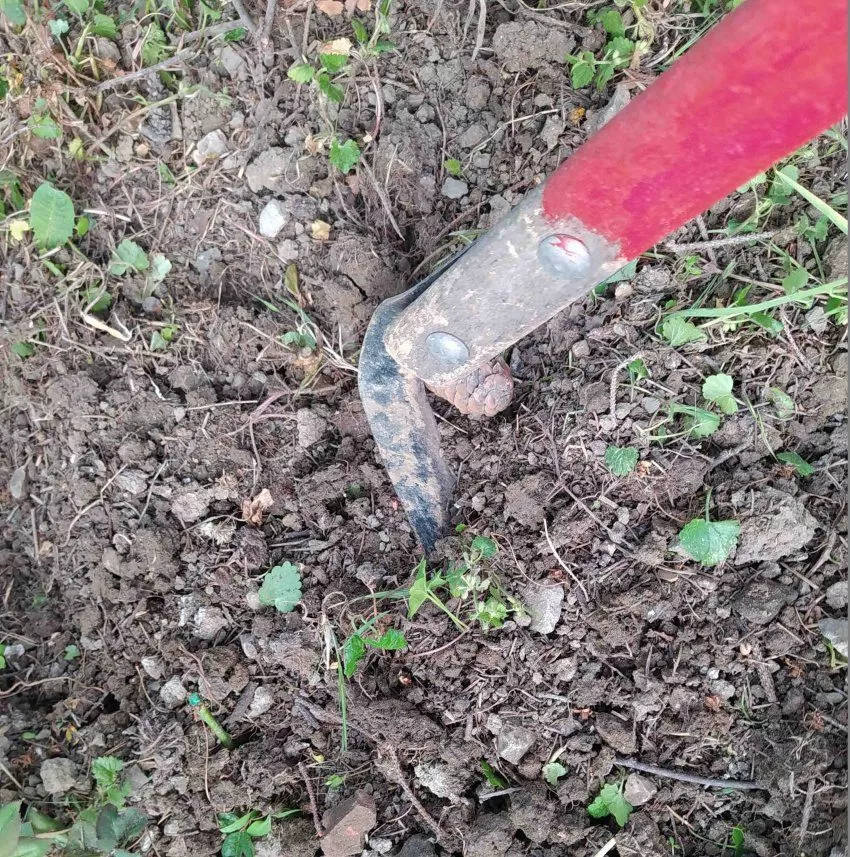
For example, here I freed a cherry tree root from hard, dry soil to remove it at the base:
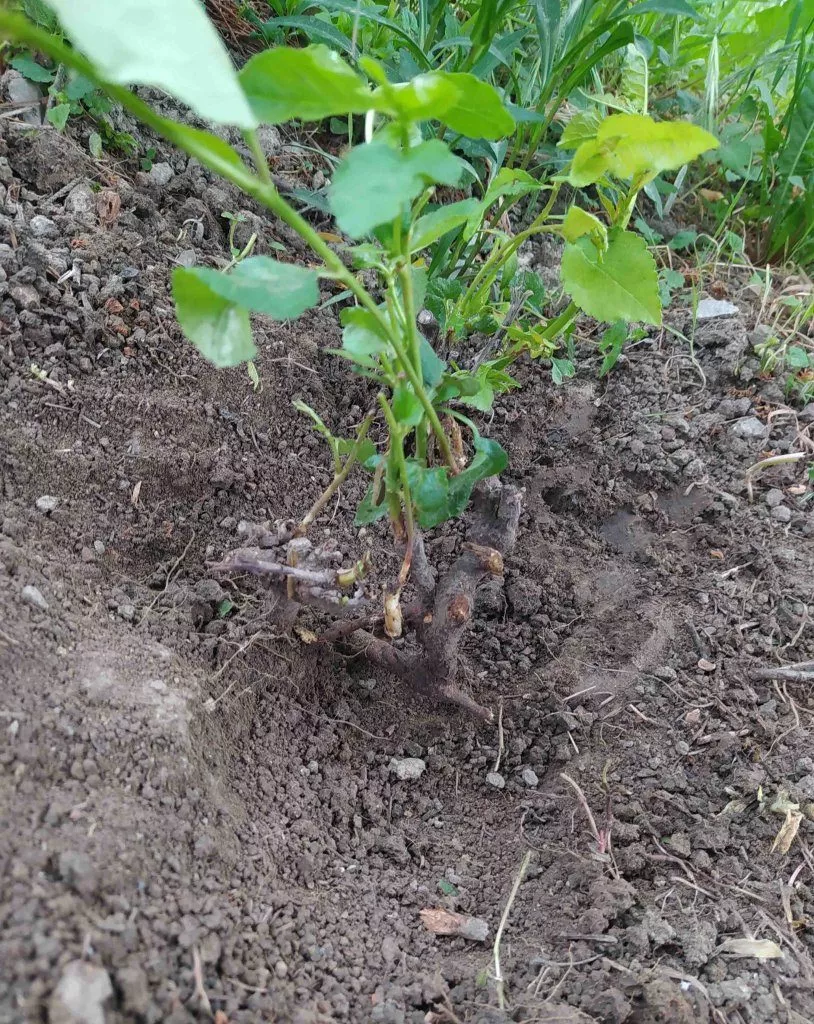
I'll show you the results of using this tool on the plot in front of the house. The soil here is better quality, but still rocky and dry. It hasn't been tilled or turned for several years, only the grass has been mown and the cherry and plum trees regularly trimmed.
Was:
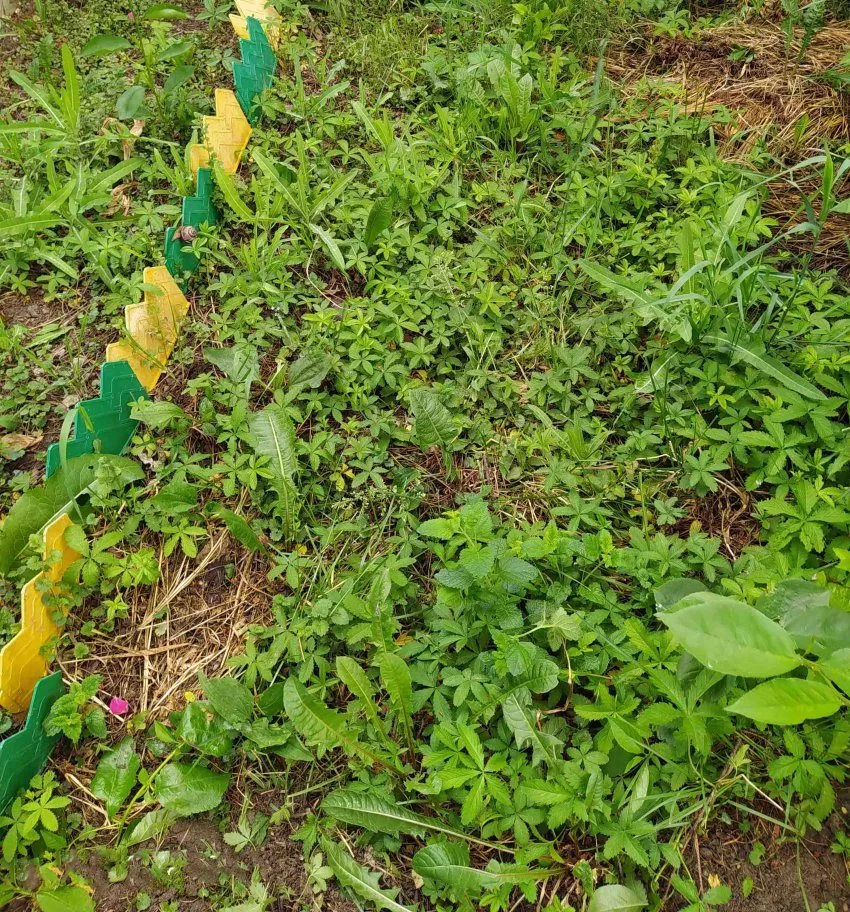
It became:
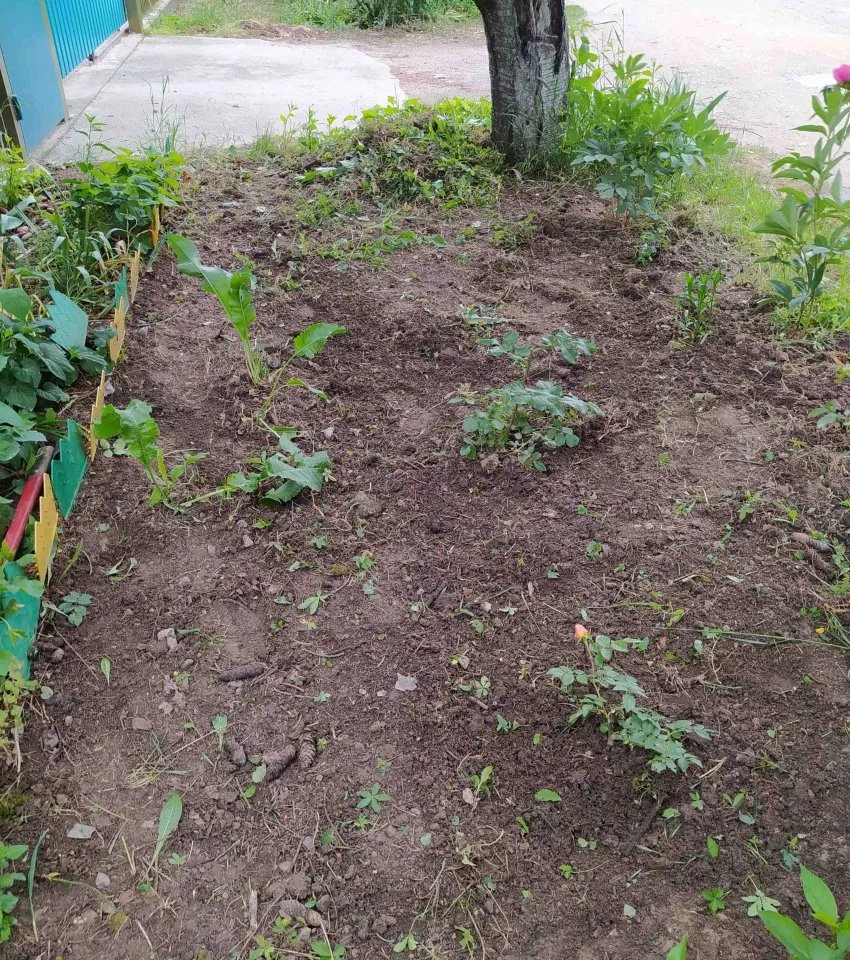
Here too, along an overgrown path, Fokin's flat cutter walked:
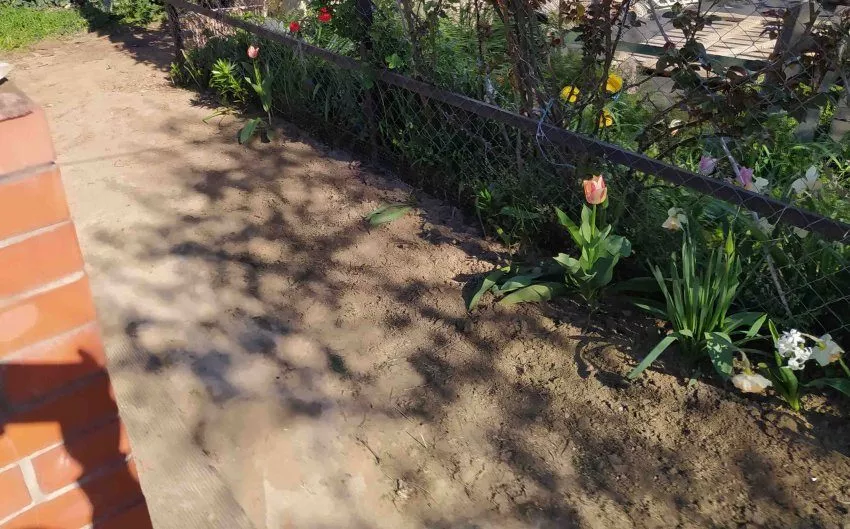
The advantage of the subsoil cutter in this case is that there was no need to loosen the soil. The path is compact and level; just cutting off a layer of turf was enough.
So, after several years of storage, my flat cutter is back in action. Interestingly, when reading about the advantages of this tool, I mostly found positive reviews from gardeners about using it on loose soil. But I found it more convenient for cultivating grassy areas and heavy, rocky soil.
To get started with Fokin's flat cutter, you first need to assemble it correctly! Check out Fokin's website for instructions on how to do this.
Hello, I checked, and yes, it turns out my flat saw is screwed on the wrong way. But interestingly, the instructions specified this exact mounting method. Maybe mine wasn't the original one back then... but in any case, it gets the job done, whereas the first purple one didn't work at all. Yesterday, I used this tool again to quickly tidy up the yard.
And since I'm already looking for the right mount, I'll copy it here. Maybe it'll be useful to someone else. And if anything else is wrong, please let me know so I can better understand what else might be wrong.
1. For right-handed or left-handed people, place the flat cutter on the handle with the sharp part and point its tip to the right (for right-handed people) or to the left (for left-handed people), depending on which hand is your dominant hand.
2. For young or old people - fastening depending on the person’s physical capabilities.
Here you need to take into account the fact that the longer the blade, the more effort you need to apply during work.
Option I: Try the standard mount.
Place the cutting and screw the flat cutter on top of it.
If this is difficult for you to work, and the flat cutter gets stuck in the ground and is difficult to pull out.
Option II: It is necessary to reduce the length of the blade.
To do this, first place the flat cutter and then place the handle on top of it, thus making the blade shorter.
3. For tall or short workers – fastening depending on the worker’s height.
The flat cutter blade always has three mounting holes, which makes it possible to change the angle of attachment to the handle.
For a person of short stature, the flat cutter is attached at an angle.
For a man of average height (175–185 cm), the blade is attached almost perpendicular to the handle.