

Tansy is called by many names—field or wild rowan, nine-leaved tansy, forty-brother, and even yarrow (which is incorrect). Frankly, I was surprised by this fact, especially regarding the last name. After all, they are completely different plants!
This confusion can lead to the most unpredictable side effects, so I decided to tell everyone what tansy really is. Incidentally, I grow it at the end of my garden. It's a very useful herb in many ways.
What does tansy look like?
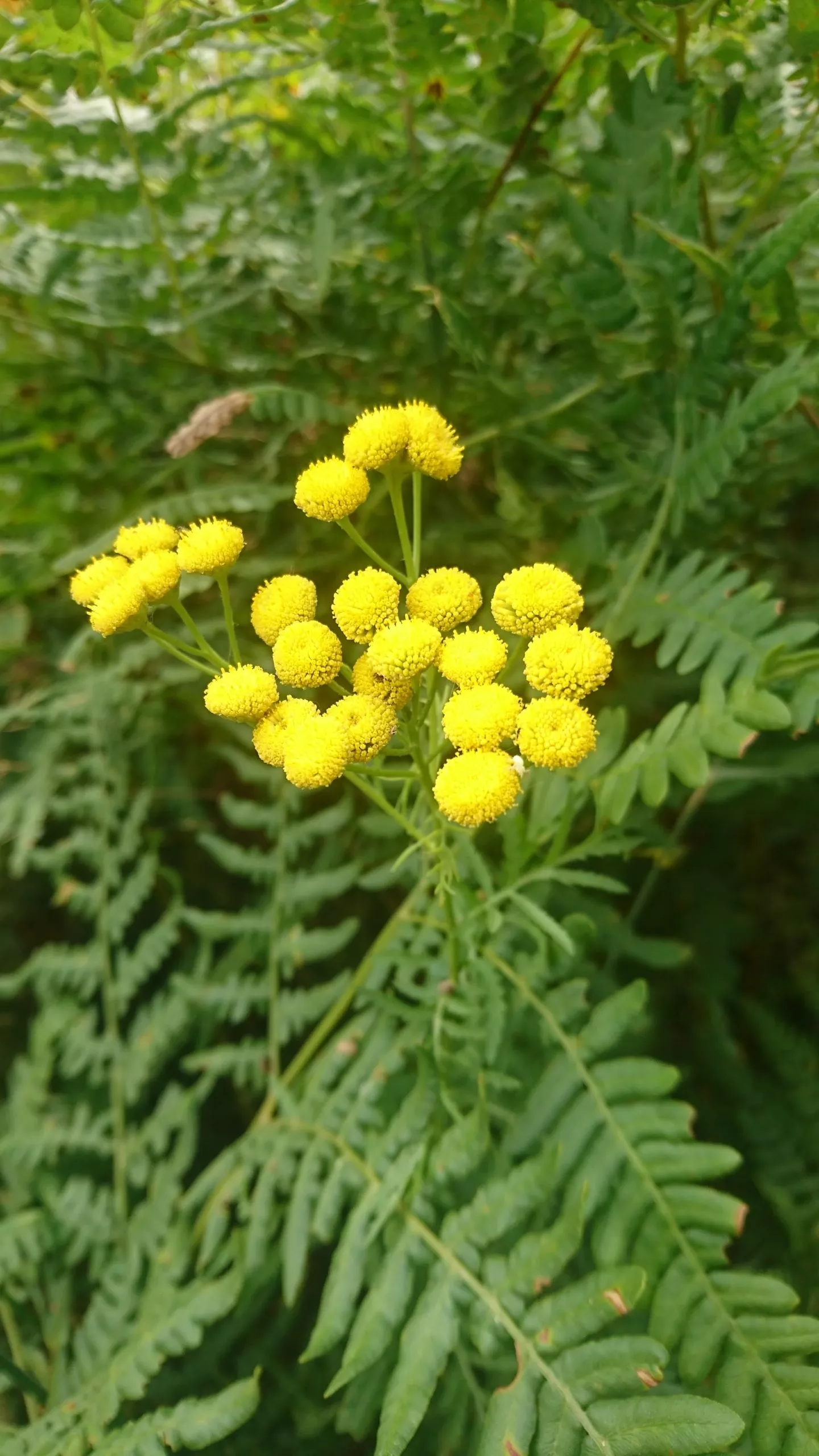 This is a turf-like plant that grows from 50 to 150 cm, and even taller under more favorable conditions. However, it's best to harvest from a young plant.
Brief description:
- the root is very long (I didn’t measure it), branches a lot and creeps straight;
- the stem is straight, but flexible, branches well in the upper tiers, can be bare or pubescent;
- foliage - oblong, reminiscent of an elongated egg, always has from 5 to 12 pairs of small leaflets (they are serrated, pointed and lanceolate-oblong);
- the color of the leaves is dark green, on the lower tiers they are petiolate, and on the upper ones they are sessile;
- the flowers are beautiful yellow, they are collected in one basket, which forms a corymbose inflorescence;
- the fruits are oblong and pentagonal, they are collected no earlier than August;
- Flowering occurs from July to September.
Flowers are pollinated by squeakers (a type of mosquito).
Where is the herb used?
It turns out that tansy's range of uses is so wide-ranging that even I was surprised (and I'm used to the versatility of many herbs). In ancient Egypt, Greece, and Persia, tansy was used to make a potion for embalming corpses, and a green dye was extracted from its roots.
Tansy can repel pests and combat certain crop diseases, especially tobacco mosaic. The herb is even fed to livestock.
Tansy for cooks
This herb has been used to make pancakes for centuries (I haven't tried it, but I prefer our traditional ones). This tradition is most closely observed in England. Today, in many countries, including Russia, tansy is used to extract essential oil, which is used in cooking and pharmaceuticals.
Young leaves are used to make salads (I've tried it - it's delicious, but rather specific), preserves, added to baked goods, etc. By the way, the herb can replace the flavor of nutmeg and ginger.
In the North of our country, tansy leaves are used to coat the meat of deer and other animals because the grass prevents the meat from decomposing (it’s no wonder that corpses were embalmed with tansy).
Tansy in pharmaceuticals
Even modern medicine recognizes the benefits of tansy. It is used to produce medications such as:
- against worms (especially pinworms and roundworms);
- to improve appetite;
- for the digestive tract;
- against liver diseases;
- from bronchial asthma;
- for rheumatism;
- as a choleretic.
For their preparations, scientists use only flowers harvested at the very beginning of flowering, meaning they are very young. The length of the flower stalk from the top of the flower head should not exceed 3-4 cm.
Tansy for herbalists
Well, the uses for tansy are simply limitless! My family and I haven't used it for every indication, but we have used it for the following problems:
- bruises;
- stomach ulcer;
- indigestion;
- boils;
- dandruff;
- purulent wound;
- menstrual cycle disorders.
In general, herbalists also recommend drinking infusions and decoctions in the following cases:
- cholecystitis and hepatitis;
- enterocolitis and angiocholitis;
- giardiasis;
- anacid gastritis;
- gout and rheumatism;
- flatulence and dysentery;
- helminthiasis;
- migraine;
- hysteria;
- epilepsy;
- urolithiasis;
- swelling;
- malaria;
- pyelonephritis;
- jaundice;
- scabies.
Tansy for agriculture
The herb has a slightly camphor-like aroma, making it widely used in agriculture. Infusions and decoctions are made from the herb, and it's also added to compost heaps. I base my recommendations on my own experience—I always add it to the compost pit and then use it as a fertilizer for trees, shrubs, and other crops.
Colorado potato beetles, moths, aphids, flies, flea beetles, cabbage butterflies, and caterpillars are afraid of tansy.
In Russia's northern regions, tansy was fed to sheep, ground squirrels, deer, marmots, and red deer. These animals readily eat it. In Russia, it can also be added to cows' food, but with extreme caution, as large doses release toxic substances that can be life-threatening.
Interesting facts
Tansy comes in many varieties, but in our country, common tansy is the most common. Incidentally, it's used in pharmaceuticals and folk medicine. And I grow only this variety. In many countries, it's used as a spice and aromatic plant because of its attractive aroma and flavor.
Another popular variety is tansy (Tanacetum balsamina). It was used in ancient times for embalming. Statistics show that tansy is not currently popular, especially in pharmaceuticals, cooking, and folk medicine. It has too distinctive a flavor.
Incidentally, in ancient times, people hung bunches of the herb at the entrance to their homes. It was believed to ward off evil spirits. In reality, it only warded off insects.
To summarize, I want to say that tansy is medicinal, and much is known about its benefits. Furthermore, it is actively used by gardeners and horticulturists for various purposes. Personally, I will never give up growing this simple, yet wonderful herb like tansy. It helps me in many ways!