

Very beautiful daisies
They grow in the flower beds at the dacha,
Pyrethrums in red shirts
In June they bloom so profusely,
On a long green stalk
They dance to the song of the bees,
Dressed like nesting dolls
These flowers are dear to the heart.
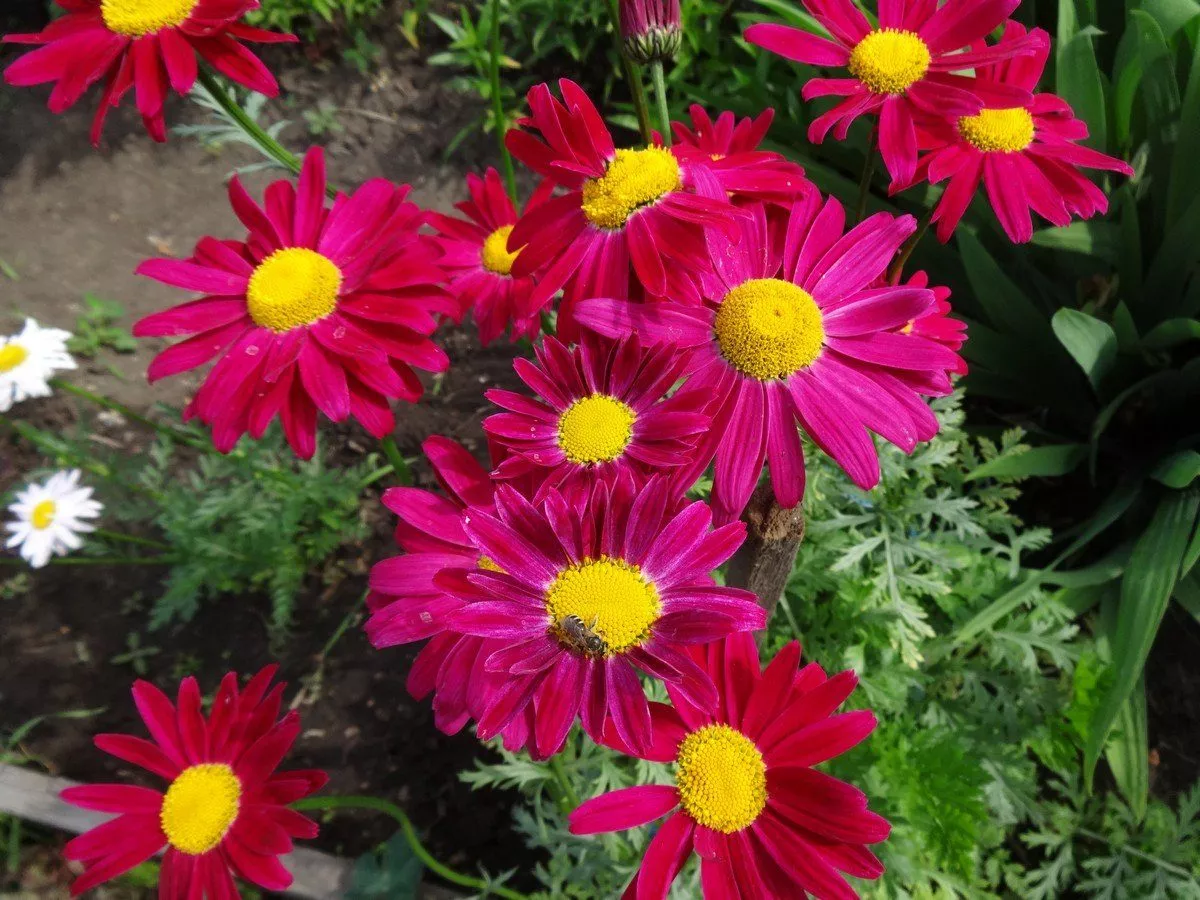
Pyrethrum is a perennial, undemanding, frost-resistant plant with beautiful flowers. Its flowers resemble daisies, and its leaves resemble carrot tops.
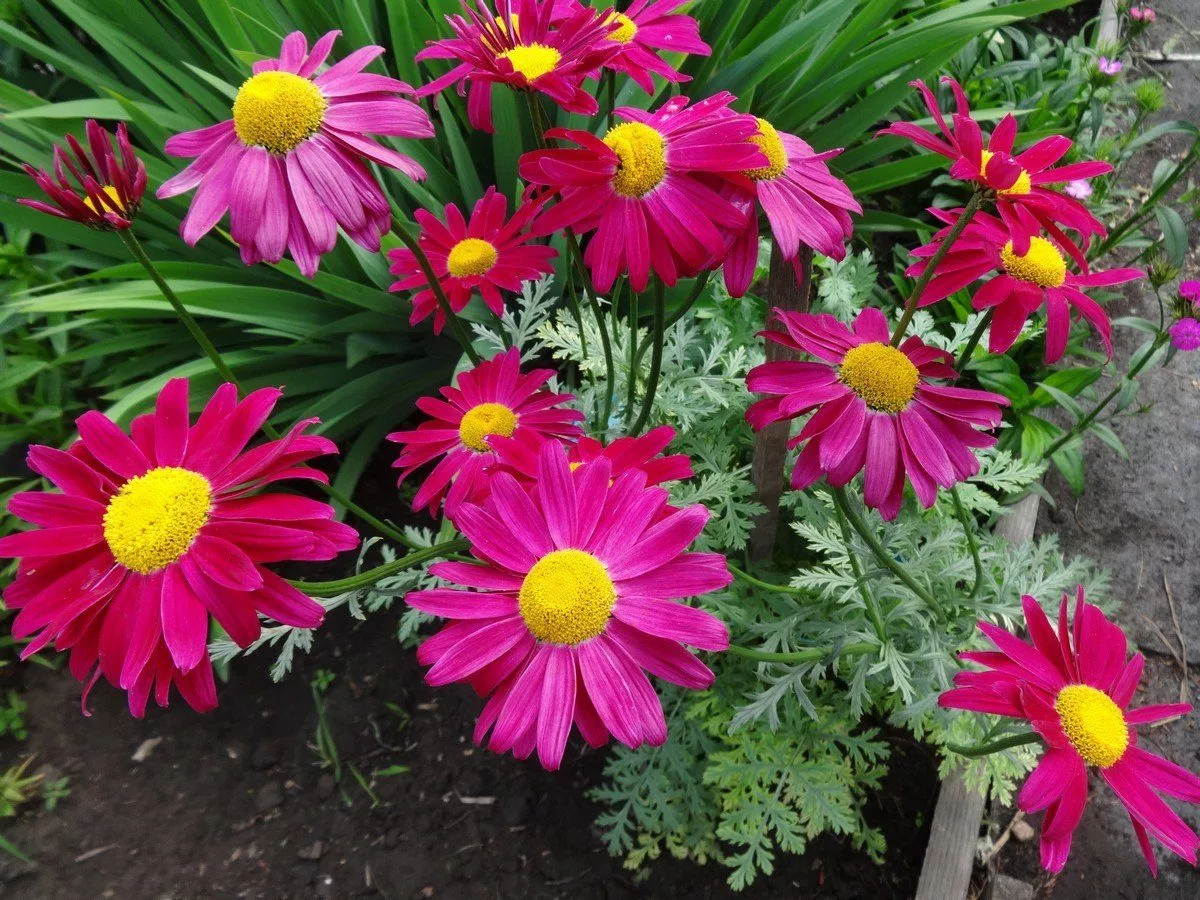
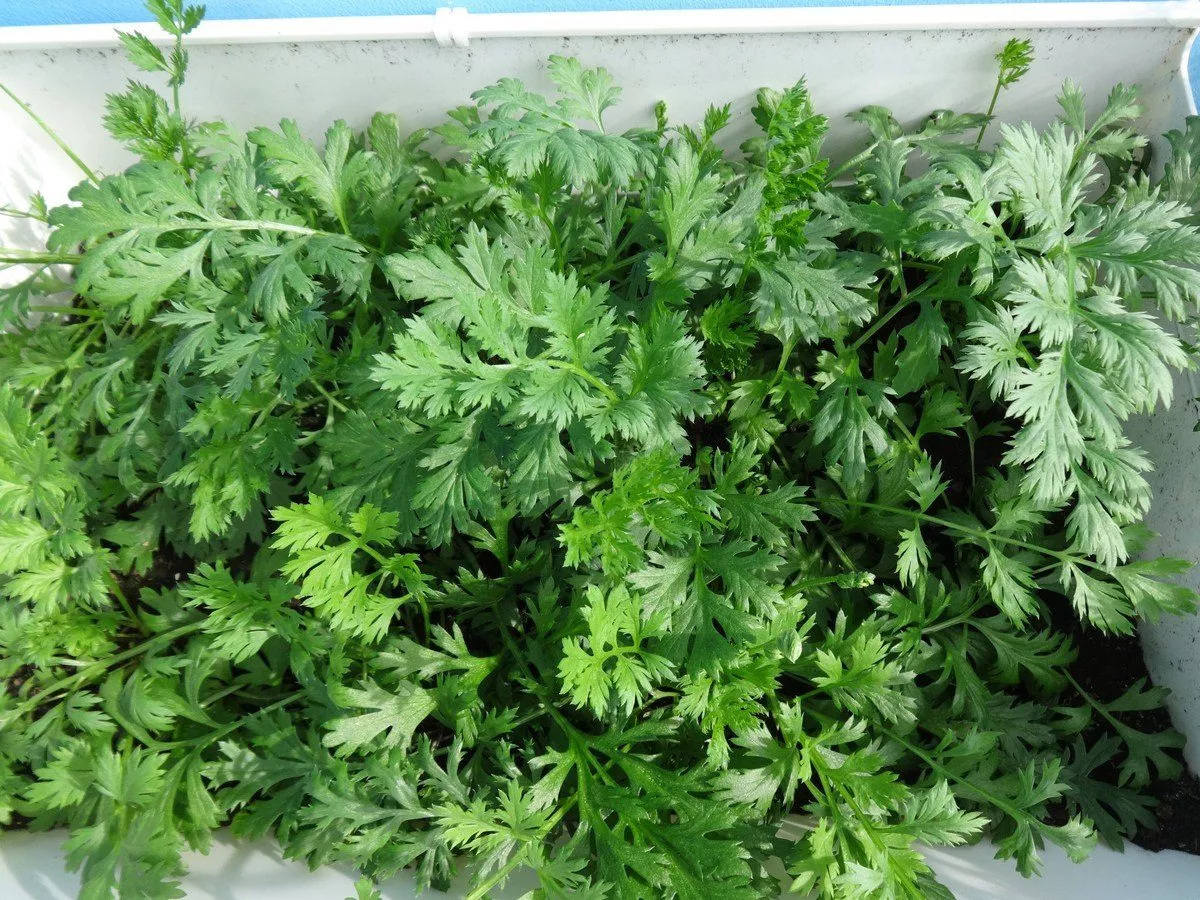
Pyrethrum is easy to propagate. I grew my first flowers from seeds I bought at a flower shop. The package had pictures of red, pink, and white daisies, and they were called Pyrethrum RobinsonI sowed them in a box in early spring, and when the seedlings grew, I transplanted them into the flowerbed at the end of May. They bloomed the following year.
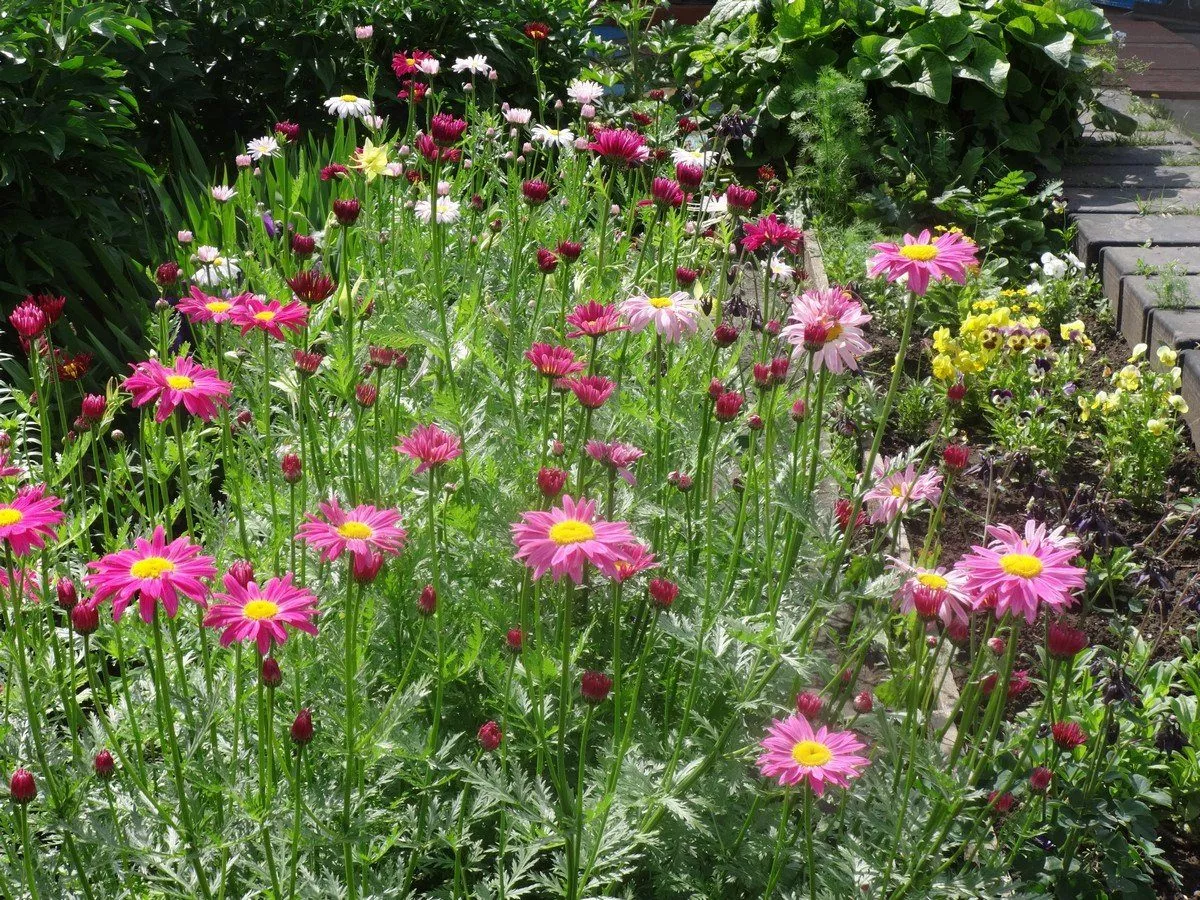
In June, pyrethrum is covered with large, vibrant red, pink, and light pink daisies. The light pink flowers quickly fade in the sun, turning into white daisies.
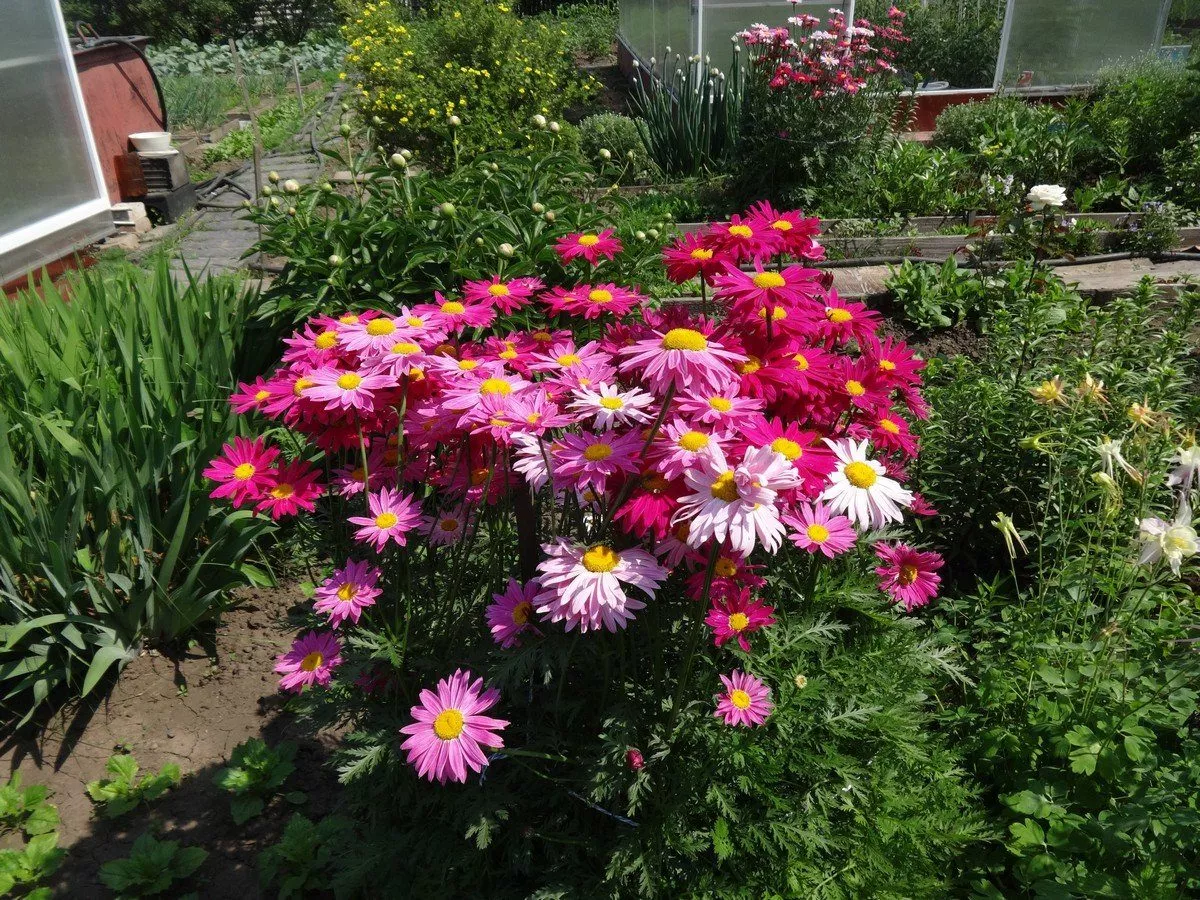
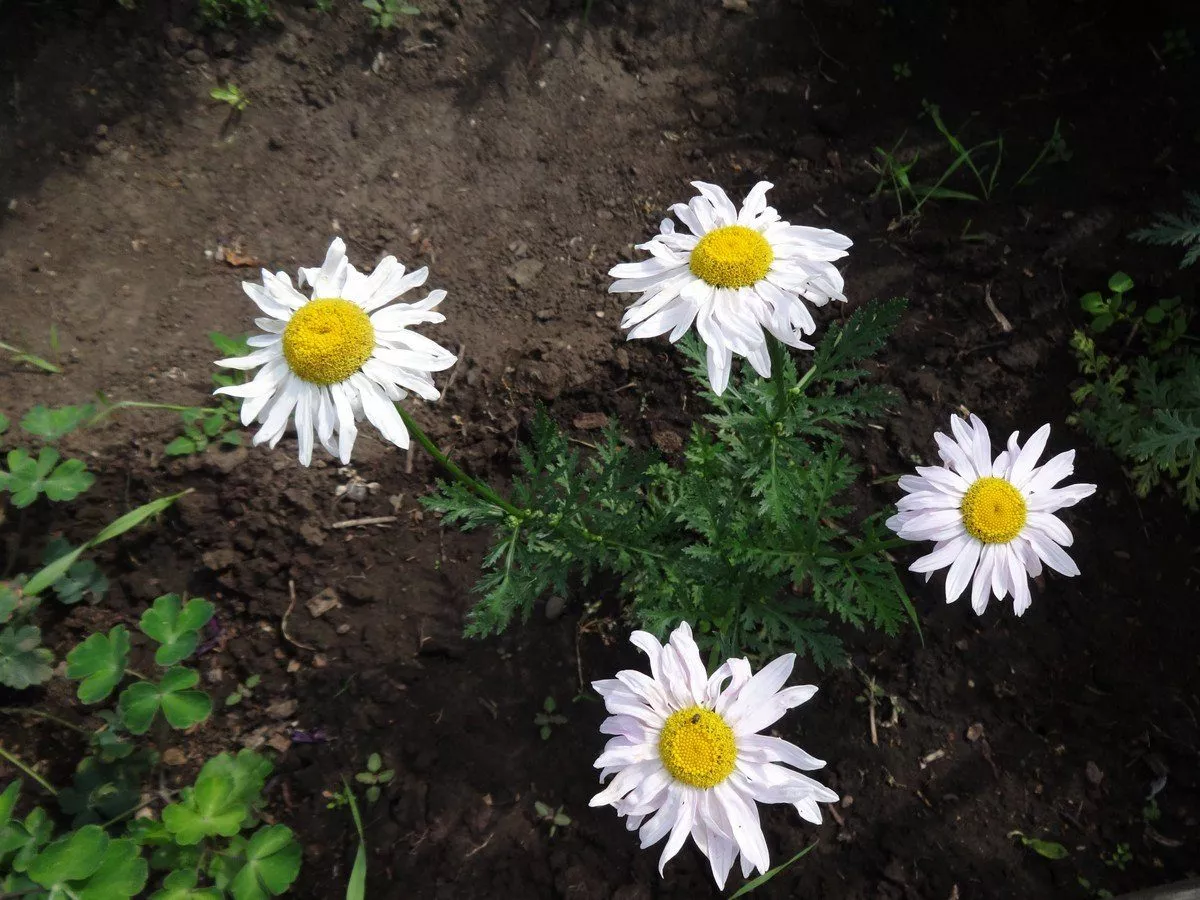
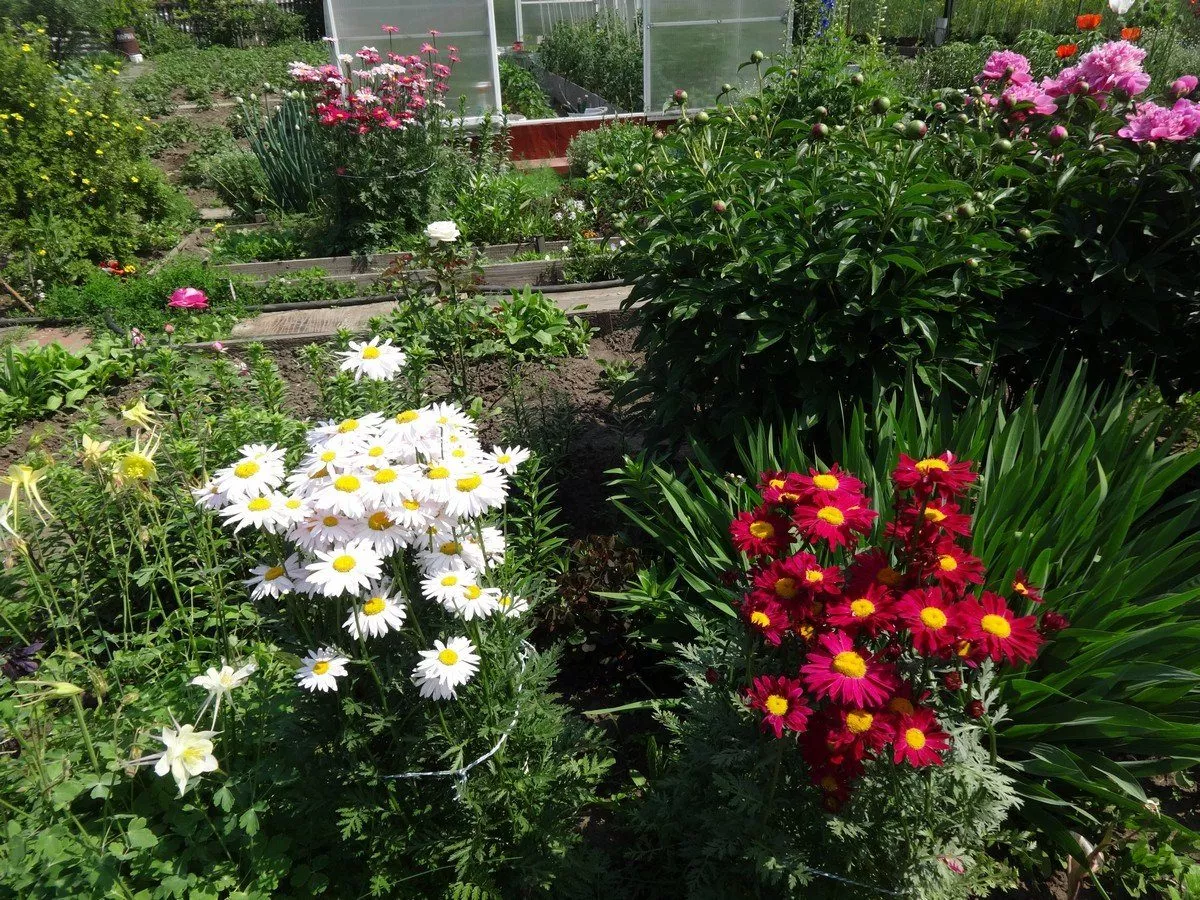
Pyrethrum bushes are neat, reaching a height of 50 to 100 cm. I tie the bushes up to prevent them from being blown over by the wind.
It blooms very profusely. The flowers are borne on long stems, and the petals don't fall off. When the flowers get old, I cut them off at foliage level, leaving a few flowers for seed.
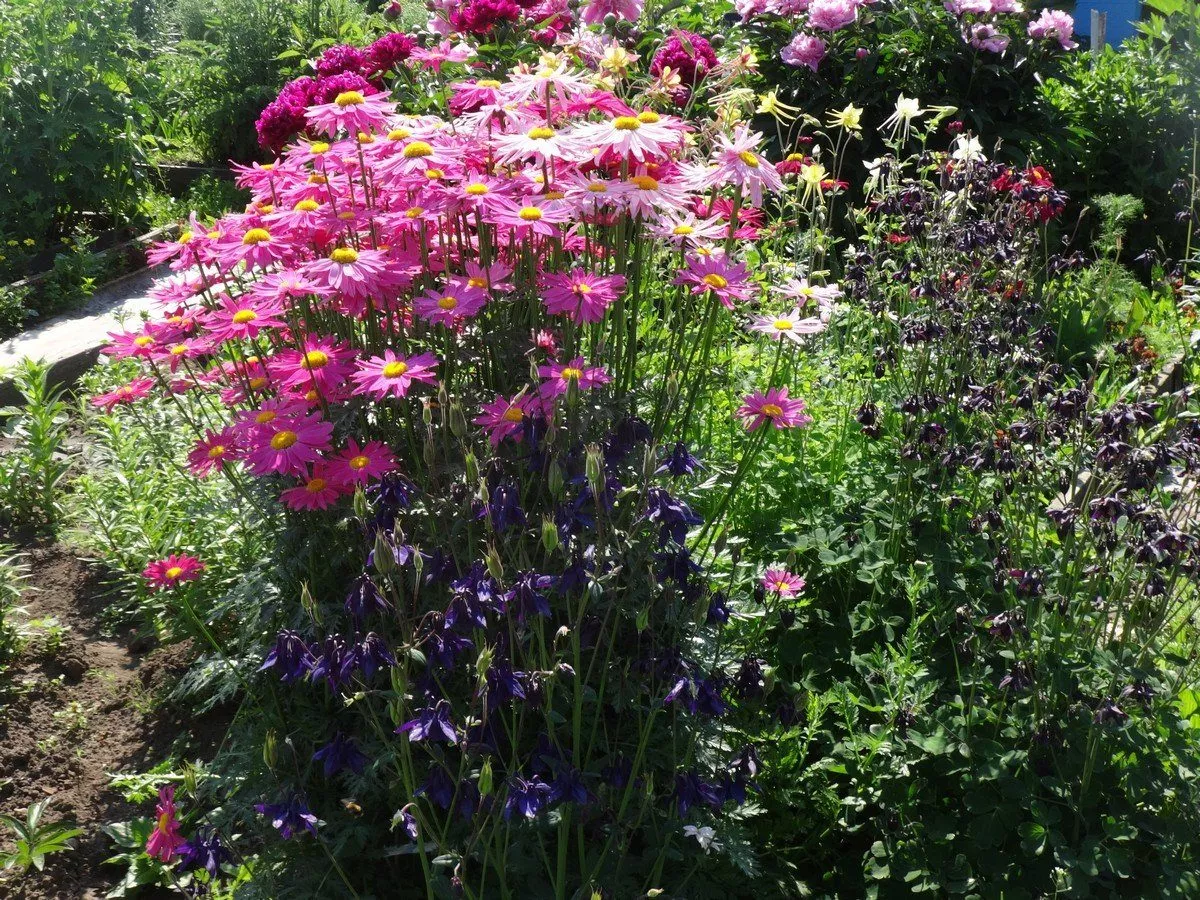
In the fall, the seeds scatter, and in the spring, young shoots appear all over the flowerbed. I usually dig them up and move them to suitable locations. I divide the older bushes every three to four years in the spring and replant them.
Sometimes in autumn pyrethrum blooms again, but not as profusely as in summer.
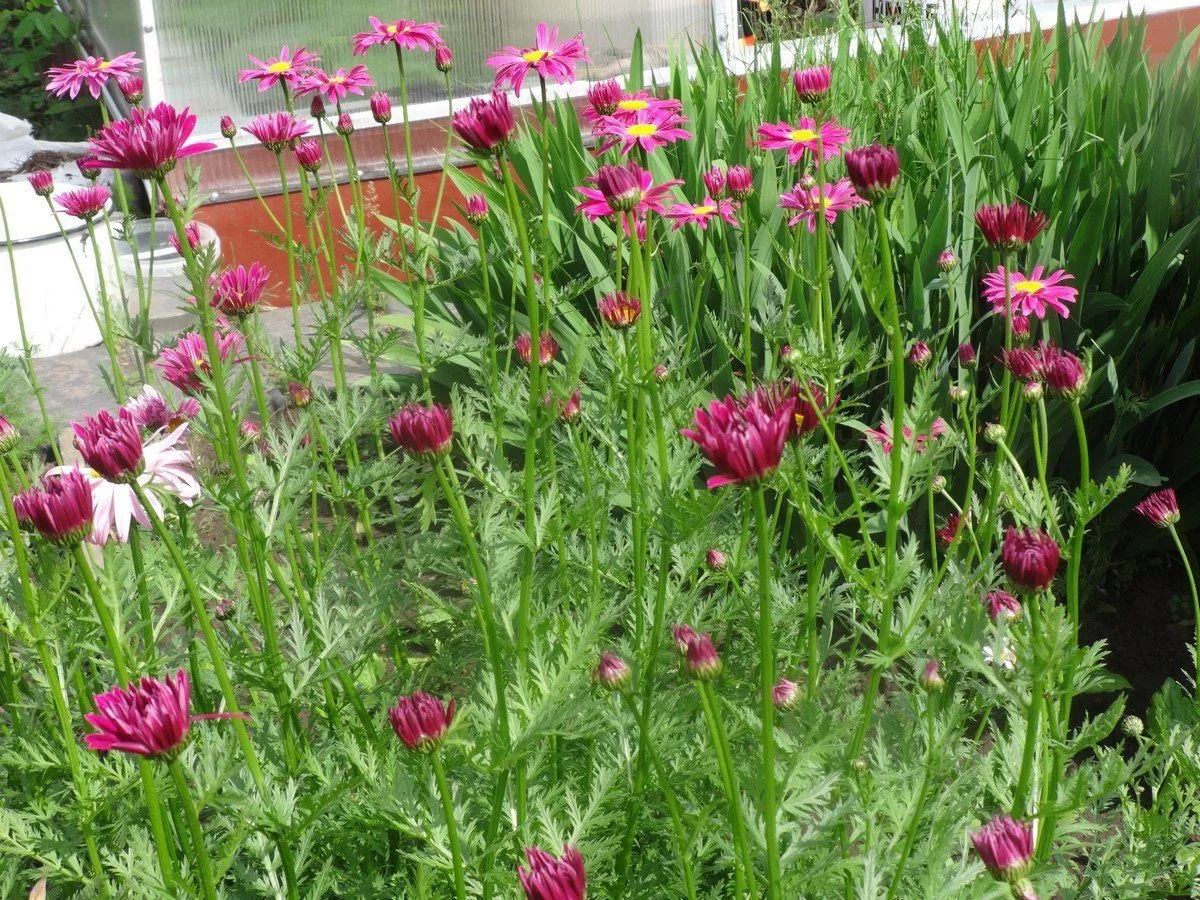
It overwinters well, never freezing. In the fall, I add humus under the bushes. This protects the plant from frost, and in the spring, it nourishes the seedlings, as humus contains many nutrients beneficial for plant growth and development.
Pests dislike pyrethrum because it's a medicinal plant; its flowers are used to make a powder that kills bedbugs and fleas. However, small black aphids sometimes swarm the young flower buds. Inta-Vir and other products are effective against black aphids.
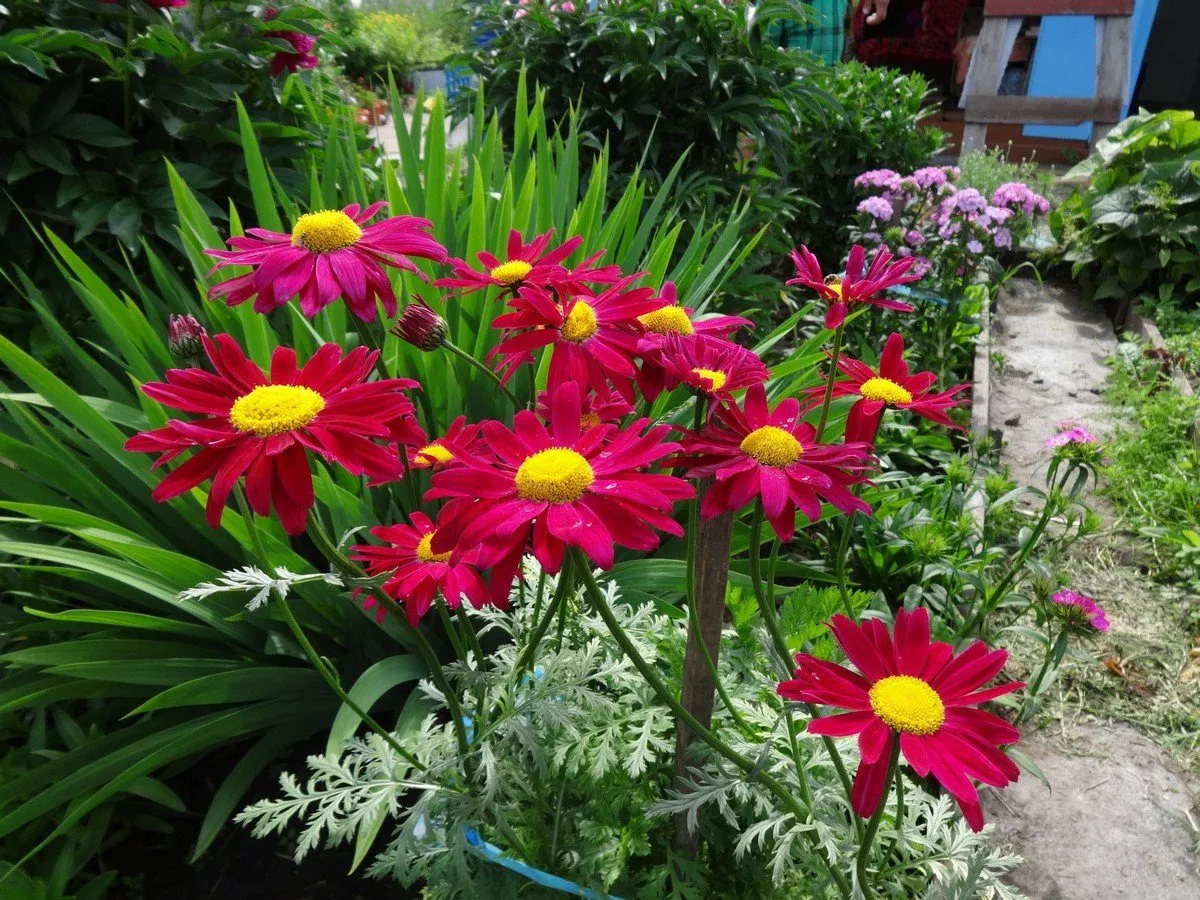
Pyrethrum grows well and always blooms profusely; it doesn't require any special feeding. A couple of times a season, at the beginning of the growing season and in early spring, I add urea to the bush, and in the summer, I apply potassium fertilizer or ash. I also water regularly, loosen the soil, and weed.
This wonderful flower delights everyone with its bright red daisies.