

We grow leaf and root parsley every year; I can’t even imagine my dacha without parsley.
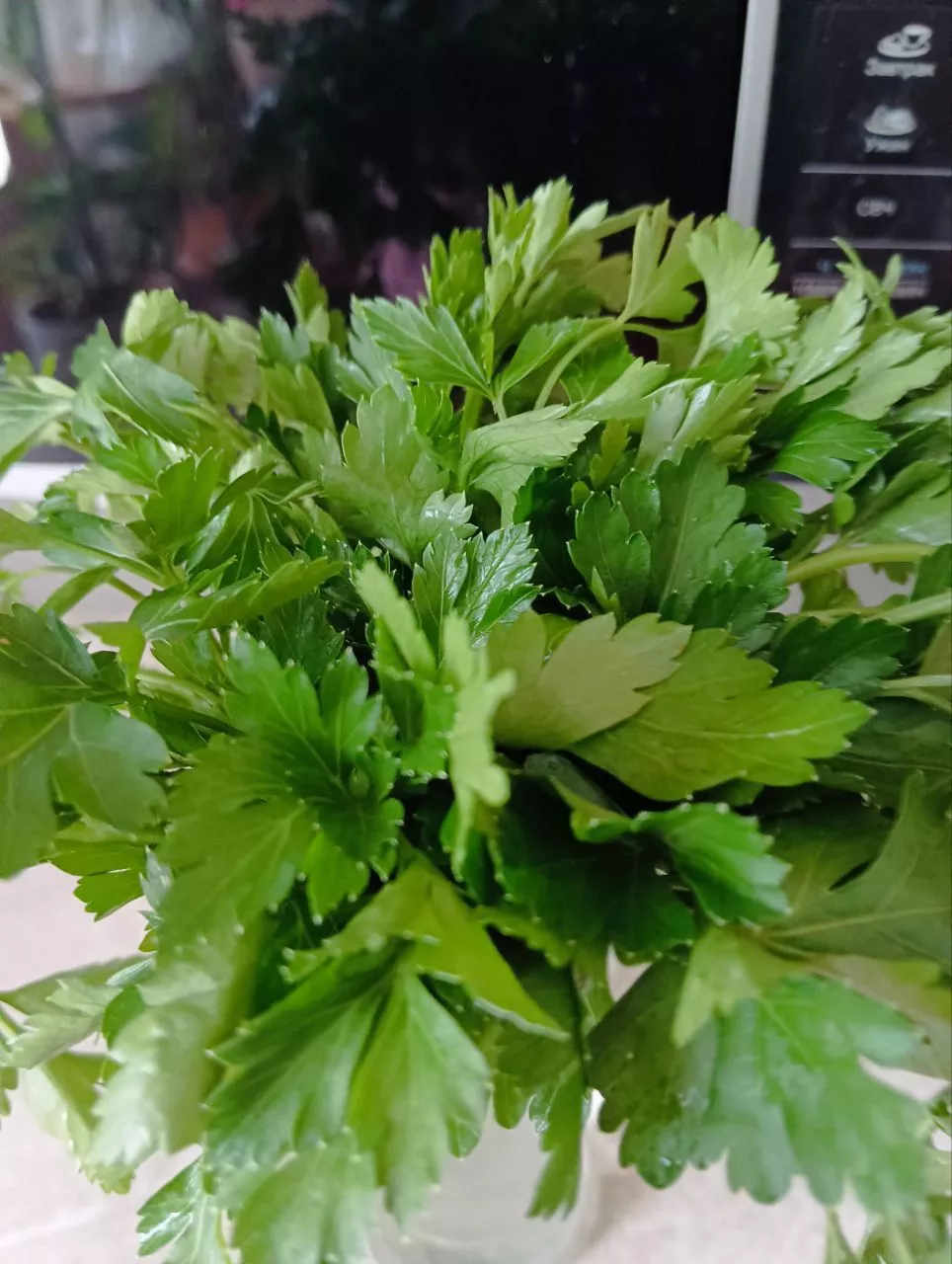
Parsley is a spicy, highly aromatic plant belonging to the Apiaceae or Celery family. Parsley comes in leaf and root varieties. Leaf parsley is divided into common parsley and curly parsley, which has wavy, corrugated leaflets.
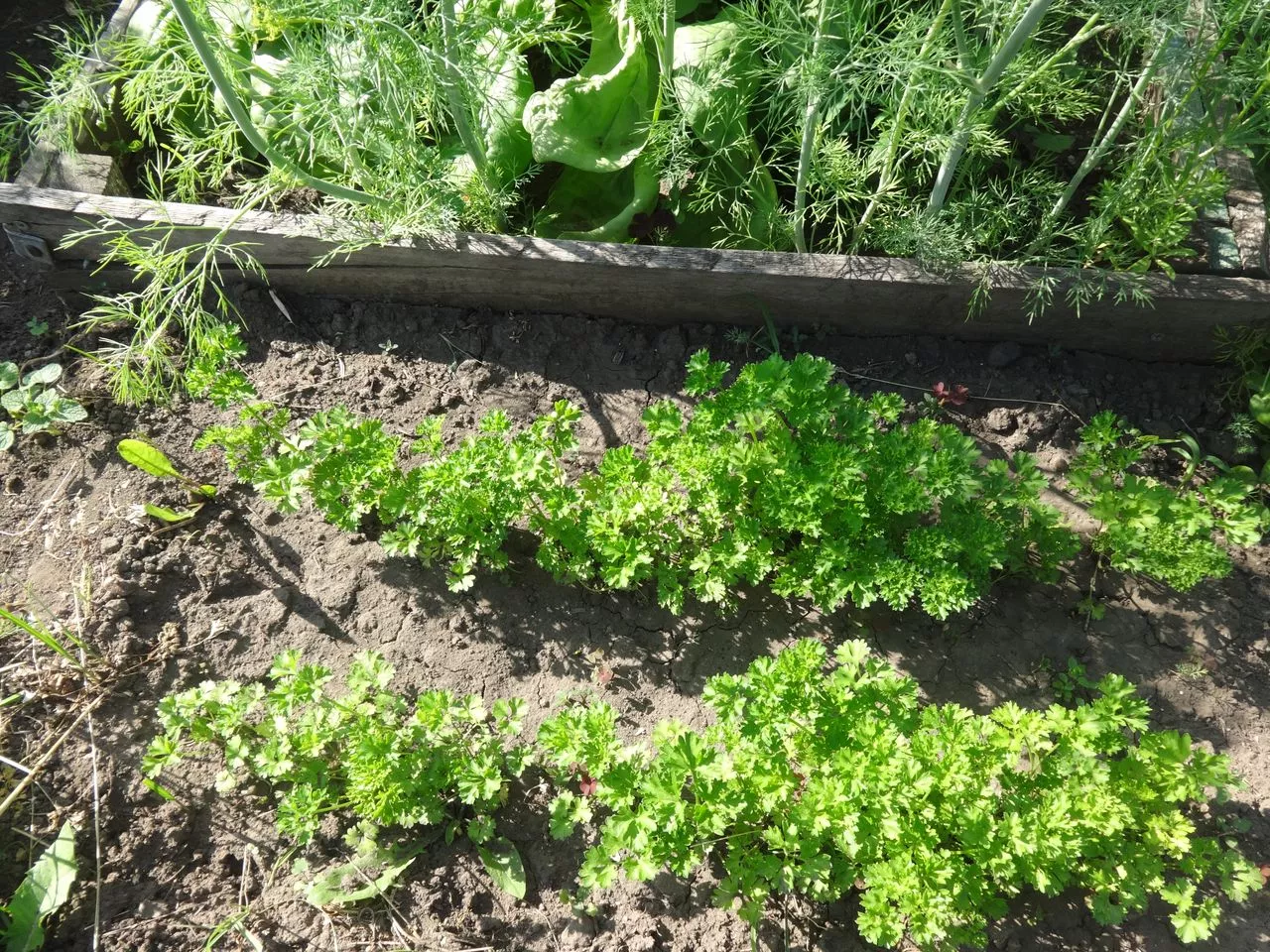
This is a biennial plant. In the first year, rosettes with numerous green dissected leaflets form on the leaves, and in the second year, umbel-shaped flower stalks with small greenish-yellow flowers appear, blooming in the summer; by autumn, the seeds ripen.
And besides the abundant green foliage, the root vegetable forms a carrot-like root by autumn, only whitish-yellow with white flesh. Parsley root is aromatic, spicy, and edible.
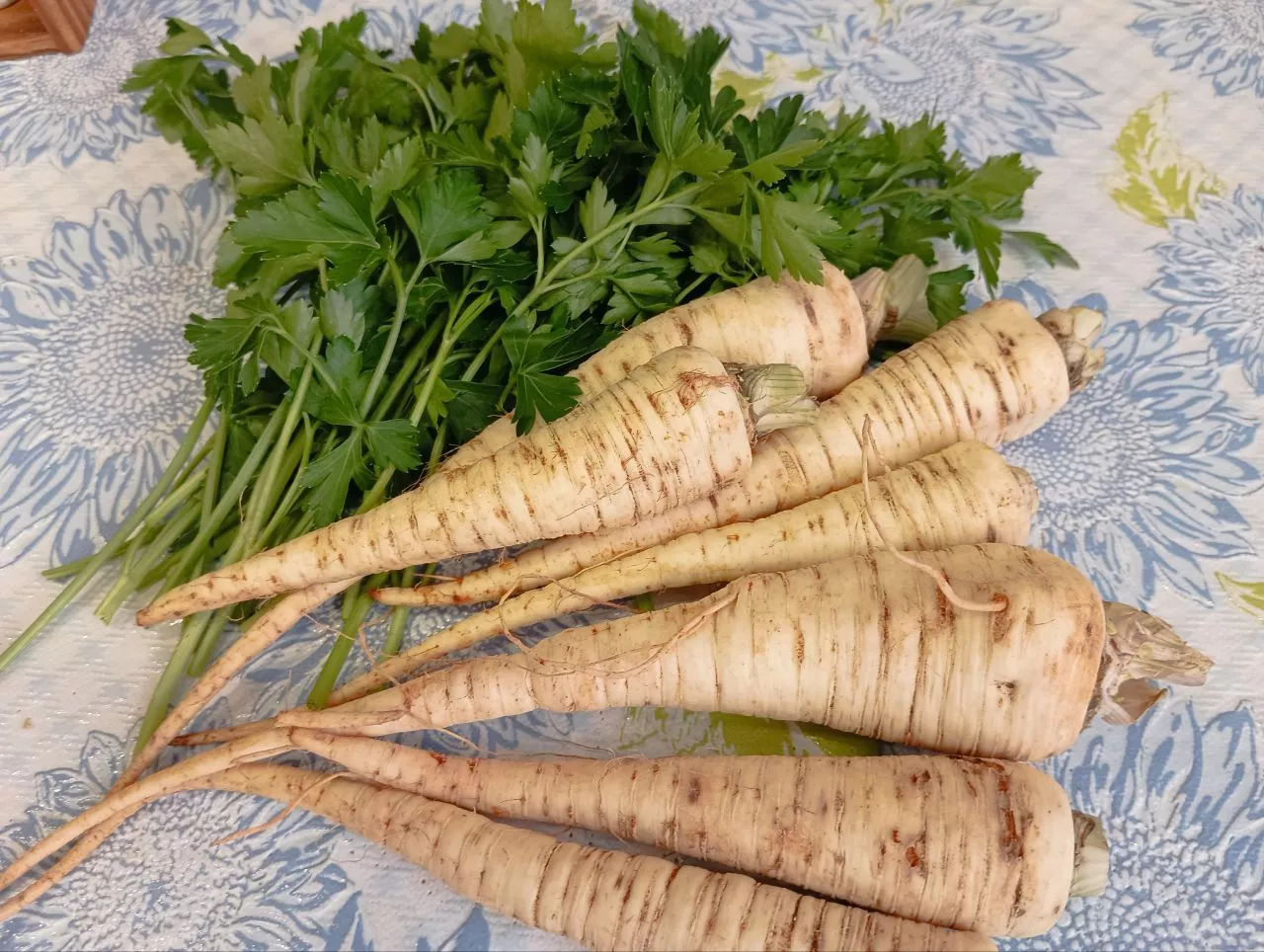
Of course, the leafy plant also has roots, but they are thin, branched and are not used for food.
Parsley is a hardy plant, and it doesn't mind a light frost. After the first frost in the garden, dill and all the salads freeze, but the parsley stands with green leaves and goes under the snow, green, and in the spring, new leaves grow back.
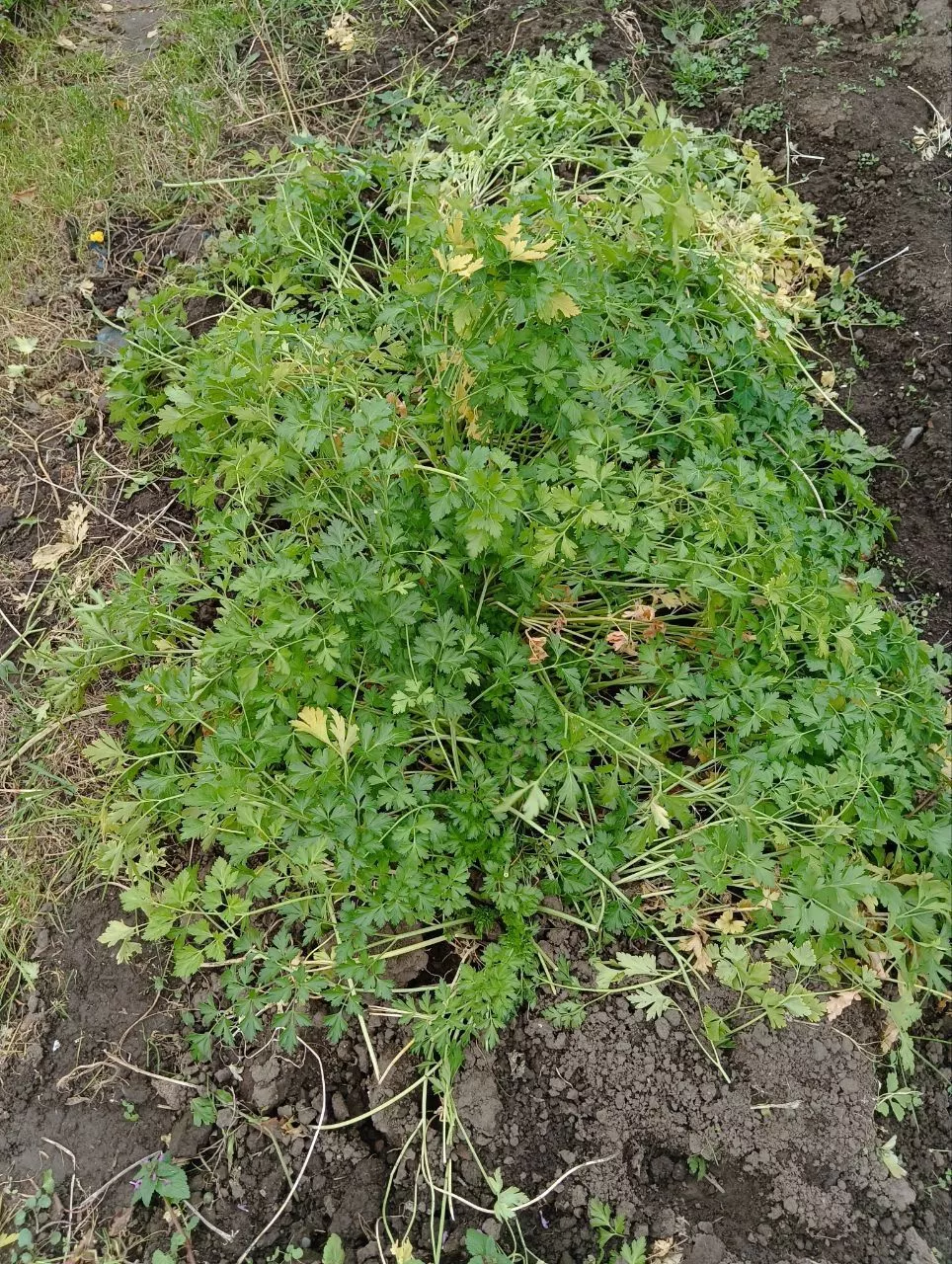
Parsley is easy to grow; it's an easy crop to grow, as long as you have good-quality seeds and loose, fertile soil. Parsley can be sown in early spring; it's frost-resistant. Some gardeners sow the seeds before winter.
Parsley is said to take a long time to germinate, and to speed it up, the seeds need to be soaked, disinfected, and germinated before planting. I never do such nonsense. In the spring, I simply make two rows, add compost, mix it with soil, open the packets, and sow the seeds. I sow leaf parsley in one row and curly parsley in the other. I cover the rows with soil, water, and wait for the seedlings to sprout.
I plant root parsley separately. I make a small bed and add humus and ash to the soil. I also recommend adding azophoska (nitrogen-phosphorus fertilizer) to improve root development.
But I believe that humus and ash contain enough nitrogen, potassium, phosphorus and other microelements, so I don’t add any fertilizers to the soil for green crops such as parsley, dill, cilantro, lettuce, and basil.
I make the distance between the furrows for root parsley about 15-20 cm, I sow the seeds less often so that the roots have space and develop better.
Once the root parsley has sprouted and grown a little, the seedlings need to be thinned out. After thinning, I add humus and fertilize with an infusion of fermented parsley to speed up growth.
It's best not to pluck the leaves from root parsley, as this weakens the plant. The plant will devote all its energy to growing new leaves, which will deprive the root of nutrients and make it smaller. For fresh herbs, I grow leaf parsley.
I usually sow root parsley seeds of the Sakharnaya and Eagle varieties. I choose early-ripening, high-yielding varieties. Every year I have a good harvest of root vegetables.
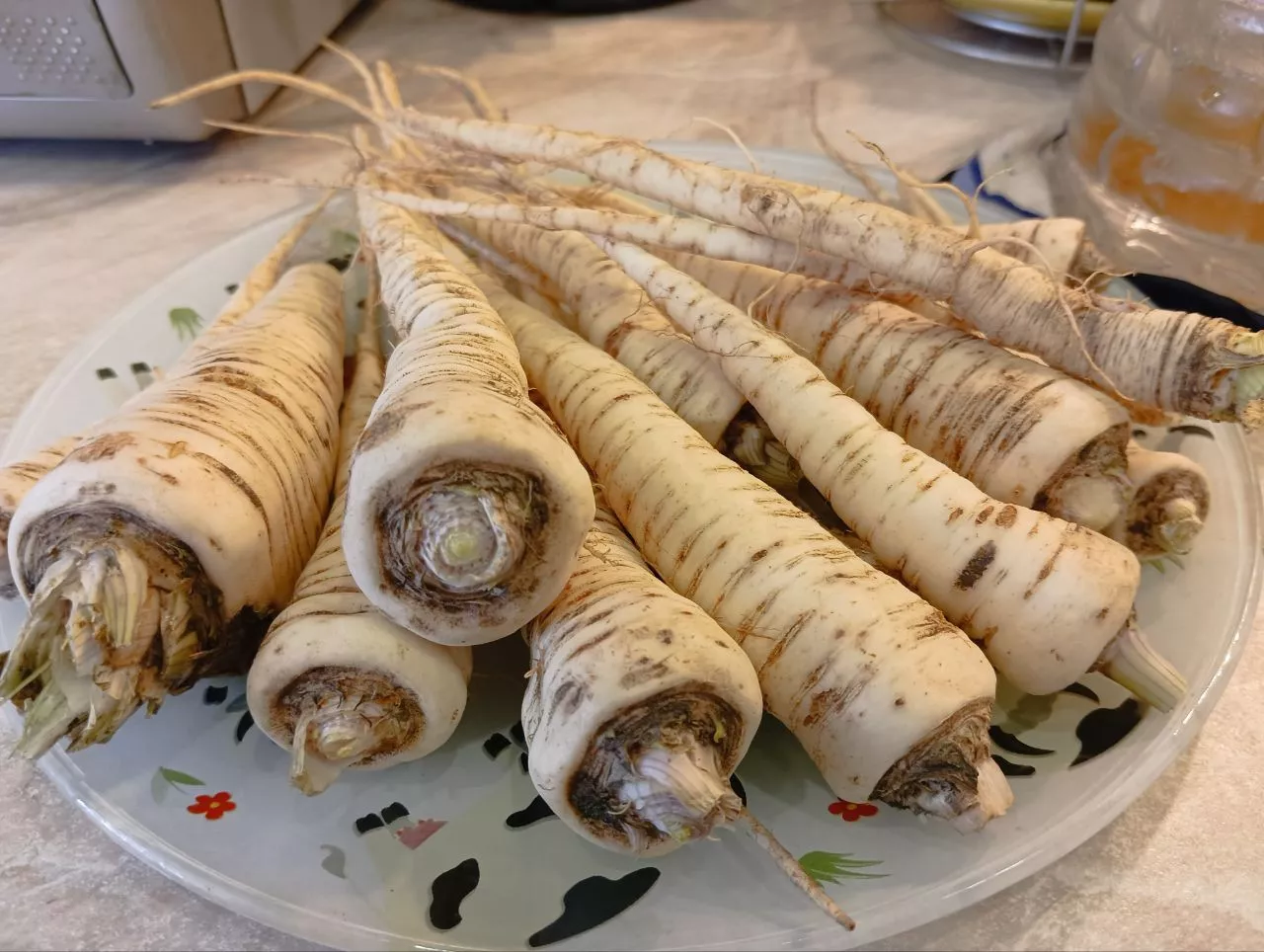
This year (23rd) I planted Sakharnaya and Bogatyr.
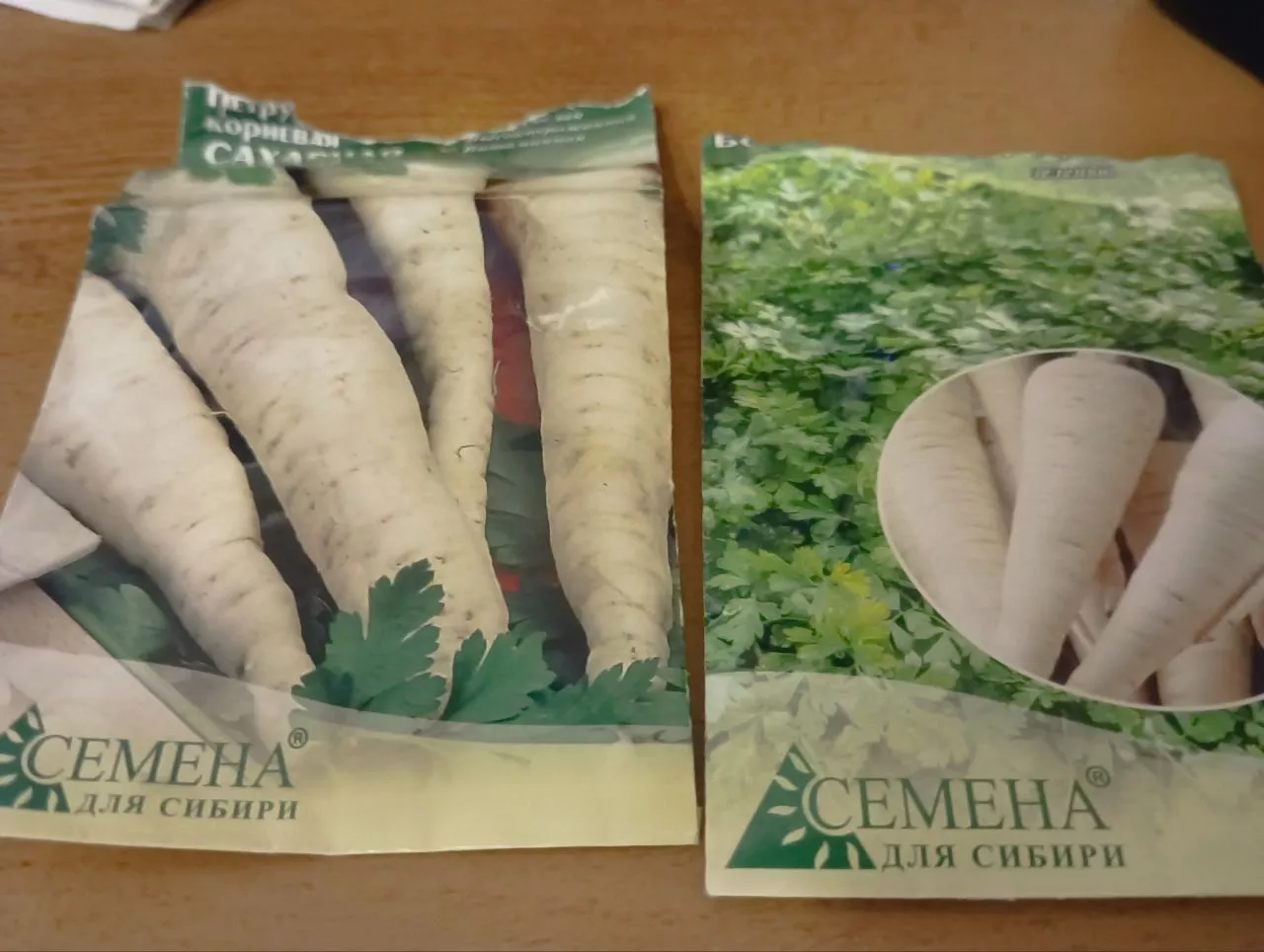
Sugar Parsley's roots grew normally, but the row with Bogatyr surprised me with its centipede-like roots.
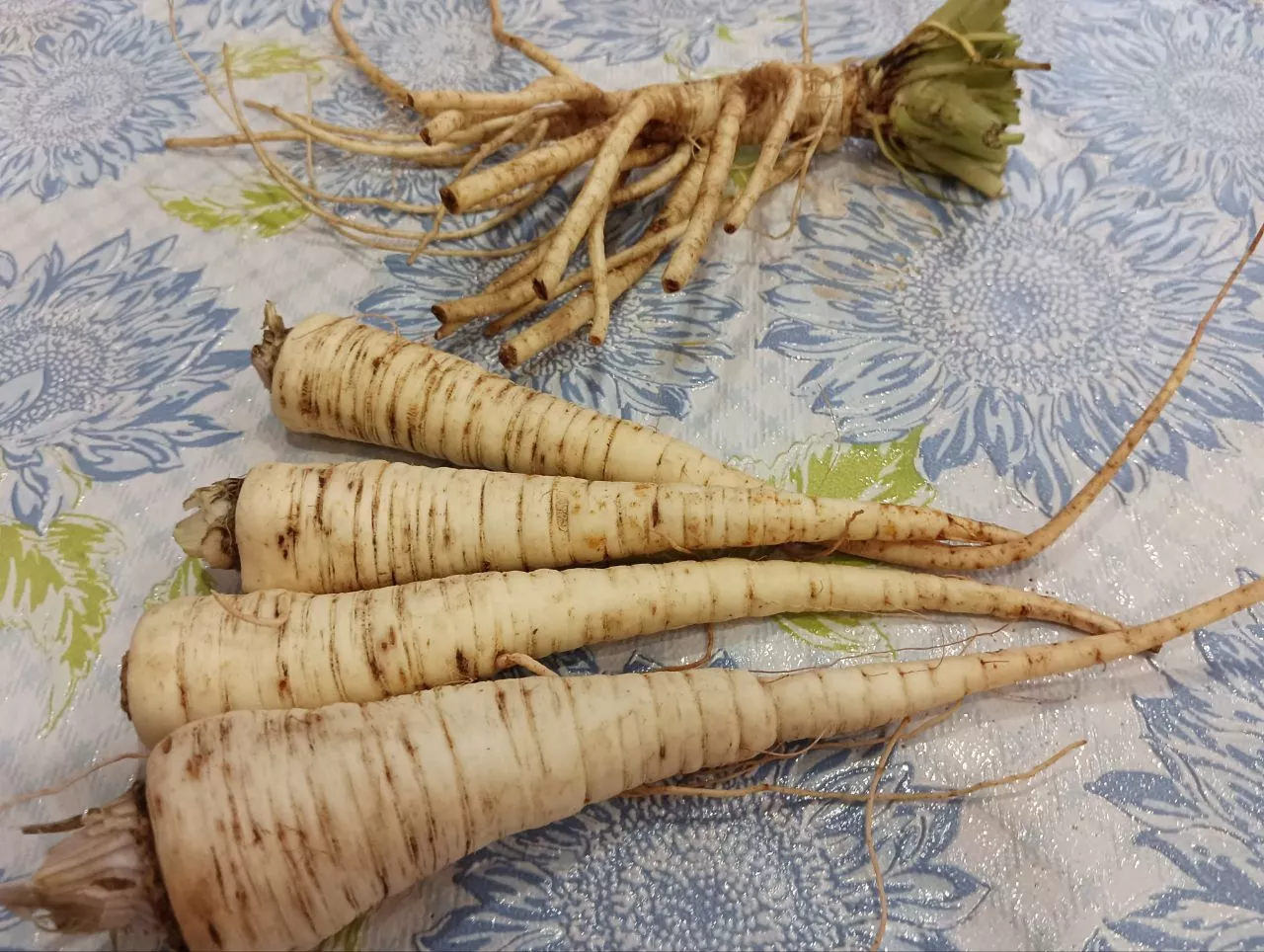
There wasn't a single root of normal shape; all the roots were branched, intertwined, and extended in different directions, deep into the ground. They were difficult to pull out, and I had to dig them out with a shovel, and some of the roots were simply cut off by the shovel.
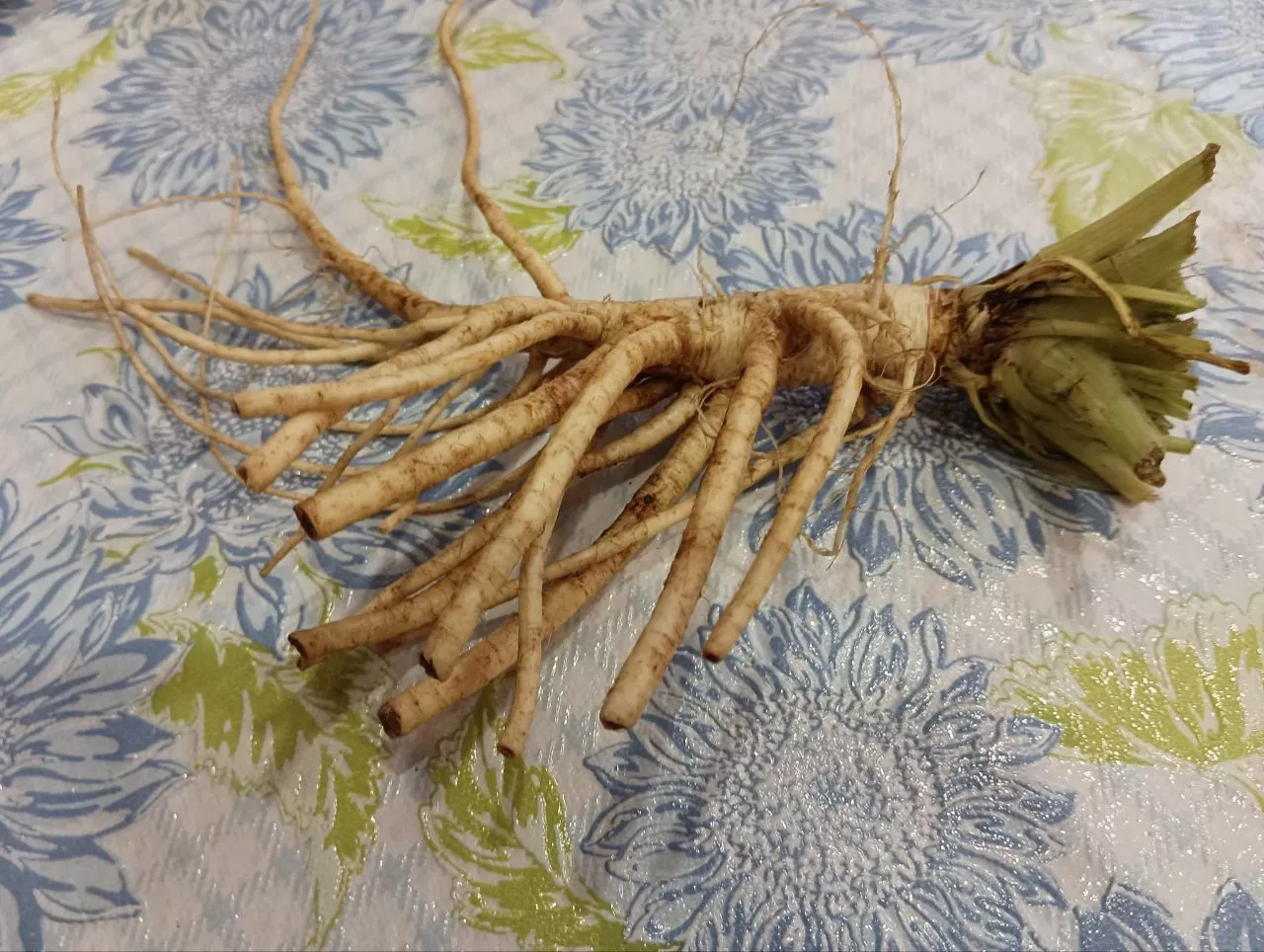
I've never seen such fruits on root parsley. I dug up a few roots on one side of the row, then on the other, and in the middle—all branched. I decided not to dig up the parsley completely; I'd let it sit in the ground. I don't need such roots.
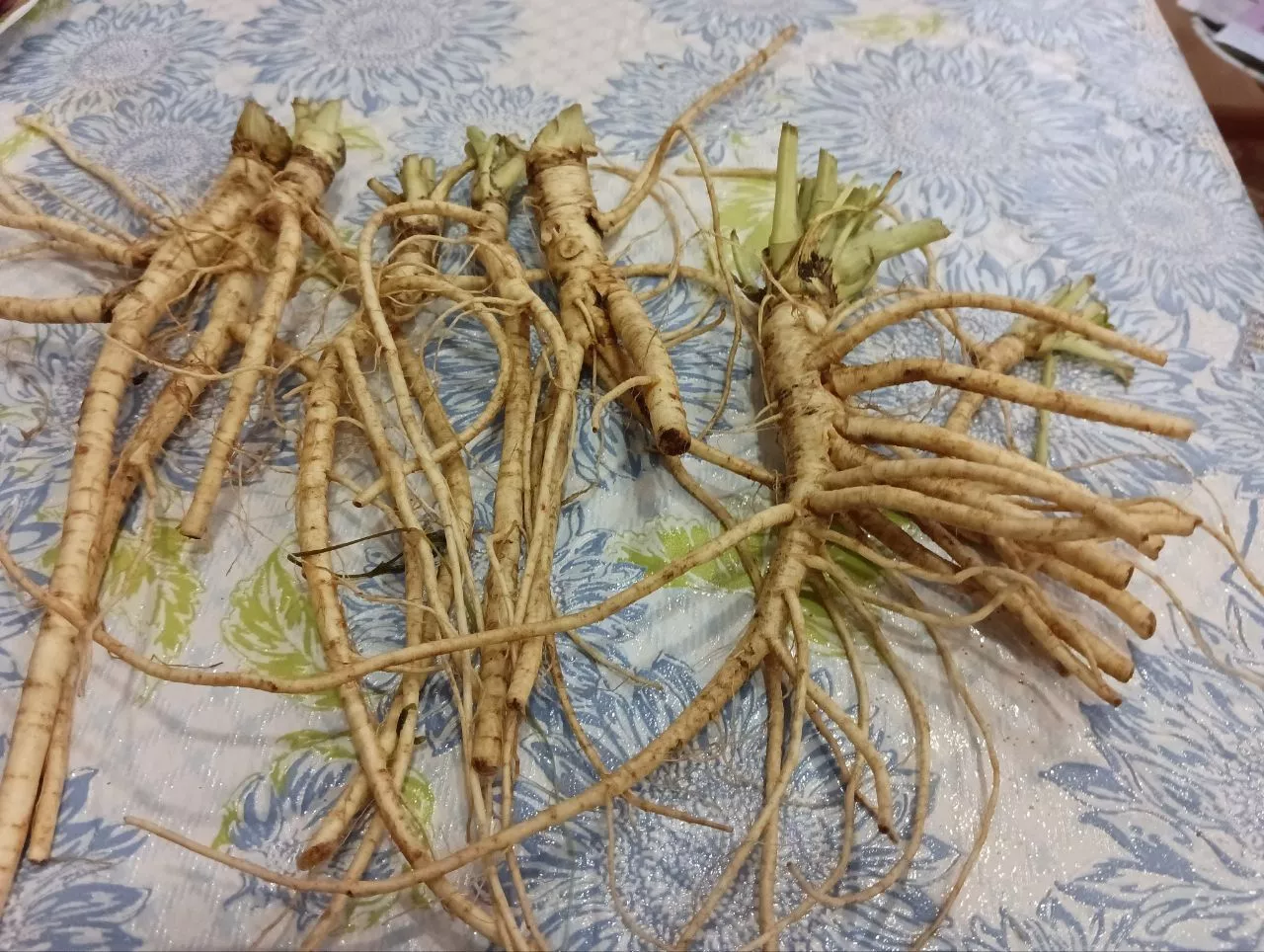
I've been growing root parsley for years, and I don't think the deformed roots are due to improper care or unsuitable soil. Then, sugar parsley would also have branched roots. I think it's all down to the seeds; I got poor-quality seeds, not just for the root parsley, but for the leaf parsley as well.
In the bag of curly parsley, I also found seeds of common parsley, and there were more of them than curly parsley seeds. The common parsley seeds, planted elsewhere, germinated very poorly and barely grew over the summer. The bushes were small, the leaves were small and pale, and they remained that way until autumn; even fertilizing didn't help. But the harvest that did grow is quite sufficient for us; we're still picking the greens. October is almost over, and there have been frosts.
We use parsley all year round; in summer we use fresh leaves in food, add them to salads, soups, and prepare them for the winter by freezing and drying them.
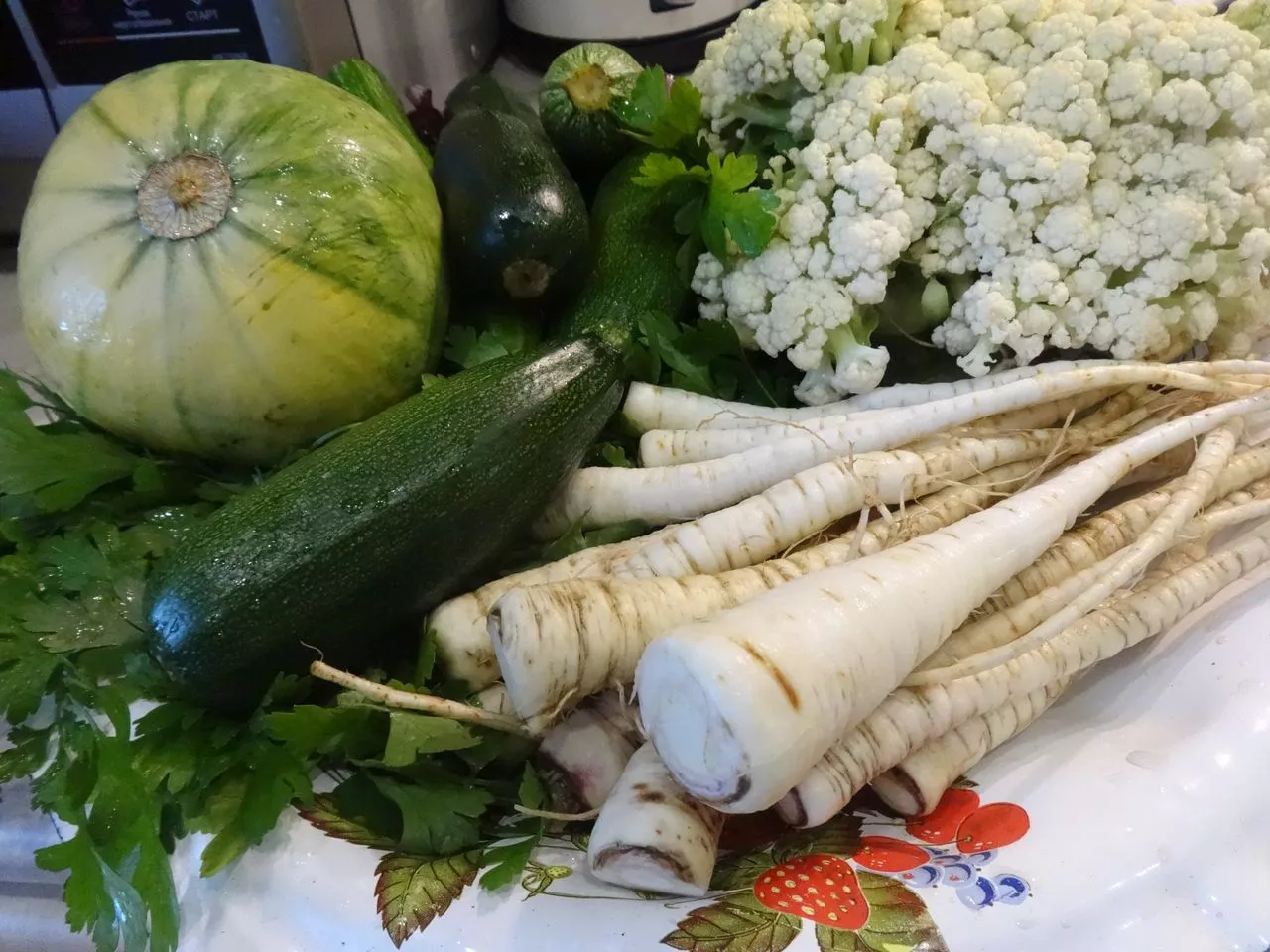
We also use the root fresh, and for the winter we dry and freeze the roots. We store some of the roots in the cellar or refrigerator. I really like adding the roots to soups, broths, sauces, and gravies. Parsley root imparts a pleasant flavor and aroma to food. And when I preserve cucumbers and tomatoes for the winter, I always add parsley, both leaf and roots, to the jars.